25 Crow Facts: The Brainy Birds Living Among Us
Crows are everywhere, from city streets to farm fields, but most people don't realise just how clever they are. Some scientists even call them "feathered apes" because of their remarkable intelligence.
Here are 25 clever facts about crows, from tool-making crows to the real science behind the famous story of "The Thirsty Crow".
Crow Facts
Crows belong to a group of birds called Corvus, along with ravens, rooks and jackdaws.
There are around 45 species in this group, found on every continent except Antarctica and South America.
A group of crows is often called a "murder".
Surprisingly, crows are songbirds, belonging to the same large group as sparrows and robins.
Crows have very large brains for their size, and their intelligence has been compared to that of great apes.
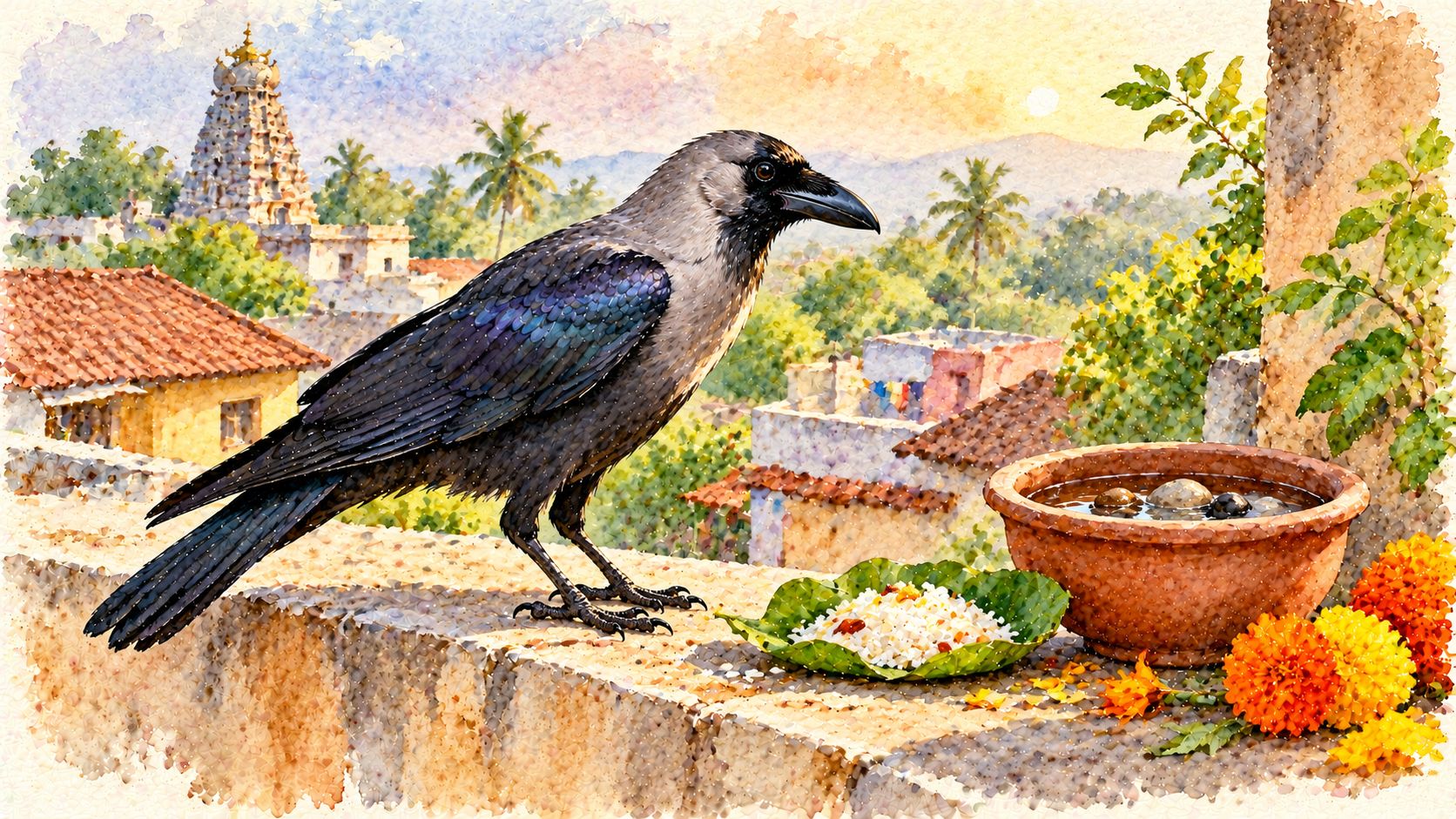
India's most common crows are the house crow, with its grey neck, and the all-black jungle crow, also called the large-billed crow.
Crows are omnivores and eat almost anything, from fruit, seeds and insects to food scraps and dead animals.
Crows usually stay with the same partner for many years.
Young crows often stay with their parents for a year or more and help raise their younger brothers and sisters.
Some crows make their own tools
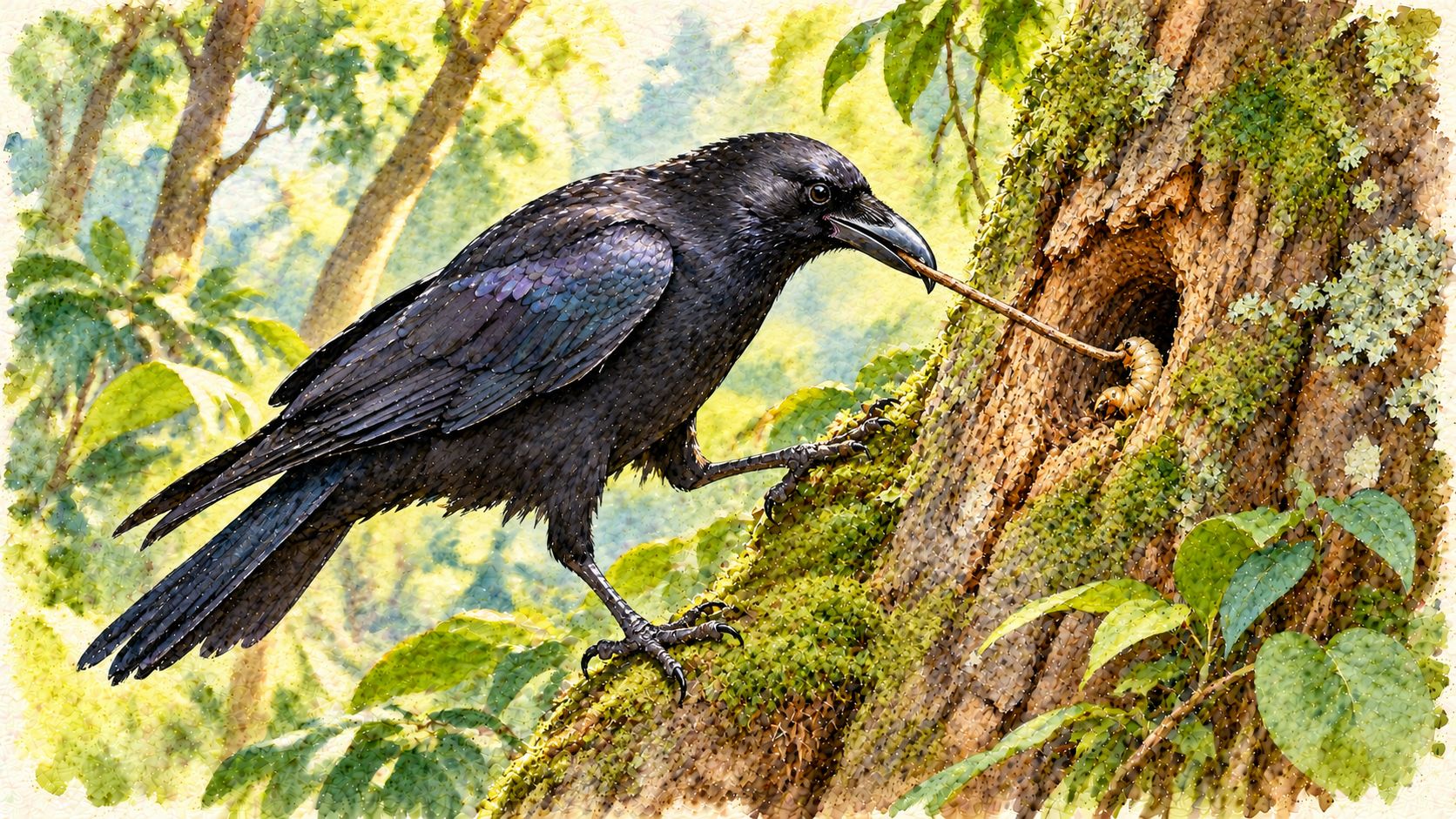
New Caledonian crows, from a group of Pacific islands, are some of the best tool-makers in the animal world. They snip and shape twigs and leaves into hooked tools to poke insects and grubs out of holes in trees. In experiments, these crows have even joined separate pieces together to build longer tools to reach food they couldn't get otherwise, something very few animals can do. Young crows learn these skills by watching adults, much like children learn from their parents.
Crows can recognise individual human faces and remember them for years, especially people who have treated them badly.
In a famous experiment in the United States, crows "scolded" people wearing a mask they had learned to see as dangerous, and taught other crows to do the same.
When a crow dies, others often gather around and call loudly, which scientists think helps them learn about dangers in the area.
In Japan, crows have been seen dropping nuts onto roads so that passing cars crack them open.
In Australia, some crows have learned to flip poisonous cane toads over and eat only the safe parts.
Crows can plan ahead and will hold off eating a treat now if they expect a better reward later.
Crows can copy many sounds, including other birds, animals and even human speech.
In Japan, crows sometimes build nests out of metal coat hangers, and nests on electricity poles have caused power cuts.
The Hawaiian crow became extinct in the wild in 2002, and scientists have been working to return birds bred in captivity to the forest.
Crows play a special role in Indian traditions
In India, crows are closely linked with ancestors. During Pitru Paksha and other shraddha rituals, families place food out for crows, as crows are believed to carry offerings to departed ancestors. Crows also appear in Indian stories and beliefs: the wise crow Kakbhushundi appears in Ramayana tradition, and the crow is considered the vahana, or vehicle, of Shani. Many Indian children also grow up with the famous story of the thirsty crow that drops pebbles into a pot to raise the water.
Scientists have tested the "thirsty crow" story for real. Crows dropped stones into a tube of water to raise the level and reach a floating treat, showing they understand cause and effect.
India's house crow has spread to many other countries by hitching rides on ships, and it is now found in parts of Africa, the Middle East and even Europe.
Crows can work out the difference between small numbers and understand simple counting.
Wild crows often live for 7 to 8 years, and some live for more than 20.
The phrase "as the crow flies" means the shortest, most direct route between two places.
Sources and Further Reading
- Bombay Natural History Society (BNHS)
- University of Washington
- University of Cambridge
- Cornell Lab of Ornithology
- Encyclopaedia Britannica
- National Geographic
Frequently asked questions
Are crows intelligent?
Yes. Crows are among the most intelligent birds. They make tools, solve puzzles, recognise faces and plan ahead, with intelligence often compared to great apes.
Can crows recognise human faces?
Yes. Crows can recognise individual human faces and remember them for years, especially people who have been unkind to them.
Why are crows fed during Pitru Paksha?
In Indian tradition, crows are believed to carry food offerings to departed ancestors, so families place food out for them during Pitru Paksha and shraddha rituals.
Is the "thirsty crow" story true?
Scientists have tested it and found that crows really do drop stones into water to raise the level and reach floating food.
What is a group of crows called?
A group of crows is often called a "murder".
Which crows are found in India?
India's most common crows are the house crow, with its grey neck, and the all-black jungle crow, also called the large-billed crow.
More Fun Facts