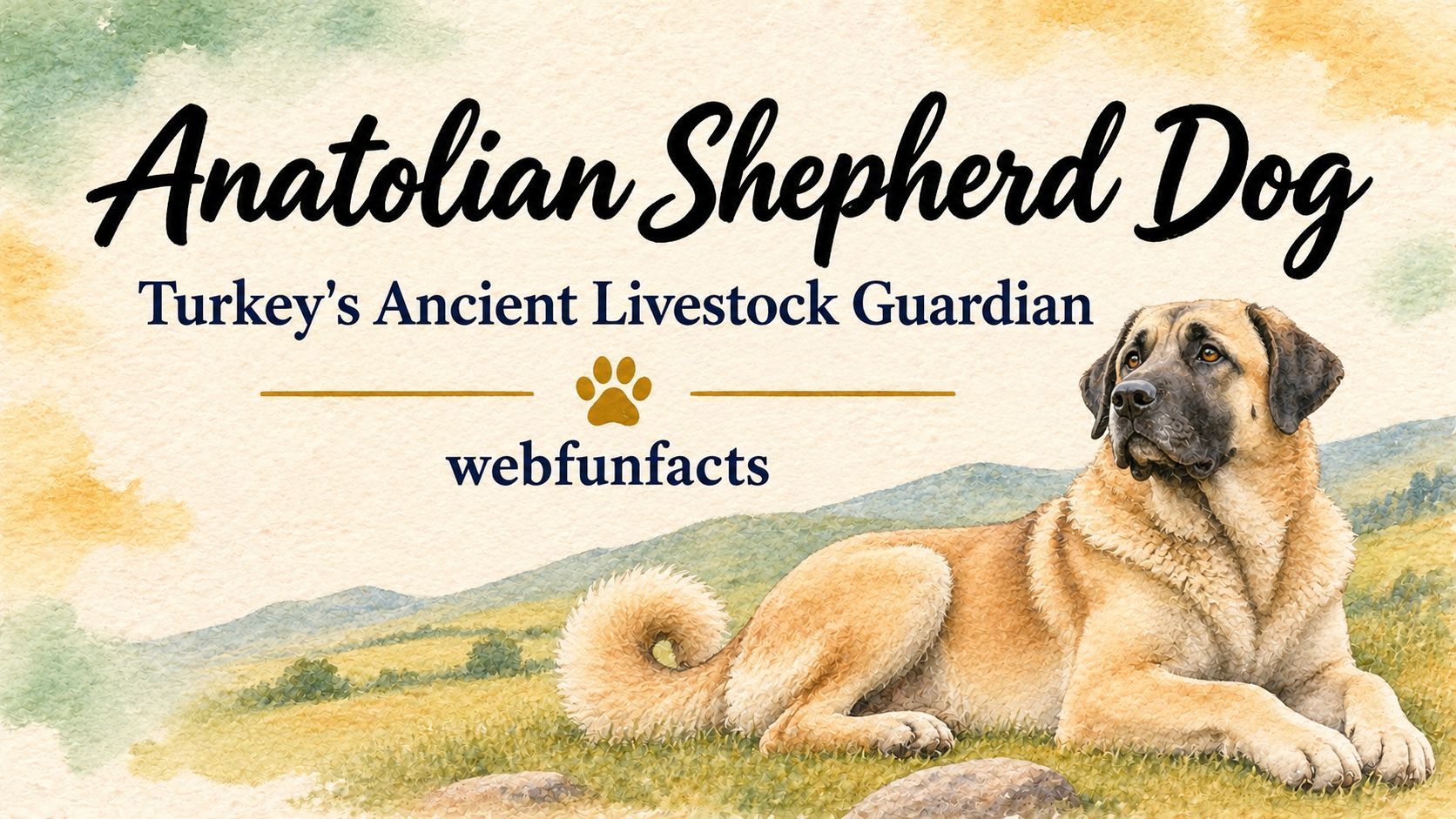
The Anatolian Shepherd Dog is a powerful, calm and fiercely devoted guardian whose roots stretch back thousands of years to the rugged hills of Turkey. Bred to live alongside flocks of sheep and goats, this giant breed was trusted to drive off wolves, bears and other predators with little help from people. Its quiet confidence and watchful nature still define the breed today.
At home, this dog is gentle and loving with its own family, yet naturally wary of strangers. In this complete Anatolian Shepherd Dog breed guide, you will learn about its size, temperament, training, exercise needs, grooming, health, diet and remarkable history, so you can decide whether this independent giant is the right companion for you.
Anatolian Shepherd Dog at a Glance
| Trait | Details |
|---|---|
| Breed group | Working (AKC) |
| Height | About 27 to 29 inches (69 to 74 cm) or more |
| Weight | 80 to 150 pounds (36 to 68 kg) |
| Life expectancy | About 11 to 13 years |
| Coat | Double coat; short or rough (longer) variety |
| Colors | Fawn with black mask, white, pinto, brindle |
| Shedding | Moderate; heavier seasonal sheds |
| Energy level | Moderate |
| Temperament | Loyal, protective, calm, independent, alert |
| Good for | Experienced owners, rural homes, large fenced yards |
| Origin | Turkey (Anatolia), ancient |
What Is an Anatolian Shepherd Dog?
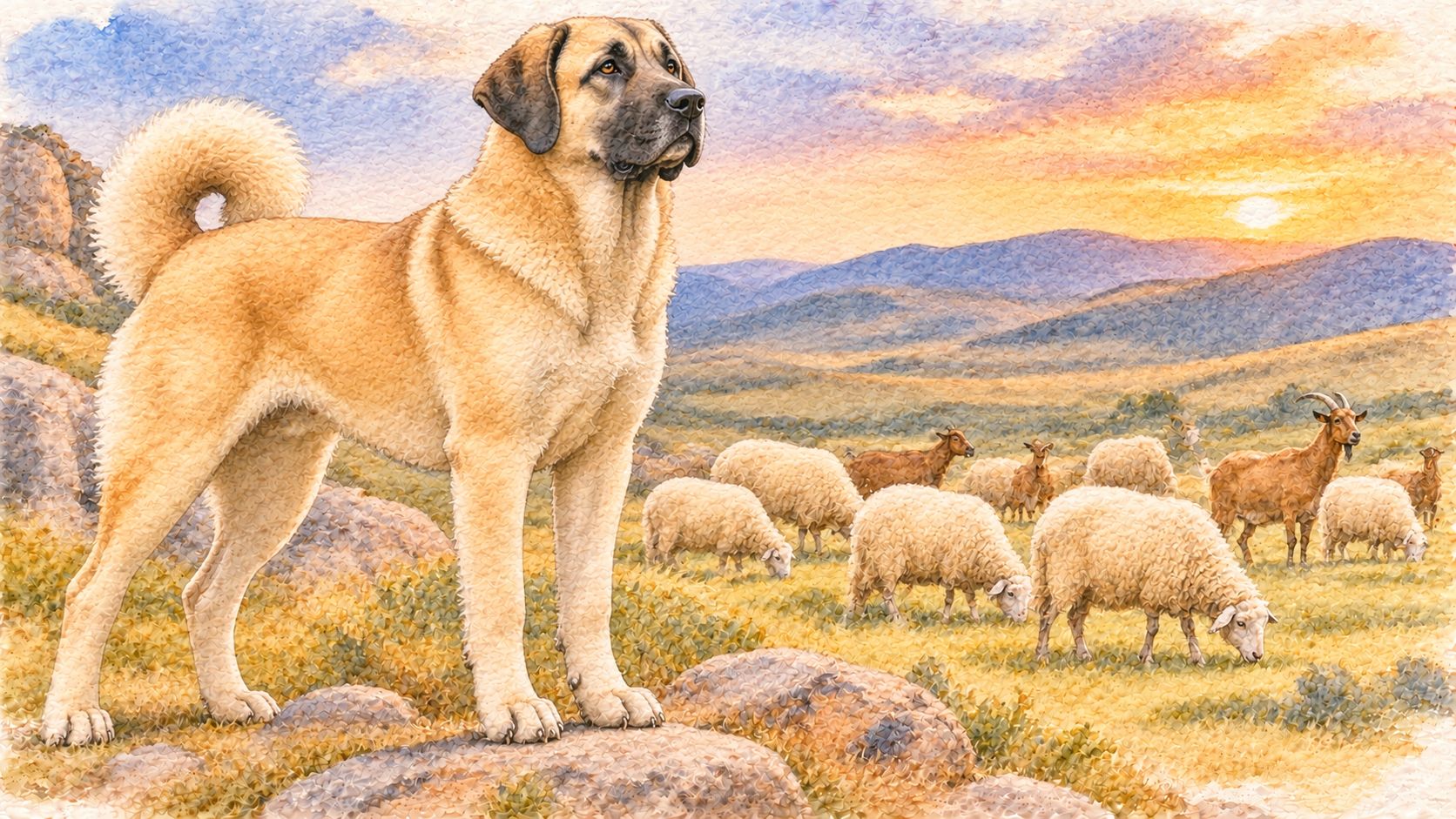
The Anatolian Shepherd Dog is a large-to-giant livestock guardian breed from the Anatolian plateau of central Turkey. Its ancestors are believed to have guarded flocks in this region for thousands of years. Rather than herding sheep, these dogs lived among the animals and protected them from predators.
Today, the breed belongs to the American Kennel Club's Working Group. Many still work on farms and ranches, while others live as devoted family guardians. Either way, this is a thinking dog that was bred to make its own decisions, and that independence shapes everything about life with the breed.
Anatolian Shepherd Size and Appearance
How Big Do Anatolian Shepherds Get?
They are giant dogs, with adult males often reaching around 29 inches (74 cm) at the shoulder and females around 27 inches (69 cm). Males typically weigh 110 to 150 pounds (50 to 68 kg), while females usually weigh 80 to 120 pounds (36 to 54 kg).
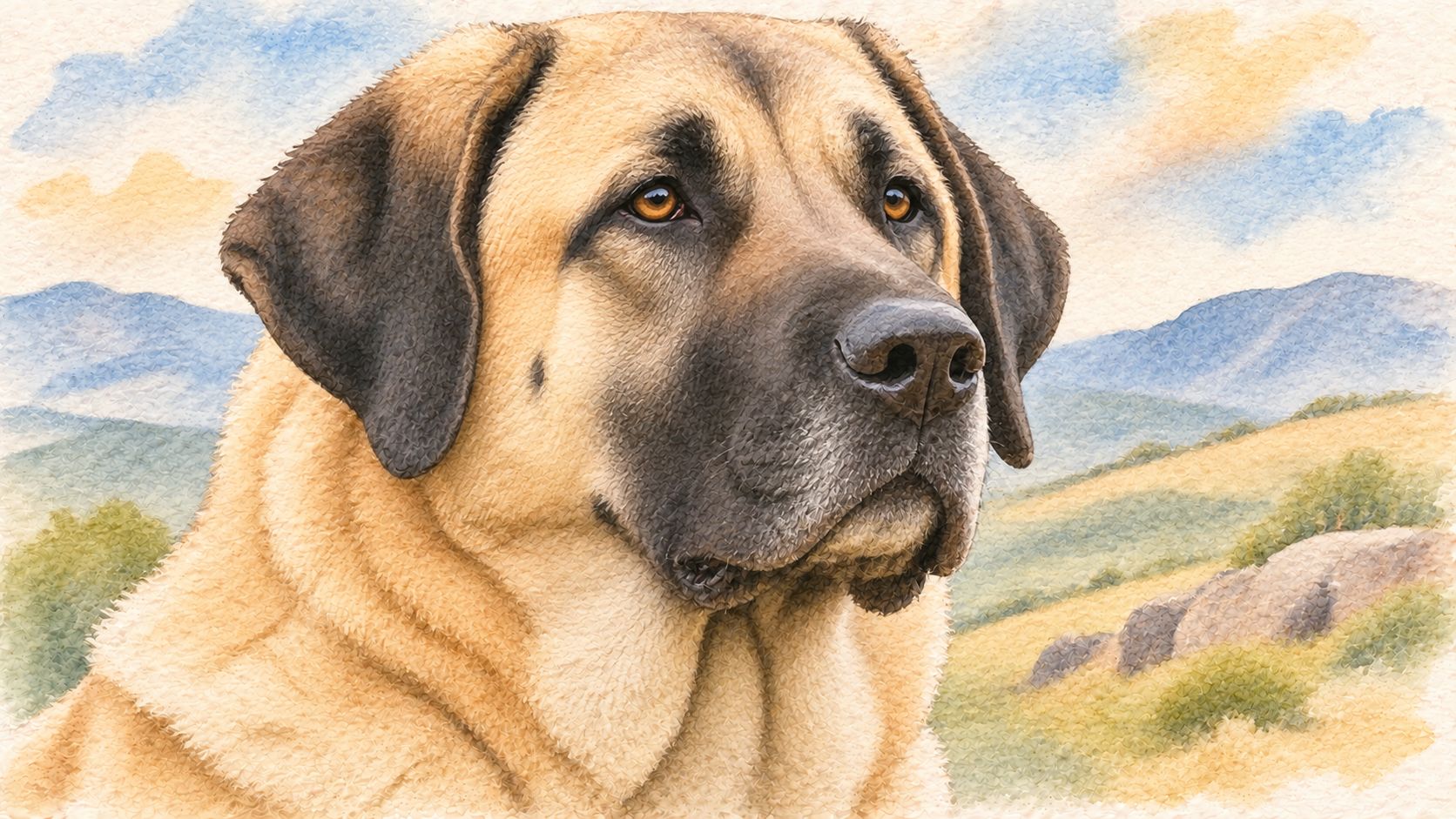
Despite their size, these dogs are athletic rather than bulky. They have a rugged, muscular frame, a broad head, V-shaped drop ears and a long tail that often curls upward when the dog is alert. They move with a smooth, powerful stride that can cover a lot of ground quickly.
The breed is also slow to mature. A puppy may not reach full physical and mental maturity until about 4 years of age, so patience is key during the long "teenage" stage.
Coat and Colors
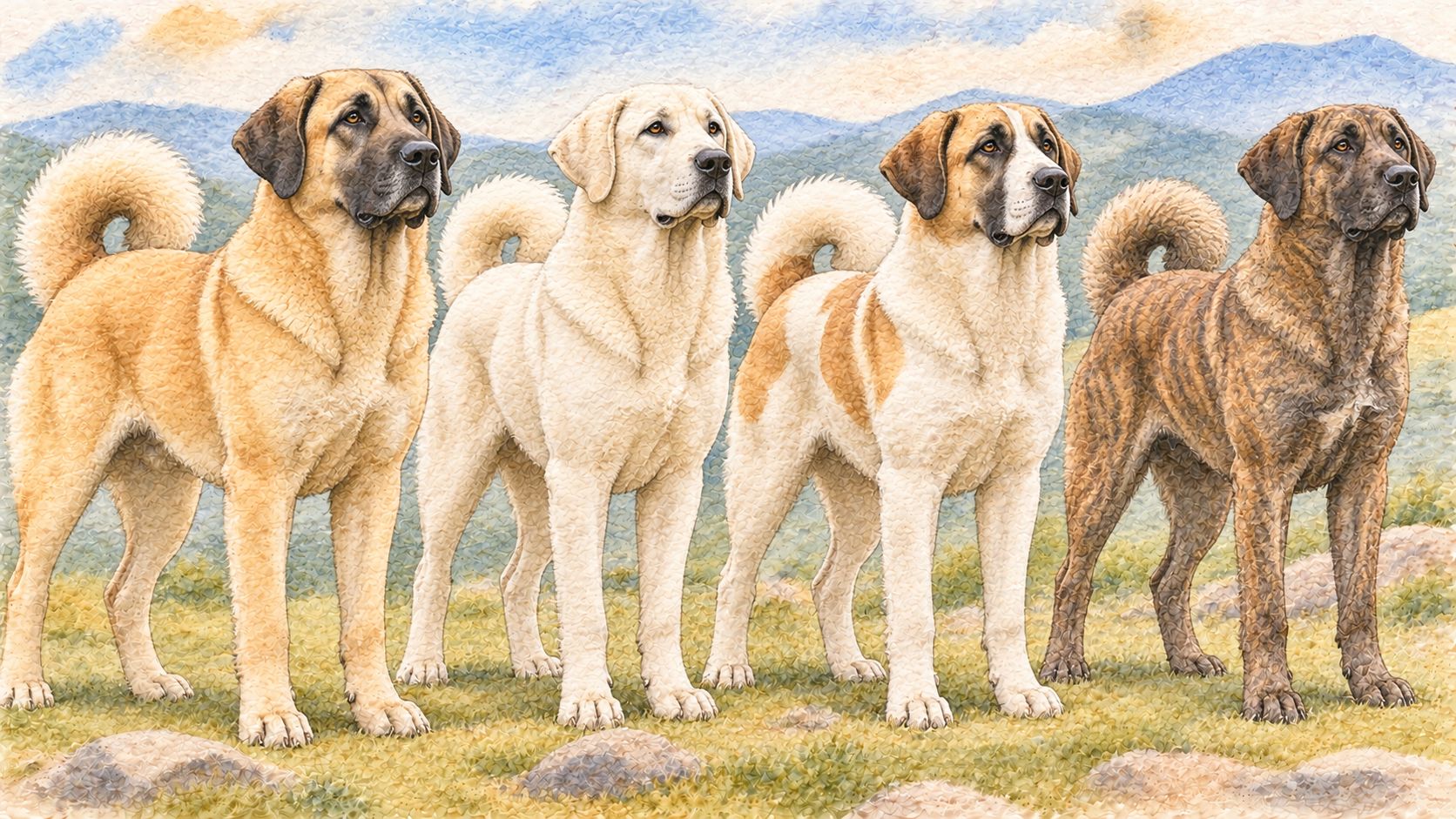
The Anatolian Shepherd Dog has a weather-resistant double coat that comes in two varieties: short and rough. The short coat is about an inch long, while the rough coat is slightly longer, with thicker fur around the neck and on the tail and legs. Both protect the dog from the hot summers and cold winters of its homeland.
The most familiar look is fawn with a black mask, but the breed also comes in white, pinto and brindle. Some dogs also have dark ears to match their mask.
Anatolian Shepherd Temperament and Personality
The Anatolian Shepherd temperament reflects thousands of years of guarding work. This breed is known for being:
- Loyal: These dogs bond deeply with their family and consider protecting them a serious job.
- Protective: They are naturally territorial and will place themselves between their people or animals and anything they see as a threat.
- Calm: When all is well, they are often quiet and relaxed, happy to lie in a spot where they can watch everything.
- Independent: Bred to work without direct instruction, they like to make their own choices and are not eager-to-please in the way some breeds are.
- Alert: They notice changes in their surroundings quickly and will bark to warn off unfamiliar people or animals, especially at night.
Because of these traits, the breed tends to be suspicious of strangers. Visitors may be watched closely until the dog decides they are welcome. This is normal guardian behavior, but it means early and ongoing socialization is essential.
Are Anatolian Shepherds Good Family Dogs?
Anatolian Shepherds can be loyal, gentle family dogs in the right home, especially with experienced owners who understand guardian breeds. They are often tolerant and protective of children in their own family.
However, their size alone means they can easily knock over a small child by accident. They may also misread rough play between kids and visiting friends as a threat. Always supervise interactions and teach children to respect the dog's space.
Are Anatolian Shepherds Good With Other Pets?
A dog raised with other animals usually accepts them as part of its "flock." Many are calm and careful with goats, sheep, chickens and household cats they know well.
Unfamiliar dogs are another story. The breed may be dominant or protective toward dogs it does not know, particularly ones of the same sex. Careful introductions and early socialization help a great deal.
Training an Anatolian Shepherd
These dogs are intelligent, but they were bred to think for themselves rather than follow orders. Expect a dog that understands what you are asking and then decides whether it makes sense. Calm, consistent, reward-based training works best, while harsh methods can damage trust with this sensitive yet strong-willed breed.
Here are a few training tips for new owners:
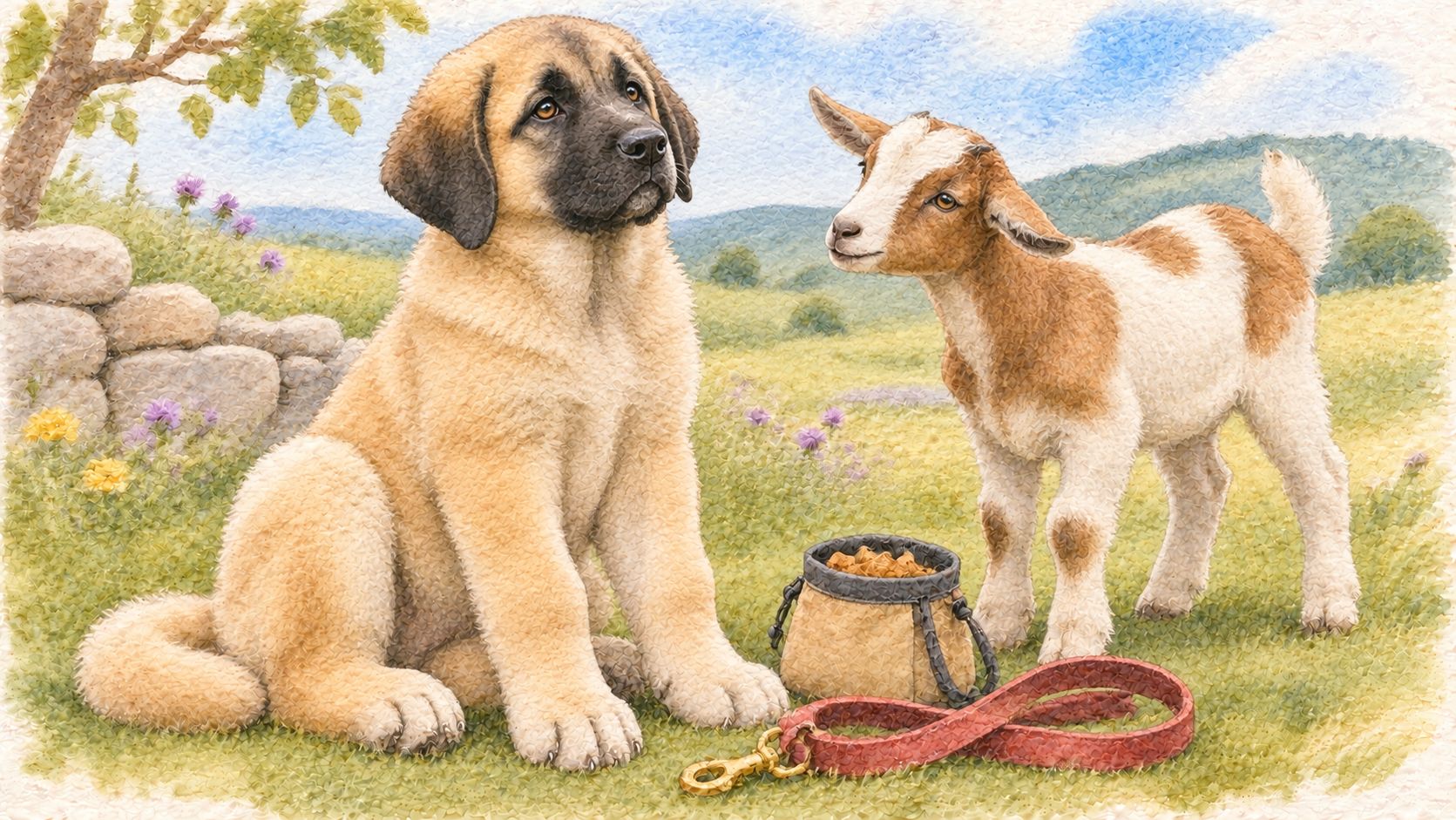
- Start early. Begin training and socialization the day your puppy comes home, before it grows too big to manage easily.
- Socialize widely. Introduce your puppy to many people, places, sounds and well-mannered animals so it learns what is normal and what is not a threat.
- Focus on the basics. A reliable recall, a solid "leave it" and polite leash walking are especially important for a dog this large.
- Stay patient during adolescence. Because the breed matures slowly, you may see testing behavior for several years.
- Consider a puppy class. A structured class with a trainer who understands guardian breeds can make a big difference.
Exercise Needs
The Anatolian Shepherd Dog has a moderate energy level and does best with moderate daily exercise. A long walk or two each day, plus time to patrol a large, securely fenced yard, is usually enough to keep this dog content.
This is not a breed for apartment living. These dogs are happiest with space to roam and a "territory" to watch over. A sturdy fence at least 5 to 6 feet tall is often recommended, since these dogs are strong and may try to expand their patrol area.
Off-leash time in open areas is generally not advised. Their independent nature and urge to investigate distant sights can make recall unreliable. Keep your dog on a leash or in a secure enclosure.
Anatolian Shepherd Grooming
Anatolian Shepherd grooming is refreshingly simple for such a large dog. Both the short and rough coat varieties need little maintenance beyond regular brushing.
Do Anatolian Shepherds Shed?
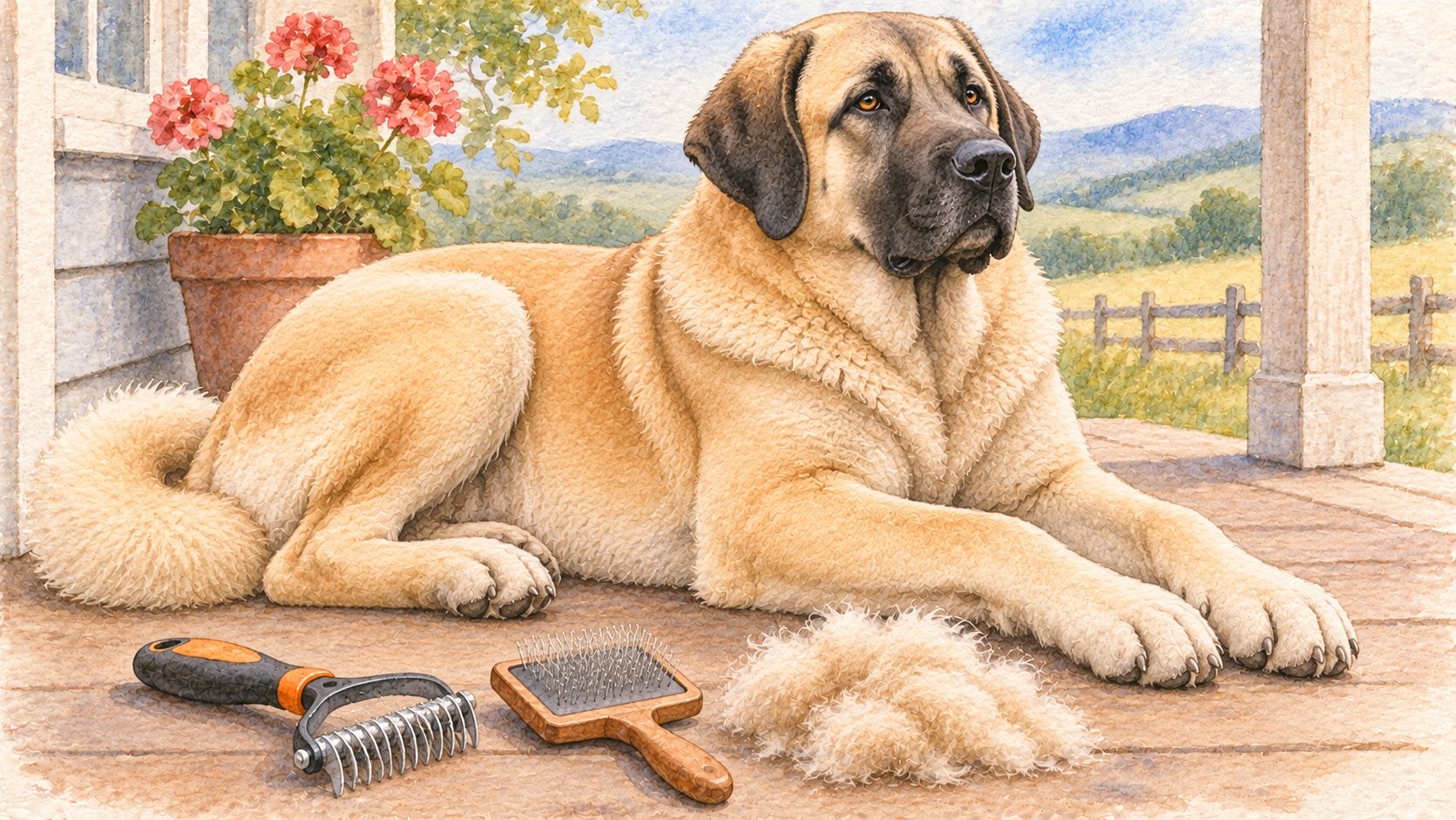
Yes, they shed a moderate amount year-round, and they usually "blow" their undercoat heavily once or twice a year. During these seasonal sheds, expect plenty of loose fur around the house.
Grooming Routine
- Brushing: Brush once a week to remove loose hair, increasing to daily brushing during heavy shedding seasons.
- Bathing: Bathe only as needed, as the coat naturally resists dirt and weather.
- Nails: Trim nails every few weeks if they don't wear down naturally from outdoor activity.
- Teeth: Brush your dog's teeth several times a week to support good dental health.
- Ears: Check the drop ears weekly for dirt, redness or odor.
- Handling: Get your puppy used to being handled early, since grooming a resistant 130-pound adult is no small task.
Anatolian Shepherd Health and Lifespan
The Anatolian Shepherd Dog is generally a hardy, healthy breed, with an average lifespan of about 11 to 13 years. That is a long life for a dog of its size. Like all breeds, though, it can be prone to certain conditions. Responsible breeders may screen for concerns such as:
- Hip dysplasia: An abnormal formation of the hip joint that is common in large and giant breeds.
- Elbow dysplasia: A developmental problem affecting the elbow joint.
- Eyelid issues: Some dogs can develop entropion, in which the eyelid rolls inward.
- Thyroid concerns: Thyroid function testing is sometimes recommended for the breed.
Some owners and breeders also report that the breed may be sensitive to anesthesia. Be sure to discuss any procedure with your veterinarian ahead of time.
Like other deep-chested giant breeds, these dogs may be at risk of bloat. Always work with your veterinarian to set up regular checkups, vaccinations and preventive care, and ask about warning signs to watch for.
Feeding and Nutrition
This breed does best on a high-quality dog food made for large or giant breeds. These formulas are designed with the growth and joint needs of big dogs in mind.
Puppies should eat a large-breed puppy food to support steady, controlled growth. Because the breed grows for so long, your veterinarian may advise how long to keep your dog on puppy food. Portions depend on age, size and activity level, so follow the package guidelines and adjust as needed. Keep treats to a small share of daily calories to help maintain a healthy weight.
History of the Anatolian Shepherd Dog
The breed's story began in rural Turkey around 6,000 years ago, according to Purina. In the harsh landscape of the Anatolian plateau, shepherds needed dogs that could guard their flocks from wolves, bears and jackals while traveling long distances with the herds.
These guardians were valued for their size, speed, endurance and courage. They were also expected to be calm with the animals they protected and loyal companions to the shepherds who cared for them. In Turkey, such dogs are often simply called çoban köpeği, meaning "shepherd's dog."
The breed began arriving in the United States in the mid-1900s. A breed club was formed in the US in 1970, and the American Kennel Club later recognized the Anatolian Shepherd Dog, placing it in the Working Group in the late 1990s.
The breed has also made a big impact in conservation. In Namibia, the Cheetah Conservation Fund has placed these guardians with farmers to protect livestock from cheetahs. With guardian dogs on duty, farmers are less likely to harm the wild cats, which helps protect this endangered species.
Anatolian Shepherd vs Great Pyrenees
The Anatolian Shepherd and the Great Pyrenees are both giant livestock guardians, but they differ in look and style. The Great Pyrenees has a long, thick white coat that needs more brushing, while the Anatolian's shorter coat is easier to maintain. Anatolians are often described as faster and more athletic, while Pyrenees tend to be fluffier and slightly more laid-back.
People also often compare the breed with the Kangal, another Turkish guardian. Some kennel clubs recognize the Kangal as a separate breed, so it is worth asking breeders exactly which breed and lines they work with.
Is an Anatolian Shepherd Dog Right for You?
An Anatolian Shepherd Dog could be a wonderful match if you:
- Have experience with large, independent or guardian breeds
- Live in a rural or suburban home with a large, securely fenced yard
- Want a loyal, protective dog that watches over family or livestock
- Prefer a low-maintenance coat
- Can commit to years of patient training and socialization
An Anatolian Shepherd may not be the best fit if you:
- Live in an apartment or a home without a yard
- Are a first-time dog owner
- Want a dog that is friendly with every stranger
- Need a dog that reliably comes back when off-leash
- Prefer a quiet dog, since Anatolians bark to warn off intruders
Before you bring one home, it is also a good idea to check any local rules on large or guardian breeds where you live.
Finding an Anatolian Shepherd Puppy
Look for an Anatolian Shepherd puppy from a reputable breeder who health-tests parent dogs, raises puppies around people and daily life, and will answer your questions honestly. Ask whether the parents are working guardians or family companions, since temperament can vary. Breed clubs and rescue groups are also great places to find adult dogs in need of experienced homes.
Fun Facts About the Anatolian Shepherd Dog
- The breed's history in Turkey is believed to stretch back thousands of years.
- These dogs were bred to guard livestock, not to herd them.
- In Namibia, they help protect cheetahs by keeping livestock safe from predation.
- The breed can take around 4 years to fully mature.
- Despite its size, the breed has a fairly long life expectancy for a giant dog.
- Its coat comes in two varieties, short and rough, and both are easy to care for.
Frequently Asked Questions
How big do Anatolian Shepherds get?
Adult dogs often stand around 27 to 29 inches tall at the shoulder. Males usually weigh 110 to 150 pounds, while females weigh 80 to 120 pounds.
Are Anatolian Shepherds good family dogs?
They can be loyal, protective family dogs for experienced owners. Supervision around children is important because of their size and guardian instincts.
How long do Anatolian Shepherds live?
The typical Anatolian Shepherd lifespan is about 11 to 13 years, which is quite long for a giant breed.
Do Anatolian Shepherds shed a lot?
They shed moderately throughout the year and more heavily during seasonal coat blows. Weekly brushing, and daily brushing during heavy sheds, keeps fur under control.
Are Anatolian Shepherds easy to train?
They are smart but independent, so training takes patience and consistency. Reward-based methods and early socialization work best.
Can an Anatolian Shepherd live in an apartment?
Generally, no. This giant breed is happiest with a large, securely fenced yard and a territory to guard.
Final Thoughts
The Anatolian Shepherd Dog is a living piece of history, a calm and courageous guardian shaped by thousands of years of protecting flocks in Turkey. In the right hands, it becomes a deeply loyal family protector with an easy-care coat and a quiet dignity. If you have the space, experience and patience this independent giant needs, an Anatolian Shepherd Dog may be the most devoted companion you will ever have.