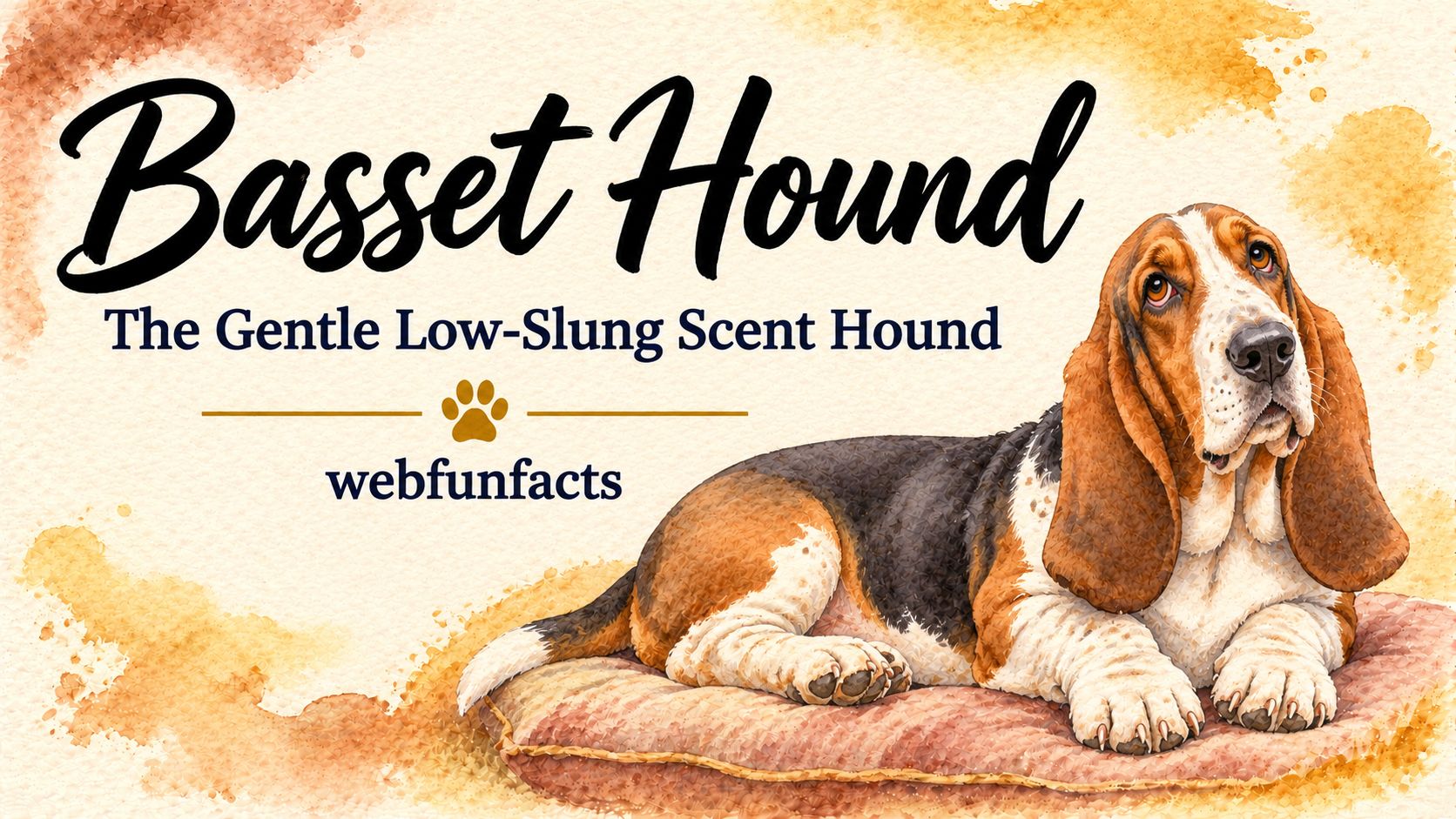
With its long velvety ears, short sturdy legs and soulful, droopy eyes, the Basset Hound is one of the most recognizable dogs in the world. Behind that famously mournful expression lives a cheerful, easygoing companion with a nose that rivals almost any breed on the planet. The name even tells part of the story: "bas" is French for "low," a fitting nod to this dog's close-to-the-ground build.
The Basset may look laid-back, but it was built for serious work. Bred to follow a scent trail for hours, it has the stamina and strength of a much bigger dog packed into a compact frame. In this complete Basset Hound dog breed guide, you will learn about its size, temperament, grooming needs, exercise requirements, health concerns, diet and fascinating history, so you can decide if this loyal hound is right for you.
Basset Hound at a Glance
| Trait | Details |
|---|---|
| Breed group | Hound (AKC) |
| Height | Up to 15 inches (38 cm) |
| Weight | 45 to 65 pounds (20 to 29.5 kg) |
| Life expectancy | 12 to 13 years |
| Coat | Short, smooth, dense |
| Colors | Tricolor, lemon and white, red and white, mahogany and white, black and white |
| Shedding | Moderate |
| Energy level | Low |
| Temperament | Gentle, affectionate, loyal, patient, stubborn |
| Good for | Families, multi-dog homes, relaxed households |
| Origin | France and Belgium |
What Is a Basset Hound?
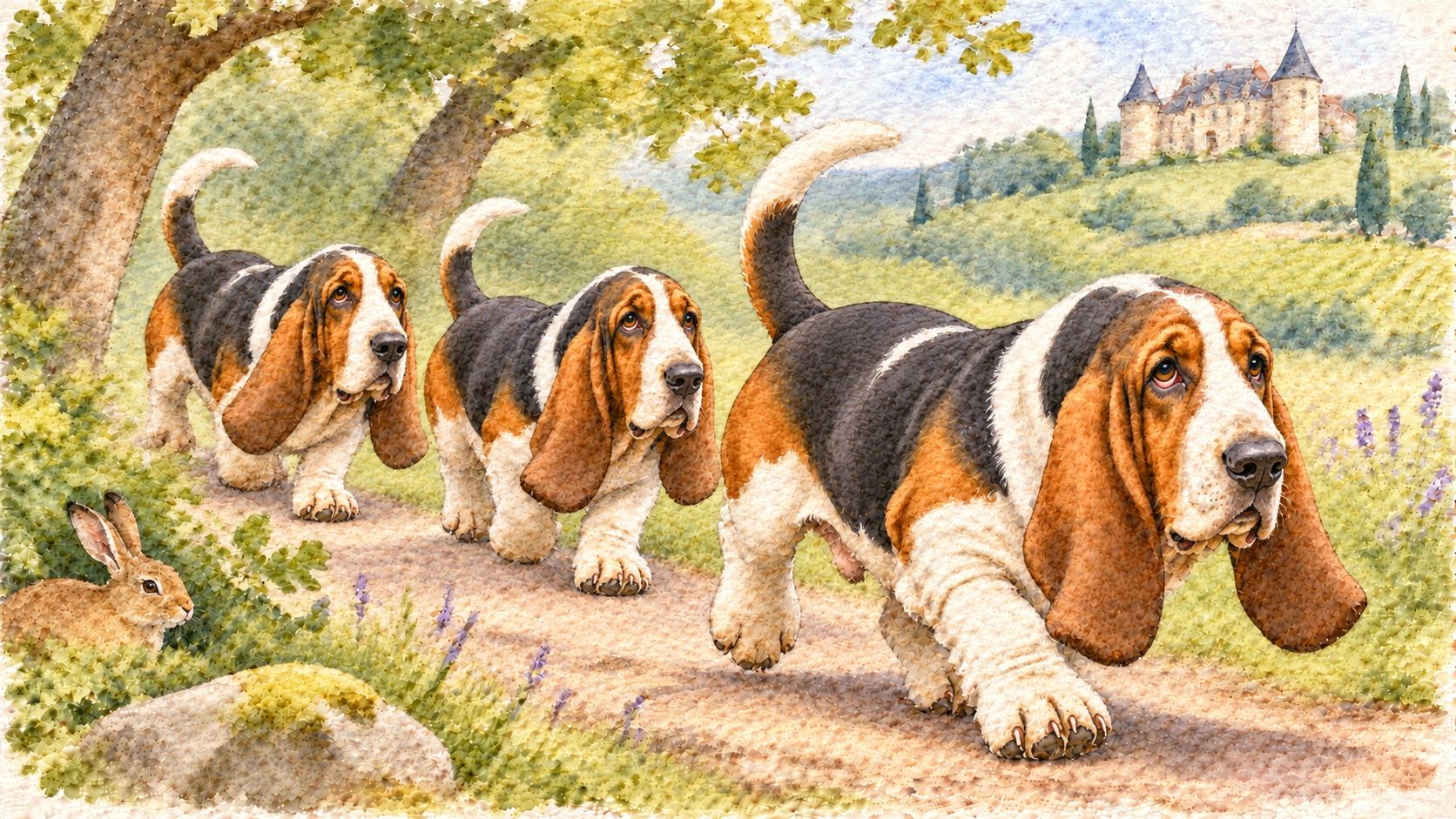
The Basset Hound is a short-legged scent hound that originated in France and Belgium. It was developed to track rabbits, hares and other game, leading hunters who followed on foot. Its low build kept it slow enough for people to keep up, while its powerful nose kept it firmly on the trail.
Today, the Basset is far more likely to be found snoozing on a couch than hunting in a field. Still, it remains a true hound at heart. It is a member of the American Kennel Club's Hound Group and was among the very first breeds the AKC recognized, back in 1885.
Basset Hound Size and Appearance
How Big Do Basset Hounds Get?
Basset Hounds usually stand no taller than about 15 inches (38 cm) at the shoulder and weigh around 45 to 65 pounds (20 to 29.5 kg). That makes them short in height but surprisingly heavy for their size.
The breed has a long body, a deep chest and heavy bone, all set on short, strong legs. Despite the short stature, a Basset moves with a smooth, steady gait. It is not built for speed, but it can keep going for a long time.
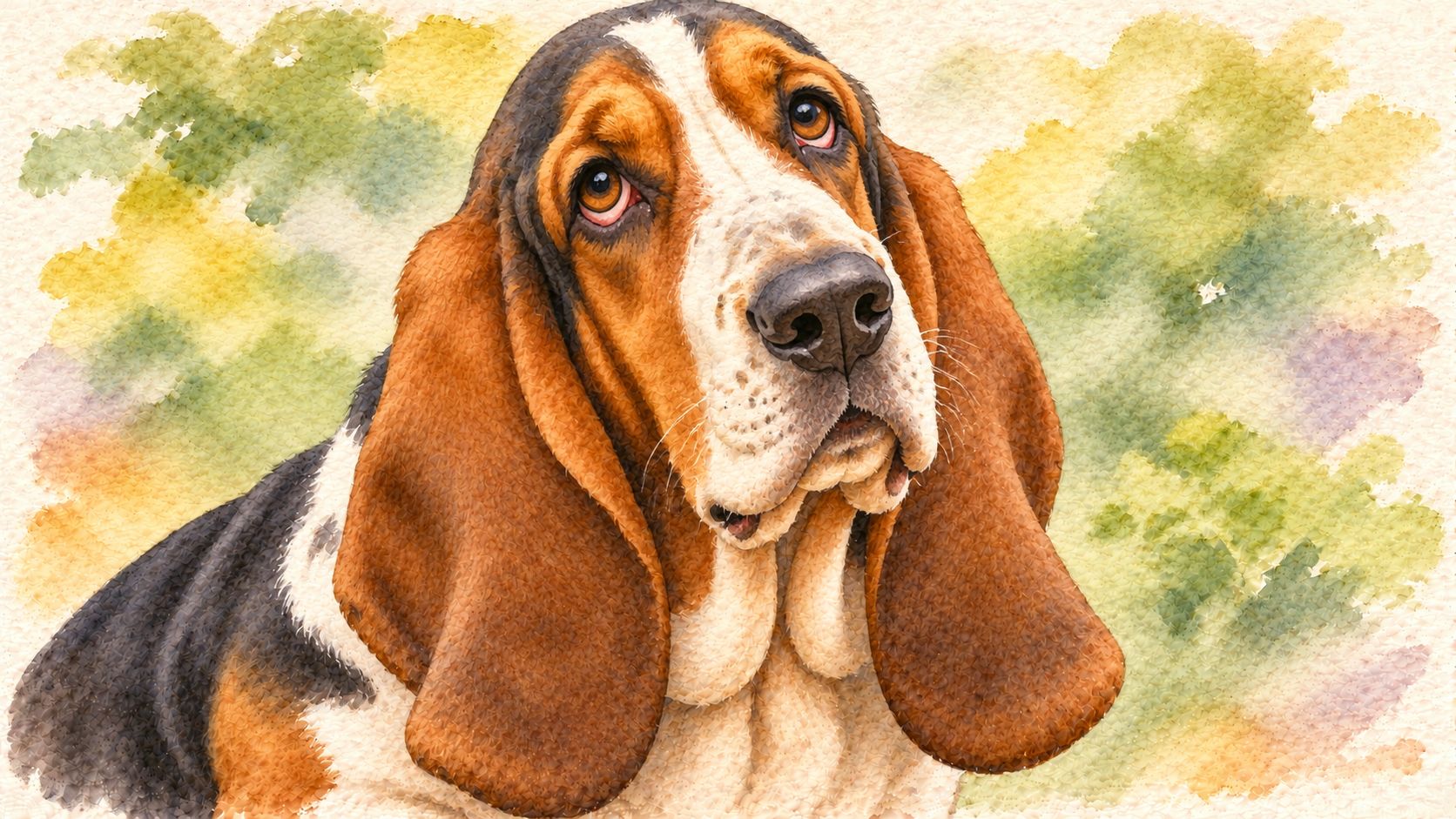
The face is unforgettable. Long ears hang low and often brush the ground, loose skin forms gentle wrinkles on the brow, and the eyes have a soft, slightly sad look. Many people believe the long ears and loose skin help stir up and hold scent close to the nose as the dog tracks.
Coat and Colors
The Basset wears a short, smooth and dense coat that is fairly weather-resistant. It is easy to care for and gives the breed a sleek, clean outline.
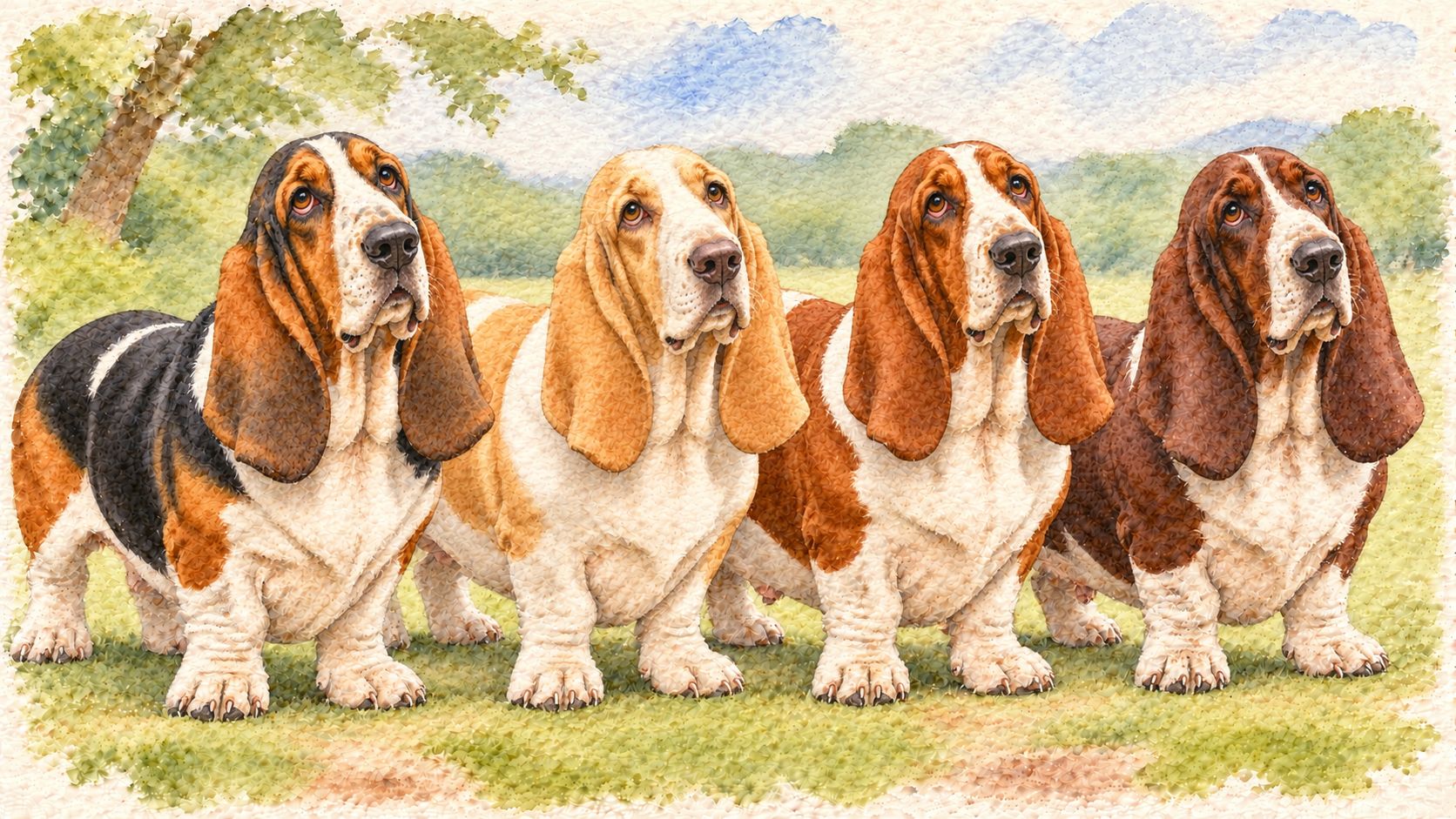
Recognized color combinations include black, tan and white tricolor, lemon and white, red and white, mahogany and white, and black and white, along with several other mixes of black, brown, tan and white. The classic tricolor pattern is the one most people picture.
Basset Hound Temperament and Personality
The Basset Hound temperament is one of the breed's biggest selling points. These dogs are famously mellow and friendly. A typical Basset is:
- Gentle and good-natured: Bassets are rarely aggressive and tend to greet everyone with a wagging tail.
- Affectionate: They love their people and enjoy relaxing close by, often in the comfiest spot in the house.
- Loyal: A Basset bonds strongly with its family and likes to be included in daily life.
- Patient: Their calm nature makes them tolerant companions in busy homes.
- Stubborn: When a Basset catches an interesting smell, its nose usually wins over your commands.
- Vocal: Many Bassets have a deep, booming bay that carries a long way.
Bassets were bred to hunt in packs, so they usually enjoy company. They may become unhappy, noisy or destructive if left alone for long stretches every day.
Are Basset Hounds Good Family Dogs?
Yes, Basset Hounds are generally excellent family dogs. They are patient with children, easygoing and affectionate, which makes them a popular choice for households with kids.
As with any breed, teach children to handle the dog gently and always supervise playtime. A Basset's long back should be protected, so kids should not try to lift or ride on the dog.
Are Basset Hounds Good With Other Pets?
Bassets usually get along well with other dogs, thanks to their pack-hunting background. Many enjoy having a canine buddy at home.
They can live peacefully with cats, especially when raised together. Early socialization helps your Basset puppy grow into a confident, well-mannered adult around people, pets, sounds and new places.
Training a Basset Hound
Bassets are smart, but they are also independent and strong-willed. They were bred to follow a trail on their own, not to wait for instructions, so training takes patience and a sense of humor. Harsh corrections tend to backfire with this sensitive breed.
Here are a few training tips for Basset owners:
- Start early. Begin basic manners and socialization as soon as your puppy comes home.
- Use food rewards. Most Bassets are highly food-motivated, so small treats work well. Just count them as part of the daily food.
- Keep sessions short and fun. Several brief sessions a day keep your hound interested.
- Work on recall in a safe area. A Basset following a scent may simply stop listening, so practice in fenced spaces.
- Try scent work. Tracking, scent games and nose work give this breed a natural outlet for its incredible sense of smell.
Bassets also take part in field trials, tracking, obedience, rally and conformation events, and many enjoy the challenge.
Basset Hound Exercise Needs
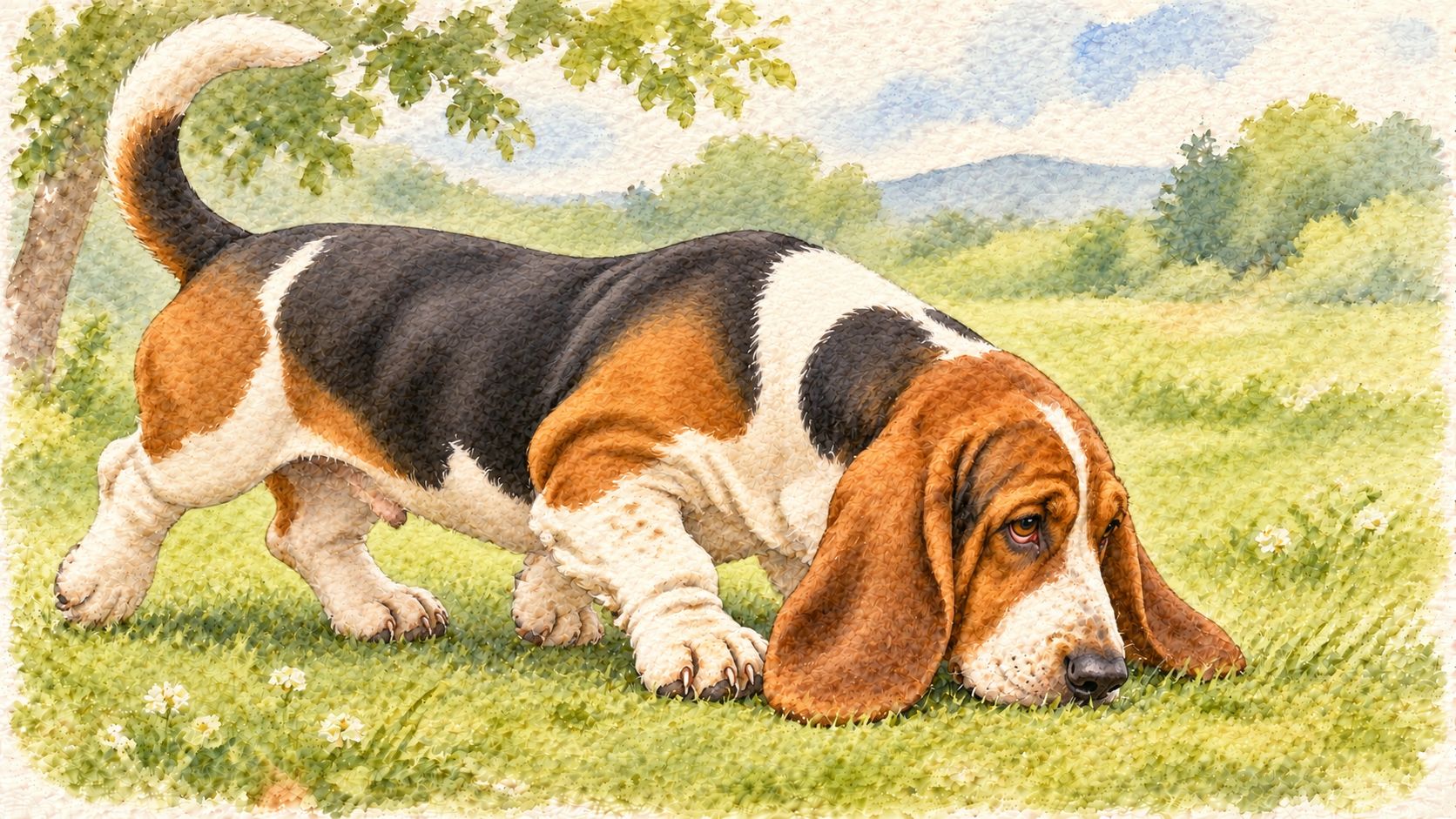
The Basset has a low energy level indoors, but it still needs daily exercise. One or two moderate walks a day, plus some sniffing time, is usually enough to keep a Basset fit and content.
Regular activity is especially important for this breed because Bassets gain weight easily. Let your dog sniff along the way, since following scents is mentally tiring and deeply satisfying for a hound.
Always keep your Basset on a leash or in a securely fenced yard. Once its nose locks onto a trail, it may wander off without a second thought. Because of its long back and short legs, try to limit jumping on and off furniture and use ramps or steps where possible.
Basset Hound Grooming
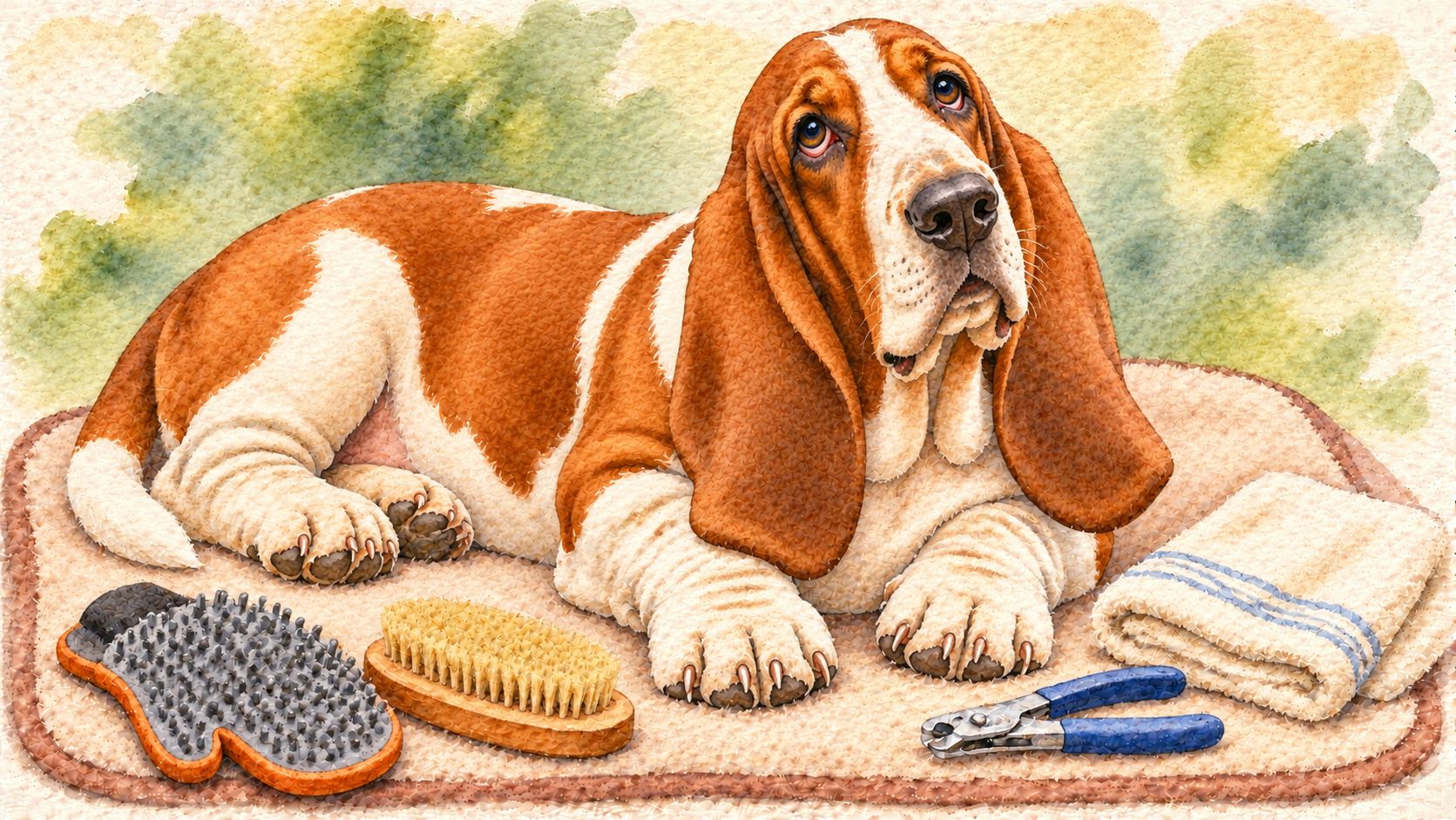
Basset Hound grooming is fairly simple, but it does need regular attention. The short coat is easy to brush, while the ears and skin folds need a little extra care.
Do Basset Hounds Shed?
Yes, Bassets are moderate shedders. Brushing several times a week helps remove loose hair and keeps shedding under control around the house.
Grooming Routine
- Brushing: Use a rubber grooming mitt or a soft bristle brush several times a week to remove dead hair and spread natural skin oils.
- Ears: Check and gently clean the long ears every week. Their size and shape can trap moisture and dirt.
- Wrinkles and face: Wipe skin folds and the area around the mouth to keep them clean and dry. Bassets can drool, so a handy towel helps.
- Eyes: Gently wipe away any discharge from around the eyes.
- Nails: Trim nails every few weeks, since a heavy dog with long nails can be uncomfortable when walking.
- Bathing: Bathe as needed. Some Bassets have a noticeable "hound" smell that a bath can freshen.
- Teeth: Brush your dog's teeth regularly to support good dental health.
Basset Hound Health and Lifespan
How Long Do Basset Hounds Live?
The average Basset Hound lifespan is about 12 to 13 years. With good care, a healthy weight and regular checkups, many Bassets enjoy long, comfortable lives.
Like all breeds, the Basset can be prone to certain health conditions. Responsible breeders screen their dogs for common concerns, which may include:
- Obesity: The breed has a high risk of becoming overweight, which puts extra strain on its back and joints.
- Ear infections: The long, heavy ears can hold moisture and debris.
- Hip and elbow dysplasia: Abnormal development of these joints.
- Bleeding disorders: Some lines may be affected by inherited clotting problems.
- Glaucoma: An eye condition involving pressure inside the eye.
- Hypothyroidism: An underactive thyroid gland.
- Luxating patella: A condition in which the kneecap slips out of place.
Keeping your Basset lean is one of the best things you can do for its long-term health. Always work with your veterinarian to set up a routine of checkups, vaccinations and preventive care.
Feeding and Nutrition
An adult Basset Hound should eat a complete and balanced dog food suited to its size and activity level. Because the breed has a low energy level and loves to eat, portion control matters a great deal.
Puppies should eat a complete and balanced puppy food for about their first year to support healthy growth and development. Follow the feeding guidelines on the food package and ask your veterinarian how much your dog should eat.
Treats are great for training, but keep them to a small share of your dog's daily calories. Store food securely too, since a Basset's nose can find snacks on counters and in bags with impressive skill.
History of the Basset Hound
The Basset Hound traces its roots to France and Belgium. Many historians believe the breed was developed by French friars, who crossed older French hound breeds to create a dog with a superb nose and a low, steady pace. The short legs may have first appeared as a natural dwarf trait in litters of larger French hunting hounds.
These low-set hounds proved ideal for hunters on foot. They could push through thick brush and follow rabbits, hares and other game at a pace people could match. Their accuracy on a trail made them popular with the French aristocracy.
The breed later traveled to Britain and the United States. According to a popular story, the Marquis de Lafayette gave George Washington Bassets as a gift after the American Revolution. The AKC recognized the Basset in 1885.
The Basset has also enjoyed plenty of fame. In 1928, Time magazine covered the Westminster Kennel Club Dog Show with a story told from a Basset puppy's point of view. The breed later became the face of the Hush Puppies shoe brand, starred as Flash in The Dukes of Hazzard and inspired the long-running comic strip Fred Basset.
Basset Hound vs Beagle
The Basset Hound and the Beagle are often compared because both are friendly scent hounds that love to follow their noses. The Basset is heavier, lower to the ground and more laid-back, with much longer ears and looser skin. The Beagle is lighter, leggier and more energetic, so it usually needs more exercise. Both breeds are vocal, food-loving and happiest with company.
Is a Basset Hound Right for You?
A Basset could be a great match if you:
- Want a gentle, affectionate dog that is patient with children
- Prefer a calm, low-energy companion at home
- Already have, or plan to get, another dog
- Can provide daily walks and plenty of sniffing time
- Have patience for training a strong-willed hound
- Are happy to manage your dog's diet and weight carefully
A Basset may not be the best fit if you:
- Want a dog that obeys instantly every time
- Need a quiet dog, since Bassets can bay loudly
- Are away from home for long hours most days
- Want a jogging or hiking partner for long, fast outings
- Live somewhere with many stairs and cannot help your dog manage them
Finding a Basset Hound Puppy
When looking for a Basset Hound puppy, choose a reputable breeder who health-screens their dogs and raises puppies in a home setting. A good breeder will happily answer questions and let you meet the puppy's mother. You can also check breed clubs and rescue groups, as adult Bassets sometimes need loving new homes.
Fun Facts About the Basset Hound
- The word "bas" means "low" in French, which inspired the breed's name.
- The Basset's sense of smell is often ranked second only to the Bloodhound's.
- Lafayette is said to have given George Washington Bassets as a gift.
- The Basset was among the first breeds recognized by the AKC, in 1885.
- A Basset is the famous mascot of Hush Puppies shoes.
- Despite their size, Bassets are heavy-boned and strong for their height.
Frequently Asked Questions
How big do Basset Hounds get?
Adult Basset Hounds stand up to about 15 inches (38 cm) tall and usually weigh 45 to 65 pounds (20 to 29.5 kg). They are short but solid, heavy-boned dogs.
Are Basset Hounds good family dogs?
Yes. Bassets are gentle, affectionate and patient with children, and they usually get along well with other dogs. Always supervise young kids and protect the dog's long back.
Do Basset Hounds shed a lot?
Bassets are moderate shedders. Brushing several times a week helps keep loose hair under control.
How long do Basset Hounds live?
The typical Basset lifespan is about 12 to 13 years with good care, a healthy weight and regular veterinary checkups.
Are Basset Hounds hard to train?
They can be. Bassets are smart but stubborn and easily distracted by scents. Short, positive sessions with food rewards and early socialization help a lot.
Do Basset Hounds bark a lot?
Bassets are known for their deep, loud bay rather than constant barking. They may vocalize when bored, lonely or on an interesting scent, so company and daily activity help.
Final Thoughts
The Basset Hound pairs a soulful face with a warm, easygoing heart. This loyal, gentle scent hound brings centuries of hunting history, a patient nature and plenty of charm to the right family. If you can offer daily walks, patient training and careful weight management, a Basset Hound may become the most devoted companion you have ever had.