25 Chicken Facts: Surprising Secrets of the World's Most Common Bird
Chickens are so common that it's easy to overlook them, but these birds are smarter, chattier and more interesting than most people realise. They even gave us the phrase "pecking order".
Here are 25 surprising facts about chickens, from their wild ancestors in Indian forests to the jet-black Kadaknath chicken of Madhya Pradesh.
Chicken Facts
There are more than 25 billion chickens on Earth at any one time, making them the most common bird in the world.
Chickens are descended from dinosaurs, like all birds.
In 2004, the chicken became the first bird to have its full genetic code read.
Modern hens can lay around 250 to 300 eggs a year, while their wild ancestors lay only a few clutches of eggs each year.
It takes a hen around 24 to 26 hours to make a single egg.
The colour of an eggshell depends on the breed of hen, not on how healthy or nutritious the egg is.
Chicken eggs hatch after about 21 days of incubation.
A mother hen clucks to her eggs before they hatch, and the chicks inside chirp back.
Newly hatched chicks can understand that objects still exist when hidden from view, a skill human babies take months to develop.
Chickens came from the forests of India and Southeast Asia
All chickens are descended from a wild bird called the red junglefowl, which still lives in the forests of India and Southeast Asia. Scientists think people first domesticated chickens around 3,500 years ago in Southeast Asia, possibly attracted by the rice and millet growing in early farmers' fields. Chickens then spread across the world with traders and travellers. Studies have also shown that the gene giving many chickens yellow skin came from another wild bird, the grey junglefowl of southern India.
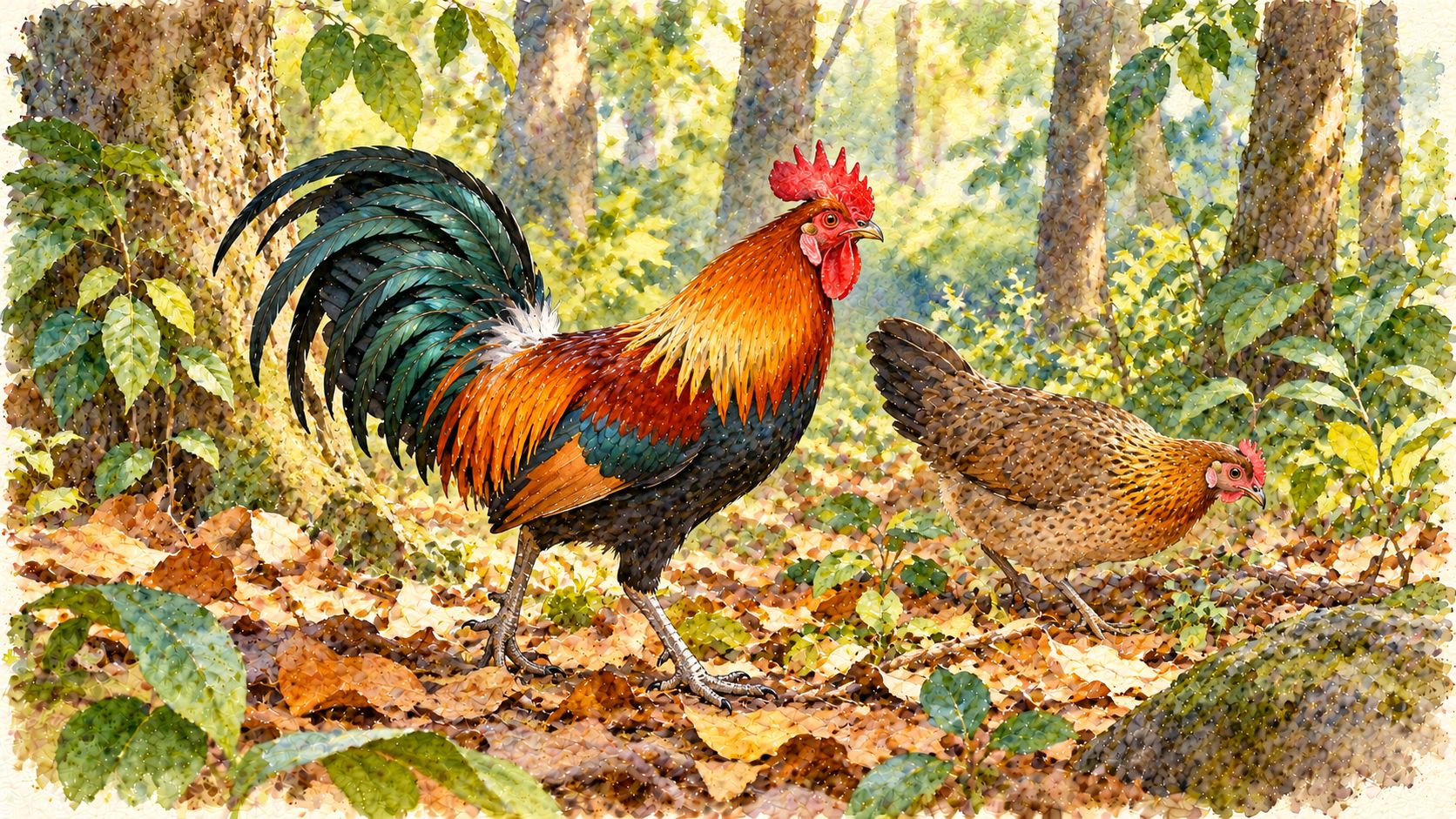
Wild red junglefowl, which look a lot like colourful farmyard roosters, can still be seen in Indian forests such as Jim Corbett National Park.
Chickens can recognise and remember many different faces of other chickens and people.
Chickens make more than two dozen different calls, including separate alarm calls for danger from the sky and danger on the ground.
To impress hens, a rooster may perform "tidbitting", calling out and picking up and dropping food to show it off.
The phrase "pecking order" comes from chickens. In 1921, a Norwegian scientist described how hens form a strict ranking by pecking each other.
Chickens take dust baths, rolling in dry soil to keep their feathers clean and remove parasites.
Chickens have three eyelids, including a see-through one that sweeps sideways to clean and protect the eye.
Chickens have excellent colour vision and can see ultraviolet light, which humans can't.
Chickens can't taste sweetness, because they lack the gene for sweet taste receptors.
India's Kadaknath chicken is black inside and out
The Kadaknath is a rare breed of chicken from the Jhabua region of Madhya Pradesh, traditionally raised by local tribal communities. It's famous for being black almost all over, with black feathers, black skin, dark meat and even dark bones and organs, caused by a large amount of a natural pigment called melanin. Kadaknath chicken is valued for its taste and is believed to be rich in protein. In 2018, Madhya Pradesh's Kadaknath received a Geographical Indication (GI) tag.
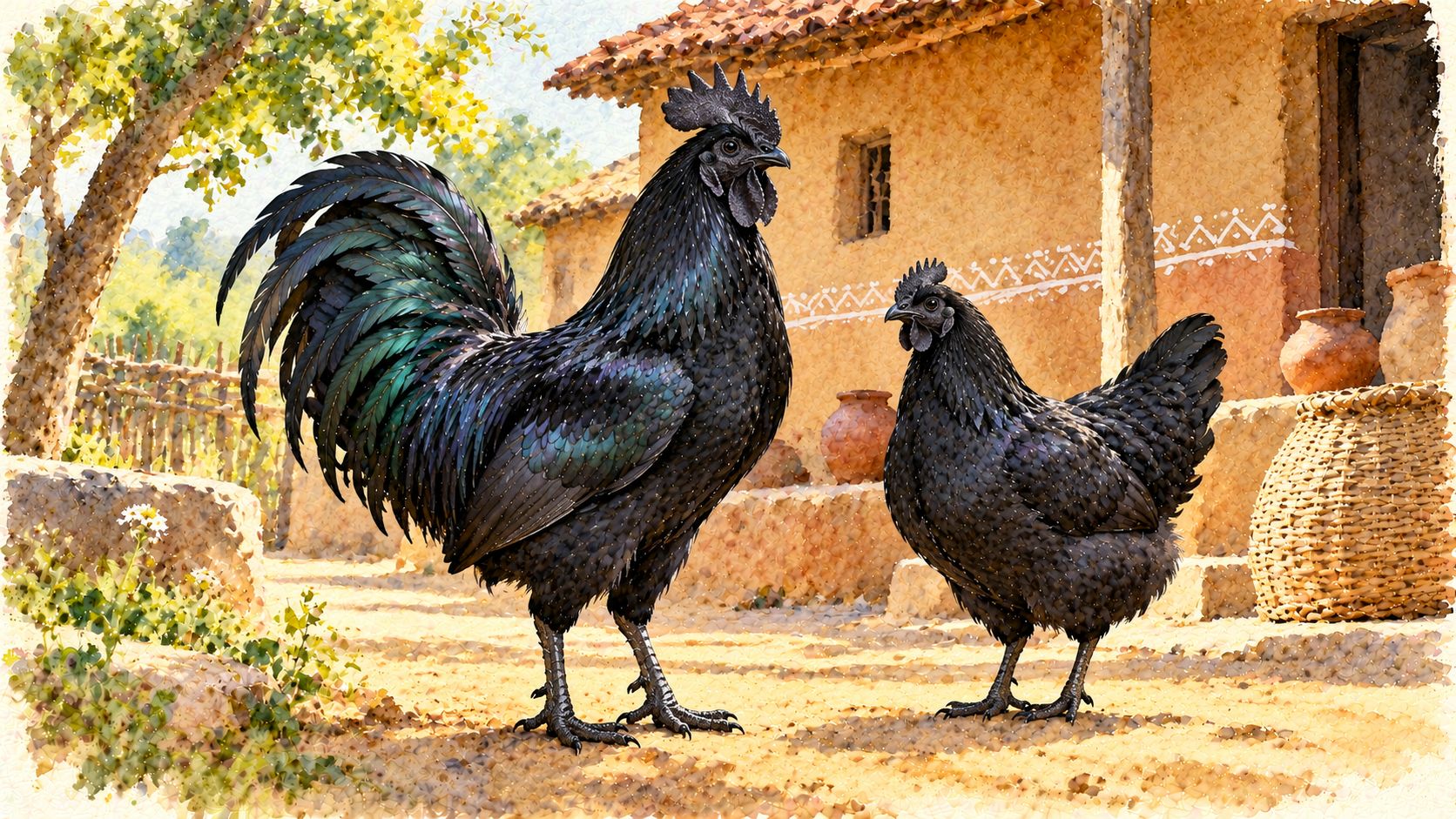
India's Aseel is one of the oldest chicken breeds in the world, known for its strength and upright stance.
Chickens can fly only short distances. The record for the longest chicken flight is just 13 seconds.
Chickens can run at around 14 kilometres per hour.
Engineers use a "chicken gun" to fire chicken carcasses at aircraft windscreens and engines to test them against bird strikes.
Pet chickens can live for around 5 to 10 years, and one hen named Peanut lived to more than 20.
Sources and Further Reading
- ICAR-Directorate of Poultry Research
- Geographical Indications Registry, Government of India
- Food and Agriculture Organization of the United Nations (FAO)
- Guinness World Records
- Science (journal)
- Encyclopaedia Britannica
Frequently asked questions
Where do chickens come from?
Chickens are descended from the red junglefowl, a wild bird of the forests of India and Southeast Asia. They were domesticated around 3,500 years ago.
How many eggs does a hen lay?
Modern hens can lay around 250 to 300 eggs a year. It takes about 24 to 26 hours to make each egg.
Does eggshell colour affect nutrition?
No. The colour of an eggshell depends on the breed of hen and doesn't affect how nutritious the egg is.
Where does the phrase "pecking order" come from?
It comes from chickens. In 1921, a Norwegian scientist described how hens form a strict ranking by pecking each other.
What is Kadaknath chicken?
Kadaknath is a black chicken breed from the Jhabua region of Madhya Pradesh, with black feathers, skin, meat and bones. It received a GI tag in 2018.
How long do chickens live?
Pet chickens usually live for around 5 to 10 years, and some live even longer.
More Fun Facts