25 Robin Facts: The Little Red-Breasted Songbird
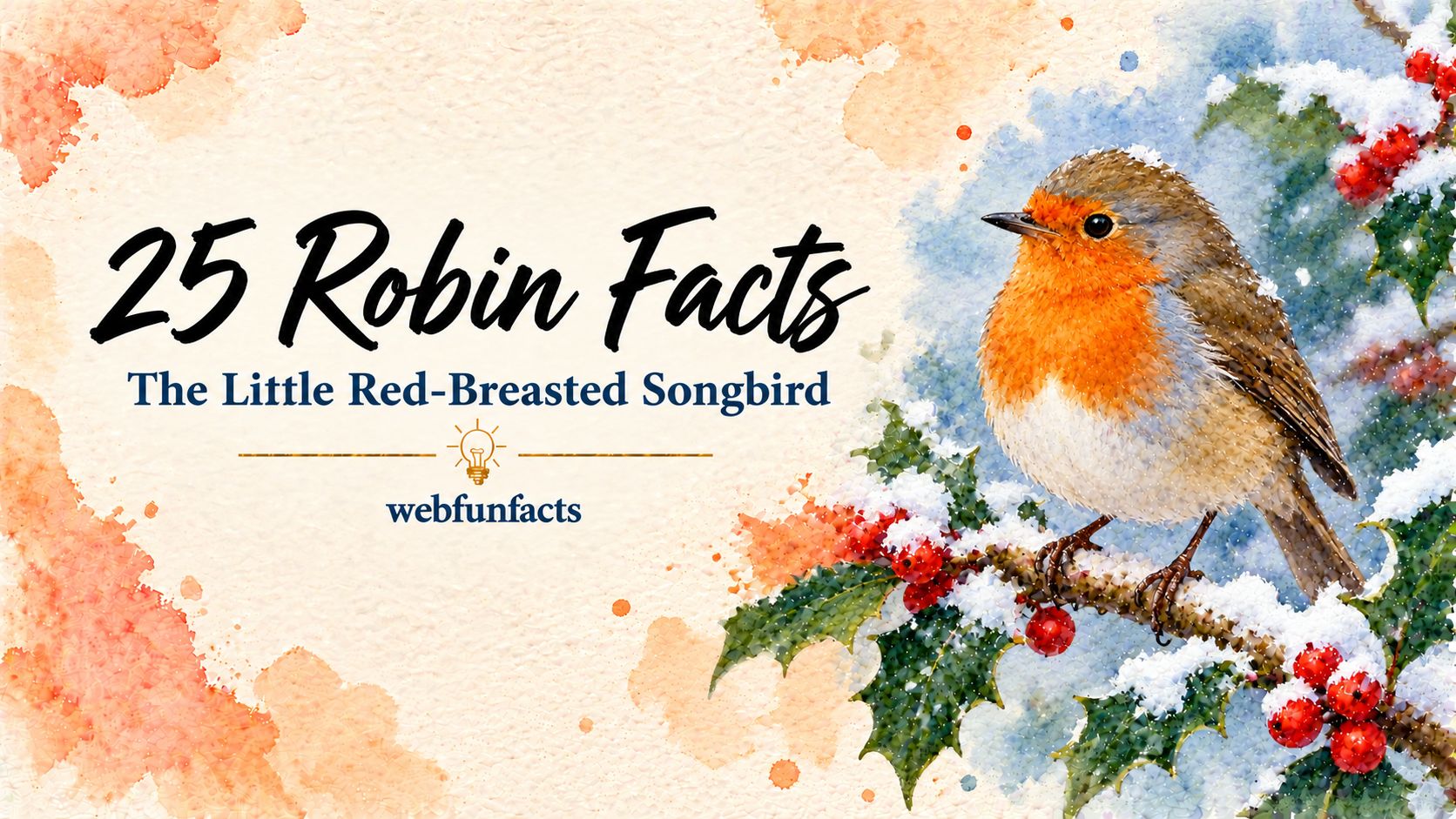
With its round body, bright orange-red breast and cheerful song, the European robin is one of the best-loved garden birds in the world. It's famous for appearing on Christmas cards and for being bold enough to hop right up to gardeners.
Here are 25 charming facts about robins, from why they're linked to Christmas to their amazing ability to "see" Earth's magnetic field.
Robin Facts
The European robin's scientific name is Erithacus rubecula.
European robins live across Europe, western Asia and North Africa.
Despite often being called a thrush, the European robin belongs to the Old World flycatcher family.
The American robin is a completely different bird. It's a type of thrush that early settlers named after the robin they knew from home.
Robins were originally called "redbreasts". The friendly name "robin" was added later, and gradually became the bird's main name.
A robin's breast is really orange. It was called "red" because the word "orange" wasn't used for the colour in English until later.
Male and female robins look almost exactly the same.
Young robins have speckled brown feathers and don't grow their famous orange-red breast until they moult a few months after leaving the nest.
The robin has often been voted Britain's favourite bird, and it won a national vote to choose a national bird in 2015.
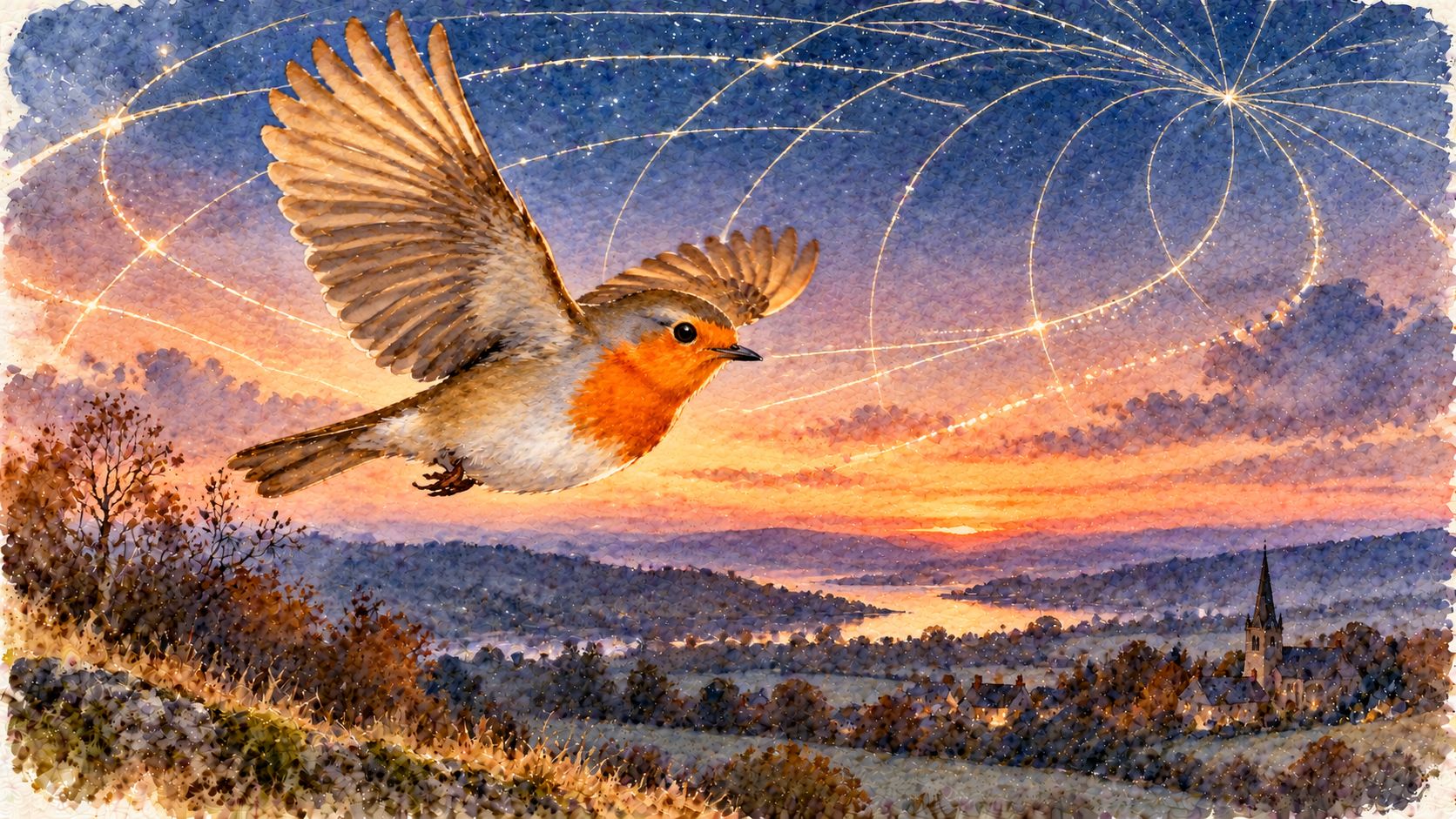
Robins can "see" Earth's magnetic field
The European robin is one of the best-studied birds for understanding how animals sense Earth's magnetic field. Scientists believe special molecules in robins' eyes react to the magnetic field, possibly allowing them to "see" it as a pattern overlaid on their vision. This helps migrating robins find their way across long distances. Experiments have shown that weak radio noise can disrupt this magnetic sense, which suggests it relies on extremely delicate chemical reactions.
Robins appear on Christmas cards partly because Victorian postmen wore red uniforms and were nicknamed "robins".
Unlike most birds, robins sing almost all year round, and both males and females sing in winter to defend their territories.
Robins living near streetlights sometimes sing at night, and people often mistake them for nightingales.
Robins are very territorial and will fiercely chase away other robins, even attacking their own reflections.
Robins often follow gardeners who are digging, waiting to snatch up worms and insects that are disturbed.
In the wild, robins have been seen following animals like wild boar for the same reason.
Robins mainly eat worms, insects and spiders, and switch to berries, seeds and fruit in winter.
Robins fluff up their feathers in cold weather to trap warm air, making them look round and plump.
Some robins, especially those from northern Europe, migrate south for the winter, while many British robins stay put.
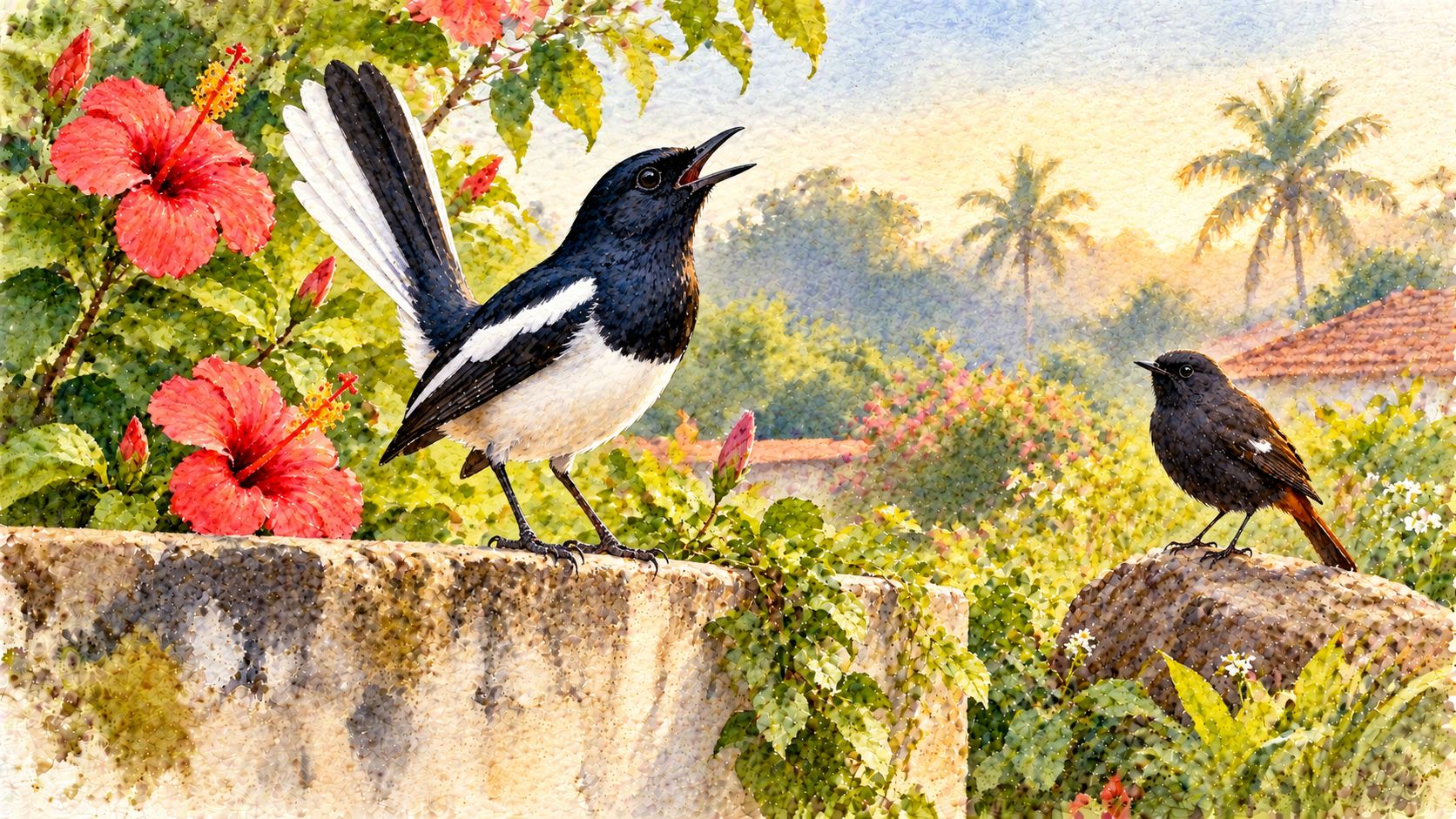
India has its own "robins"
The European robin is rarely seen in India, but India has several birds called robins. The Oriental magpie-robin is a black-and-white songbird common in Indian gardens and cities, famous for its rich, musical song. It's even the national bird of Bangladesh, where it's called the doyel. The Indian robin is a small, dark bird that often perches with its tail cocked upright, found in dry, open country across India. In the hills of the Western Ghats, birdwatchers can also spot shy robins like the Indian blue robin, which flies all the way from the Himalayas to spend the winter there.
Robins sometimes build nests in strange places, such as old kettles, flower pots, letterboxes and parked cars.
A female robin usually lays four to six eggs and can raise two or three broods in a year.
Robin chicks hatch after about two weeks and leave the nest about two weeks later.
Many robins die in their first year, so the average robin lives only around two years, though some live much longer.
An old legend says the robin got its red breast after it was singed while fanning the flames of a fire to keep a baby warm.
Sources and Further Reading
- Royal Society for the Protection of Birds (RSPB)
- British Trust for Ornithology (BTO)
- Bombay Natural History Society (BNHS)
- Nature
- Encyclopaedia Britannica
- National Geographic
Frequently asked questions
Why are robins on Christmas cards?
Victorian postmen in Britain wore red uniforms and were nicknamed "robins", so robins became a symbol on the Christmas cards they delivered.
Is a robin's breast red or orange?
It's really orange. It was called "red" because the word "orange" wasn't used for the colour in English until later.
Are European and American robins the same?
No. The American robin is a different bird, a type of thrush, named after the European robin by early settlers.
Do robins sing at night?
Yes. Robins near streetlights sometimes sing at night, and people often mistake them for nightingales.
Are there robins in India?
India has several birds called robins, including the Oriental magpie-robin, the Indian robin and the Indian blue robin.
How long do robins live?
Many robins die in their first year, so the average robin lives around two years, though some live much longer.
More Fun Facts