25 Fun Facts
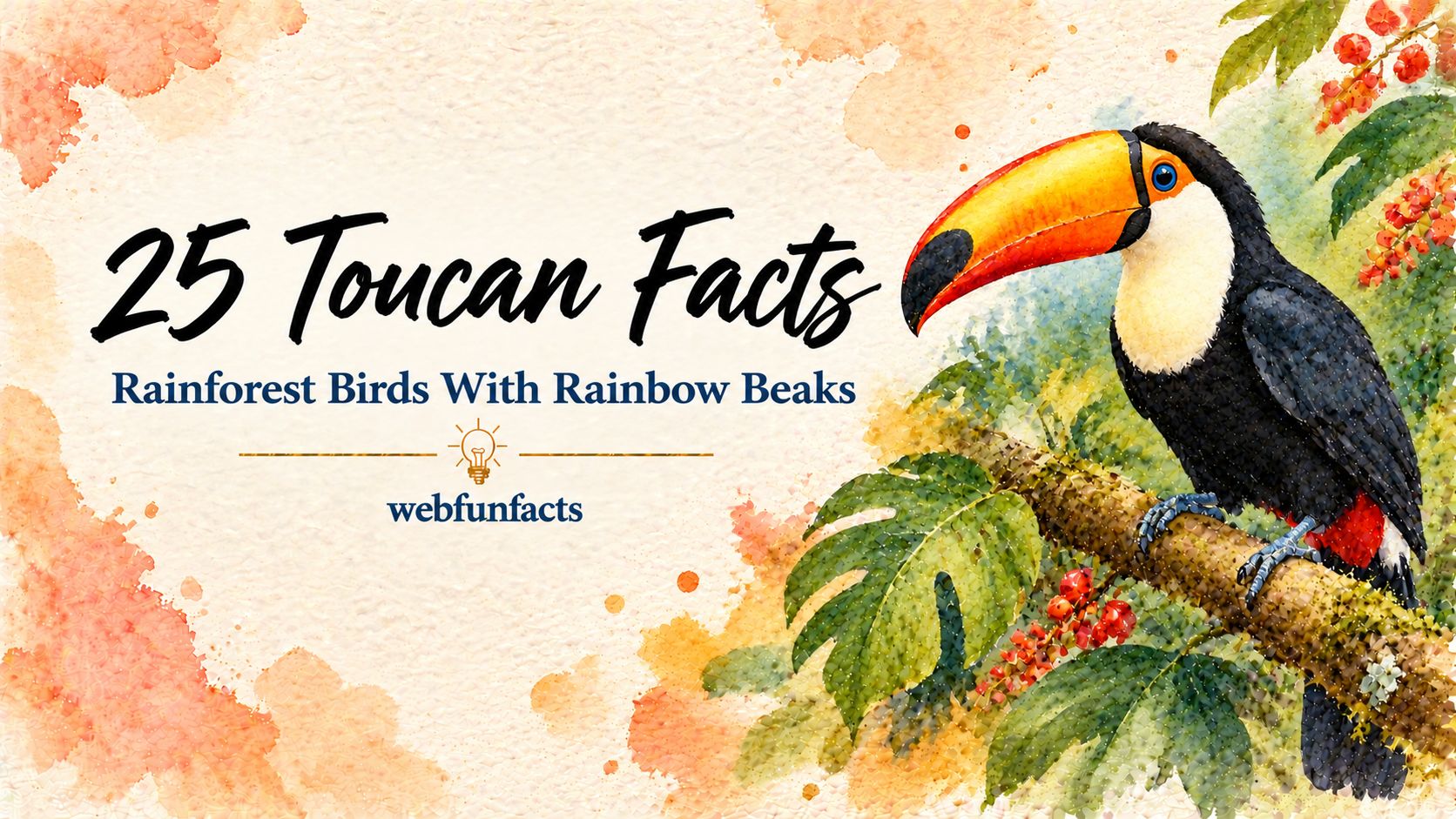
25 Toucan Facts: Rainforest Birds With Rainbow Beaks
With their enormous, brightly coloured beaks, toucans are some of the most eye-catching birds in the rainforest. Their bills might look heavy and clumsy, but they are surprisingly light and full of clever uses.
Here are 25 colourful facts about toucans, from how their beaks help them stay cool to India's look-alike hornbills.
Toucan Facts
There are around 40 species in the toucan family, including the smaller aracaris and toucanets.
Toucans live in the tropical forests of Central and South America and southern Mexico.
The toco toucan is the largest toucan, and its bright orange beak can be around 20 centimetres long, about a third of its total length.
Toucans have the largest beaks compared with their body size of any bird.
Despite its size, a toucan's beak is very light. It has a thin outer layer of keratin and a spongy inside made of bone fibres and air pockets.
The edges of a toucan's beak are serrated, like a saw, which helps it grip and tear fruit.
A toucan's tongue is long, narrow and has a feathery tip.
Toucans mainly eat fruit, but they also eat insects, eggs, small lizards and even baby birds.
To eat, a toucan picks up a piece of fruit with the tip of its beak, tosses it into the air and catches it at the back of its throat.
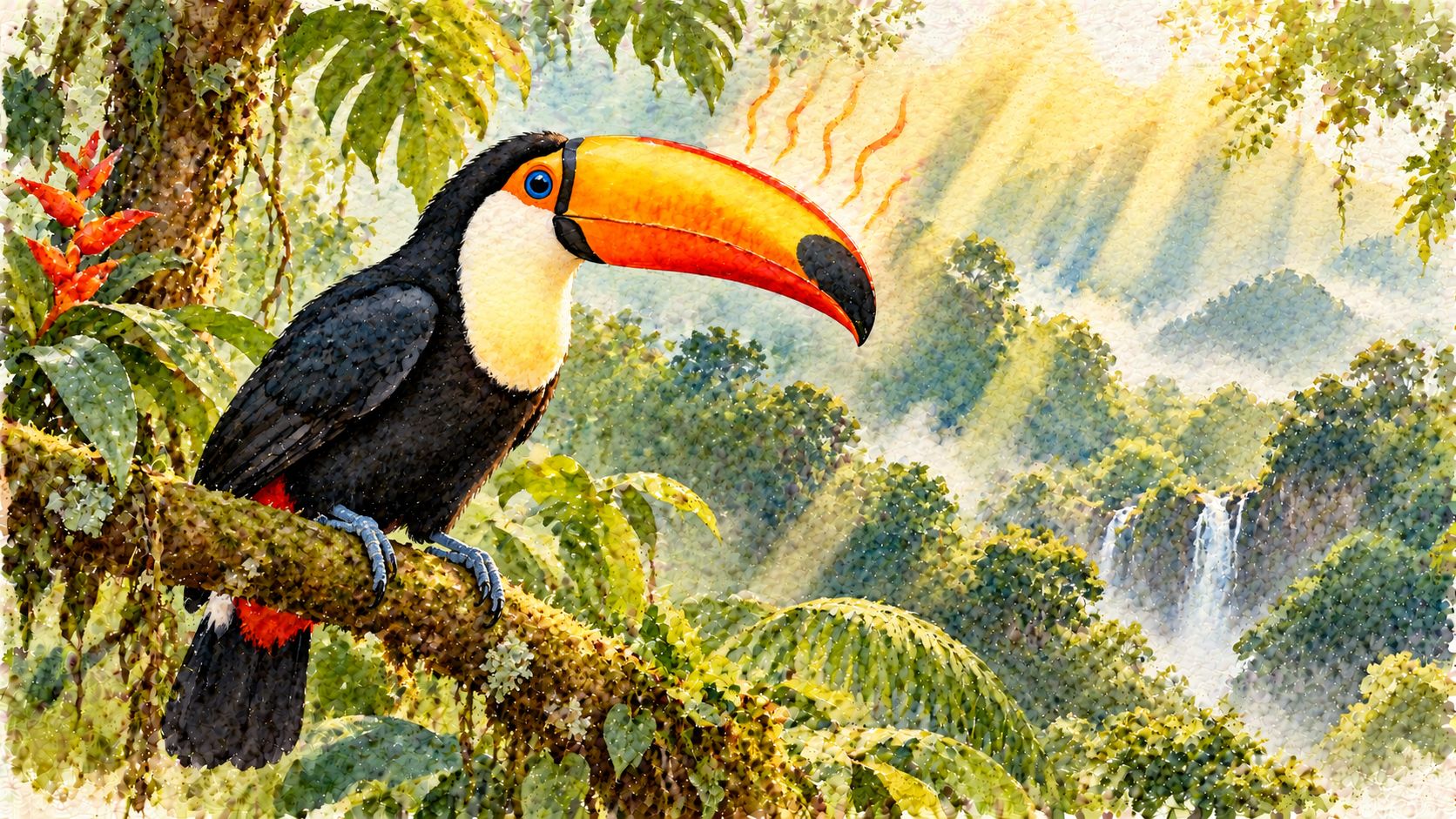
A toucan's beak works like a radiator
Toucans live in hot, steamy forests, and their huge beaks help them stay cool. Their beaks are full of blood vessels. When a toucan gets too warm, it sends more blood to its beak, which releases heat into the air, like a radiator. When it's cool, it reduces the blood flow to keep heat in. A 2009 study found that a toucan's beak can release a large share of its body heat, making it one of the most effective heat-control systems of any animal.
When toucans sleep, they turn their heads around, tuck their beaks over their backs and fold their tails over, becoming a fluffy ball of feathers.
Toucans are important for rainforests because they spread the seeds of the fruit they eat.
Toucans nest in holes in trees, often using old woodpecker holes, since their beaks aren't strong enough to dig deep holes themselves.
Toucan chicks hatch blind and featherless, with small beaks that grow larger as they get older.
Toucans aren't strong fliers. They usually fly short distances and hop between branches.
Toucans often live in small, noisy flocks and sometimes play by "fencing" with their beaks.
Toucans make loud croaking, yelping and rattling calls that echo through the forest.
The word "toucan" comes from the Tupi language of Brazil.
The keel-billed toucan, with its rainbow-coloured beak, is the national bird of Belize.
India's hornbills look like toucans but aren't related
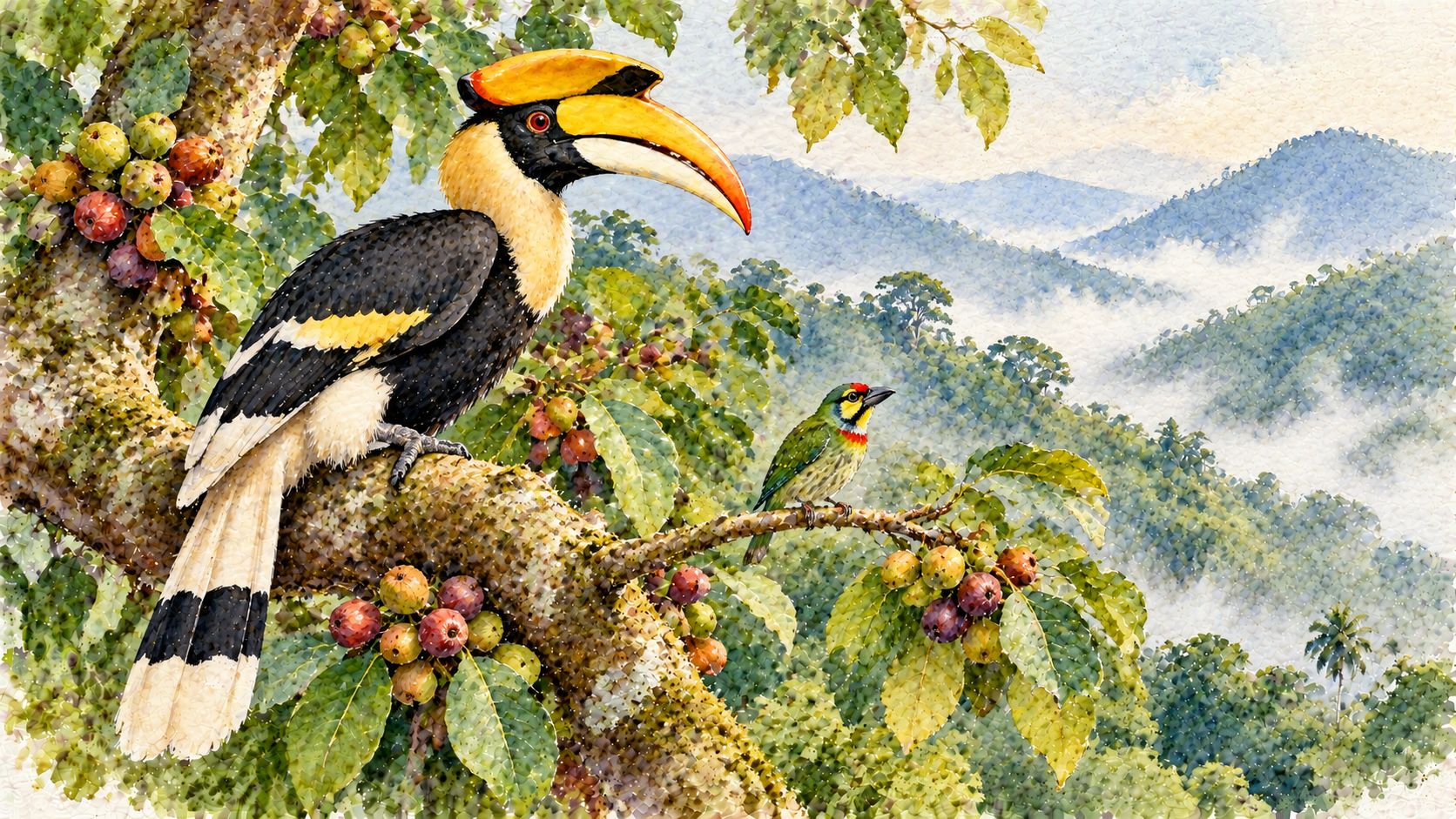
India doesn't have toucans, but it does have hornbills, birds that look remarkably similar with their huge curved beaks. However, the two aren't closely related. Toucans are related to woodpeckers and barbets, while hornbills belong to a separate group. They developed similar big beaks independently, an example of what scientists call convergent evolution. The great hornbill is the state bird of Kerala and Arunachal Pradesh, and Nagaland's famous Hornbill Festival is named after these birds. India's colourful barbets, like the coppersmith barbet, are actually the toucan's true cousins.
In 2015, a toucan named Grecia from Costa Rica lost part of its beak in an attack. It received a 3D-printed prosthetic beak, which helped it eat and became famous around the world.
Aracaris, the smaller relatives of toucans, often sleep together in groups inside tree holes.
A small group of stars in the southern sky, the constellation Tucana, is named after the toucan.
Most toucan species aren't endangered, but some are threatened by forest loss and capture for the pet trade.
Toucans can live for around 15 to 20 years in protected settings.
Sources and Further Reading
- Cornell Lab of Ornithology
- Bombay Natural History Society (BNHS)
- American Bird Conservancy
- Science (journal)
- Encyclopaedia Britannica
- National Geographic
Frequently asked questions
Where do toucans live?
Toucans live in the tropical forests of Central and South America and southern Mexico.
Is a toucan's beak heavy?
No. A toucan's beak is surprisingly light, made of a thin layer of keratin with a spongy, air-filled inside.
Why do toucans have such big beaks?
Toucans use their big beaks to reach and grip fruit, and to help control their body temperature by releasing heat, like a radiator.
Are there toucans in India?
No. India doesn't have toucans, but it has hornbills, which look similar, and barbets, which are the toucan's real relatives.
What do toucans eat?
Toucans mainly eat fruit, but they also eat insects, eggs, small lizards and sometimes baby birds.
How do toucans sleep?
Toucans tuck their beaks over their backs and fold their tails over their heads, curling up into a fluffy ball of feathers.