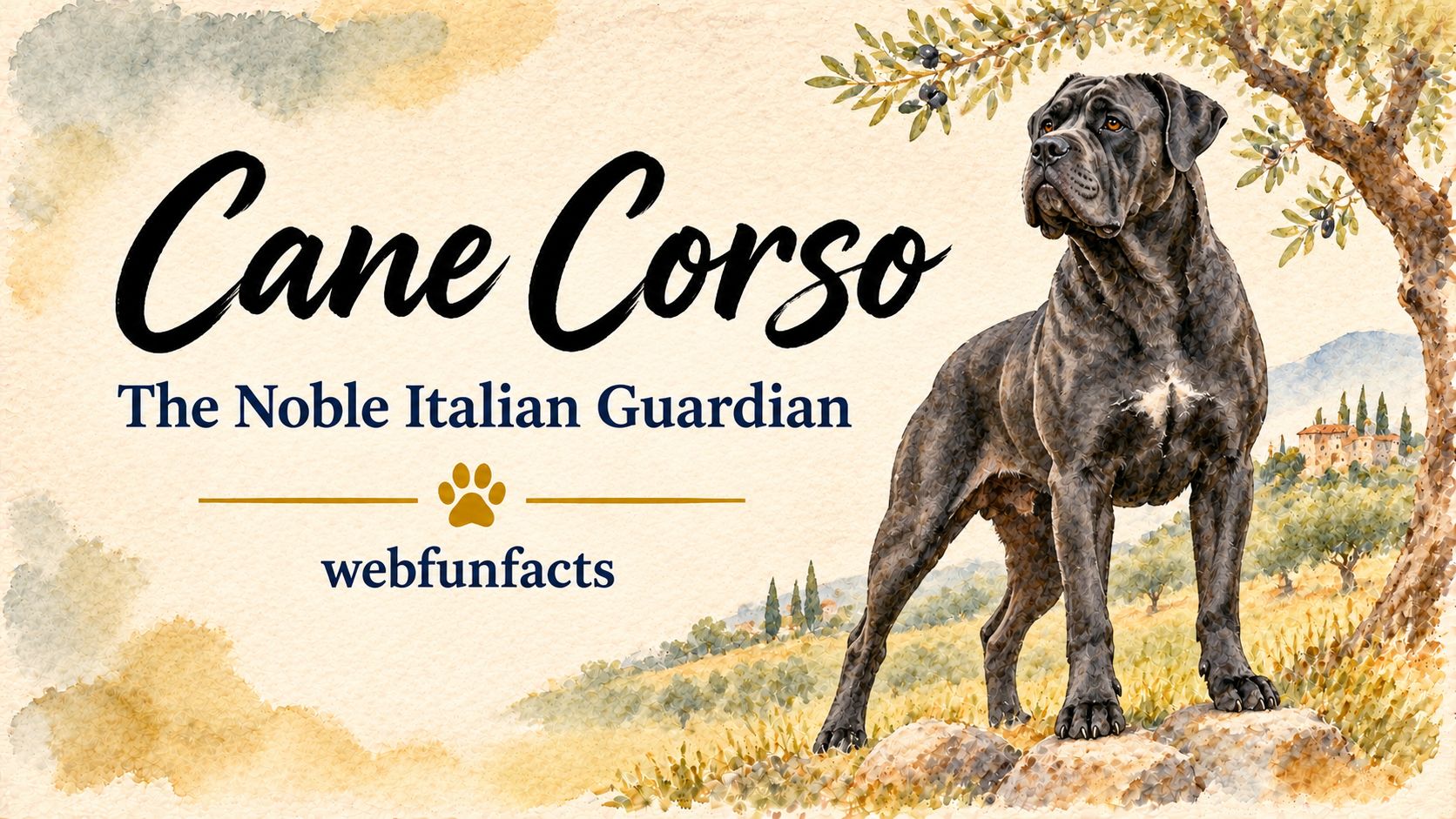
The Cane Corso is a large, muscular Italian guardian with a noble bearing, a calm confidence and a deep devotion to its family. Its name is pronounced "KAH-nay KOR-so," and it comes from Latin and Italian roots that roughly mean "protector dog," a fitting title for a breed that has watched over Italian farms for centuries.
Behind that imposing look is an affectionate, intelligent and eager-to-please companion. In this complete Cane Corso dog breed guide, you will learn about its size, temperament, training, exercise needs, grooming, health, diet and fascinating history, so you can decide whether this powerful mastiff belongs in your home.
Cane Corso at a Glance
| Trait | Details |
|---|---|
| Breed group | Working (AKC) |
| Height | Males 25 to 27.5 inches (64 to 70 cm); females 23.5 to 26 inches (60 to 66 cm) |
| Weight | About 88 to 110 pounds (40 to 50 kg) |
| Life expectancy | 9 to 12 years |
| Coat | Short, coarse, dense double coat |
| Colors | Black, gray, fawn, red, black brindle, gray brindle, chestnut brindle |
| Shedding | Moderate; heavier in spring |
| Energy level | Moderate, with a strong work ethic |
| Temperament | Loyal, protective, intelligent, affectionate, confident |
| Good for | Experienced owners, active homes with space |
| Origin | Italy |
What Is a Cane Corso?
The Cane Corso is an Italian mastiff, part of the molosser family of large, heavy-boned guardian dogs. For centuries, it worked on farms in southern Italy, guarding property, driving livestock and helping hunters with large game such as wild boar.
Today, the breed is valued as a loyal family protector and a versatile working dog. It belongs to the American Kennel Club's Working Group. Although it looks intimidating, a well-raised Corso is typically calm at home, affectionate with its people and quietly watchful with strangers.
How Big Do Cane Corsos Get?
These are large dogs. Males usually stand 25 to 27.5 inches (64 to 70 cm) tall at the shoulder, and females are slightly smaller. Most adults weigh roughly 88 to 110 pounds (40 to 50 kg), with males usually at the heavier end.
Cane Corso Size and Appearance
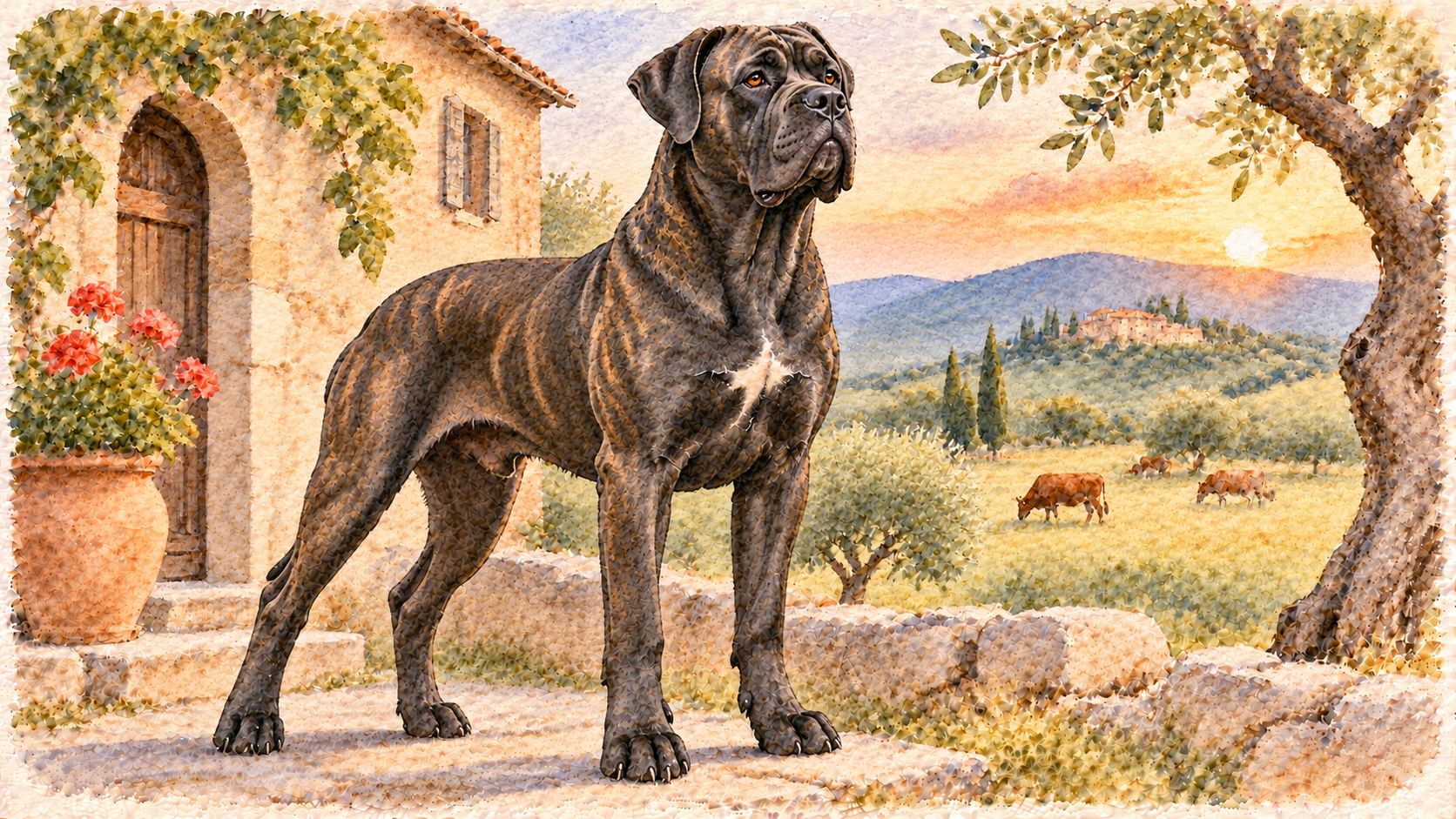
The Cane Corso size is matched by an athletic, muscular build. This is not a sluggish giant. The body is slightly longer than it is tall, with a broad chest, powerful shoulders and strong legs that give it surprising agility for a dog of its weight.
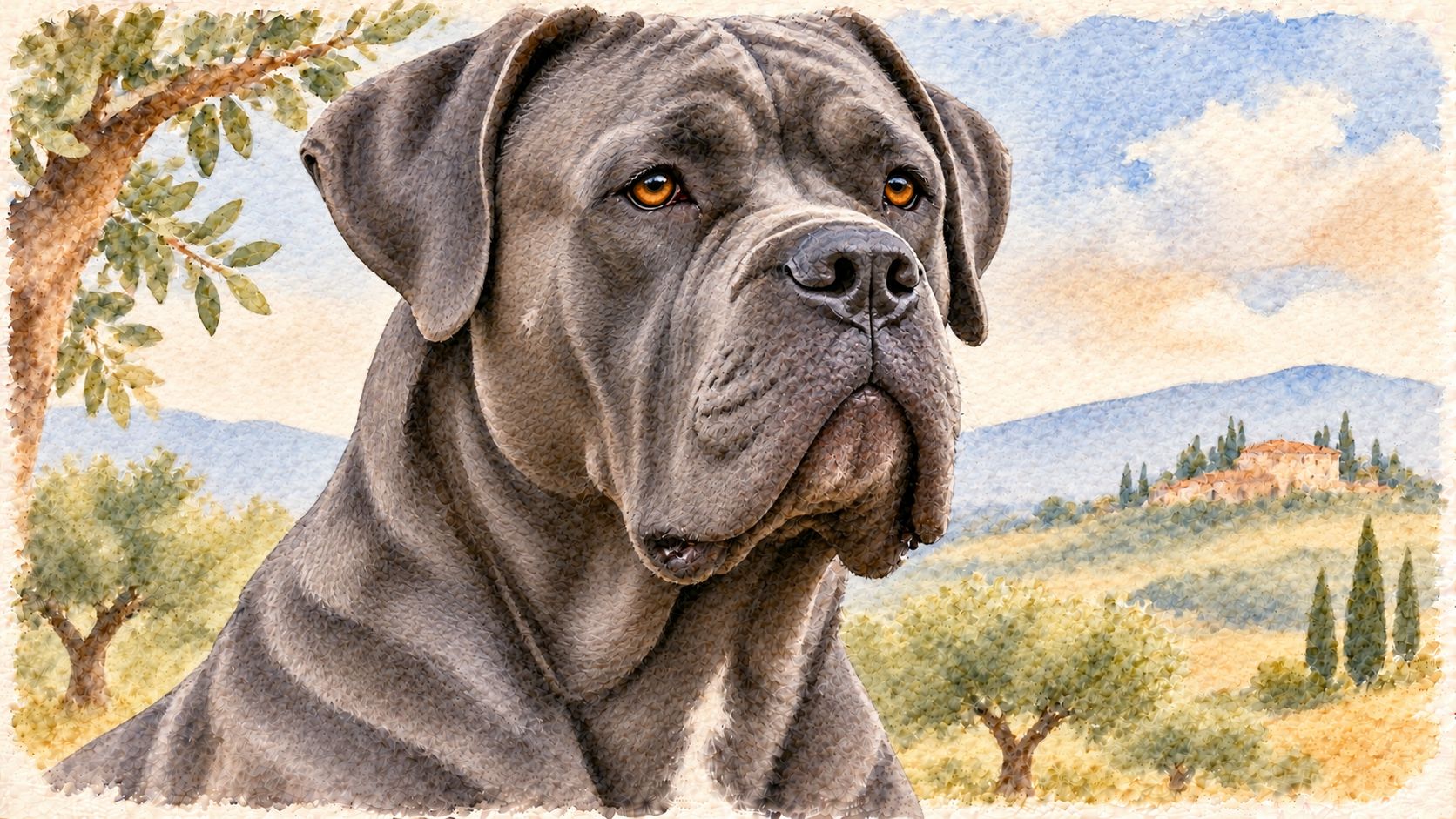
The head is large and broad, with a square muzzle and a gently furrowed brow. Its expression is alert and intelligent. Many dogs have a darker mask on the face, which adds to the breed's striking, dignified appearance.
Coat and Colors
This mastiff has a short, coarse, thick double coat that is slightly waterproof. The coat shows off the dog's muscular outline and needs very little styling.
Common colors include black, gray, fawn, red and several brindle patterns, such as black brindle, gray brindle and chestnut brindle. Fawn and red dogs often have a black or gray mask that does not extend past the eyes. Small white patches on the chest, throat or toes are sometimes seen.

Cane Corso Temperament and Personality
The Cane Corso temperament combines strength with sensitivity. When properly raised, these dogs are known for being:
- Loyal: Corsos form intense bonds with their families and want to be close to their people.
- Protective: Guarding comes naturally. They are watchful and will step in if they sense a threat.
- Intelligent: These dogs learn quickly and can excel at many tasks.
- Affectionate: Despite their size, many Corsos are gentle, loving and surprisingly cuddly with family.
- Eager to please: They respond well to owners who are consistent, fair and kind.
Because of its protective nature, a Corso is usually reserved with strangers. It does best with an owner who provides clear guidance and plenty of positive social experiences from puppyhood onward.
Are Cane Corsos Good With Kids?
Corsos can be very good with kids in their own family when they are well socialized and raised with children. Many become devoted, gentle guardians of the youngsters they know.
However, their size and strength mean supervision is important, especially around small children and visiting friends. Teach kids to respect the dog's space and never leave young children alone with any large dog.
Are Cane Corsos Good With Other Pets?
With early socialization, Corsos can live peacefully with other pets, particularly animals they grow up with. Some may be dominant or reserved with unfamiliar dogs, especially dogs of the same sex.
Introduce your Cane Corso puppy to a wide variety of people, dogs, places and sounds. Puppy classes and controlled meetings help build a calm, confident adult.
Training a Cane Corso
Training is essential for a dog this large and capable. The good news is that Corsos are intelligent and eager to please. They respond far better to love, praise and rewards than to harsh corrections, which can damage trust.
Training tips for Corso owners include:
- Begin on day one. Start basic manners, leash skills and socialization as soon as your puppy comes home.
- Be consistent. Clear, fair rules help this confident breed understand its role in the family.
- Use positive reinforcement. Treats, praise and play build motivation and a strong bond.
- Socialize continually. Keep introducing your dog to new people and situations throughout its life.
- Give it a job. Many Corsos enjoy obedience, agility, dock diving, tracking and protection sports.
Because of their power and guarding instincts, Corsos are generally best suited to experienced dog owners. Working with a professional trainer can be very helpful for first-time owners of the breed.

Cane Corso Exercise Needs
This breed needs a good amount of daily exercise. A single short walk is not enough for this working breed. A brisk mile or so in the morning and another in the evening is a solid starting point for most healthy adults.
These dogs were bred to work, and they are happiest with a job to do. Training sessions, structured games and dog sports provide both physical activity and mental stimulation. A bored Corso may become restless or destructive.
Puppies need a gentler approach. Avoid long runs and repetitive jumping while their joints are still developing, and ask your veterinarian when it is safe to increase activity.
The short coat offers limited protection in extreme weather. On hot days, walk your dog in the early morning or evening and provide shade and fresh water. In cold or wet weather, keep outings brisk and let your dog warm up indoors afterward.
Cane Corso Grooming
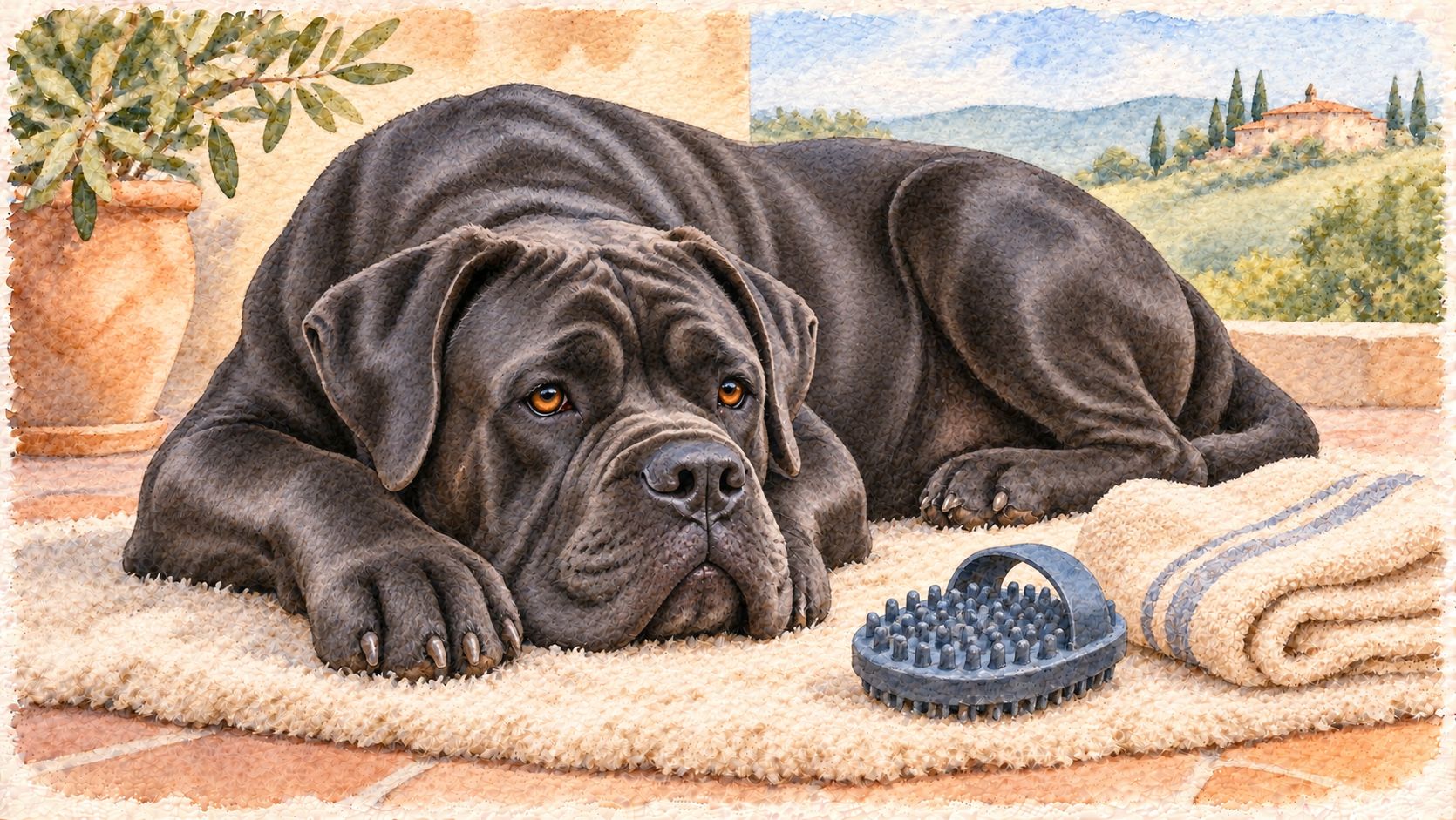
Cane Corso grooming is simple. The short coat does not need trimming or styling, and occasional baths keep it clean.
Do Cane Corsos Shed?
Yes, they shed. The undercoat sheds throughout the year, with a noticeable increase in spring. Weekly brushing during heavier shedding periods removes dead hair before it lands on your furniture.
Grooming Routine
- Brushing: Brush weekly with a rubber curry brush or bristle brush, and more often during spring shedding.
- Bathing: Bathe as needed, usually every month or two.
- Nails: Trim nails regularly. Large dogs with long nails can develop foot and posture discomfort.
- Teeth: Brush your dog's teeth several times a week.
- Ears and face: Check ears weekly and wipe any facial folds clean.
Start grooming routines early so your puppy grows comfortable being handled. It is much easier to trim the nails of a calm 100-pound dog that learned to enjoy it as a puppy.
Cane Corso Health and Lifespan
The typical Cane Corso lifespan is 9 to 12 years. Like many large breeds, it can be prone to certain health conditions. Responsible breeders screen their dogs, and concerns in the breed may include:
- Hip dysplasia: An abnormal formation of the hip joint that can lead to arthritis.
- Bloat: Large, deep-chested dogs are at higher risk of this serious stomach emergency, so learn the warning signs.
- Idiopathic epilepsy: A seizure disorder with no identifiable cause.
- Demodex mange: A skin condition caused by mites.
- Eyelid abnormalities: Problems such as eyelids that roll inward or outward.
Keeping your dog lean and fit helps protect its joints. Many owners of deep-chested breeds feed two or more smaller meals a day rather than one large meal, and avoid vigorous exercise right after eating. Ask your breeder for the health screening results of both parents. Always work with your veterinarian to plan vaccinations, parasite prevention and regular checkups.
Feeding and Nutrition
A Corso does best on a high-quality dog food formulated for large or giant breeds. These formulas are designed to support joint health, mobility and an ideal body condition. Very active dogs may benefit from a food with a protein and fat balance suited to their activity level to help maintain lean muscle.
Puppies should eat a large-breed puppy formula. Look for nutrients such as DHA, which supports brain and vision development, and antioxidants for immune support. Controlled growth matters for big breeds, so follow the feeding guide and ask your veterinarian about portion sizes.
History of the Cane Corso
The breed's roots go back to ancient times. Its ancestors are believed to have been large, big-boned guard dogs kept by ancient Greek tribes. When the Roman Empire was at its height, these dogs were brought to Italy and crossed with native Italian breeds, likely including the ancestors of the Neapolitan Mastiff.
Roman war dogs were legendary for their courage. According to some accounts, they even charged enemy lines carrying buckets of flaming oil. After the fall of the Roman Empire, around the 5th century, the dogs turned to civilian work. They hunted wild boar, guarded farms, drove cattle and became a common sight across the Italian countryside.
Political upheaval, economic hardship and the arrival of mechanized farming later pushed the breed close to extinction. In the 1970s, a group of dedicated Italian farmers and enthusiasts began working to revive it, and the Society of Amorati Cane Corso was formed in 1983.
The first Corso arrived in the United States in 1988. The breed grew steadily in popularity, and the American Kennel Club recognized it in 2010. The breed also appears in historic Italian art, including paintings by Bartolomeo Pinelli.
Cane Corso vs Rottweiler
The Cane Corso vs Rottweiler comparison is common because both are powerful, protective working breeds. The Corso is usually taller and leaner, with a larger, squarer head and a wider range of coat colors. The Rottweiler is always black and tan, slightly shorter and stockier, and often a bit more outgoing with strangers. Both need experienced, consistent owners.
Are Cane Corsos Good Family Dogs?
Corsos can be wonderful family dogs in the right home. A Corso could be a great match if you:
- Have experience with large, protective breeds
- Can commit to early and lifelong training and socialization
- Enjoy daily walks, training and activities
- Have space and a securely fenced yard
- Want a loyal, affectionate guardian
A Corso may not be the best fit if you:
- Are a first-time dog owner without access to professional training support
- Live in a small apartment with limited outdoor access
- Want a dog that is friendly with every stranger
- Have little time for daily exercise
Some cities and housing providers have rules about large guardian breeds, so it is a good idea to check local regulations before bringing one home.
Finding a Cane Corso Puppy
When looking for a Cane Corso puppy, choose a reputable breeder who health-tests parent dogs, raises puppies in a home environment and focuses on stable temperaments. Meet the parents if possible. Rescue groups also have adult Corsos who need loving homes, and some come with basic training already in place.
Fun Facts About the Cane Corso
- "Cane" means "dog" in Italian, and "Corso" is thought to come from the Latin cohors, meaning protector or guardian.
- The plural of the breed name is Cani Corsi.
- Ancient ancestors of the breed served as Roman war dogs.
- The breed was nearly lost in the 20th century before Italian enthusiasts revived it.
- The first Corso came to America in 1988.
- The American Kennel Club recognized the breed in 2010.
Frequently Asked Questions
How big do Cane Corsos get?
Males stand about 25 to 27.5 inches tall, and females are slightly smaller. Most adults weigh roughly 88 to 110 pounds.
Do Cane Corsos shed?
Yes. They shed year-round, with heavier shedding in spring. Weekly brushing keeps loose hair under control.
Are Cane Corsos good family dogs?
They can be loving, gentle family protectors when well trained and socialized. Their size and guarding instincts make them best for experienced owners.
How long do Cane Corsos live?
The average Cane Corso lifespan is 9 to 12 years with good nutrition, exercise and regular veterinary care.
How do you pronounce Cane Corso?
It is pronounced "KAH-nay KOR-so." The plural is Cani Corsi.
Are Cane Corsos easy to train?
They are intelligent and eager to please, which helps with training. They need consistent, positive guidance from an owner who is confident and patient.
Final Thoughts
The Cane Corso is a majestic, intelligent and deeply loyal guardian with a history stretching back to ancient Rome. In experienced hands, it becomes a gentle family companion and a confident protector. If you can provide training, socialization and daily exercise, a Cane Corso may be the most devoted dog you will ever own.