
With its wrinkled brow, square jaw and wiggly, happy-go-lucky attitude, the Boxer is one of the most lovable large breeds around. This muscular, athletic dog looks serious at first glance, but anyone who has lived with one knows the truth: underneath that noble face is a playful clown who never quite stops acting like a puppy.
This breed has been a favorite in American homes for decades, and it regularly ranks among the most popular dog breeds in the country. In this complete Boxer dog breed guide, you will learn everything you need to know before bringing one home, including its size, temperament, training, exercise needs, grooming, common health concerns, diet tips and fascinating history.
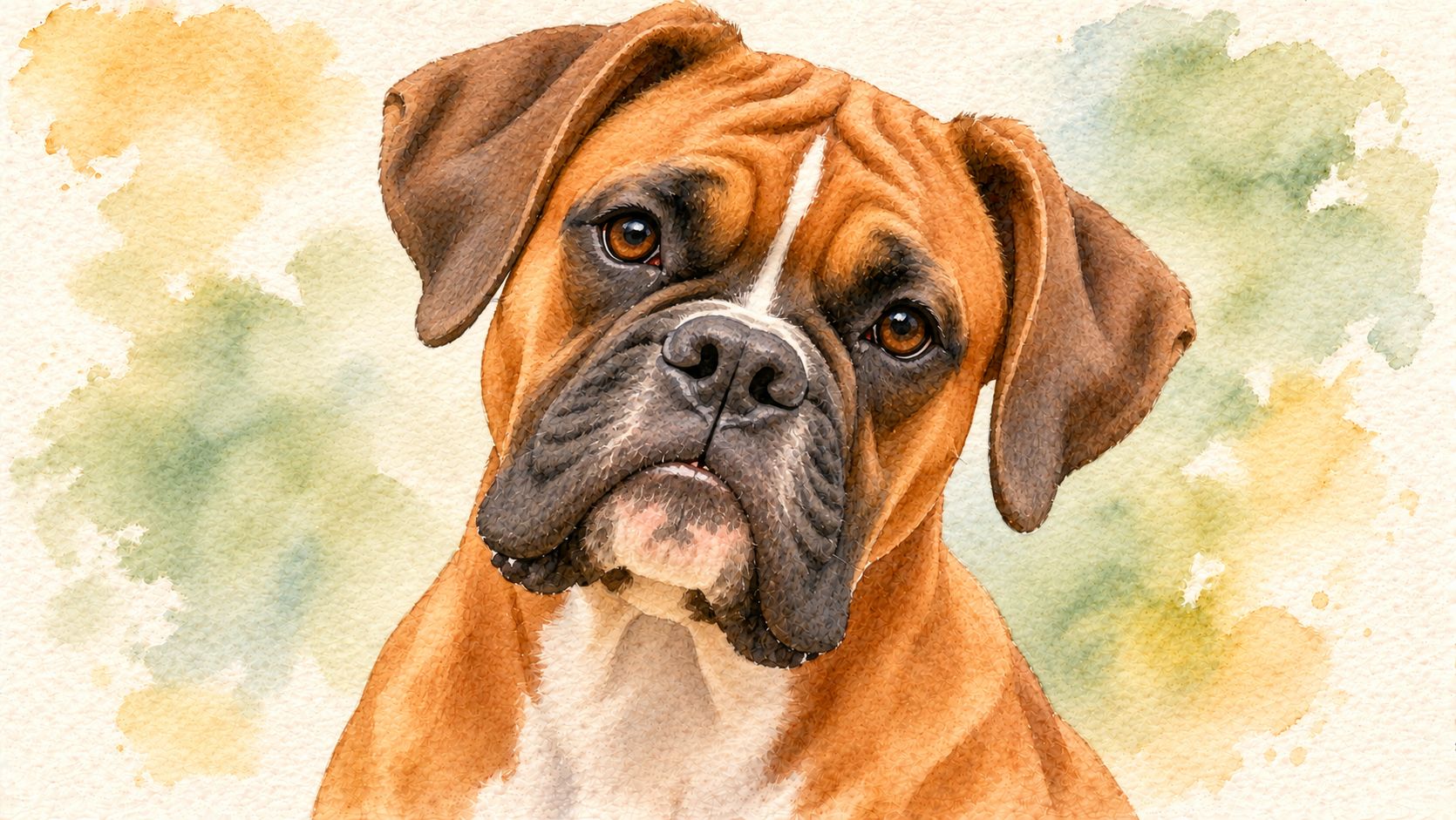
Boxer at a Glance
| Trait | Details |
|---|---|
| Breed group | Working (AKC) |
| Height | Males 23 to 25 inches (58 to 64 cm); females 21.5 to 23.5 inches (55 to 60 cm) |
| Weight | Males about 60 to 80 pounds (27 to 36 kg); females about 55 to 65 pounds (25 to 29 kg) |
| Life expectancy | 10 to 12 years |
| Coat | Short, smooth, tight-fitting |
| Colors | Fawn or brindle, often with white markings and a black mask |
| Shedding | Moderate; sheds on occasion |
| Energy level | High |
| Temperament | Playful, loyal, patient, protective, intelligent |
| Good for | Active families, homes with older kids, experienced owners |
| Origin | Germany (1800s) |
What Is a Boxer?
This is a medium-to-large working breed that was developed in Germany in the late 1800s. Its ancestors were powerful hunting dogs used to catch and hold large game. Over time, the breed was refined into the athletic, people-loving companion we know today.
The breed belongs to the American Kennel Club's Working Group. They have served as guard dogs, police dogs and military helpers, but their favorite job today is simply being part of the family. Owners often describe them as loyal, goofy and endlessly enthusiastic about life.
Boxer Size and Appearance
How Big Do Boxers Get?
Adult Boxers usually stand about 21.5 to 25 inches (55 to 64 cm) tall at the shoulder and weigh roughly 55 to 80 pounds (25 to 36 kg). Males are typically taller and heavier than females, and most dogs reach their full size by around 18 months to two years of age.
The breed has a strong, square, athletic build with a deep chest and well-muscled legs. Everything about the breed suggests power and agility. When it moves, a well-built dog looks springy, balanced and ready for action.
The head is the breed's signature feature. These dogs have a short, broad muzzle, a slightly undershot jaw, dark expressive eyes and a forehead that wrinkles when they are alert or curious. Many people say this face can show a whole range of emotions, from serious concentration to pure mischief.
Boxer Coat and Colors
The breed wears a short, smooth, shiny coat that fits close to the body. This sleek coat shows off the dog's muscular outline and is very easy to care for.
The standard colors are fawn and brindle. Fawn ranges from light tan to a deep reddish mahogany, while brindle features dark stripes over a fawn base. Most have a black mask on the face, and many have white markings on the chest, feet or face, often called "flash."
Some puppies are born mostly white. White dogs can make wonderful pets, though they are not accepted in the show ring under the breed standard, and some may be more prone to sun sensitivity or hearing problems.
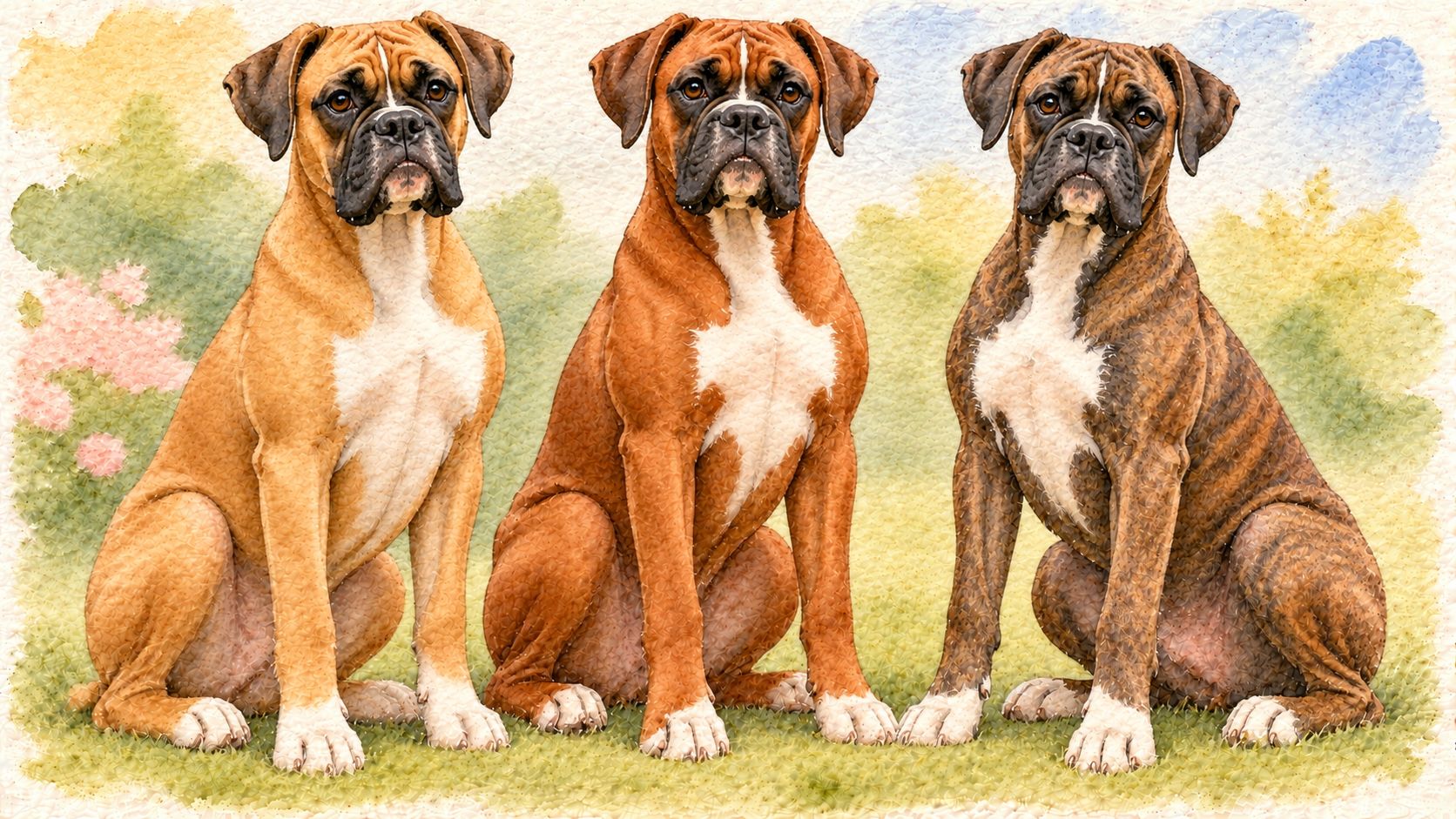
Boxer Temperament and Personality
The Boxer temperament is one of the main reasons the breed is so beloved. This dog is known for being:
- Playful: They love games and often stay puppy-like well into adulthood. Many owners call them "perpetual puppies."
- Loyal and affectionate: They form deep bonds with their families and want to be close to their people.
- Patient: They are often patient and gentle with the children in their household.
- Protective: They are naturally watchful and can be wary of strangers, which makes them good watchdogs.
- Intelligent: They are clever problem solvers who learn quickly when training is fun.
- Funny: From the famous "kidney bean" wiggle to bouncing on their hind legs, these dogs are natural entertainers.
They are usually fearless when they sense a real threat, yet friendly once they accept a visitor. Most are not big barkers, but they will let you know when something seems unusual.
Because they are so people-oriented, these dogs do not enjoy being left alone for long periods. A bored or lonely dog may find its own entertainment, which can include chewing or digging.
Are Boxers Good Family Dogs?
Yes, Boxers are often excellent family dogs. They tend to be patient, protective and playful with children, and they enjoy being included in everyday family life.
That said, this is a big, strong and bouncy breed. An excited youngster can easily knock over a toddler by accident, so supervision is important with small children. Teaching both kids and dogs good manners helps everyone stay safe and happy.
Are Boxers Good With Other Pets?
Many live peacefully with other dogs and even cats, especially when they are raised together. Some can be bossy with unfamiliar dogs of the same sex, so careful introductions are wise.
Early socialization is essential. Introducing your Boxer puppy to many people, animals, sounds and places will help it grow into a confident, well-mannered adult.
Training a Boxer
This breed is smart and eager to please, but they can also be strong-willed and easily bored. They often lose interest in repetitive drills, so the best training sessions are short, upbeat and full of variety. Positive reinforcement with praise, play and treats works far better than harsh methods.
Here are a few helpful training tips:
- Start early. Begin basic training and socialization the day your puppy comes home.
- Keep it fun. Mix up commands and games so your dog stays engaged.
- Teach polite greetings. These dogs love to jump up on people. Reward "four paws on the floor" from day one.
- Practice leash manners. A strong adult can pull hard, so loose-leash walking is a must.
- Try dog sports. The breed can shine in agility, obedience, rally and conformation events.
Because the breed matures slowly, expect some puppy silliness for the first two to three years. Patience and consistency will pay off with a well-behaved, devoted companion.
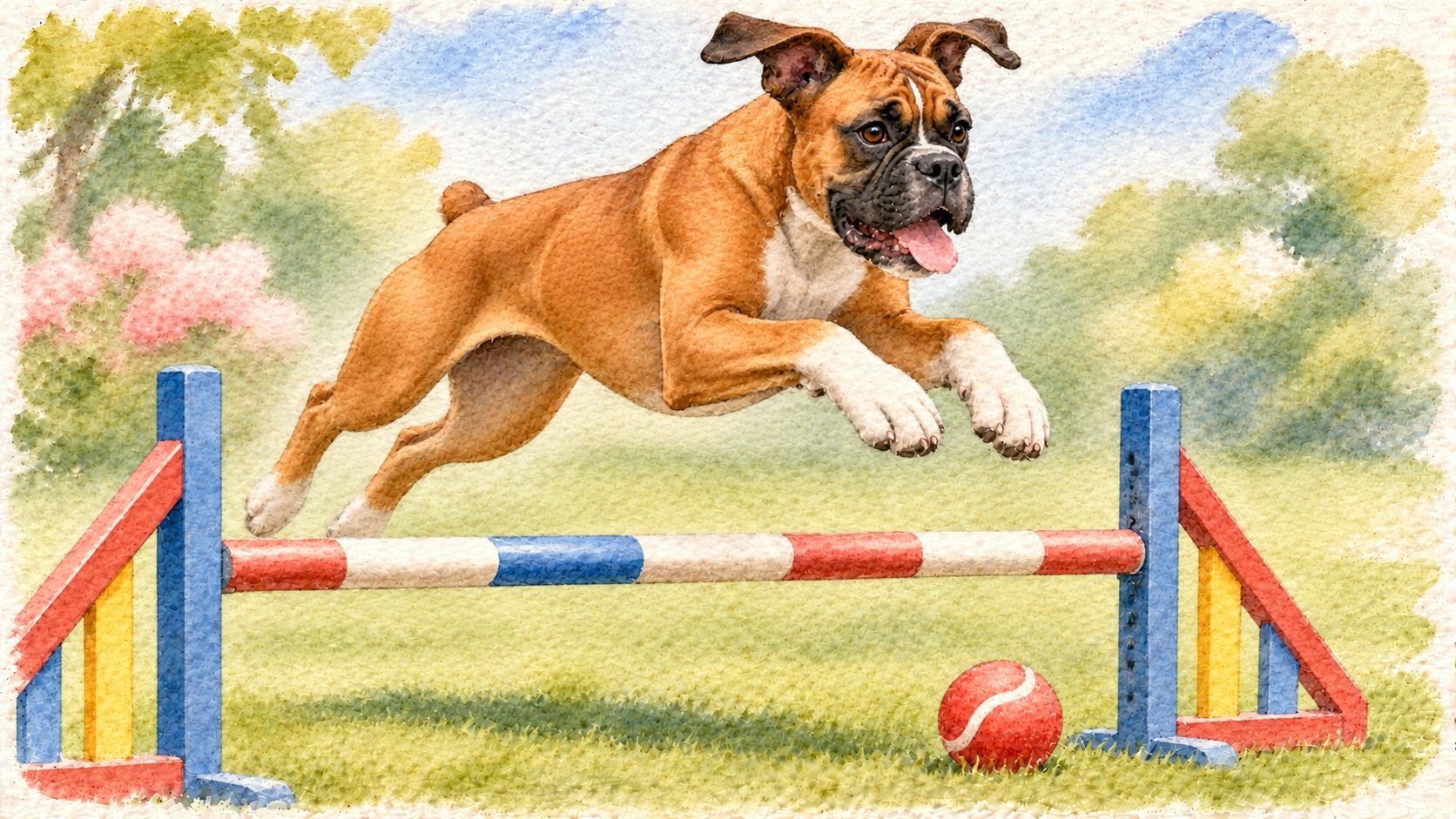
Boxer Exercise Needs
How Much Exercise Does a Boxer Need?
This is a high-energy breed that needs daily exercise to stay healthy and happy. Most do best with at least an hour of activity each day, such as long walks, jogs, or active play in a securely fenced yard.
Mental stimulation matters just as much as physical activity. Puzzle toys, fetch, tug games and training challenges help keep that busy mind occupied. A tired dog is usually a well-behaved dog.
The breed does not handle extreme temperatures well. Their short muzzles make it harder to cool down in hot weather, and their thin coats offer little protection from the cold. In summer, exercise during the cooler morning and evening hours and always provide shade and fresh water. In winter, keep outdoor sessions shorter and consider a dog coat. Never leave your dog in a parked car.
Boxer Grooming
This is one of the easiest large breeds to groom. Its short, tight coat needs very little maintenance, which makes the breed appealing to busy owners.
Do Boxers Shed?
Yes, they shed, but only a moderate amount. Their short hair sheds on occasion throughout the year, and a quick weekly brushing helps keep loose hair under control. The breed is not considered hypoallergenic.
Grooming Routine
- Brushing: Brush once a week with a rubber curry brush or grooming mitt to remove loose hair and bring out the coat's shine.
- Bathing: Bathe only when needed, as these are naturally fairly clean dogs.
- Wrinkles and face: Wipe the face and any folds gently to keep them clean and dry. Keep a towel handy for drool, especially after drinking.
- Nails: Trim nails every few weeks if they don't wear down naturally.
- Teeth: Brush your dog's teeth several times a week to support good dental health.
- Ears: Check ears weekly for dirt, redness or odor.
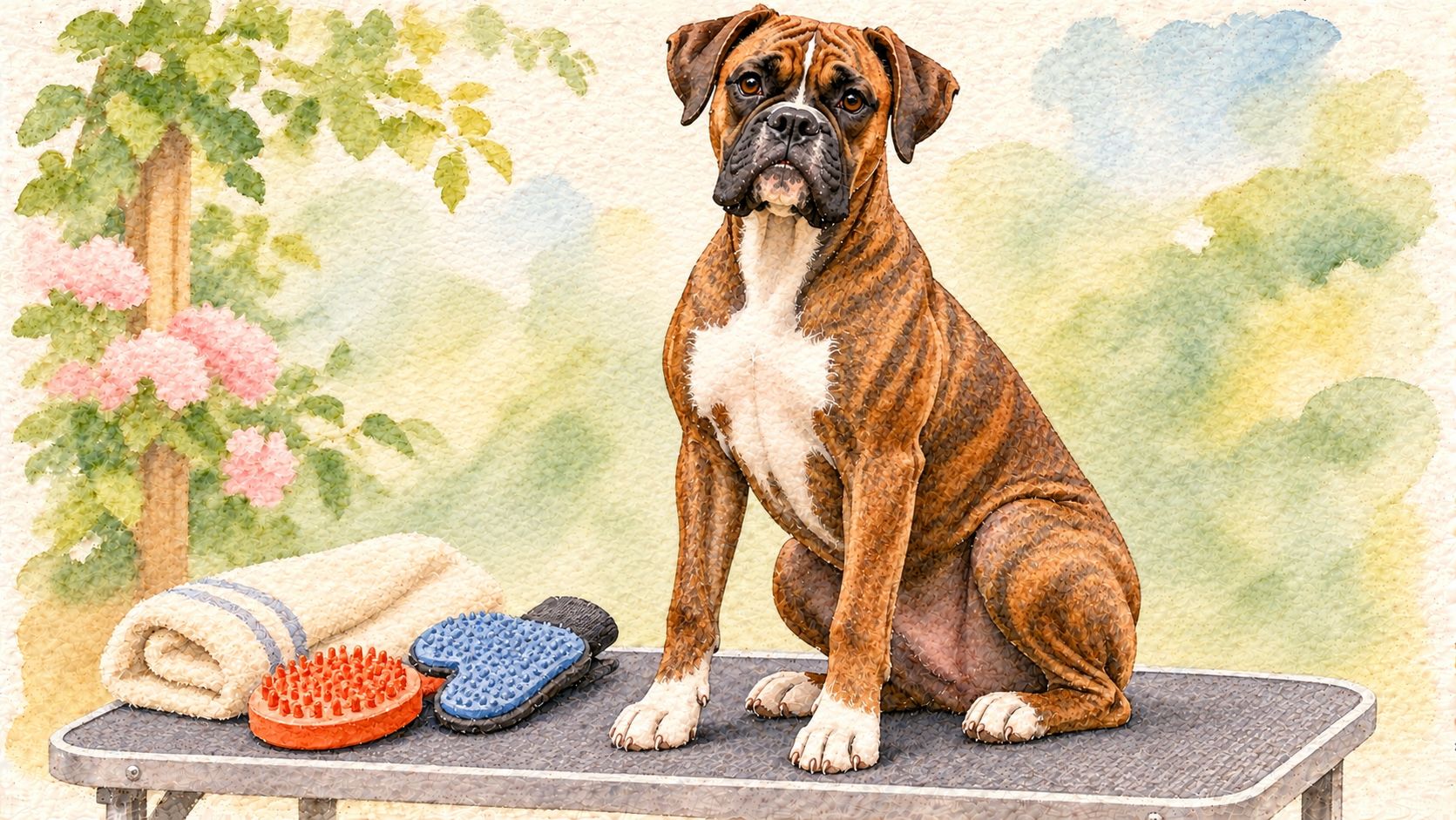
Boxer Health and Lifespan
How Long Do Boxers Live?
The average Boxer lifespan is 10 to 12 years. With good nutrition, regular exercise and routine veterinary care, many enjoy a happy, active life throughout those years.
Like all breeds, it can be prone to certain health conditions. Responsible breeders screen their dogs regularly, and common concerns may include:
- Heart conditions: Some dogs may develop heart problems, so cardiac screening is recommended for breeding dogs.
- Hip dysplasia: An abnormal formation of the hip joint that can affect mobility.
- Thyroid deficiency: Some dogs may have an underactive thyroid.
- Certain cancers: The breed is known to be at higher risk for some types of cancer.
- Bloat: Like many deep-chested breeds, it may be at risk of this serious stomach condition.
Because the breed has a short face, it can struggle in heat and humidity, so plan activities with the weather in mind. Always work with your veterinarian to set up a routine of checkups, vaccinations and preventive care, and ask any breeder about the health testing done on their dogs.
Feeding and Nutrition
Active adults do well on a high-quality, protein-rich dog food that supports their energy and muscular build. A formula designed for medium or large breeds is often a good fit.
Puppies should eat a complete and balanced puppy food to support healthy growth and development. Portion sizes depend on your dog's age, size and activity level, so follow the feeding guidelines on the package and ask your veterinarian for advice. Treats are great for training but should make up only a small part of daily calories to help prevent weight gain.
History of the Boxer
The breed's story stretches back much further than the breed itself. Its most direct ancestor was the Bullenbeisser, a powerful German hunting dog used in medieval times to catch and hold large game such as bear, wild boar and bison. Mastiff-type dogs of this kind have existed in Europe for many centuries.
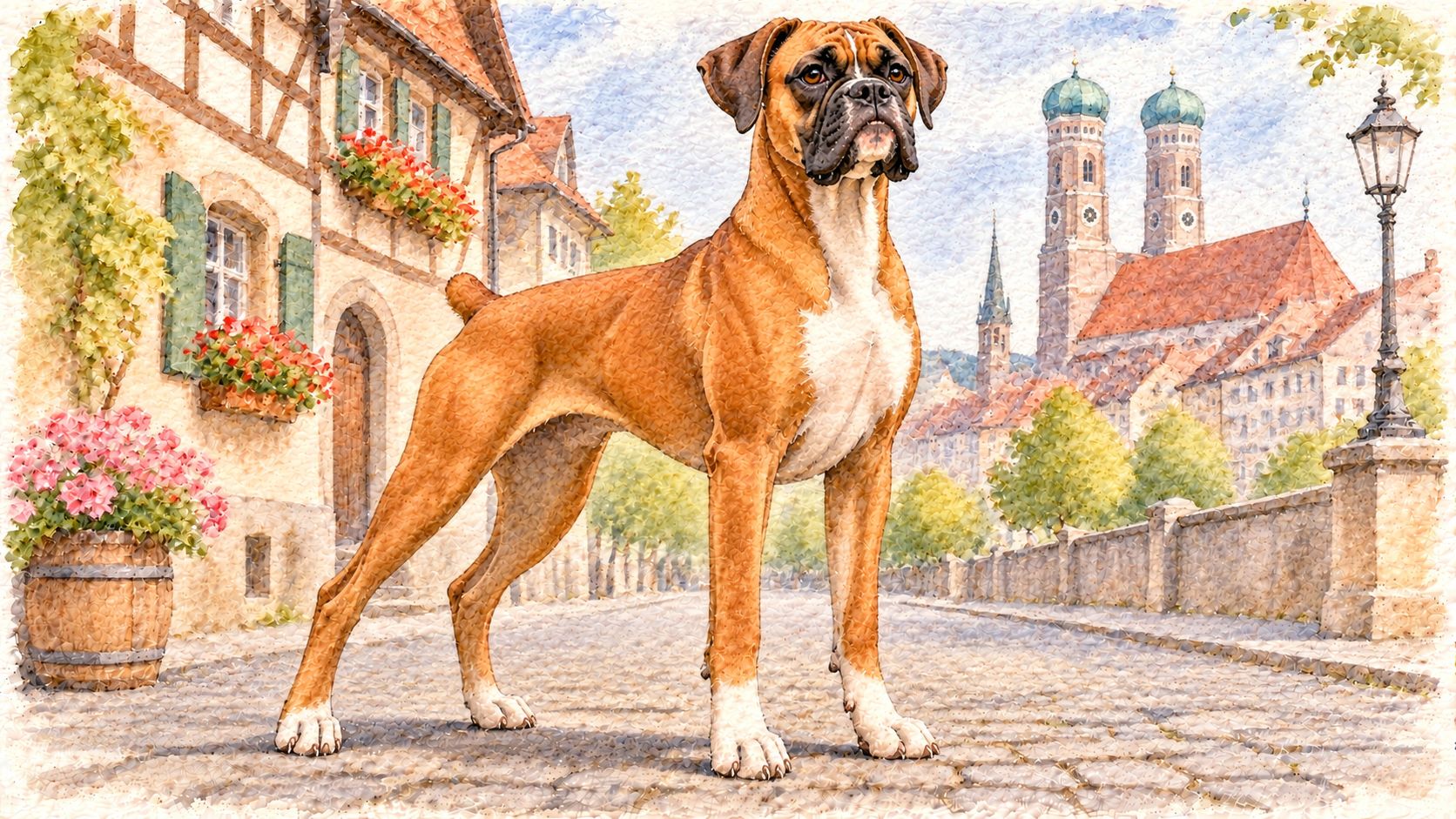
As big-game hunting faded in the 1800s, German dog fanciers began shaping these strong, brave dogs into a new breed. In the late 1800s, breeders in Munich developed the modern Boxer, and the first breed club was formed there in the mid-1890s. The new breed quickly gained a reputation as a capable, versatile worker.
The breed was among the first in Germany to be trained for police work. These dogs also served as messenger dogs, guard dogs and pack carriers during wartime. Soldiers returning home helped spread the breed's popularity to other countries.
The American Kennel Club first registered the breed in 1904. The breed's fame in the United States grew rapidly in the 1950s after a Boxer named Bang Away won Best in Show at the Westminster Kennel Club Dog Show. Since then, it has remained one of the most popular breeds in America.
How did the breed get its name? One popular explanation is the breed's habit of standing on its hind legs and "punching" with its front paws during play, much like a boxer in the ring.
Boxer vs Bulldog
People often compare the Boxer with the English Bulldog, since both breeds share bulldog ancestry and a short muzzle. The former is taller, leaner and far more athletic, with high energy and a love of running and play. The Bulldog is shorter, heavier-set and much more laid-back, so it suits owners who prefer a calmer, lower-activity companion.
Is a Boxer Right for You?
This breed could be a wonderful match if you:
- Want a loyal, playful and affectionate family dog
- Lead an active lifestyle and enjoy walks, jogs or outdoor play
- Have a securely fenced yard or easy access to safe exercise areas
- Prefer a short coat that is easy to groom
- Can spend plenty of time with your dog each day
- Have the patience for consistent, positive training
This breed may not be the best fit if you:
- Are away from home for long hours most days
- Want a calm, low-energy dog
- Live in a very hot climate without air-conditioning
- Don't want to deal with occasional drool or shedding
Finding a Boxer Puppy
Because the breed is so popular, it is important to choose a reputable breeder carefully. Look for breeders who health-test their dogs, raise puppies in a home environment and welcome your questions. Breed rescue groups and local shelters are also great places to find adult dogs in need of loving homes. Since local pet rules vary, it is a good idea to check any housing or community guidelines before bringing home a large breed.
Fun Facts About the Boxer
- The breed is named for the way these dogs use their front paws when playing or defending themselves.
- The breed descends from the Bullenbeisser, a German hunter of large game.
- They were among the first dogs trained for police work in Germany.
- A dog named Bang Away won Best in Show at Westminster in the 1950s.
- Many do a happy "kidney bean" dance, curling their bodies into a C-shape when excited.
- They mature slowly and often act like puppies for years.
Frequently Asked Questions
How big do Boxers get?
Adult Boxers usually stand 21.5 to 25 inches tall at the shoulder and weigh about 55 to 80 pounds, with males typically larger than females.
Are Boxers good family dogs?
Yes. They are usually patient, protective and playful with children. Supervision is important around toddlers, since an excited dog can knock small kids over.
Do Boxers shed a lot?
They shed a moderate amount. The short coat sheds on occasion, and weekly brushing keeps loose hair under control. They are not hypoallergenic.
How long do Boxers live?
The average lifespan is 10 to 12 years with good care, a healthy diet and regular veterinary checkups.
Are Boxers easy to train?
They are intelligent and learn quickly, but they can be stubborn and get bored with repetition. Short, fun sessions with positive rewards work best.
How much exercise does a Boxer need?
Most need at least an hour of exercise each day, such as long walks, runs or active play, plus mental games to keep them busy.
Final Thoughts
The Boxer is a joyful, loyal and athletic companion that brings energy and laughter to any home. With its expressive face, gentle patience with family and playful spirit, this breed has won hearts for generations. If you can offer daily exercise, consistent training and plenty of companionship, your Boxer may become the best friend your family has ever had.