
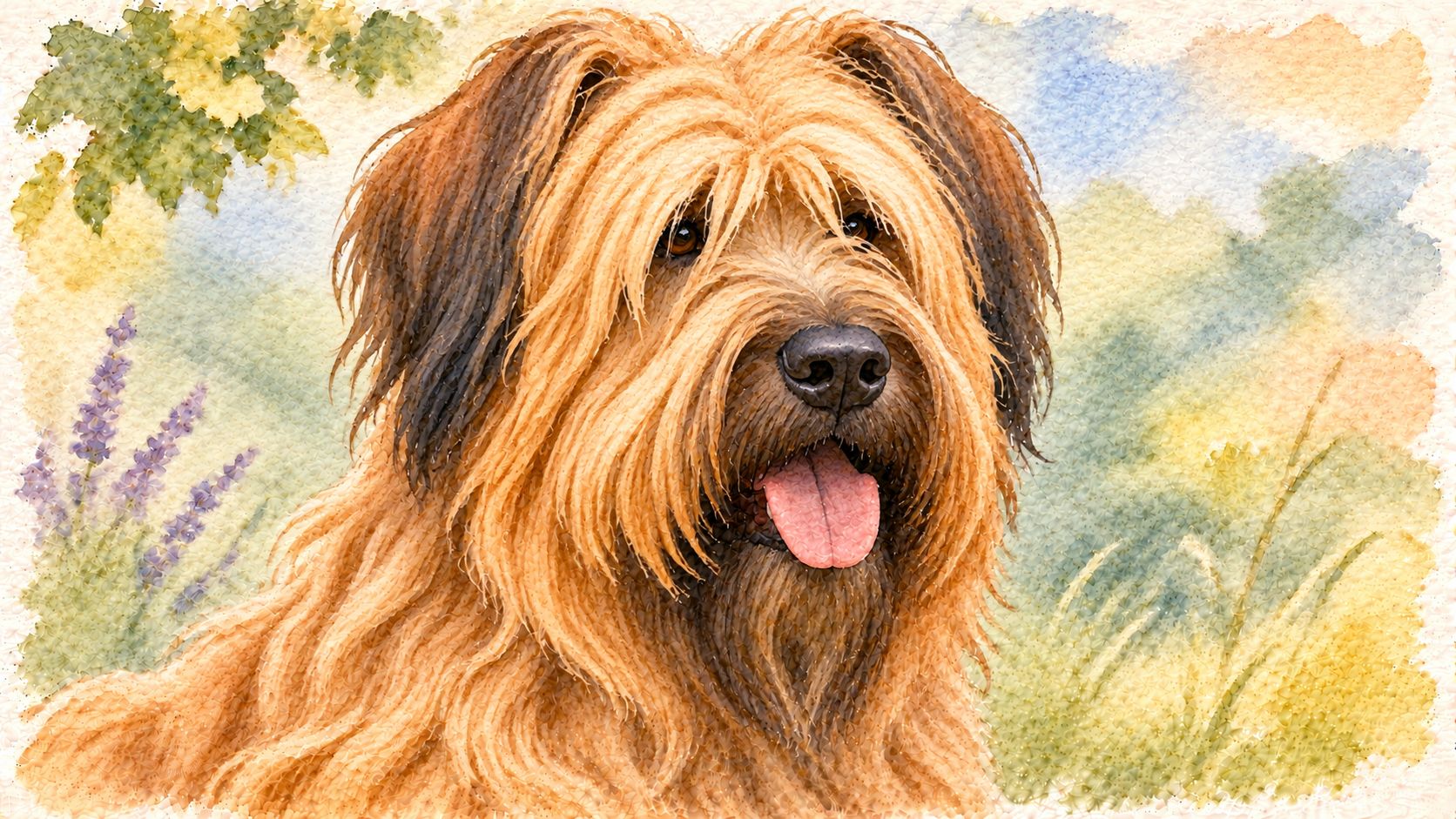
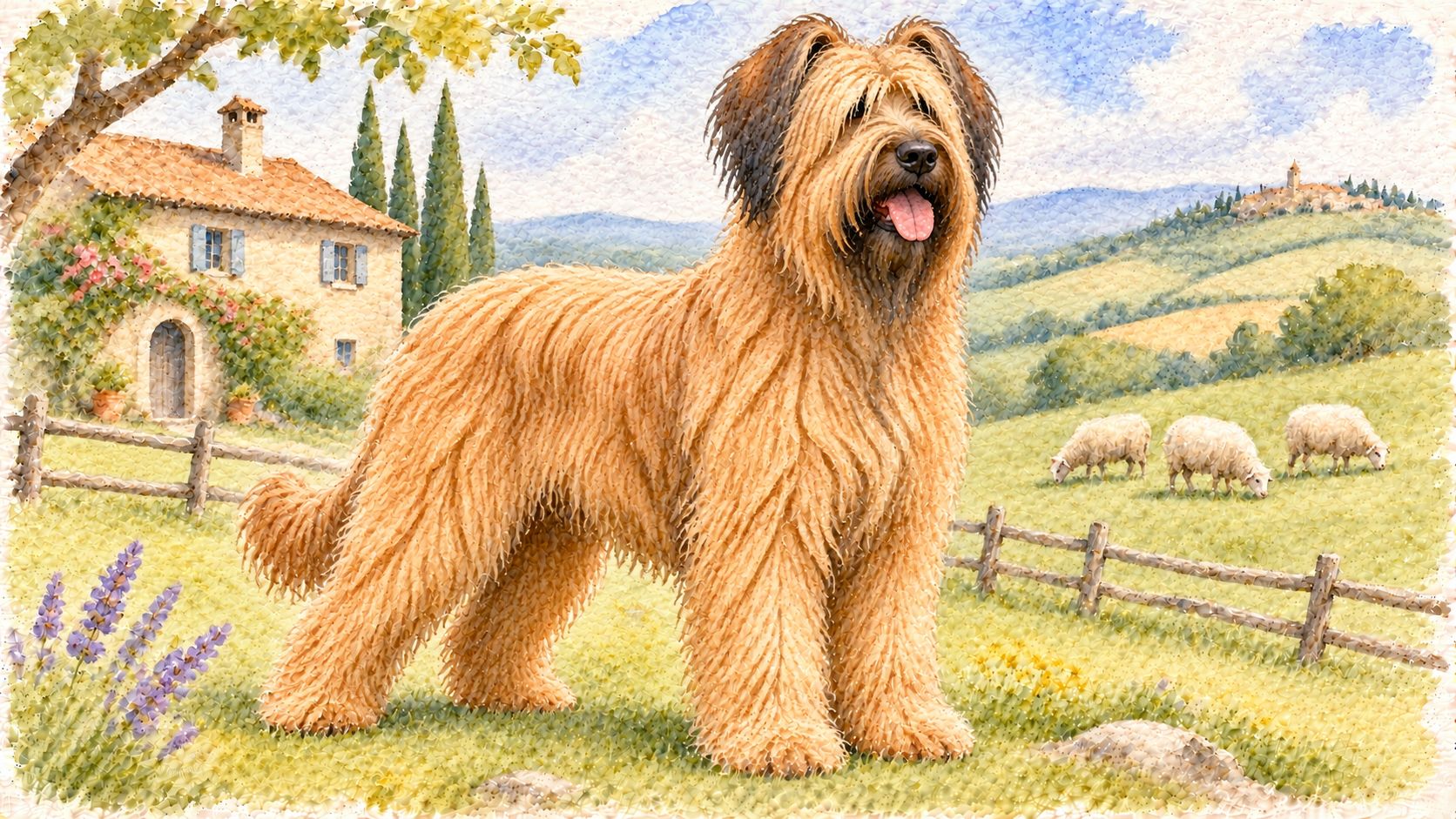
The Briard is a big, shaggy French herding dog with bushy eyebrows, a flowing beard and a heart full of loyalty. Fans often call it "a heart wrapped in fur," and once you meet one, it is easy to see why. Beneath that long, wavy coat is a brave, clever and deeply devoted companion.
For centuries, this breed guarded and herded sheep across the French countryside. Today, it is still a capable working dog, but it is just as happy protecting its family at home. In this complete Briard dog breed guide, you will learn about its size, temperament, grooming needs, exercise requirements, health, diet and fascinating history.
Briard at a Glance
| Trait | Details |
|---|---|
| Breed group | Herding (AKC) |
| Height | Males 23 to 27 inches (58 to 69 cm); females 22 to 25.5 inches (56 to 65 cm) |
| Weight | Roughly 55 to 100 pounds (25 to 45 kg) |
| Life expectancy | About 12 years |
| Coat | Long, coarse, wavy outer coat with a fine undercoat |
| Colors | Black, gray, tawny (in various shades) |
| Shedding | Moderate |
| Energy level | Moderate to high |
| Temperament | Loyal, brave, protective, intelligent, devoted |
| Good for | Active families, experienced owners, homes with a yard |
| Origin | France (centuries old) |
What Is a Briard?
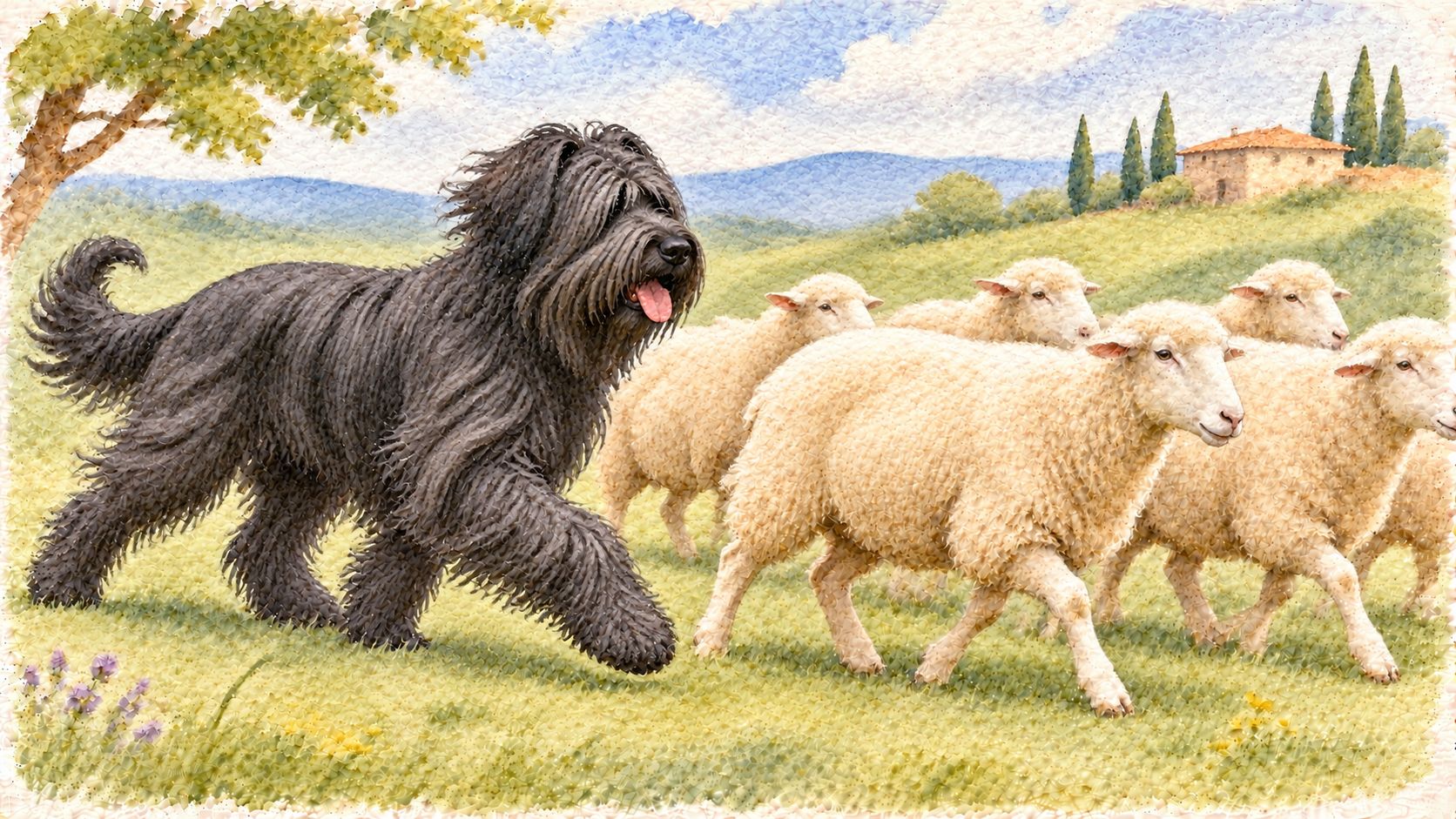
This is a large, muscular herding breed from France. Its name is usually linked to the Brie region east of Paris, though the breed was found across much of rural France. Farmers relied on it both to move flocks and to protect them from wolves and thieves.
That dual role still shows today. The breed is a thinking herder, not just a follower of commands, and it has a strong urge to watch over its people. The American Kennel Club places it in its Herding Group, and the breed has been known in the United States since the late 1700s.
Briard Size and Appearance
How Big Do Briards Get?
These are large dogs. Males usually stand 23 to 27 inches (58 to 69 cm) at the shoulder, and females 22 to 25.5 inches (56 to 65 cm). Most adults weigh somewhere between about 55 and 100 pounds (25 to 45 kg), depending on sex, build and condition.
The dog can look even bigger than it is because of the long coat. Under all that hair, the dog is strong, well muscled and slightly longer than it is tall. It moves with a smooth, springy gait that has been described as "quicksilver," allowing it to turn and change direction quickly while working.
The breed has a few unique features. Its head is long and framed by a beard, mustache and heavy eyebrows that partly veil the eyes. The breed standard also calls for double dewclaws on each hind leg, a trait few other breeds share. In the United States, ears may be left natural or cropped, while natural ears are the norm in many other countries.
Coat and Colors
The coat is one of the breed's most striking traits. The outer coat is long, coarse and dry, with a slight wave, and on the body it is often six inches or more in length. Beneath it lies a fine, tight undercoat that adds insulation in cold or wet weather.
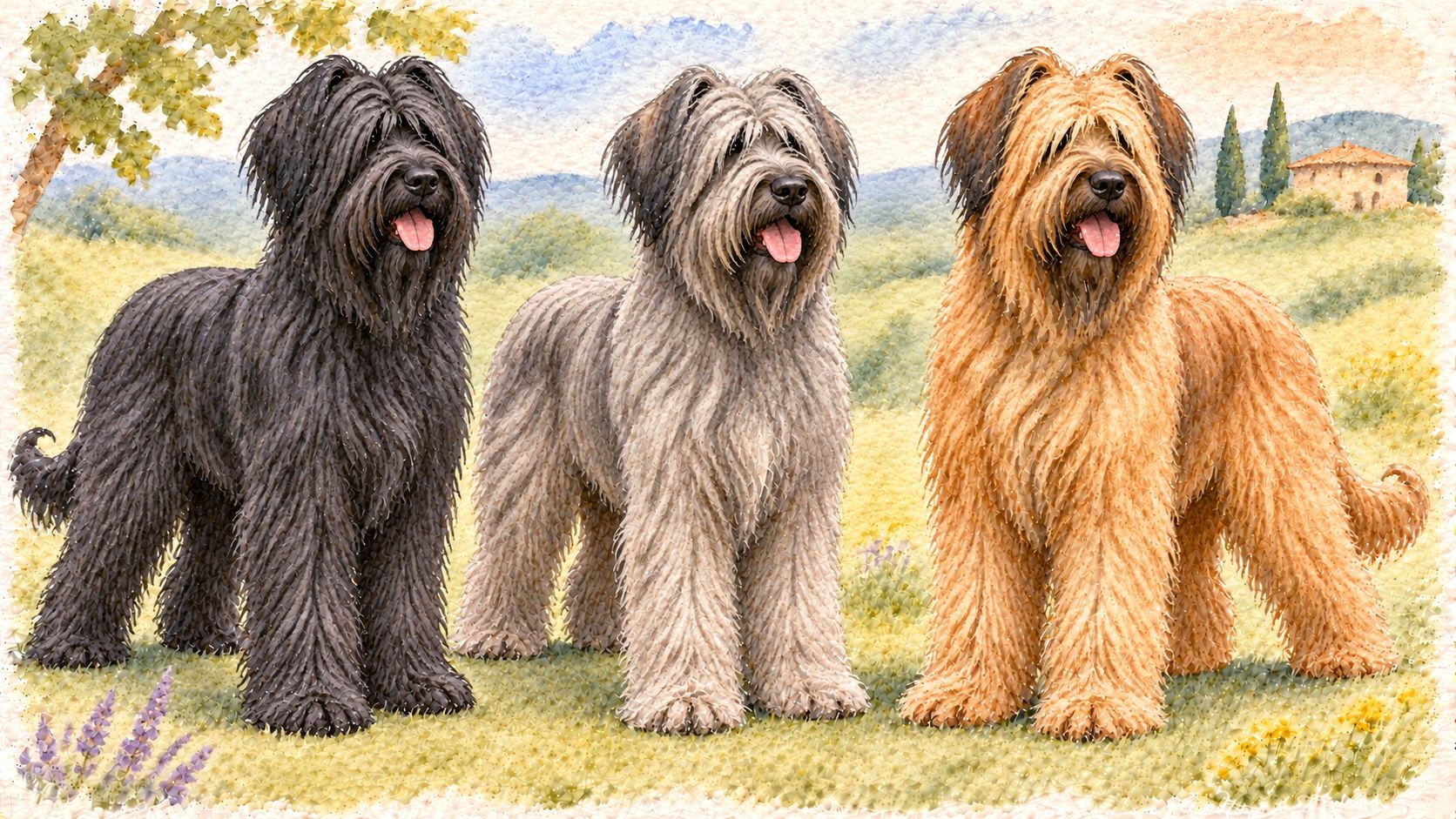
Accepted colors include black, various shades of gray, and various shades of tawny. Tawny puppies often darken as they mature, and many tawny dogs show darker shading on the ears, muzzle and back. A solid, rich color is preferred, although some coats shift in tone over the years.
Briard Temperament and Personality
The Briard temperament combines loyalty, courage and intelligence. This breed is known for being:
- Loyal: These dogs bond closely with their families and like to stay near the people they love.
- Protective: Bred to guard flocks, they have a strong instinct to watch over home and family.
- Brave: This breed is rarely timid and will stand its ground when it senses a threat.
- Intelligent: These dogs learn quickly and have an excellent memory, for good habits and bad.
- Independent: As thinking herders, they sometimes like to make their own decisions.
They are usually reserved with strangers. They are not typically unfriendly, but they prefer to size up new people before warming up. This natural caution makes them fine watchdogs, but it also means early socialization is a must.
Are Briards Good Family Dogs?
Yes, Briards can be excellent family dogs for active households that can meet their needs. They are affectionate and devoted, and many seem to view their family as their personal flock.
Is the Briard Good With Kids and Other Pets?
This breed is often gentle and patient with children in its own family. However, its herding instincts may lead it to nudge or gather running kids, and its size can easily knock over a toddler. Supervision and teaching children how to behave around dogs are important.
With other pets, they usually do well when raised alongside them. Some can be bossy with unfamiliar dogs, especially those of the same sex. Introducing a young puppy to many people, animals, sounds and places early on will help it grow into a calm, confident adult.
Training a Briard
These dogs are smart and eager to please, but they can also be willful. They respond best to calm, confident leadership and positive reinforcement. Harsh methods tend to backfire with this sensitive, proud breed and can damage the trust it places in you.
Here are a few training tips for new owners:
- Start early. Begin training and socialization as soon as your puppy comes home.
- Be consistent. These dogs remember everything, so set clear rules and stick to them.
- Keep it interesting. Vary exercises and use play, praise and treats to keep sessions fun.
- Channel the herding drive. Teach a reliable "leave it" and recall so your dog does not try to herd kids, cyclists or cars.
- Try dog sports. Many can excel at herding trials, obedience, agility, rally and tracking.
The breed's brains and steady nature have made it useful far beyond the farm. Over the years, the breed has worked in police and military roles and in search and rescue.
Exercise Needs
This breed has a moderate to high energy level and needs daily exercise. Plan on at least an hour of activity each day, such as brisk walks, jogging, hiking or games of fetch in a securely fenced yard.
Mental exercise is just as important. A bored dog may invent its own jobs, which can include barking, digging or herding the household. Puzzle toys, training games and dog sports help keep its clever mind busy.
Because of its size and energy, it usually does best in a home with a yard rather than a small apartment. Its thick coat makes it comfortable in cool weather, but on hot days keep exercise to the cooler hours and provide shade and fresh water.
Briard Grooming
Do Briards Shed?
Yes, they shed a moderate amount. The long hair tends to tangle in the coat rather than fall out, which is why regular brushing matters so much. The breed is not considered hypoallergenic.
Briard grooming is a real commitment. Without regular care, that beautiful coat can quickly develop painful mats, especially behind the ears, under the legs and around the beard.
Grooming Routine
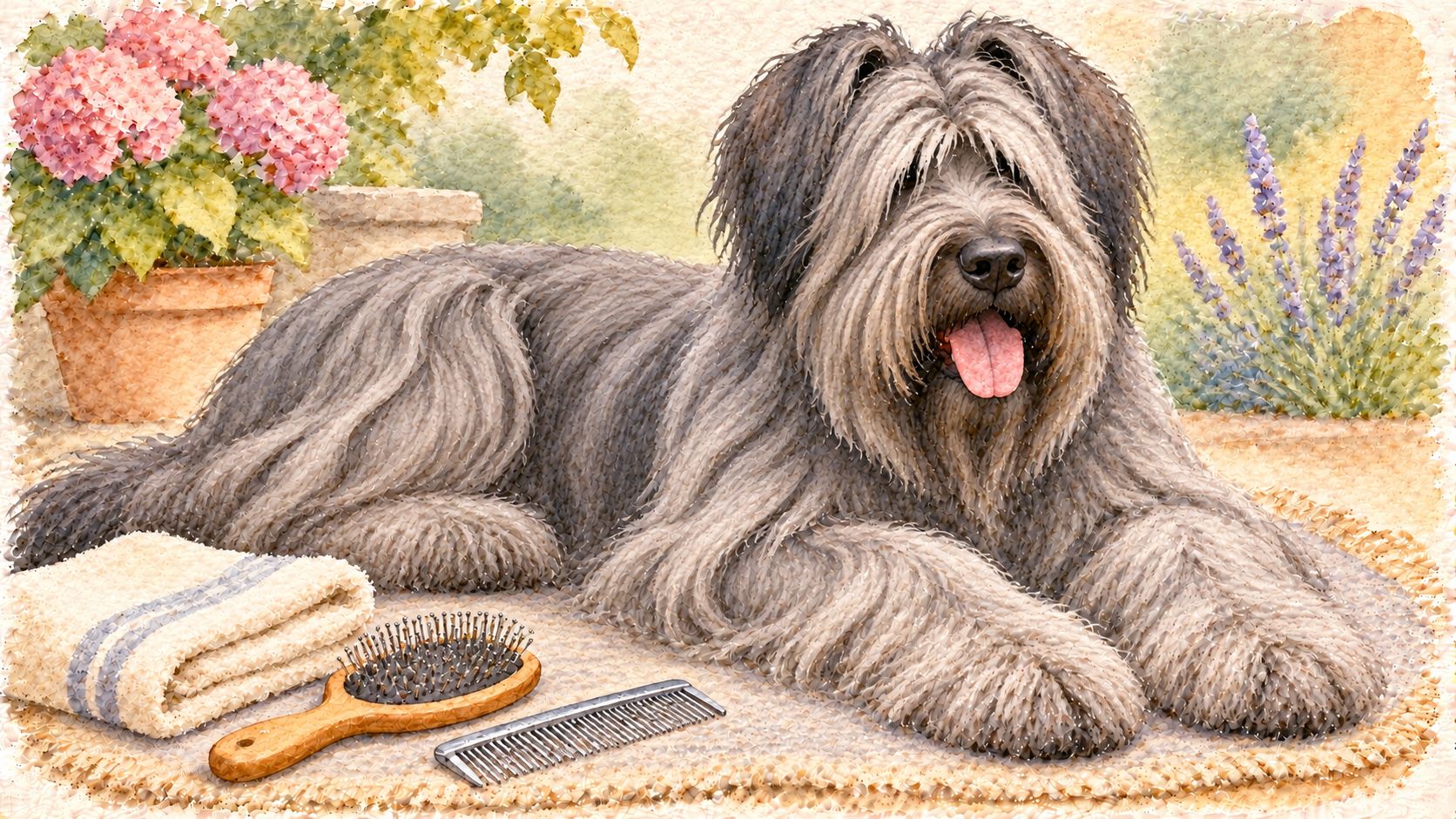
- Brushing: Brush often, ideally daily or at least several times a week, working down to the skin with a pin brush and comb to prevent mats.
- Bathing: Bathe every month or two, or when the coat gets dirty, and make sure it is fully dry and brushed out afterward.
- Face care: Wipe the beard after meals and check the eyebrows and mustache for food and debris.
- Feet: Trim the hair between the paw pads to help with traction and cleanliness.
- Nails: Trim nails regularly, including the double dewclaws on the hind legs, which do not wear down on their own.
- Ears and teeth: Check ears weekly and brush your dog's teeth several times a week.
Many owners schedule visits with a professional groomer, but most of the daily work happens at home. Starting grooming routines in puppyhood helps your dog learn to enjoy the process.
Briard Health and Lifespan
How Long Do Briards Live?
The average Briard lifespan is around 12 years, and some live a little longer with good care. Like all breeds, it can be prone to certain health conditions. Responsible breeders screen their dogs for concerns that may include:
- Hip dysplasia: An abnormal formation of the hip joint that can lead to stiffness or arthritis.
- Bloat (gastric dilatation-volvulus): A serious emergency in which the stomach fills with gas and may twist, more common in large, deep-chested dogs.
- Eye conditions: Including congenital stationary night blindness, an inherited condition for which DNA testing is available, and progressive retinal atrophy.
- Hypothyroidism: An underactive thyroid gland that can affect weight, energy and coat.
Knowing the signs of bloat, such as a swollen belly, restlessness or unproductive retching, is wise for any large-breed owner. Always work with your veterinarian to set up a routine of checkups, vaccinations and preventive care, and to discuss feeding habits that support your dog's health.
Feeding and Nutrition
As a large, active breed, this dog does best on a high-quality dog food made for large dogs. Large-breed formulas are designed with the energy, joint and growth needs of big dogs in mind.
Puppies grow quickly, so they should eat a food formulated for large-breed puppies to support steady, healthy development. Portion sizes depend on your dog's age, weight and activity level. Follow the package guidelines, ask your veterinarian for advice, and keep treats to a small share of daily calories to prevent weight gain.
History of the Briard
This is an old French breed, and dogs resembling it appear in artwork and writings going back several centuries. Some legends link the breed to Charlemagne, though such early stories are hard to confirm. What is clear is that for generations, these dogs guarded and herded sheep in rural France.
The breed reached America early. The Marquis de Lafayette is often credited with bringing the breed to the United States, and Thomas Jefferson also imported the breed. Even so, it remained uncommon in America for many years.
During World War I, the breed served as the official dog of the French army. These dogs carried supplies, ran messages and helped locate wounded soldiers on the battlefield. Their courage and keen hearing made them valued partners during wartime.
After the war, American soldiers returning home brought new interest in the breed. The American Kennel Club recognized the breed in 1928, and the Briard Club of America was founded that same year. Today, the breed remains fairly rare but has a passionate following.
Briard vs Bouvier des Flandres
The Briard and the Bouvier des Flandres are both large, bearded European herding dogs, so people often compare them. The Briard has a long, flowing, wavy coat and a lighter, more agile build. The Bouvier, from Belgium, has a shorter, rough, tousled coat and a heavier, more compact body. Both are loyal and protective, and both need committed owners and regular grooming.
Is a Briard Right for You?
A Briard could be a wonderful match if you:
- Want a loyal, protective and affectionate companion
- Lead an active lifestyle and enjoy daily walks, hikes or dog sports
- Have a home with a securely fenced yard
- Can commit to frequent brushing and coat care
- Have experience with confident, intelligent dogs
- Are ready for consistent, positive training
A Briard may not be the best fit if you:
- Live in a small apartment with little outdoor space
- Have limited time for grooming
- Want a dog that is instantly friendly with every stranger
- Are away from home for long hours most days
Finding a Briard Puppy
Because this is a fairly rare breed, you may need to join a waiting list for a puppy from a reputable breeder. Look for breeders who health-test their dogs for conditions such as hip dysplasia and night blindness, raise puppies in a home environment and welcome your questions. Breed clubs and rescue groups are also worth checking, since adult dogs sometimes need new homes.
Fun Facts About the Briard
- This breed is often nicknamed "a heart wrapped in fur."
- The breed standard calls for double dewclaws on each hind leg.
- These dogs served as the official French army dog during World War I.
- Thomas Jefferson was among the early Americans to import the breed.
- The breed's smooth, agile movement is sometimes called "quicksilver."
- Tawny puppies often grow darker as they mature.
Frequently Asked Questions
How big do Briards get?
Adult males usually stand 23 to 27 inches tall and females 22 to 25.5 inches. Most weigh roughly 55 to 100 pounds, depending on sex and build.
Are Briards good family dogs?
Yes, they can be loving, devoted family dogs for active households. They are protective and gentle with their own people, but supervision around small children is important because of their size and herding instincts.
Do Briards shed a lot?
They shed a moderate amount. Their long hair tends to tangle in the coat, so frequent brushing is needed to prevent mats and keep loose hair under control.
How long do Briards live?
The average Briard lifespan is around 12 years. Good nutrition, regular exercise and routine veterinary care help support a long, healthy life.
Are Briards easy to train?
They are intelligent and eager to please, but they can be willful. They learn best with patient, consistent and reward-based training that starts in puppyhood.
Why do Briards have double dewclaws?
Double dewclaws on the hind legs are a traditional feature of the breed and are required by the standard. Their original purpose is not certain, but they remain a hallmark of the Briard.
Final Thoughts
The Briard is a loyal, brave and deeply affectionate herding dog with centuries of French history behind it. Its flowing coat takes real commitment, and its clever mind needs daily work. For an active owner who can offer training, exercise and plenty of brushing, a Briard can become a devoted guardian and a true heart wrapped in fur.