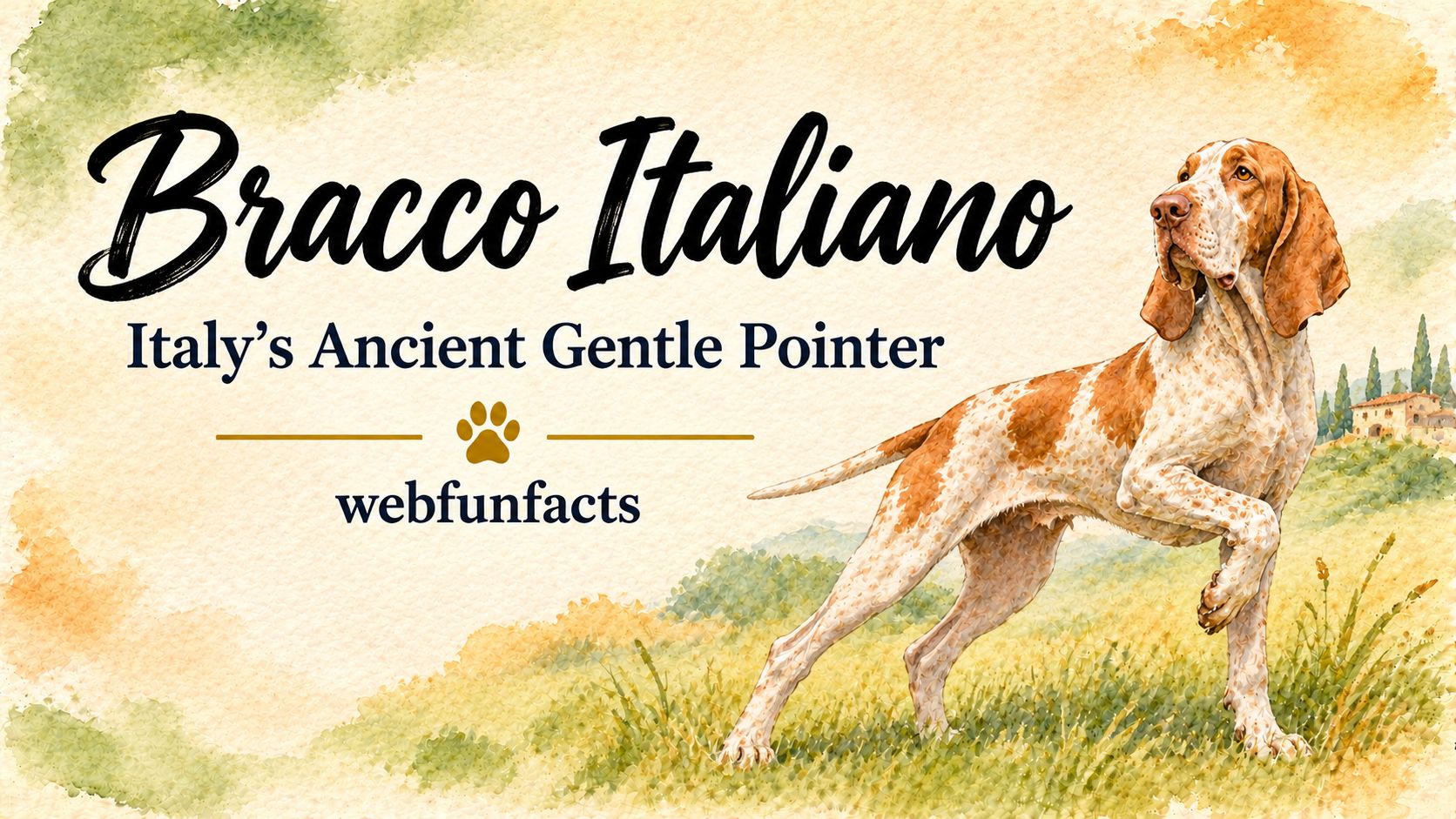
The Bracco Italiano is one of the oldest pointing dogs in the world, a noble Italian hunting breed with a soulful face, long velvety ears and a famously sweet nature. Also known as the Italian Pointer or Italian Pointing Dog, this breed has been helping hunters find birds for centuries. Its roots may stretch back as far as the 4th or 5th century B.C.
At home, the same dog that works tirelessly in the field turns into a goofy, loving and slightly clownish family member. In this complete Bracco Italiano dog breed guide, you will learn about its size, temperament, training, exercise needs, grooming routine, health, diet and remarkable history, so you can decide whether this gentle athlete is the right companion for you.
Bracco Italiano at a Glance
| Trait | Details |
|---|---|
| Breed group | Sporting (AKC) |
| Height | About 22 to 27 inches (56 to 69 cm) |
| Weight | About 55 to 90 pounds (25 to 41 kg) |
| Life expectancy | 10 to 14 years |
| Coat | Short, dense, glossy |
| Colors | White, or white with orange, brown or chestnut markings; roan |
| Shedding | Moderate; heavier twice a year |
| Energy level | High |
| Temperament | Gentle, affectionate, goofy, eager to please, sensitive |
| Good for | Active, experienced owners; rural or suburban homes |
| Origin | Northern Italy (ancient) |
What Is a Bracco Italiano?
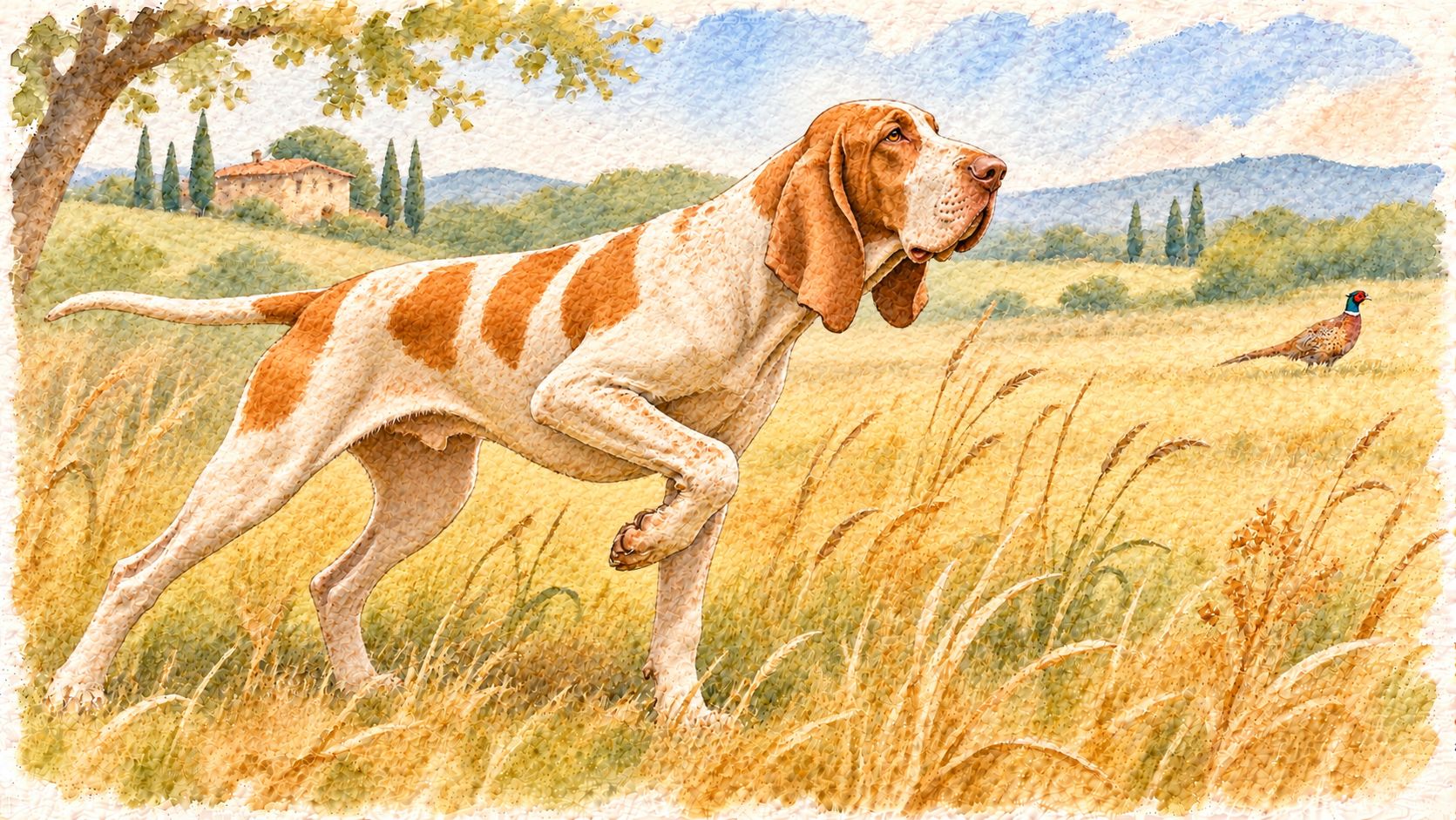
The Bracco Italiano is a large, powerful pointing breed from Northern Italy. Pointing dogs were developed to search for game birds, freeze in a "point" to show the hunter where the bird is hiding, and then retrieve it once it has been shot. The Bracco is a versatile gundog that can do all of these jobs.
It is often called the oldest European pointer, and it was a favorite of Italian nobility for hundreds of years. The American Kennel Club fully recognized the Bracco Italiano in 2022 as a member of the Sporting Group. Today, it is valued both as a talented hunting partner and as an affectionate family dog.
Bracco Italiano Size and Appearance
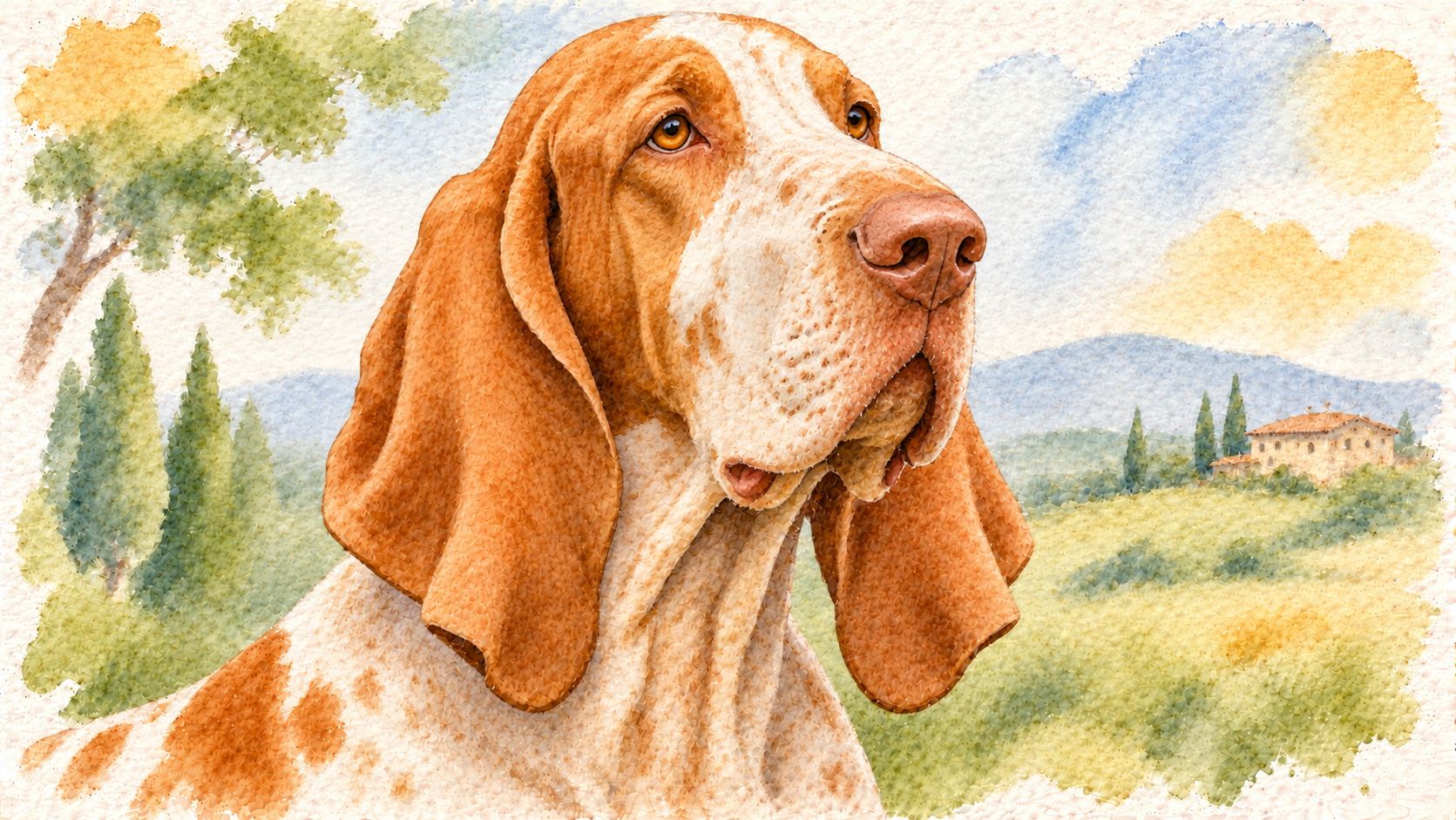
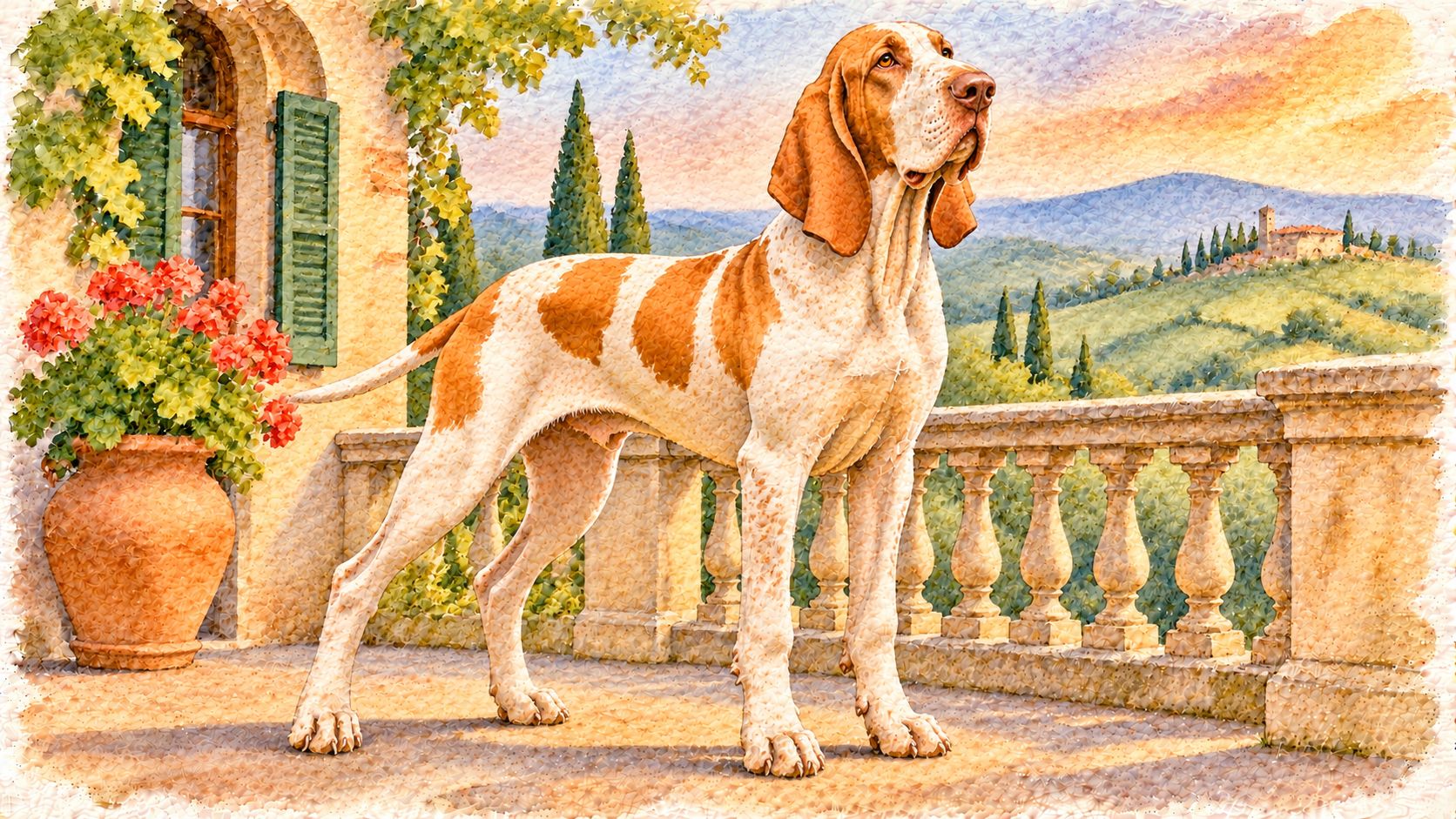
The Bracco is a sturdy, athletic dog with a noble look. It has a large, long head, a gentle expression, long floppy ears and slightly loose skin, which gives it soft jowls around the muzzle. Its body is strong and muscular, with lean limbs built for covering a lot of ground.
How Big Do Bracco Italianos Get?
Bracco Italianos are large dogs that usually stand about 22 to 27 inches (56 to 69 cm) tall at the shoulder and weigh roughly 55 to 90 pounds (25 to 41 kg). Males are generally taller and heavier than females. Some sources describe the breed as medium to large, but most adults fall comfortably into the large-dog range.
In the field, the Bracco is known for a distinctive, ground-covering trot rather than a gallop. It often moves with its head held high, using its nose to catch scent on the air.
Coat and Colors
The Bracco wears a short, dense and glossy coat. The hair is even finer and thinner on the head, ears, front of the legs and feet. This sleek coat shows off the dog's muscular build and makes it relatively easy to care for.
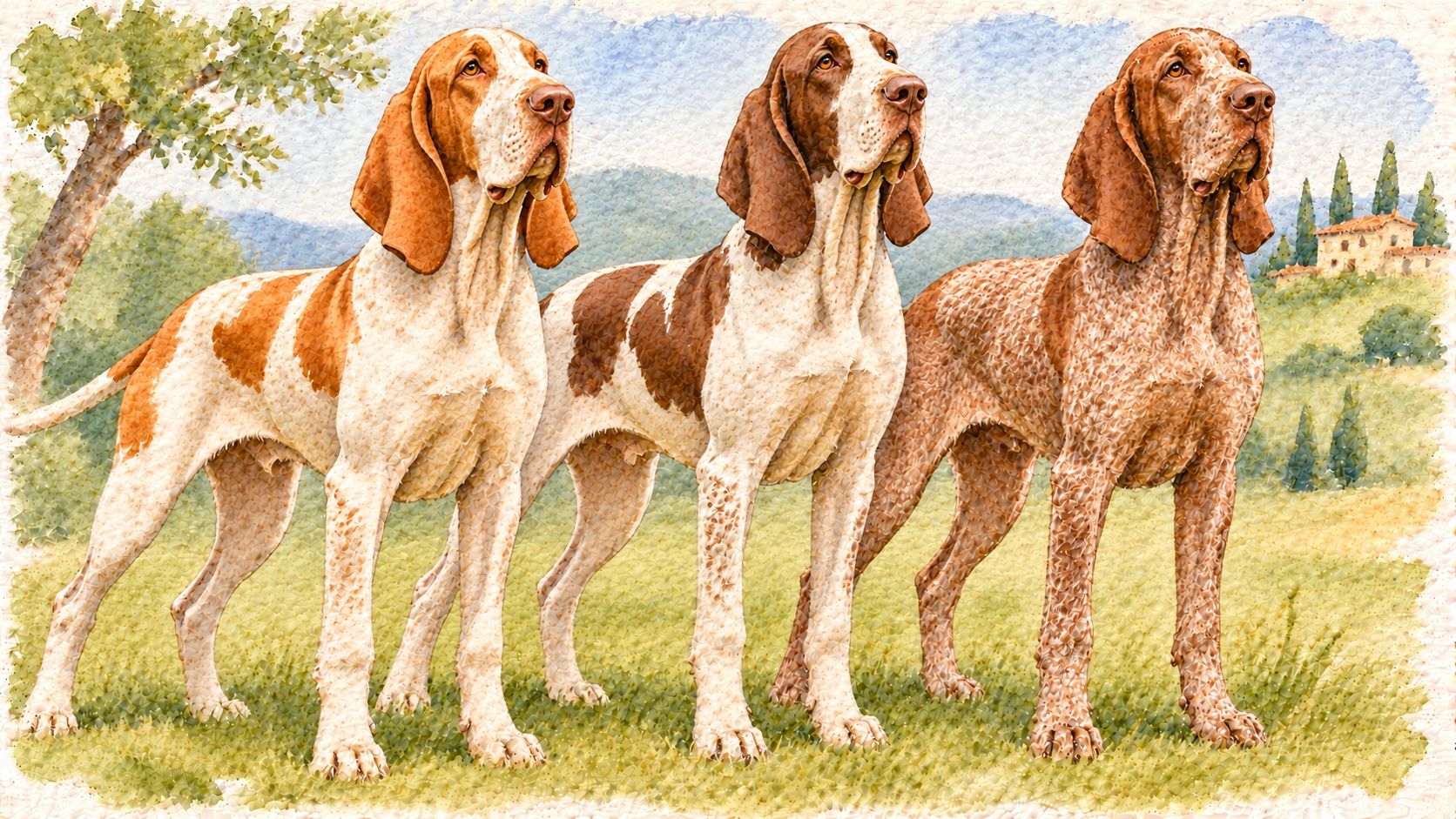
Accepted colors center on white. A Bracco may be all white, or white with orange, brown or chestnut markings. Markings can appear as larger patches, small speckles called ticking, or a mixed pattern called roan. Some dogs also have a symmetrical mask on the face.
Bracco Italiano Temperament and Personality
The Bracco Italiano temperament is one of the breed's biggest selling points. These dogs are known for being:
- Gentle and affectionate: Braccos bond closely with their families and love being near their people.
- Goofy and fun-loving: Many owners describe them as lovingly clownish, with silly antics that keep the household laughing.
- Eager to please: They enjoy working with their owners and usually respond well to training.
- Calm indoors: With enough daily exercise, a Bracco is often easygoing and relaxed at home.
- Sensitive: This breed does not react well to harsh handling and does best with a soft, patient approach.
Because they are so people-oriented, Braccos do not like being left alone for long stretches. A lonely or bored Bracco may develop separation anxiety, which can show up as chewing or excessive barking. This breed is happiest in a home where someone is around for much of the day.
Are Bracco Italianos Good Family Dogs?
Yes, Bracco Italianos can be wonderful family dogs for active households. They are loving and patient, and they tend to do best with older children who can handle a large, energetic dog. Their size and enthusiasm can accidentally knock over toddlers, so supervision is always important with young kids.
Are Bracco Italianos Good With Other Pets?
The Bracco usually gets along with other dogs, especially when raised with them. However, it has a strong prey drive from its hunting background. Some Braccos may never fully adjust to living with cats, small dogs or pet rodents, because the urge to chase can be hard to switch off.
Early socialization makes a big difference. Introduce your Bracco Italiano puppy to many people, animals, sounds and places so it grows into a confident, well-mannered adult.
Training a Bracco Italiano
Braccos are intelligent and eager to learn, which makes them fairly easy to train for a sporting breed. They can, however, show an independent streak if training is inconsistent. Gentle, positive methods that use praise, play and treats bring out the best in this sensitive dog.
Here are a few training tips for new owners:
- Start early. Begin basic manners and socialization the day your puppy comes home.
- Stay positive. Harsh corrections can make a Bracco anxious or unwilling, so reward good behavior instead.
- Work on recall. A strong prey drive means your dog may follow its nose. Practice coming when called in a safe, enclosed area.
- Teach alone time gradually. Short, calm absences help prevent separation anxiety later on.
- Give it a job. Scent work, field training, obedience and agility all let this clever dog use its natural talents.
Exercise Needs
This is a high-energy working dog that needs plenty of daily exercise and mental stimulation. Long walks, hikes, runs and supervised play in a secure area will help keep it fit and content. Many Braccos also love swimming and scent games.
This is not a breed for apartment life or a mostly indoor routine. It does best in a rural or suburban home with access to open spaces and a securely fenced yard. Off-leash running should only happen in a safe, enclosed place, because a Bracco that catches an interesting scent may wander off to investigate.
Mental exercise matters just as much as physical activity. Puzzle toys, training sessions and nose-work games help tire out the busy mind of this hunting dog. A well-exercised Bracco is usually a calm and pleasant companion in the house.
In hot weather, plan activity for the cooler parts of the day and provide shade and fresh water. The short coat also means the breed should not stay outside in very cold or extreme weather for long.
Bracco Italiano Grooming
Bracco Italiano grooming is fairly simple thanks to the short, smooth coat. However, the breed's long ears and loose lips need regular attention.
Do Bracco Italianos Shed?
Yes, Bracco Italianos shed. Their short coat sheds a moderate amount year-round, with heavier shedding seasons about twice a year. Regular brushing helps remove loose hair and keeps the coat glossy.
Grooming Routine
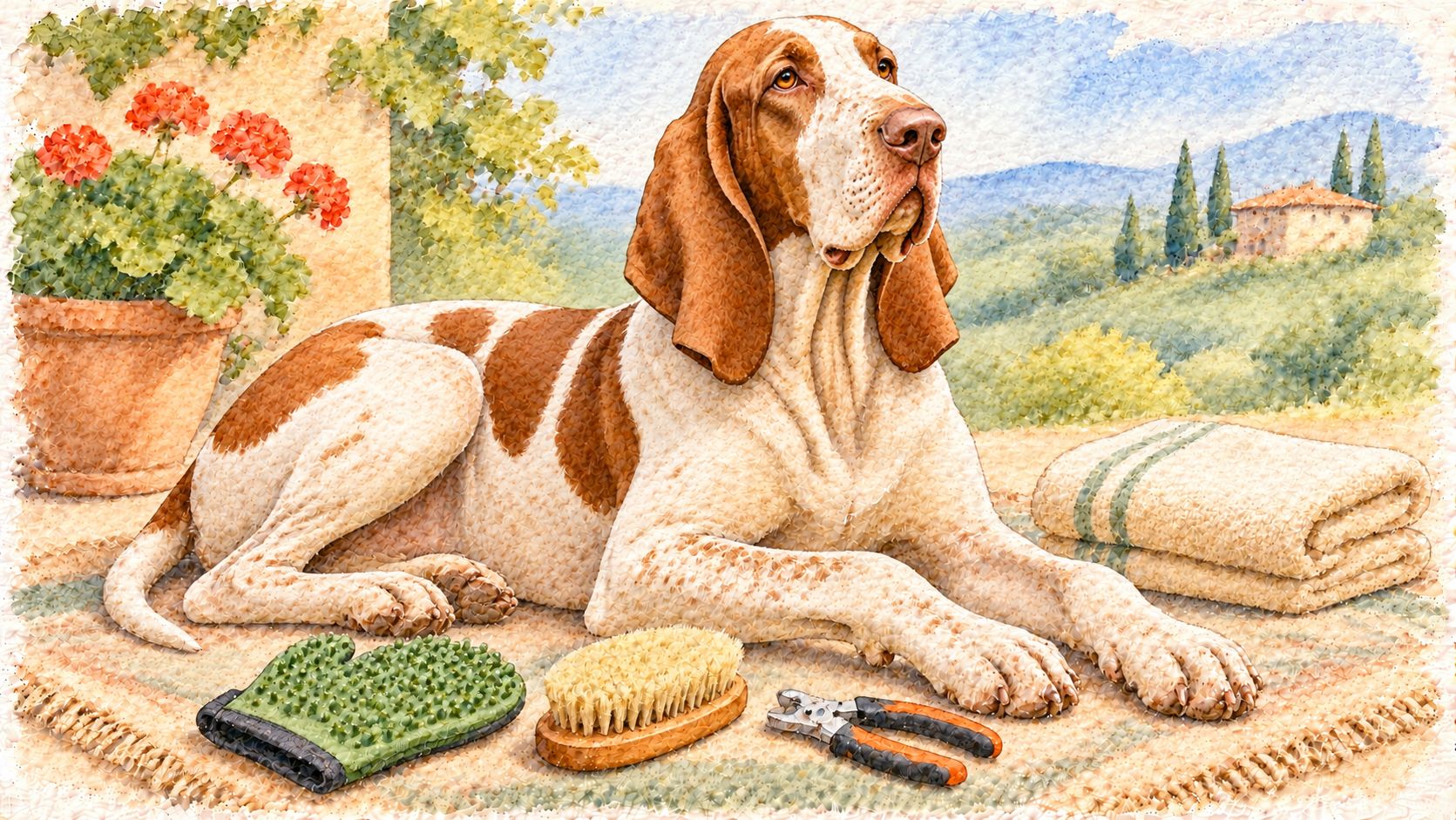
- Brushing: Brush the coat once a week with a soft brush or grooming mitt, and more often during shedding seasons.
- Bathing: Bathe only when your dog is truly dirty, since frequent baths can strip away the coat's natural oils.
- Ears: Check and clean the long, droopy ears weekly. Their shape traps warmth and moisture, which can lead to ear infections.
- Jowls and skin folds: Wipe the lips and any skin folds to keep them clean and dry. Like many breeds with loose lips, a Bracco may drool a little.
- Nails and paws: Trim nails regularly to prevent cracks and splits, and check paw pads after outdoor adventures.
- Teeth: Brush your dog's teeth often to help prevent tartar buildup and gum problems.
Bracco Italiano Health and Lifespan
The average Bracco Italiano lifespan is about 10 to 14 years with good care. The breed is generally robust, but like all breeds it can be prone to certain health conditions. Responsible breeders screen their dogs, and common concerns may include:
- Hip dysplasia: An abnormal formation of the hip joint that can lead to stiffness or arthritis.
- Bloat: A serious, sudden stomach condition that can affect deep-chested breeds. Ask your veterinarian about the warning signs.
- Kidney disease: Some lines may be affected by kidney problems, so health testing is important.
- Ear infections: The breed's long, heavy ears can trap moisture and debris.
Keeping your Bracco at a healthy weight, providing regular exercise and staying on top of routine checkups all support long-term health. Always work with your veterinarian on vaccinations, parasite prevention and a preventive care plan that suits your dog.
Feeding and Nutrition
A large, active dog like the Bracco does best on a high-quality dog food with good-quality protein and moderate amounts of healthy fat. Choose a formula made for your dog's life stage, whether puppy, adult or senior, and consider a large-breed recipe.
Scheduled meals are generally recommended over leaving food out all day. Many owners feed two separate meals daily, and a slow-feeder bowl can help dogs that tend to gulp their food. Treats are great for training, but they should make up only a small part of your dog's daily calories. Follow the feeding guide on the food label and ask your veterinarian how much your individual dog needs.
History of the Bracco Italiano
The history of the Bracco Italiano reaches back further than almost any other gundog. Many experts believe its ancestors date to the 4th or 5th century B.C., making it a strong candidate for the oldest pointing breed in Europe.
The breed developed in Northern Italy, where two regional types appeared. A lighter white-and-orange type came from the Piedmont region, while a heavier roan-and-brown type came from Lombardy. Over time, breeders combined these two varieties into the single breed we know today.
During the Middle Ages and the Renaissance, the Bracco was a prized hunting companion of the Italian aristocracy. Noble families, including the famous Medici, kept these dogs, and Braccos were sent as valued gifts and exported to other parts of Europe. The breed's popularity peaked during the Renaissance.
In later centuries, the Bracco's numbers fell sharply, and by the late 1800s and early 1900s the breed was in danger of disappearing. Dedicated Italian enthusiasts worked to revive it in the 20th century, and the Bracco slowly regained its place in the field.
The breed arrived in North America much more recently. The American Kennel Club recognized the breed in 2022, and it made its debut at the Westminster Kennel Club Dog Show in 2023, competing in the Sporting Group for the first time.
Bracco Italiano vs Spinone Italiano
The Bracco Italiano and the Spinone Italiano are both ancient Italian hunting breeds, and they are often compared. The biggest difference is the coat: the Bracco has a short, smooth coat, while the Spinone wears a rough, wiry coat with a shaggy beard. Both are gentle, affectionate pointing breeds, but the Bracco's sleek coat makes grooming a little simpler.
Is a Bracco Italiano Right for You?
A Bracco Italiano could be a great match if you:
- Lead an active, outdoor lifestyle and enjoy hiking, running or hunting
- Live in a rural or suburban home with a securely fenced yard
- Want a loving, gentle and goofy family companion
- Can spend plenty of time with your dog each day
- Have experience training dogs with positive, patient methods
- Live with adults or older children
This breed may not be the best fit if you:
- Live in a small apartment with no outdoor space
- Are away from home for long hours most days
- Keep cats, rabbits or other small pets that might trigger its chase instinct
- Want a low-energy dog or a breed that never drools
Finding a Bracco Italiano Puppy
The Bracco is still uncommon in the United States, so you may need to join a waiting list for a puppy from a reputable breeder. Look for breeders who health-test their dogs, raise puppies in a home environment and gladly answer your questions about the parents. Breed clubs and rescue groups are also worth contacting, since adult Braccos sometimes need new homes.
Fun Facts About the Bracco Italiano
- The breed may date back to the 4th or 5th century B.C.
- In English, it is often called the Italian Pointer or Italian Pointing Dog.
- The breed was a favorite of Italian nobility, including the Medici family.
- The Bracco originally came in two regional types, from Piedmont and Lombardy.
- It is known for hunting at a fast, efficient trot with its head held high.
- The breed made its Westminster Kennel Club Dog Show debut in 2023.
Frequently Asked Questions
What does "Bracco Italiano" mean?
"Bracco" is an Italian word for a pointing or hunting dog, so the name roughly means "Italian Pointer." It reflects the breed's long history as a bird-hunting dog in Italy.
How big do Bracco Italianos get?
Adult Braccos usually stand about 22 to 27 inches tall at the shoulder and weigh around 55 to 90 pounds, with males typically larger than females.
Are Bracco Italianos good family dogs?
Yes, they are affectionate, gentle and goofy companions for active families. They usually do best with older children and need plenty of daily exercise and company.
How long do Bracco Italianos live?
The average Bracco Italiano lifespan is about 10 to 14 years with a healthy diet, regular exercise and routine veterinary care.
Do Bracco Italianos drool?
Their loose lips and soft jowls mean some Braccos drool, especially after drinking or eating. Keeping a towel handy and wiping the jowls helps keep things tidy.
Can a Bracco Italiano live in an apartment?
A Bracco is generally not suited to apartment living. This high-energy breed thrives with open space, a securely fenced yard and lots of daily activity.
Final Thoughts
The Bracco Italiano blends ancient hunting talent with a heart full of affection and a delightfully goofy streak. It needs an active owner, plenty of exercise and lots of time together, but it gives back loyalty, gentleness and endless charm. If you can offer space, patience and daily adventures, a Bracco Italiano may be the perfect companion for your family.