The Puli is one of the most eye-catching dogs you will ever see, thanks to a coat of long, natural cords that makes it look like a lively, bouncing mop. Beneath that unusual coat is a quick, clever and devoted herding dog from Hungary. It has worked alongside shepherds for more than a thousand years.
This breed is playful, alert and full of character, and it keeps its puppyish sense of fun well into old age. In this complete dog breed guide, you will learn about its size, temperament, coat care, exercise needs, health, diet and history, so you can decide whether this one-of-a-kind herder belongs in your home.
Puli at a Glance
| Trait | Details |
|---|---|
| Breed group | Herding (AKC) |
| Height | About 16 to 17 inches (41 to 43 cm) |
| Weight | 25 to 40 pounds (11 to 18 kg) |
| Life expectancy | About 10 to 15 years |
| Coat | Long, woolly, corded or brushed |
| Colors | Black, silver, white, cream and others |
| Shedding | Low |
| Energy level | Moderate |
| Temperament | Affectionate, alert, protective, clever |
| Good for | Active families, experienced owners |
| Origin | Hungary (ancient) |
What Is a Puli?
This is a compact herding breed from Hungary, where it was used for centuries to gather and move flocks of sheep. It is small enough to be agile and quick, yet tough enough to work long days in all kinds of weather. The plural of the name in Hungarian is "Pulik."
Today, the breed is a member of the American Kennel Club's Herding Group. It is still fairly rare in the United States, but its devoted fans love its intelligence, loyalty and playful spirit as much as its famous coat.
Puli Size and Appearance
How Big Do Pulik Get?
Males usually stand about 17 inches tall at the shoulder, and females are about 16 inches. Most adults weigh between 25 and 40 pounds, making this a true medium-sized dog.
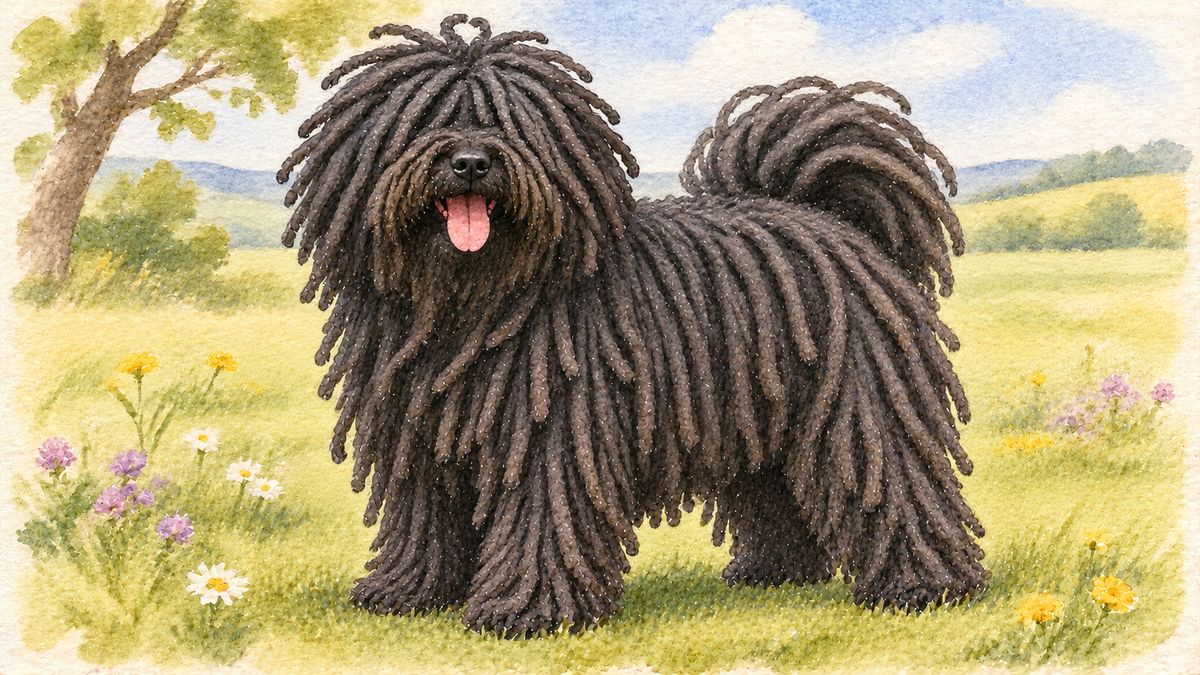
Under the coat, the body is compact, square and muscular. The breed moves with a light, springy gait and can change direction in a flash, which was useful when turning sheep. The coat covers so much of the face that the dark eyes are often hidden, but the dog can see perfectly well through its cords.
The Famous Corded Coat
The coat is the breed's signature feature. It has a soft, woolly undercoat and a coarser outer coat. As the dog grows, the two layers naturally twist together to form cords, which can become long enough to reach the ground on a mature adult.
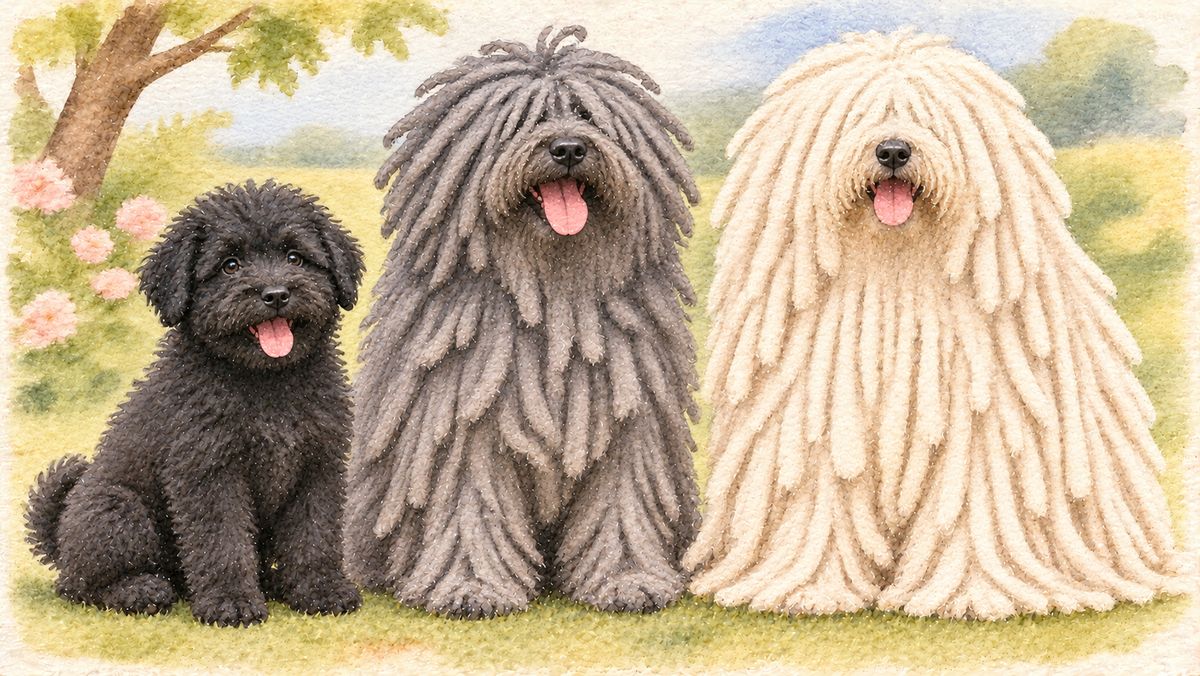
Puppies are born with fluffy, uncorded coats. Cords usually start forming around 9 months of age and keep developing until about 5 years old. Some owners choose to keep the coat brushed out instead of corded, which gives a fluffy, wavy look.
Black is the most familiar color, but the breed also comes in silver, white and cream, and some sources list other shades as well.
Puli Temperament and Personality
The Puli temperament combines the brains of a working herder with the heart of a family companion. These dogs are known for being:
- Affectionate: They form close, loving bonds with their families.
- Alert: Very little escapes their notice, and they will let you know when something is happening.
- Protective: They are naturally watchful and make excellent watchdogs.
- Clever: They are quick thinkers that learn fast and sometimes prefer to make their own decisions.
- Playful: Many stay fun-loving and clownish throughout their lives.
These dogs can be reserved with strangers, which is part of their watchdog nature. With early socialization, most learn to accept new people politely while still keeping an eye on the household.
Are Pulik Good Family Dogs?
Yes, they can be wonderful family dogs for active households. They are affectionate with their people and enjoy being involved in family life.
With children, they are usually best with kids who are old enough to treat a dog respectfully. Their herding instinct may lead them to nudge or circle running children, so teaching both dog and kids good manners is important. Most get along with other pets they are raised with. Early socialization helps a young dog grow into a confident, friendly adult.
Do Pulik Bark a Lot?
Yes, they can be quite vocal. As herders and watchdogs, these dogs were expected to sound the alarm, and many still bark to announce visitors, unusual sounds or anything they find suspicious.
Training, daily exercise and plenty of mental stimulation help keep barking at a reasonable level. Rewarding calm behavior early on makes a big difference as your dog matures.
Training a Puli
These smart dogs learn quickly, but they also have an independent streak. They were bred to make decisions while herding, so they may question commands that seem pointless. Short, varied sessions using praise, play and treats work best.
Here are a few training tips for new owners:
- Start socialization early. Introduce your puppy to many people, places and sounds.
- Keep it interesting. Repetitive drills can bore this clever breed, so mix up the activities.
- Be consistent. Clear rules help an independent dog understand what is expected.
- Manage barking. Teach a "quiet" cue and reward calm behavior from a young age.
- Try dog sports. Many excel at herding, obedience, agility, tracking and even therapy work.
Exercise Needs
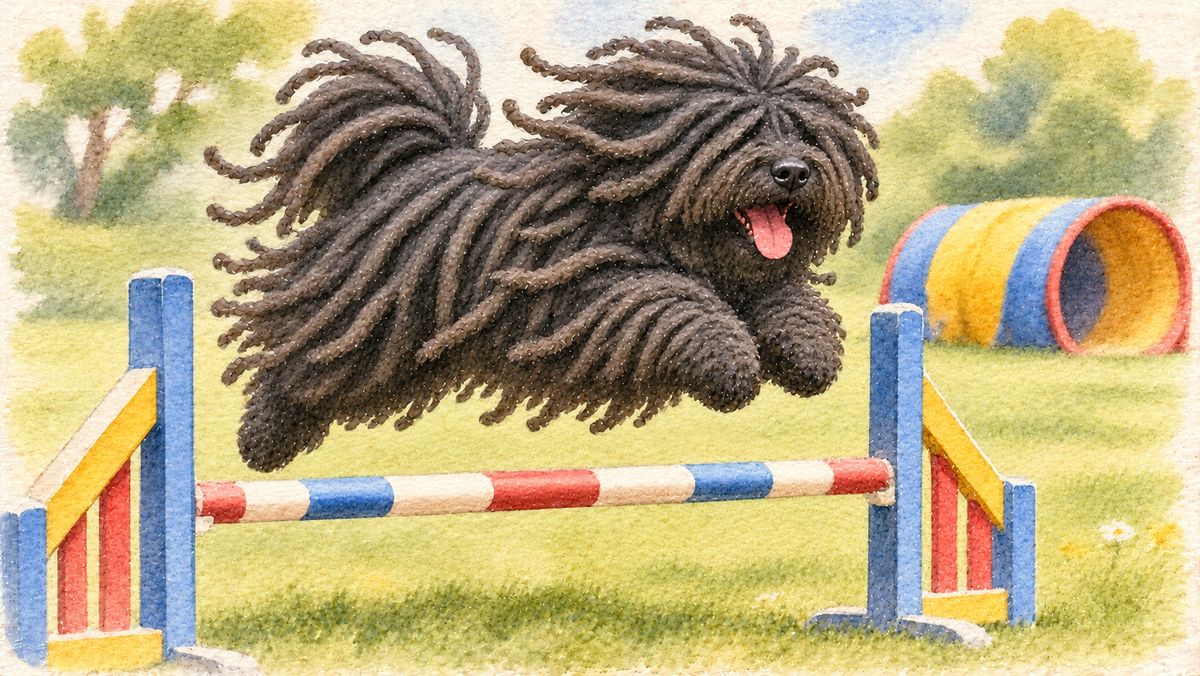
The breed needs moderate exercise every day. A couple of brisk walks plus playtime in a secure yard is usually enough for most adults. They are agile and athletic, and many enjoy chasing balls, running short courses and learning new tricks.
Mental exercise matters just as much as physical activity. Herding trials, agility classes, puzzle toys and training games give this intelligent dog a healthy outlet. A bored dog may find its own entertainment, such as barking or herding family members.
A fenced yard is helpful, and on walks a leash is wise, since the dog may decide to chase moving things. With enough daily activity, the breed can adapt to many types of homes, including larger apartments.
Weather and Living Conditions
The thick, woolly coat was designed for the cold winters and windy plains of Hungary, so these dogs are usually comfortable in cool weather. They can handle rain well, although a soaked coat takes a long time to dry.
Hot weather is more of a challenge. On warm days, keep exercise to the cooler parts of the day, offer shade and fresh water, and give your dog a cool indoor place to rest. Some owners in warmer climates keep the coat shorter to help their dogs stay comfortable.
Puli Grooming
Do Pulik Shed?
Very little. Loose hair tends to get trapped in the cords rather than falling onto your floors, which is why the breed is often considered low-shedding. No dog is truly hypoallergenic, though, so spend time with the breed if you have allergies.
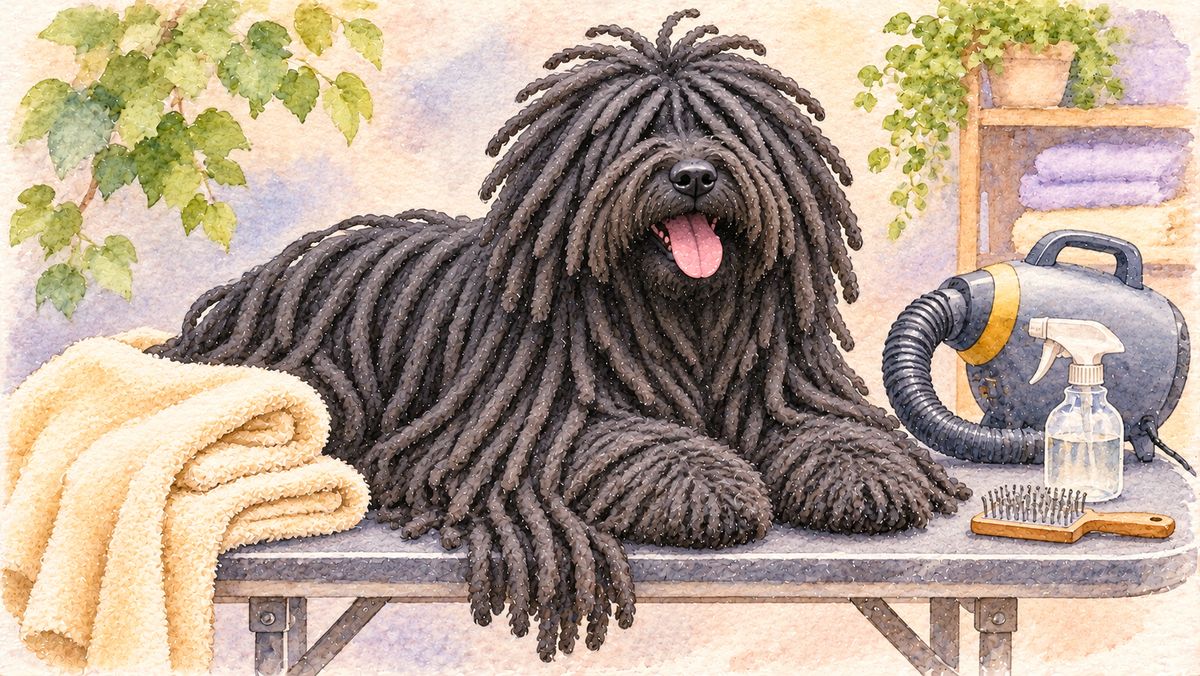
While shedding is low, Puli grooming takes real commitment. The corded coat requires extensive, regular care.
Grooming Routine
- Separating cords: As the coat develops, cords must be gently pulled apart by hand so they don't mat together into large clumps. This is usually done regularly throughout the dog's life.
- Bathing: Baths take time, and a full corded coat can take many hours, or even a day or more, to dry completely. Thorough drying is important to keep the coat fresh.
- Keeping it clean: Leaves, twigs and debris can get caught in the cords, so check the coat after outdoor play.
- Trimming: Some owners trim the cords around the feet and face for practicality.
- Nails, ears and teeth: Trim nails regularly, check ears weekly and brush teeth several times a week.
Owners who prefer a simpler routine sometimes keep the coat shorter or brushed out. A groomer who knows corded breeds can be a great help.
Puli Health and Lifespan
The breed is generally considered healthy, and the typical Puli lifespan is roughly 10 to 15 years. Many dogs stay active and playful well into their senior years.
Like all breeds, they can be prone to certain health conditions. Responsible breeders screen their dogs and may test for:
- Hip dysplasia: An abnormal formation of the hip joint.
- Eye conditions: Regular eye exams help catch problems early.
- Joint issues: Some dogs may develop knee or joint problems.
Because the coat is so thick, it is important to keep the dog cool and shaded in hot weather. Always work with your veterinarian on regular checkups, vaccinations and preventive care.
Feeding and Nutrition
A high-quality dog food made for medium-sized breeds is a good choice. Working or very active dogs may need more calories than those with a quieter lifestyle.
Puppies should eat a puppy formula that supports healthy growth. Follow the feeding guidelines on the package, adjust portions based on age, weight and activity, and ask your veterinarian for advice. Keep treats to a small part of the daily diet so your dog stays at a healthy weight. Fresh, clean water should always be available, especially after exercise and on warm days.
History of the Puli
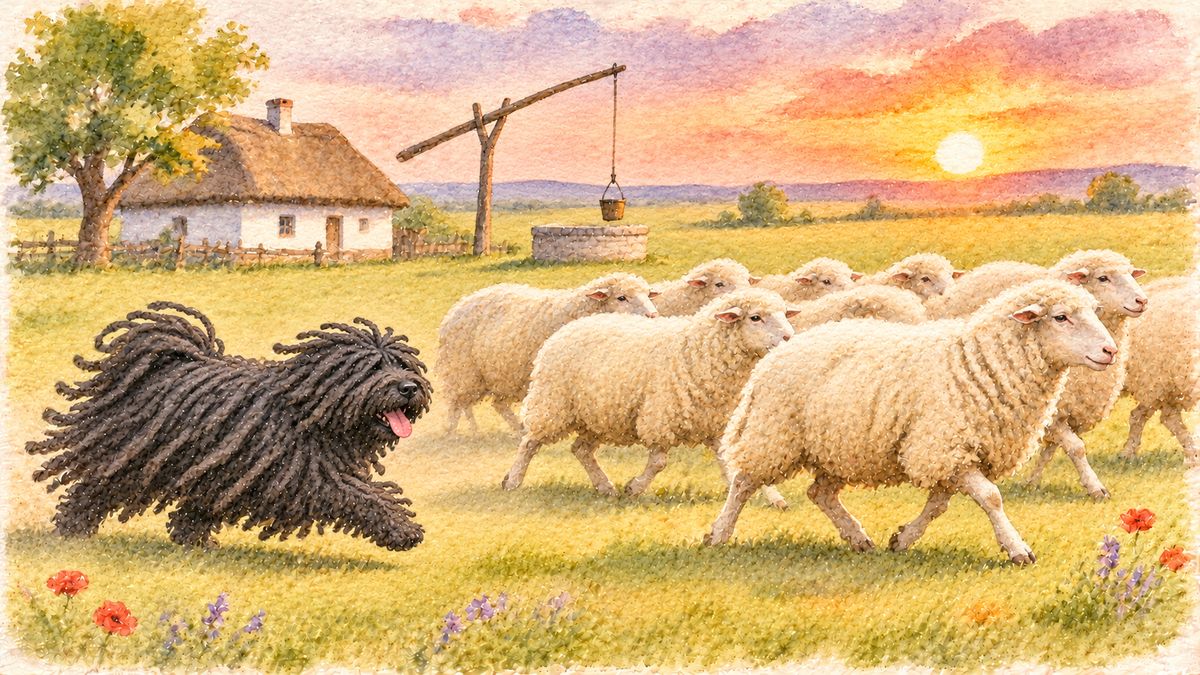
This is an ancient breed with a long history in Hungary. It is widely believed that ancestors of these dogs came to the Carpathian Basin with the Magyar people more than a thousand years ago. For centuries, the small, quick herder worked alongside shepherds on the Hungarian plains.
The Puli and the much larger Komondor often worked as a team. The Puli moved and gathered the sheep by day, while the Komondor guarded the flock against predators. Shepherds valued the little herder so highly that a good one was said to be worth a year's wages.
The breed faced hard times during the World Wars, and its numbers fell sharply. Dedicated breeders in Hungary and abroad helped it recover.
The American Kennel Club recognized the breed in 1936. In more recent years, one of the most famous members of the breed has been Beast, a white dog owned by Facebook founder Mark Zuckerberg.
Puli vs Komondor
People often compare the Puli with the Komondor, since both are Hungarian breeds with corded coats. The Komondor is a giant, white livestock guardian built to protect the flock. The Puli is a much smaller, quicker herding dog that comes in several colors and was bred to move the sheep.
Is a Puli Right for You?
Before choosing this breed, think honestly about your schedule. Coat care, daily exercise and ongoing training all take time, and these dogs are happiest when they are treated as full members of the family rather than left alone in the yard.
This breed could be a wonderful match if you:
- Want a smart, playful and loyal companion
- Can commit time to regular coat care
- Enjoy daily walks, training and dog sports
- Want an alert watchdog
- Prefer a breed that sheds very little
This breed may not be the best fit if you:
- Want a wash-and-go coat with minimal grooming
- Have little time for training and mental exercise
- Want a dog that is instantly friendly with everyone
- Need a quiet dog, since these herders like to bark
Finding a Puli Puppy
Because the breed is fairly rare, you may need to join a waiting list for a Puli puppy. Look for breeders who health-test their dogs, socialize puppies well and can teach you how to care for the coat. Breed clubs and rescue groups are also good places to look for adult dogs in need of new homes.
Fun Facts About the Puli
- The plural of the breed's name is "Pulik."
- Puppies are born without cords; the cords form over the first few years.
- These dogs can see through their cords, even though their eyes are hidden.
- The breed often worked alongside the Komondor on Hungarian farms.
- A white dog named Beast became famous as Mark Zuckerberg's pet.
- The AKC recognized the breed in 1936.
Frequently Asked Questions
How big do Pulik get?
Males are about 17 inches tall and females about 16 inches, with most adults weighing 25 to 40 pounds.
Do Pulik shed?
They shed very little, because loose hair is usually caught in the cords. However, the coat still needs a lot of regular care.
Are Pulik good family dogs?
Yes, they can be loving family dogs for active households. They do best with respectful children and early socialization.
When does a Puli coat start to cord?
Cords usually begin forming at around 9 months of age and continue developing until the dog is about 5 years old.
How long do Pulik live?
The average lifespan is roughly 10 to 15 years with good care, a healthy diet and regular veterinary checkups.
Can you brush out a Puli coat?
Yes, some owners keep the coat brushed instead of corded. A brushed coat has a fluffy look but still needs frequent grooming.
Final Thoughts
The Puli is a lively, loyal and wonderfully unique herding dog with a coat unlike any other. It brings intelligence, playfulness and centuries of history to the right home. If you can commit to coat care, daily activity and patient training, a Puli may become the most memorable companion you have ever had.