The Bavarian Mountain Hound is a sleek, red-coated scent hound from southern Germany, famous for following a trail that other dogs would have given up on hours earlier. Bred to track wounded deer and other game across steep Alpine slopes, it combines a remarkable nose with a calm, steady nature at home.
In its homeland, the breed is known as the Bayerischer Gebirgsschweißhund, which roughly translates to "Bavarian mountain blood hound." In this complete Bavarian Mountain Hound dog breed guide, you will learn about its size, temperament, exercise needs, grooming routine, health, feeding, history and whether this hard-working hound is the right fit for your lifestyle.
Bavarian Mountain Hound at a Glance
| Trait | Details |
|---|---|
| Breed group | Hound (UK Kennel Club); Scent Hound (AKC Foundation Stock Service) |
| Height | About 17 to 20.5 inches (44 to 52 cm) |
| Weight | About 44 to 55 pounds (20 to 25 kg) |
| Life expectancy | 12 to 15 years |
| Coat | Short, dense, close-lying, slightly harsh |
| Colors | Shades of red, fawn, tan, reddish brown or brindle, often with a dark mask |
| Shedding | Moderate; heavier during seasonal sheds |
| Energy level | High outdoors, calm indoors |
| Temperament | Loyal, calm, determined, devoted, reserved with strangers |
| Good for | Active, experienced owners in rural or suburban homes |
| Origin | Bavaria, Germany (late 1800s) |
What Is a Bavarian Mountain Hound?
The Bavarian Mountain Hound is a medium-sized working scent hound developed in Germany to find wounded game. Hunters relied on it to follow a "cold" trail, meaning a scent that may be many hours old, across rough mountain ground until the injured animal was located.
This specialty makes it a "leash hound." Rather than chasing game in a noisy pack, it traditionally works quietly on a long tracking line with a single handler. Outside Germany and Austria the breed is still fairly rare, and in the United States it is part of the American Kennel Club's Foundation Stock Service rather than a fully recognized breed.
Bavarian Mountain Hound Size and Appearance
How Big Do Bavarian Mountain Hounds Get?
Bavarian Mountain Hounds are medium-sized dogs that usually stand about 17 to 20.5 inches (44 to 52 cm) tall at the shoulder and weigh roughly 44 to 55 pounds (20 to 25 kg). Males are typically taller and heavier than females.
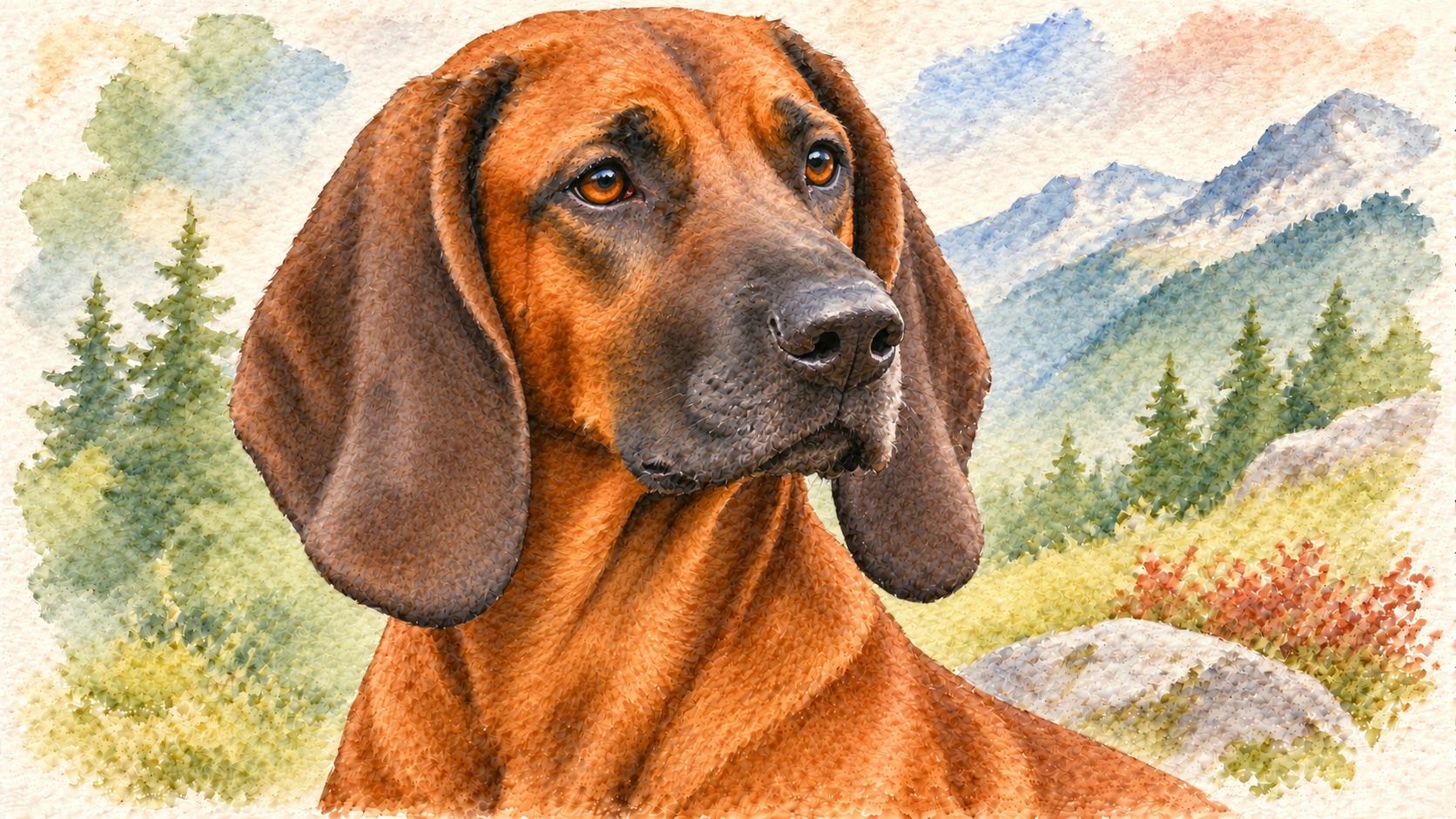
The body is slightly longer than it is tall, with a deep chest, a strong back and well-muscled legs built for climbing. Compared with many other scent hounds, this breed is lighter and more agile, a design that helps it move nimbly over rocks and through dense forest.
The head is fairly broad with a slightly arched skull, and the expression is alert and gentle. Classic hound ears hang close to the cheeks, and the tail is carried level or slightly downward. Many dogs also wear a darker mask around the muzzle and eyes, which adds to their noble look.
Coat and Colors
This hound has a short, thick, close-fitting coat with a slightly harsh feel. The hair is finer on the head and ears and a little longer on the belly, legs and tail, giving the dog practical protection from brambles and cold mountain weather.
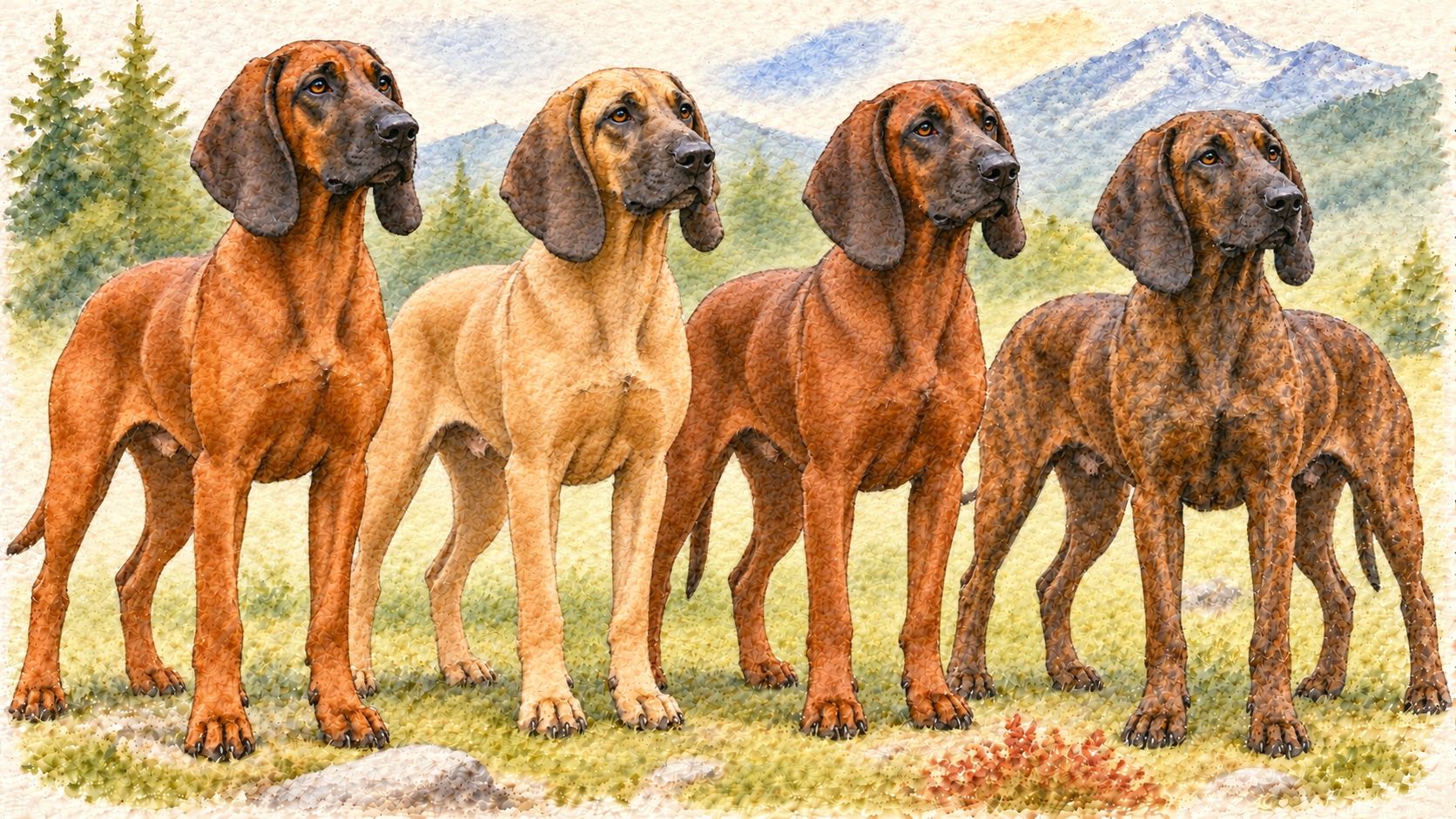
Colors come in many warm shades, including deep red, deer red, reddish brown, tan, fawn and pale biscuit, as well as brindle. Some dogs have a darker mask, black hairs scattered through the coat or on the tail, or a small white patch on the chest.
Bavarian Mountain Hound Temperament and Personality
The Bavarian Mountain Hound temperament is a mix of quiet devotion at home and focused determination in the field. Owners often describe it as two dogs in one. This breed is known for being:
- Loyal and devoted: These hounds bond closely with their families and often attach strongly to one main person.
- Calm indoors: Given enough exercise, they tend to settle peacefully in the house and enjoy relaxing near their people.
- Determined: Once their nose is on a scent, they can be single-minded and very hard to call away.
- Reserved with strangers: They are usually polite but aloof with new people, warming up slowly once they feel comfortable.
- Sensitive: This breed responds best to gentle, fair handling and may shut down if treated harshly.
- Vocal: Many will bark to alert you to visitors or anything unusual happening around the home.
A bored hound can become mischievous. Without enough activity, some dogs dig, climb, chew or look for ways to escape a yard. The breed also tends to mature slowly, so expect puppy-like behavior to last a little longer than in some other breeds.
Are Bavarian Mountain Hounds Good With Kids and Other Pets?
Yes, they can be good with kids, especially respectful older children in active households. Because they are strong, energetic dogs, they may be too much for toddlers, and supervision is always wise.
With other dogs, they usually get along well with familiar companions, though they can be wary of unknown dogs. Their strong chase instinct means they may not be a safe match for cats, rabbits, hamsters or other small pets unless they are raised with them and closely managed.
Early and ongoing socialization is important. Introduce your puppy to a wide variety of people, animals, sounds and places to help it grow into a confident, well-adjusted adult.
Training a Bavarian Mountain Hound
This breed is intelligent and eager to work, but it can also be independent, especially when an interesting scent is nearby. Training works best when it is patient, consistent and based on positive reinforcement. Many of these dogs are food-motivated, so small treats can be very effective rewards.
Here are a few training tips for owners:
- Start socialization early. Help your puppy feel relaxed around strangers, other dogs and new environments from the start.
- Work on recall constantly. A reliable recall is hard to achieve with a scent hound, so practice often and use a long line in open areas.
- Give the nose a job. Scent games, tracking and nose work turn the breed's natural drive into a rewarding outlet.
- Stay gentle and fair. Harsh corrections can damage trust with this sensitive breed.
- Be patient with maturity. Because the breed develops slowly, keep expectations realistic and celebrate small wins.
Bavarian Mountain Hound Exercise Needs
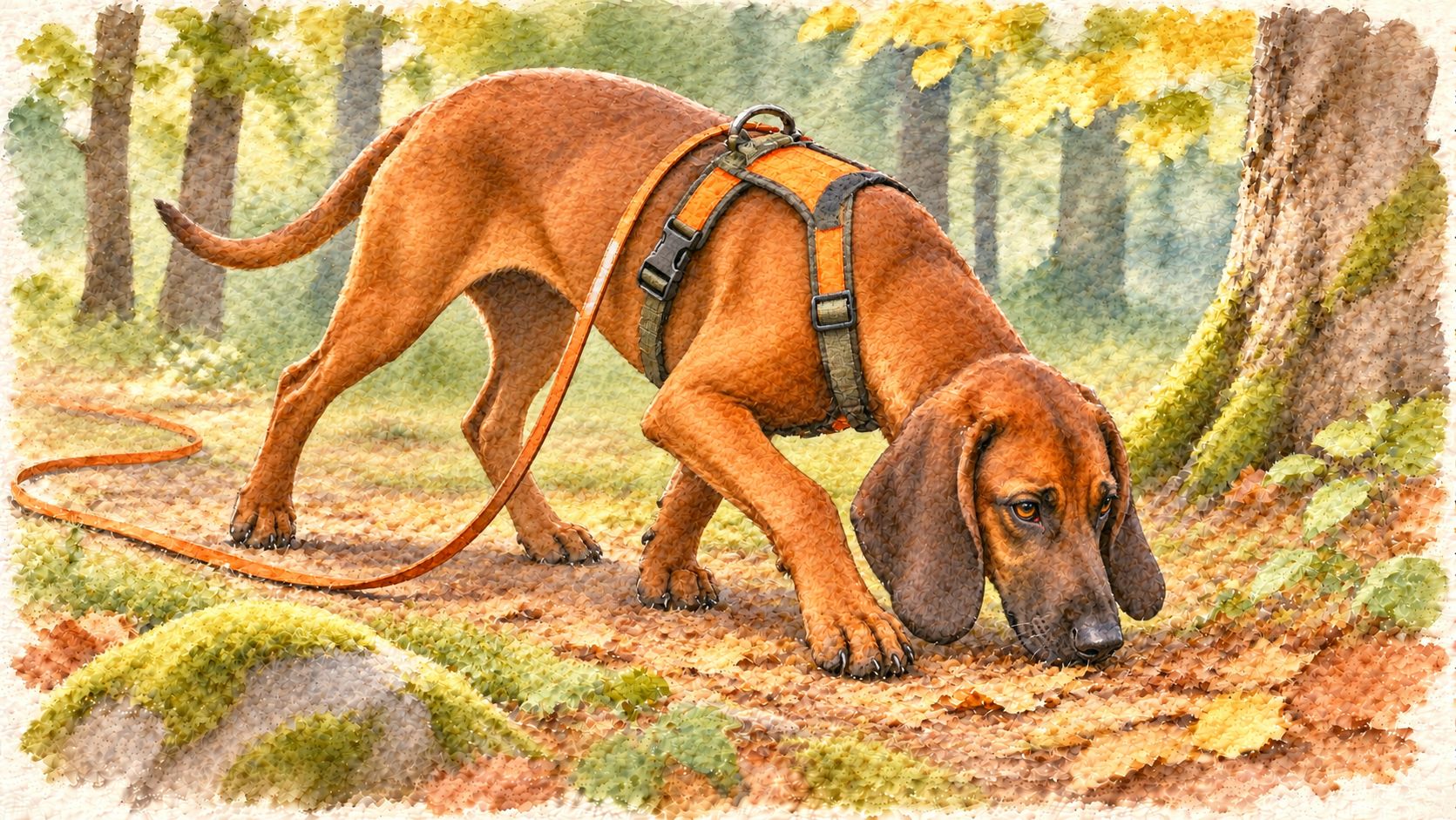
This is a true working dog that needs plenty of daily activity. Adults often do best with around two hours of exercise each day, including long walks, hikes, runs in safe areas and swimming.
Physical exercise alone is not enough. This breed thrives when it can use its nose, so tracking games, scent work, mantrailing or formal tracking sports are ideal ways to keep it mentally satisfied. A tired, fulfilled hound is much more likely to be relaxed in the house.
Because of its energy level and love of the outdoors, the breed generally suits rural or suburban homes with a large, securely fenced yard better than city apartments. Fences should be high and sturdy, since some dogs are clever escape artists, and the breed should not be left outside unsupervised for long periods.
The breed handles cool weather well and cope with moderate temperatures. In warm climates, exercise during the cooler parts of the day and always provide shade and fresh water.
Bavarian Mountain Hound Grooming
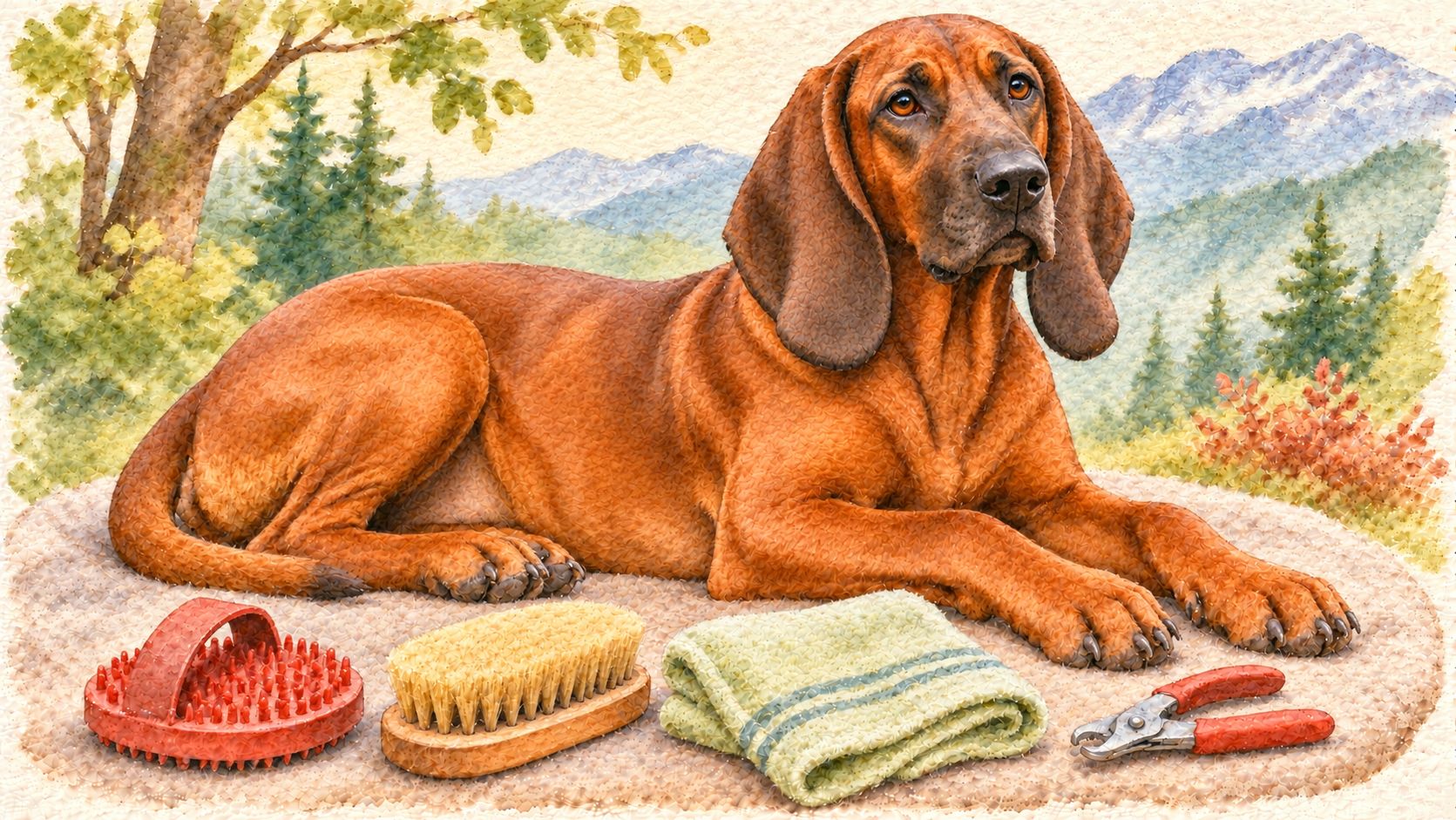
Bavarian Mountain Hound grooming is refreshingly simple. The short, dense coat does not need trimming or special styling, and a weekly brush is usually enough to keep it healthy and shiny.
Do Bavarian Mountain Hounds Shed?
Yes, they shed, though their short coat makes it fairly manageable for most of the year. Shedding usually increases during seasonal coat changes, when more frequent brushing helps remove loose and dead hair.
Grooming Routine
- Brushing: Brush once a week with a rubber curry or bristle brush, and more often during seasonal sheds.
- Bathing: Bathe only as needed, such as after a muddy hike or a swim.
- Ears: Check the floppy ears every week and keep them clean and dry, since hanging ears can trap moisture and debris.
- Paws: Look over paw pads after outdoor adventures for small cuts, scrapes or thorns.
- Nails: Trim nails regularly to help prevent cracking and splitting.
- Teeth: Brush your dog's teeth often to help prevent tartar buildup and gum disease.
Bavarian Mountain Hound Health and Lifespan
This is generally a healthy breed, and the typical Bavarian Mountain Hound lifespan is about 12 to 15 years. Like all breeds, it can be prone to certain conditions, and responsible breeders screen their dogs where tests are available. Conditions to be aware of may include:
- Hip dysplasia: An abnormal formation of the hip joint; hip screening is recommended for breeding dogs.
- Epilepsy: Some dogs in the breed may be affected by seizures.
- Bloat: Deep-chested, active breeds can be at risk of this serious stomach condition.
- Ear infections: Floppy ears can hold moisture, so regular checks are important.
Keeping your dog at a healthy weight helps protect its joints. Always work with your veterinarian to set up a routine of checkups, vaccinations, parasite prevention and dental care, and ask about any changes in diet or activity as your dog grows older.
Feeding and Nutrition
An active hound needs a complete and balanced dog food with high-quality protein, moderate healthy fats and balanced carbohydrates. Very active working dogs may need more calories than family pets with a quieter routine.
Many owners feed two or more scheduled meals each day instead of leaving food out, which is often suggested for deep-chested breeds. Portion sizes depend on age, weight and activity level, so follow the feeding guidelines on the package and ask your veterinarian for advice. Treats are helpful for training but should make up only a small part of daily calories.
Puppies should eat a food designed for puppies to support healthy growth. Regularly checking your dog's body condition is an easy way to tell whether portions need adjusting.
History of the Bavarian Mountain Hound
This breed descends from a long line of European scent hounds used for centuries to track game. For generations, German hunters valued dogs that could follow a wounded animal's blood trail, a job known as Schweißarbeit, or "blood tracking."
In the 1800s, the heavy Hanoverian Scent Hound was the top choice for this work. However, hunters in the Bavarian Alps needed a lighter, more agile dog that could cope with steep, rocky terrain. Around the 1870s, breeders began crossing Hanoverian Scent Hounds with red mountain hounds, creating the dog we now know as the Bavarian Mountain Hound.
The breed club, the Klub für Bayerische Gebirgsschweißhunde, was founded in Munich in 1912 and remains devoted to the breed's working ability. In its homeland, dogs have traditionally had to prove themselves on tracking tests before being bred, which has helped preserve the breed's legendary nose.
Today, these dogs are still prized by hunters, gamekeepers and deer managers across Europe. They have also gained admirers in the United Kingdom and North America, where they are increasingly enjoyed in tracking and mantrailing activities.
Bavarian Mountain Hound vs Hanoverian Scent Hound
The Bavarian Mountain Hound and the Hanoverian Scent Hound are close relatives with the same blood-tracking job. The Hanoverian is larger and heavier, built for steady work in lowland forests, while the Bavarian Mountain Hound is lighter, quicker and more agile on steep mountain ground.
Is a Bavarian Mountain Hound Right for You?
Are Bavarian Mountain Hounds Good Family Dogs?
Yes, they can be excellent family dogs for active households that include them in daily adventures. They are loving and loyal at home, but they need lots of exercise, mental work and a secure yard to be at their best.
A Bavarian Mountain Hound could be a wonderful match if you:
- Enjoy hiking, long walks and spending time outdoors
- Live in a rural or suburban home with a large, securely fenced yard
- Have experience training independent, scent-driven dogs
- Are interested in tracking, nose work or mantrailing
- Can spend much of the day with your dog
- Want a calm, devoted companion in the house
This breed may not be the best fit if you:
- Live in a small city apartment with little outdoor space
- Work long hours away from home
- Keep cats, rabbits or other small pets
- Want a dog that is always off-leash and quick to come when called
Finding a Bavarian Mountain Hound Puppy
Because the breed is rare outside Europe, finding a Bavarian Mountain Hound puppy may take time and patience. Look for a reputable breeder who health-screens parent dogs, raises puppies in a home environment and welcomes your questions. Breed clubs and rescue networks can also help you find adult dogs that need new homes.
Fun Facts About the Bavarian Mountain Hound
- The German name, Bayerischer Gebirgsschweißhund, refers to "blood" in the hunter's sense of tracking a wounded animal.
- The breed has a "cold nose," meaning it can follow scent trails that are many hours old.
- These hounds traditionally work alone on a long leash rather than in a pack.
- Its breed club was founded in Munich in 1912.
- The breed was developed from the heavier Hanoverian Scent Hound to handle steep Alpine terrain.
- In the United States, the breed is part of the AKC Foundation Stock Service.
Frequently Asked Questions
What is a Bavarian Mountain Hound used for?
The Bavarian Mountain Hound was bred to track wounded game, especially deer, over long distances and difficult mountain terrain. Today it is also popular for tracking sports, nose work and mantrailing.
How big do Bavarian Mountain Hounds get?
Adults usually stand about 17 to 20.5 inches (44 to 52 cm) tall and weigh roughly 44 to 55 pounds (20 to 25 kg), with males typically larger than females.
Are Bavarian Mountain Hounds good family dogs?
They can be wonderful companions for active families with older children. They are loyal and calm at home but need plenty of exercise and mental stimulation every day.
How long do Bavarian Mountain Hounds live?
A healthy dog typically lives about 12 to 15 years with good care, a balanced diet and regular veterinary checkups.
Do Bavarian Mountain Hounds bark a lot?
They can be fairly vocal and often bark to alert their family to visitors or unusual sounds. Enough exercise and consistent training help keep barking in check.
Can a Bavarian Mountain Hound live in an apartment?
It is generally not ideal. This energetic scent hound does best in a rural or suburban home with a large, secure yard and easy access to trails or open countryside.
Final Thoughts
The Bavarian Mountain Hound is a rare and remarkable dog, blending a world-class nose with a calm, loving nature at home. It is not a breed for a busy city lifestyle, but for active, experienced owners who love the outdoors, this devoted tracker can be an unforgettable companion. If you can give it daily exercise, scent work and patient training, a Bavarian Mountain Hound may become your most loyal adventure partner.