The Rhodesian Ridgeback is a powerful, graceful hound best known for the distinctive stripe of hair that runs along its back in the opposite direction to the rest of its coat. Developed in southern Africa, this athletic dog was famously used to help hunters track lions and hold them at bay. That history earned it the nickname "African Lion Hound."
Behind the brave reputation is a dignified, affectionate companion that loves to stay close to its family. In this complete Rhodesian Ridgeback dog breed guide, you will learn about its size, temperament, grooming, exercise needs, health, diet and history, so you can decide whether this striking hound is the right fit for your lifestyle.
Rhodesian Ridgeback at a Glance
| Trait | Details |
|---|---|
| Breed group | Hound (AKC) |
| Height | Males 25 to 27 inches (63 to 69 cm); females 24 to 26 inches (61 to 66 cm) |
| Weight | Males about 85 pounds (39 kg); females about 70 pounds (32 kg) |
| Life expectancy | About 10 to 12 years |
| Coat | Short, dense, sleek |
| Colors | Light wheaten to red wheaten |
| Shedding | Low; seasonal |
| Energy level | High |
| Temperament | Loyal, dignified, independent, affectionate, brave |
| Good for | Active, experienced owners and families with space |
| Origin | Southern Africa (1800s) |
What Is a Rhodesian Ridgeback?
The Rhodesian Ridgeback is a large, muscular hound that combines the speed of a sighthound with the scenting ability and stamina of a working hunting dog. It was developed to track big game, keep up with hunters on horseback over long distances and bravely hold dangerous animals at bay without engaging them.
Its signature feature is the ridge: a band of hair along the spine that grows forward, against the rest of the coat. This ridge gives the breed its name and makes it instantly recognizable.
The American Kennel Club classifies the breed in its Hound Group. It received AKC recognition in 1955 and has since become a well-loved companion, show dog and sporting partner in many countries.
Rhodesian Ridgeback Size and Appearance
How Big Do Rhodesian Ridgebacks Get?
Rhodesian Ridgebacks are large dogs. Males typically stand 25 to 27 inches tall at the shoulder and weigh about 85 pounds, while females stand about 24 to 26 inches and weigh around 70 pounds. Individual dogs may be a little lighter or heavier.
The breed is strong, balanced and athletic, built for endurance and speed rather than bulk. It has a deep chest, a level back, powerful hindquarters and a long, tapering tail. The head is fairly broad with a dignified, expressive face, and the ears are set high and hang close to the head.
The Famous Ridge
The ridge starts just behind the shoulders and tapers toward the hips. In a well-formed ridge, there are two matching whorls of hair, called crowns, near the top. Occasionally, puppies are born without a ridge, and these dogs make equally loving pets even though they are not shown in conformation.
Coat and Colors
The coat is short, dense and sleek, with a glossy feel. It is designed to handle hot climates and is very easy to maintain.
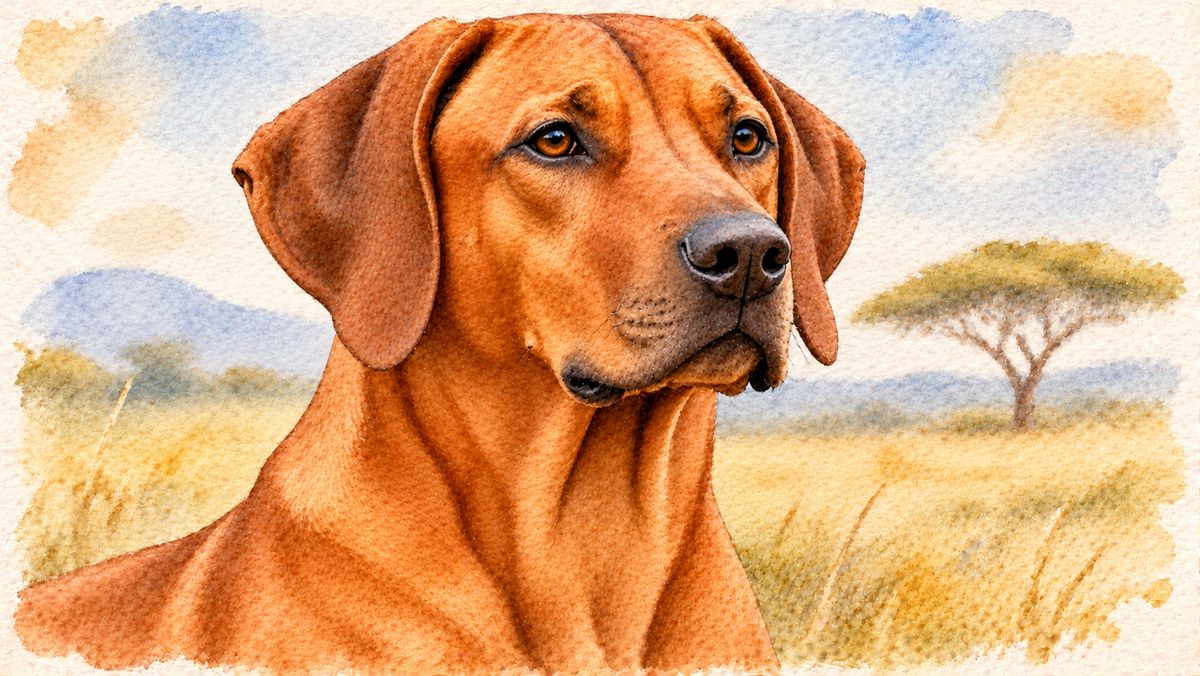
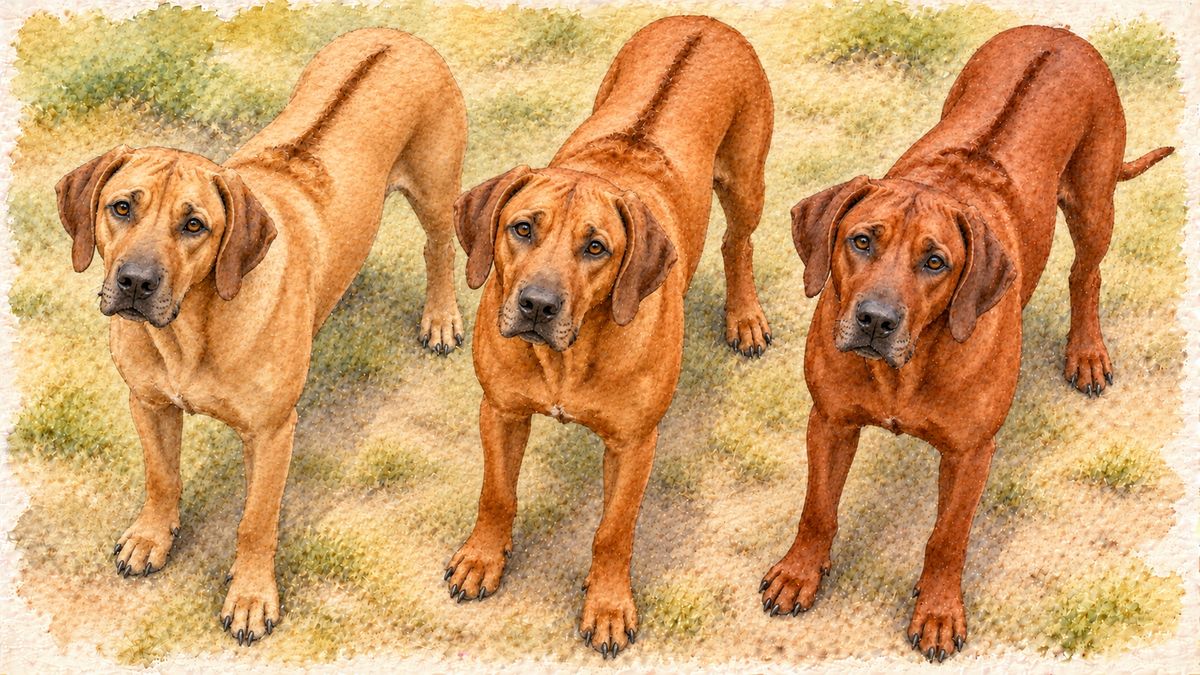
Wheaten is the only recognized color, ranging from pale light wheaten to rich red wheaten. A small amount of white on the chest and toes is acceptable. The nose is usually black, though some dogs have a brown nose, often paired with amber eyes.
Rhodesian Ridgeback Temperament and Personality
The Rhodesian Ridgeback temperament blends independence with deep devotion. These dogs are known for being:
- Loyal: Ridgebacks are deeply devoted to their families and like to stay close to their people.
- Dignified: Many have a calm, composed manner and can seem reserved with strangers.
- Independent: Bred to make decisions while hunting, they can be strong-willed and think for themselves.
- Affectionate: With people they trust, they are loving and often enjoy cuddling on the sofa.
- Brave: Their history of facing lions gives them natural confidence and protective instincts.
- Quiet: They are not known as big barkers, so when one does bark, there is usually a reason.
This breed needs to live indoors as part of the family. It does not thrive when left alone in a yard for long periods and may become bored or unhappy without companionship.
Are Ridgebacks Good Guard Dogs?
Ridgebacks make good watchdogs thanks to their alert, protective nature and natural wariness of strangers. They tend to observe calmly first rather than bark at every noise, which many owners appreciate.
That protective streak should be guided with early socialization and training. A well-raised Ridgeback learns to tell the difference between a welcome guest and a real concern, and it will usually greet friends of the family politely once it has had time to size them up.
Are They Good in Hot and Cold Weather?
The short, sleek coat was developed for African heat, so Ridgebacks generally handle warm weather well, though shade and fresh water are always essential. In cold climates, the thin coat offers little insulation, and many owners use a dog coat for winter walks.
Are Rhodesian Ridgebacks Good Family Dogs?
Yes, Rhodesian Ridgebacks can be wonderful family dogs. They are known for being tolerant of children and affectionate with their families. Because they are large, strong and energetic, especially as young dogs, supervision around small children is important.
Are Rhodesian Ridgebacks Good With Other Pets?
Many live peacefully with other dogs, particularly when raised together. However, their strong prey drive means they may chase cats, small animals or wildlife. Careful introductions and early socialization help, but small pets should always be supervised.
Expose your puppy to a wide range of people, places, sounds and animals early on. A well-socialized Ridgeback grows into a calm, confident adult.
Training a Rhodesian Ridgeback
Ridgebacks are intelligent, but their independent nature means they are not always eager to obey just because you asked. Training works best when it is consistent, patient and built on positive reinforcement. Harsh methods tend to backfire with this sensitive, strong-minded breed.
Here are a few training tips for new owners:
- Start early. Begin socialization and puppy classes as soon as your veterinarian says it is safe.
- Be consistent. Set clear house rules and make sure everyone in the family follows them.
- Use rewards. Treats, praise and play keep training sessions upbeat and motivating.
- Manage counter surfing. Ridgebacks are notorious for helping themselves to food on counters, so keep snacks out of reach.
- Try dog sports. Lure coursing, tracking, obedience and agility are excellent outlets.
Rhodesian Ridgeback Exercise Needs
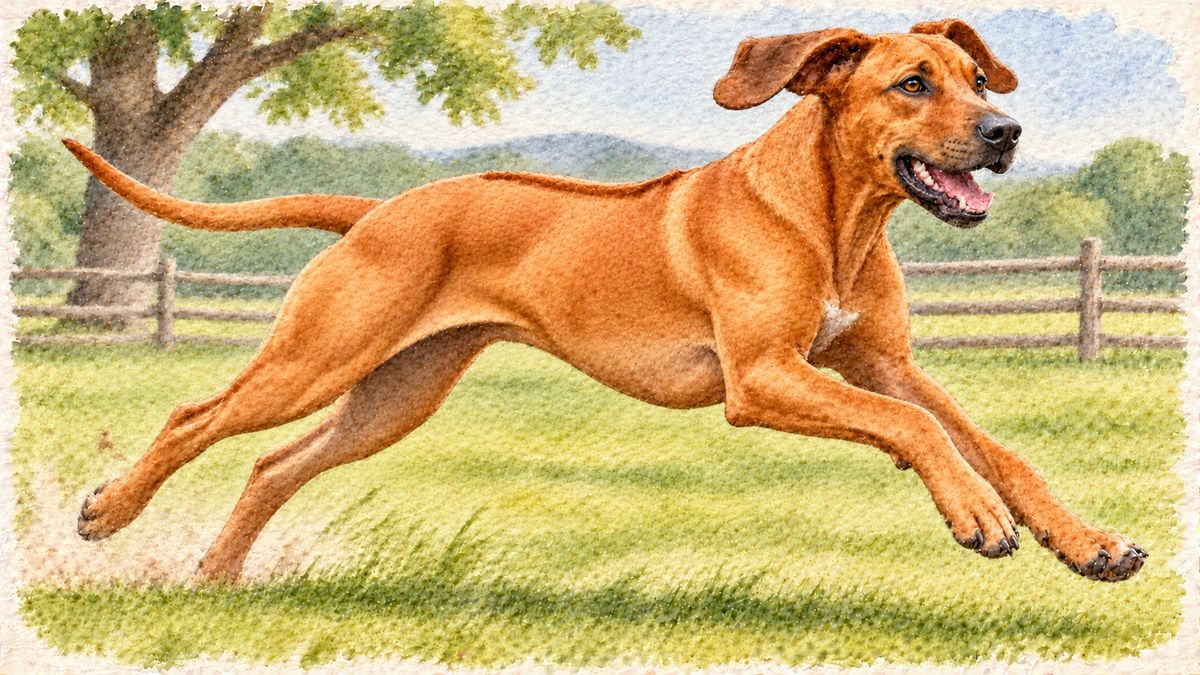
This is a high-energy breed with great endurance once mature. Long walks, running, hiking or active play sessions every day help keep it healthy and content. Many make excellent jogging partners once they are fully grown and cleared by a veterinarian.
Mental exercise matters too. Scent games, puzzle toys and training challenges help satisfy the dog's clever, independent mind.
Because of its strong prey drive, a Ridgeback should only be off leash in a fully fenced area. It can reach impressive speeds and may chase after a squirrel, rabbit or deer before you can react.
Rhodesian Ridgeback Grooming
Do Rhodesian Ridgebacks Shed?
Yes, Rhodesian Ridgebacks shed, but only lightly and mostly on a seasonal basis. Their short coat is one of the easiest to maintain among large breeds.
Grooming Routine
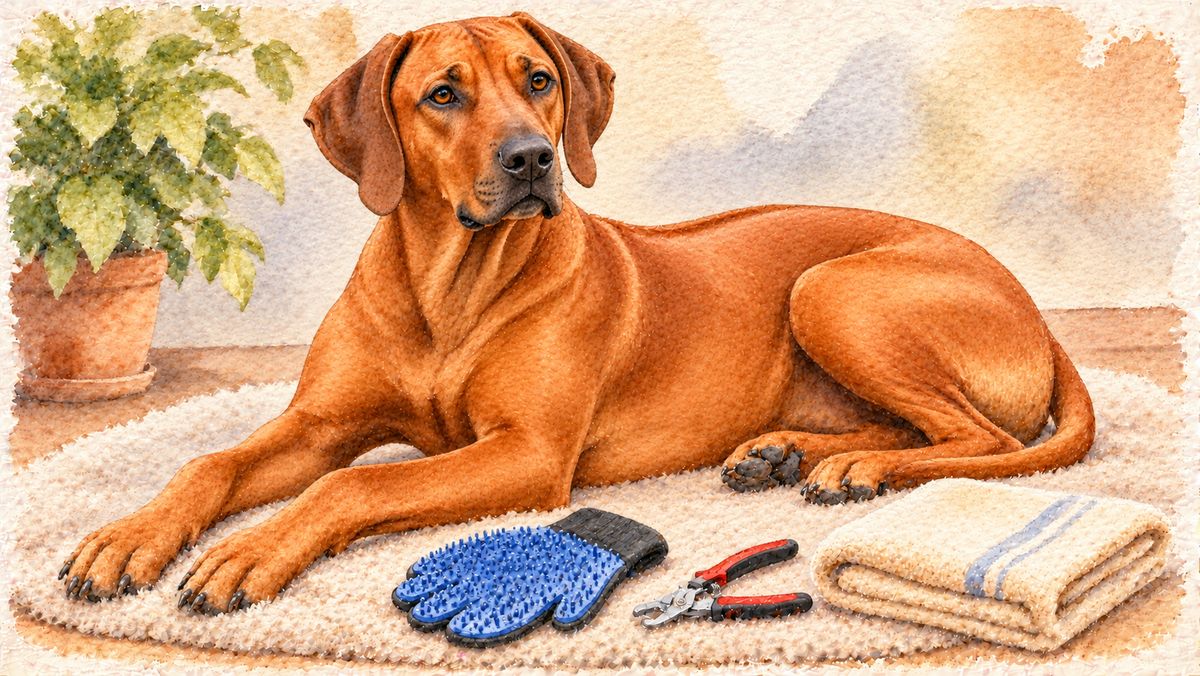
Rhodesian Ridgeback grooming is simple and quick:
- Brushing: Brush once a week with a rubber brush or hound mitt to remove loose hair and keep the coat glossy.
- Bathing: An occasional bath is enough, unless your dog rolls in something smelly.
- Nails: Trim nails regularly, as long nails can be uncomfortable for active dogs.
- Teeth: Brush your dog's teeth several times a week to support dental health.
- Ears: Check ears weekly and gently wipe away any dirt.
Rhodesian Ridgeback Health and Lifespan
How Long Do Rhodesian Ridgebacks Live?
The Rhodesian Ridgeback lifespan is typically about 10 to 12 years. Good nutrition, regular exercise and routine veterinary care help support a long, active life.
The breed is generally healthy, but like all breeds it can be prone to certain conditions. Responsible breeders screen their dogs for concerns that may include:
- Hip and elbow dysplasia: Abnormal development of the hip or elbow joints.
- Thyroid function: Thyroid testing helps breeders make informed choices.
- Eye anomalies: Regular eye exams can catch issues early.
- Dermoid sinus: A skin condition along the spine that breeders check puppies for at birth.
Keeping your dog lean helps protect its joints. Always work with your veterinarian to create a plan for checkups, vaccinations and preventive care.
Feeding and Nutrition
A Rhodesian Ridgeback usually does well on a high-quality adult dog food or a formula designed for active dogs. If your dog needs to manage its weight, a healthy weight formula may help.
Puppies should eat a puppy food during their first year to support healthy growth. Portion sizes depend on age, size and activity level, so follow the package guidelines and ask your veterinarian for advice.
One important tip: Ridgebacks are known counter surfers. Store people food securely and never leave meals unattended on low tables or kitchen counters.
History of the Rhodesian Ridgeback
The Rhodesian Ridgeback traces its roots to southern Africa. The Khoikhoi people kept a native dog with a ridge of hair along its back. When European settlers arrived, they crossed these ridged dogs with breeds they had brought with them, including Greyhounds and various hunting and guarding dogs.
The result was a tough, versatile hound suited to the African landscape. It could withstand heat, cover long distances and guard homesteads at night. In the late 1800s, hunters began using packs of these dogs to track lions. Their job was not to kill the lion, but to find it and hold it at bay until the hunter arrived.
The breed was named after Rhodesia, the region now known as Zimbabwe. In 1922, a group of breeders met in Bulawayo to write the first breed standard, which used the Dalmatian standard as a template. As big-game hunting declined, the Ridgeback's role shifted toward companion, guardian and sporting dog.
The breed came to the United States in the mid-20th century. Hollywood star Errol Flynn is often credited as the first American breeder, keeping Ridgebacks on his ranch in the 1930s. The American Kennel Club recognized the breed in 1955.

Rhodesian Ridgeback vs Vizsla
People sometimes compare the Rhodesian Ridgeback vs Vizsla because both have short, reddish coats. The Vizsla is a smaller, very people-focused Hungarian pointing breed, usually weighing about 45 to 65 pounds. The Ridgeback is larger and more independent, has a wheaten coat with its signature ridge, and is often more reserved with strangers.
Is a Rhodesian Ridgeback Right for You?
This breed could be a wonderful match if you:
- Lead an active lifestyle and enjoy running or hiking
- Have experience training strong-willed dogs
- Can provide a securely fenced yard
- Want a loyal, quiet and dignified companion
- Prefer a short coat that is easy to groom
- Want your dog to live indoors as part of the family
It may not be the best fit if you:
- Are a first-time owner looking for an easy-to-train dog
- Keep cats or small pets that may trigger prey drive
- Want a dog that can roam off leash in open areas
- Are away from home for long hours most days
Finding a Rhodesian Ridgeback Puppy
When searching for a Rhodesian Ridgeback puppy, look for a breeder who health-tests their dogs, checks puppies for dermoid sinus and raises litters in a home environment. A good breeder will ask about your lifestyle and help you choose the right puppy. Breed clubs and rescue groups are also great places to find adult dogs looking for homes.
Fun Facts About the Rhodesian Ridgeback
- The breed is also known as the African Lion Hound.
- The ridge grows in the opposite direction to the rest of the coat.
- A classic ridge has two matching whorls of hair called crowns.
- The first breed standard, written in 1922, was based on the Dalmatian standard.
- Errol Flynn is often called the first American Ridgeback breeder.
- Ridgebacks are not big barkers and usually bark only for a reason.
Frequently Asked Questions
How big do Rhodesian Ridgebacks get?
Males usually stand 25 to 27 inches tall and weigh about 85 pounds. Females stand 24 to 26 inches and weigh about 70 pounds.
Are Rhodesian Ridgebacks good family dogs?
Yes. They are devoted, affectionate and tolerant of children. Their size and strength mean supervision with young kids is important.
Do Rhodesian Ridgebacks shed?
They shed lightly and seasonally. Weekly brushing keeps their short coat clean and glossy.
How long do Rhodesian Ridgebacks live?
The typical lifespan is about 10 to 12 years with good care.
Did Rhodesian Ridgebacks really hunt lions?
Yes. Packs of these dogs tracked lions and held them at bay until hunters arrived, rather than attacking them.
Are Rhodesian Ridgebacks easy to train?
They are intelligent but independent. Consistent, positive training works best, and they suit owners with some dog experience.
Final Thoughts
The Rhodesian Ridgeback is a remarkable mix of courage, grace and quiet devotion. With its famous ridge, easy-care coat and rich African history, it stands out wherever it goes. If you can offer daily exercise, a secure yard and patient, consistent training, a Rhodesian Ridgeback can be a loyal and loving companion for years to come.