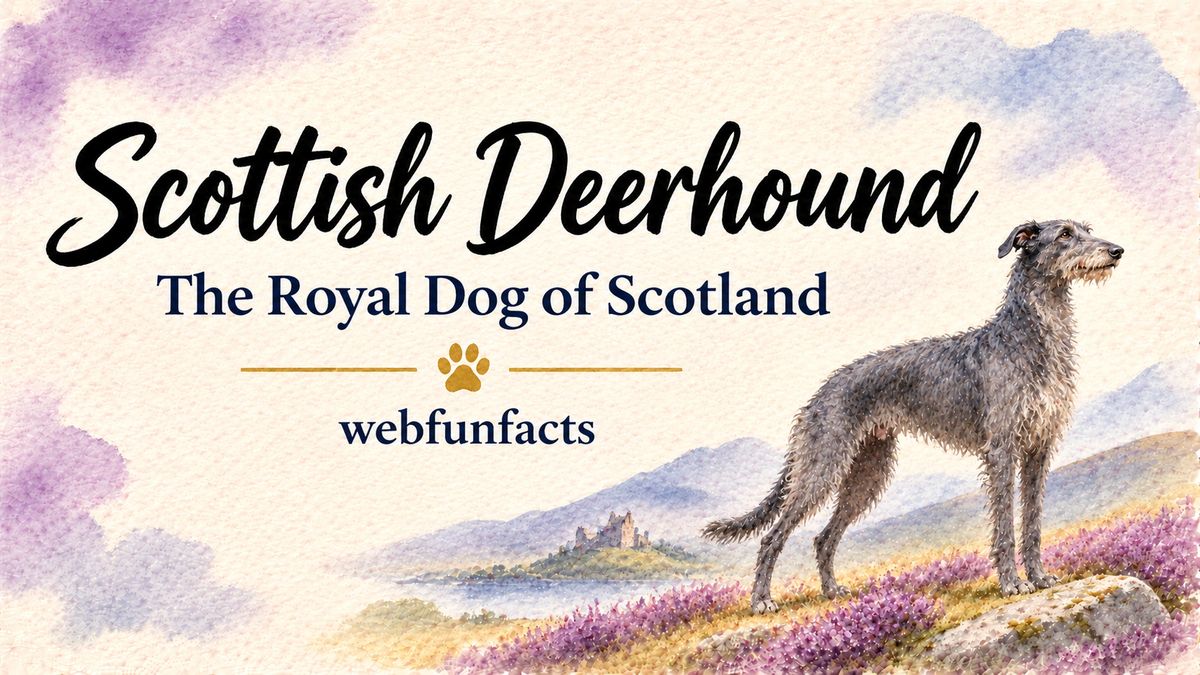
The Scottish Deerhound is one of the tallest dog breeds in the world, a lean, shaggy sighthound that looks like a greyhound wrapped in a rough, wiry coat. Developed in the Scottish Highlands to chase and bring down wild red deer, it was once so prized that it became known as the Royal Dog of Scotland. Its long legs, gentle eyes and quiet dignity give it an air of old-world romance.
At home, the Deerhound is a calm, polite and deeply affectionate companion. Out in the open, it is a fast, determined hunter with powerful instincts. In this complete Scottish Deerhound dog breed guide, you will learn about its size, temperament, exercise needs, grooming, health, diet, history and whether this graceful giant is the right fit for your home.
Scottish Deerhound at a Glance
| Trait | Details |
|---|---|
| Breed group | Hound (AKC) |
| Height | 28 to 32 inches or more (71 to 81 cm or more) |
| Weight | 75 to 110 pounds (34 to 50 kg) |
| Life expectancy | About 8 to 11 years |
| Coat | Harsh, wiry and crisp, about 3 to 4 inches long |
| Colors | Blue-gray, gray, brindle, gray-brindle; sometimes fawn or red |
| Shedding | Light to moderate |
| Energy level | High outdoors, calm indoors |
| Temperament | Gentle, dignified, loving, polite, quiet |
| Good for | Experienced owners with space and secure fencing |
| Origin | Scotland (Highlands) |
What Is a Scottish Deerhound?
The Scottish Deerhound is a large sighthound, meaning it hunts mainly by sight and speed. It was developed to course, or chase, the wild red deer of the Scottish Highlands, a job that required great speed, stamina and courage. Over the centuries, it has been called by many names, including the Scotch Greyhound, the Rough Greyhound and the Highland Deerhound.
Today, the breed is a member of the American Kennel Club's Hound Group. While few dogs hunt deer anymore, many enjoy lure coursing and racing. At home, they are gentle, quiet companions that love their families and a comfortable place to stretch out.
Many owners say this mix of athlete and couch lover is what makes the breed so special. A dog that can race across a field at full speed is often just as content to lean quietly against your legs or doze by the fire for the rest of the afternoon.
Scottish Deerhound Size and Appearance
How Big Do Scottish Deerhounds Get?
Scottish Deerhounds are very tall dogs, with males standing about 30 to 32 inches or more at the shoulder and weighing roughly 85 to 110 pounds. Females are at least 28 inches tall and usually weigh about 75 to 95 pounds.
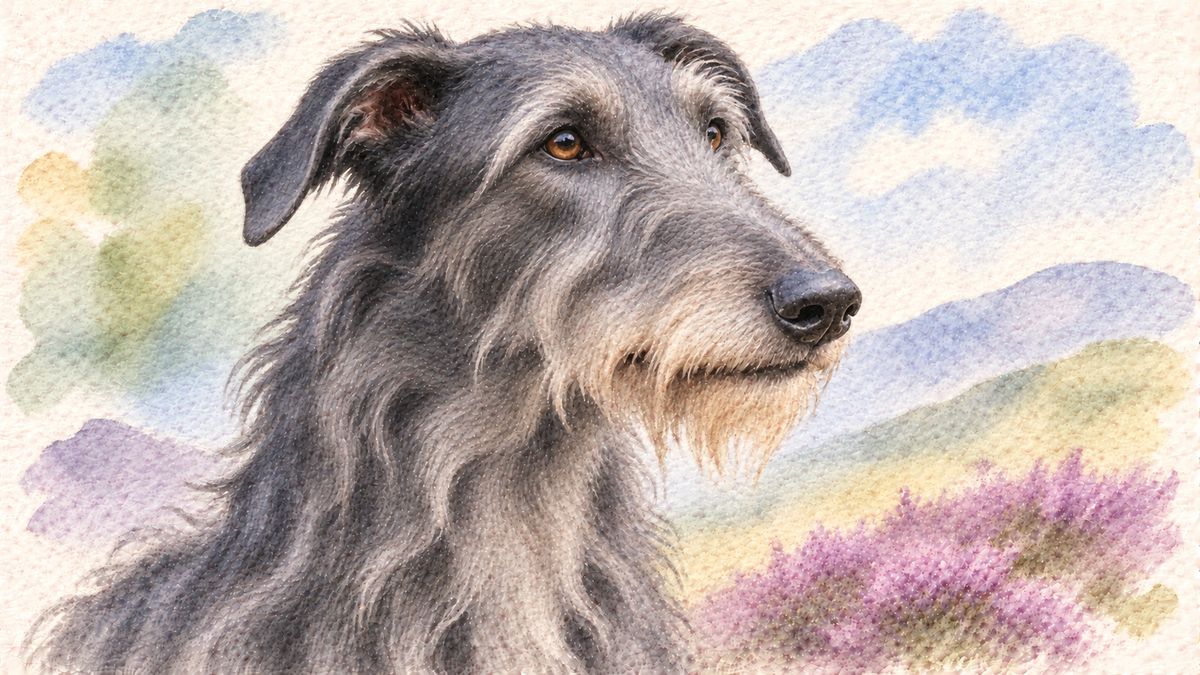
The Scottish Deerhound size comes mostly from height rather than bulk. These dogs have a long, narrow head, dark eyes, small folded ears, a deep chest and a long, curved tail that nearly reaches the ground. Their build is lean, strong and athletic, designed for speed over rough ground.
Like other giant-sized breeds, puppies grow quickly. Most do not reach full maturity until they are around two years old.
Coat and Colors
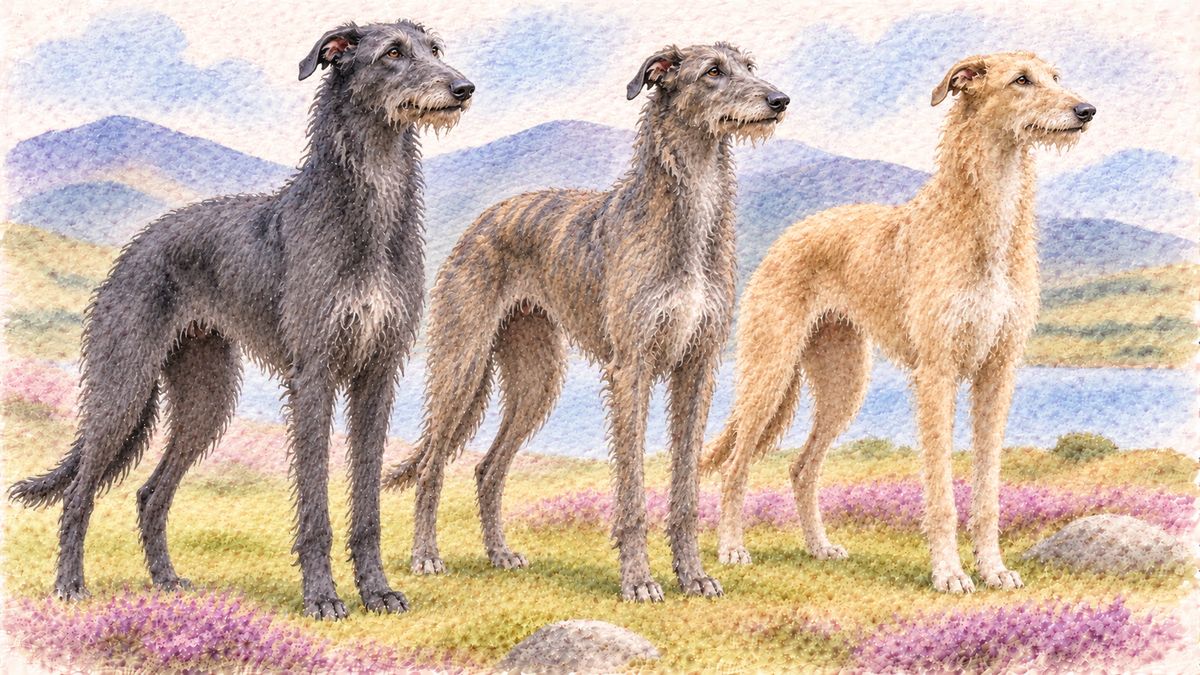
The breed wears a harsh, crisp, wiry coat that is usually about 3 to 4 inches long on the body. The hair is softer on the head, chest and belly, and the face often has a slight beard and mustache. This rough coat helped protect the dogs from cold, wet Highland weather.
Dark blue-gray is the most common and most traditional color. Other colors include gray, brindle and gray-brindle, and some dogs may be fawn, sandy or red. Many have darker ears and muzzles.
Scottish Deerhound Temperament and Personality
The Scottish Deerhound temperament is a wonderful balance of gentleness at home and courage in the field. This breed is often described as:
- Gentle: Deerhounds are known for their soft, sweet nature and calm presence.
- Dignified: They carry themselves with quiet grace and rarely seem in a hurry indoors.
- Loving: They form close bonds with their families and enjoy gentle affection.
- Polite and friendly: Most are courteous with visitors, though some may be a little reserved at first.
- Quiet: They are not big barkers, which also means they are not natural watchdogs.
- Determined: When chasing, they become fearless, focused and very fast.
Because of their strong prey drive, these hounds may instantly give chase if they see a running animal. Once they are in full stride, they may not respond to calls.
Are Scottish Deerhounds Good Family Dogs?
Yes, Scottish Deerhounds can be wonderful family dogs for calm homes with older children. They are gentle and affectionate with the people they know, and they usually enjoy quiet companionship more than rough play.
Their size is the main concern around young kids. A happy, long-legged hound can accidentally knock over a toddler, so always supervise playtime and teach children to be calm and gentle.
Are Scottish Deerhounds Good With Other Pets?
Deerhounds usually get along well with other dogs, especially other sighthounds. However, small pets such as cats and rabbits may trigger their chase instinct, so introductions should be made carefully, ideally when the dog is young.
Early socialization helps a Scottish Deerhound puppy grow into a confident, relaxed adult that is comfortable with new people, places and animals.
Training a Deerhound
Deerhounds are intelligent and sensitive, but like many sighthounds, they are independent thinkers. They respond best to gentle, positive training that uses praise, treats and patience. Harsh corrections can make them withdraw or lose interest.
Here are a few training tips for new owners:
- Start early. Teach good manners before your puppy becomes a very tall adult.
- Keep it positive. Use rewards and calm encouragement.
- Keep sessions short. These dogs can get bored with long, repetitive drills.
- Focus on leash manners. A large hound that pulls can be hard to handle.
- Stay realistic about recall. Even well-trained sighthounds may chase when they see prey.
Exercise Needs
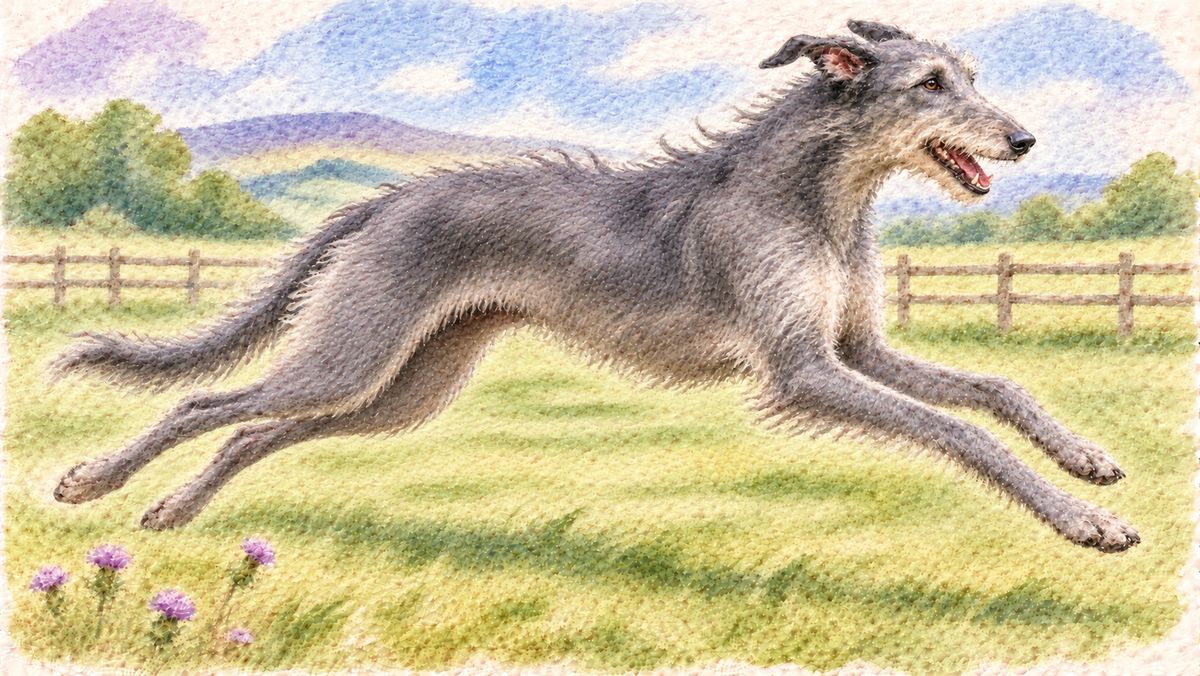
The Scottish Deerhound is athletic and needs regular exercise, but it is usually calm and relaxed indoors. Plan on long daily walks on leash, plus regular chances to gallop freely in a large, securely fenced area.
Running is an important part of a Deerhound's well-being. Lure coursing, a sport where sighthounds chase a moving lure, is a great outlet for their natural instincts. After a good run, most are happy to stretch out on a soft bed and rest for hours.
Puppies should not be over-exercised while their bones and joints are still growing. Avoid long runs and repetitive jumping during the first year or so, and ask your veterinarian when your dog is ready for more strenuous activity.
Scottish Deerhound Grooming
Do Scottish Deerhounds Shed?
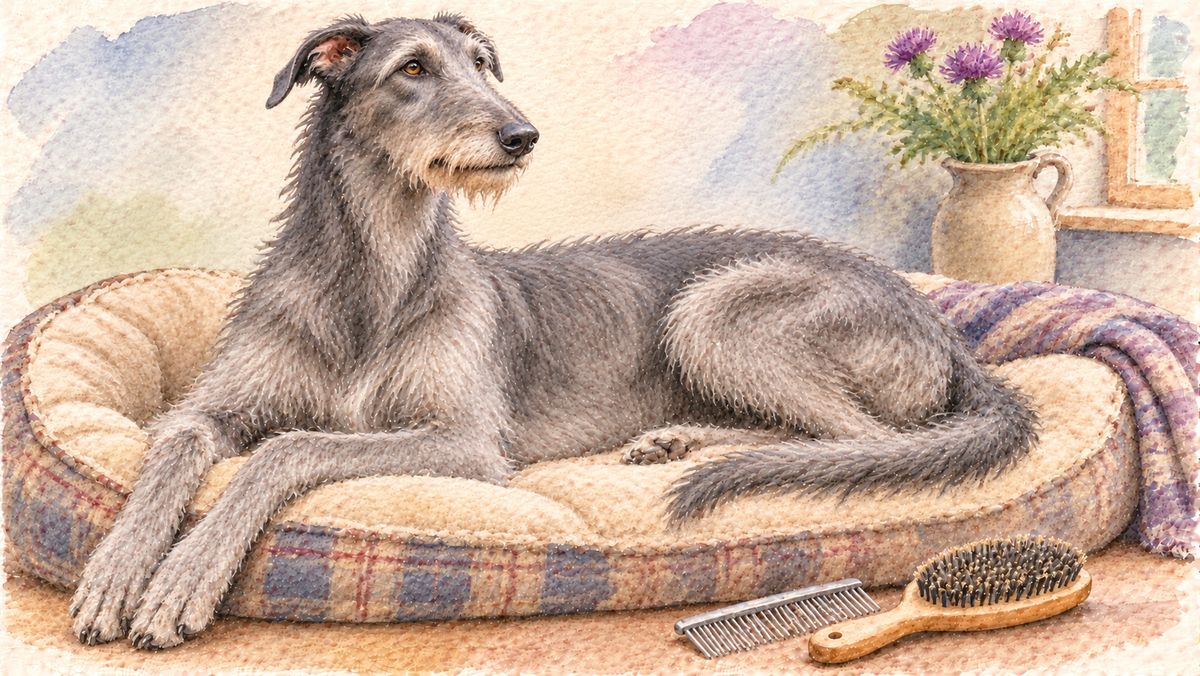
Scottish Deerhounds shed lightly to moderately, and their harsh coat is fairly easy to maintain. Regular brushing helps remove loose hair and keeps the coat looking neat.
Grooming Routine
Scottish Deerhound grooming does not take much time:
- Brushing: Brush or comb the coat about once a week to remove loose hair and prevent tangles.
- Bathing: Bathe occasionally, since the harsh coat tends to repel dirt.
- Tidying: Some owners remove a little excess hair around the ears and feet for a neat look.
- Nails: Trim nails every few weeks, as long nails can affect comfort and movement.
- Teeth: Brush your dog's teeth several times a week to support dental health.
- Ears: Check the ears weekly for dirt or redness.
A large, padded bed is a good investment, since lean, bony dogs can develop pressure sores from lying on hard floors.
Scottish Deerhound Health and Lifespan
The Scottish Deerhound lifespan is about 8 to 11 years, which is typical for very large breeds. Good care, a healthy weight and regular veterinary visits can help your dog enjoy a happy, active life.
Like all breeds, Deerhounds may be prone to certain health conditions. Responsible breeders screen their dogs, and concerns may include:
- Heart conditions: Some dogs may develop heart problems, so heart screening is recommended.
- Bloat (gastric dilatation-volvulus): A serious, sudden condition in deep-chested dogs that needs emergency veterinary care.
- Bone cancer: Like many giant breeds, Deerhounds can be affected by bone cancer.
- Inherited conditions: Some lines may carry inherited conditions, so ask breeders about health testing.
- Anesthesia sensitivity: Lean sighthounds may react differently to anesthesia, so discuss this with your veterinarian before any procedure.
Always work with your veterinarian to plan checkups, vaccinations and preventive care.
Feeding and Nutrition
A Deerhound does well on a complete and balanced dog food made for large or giant breeds. These formulas are designed to support healthy joints and provide the right energy for big, active dogs.
Puppies should eat a large-breed puppy food that supports steady, controlled growth. Follow the feeding guidelines on the package, monitor your dog's body condition and ask your veterinarian for advice. Many owners feed two or more smaller meals a day rather than one large meal.
History of the Scottish Deerhound
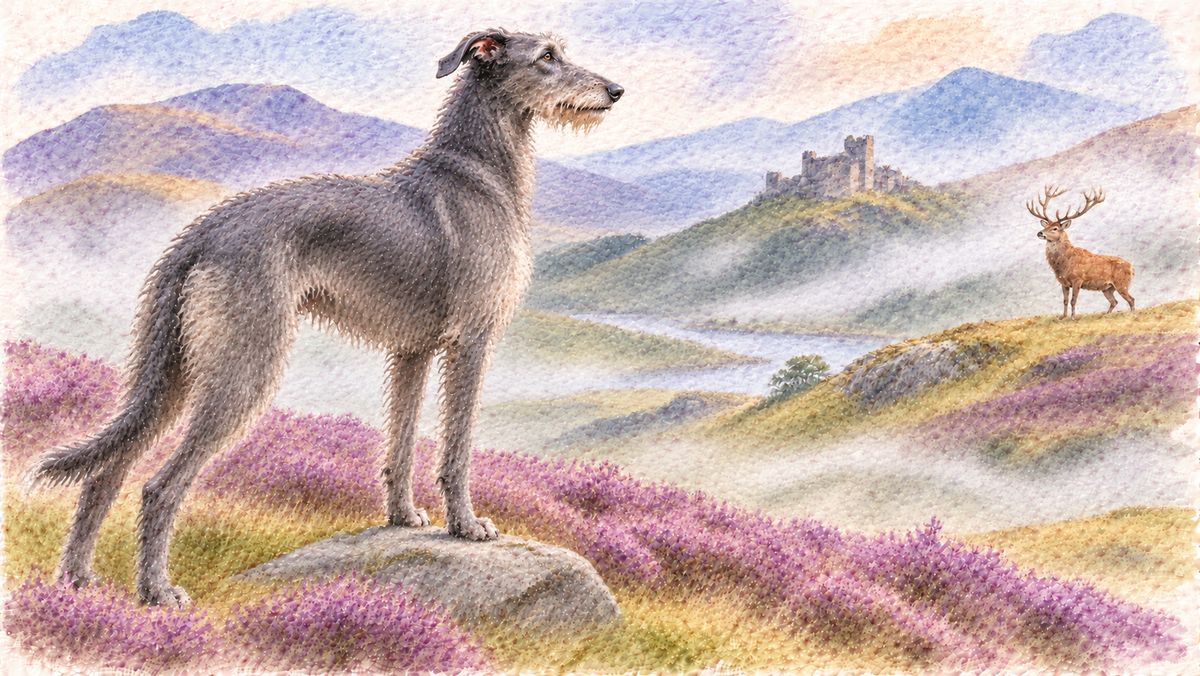
Large, rough-coated hounds have been used to hunt deer in Scotland for many centuries, and the modern breed took shape around the 16th and 17th centuries. These dogs were the companions of Highland chieftains and nobles, who used them to course wild red deer across the hills.
The breed was so valued that, according to tradition, no one ranked below an earl was allowed to own one. This exclusive status earned it the name Royal Dog of Scotland. Owning a fine hound was a sign of wealth and status, and the dogs were sometimes given as noble gifts.
The breed's numbers fell sharply in the 1700s, after the collapse of the old Highland clan system and as deer hunting changed. In the 1800s, dedicated breeders worked to restore it. Famous admirers included Queen Victoria and the writer Sir Walter Scott, whose beloved hound Maida became well known. The American Kennel Club recognized the breed in 1886.
In 2011, a Scottish Deerhound named Hickory won Best in Show at the Westminster Kennel Club Dog Show, introducing the breed to many new fans in the United States.
Scottish Deerhound vs Irish Wolfhound
These two shaggy sighthounds look similar and share a long history. The Irish Wolfhound is generally heavier and more powerfully built, and it was bred to hunt wolves. The Scottish Deerhound is slightly lighter and more racy in build, and it was bred to chase deer. Both are gentle giants with rough coats, calm personalities and shorter lifespans than smaller breeds.
Is a Scottish Deerhound Right for You?
A Scottish Deerhound could be a wonderful match if you:
- Want a calm, gentle and affectionate companion
- Have plenty of space and a large, securely fenced area
- Enjoy long daily walks
- Prefer a quiet dog that rarely barks
- Have room for a very tall dog on your sofa or bed
- Are prepared for the costs of caring for a large breed
A Scottish Deerhound may not be the best fit if you:
- Live in a small apartment without access to open space
- Keep cats, rabbits or other small pets
- Want a dog that can be trusted off leash in open areas
- Want a guard dog
Finding a Scottish Deerhound Puppy
The breed is fairly rare, so you may need to join a waiting list for a puppy from a reputable breeder. Look for breeders who health-test their dogs, raise puppies in a home environment and are happy to answer questions. Breed clubs and sighthound rescue groups can also help you find adult dogs that need loving homes.
Fun Facts About the Scottish Deerhound
- The breed was once known as the Royal Dog of Scotland.
- By tradition, only people ranked earl or higher could own one.
- Past names include the Scotch Greyhound, the Rough Greyhound and the Highland Deerhound.
- Queen Victoria and Sir Walter Scott were both fans of the breed.
- A Deerhound named Hickory won Best in Show at Westminster in 2011.
- It is one of the tallest dog breeds in the world.
Frequently Asked Questions
How big do Scottish Deerhounds get?
Males usually stand 30 to 32 inches or more and weigh 85 to 110 pounds. Females are at least 28 inches tall and weigh about 75 to 95 pounds.
Are Scottish Deerhounds good family dogs?
Yes. They are gentle, calm and loving, and they do well in quiet homes with older children. Supervise them around toddlers because of their size.
How long do Scottish Deerhounds live?
The average lifespan is about 8 to 11 years, which is typical for very large breeds.
Do Scottish Deerhounds shed?
They shed lightly to moderately. Weekly brushing keeps their harsh coat tidy and healthy.
Are Scottish Deerhounds good guard dogs?
Not usually. They are friendly, quiet and gentle, so they rarely bark or act protective toward strangers.
What is the difference between a Deerhound and an Irish Wolfhound?
The Irish Wolfhound is generally heavier and was bred to hunt wolves, while the Deerhound is lighter and was bred to chase deer.
Final Thoughts
The Scottish Deerhound is a gentle, noble giant with a royal history and a loving heart. It needs space to run, secure fencing and a calm home, but it rewards its family with quiet devotion and graceful companionship. If you have room for a tall, shaggy friend, a Scottish Deerhound may be the perfect match.