Deep in the rainforests of West and Central Africa lives one of the world's least-known wild cats. The African golden cat is a stocky, powerful hunter with a coat that ranges from rusty red to silvery grey, and it is so secretive that scientists have only recently begun to learn about its life. For decades, it was seen mostly in the occasional glimpse by local hunters or as a chance picture from a camera trap. Even today, many basic details of its habits remain a mystery.
This elusive cat is also an important predator of the African rainforest, and it is increasingly under threat as the forests it depends on are cut down. In this complete guide, you will learn what an African golden cat is, what it looks like, where it lives, what it eats, how it raises its kittens, and why it is a species that conservationists are keen to protect.
Quick answer: The African golden cat (Caracal aurata) is a medium-sized wild cat of the rainforests of West and Central Africa. It weighs about 5 to 16 kg (11 to 35 lb), hunts mostly rodents, small antelope and monkeys, and comes in red and grey colour forms. It is a close relative of the caracal and the serval, and the IUCN lists it as Vulnerable.
African Golden Cat at a Glance
| Feature | Details |
|---|---|
| Scientific name | Caracal aurata |
| Class | Mammalia |
| Order | Carnivora |
| Family | Felidae |
| Body length | About 2.1 to 3 feet (61 to 100 cm), plus tail |
| Tail length | About 1 to 1.4 feet (16 to 40 cm) |
| Weight | About 11 to 35 pounds (5 to 16 kg) |
| Lifespan | Poorly known; around 12 years recorded in captivity |
| Diet | Carnivore: rodents, small antelope, monkeys, birds |
| Habitat | Tropical rainforest, forest edges and swampy forest |
| Range | West and Central Africa |
| Activity | Mostly active at dawn, dusk and night; sometimes by day |
| Conservation status | Vulnerable (IUCN) |
What Is an African Golden Cat?
The African golden cat is a member of the cat family, Felidae, and the only wild cat to be found mainly in the African rainforest. It belongs to the genus Caracal, which means its closest relatives are the caracal and the serval, two other African cats. Scientists once placed it in its own genus, Profelis, but genetic studies have shown that it is more closely related to these two species.
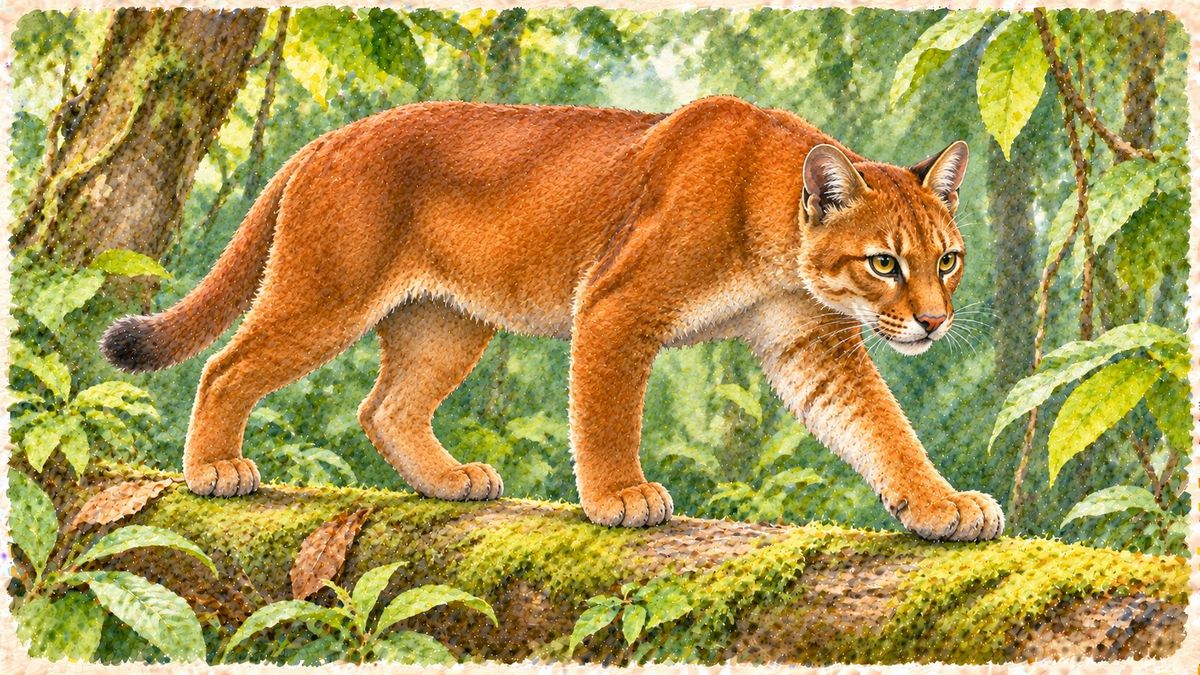
The cat is roughly twice the size of a large house cat, and it is solidly built, with strong legs, a thick neck and a rounded head. Its sturdy build is a clue to its hunting style, since it takes prey that can be much larger than a small rodent.
Because it lives in dense forest and is shy of people, it is a very difficult animal to study. Much of what is known comes from camera traps, the stomach contents of animals killed by hunters, and observations of the few cats kept in zoos.
What Does an African Golden Cat Look Like?
The African golden cat is known for its variable colouring and its sturdy, muscular body.
Size and Weight
Adults measure about 2.1 to 3 feet (61 to 100 cm) in body length, with a tail that adds another 1 to 1.4 feet (16 to 40 cm). They weigh roughly 11 to 35 pounds (5 to 16 kg), with males usually larger than females. They stand about 1.5 to 2 feet (45 to 60 cm) tall at the shoulder, and their legs are relatively long.
Coat Colour
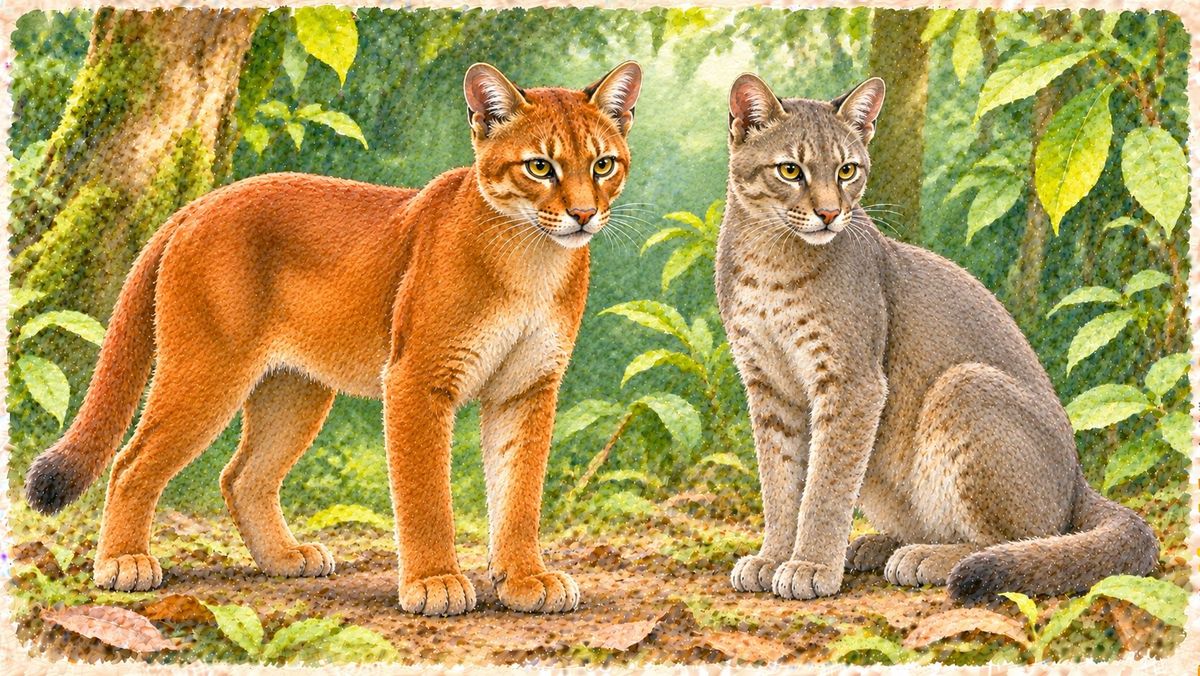
The coat comes in a remarkable range of colours, which is one of the cat's most distinctive features. There are two main forms:
- Red form: The coat ranges from a warm chestnut to a deep reddish brown.
- Grey form: The coat is a smooth slate-grey to silvery-grey.
There are also in-between shades, and in some individuals, dark, melanistic cats have been recorded. In some areas, one colour is much more common than the other. Many cats have spots on the belly, chest, legs and sometimes on the flanks, while others are nearly plain. This variation means that some animals look like entirely different species.
Face and Ears
The face is usually marked with pale lines and whitish fur around the eyes, chin and cheeks. The ears are small and rounded, unlike the tufted ears of the caracal. The eyes are round, and the nose is pinkish to brown.
Tail
The tail is relatively short, thick and often tipped with black, with a paler underside. It helps with balance when the cat moves through the undergrowth.
Where Do African Golden Cats Live?
African golden cats are found in the tropical forests of West and Central Africa, from Senegal and Guinea in the west, through Ghana, Cameroon and Gabon, to the Democratic Republic of the Congo and Uganda in the east.
They live in a range of forest types, including:
- Dense lowland rainforest
- Moist evergreen and semi-deciduous forest
- Swampy and flooded forest
- Montane forest at high elevations, in places up to around 3,000 metres (about 9,800 ft)
- Forest edges, regrowth and secondary forest
In some regions, they are also seen along forest edges, and sometimes in thicker woodland, but they stay close to forest cover.
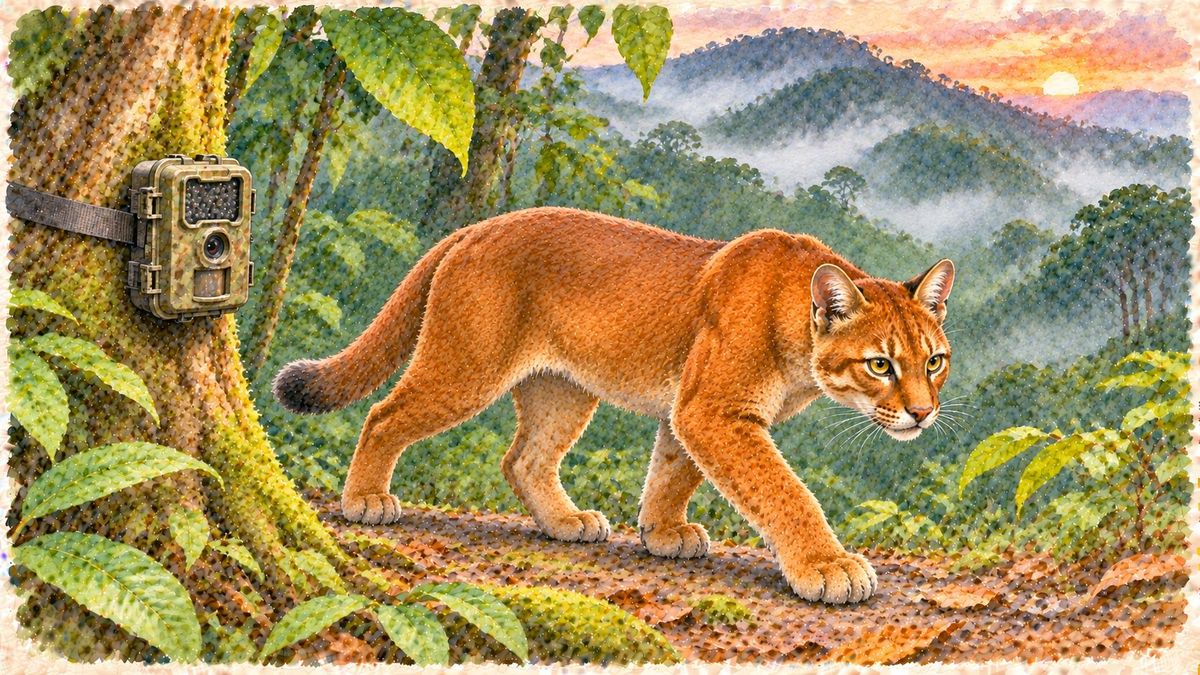
Researchers have found the cats in surprising places, including high up in the Rwenzori Mountains of Uganda, where camera traps have photographed them at high altitude. In the lowland forests of Gabon, they are among the most common medium-sized predators recorded by camera traps in some areas.
What Do African Golden Cats Eat?
The African golden cat is a strong, opportunistic hunter that feeds on a wide range of forest animals.
Typical Prey
- Rodents: Including forest rats, squirrels and giant pouched rats, which are the main prey in many areas
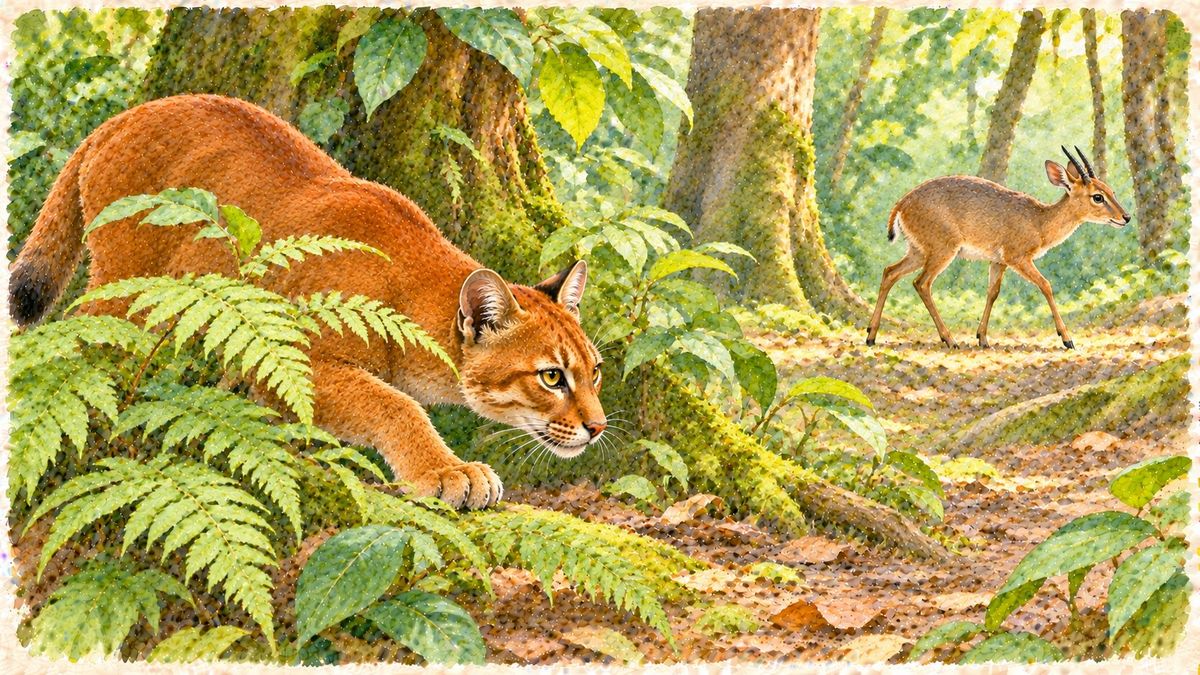
- Small antelope: Particularly duikers, which can be large relative to the cat
- Primates: Such as small monkeys
- Birds: Including ground-living species
- Reptiles: Such as lizards and snakes
- Other small mammals: Including hyraxes
How They Hunt
The cat is a skilled stalker and ambush hunter. It moves quietly along forest trails, often following the same routes as its prey, and then pounces from cover. It is thought to be a mostly ground-living animal, although it can climb trees when it needs to.
Its powerful forelimbs and strong jaws allow it to kill prey much larger than a rodent, such as a young duiker. It is believed to hunt both by day and night, although it is most active in the early morning and evening.
African Golden Cat Behavior and Lifestyle
Solitary and Secretive
Like most wild cats, the African golden cat lives alone, except for mothers with kittens. Each adult probably holds a home range that overlaps with others, and it marks it with scent and scratches. Home ranges in Gabon have been reported at around 10 to 20 square kilometres in some studies, though they vary with prey supply.
When Are They Active?
Although often thought to be nocturnal, camera trap studies suggest that the cat is quite active during the day, especially in the early morning and afternoon. The pattern probably depends on how much human disturbance there is.
Sounds
The golden cat can purr, hiss and growl, like other small cats, and it makes soft calls between mothers and kittens.
Little-Known Habits
There is a lot we do not know. Studies using radio collars and camera traps are still being carried out to learn more about how far the cats travel and how they use the forest.
African Golden Cat Reproduction and Kittens
Little is known about how African golden cats breed in the wild. Most information comes from captive cats and a handful of field reports.
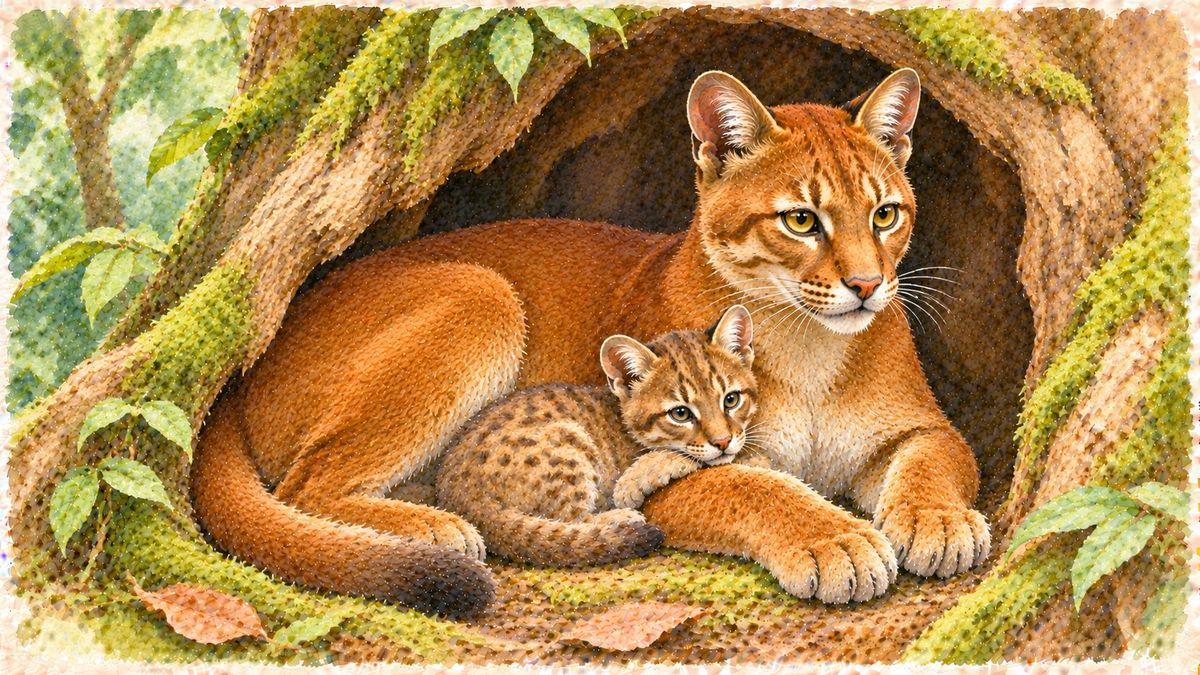
Females are thought to give birth to a single kitten, and sometimes two, after a gestation of about 75 days. The kittens are born in a hidden den, such as a hollow tree, a thick tangle of vegetation or a burrow. They are blind at first and covered in spotted fur, which in some cases fades as they grow.
The mother raises the young on her own. The kittens begin to eat meat after several weeks and become independent after several months. Cats are believed to reach adulthood at around two years old.
How Long Do African Golden Cats Live?
The lifespan of wild African golden cats is not known. In captivity, individuals have lived for around 12 years, and a few have lived longer. In the wild, they probably live a little less, because of hunting, disease and accidents.
Predators and Threats
Adult African golden cats have few natural predators, though leopards may kill them and young kittens may be taken by large snakes, birds of prey or other carnivores. As in the case of many forest species, the most serious threats come from humans.
- Habitat loss: Logging, farming, mining and roads shrink and break up the forest.
- Hunting for bushmeat: The cats are shot or trapped for meat in many places.
- Snares: Wire traps set for antelope and other animals catch cats by accident.
- Skins and body parts: Golden cat skins and parts are used in traditional ceremonies and may be sold as trophies.
- Loss of prey: Heavy hunting of duikers and monkeys leaves less food for the cat.
- Conflict: Cats may be killed when they are blamed for taking chickens or goats.
Cultural Importance
In some parts of Central and West Africa, the African golden cat holds special meaning. In several communities, it is regarded as a symbol of power and is linked to leopards in folk beliefs. Skins have traditionally been used in ceremonies. In some areas, the cat is considered a sacred or protected animal, while in others it is hunted. Its secrecy has added to its mystique and to the legends that surround it.
Why African Golden Cats Are Important
African golden cats are mid-level predators in the rainforest, and they have a number of ecological roles.
- Controlling rodents: By eating large numbers of rodents, they help keep their populations in balance.
- Balancing prey species: Taking duikers and monkeys helps to regulate those populations.
- Indicator of forest health: Because they need intact forest and plentiful prey, a healthy golden cat population suggests the ecosystem is in good condition.
- Part of the food web: They link small prey species to the large predators, such as leopards, above them.
Are African Golden Cats Endangered?
The African golden cat is listed as Vulnerable by the IUCN, which means it faces a high risk of extinction in the wild if current trends continue. Because the cat is so hard to count, its exact population is unknown, but it is believed to be declining as forests disappear and hunting increases.
Conservation Efforts
- Protecting rainforest through national parks and reserves
- Reducing bushmeat hunting and snaring
- Camera trap surveys to track populations
- Working with local communities to find alternatives to hunting
- International trade controls, since the species is listed in the CITES appendices
Researchers in countries such as Gabon, Uganda and Cameroon are continuing to study the cat to find out where it is most at risk.
Fun Facts About African Golden Cats
- Two main colours: The coat may be red or grey, and the two colours can occur in the same litter.
- Cousin of the caracal: It is more closely related to the caracal and serval than to leopards.
- Mountain climber: Camera traps have photographed it high in the mountains of Uganda.
- Secretive: It is one of the least-studied cats in the world.
- Strong for its size: It can tackle prey bigger than itself, such as young duikers.
- Daytime hunter: Despite its secretive habits, it is often active in daylight.
- Spotted or plain: Some cats have spotted coats, while others are nearly plain.
- Symbol of power: It features in local stories and traditions in parts of Africa.
- Forest specialist: It is the main wild cat of the African rainforest, together with the leopard.
Frequently Asked Questions
Is the African golden cat related to the leopard? No. Although they share forests, the African golden cat is more closely related to the caracal and the serval than to the leopard.
What do African golden cats eat? They eat rodents, small antelope such as duikers, monkeys, birds and reptiles.
How big is an African golden cat? It weighs about 11 to 35 pounds (5 to 16 kg) and is about 2.1 to 3 feet (61 to 100 cm) long, not counting the tail.
Where do African golden cats live? They live in the rainforests of West and Central Africa, in countries such as Gabon, Cameroon, Ghana and Uganda.
Are African golden cats dangerous to humans? No. They are very shy and avoid people. Like any wild animal, they may bite or scratch if cornered.
Are African golden cats endangered? They are listed as Vulnerable by the IUCN, and their numbers are thought to be declining because of habitat loss and hunting.
Final Thoughts
The African golden cat is one of the great mysteries of the rainforest. With its shifting coat colours, powerful build and shy habits, this elusive predator remains one of the least understood wild cats in the world. Every new camera trap picture adds a small piece to the puzzle. Protecting the forests it calls home gives this golden ghost of the jungle the best chance of staying a part of Africa's wild heritage for many years to come.