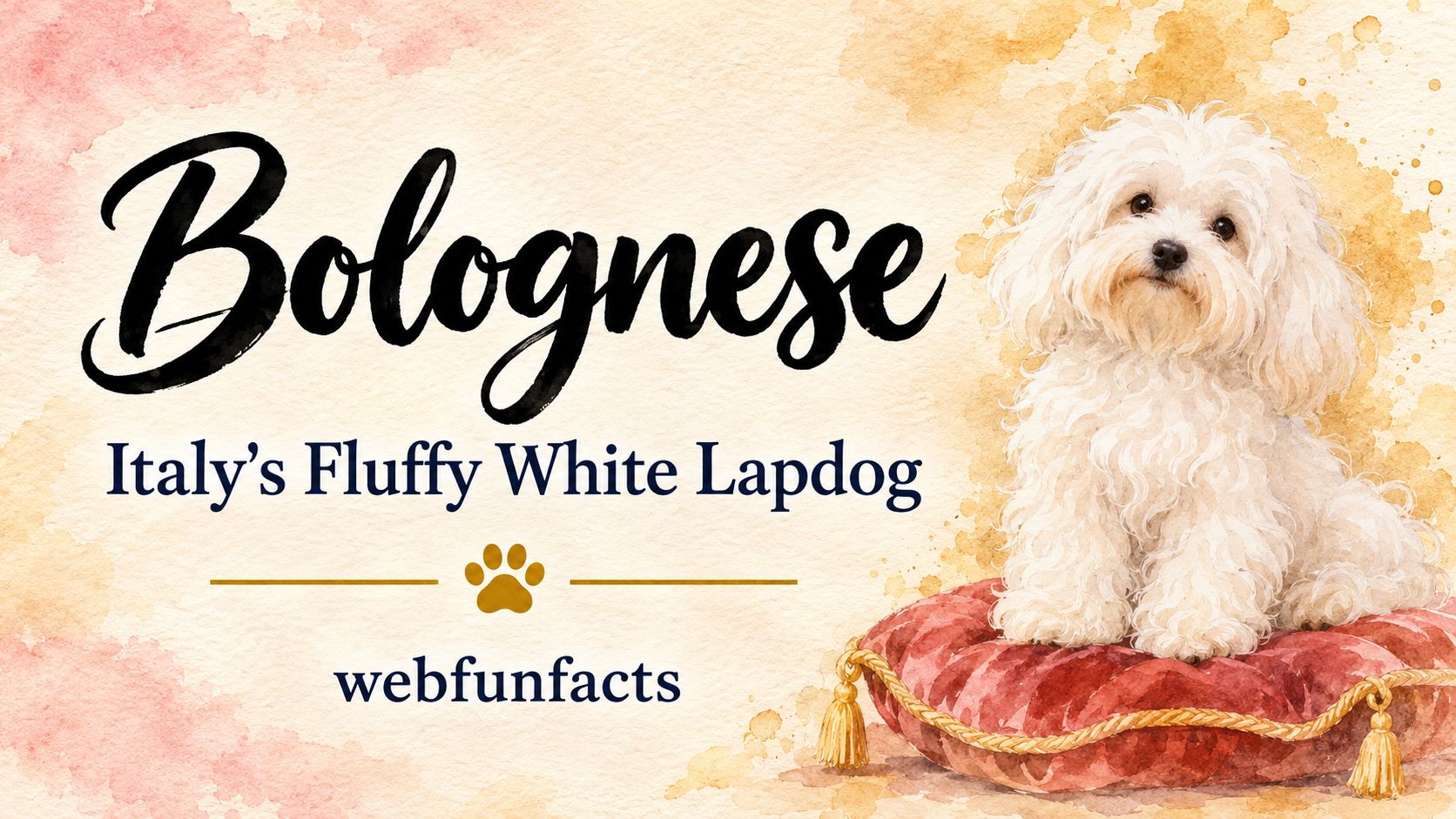
The Bolognese is a small, fluffy white companion dog from Italy with a soft, cloud-like coat and a sweet, gentle nature. Named after the city of Bologna, this little dog spent centuries in the laps of nobles, dukes and royalty. Its loose white ringlets and dark, expressive eyes give it a look that is both elegant and huggable.
Today, it is still a rare breed, but people who meet one are often won over by its calm, loving personality. In this complete Bolognese dog breed guide, you will learn everything you need to know before bringing one home, including its size, temperament, grooming needs, exercise requirements, health concerns, diet tips and fascinating history.
Bolognese at a Glance
| Trait | Details |
|---|---|
| Breed group | Toy; AKC Foundation Stock Service (not yet fully recognized) |
| Height | About 10 to 12 inches (25 to 30 cm) |
| Weight | 6 to 10 pounds (2.7 to 4.5 kg) |
| Life expectancy | 12 to 14 years |
| Coat | Long, wavy, loose ringlets; single coat |
| Colors | Pure white |
| Shedding | Low |
| Energy level | Low |
| Temperament | Gentle, affectionate, calm, playful, devoted |
| Good for | Seniors, couples, quiet homes, apartment living |
| Origin | Bologna, Italy |
What Is a Bolognese?
It is a toy companion breed that belongs to the Bichon family of small white dogs. Its cousins include the Bichon Frise, the Maltese, the Havanese and the Coton de Tulear. You may also hear it called the Bichon Bolognese.
Unlike many breeds that were developed for herding, hunting or guarding, this breed was developed for one main job: being a loving companion. For centuries, it was a prized lapdog among Italian nobility and was often given as a gift between royal families.
In the United States, the breed is part of the American Kennel Club's Foundation Stock Service, a program for breeds working toward full recognition. It is fully recognized by international kennel clubs, including the FCI, which places it among companion and toy dogs.
Bolognese Size and Appearance
How Big Do Bolognese Dogs Get?
Bolognese dogs are small, usually weighing between 6 and 10 pounds (2.7 to 4.5 kg) and standing roughly 10 to 12 inches (25 to 30 cm) tall at the shoulder. Males tend to be slightly taller than females.
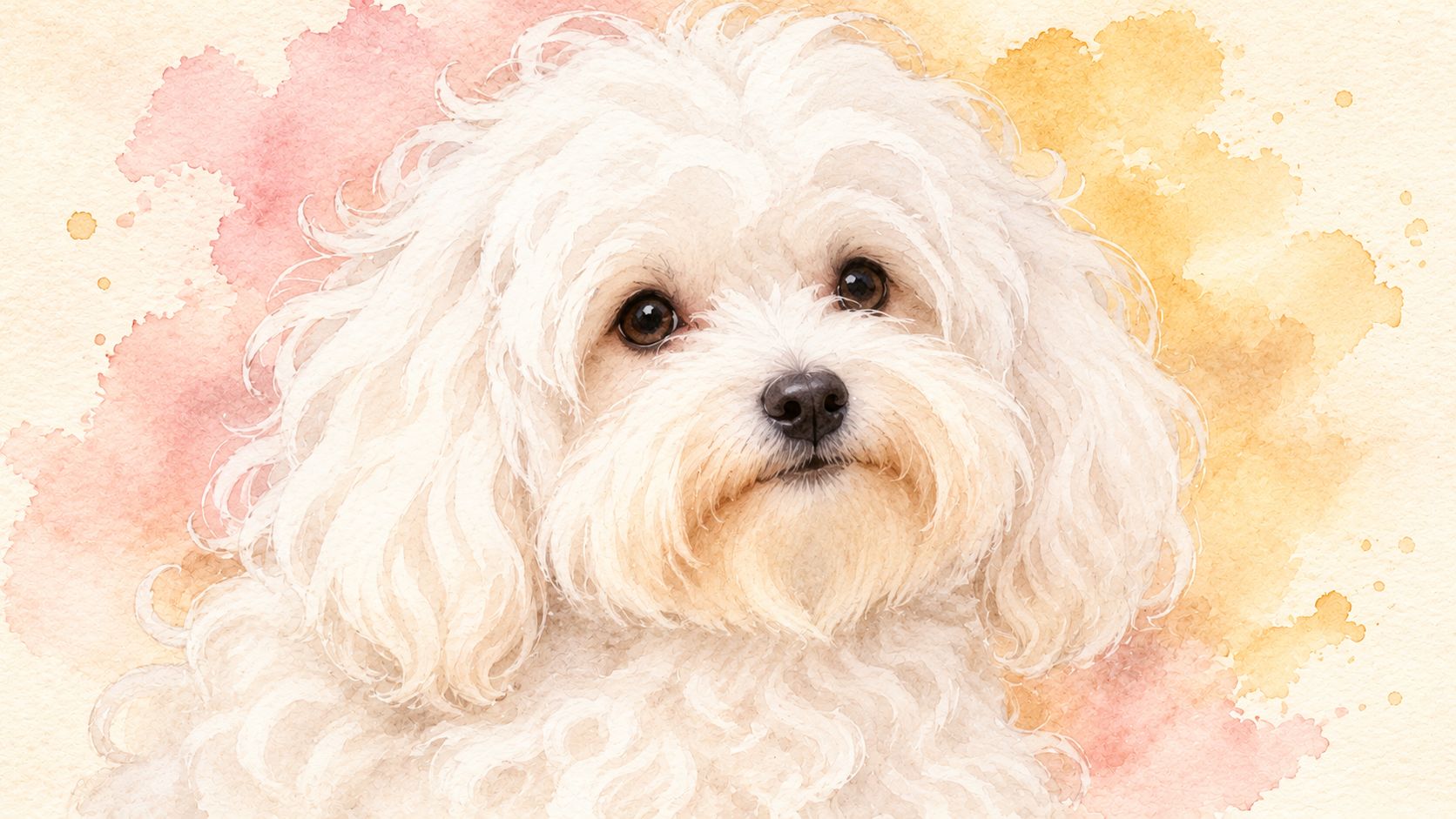
Its small size makes it easy to carry, but it is not fragile-looking. The body is compact and square, with a sturdy frame hidden under all that fluff. The head is medium in size, with a short muzzle, a black nose and large, round, dark eyes rimmed in black. The ears hang down and are covered in long, flowing hair.
The overall expression is soft, alert and friendly. Many owners say their dog looks like a little cotton ball with a face.
Coat and Colors
The coat is one of its most recognizable features. It is long and falls in loose, wavy ringlets over most of the body. The hair is a little silkier on the ears and tail and shorter around the muzzle. Unlike some long-coated breeds, the coat does not lie flat. It has a fluffy, slightly tousled look.
This is a single coat, meaning it lacks the thick undercoat many breeds have. The only accepted color is pure white with no markings. Young puppies under about 18 months may show a light champagne shade around the ears, which usually fades as they mature.
Bolognese Temperament and Personality
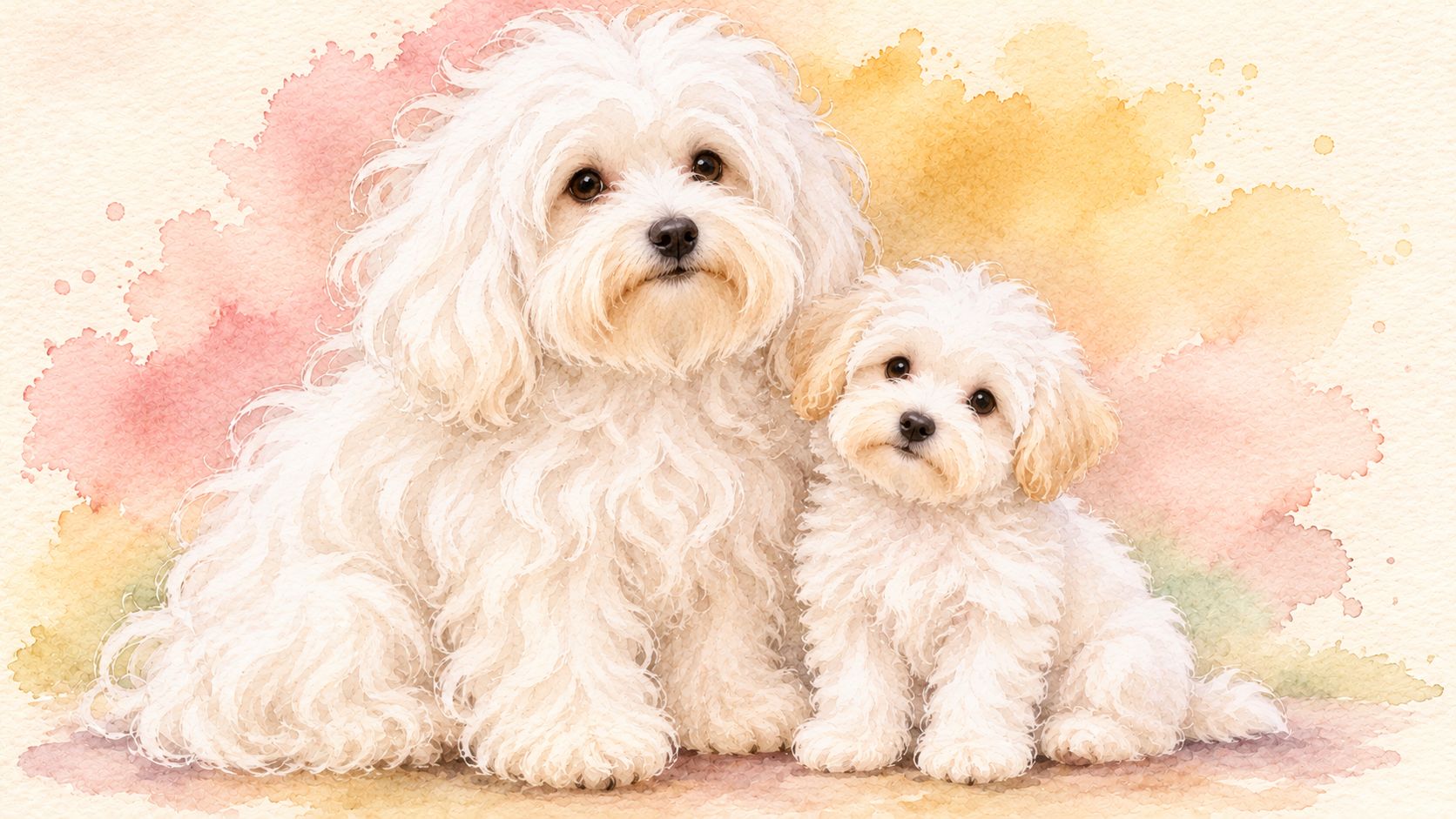
The Bolognese temperament is one of the main reasons people fall for this breed. It is a loving, people-focused dog that wants to be close to its family. This breed is known for being:
- Affectionate: It loves to cuddle and is happiest curled up on a lap or snuggled beside its favorite person.
- Gentle and easygoing: It is generally calm indoors and less hyper than many other small breeds.
- Playful: Despite its calm side, it enjoys short bursts of play, games and learning tricks.
- Devoted: It forms a deep bond with its people and often follows them from room to room.
- Alert and chatty: It will bark to let you know someone is at the door, and some dogs are quite vocal.
Because it is so attached to its family, it can be prone to separation anxiety. It does not do well when left alone for long hours each day. This breed is best suited to homes where someone is around for much of the day, such as retirees or people who work from home.
This breed can also be a little reserved with strangers at first. Early socialization helps it grow into a confident, friendly adult.
Are Bolognese Good With Kids and Other Pets?
They are usually good with calm, well-behaved children who know how to handle a small dog gently. Because the breed is small and sensitive, boisterous play or rough handling can frighten or injure it, so supervision is important with younger kids.
With other animals, it can do well, especially with other gentle dogs it is raised with. However, it may feel intimidated by large, loud or pushy dogs. Introduce new pets slowly and give your dog a safe, quiet place to retreat.
Are Bolognese Good Family Dogs?
Yes, it can be a wonderful family dog in the right home. It does best in a calm household with older children or adults who can give it lots of attention and companionship. Very busy, noisy homes may overwhelm this gentle breed.
Training a Bolognese
This breed is intelligent and eager to please, and it usually enjoys training sessions. Many owners find that their dog loves learning tricks. Because the breed is sensitive, it responds best to positive reinforcement such as praise, play and small treats. Harsh corrections can make it anxious or withdrawn.
Here are a few training tips for new owners:
- Start early. Begin socialization and basic training as soon as your Bolognese puppy comes home.
- Keep sessions short and fun. Five to ten minutes at a time keeps your dog focused and happy.
- Be patient with house-training. Like many small breeds, these dogs can take a bit longer to house-train. A regular routine and crate training can help.
- Manage barking. Teach a "quiet" cue and reward calm behavior so alert barking does not turn into excessive barking.
- Practice alone time. Gradually teach your dog to be comfortable alone for short periods to help prevent separation anxiety.
Exercise Needs
This breed has a low energy level and needs less physical exercise than many breeds. A couple of short, gentle walks each day plus some indoor play is usually enough to keep it healthy and content.
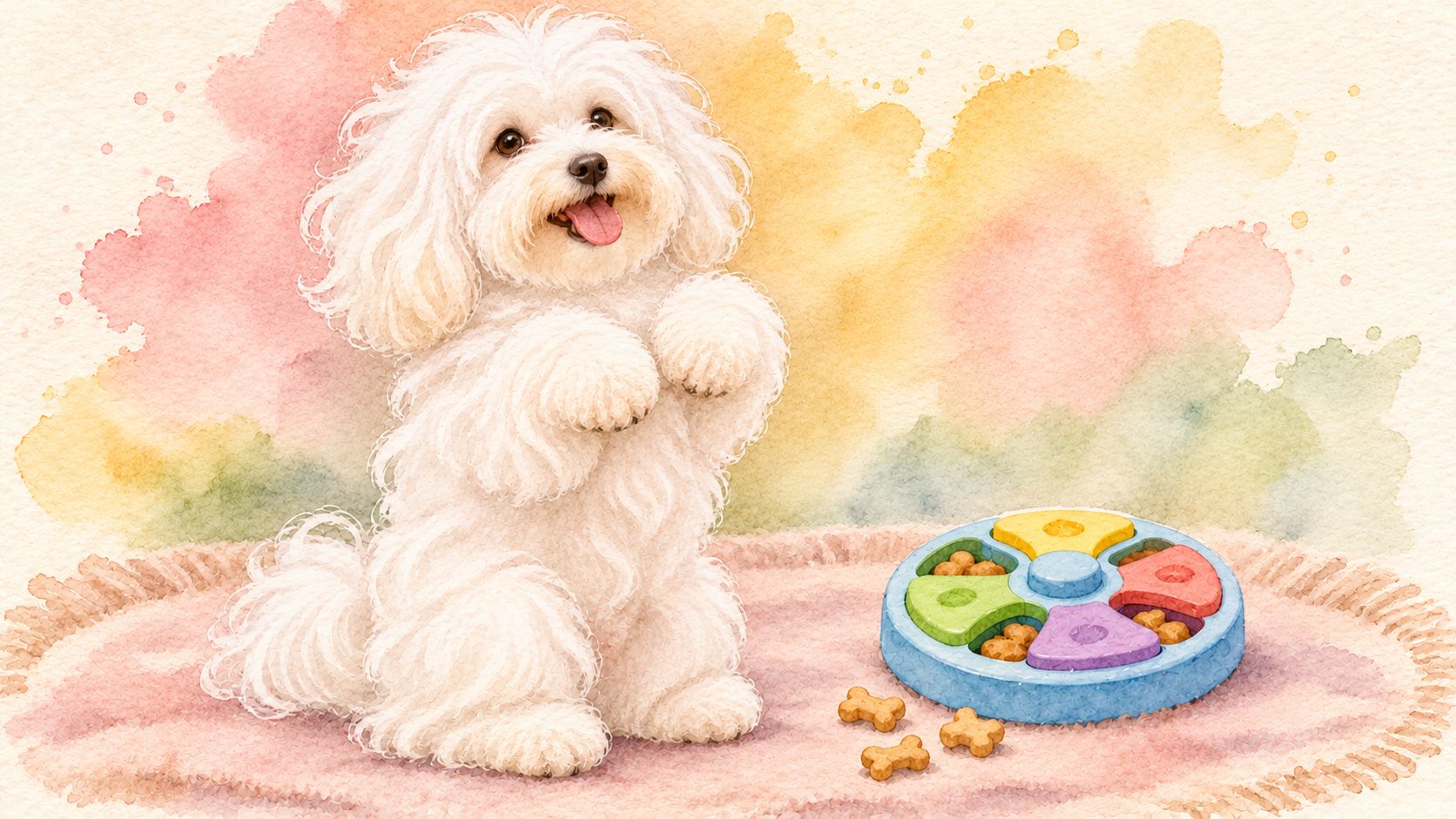
Mental stimulation is just as important as physical activity. Puzzle toys, sniffing games, trick training and short play sessions help keep its clever mind busy. This breed generally prefers relaxed leash walks over long hikes or intense outdoor adventures.
Thanks to its small size and calm nature, it adapts well to apartments and smaller homes. It is happiest living indoors with its family.
Weather Sensitivity
This breed prefers mild temperatures. In cool weather, a dog sweater can help keep it comfortable, since it lacks a thick undercoat. In hot weather, walk your dog during the cooler parts of the day, provide shade and fresh water, and watch for signs of overheating.
Bolognese Grooming
Do Bolognese Shed?
It sheds very little, which is one reason it appeals to many families. Its low-shedding single coat means you will find less hair on your furniture and clothes. However, no dog is truly 100 percent hypoallergenic, so people with allergies should spend time with the breed before committing.
Grooming Routine
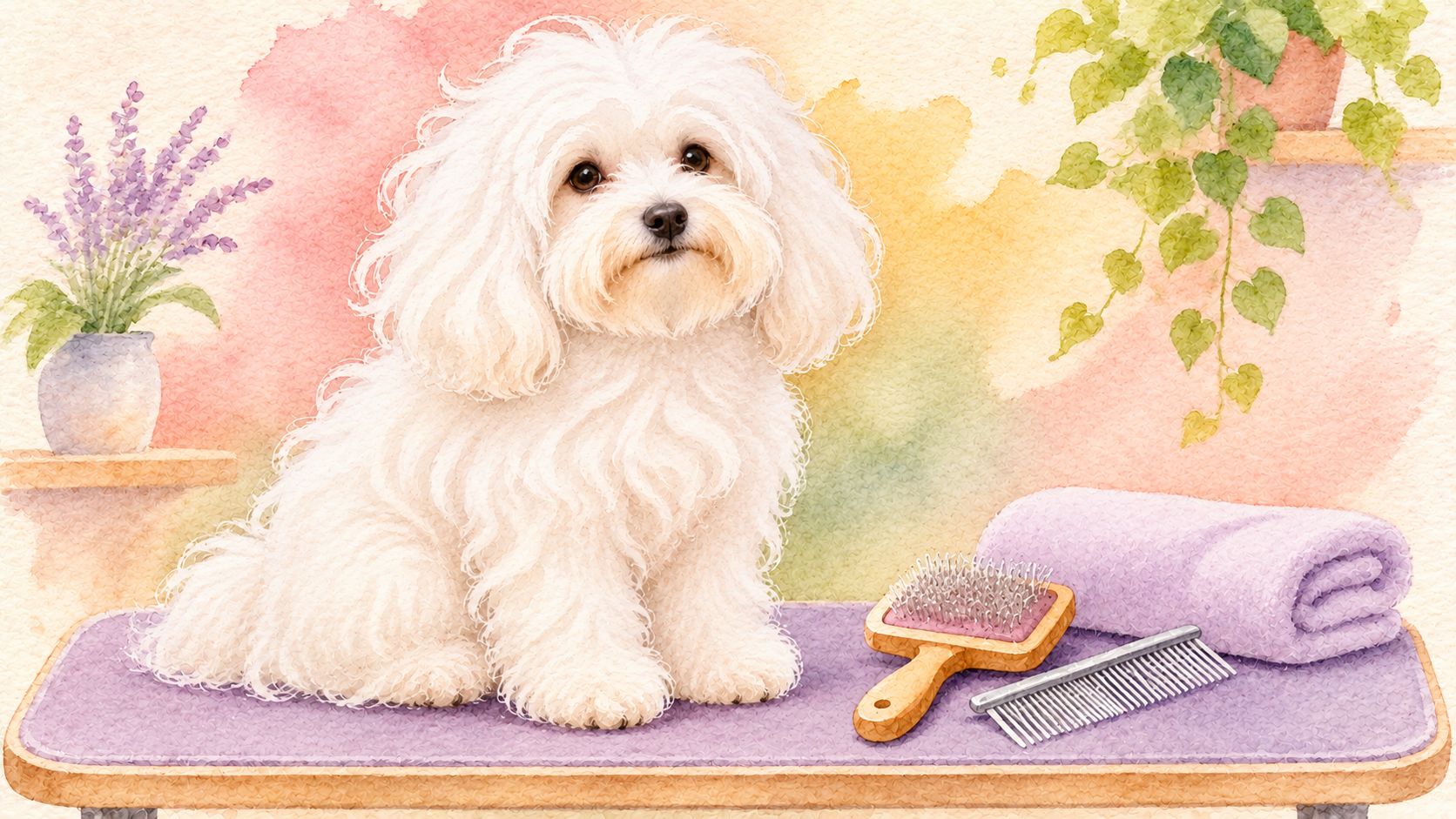
While it does not shed much, Bolognese grooming is fairly high-maintenance. That fluffy coat can mat quickly without regular care.
- Brushing: Brush the coat several times a week, and ideally daily, to prevent mats and tangles, paying close attention to areas behind the ears, under the legs and around the collar.
- Professional grooming: Many owners visit a groomer regularly for a bath and trim. Some choose a shorter "puppy cut" to make home care easier.
- Eye care: Wipe around the eyes often to help prevent tear staining, which shows easily on a white face.
- Ears: Check and gently clean the ears with dog-safe wipes. The hanging ears can trap moisture, but avoid overcleaning.
- Nails: Trim nails regularly, as they can grow quickly on small dogs.
- Teeth: Brush your dog's teeth several times a week. Small breeds are prone to tartar buildup and dental problems.
Bolognese Health and Lifespan
How Long Do Bolognese Live?
The average Bolognese lifespan is about 12 to 14 years, and some live even longer with good care. Overall, it is considered a fairly healthy breed.
Like all breeds, it can be prone to certain conditions. Responsible breeders screen their dogs for common concerns, which may include:
- Luxating patella: A condition in which the kneecap slips out of place, common in small breeds.
- Progressive retinal atrophy (PRA): An inherited eye condition that can affect vision over time.
- Arthritis: Joint stiffness that may develop as the dog gets older.
- Dental disease: Crowded teeth in a small mouth can lead to tartar and gum problems.
Small dogs may also need their anal glands checked from time to time. Signs such as scooting or frequent licking are worth mentioning at your next vet visit. Always work with your veterinarian to set up a routine of checkups, vaccinations, parasite prevention and dental care.
Feeding and Nutrition
This little dog does best on a high-quality, balanced dog food made for small or toy breeds. These formulas usually have smaller kibble that is easier for tiny mouths to chew. Some small dogs also find wet food easier to eat.
Puppies should eat a food designed for puppies to support healthy growth. Adults usually do well with their daily portion split into two or more meals. Follow the feeding guidelines on the package and ask your veterinarian about the right amount for your dog's age, weight and activity level.
Weight management matters for small breeds, since even a pound or two of extra weight can strain small joints. Use treats sparingly and choose small, low-calorie options. As your dog ages, your veterinarian can help you decide when to switch to a senior formula.
History of the Bolognese
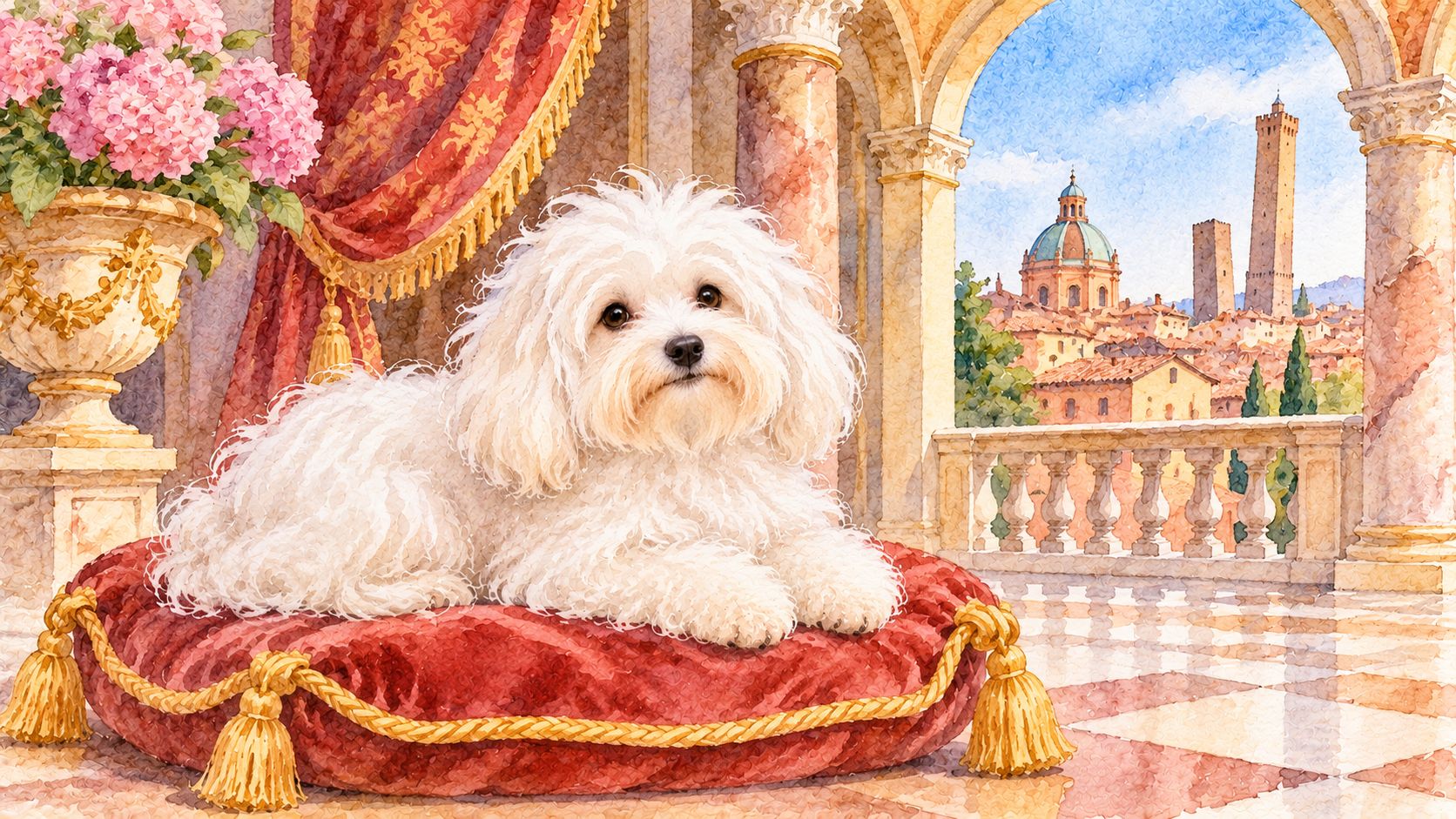
This breed takes its name from Bologna, a historic city in northern Italy. Small white Bichon-type dogs have been known in Italy for many centuries, and this breed became especially popular during the Renaissance.
During the Renaissance, it was a treasured companion of the Italian nobility. Wealthy families, including the powerful Medici family, reportedly gave these little dogs as precious gifts to other noble and royal households across Europe. Bolognese-type dogs even appear in paintings by Renaissance artists such as Titian.
The breed counted many famous admirers over the centuries. Madame de Pompadour, Catherine the Great, Empress Maria Theresa of Austria and King Louis XIV of France are all said to have adored these little white dogs.
After the age of royal courts faded, the breed's numbers dropped sharply, and it came close to disappearing in the 20th century. Dedicated Italian and European breeders worked to revive it, and the breed slowly regained its footing.
The breed reached the United States relatively recently. It is now part of the AKC Foundation Stock Service, and it remains rare in North America.
Bolognese vs Bichon Frise
The Bolognese and the Bichon Frise are close cousins, and both are small, white and low-shedding. The Bichon Frise is usually a bit heavier and has a dense double coat that is often trimmed into a rounded, powder-puff shape. The Bolognese, by contrast, has a single coat of loose, wavy ringlets and tends to be calmer and more reserved, while the Bichon is often more outgoing and bubbly with strangers.
Is a Bolognese Right for You?
A Bolognese could be a wonderful match if you:
- Want a small, gentle and very affectionate companion
- Live in an apartment or a quieter home
- Are home for much of the day
- Prefer a low-shedding breed
- Enjoy regular brushing or don't mind grooming appointments
- Want a dog that loves to cuddle and learn tricks
A Bolognese may not be the best fit if you:
- Are away from home for long hours most days
- Have a very loud, busy household with rough play
- Want a jogging or hiking partner
- Prefer a low-maintenance coat
Finding a Bolognese Puppy
Because the breed is rare, finding a puppy may take time, and you may need to join a waiting list. Look for a reputable breeder who health-tests their dogs, raises puppies in a home setting and welcomes your questions. You can also check breed clubs, rescue groups and adoption sites such as Petfinder, as adult dogs sometimes need new homes.
Fun Facts About the Bolognese
- The breed is named after the city of Bologna in northern Italy.
- It belongs to the Bichon family, alongside the Bichon Frise, Maltese and Havanese.
- The only accepted coat color is pure white.
- Renaissance nobles gave these dogs as valuable gifts to other royal families.
- Catherine the Great and Madame de Pompadour are said to have owned the breed.
- Puppies may have a light champagne tint on their ears that fades with age.
Frequently Asked Questions
Is the Bolognese the same as a Bichon Frise?
No. The two are related members of the Bichon family, but they are separate breeds. The Bolognese has a single coat of loose ringlets, while the Bichon Frise has a dense double coat.
How big do Bolognese dogs get?
Adults usually weigh 6 to 10 pounds and stand about 10 to 12 inches tall at the shoulder, making them a true toy-sized breed.
Are Bolognese hypoallergenic?
This breed has a low-shedding coat and is often recommended for people with mild allergies. However, no dog is completely allergen-free, so spend time with the breed before deciding.
Are Bolognese good family dogs?
Yes, in calm homes with adults or gentle, older children. They are loving and easygoing but can be overwhelmed by rough play or very noisy households.
How long do Bolognese dogs live?
The average lifespan is 12 to 14 years, and some live longer with good care, a healthy diet and regular veterinary checkups.
Can a Bolognese be left alone?
This breed is very attached to its people and can develop separation anxiety. It is best suited to homes where someone is around for much of the day.
Final Thoughts
The Bolognese is a gentle, loving and charming little dog with a rich royal past. With its fluffy white ringlets, calm nature and devotion to its family, it makes a delightful companion for quieter homes. If you can offer regular grooming, gentle training and plenty of time together, a Bolognese may become your most loyal lap-warming friend.