
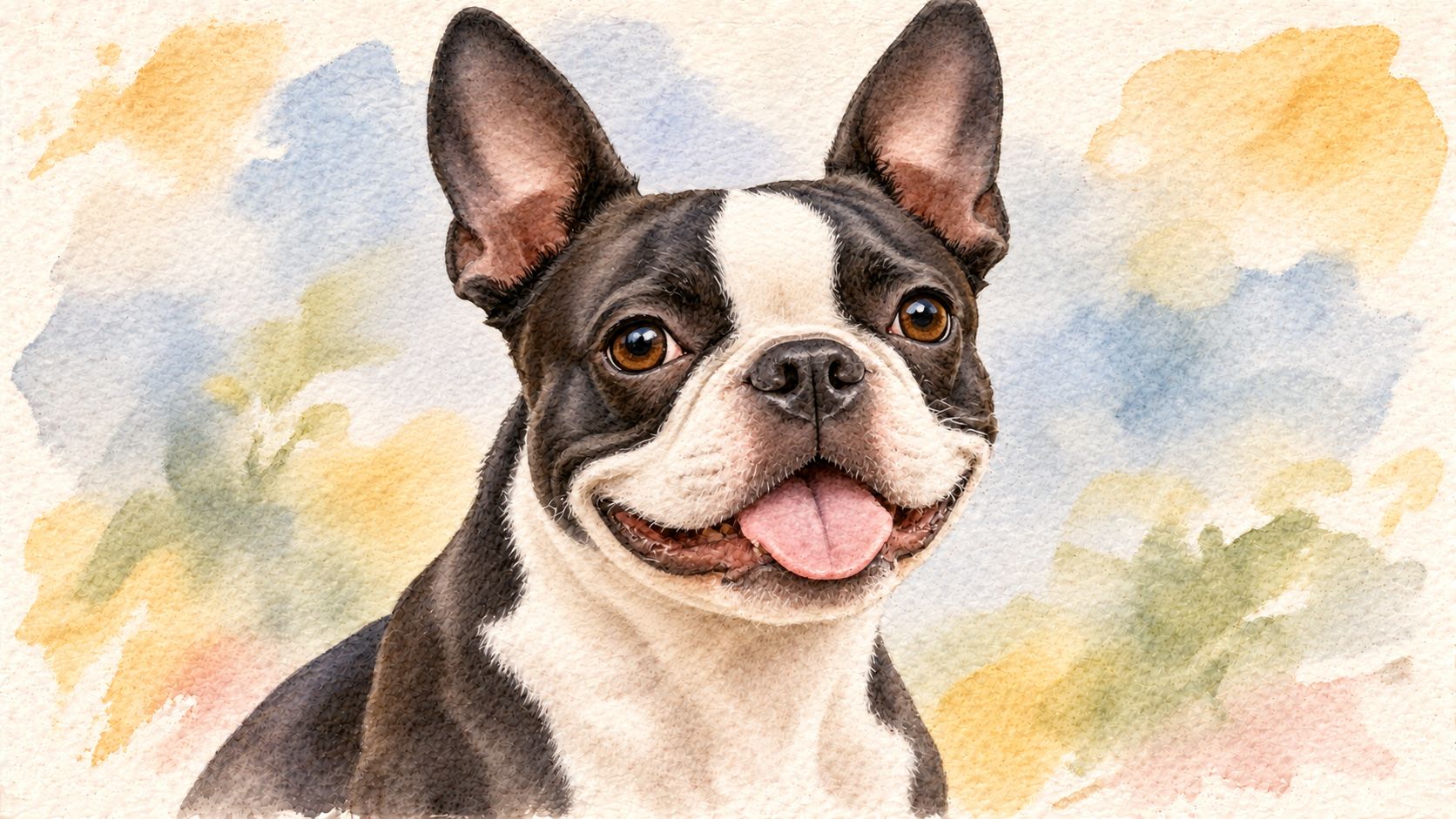
With its tuxedo-style coat, big round eyes and a grin that seems permanently switched on, the Boston Terrier is one of the most lovable small dogs in America. Its polished look and polite manners earned it a famous nickname: "The American Gentleman." Behind that dapper outfit, though, is a playful clown who loves nothing more than making its family laugh.
This breed is friendly, bright, sturdy and easy to carry, which makes it a favorite with city dwellers and families alike. In this complete Boston Terrier dog breed guide, you will learn everything you need to know before bringing one home, including its size, temperament, grooming needs, exercise requirements, common health concerns, diet tips and proud all-American history.
Boston Terrier at a Glance
| Trait | Details |
|---|---|
| Breed group | Non-Sporting (AKC) |
| Height | About 15 to 17 inches (38 to 43 cm) |
| Weight | About 15 to 25 pounds (7 to 11 kg) |
| Life expectancy | 11 to 13 years |
| Coat | Short, smooth, fine |
| Colors | Black, brindle or seal, always with white markings |
| Shedding | Minimal |
| Energy level | Moderate |
| Temperament | Friendly, gentle, playful, bright, affectionate |
| Good for | Families, first-time owners, seniors, apartment living |
| Origin | United States (Boston, late 1800s) |
What Is a Boston Terrier?
The Boston is a compact, muscular companion dog that was developed in Boston, Massachusetts, in the late 19th century. It is one of the few breeds that can truly claim to be "made in the USA," and it was among the first American breeds recognized by the American Kennel Club.
Despite the word "terrier" in its name, the breed belongs to the AKC's Non-Sporting Group. Its ancestors were bull-and-terrier crosses, but generations of careful breeding turned it into the gentle, people-loving house dog we know today. It is also the official state dog of Massachusetts.
Boston Terrier Size and Appearance
How Big Do Boston Terriers Get?
Most adult Bostons stand about 15 to 17 inches (38 to 43 cm) tall at the shoulder and weigh roughly 15 to 25 pounds (7 to 11 kg). Some individuals are a little smaller, so you may meet Bostons that weigh well under 15 pounds.
The breed standard actually divides these dogs into weight classes, which means you can find lighter and heavier dogs that still look unmistakably like a Boston. Whatever its weight, the Boston Terrier size makes it small enough to carry yet sturdy enough to join in active family life.
The Boston has a short, square body, a deep chest and a short tail. Its head is square and flat on top, with a short muzzle, large round dark eyes set wide apart and small upright ears. The overall expression is alert, kind and full of intelligence. Many owners say their Boston's face can show surprise, curiosity and pure joy all in the space of a minute.
Coat and Colors
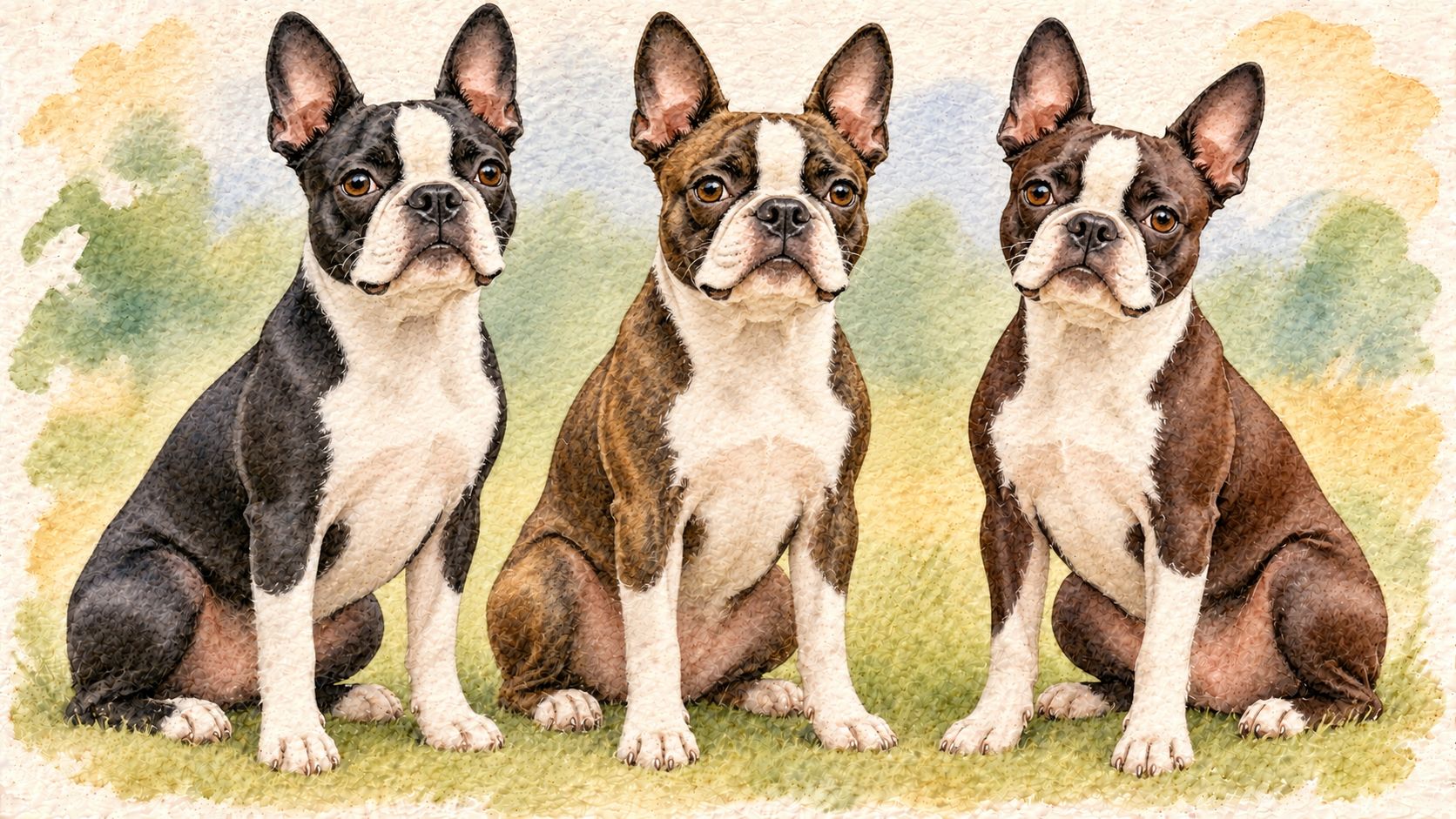
This breed wears a short, smooth, fine coat with a bright sheen. The most recognizable color pattern is black and white, with a white blaze between the eyes, a white muzzle and a white chest that looks like a dress shirt under a dark jacket.
Accepted colors include black, brindle and seal, each with white markings. Seal is a black coat with a reddish cast that shows up in sunlight or bright light. The crisp contrast between dark and white is what gives the breed its tuxedo look.
Boston Terrier Temperament and Personality
The Boston Terrier temperament is one of the main reasons the breed has stayed popular for well over a century. These dogs are known for being:
- Friendly: Bostons usually greet family, guests and new friends with a wagging rear end and a happy face.
- Gentle and well-mannered: True to their "American Gentleman" nickname, they tend to be polite, calm indoors and easygoing.
- Funny and playful: Bostons have a natural gift for comedy and love to entertain with silly games and goofy expressions.
- Affectionate: They enjoy staying close to their people, whether that means sitting on the couch or following you from room to room.
- Bright and alert: They are quick learners and pay close attention to what is happening around them.
Because they are so people-focused, Bostons do not enjoy being left alone for long stretches. A Boston that spends too many hours by itself may become bored or frustrated, which can lead to unwanted chewing or barking. This breed is happiest in a home where someone is around for much of the day.
Are Boston Terriers Good Family Dogs?
Yes, Bostons are generally excellent family dogs. They are affectionate, sturdy enough for gentle play and usually patient with children who know how to treat a dog kindly.
As with any breed, adults should supervise young children around dogs and teach them not to pull ears or tails. The Boston's compact, solid build means it is less fragile than many tiny toy breeds, which is one reason it does so well in busy households.
Are Boston Terriers Good With Other Pets?
Most Bostons get along well with other dogs and can live peacefully with cats, especially when they are raised together. Some Bostons can be a little bossy with other dogs of the same sex, so slow introductions help.
Early socialization makes a big difference. Introducing your Boston Terrier puppy to many people, animals, sounds and places will help it grow into a confident, well-rounded adult.
Training a Boston Terrier
Bostons are smart and eager to please, which makes them a good choice for first-time dog owners. They are also sensitive dogs, so training works best with praise, treats and gentle correction rather than harsh methods. A raised voice can upset a Boston and make it less willing to try.
Here are a few training tips for new owners:
- Start early. Begin basic manners and socialization as soon as your puppy comes home.
- Keep it upbeat. Short, happy sessions of five to ten minutes keep your Boston focused and having fun.
- Use rewards. Small treats, toys and lots of praise help your dog understand what you want.
- Work on house-training. Some small dogs take longer to house-train, so stick to a regular schedule and consider crate training.
- Try dog sports. Many Bostons enjoy agility, obedience, rally and flyball, and their gentle nature makes some of them wonderful therapy dogs.
Exercise Needs
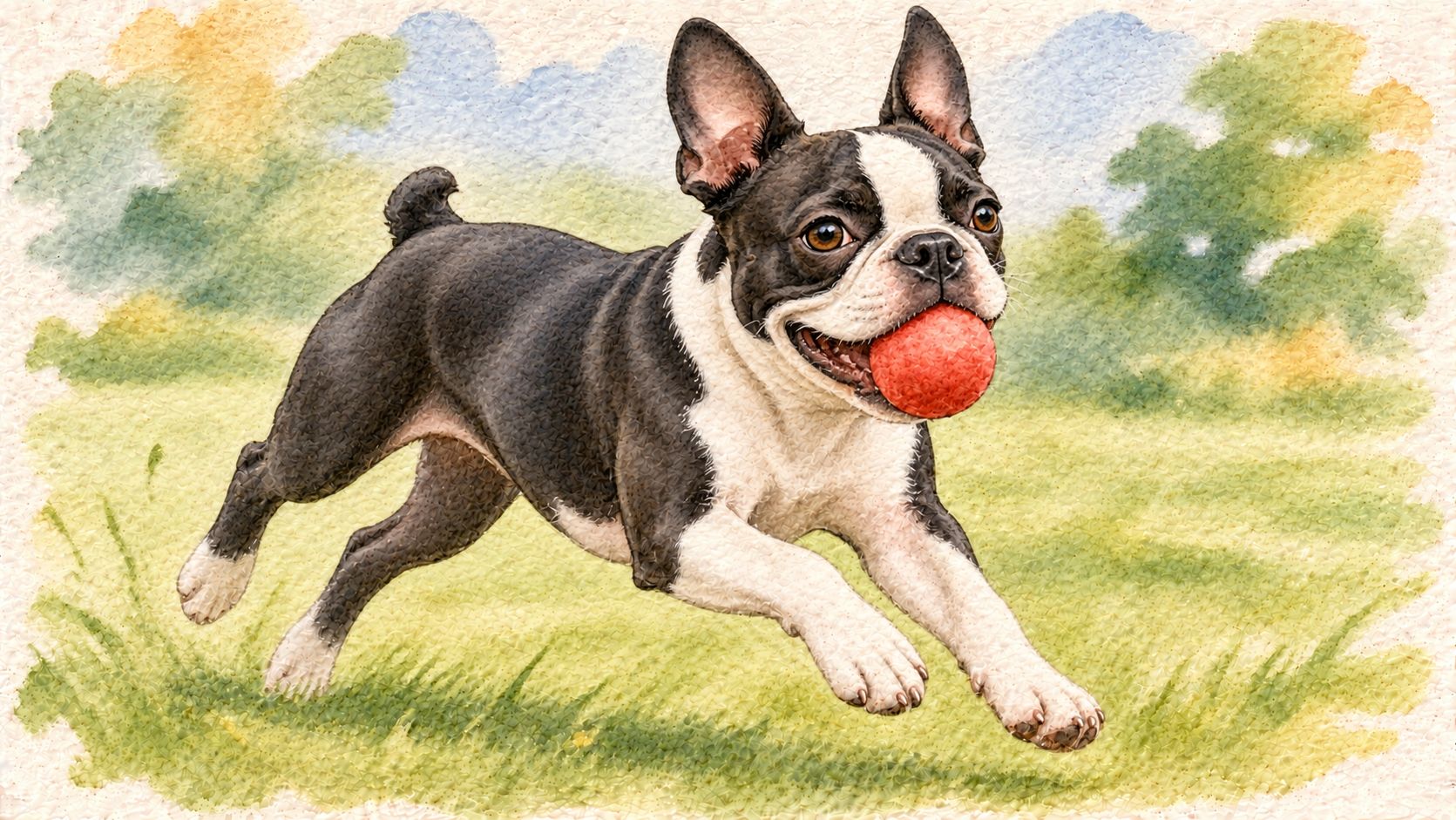
This breed has a moderate energy level. Some Bostons love to run, chase and play for long periods, while others are content with one brisk daily walk and a bit of play at home. Most do well with a couple of walks a day plus a few short play sessions.
Many Bostons adore playing fetch with their owners, and interactive toys and puzzle feeders are great for rainy days. Because of their size and adaptable nature, Bostons are well suited to apartments and city living, as long as they get regular exercise and attention.
Be careful in hot or humid weather. As a flat-faced breed, the Boston can struggle to cool down, so plan walks for early morning or evening in summer and avoid hard exercise in the heat.
Boston Terrier Grooming
Do Boston Terriers Shed?
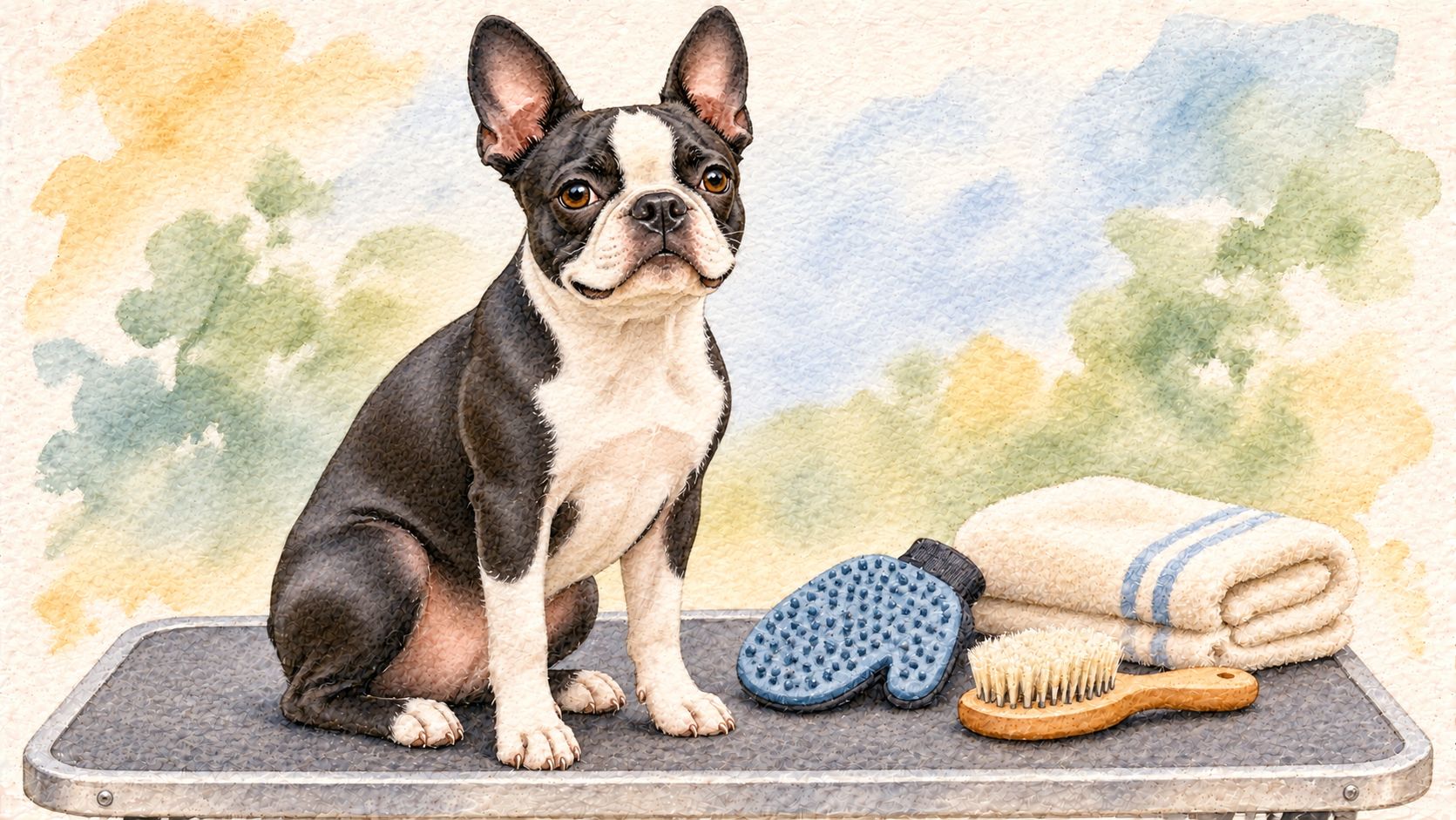
Boston Terriers shed minimally. Their sleek, fine coat sheds lightly, and a quick weekly brushing is usually enough to keep loose hair under control.
Keep in mind that the breed is not considered hypoallergenic. People with allergies should spend time around the breed before deciding whether it is the right fit.
Grooming Routine
Boston Terrier grooming is refreshingly simple compared with many other breeds:
- Brushing: Brush the coat once a week with a soft brush or rubber grooming mitt to remove loose hair and bring out its shine.
- Bathing: Bathe only when needed, such as after a muddy walk, using a gentle dog shampoo.
- Eyes: Check your Boston's large, prominent eyes daily for redness, discharge or irritation, and gently wipe away any debris.
- Face folds: Wipe the short muzzle area as needed to keep it clean and dry.
- Nails: Trim nails every few weeks to keep them from getting too long.
- Teeth: Brush your dog's teeth several times a week, since small dogs are prone to dental problems.
- Ears: Check ears weekly and clean them gently if you notice dirt or wax.
Boston Terrier Health and Lifespan
The typical Boston Terrier lifespan is about 11 to 13 years. Like all breeds, Bostons can be prone to certain health conditions, and responsible breeders screen their dogs for common concerns. These may include:
- Eye problems: The breed's large, prominent eyes can be prone to injury and other eye issues, so daily checks are important.
- Luxating patella: A condition in which the kneecap slips out of place, common in small breeds.
- Breathing difficulties: As a brachycephalic, or flat-faced, breed, Bostons can have trouble breathing in excessive heat or humidity.
- Hearing problems: Some lines may be affected by deafness, so ask breeders about hearing screening.
Many Bostons also snore, snort and wheeze a little because of their short noses. Keep your Boston cool in warm weather, provide shade and fresh water, and never leave your dog in a parked car.
Keeping your Boston at a healthy weight also supports good breathing and joint health. Always work with your veterinarian to set up a routine of checkups, vaccinations and preventive care.
Feeding and Nutrition
As a small dog, the Boston usually does best on a high-quality food formulated for small breeds. Small-breed formulas often have smaller kibble that is easier to chew and are designed to help small dogs maintain an ideal body condition.
Puppies should eat a complete puppy food to support healthy growth. Many puppy foods include DHA, which supports brain and vision development, along with antioxidants for immune support.
Portion sizes depend on your dog's age, weight and activity level, so follow the feeding guidelines on the package and ask your veterinarian for advice. Treats are great for training, but keep them to a small part of your dog's daily calories to prevent weight gain.
History of the Boston Terrier
The Boston Terrier's story starts in 19th-century England, where crossing bulldogs with terriers was a popular way to create tough, athletic dogs. One of these crosses, a dog named Judge, was a mix of a Bulldog and the now-extinct White English Terrier. Judge was sold to an American and brought to Boston, where he became the founding father of the breed.
Boston breeders began refining Judge's descendants, gradually making the dogs smaller, sweeter and more suited to family life. Early on, the breed was known by names such as the American Bull Terrier and the "Round Head," before Boston Terrier became the official name.
The breed's fans formed a club in the late 1800s, and in 1893 the first Boston Terrier was registered with the American Kennel Club. That made the Boston one of the earliest American-developed breeds to gain AKC recognition.
The breed quickly became a beloved companion across the country. It has served as the official mascot of Boston University for nearly 100 years, and in 1979 it was named the official state dog of Massachusetts.
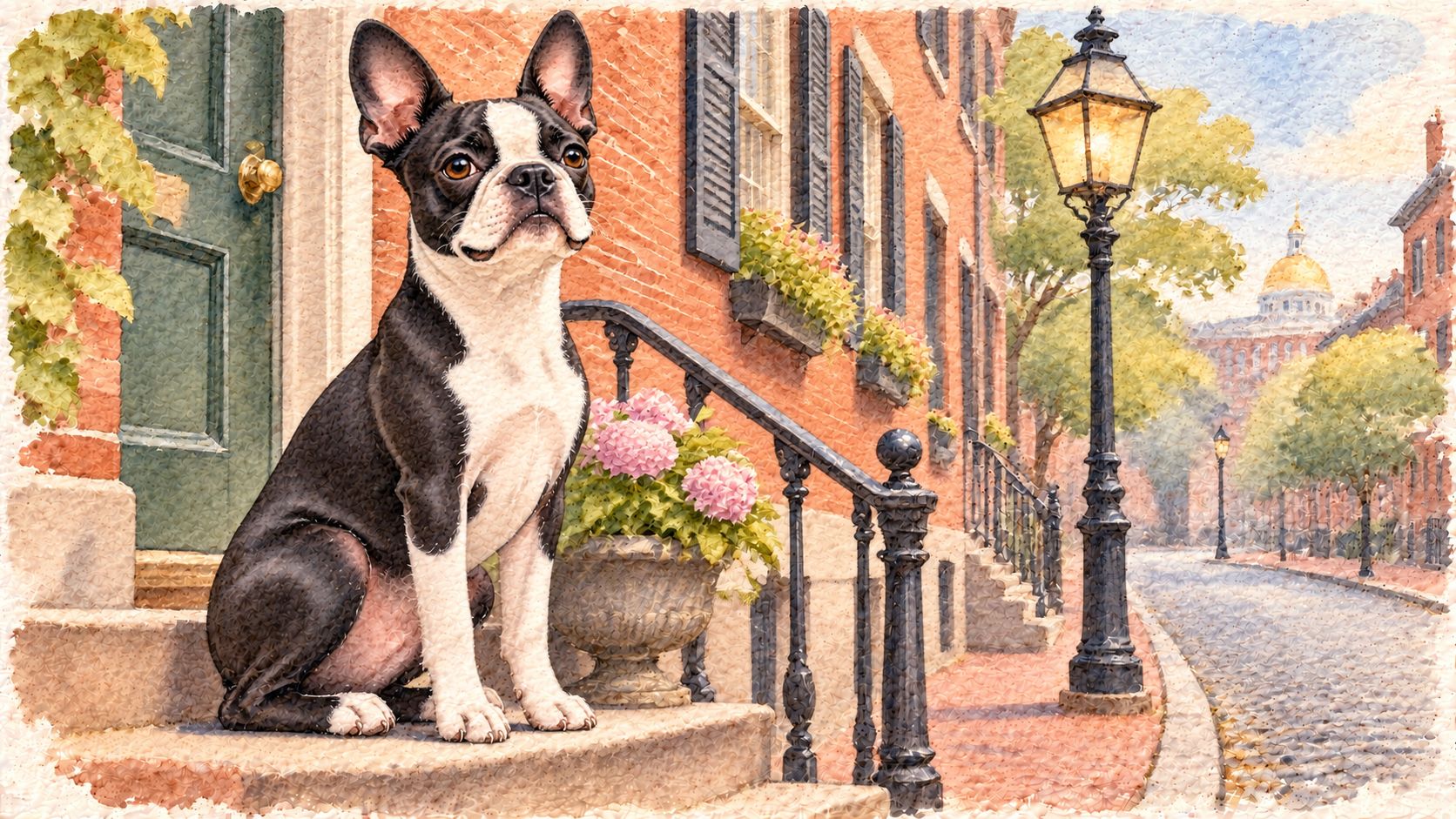
Boston Terrier vs French Bulldog
People often compare this breed with the French Bulldog because both are small, flat-faced companion dogs with upright ears. The Boston is usually taller, leaner and more athletic, with a longer leg and a square head, while the Frenchie is stockier with a heavier build and its famous bat ears.
Bostons also tend to have a bit more energy and enjoy longer play sessions. Both breeds are affectionate and city-friendly, and both need care in hot weather.
Is a Boston Terrier Right for You?
A Boston Terrier could be a wonderful match if you:
- Want a small, sturdy dog with a friendly, funny personality
- Live in an apartment, a city home or a house with a small yard
- Prefer a low-maintenance coat with minimal shedding
- Are home often and want a dog that loves to be near you
- Are a first-time owner looking for a trainable, eager-to-please companion
- Have children who know how to treat a dog gently
A Boston Terrier may not be the best fit if you:
- Are away from home for long hours most days
- Live in a very hot climate without easy access to air conditioning
- Want a dog for long runs or intense exercise in warm weather
- Need a hypoallergenic breed
- Prefer a completely quiet sleeper, since many Bostons snore
Finding a Boston Terrier Puppy
Bostons are popular, so you should find breeders in many areas, but it is worth taking your time. Look for a reputable breeder who health-tests their dogs, raises puppies in a home setting and welcomes your questions.
You can also check breed clubs and rescue groups, as adult Bostons sometimes need loving new homes. An adult dog can be a great option if you would rather skip the puppy stage.
Fun Facts About the Boston Terrier
- The Boston Terrier is nicknamed "The American Gentleman" because of its tuxedo coat and polite manners.
- It is one of the first breeds developed in the United States.
- The first Boston Terrier was registered with the AKC in 1893.
- The breed was once known as the American Bull Terrier.
- The breed became the official state dog of Massachusetts in 1979.
- A Boston has been the mascot of Boston University for nearly a century.
- Seal-colored Bostons look black indoors but show a reddish tint in bright sunlight.
Frequently Asked Questions
Why is the Boston Terrier called "The American Gentleman"?
The breed earned this nickname thanks to its black-and-white coat, which looks like a tuxedo, and its gentle, well-mannered personality.
How big do Boston Terriers get?
Adult Bostons usually stand about 15 to 17 inches tall and weigh roughly 15 to 25 pounds, though some are smaller.
Do Boston Terriers shed a lot?
No. Bostons have a short, fine coat that sheds minimally, and weekly brushing keeps it neat. They are not considered hypoallergenic, however.
Are Boston Terriers good family dogs?
Yes. They are affectionate, playful and sturdy, and they usually do well with respectful children and other pets when properly socialized.
How long do Boston Terriers live?
The average Boston Terrier lifespan is about 11 to 13 years with good care, a balanced diet and regular veterinary checkups.
Can Boston Terriers live in apartments?
Yes. Their small size, moderate energy level and friendly nature make Bostons great apartment dogs, as long as they get daily walks and plenty of company.
Final Thoughts
The Boston Terrier truly lives up to its "American Gentleman" title. This friendly, funny and affectionate little dog combines a sharp tuxedo look with an easy-care coat and a big love for people. If you can offer daily walks, gentle training, protection from the heat and lots of companionship, this little gentleman may become the most charming friend your family has ever had.