
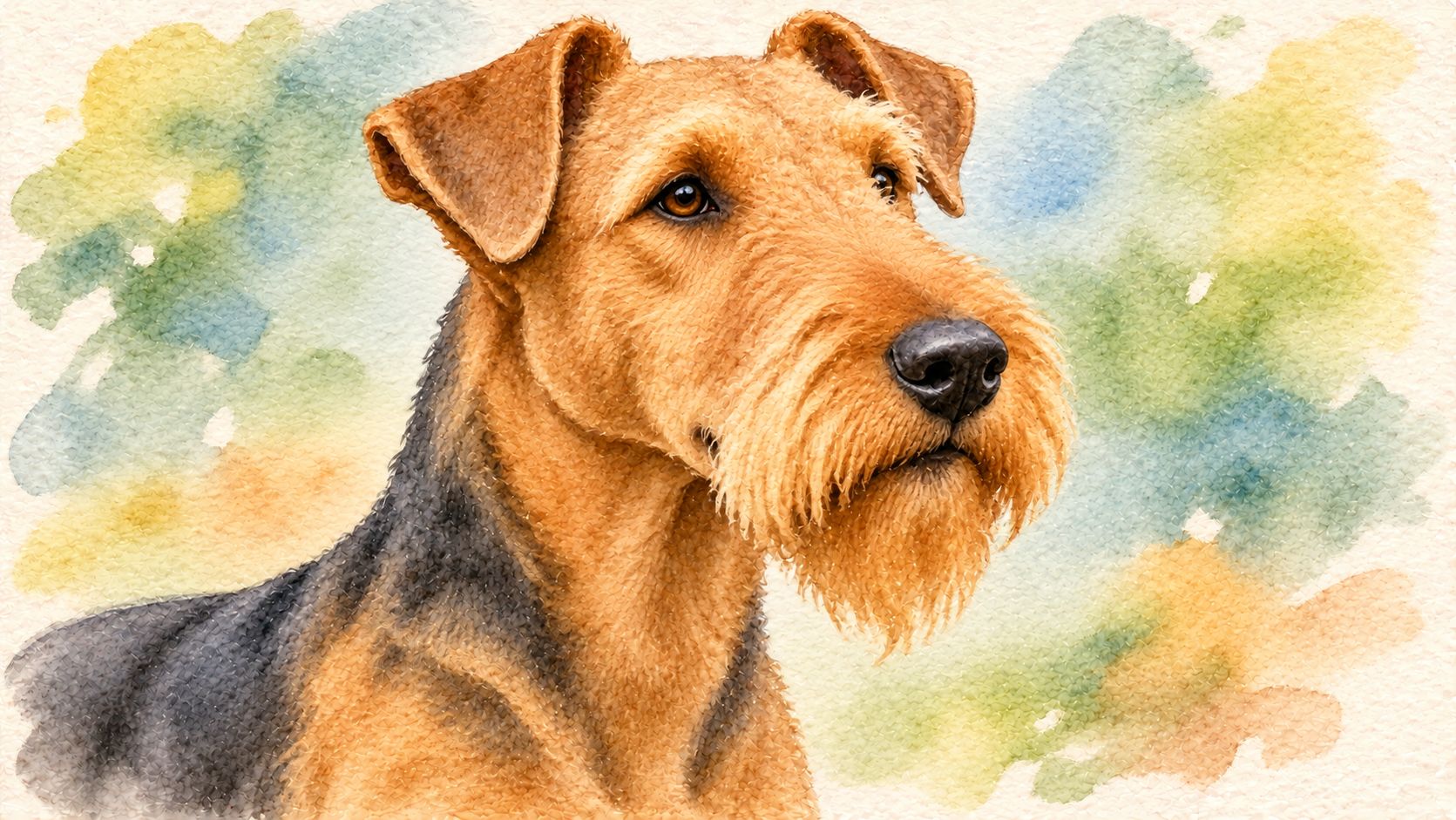
With its bearded face, folded ears and crisp black and tan jacket, the Airedale Terrier looks every bit the confident gentleman of the dog world. It is the largest of all the terrier breeds, which is why fans have long called it the "King of Terriers." Behind that dignified look, though, is a dog with a playful streak, a sharp mind and a hearty appetite for adventure.
The Airedale has done just about every job a dog can do, from catching rats and hunting game to carrying messages in wartime and working alongside police officers. Today it is best known as a loyal, energetic family companion. In this complete Airedale Terrier dog breed guide, you will learn everything you need to know before bringing one home, including its size, temperament, grooming needs, exercise requirements, common health concerns, diet tips and remarkable history.
Airedale Terrier at a Glance
| Trait | Details |
|---|---|
| Breed group | Terrier (AKC) |
| Height | About 23 inches (58 cm); females slightly smaller |
| Weight | 50 to 70 pounds (23 to 32 kg) |
| Life expectancy | 11 to 14 years |
| Coat | Dense, wiry, short to medium length |
| Colors | Black and tan, grizzle and tan |
| Shedding | Low |
| Energy level | High |
| Temperament | Confident, clever, playful, loyal, protective |
| Good for | Active families, experienced owners, homes with yards |
| Origin | Aire Valley, Yorkshire, England (1800s) |
What Is an Airedale Terrier?
The Airedale Terrier is a medium-to-large, athletic working dog that was developed in northern England during the 1800s. It takes its name from the Valley of the Aire River in Yorkshire, where working people bred a tough, versatile dog that could hunt along the riverbanks, keep rats under control and guard the home. The result was a terrier with more size, stamina and swimming ability than most of its smaller cousins.
Because it can handle so many tasks, the Airedale is often described as an all-purpose dog. It belongs to the American Kennel Club's Terrier Group and was recognized by the AKC in 1888, making it one of the longer-established breeds in the United States. People who live with Airedales often say they have a "can-do" attitude: give one a job, and it will throw itself into it with enthusiasm.
Airedale Terrier Size and Appearance
The Airedale is a sturdy, well-muscled dog with a level back and a square, balanced outline. Males typically stand around 23 inches tall at the shoulder, while females are usually a little shorter. Most adults weigh somewhere between 50 and 70 pounds, depending on sex, build and activity level. This puts the Airedale firmly at the top of the terrier family in terms of size.
The head is long and flat, with a strong muzzle, small dark eyes and V-shaped ears that fold forward and sit slightly to the side. The face is decorated with a neat beard and whiskers that give the breed its wise, slightly serious expression. The tail is set high and carried upright. When an Airedale moves, its stride is free, graceful and confident, which suits a dog that was built to cover ground all day.
Coat and Colors
The Airedale wears a double coat. The outer coat is hard, dense and wiry, lying close to the body, while the undercoat is shorter and softer. This combination helped protect early Airedales from brambles, cold water and bad weather while they worked outdoors.
The breed's classic coloring is a black or grizzle (a mix of black and gray) "saddle" over the back and sides, with rich tan on the head, ears, legs, chest and underside. Puppies are often born mostly black, and the tan areas spread as they grow, so a young Airedale may look quite different from the adult it becomes.

Airedale Terrier Temperament and Personality
The Airedale combines terrier spirit with a steady, thoughtful nature. This breed is known for being:
- Confident: Airedales carry themselves with self-assurance and are rarely shy in new situations.
- Intelligent: They learn quickly and enjoy solving problems, which can include figuring out how to open doors or reach the snack cupboard.
- Playful: Many Airedales stay puppyish well into adulthood and love games of fetch, tug and chase.
- Loyal and affectionate: They bond closely with their families and like to be included in daily activities.
- Protective: Airedales are naturally watchful and will alert you to strangers, which makes them good watchdogs.
- Independent: True to their terrier roots, they can have a mind of their own and like to make decisions for themselves.
An Airedale that does not get enough activity or attention can become bored, and a bored Airedale may dig, chew or invent its own entertainment. With plenty of exercise, companionship and mental challenge, however, this breed tends to be a well-rounded, good-humored member of the household.
Is the Airedale Terrier Good With Kids and Other Pets?
Airedales have a reputation for being patient with children, and many have served as loyal playmates and even unofficial "babysitters" for families over the years. Because they are strong and bouncy, especially when young, they may accidentally knock over toddlers during play. Supervision is always wise, and children should be taught to respect the dog's space.
With other dogs, Airedales can get along well, particularly when they are raised together and well socialized. Some individuals can be bold with unfamiliar dogs of the same sex, so careful introductions help. The breed's hunting background means it has a strong prey drive, and it may chase cats, squirrels and other small animals. Homes with pet rodents or rabbits should take extra care.
Early socialization is essential. Introducing your Airedale puppy to many different people, animals, sounds and places will help it grow into a calm and confident adult.
Training an Airedale Terrier
Airedales are smart and capable, and they have excelled at obedience, agility, hunting tests and even police work. That same intelligence comes with an independent streak, so training works best when it is engaging and rewarding. Airedales tend to switch off when lessons become repetitive, and harsh methods usually backfire. Positive reinforcement with praise, play and tasty treats brings out the best in this breed.
Here are a few training tips for Airedale Terrier owners:
- Start early. Begin training and socialization as soon as your puppy arrives. Good habits are easier to build than bad ones are to break.
- Keep it interesting. Mix up exercises and keep sessions short so your Airedale stays focused and eager.
- Be consistent. Set clear house rules and make sure every family member follows them.
- Teach a reliable recall. With a strong prey drive, an Airedale may take off after wildlife. Practice recall in safe, enclosed areas.
- Give it a job. Dog sports such as agility, rally, obedience, tracking or scent work channel the breed's energy and brainpower in a positive way.

Exercise Needs
The Airedale Terrier is a high-energy breed that needs plenty of daily activity. Most adults do best with at least an hour of exercise each day, ideally split between brisk walks and more vigorous activities such as running, hiking, swimming or games of fetch. Many Airedales also make good jogging companions once they are fully grown.
Mental exercise is just as important as physical exercise. Puzzle toys, training games, scent work and new walking routes all help keep an Airedale's mind busy. A securely fenced yard is a big bonus, but it should not replace walks and time spent with the family.
Because Airedales are curious and love to chase, always use a leash in unfenced areas. Some are also skilled diggers, so it is worth checking fences regularly.
Grooming an Airedale Terrier
One of the Airedale's appealing qualities is its low-shedding coat. The wiry outer coat traps loose hair, so you will usually find less fur around the house than with many other breeds of a similar size. Some people with mild allergies find the breed easier to live with, but keep in mind that no dog is truly 100 percent hypoallergenic. Spend time around Airedales before committing if allergies are a concern.
Grooming Routine
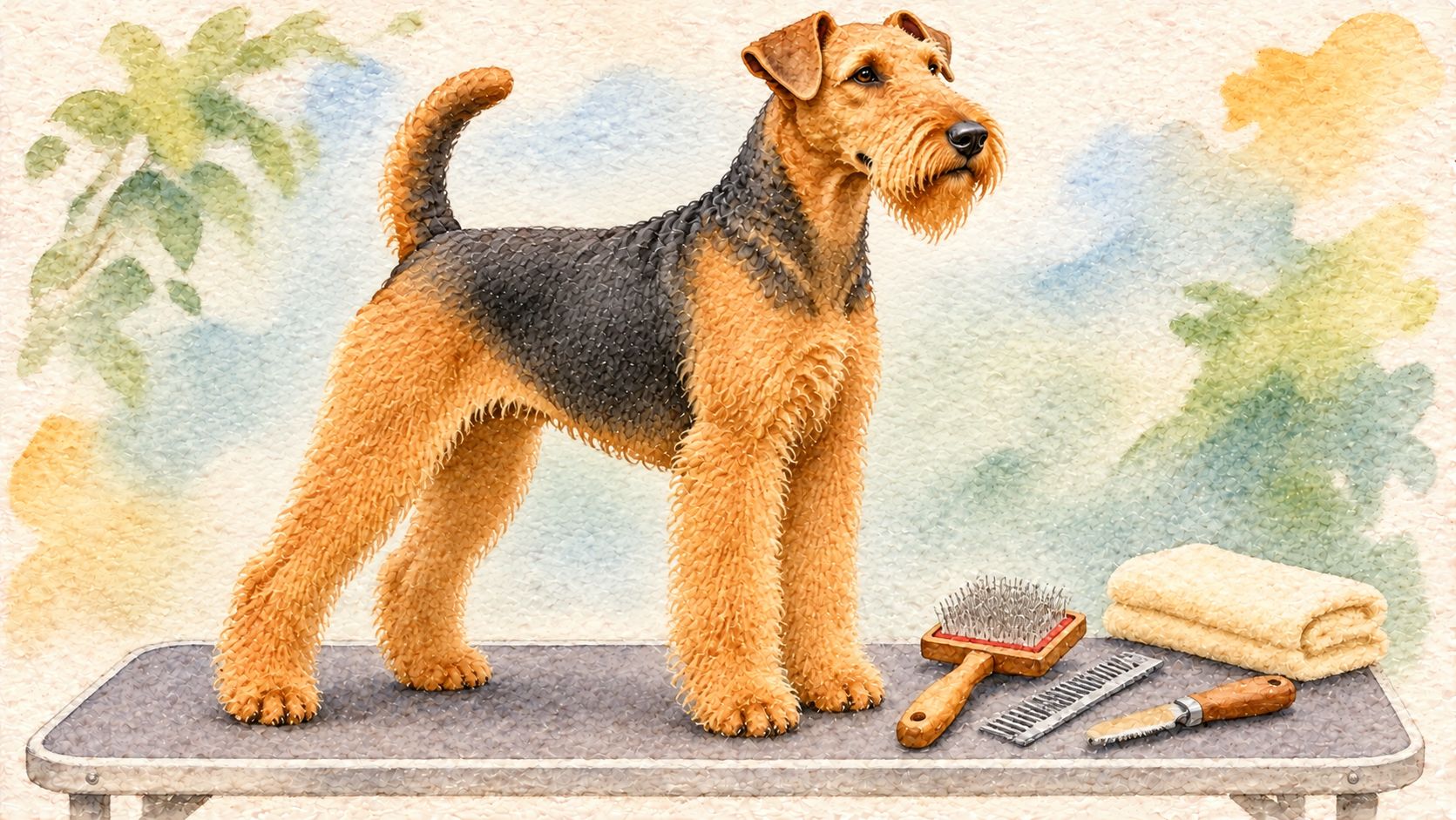
- Brushing: Brush the coat about once a week to remove loose hair and prevent tangles, especially in the beard and leg furnishings.
- Professional grooming: A full groom, including bathing, brushing and trimming, is recommended three to four times a year to keep the coat neat.
- Clipping or hand-stripping: Many pet owners choose clipping for convenience. Hand-stripping, which removes dead hair by hand, helps preserve the coat's hard texture and rich color and is typical for show dogs.
- Beard care: Wipe or rinse the beard after meals so food and water don't build up.
- Nails: Trim nails every few weeks unless your dog wears them down naturally.
- Teeth: Brush your dog's teeth several times a week to support good oral health.
- Ears: Check the folded ears weekly for dirt, moisture or redness.
Airedale Terrier Health and Lifespan
The Airedale Terrier is generally a healthy breed, with a typical life expectancy of 11 to 14 years. Like all breeds, however, it can be prone to certain conditions. Responsible breeders screen their dogs for common concerns, which may include:
- Hip dysplasia: An abnormal formation of the hip joint that can lead to stiffness or discomfort. Hip screening is the most important health check for this breed.
- Eye conditions: Regular eye exams can help detect problems early.
- Skin issues: Some Airedales may have sensitive skin, so watch for itching or irritation.
- Thyroid concerns: Some breeders also screen for thyroid function.
Keeping your Airedale at a healthy weight, providing regular exercise and scheduling routine veterinary visits all support a long, active life. Always work with your veterinarian to set up a schedule of checkups, vaccinations and preventive care, and ask breeders for the health-testing results of a puppy's parents.
Feeding and Nutrition
An adult Airedale Terrier can benefit from a high-quality, complete and balanced adult dog food that suits its size and activity level. Active, athletic Airedales may need more calories than less active ones, while dogs that tend to put on pounds may do well on a healthy weight formula.
Puppies should eat a food made specifically for puppies during their first year to support healthy growth and development. Portion sizes depend on your dog's age, weight and lifestyle, so follow the feeding guidelines on the package and check with your veterinarian. Treats are excellent training tools, but they should make up only a small portion of your dog's daily calories.
History of the Airedale Terrier
The Airedale's story begins in the mid-1800s in the Aire Valley of Yorkshire, England. Factory and mill workers in the area wanted a hardy dog that could hunt ducks and other game along the river, control rats and protect the home. To achieve this, they crossed old working terriers with the Otterhound, a large, water-loving scent hound. Other breeds believed to appear in the Airedale's family tree include the Irish Terrier and the Bedlington Terrier.
The new breed was bigger than most terriers, comfortable in water and brave enough to tackle tough prey. Early names included the Waterside Terrier and the Bingley Terrier before "Airedale" became the accepted name. The American Kennel Club recognized the breed in 1888, and it quickly gained admirers in the United States.
In America, Airedales became known as "triple-threat" hunting dogs because they could work on waterfowl, upland game birds and furred game. Over the years they have also been used as ratters, big-game hunters, herders and family guardians.
The Airedale also earned a heroic reputation in wartime. During World War I, Airedales served with the British armed forces as messengers and sentries, carrying important communications across dangerous ground. The breed was also among the first used for police work in Germany and Great Britain.
The Airedale has had plenty of famous fans. U.S. Presidents Woodrow Wilson, Warren G. Harding and Calvin Coolidge all owned Airedales, and Harding's dog, Laddie Boy, became one of the best-known White House pets. Author John Steinbeck was another proud Airedale owner.

Is an Airedale Terrier Right for You?
An Airedale Terrier could be a wonderful match if you:
- Lead an active lifestyle and enjoy walking, hiking or running
- Want a loyal, playful dog with a watchful nature
- Prefer a low-shedding breed
- Have time for daily exercise, training and mental challenges
- Enjoy dog sports or would like to try them
- Have a home with a securely fenced yard
An Airedale Terrier may not be the best fit if you:
- Want a calm couch companion that needs little exercise
- Spend long hours away from home each day
- Keep small pets such as rabbits, hamsters or guinea pigs
- Don't want a dog that may dig or test boundaries
Finding an Airedale Terrier Puppy
Look for a reputable breeder who health-tests their dogs, especially for hip dysplasia, raises puppies in a home environment and is happy to answer your questions. A good breeder will also want to know about your lifestyle to make sure an Airedale is the right fit. You can also check with breed clubs and rescue groups, as adult Airedales sometimes need new homes and can make wonderful companions.
Fun Facts About the Airedale Terrier
- The Airedale is the largest terrier breed and is nicknamed the "King of Terriers."
- The breed is named after the Aire Valley in Yorkshire, England.
- Airedales served as messengers and sentries during World War I.
- Presidents Woodrow Wilson, Warren G. Harding and Calvin Coolidge all owned Airedales.
- The breed was among the first used for police work in Germany and Great Britain.
- Airedale puppies are born mostly black, and their tan markings spread as they grow.
Frequently Asked Questions
Why is the Airedale called the "King of Terriers"?
The Airedale earned this nickname because it is the largest of all the terrier breeds. Its size, strength and versatility as a working dog helped cement its royal reputation.
How big do Airedale Terriers get?
Adult Airedales usually stand around 23 inches tall at the shoulder, with females slightly smaller, and typically weigh between 50 and 70 pounds.
Are Airedale Terriers hypoallergenic?
Airedales have a wiry, low-shedding coat, and some people with mild allergies find them easier to live with. However, no dog is completely allergen-free, so spend time with the breed before deciding.
Are Airedale Terriers good family dogs?
Yes, Airedales are known for being loyal, playful and patient with children. They are energetic and strong, so supervision with young kids and plenty of daily exercise are important.
How long do Airedale Terriers live?
The average Airedale Terrier lifespan is 11 to 14 years with good care, a balanced diet, regular exercise and routine veterinary checkups.
How much exercise does an Airedale Terrier need?
Airedales are a high-energy breed and generally need at least an hour of exercise each day, along with mental activities such as training games, puzzle toys or dog sports.
Final Thoughts
The Airedale Terrier is a true all-rounder, combining the courage of a terrier with the size and stamina of a working dog. This clever, loyal and playful breed brings a rich history, a low-shedding coat and plenty of personality to the right home. If you can offer daily exercise, engaging training and lots of companionship, the "King of Terriers" may become the most devoted friend you have ever had.