The alligator gar looks like something that swam straight out of the age of dinosaurs. With its long, broad snout, rows of sharp teeth and armor-like scales, this giant freshwater predator of the American South really does resemble an alligator in the water, and it is one of the largest freshwater fish in North America.
Alligator gar belong to an ancient lineage of fish that has changed little in tens of millions of years, which is why they are often called "living fossils." Once misunderstood and widely persecuted as a pest, the alligator gar is now recognized as an important predator and a conservation success story in progress. In this complete guide, you will learn what an alligator gar is, how big it gets, where it lives, what it eats, how it breeds, how long it lives and whether it is dangerous.
Quick answer: The alligator gar (Atractosteus spatula) is a giant, ancient freshwater fish found in the southern United States and northeastern Mexico. It can grow up to about 3 m (10 ft) long and weigh well over 100 kg (220 lb), eats fish, waterfowl and other animals, and can live 50 years or more. It is not considered a danger to people, and the IUCN lists it as Least Concern.
Alligator Gar at a Glance
| Feature | Details |
|---|---|
| Scientific name | Atractosteus spatula |
| Class | Actinopterygii (ray-finned fishes) |
| Order | Lepisosteiformes |
| Family | Lepisosteidae (gars) |
| Length | Typically 4 to 7 feet (1.2 to 2.1 m); the largest reach about 10 feet (3 m) |
| Weight | Commonly 50 to 200 pounds (23 to 90 kg); giants exceed 300 pounds (136 kg) |
| Lifespan | Females can live 50 years or more; males are generally shorter-lived |
| Diet | Fish, waterfowl, turtles, small mammals and carrion |
| Habitat | Large, slow rivers, bayous, swamps, lakes and brackish estuaries |
| Range | Gulf Coast states and the Mississippi River basin of the United States, and northeastern Mexico |
| Activity | Ambush predator, active day and night |
| Conservation status | Least Concern (IUCN), with local declines |
What Is an Alligator Gar?
The alligator gar is the largest member of the gar family, a group of primitive, ray-finned fish found only in North and Central America. There are seven living species of gar, including the longnose gar, spotted gar and Florida gar, but none gets as large as the alligator gar. Fossils from the gar family date back well over 100 million years, and ancestors of the modern fish swam in waters shared by dinosaurs.
Gars are sometimes called "primitive fish" because they have many features that are seen in ancient fish lineages, including hard, diamond-shaped scales and the ability to breathe air. They are not closely related to the alligator, despite the name. The alligator gar earned its name from its broad, flat snout and two rows of large teeth, which together make its head look much like an alligator's.
Because of its massive size and ancient look, the alligator gar is sometimes called a "living fossil." This term does not mean that it has not evolved at all, only that it has kept a body plan similar to its early relatives.
What Does an Alligator Gar Look Like?
Size and Weight
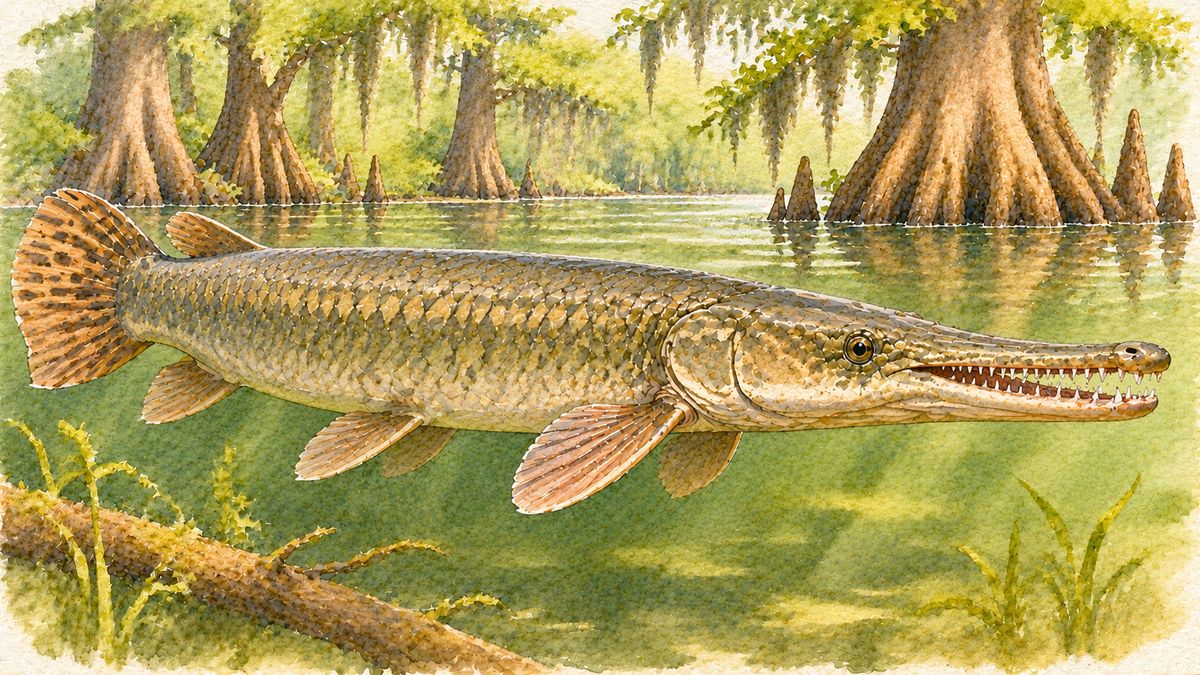
Alligator gar are enormous. Adults typically measure 4 to 7 feet (1.2 to 2.1 m), though the largest can reach about 10 feet (3 m). Typical adults weigh 50 to 200 pounds (23 to 90 kg), while giants have been recorded at well over 300 pounds (136 kg). Females grow larger than males.
Head and Teeth
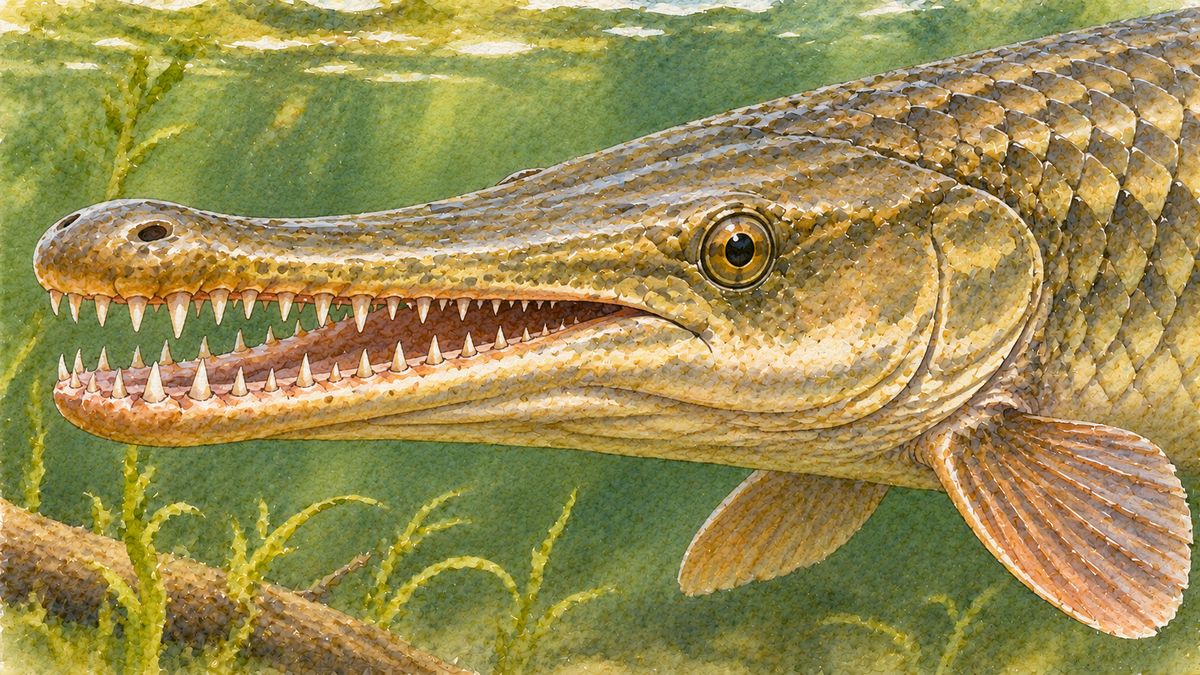
The head is broad and short compared with other gars, which have long, thin snouts. The upper jaw carries two rows of large, sharp, fang-like teeth, a feature that sets alligator gar apart from other gars and is the source of its fearsome look. The teeth are used for gripping slippery prey, not for chewing.
Scales and Armor
The body is covered in thick, interlocking, diamond-shaped scales called ganoid scales. These scales are made of a hard, bone-like material coated in enamel-like ganoine, forming a flexible armor. Native peoples once used the scales for arrowheads and ornaments, and early settlers reportedly used the tough skin to cover plows.
Color and Fins
The back is olive, brown or dark green, with a lighter underside that can be white or yellowish. Fins are usually brownish and often spotted. The dorsal fin sits far back on the body, near the tail, which helps with quick bursts of speed.
Breathing Air
The alligator gar has a swim bladder that works like a primitive lung. It can gulp air at the surface and absorb oxygen from it, which allows it to survive in warm, stagnant, low-oxygen water. You may see a gar rolling at the surface as it takes a breath.
Where Do Alligator Gar Live?
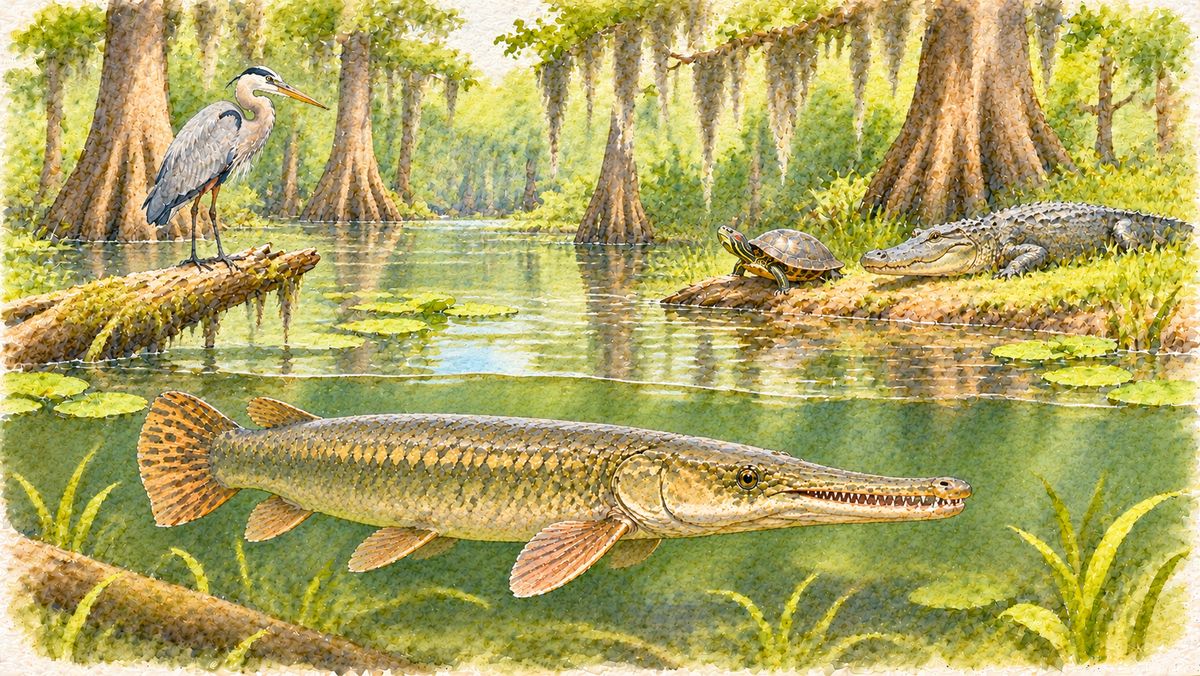
Alligator gar live in the southern United States and northeastern Mexico. Their native range extends through the lower Mississippi River basin and the rivers draining into the Gulf of Mexico, from Florida westward through Alabama, Mississippi, Louisiana and Texas, and northward up the Mississippi River as far as Missouri and southern Illinois. Historically they also lived farther north in the Ohio River basin.
They are found in:
- Large, slow-moving rivers and backwaters
- Bayous and oxbow lakes
- Swamps and floodplain wetlands
- Reservoirs and big lakes
- Brackish and slightly salty estuaries near the coast
Alligator gar can tolerate a range of salinities, from fresh to brackish water, and sometimes appear in coastal bays. They need access to river floodplains for spawning, so dams and levees that cut rivers off from their floodplains have caused declines in many areas.
What Do Alligator Gar Eat?
The alligator gar is an apex predator in its home waters.
Typical Prey
- Fish: buffalo, carp, shad, mullet, catfish and many other species
- Waterfowl: ducks, coots and other water birds
- Turtles and small mammals: when the opportunity arises
- Carrion: dead animals floating in the water
Hunting Style
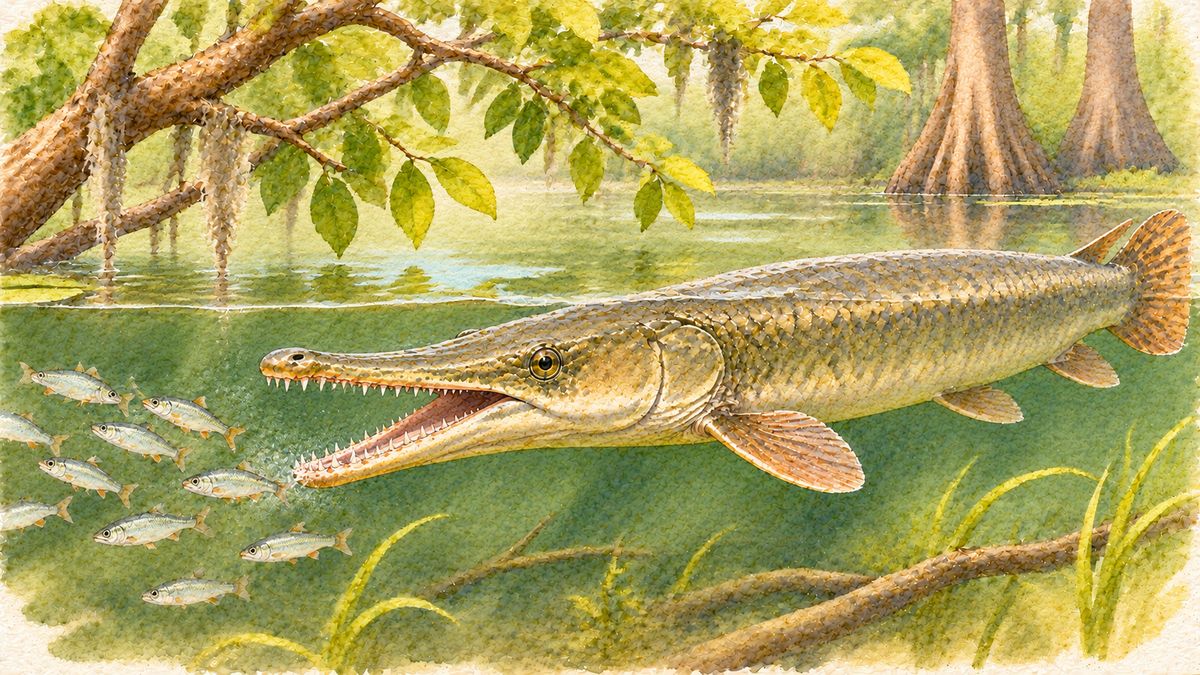
Alligator gar are ambush hunters. They float almost motionless near the surface or near cover and wait for prey to come close. Then they lunge sideways or forward with a quick snap of their jaws, impaling the prey on their sharp teeth. They swallow it whole, usually head-first.
Studies of their stomach contents show that alligator gar mostly eat fish, including many species that anglers consider less desirable, such as carp and buffalo. By feeding on these fish, they help keep their populations in balance.
Alligator Gar Behavior and Lifestyle
Lazy but Powerful
Alligator gar spend much of their time drifting slowly, often at the surface or near logs and vegetation. Despite their sluggish appearance, they can accelerate with great power when hunting.
Solitary or Small Groups
They are usually solitary, though gar sometimes gather in groups in warm shallow areas or during spawning.
Seasonal Movements
They move seasonally, often heading for shallow, flooded areas in spring to breed and returning to deeper water when levels fall. Warm weather makes them more active and cold weather makes them slow and less likely to feed.
Alligator Gar Reproduction and Babies
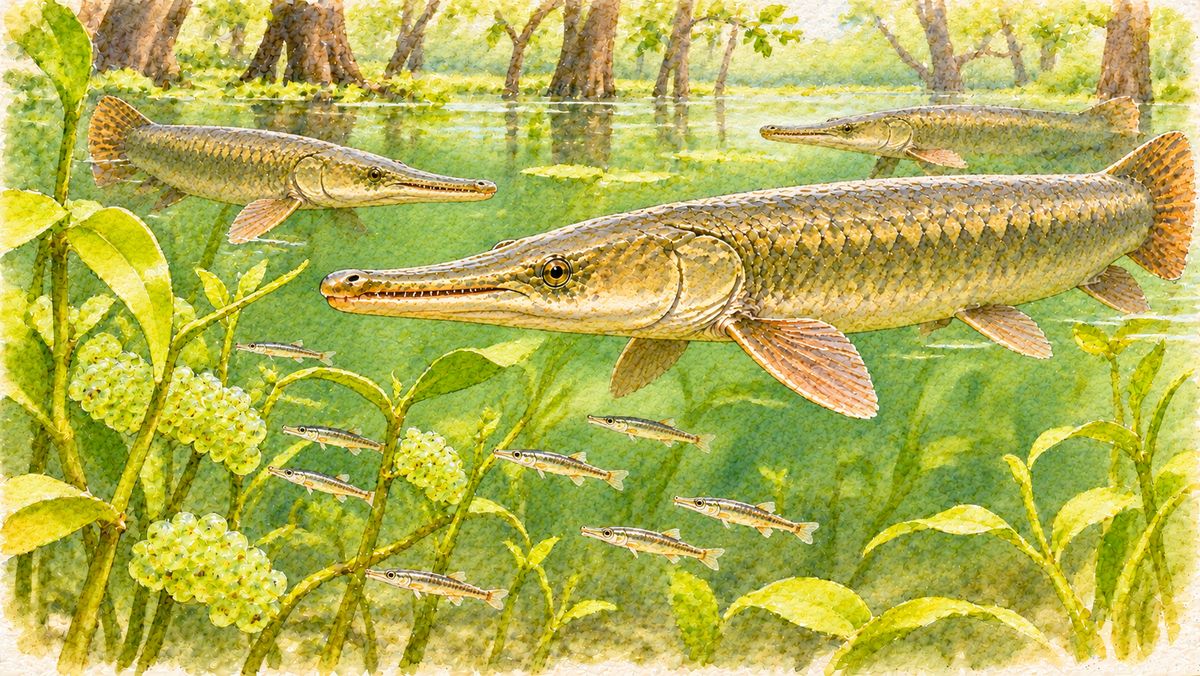
Alligator gar spawn in spring and early summer, usually when rivers flood and water temperatures rise. Large groups gather in shallow, flooded vegetation, with a female accompanied by several smaller males. Spawning is a thrashing, splashing event.
The female releases thousands of sticky, green eggs that cling to vegetation or other submerged objects. Gar eggs are toxic to people and some other animals if eaten, a feature that may help protect them from predators. Eggs hatch in about two to eight days, depending on temperature.
Newly hatched fry attach themselves to vegetation using an adhesive organ on the snout and absorb the yolk before they start swimming and feeding on tiny animals. Young gar grow quickly, feeding first on insects and small crustaceans and then on fish. Males mature at roughly 3 to 6 years of age, while females take considerably longer, often around 10 years or more.
How Long Do Alligator Gar Live?
Alligator gar are long-lived. Females often live 50 years or more, and researchers have found some that were much older. Males typically live fewer years, perhaps a few decades. Because they grow slowly and mature late, populations take a long time to recover from overfishing.
Predators and Threats
Large adults have almost no natural predators other than alligators and, rarely, very large predators in some areas. Young gar are vulnerable to birds, larger fish such as bass, and turtles. The real threats come from people:
- Habitat loss: Dams, levees and channel changes cut off spawning floodplains.
- Overfishing: Gar were once killed in large numbers because people wrongly saw them as competitors for game fish.
- Bow and rod fishing: Trophy fishing can remove the biggest, oldest breeding females.
- Pollution: Water quality problems affect wetlands.
- Illegal trade: Young gar are sometimes sold for aquariums, and their scales are used in crafts.
Are Alligator Gar Dangerous to Humans?
The alligator gar has a scary look, but it is not a danger to people. There are no verified records of an alligator gar killing a human. The fish are generally shy and avoid people. Their teeth are sharp, so large fish that are handled carelessly after being caught can cause injuries, and eggs are toxic if eaten, but swimmers have little to fear.
Why Alligator Gar Are Important
- Top predator: They help keep populations of other fish in balance.
- Ancient lineage: They provide evidence about the history of fish.
- Healthy wetlands: Their presence is a sign of connected rivers and floodplains.
- Recreation and tourism: They are increasingly valued by anglers and wildlife watchers.
- Culture: Native peoples and early settlers used gar for food, tools and crafts.
Are Alligator Gar Endangered?
The alligator gar is currently classified as Least Concern by the IUCN, but this does not tell the whole story. It has disappeared from parts of its former range, including some northern areas, and in some US states it is protected or is the subject of restoration programs.
Conservation efforts include:
- Fishing regulations such as bag limits, size limits and seasonal closures
- Hatchery breeding and restocking of rivers, for example in the Midwest and the Southeast
- Restoring floodplain connections for spawning
- Public education to replace the old "trash fish" image with appreciation
Fun Facts About Alligator Gar
- Ancient design: Gar relatives have existed for over 100 million years.
- Two rows of teeth: The upper jaw has two rows of teeth, unlike most fish.
- Air breather: It can gulp air at the surface using its swim bladder.
- Toxic eggs: The eggs are poisonous to humans.
- Armor plating: The scales are so tough they can resist most predators and even some tools.
- Giant of the rivers: It is one of the largest freshwater fish in North America.
- Slow growers: Females can take about a decade to mature.
- Brackish tolerance: It can live in both freshwater and slightly salty water.
- Long lives: Females can live for 50 years or more.
Frequently Asked Questions
How big do alligator gar get? Most adults are 4 to 7 feet (1.2 to 2.1 m) long, and the biggest reach about 10 feet (3 m) and over 300 pounds (136 kg).
Where do alligator gar live? They live in large rivers, bayous, swamps and lakes along the Gulf Coast and the lower Mississippi River basin in the United States, as well as in northeastern Mexico.
What do alligator gar eat? They eat mostly fish, along with waterfowl, turtles, small mammals and carrion. They ambush prey and swallow it whole.
Are alligator gar dangerous? No. They look frightening, but there are no verified fatal attacks on humans. They are shy, and the main risk comes from handling a large fish with sharp teeth.
Is alligator gar edible? The meat is eaten in some regions, but the eggs are toxic to people and should never be eaten. Large, old fish are also best released to protect the breeding population.
Are alligator gar endangered? The IUCN lists them as Least Concern, but they have vanished from parts of their former range and are protected or being restocked in several areas.
Final Thoughts
The alligator gar is a time traveler from the age of dinosaurs, a giant armored predator that still patrols the rivers and bayous of the American South. For years it was feared and persecuted, but we now understand that it plays an important role in keeping waterways in balance. Protecting gar means protecting the wetlands and floodplains they need, and giving a remarkable ancient fish the chance to keep thriving.