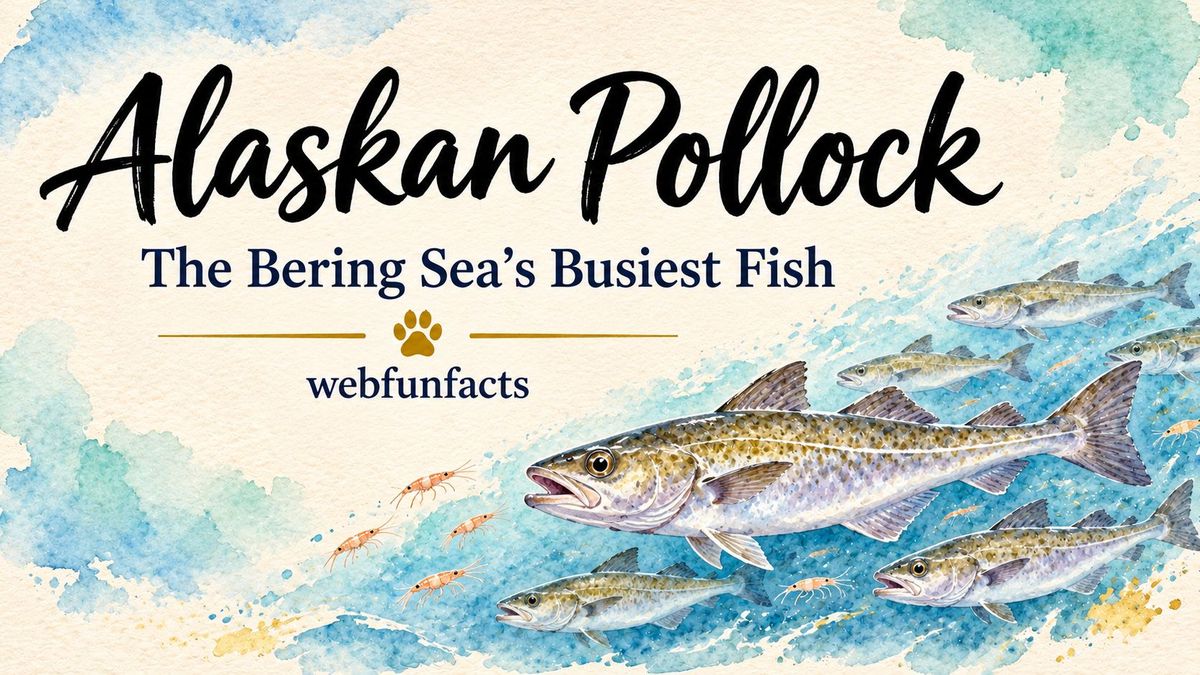
If you have ever eaten a fish sandwich from a fast-food restaurant, a crispy fish stick or a piece of imitation crab, there is a very good chance you have eaten Alaskan pollock. This modest silver-green fish is one of the most abundant and most heavily harvested fish on Earth, and it supports the largest fishery in the United States by volume.
Alaskan pollock, also called walleye pollock, lives in the cold waters of the North Pacific, where enormous schools swim through the Bering Sea and the Gulf of Alaska. It is a vital food for sea lions, seabirds and bigger fish, as well as for millions of people. In this complete guide, you will learn what Alaskan pollock is, what it looks like, where it lives, what it eats, how it breeds, how it is fished and whether it is a sustainable choice.
Quick answer: Alaskan pollock (Gadus chalcogrammus) is a cold-water fish in the cod family that lives in the North Pacific, especially the Bering Sea. It usually grows to about 40 to 70 cm (16 to 28 in), feeds on plankton, krill and small fish, and can live roughly 15 years or more. It is the main source of fish sticks, surimi and fast-food fish sandwiches, and the IUCN lists it as Least Concern.
Alaskan Pollock at a Glance
| Feature | Details |
|---|---|
| Scientific name | Gadus chalcogrammus (formerly Theragra chalcogramma) |
| Class | Actinopterygii (ray-finned fishes) |
| Order | Gadiformes |
| Family | Gadidae (cod family) |
| Typical length | About 16 to 28 inches (40 to 70 cm) |
| Maximum length | Up to about 3 feet (91 cm) |
| Weight | Usually about 1 to 3 pounds (0.5 to 1.5 kg); larger fish can be heavier |
| Lifespan | Roughly 15 years or more |
| Diet | Zooplankton, krill, small fish and squid |
| Habitat | Open ocean and continental shelf waters, near surface to deep water |
| Range | North Pacific, from Japan and Korea through the Bering Sea to the Gulf of Alaska and the US West Coast |
| Conservation status | Least Concern (IUCN) |
What Is Alaskan Pollock?
Alaskan pollock is a member of the cod family, Gadidae, which also includes Atlantic cod, haddock and Pacific cod. Its scientific name was long Theragra chalcogramma, but many scientists now classify it in the same genus as cod, Gadus, as Gadus chalcogrammus. In North America it is often called Alaska pollock, and in scientific and trade circles it is also known as walleye pollock, a name that has nothing to do with the freshwater walleye. The "walleye" refers to the fish's large, glassy eyes.
It is easy to confuse pollock names. Atlantic pollock, sometimes called Boston bluefish or saithe, is a different species in the genus Pollachius that lives in the North Atlantic. Alaskan pollock is strictly a North Pacific fish.
Pollock is a schooling fish and one of the most numerous fish in the northern Pacific. Biologists describe it as a keystone species in its ecosystem because so many other animals depend on it for food, and because its populations are so large.
What Does Alaskan Pollock Look Like?
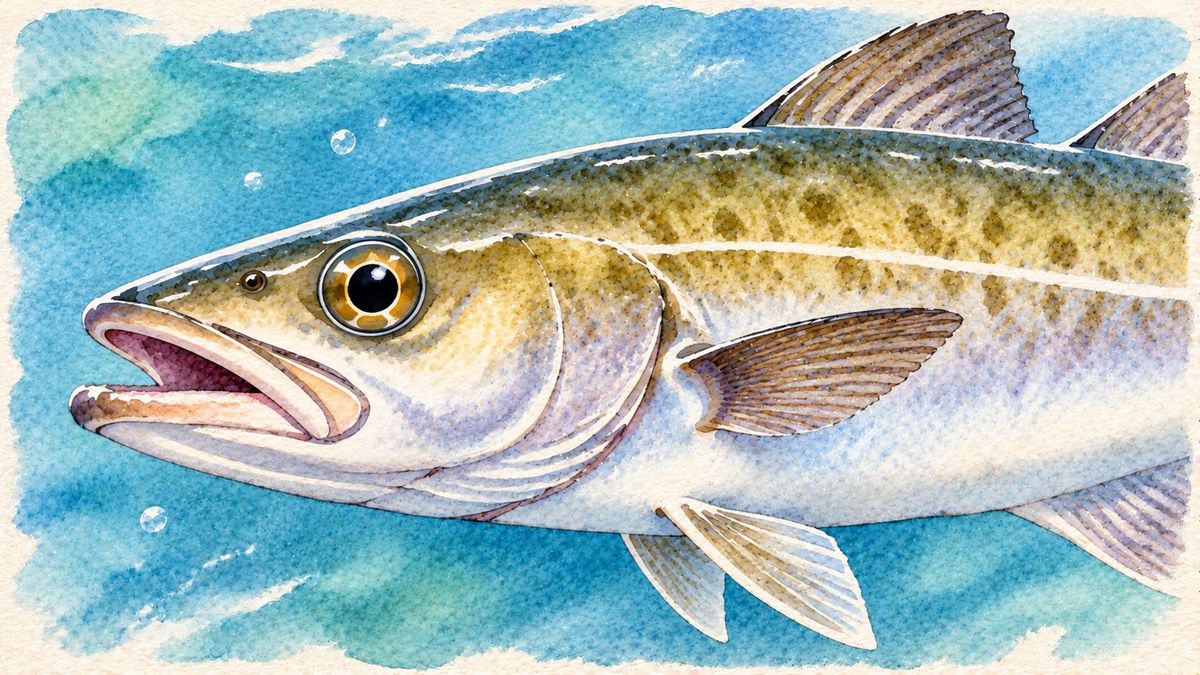
Alaskan pollock looks like a slender cousin of the cod. Its body is streamlined for swimming in open water.
Size and Shape
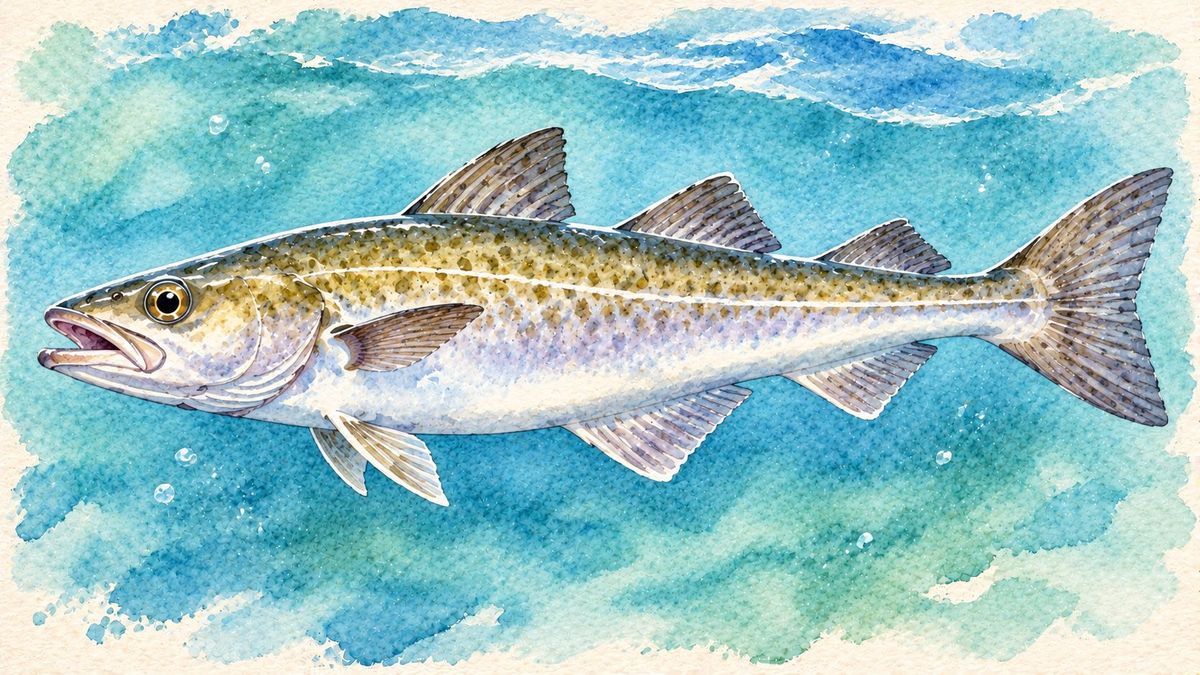
Most pollock caught by fishing fleets are about 16 to 28 inches (40 to 70 cm) long and weigh about 1 to 3 pounds (0.5 to 1.5 kg), although the biggest can reach roughly 3 feet (91 cm). The body is long and tapered, with a lower jaw that sticks out slightly beyond the upper jaw. This jaw shape is one of the easiest ways to identify the fish, because cod have a chin barbel that is more prominent.
Color and Markings
The back is olive green or brown with mottled speckles, the sides are silvery and the belly is pale. A distinctive pale lateral line runs along each side. The mottled back helps the fish blend into the dark water when viewed from above.
Fins
Like other members of the cod family, Alaskan pollock has three separate dorsal fins on its back and two anal fins on its underside. The tail fin is slightly notched. This arrangement of fins is a helpful identification feature.
Eyes and Mouth
The fish has large eyes that help it hunt in dim light, and a fairly large mouth for catching small prey such as krill and small fish. Its flesh is white, mild and flaky when cooked, which is why it is so popular in food products.
Where Does Alaskan Pollock Live?
Alaskan pollock lives throughout the North Pacific Ocean and its marginal seas. Its range extends from the coast of Japan, Korea and the Sea of Okhotsk, across the Bering Sea and Gulf of Alaska, and south along the North American coast as far as roughly central California. The heaviest concentrations are in the eastern Bering Sea and around the Aleutian Islands.
Its habitat includes:
- Continental shelf waters over sandy and muddy bottoms
- Open water near the surface, where larvae and young drift
- Deeper slopes, where large adults can be found at depths of several hundred meters
- Cold waters generally from near freezing to around 10 degrees Celsius (50 degrees Fahrenheit)
Pollock are often found in the middle of the water column, not just on the seabed. They move up and down during the day and shift seasonally, heading to spawning grounds in late winter and returning to feeding areas in summer. In the Bering Sea, the position of cold bottom water, sometimes called the "cold pool," influences where pollock gather.
What Do Alaskan Pollock Eat?
The diet of pollock changes as the fish grow.
Larvae and Juveniles
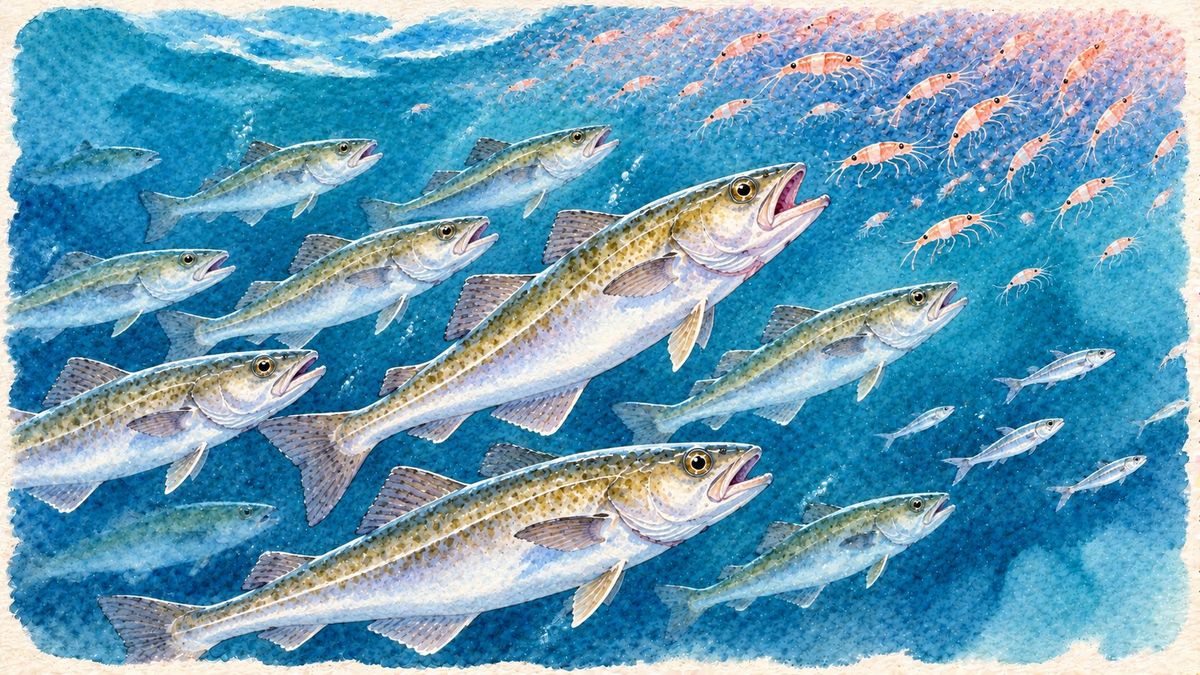
Larval and young pollock feed on tiny plankton, especially copepods and their larvae. As they grow, they move on to larger zooplankton such as krill, small crustaceans and other drifting animals.
Adults
Adult pollock eat krill, copepods, small shrimp-like animals and a variety of small fish, including capelin, herring and smaller pollock. In some areas, cannibalism is common, with adult pollock eating juveniles. Researchers believe this behavior helps regulate the population size in years when there are a lot of young fish.
Feeding Style
Pollock feed in groups, often in the middle of the water column, taking prey as it drifts by. They tend to feed more at night, when many plankton rise toward the surface, and then retreat to deeper water in daylight.
Alaskan Pollock Behavior and Lifestyle
Schooling
Alaskan pollock are social. They gather in huge schools that can stretch for large distances. Swimming in a group helps protect individual fish from predators and makes it easier to find food and spawning grounds.
Daily and Seasonal Movements
Pollock make daily vertical migrations, moving toward the surface at night to feed and returning deeper during the day. They also make seasonal journeys, moving to shallower spawning areas in winter and spring and dispersing across feeding grounds in summer and fall.
Growth
Young pollock grow quickly in their first few years. They usually become mature at about three to four years old, though this can vary with environment. Growth slows with age, and older fish can be much larger than the average catch.
Alaskan Pollock Reproduction and Babies
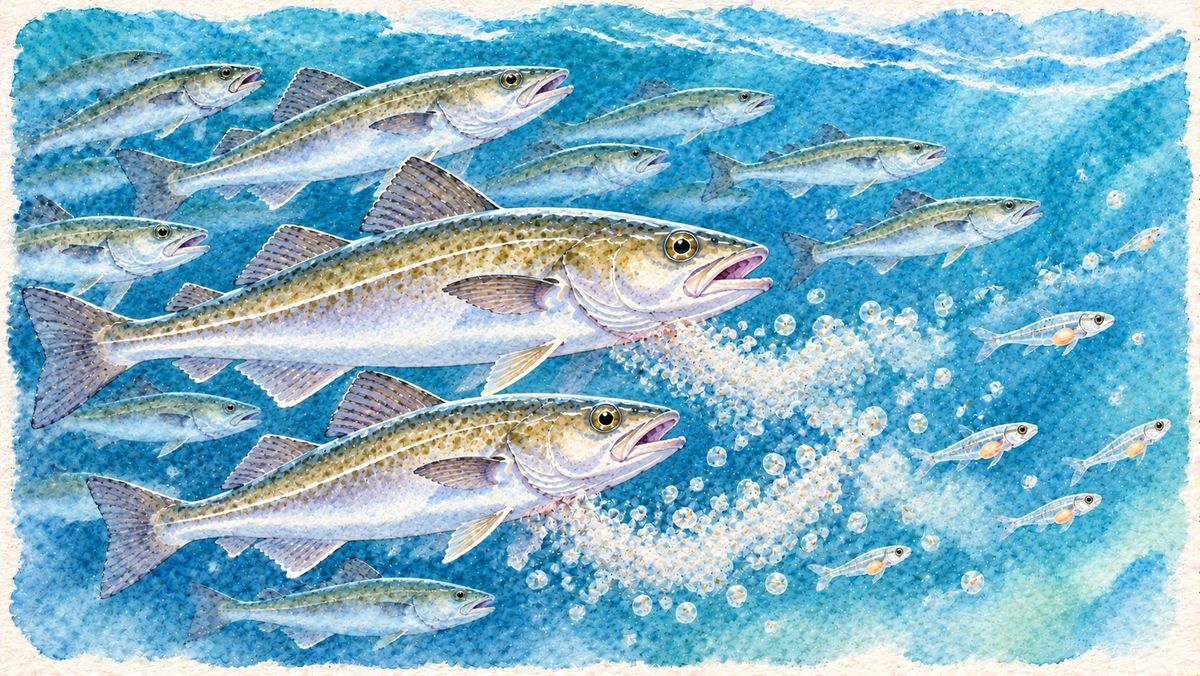
Alaskan pollock spawn in late winter and early spring, with the exact timing depending on location. Major spawning areas include the southeastern Bering Sea and Shelikof Strait in the Gulf of Alaska. In Shelikof Strait, large aggregations of spawning fish form each year and are closely monitored by scientists.
A female releases hundreds of thousands of eggs, with large females producing even more. The eggs are free-floating and drift in the water, hatching after a couple of weeks depending on temperature. The larvae are tiny and transparent and drift with currents while feeding on plankton.
Only a small percentage of larvae survive to become adults. The number of young that survive each year, called recruitment, varies widely and depends on ocean temperature, food supply and predators. A few strong year classes can sustain the fishery for many years, which is why scientists track recruitment closely.
How Long Do Alaskan Pollock Live?
Alaskan pollock can live for roughly 15 years or more, although most fish caught commercially are younger, often between 3 and 10 years old. The oldest fish are rare because of natural predation and fishing pressure.
Predators and Threats
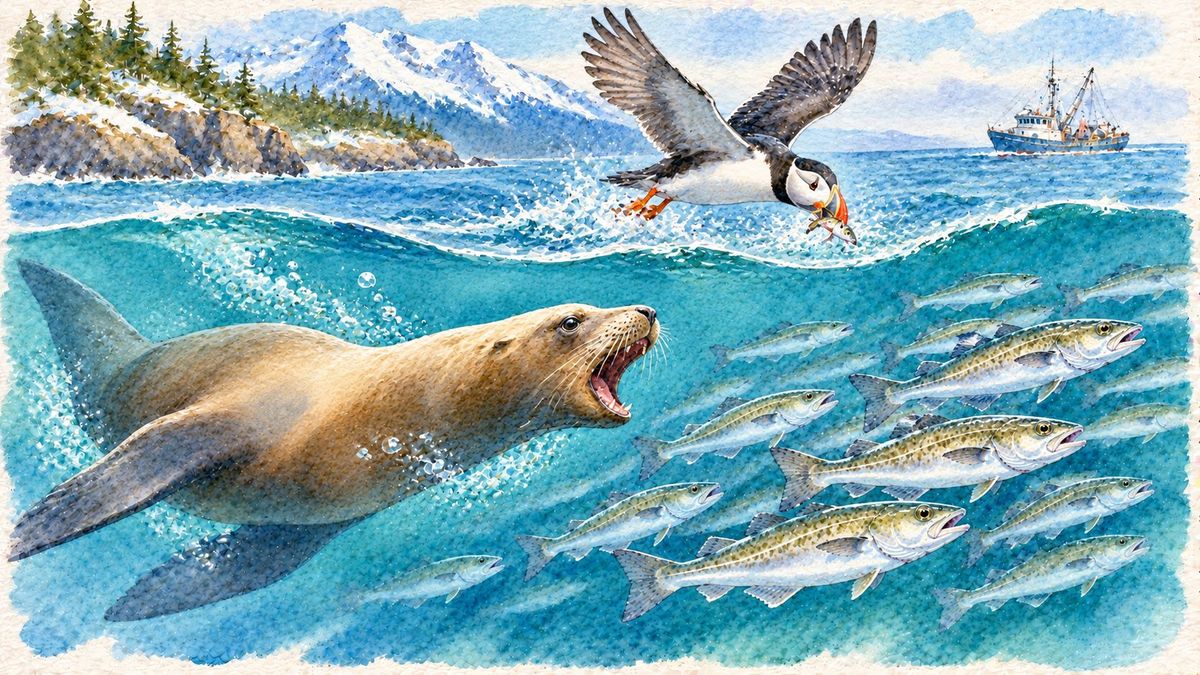
Alaskan pollock are a key food for many predators, including:
- Steller sea lions and northern fur seals
- Seabirds such as puffins, murres and kittiwakes
- Larger fish, including Pacific cod, halibut and salmon
- Marine mammals such as whales and harbor seals
Pollock are an especially important prey for Steller sea lions, and researchers have studied the link between pollock availability and sea lion population trends. This is one reason why fishing regulations in Alaska include protections such as no-fishing zones around sea lion rookeries.
Besides predators, pollock face environmental threats. Warming ocean temperatures can change where young pollock survive, the timing of plankton blooms and how much cold-water habitat is available.
How Is Alaskan Pollock Fished and Eaten?
Alaskan pollock is one of the most valuable seafood resources in the world. The fishery in Alaska harvests well over a million metric tons in many years, mostly using midwater trawls.
What Products Are Made From Pollock?
- Fish sticks and fillet blocks: Pollock fillets are frozen into blocks that are cut into sticks and portions.
- Fast-food fish sandwiches: Many popular fish sandwiches use pollock for its mild flavor and flaky texture.
- Surimi: The flesh is washed and pressed into a paste, then shaped into imitation crab, fish balls and similar products.
- Roe: Pollock roe is eaten in Japan and Korea, where products such as mentaiko and myeongnan-jeot are made from it.
- Fish oil and meal: Parts of the fish are used for oil, supplements and animal feed.
Is Alaskan Pollock Healthy?
Pollock is a lean source of protein that is low in fat and relatively low in mercury compared with large predatory fish. It also supplies vitamins and minerals such as selenium and B vitamins. As with any food, how it is cooked matters: baked or grilled fillets are lighter than deep-fried breaded fish.
Why Alaskan Pollock Are Important
- Food web link: Pollock turn plankton into food for larger animals, connecting the base of the food chain to top predators.
- Economic value: The fishery supports coastal communities in Alaska, the Pacific Northwest, Japan, Korea and elsewhere.
- Food security: Pollock is a relatively affordable, widely available protein in many countries.
- Ecosystem indicator: Because pollock numbers shift with ocean conditions, scientists use them as a sign of the health of the Bering Sea.
Is Alaskan Pollock Endangered?
No. Alaskan pollock is listed as Least Concern by the IUCN, and the population in Alaska is considered large and healthy. The Alaska pollock fisheries are managed with strict science-based catch limits, observers on fishing vessels and rules that reduce bycatch, and several have been certified as sustainable by independent programs.
Even so, scientists keep a close watch on several issues:
- Climate change, which may alter cold-water habitat and the food that young pollock need
- Fluctuating recruitment, with some years producing far fewer young fish
- Bycatch of other species such as salmon and crab in the fishery
- Differences in management between regions, as some stocks outside the United States are less well studied
Fun Facts About Alaskan Pollock
- Many names: It is called Alaska pollock, walleye pollock and, in some markets, simply "pollock."
- Cod cousin: It belongs to the same family as cod, haddock and hake relatives.
- Not the Atlantic fish: The pollock in the Atlantic is a different species.
- Fast-food favorite: Many fish sandwiches and fish sticks are made from Alaskan pollock.
- Hidden in crab sticks: Imitation crab is typically made from pollock surimi.
- Giant school size: Spawning schools can contain enormous numbers of fish.
- Three dorsal fins: Like cod, pollock have three back fins and two anal fins.
- Cannibals: Adult pollock sometimes eat smaller pollock.
- Roe delicacy: In Japan and Korea, pollock roe is a prized food.
Frequently Asked Questions
What is Alaskan pollock? Alaskan pollock is a cold-water fish in the cod family that lives in the North Pacific Ocean. It is the main fish used for fish sticks, fast-food fish sandwiches and imitation crab.
Is pollock the same as cod? No. Pollock and cod are different species in the same family. Alaskan pollock has a milder flavor, a softer texture and a projecting lower jaw, while Atlantic and Pacific cod are generally larger, firmer and have a more obvious chin barbel.
What does Alaskan pollock taste like? Alaskan pollock has a mild, slightly sweet flavor and white flesh that flakes easily when cooked. It is less oily than salmon and less strongly flavored than many other fish.
Is Alaskan pollock sustainable? Alaska pollock fisheries are managed with science-based catch limits and observer programs, and several have earned sustainability certification. Scientists still monitor the effects of climate change and bycatch.
Does Alaskan pollock contain mercury? Alaskan pollock is a small, short-lived fish that is generally low in mercury compared with large predators such as swordfish or king mackerel.
Is Alaskan pollock endangered? No. It is listed as Least Concern by the IUCN, and the Alaska population is large and carefully managed.
Final Thoughts
Alaskan pollock may not look like much, but it is one of the most important fish in the sea. It feeds sea lions, seabirds and whales, supports whole coastal communities, and ends up on millions of plates as fish sticks, sandwiches and imitation crab. Understanding where it comes from and how it is managed helps us appreciate this humble schooling fish of the cold North Pacific, and the careful science needed to keep it abundant for the future.