The albacore tuna is the fish behind the can of "white tuna" in many kitchens, but in the open ocean it is a fast, sleek and far-ranging traveler. Albacore cross entire oceans during their lives, following warm and cool currents in search of food, and they have some of the longest pectoral fins of any tuna, which is why they are often called "longfin tuna."
Albacore tuna are found in temperate and tropical seas around the world. They are prized by anglers, valued by fisheries and important prey and predators in the open-ocean food web. In this complete guide, you will learn what an albacore tuna is, what it looks like, where it lives, what it eats, how it breeds, how long it lives and whether it is a sustainable seafood choice.
Quick answer: The albacore tuna (Thunnus alalunga) is a medium-sized, fast-swimming tuna found in temperate and tropical oceans worldwide. It typically measures 60 to 100 cm (2 to 3.3 ft), can reach roughly 1.2 to 1.4 m (4 to 4.6 ft), eats fish, squid and crustaceans, and lives up to about 13 to 15 years. It is the source of canned "white tuna," and its recent IUCN status is Least Concern.
Albacore Tuna at a Glance
| Feature | Details |
|---|---|
| Scientific name | Thunnus alalunga |
| Class | Actinopterygii (ray-finned fishes) |
| Order | Scombriformes (formerly placed in Perciformes) |
| Family | Scombridae (mackerels, tunas and bonitos) |
| Typical length | About 24 to 40 inches (60 to 100 cm) |
| Maximum length | Roughly 4 to 4.6 feet (1.2 to 1.4 m) |
| Weight | Usually about 10 to 45 pounds (5 to 20 kg); the largest can exceed 80 pounds (36 kg) |
| Lifespan | Up to about 13 to 15 years |
| Diet | Small fish, squid and crustaceans |
| Habitat | Open ocean, mostly temperate and tropical waters |
| Range | Pacific, Atlantic and Indian Oceans and the Mediterranean Sea |
| Conservation status | Least Concern (IUCN, recent assessment) |
What Is an Albacore Tuna?
The albacore is one of the smaller members of the genus Thunnus, the group of true tunas that also includes bluefin, yellowfin and bigeye. Like its relatives, it is a powerful open-ocean swimmer built for speed and endurance. The scientific name alalunga means "long wing," a reference to its remarkably long pectoral fins.
The word "albacore" comes from an Arabic word for "young camel," by way of Portuguese. The fish has also been called longfin tuna, albacore tunny and, in some places, "tombo." In the seafood industry the albacore is the only species that can be sold as "white tuna" in cans, thanks to its pale, mild flesh.
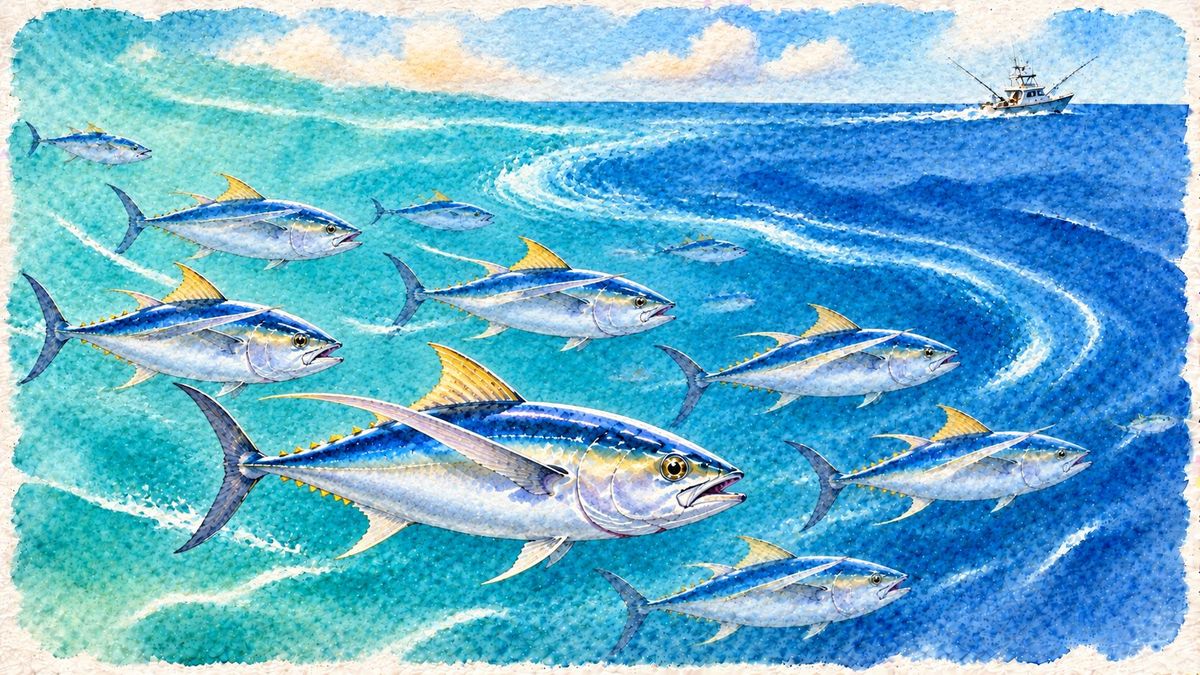
Albacore are considered pelagic fish, meaning that they spend their lives in the open sea rather than near the bottom or the shore. They are strongly migratory and travel in schools that may stretch for long distances.
What Does an Albacore Tuna Look Like?
At a glance, an albacore looks like a compact torpedo with a few unmistakable details.
Size and Shape
Most albacore weigh between 10 and 45 pounds (5 to 20 kg) and measure about 24 to 40 inches (60 to 100 cm) in length, though the biggest can approach 4 feet (1.2 m) or more. The body is deep and rounded in the middle and tapers sharply at both ends, an ideal shape for slicing through water with little drag.
Long Pectoral Fins
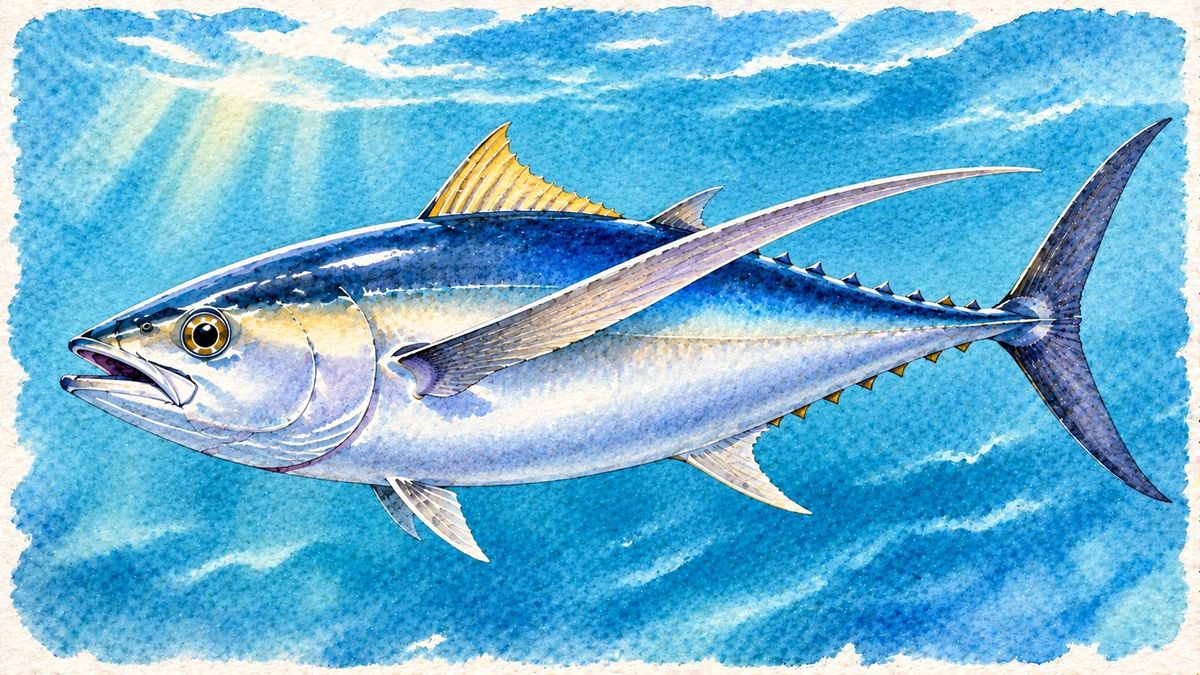
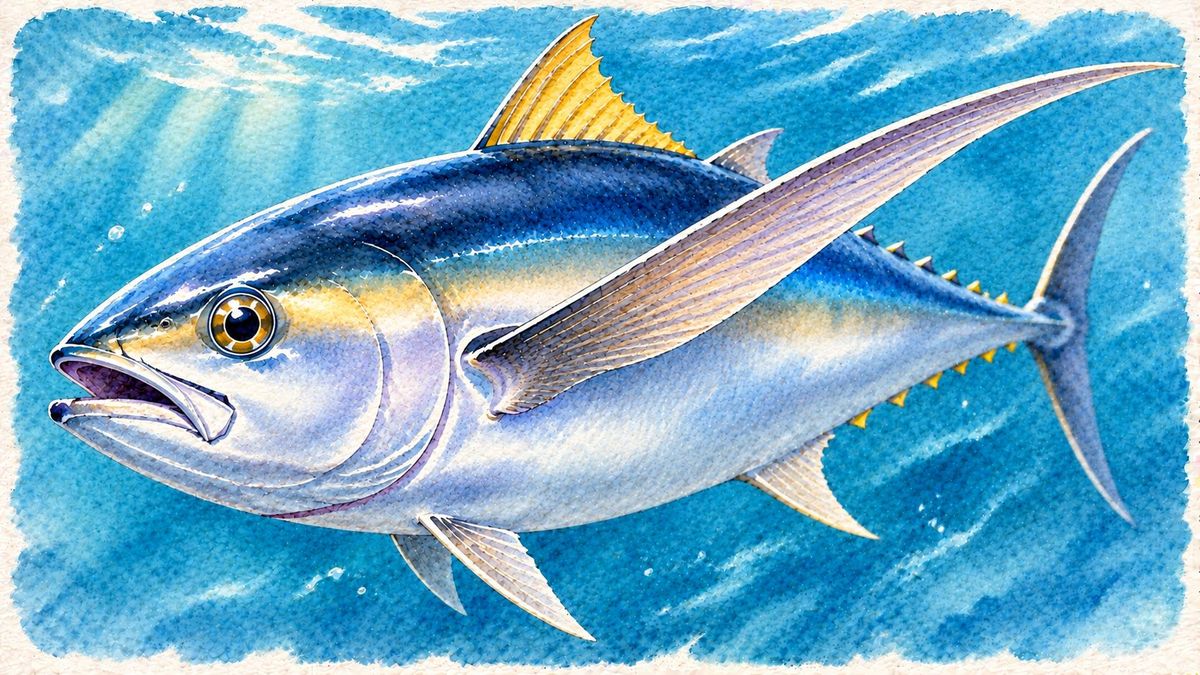
The most obvious feature is the very long pectoral fins, which can reach back past the second dorsal fin and extend to near the base of the tail in adults. No other tuna has pectoral fins this long relative to its size. Scientists think these fins help the fish with lift and maneuvering during long-distance cruising.
Color
Albacore are dark metallic blue on the back and silvery white on the belly. The tail fin has a thin whitish edge, a handy way to tell it from other tunas. The first dorsal fin is deep yellow, while the second is paler, and the small finlets behind them are dark.
Eyes and Body Temperature
Albacore have large eyes for hunting in dim, deep water. Like other tunas, they can keep parts of their body warmer than the surrounding water. This ability, called regional endothermy, helps their swimming muscles and brain stay active in cool ocean depths. Albacore are less able to do this than bluefin tuna, which is part of why they prefer warmer waters.
Where Do Albacore Tuna Live?
Albacore live in every ocean in temperate and tropical zones, roughly between 50 degrees north and 40 degrees south. Fisheries scientists usually manage them as separate stocks: North Pacific, South Pacific, North Atlantic, South Atlantic, Indian Ocean and Mediterranean Sea.
Their habitat includes:
- Open ocean far from the coast, where they spend most of their lives
- Surface waters in the upper hundred meters, especially when feeding
- Deeper water, where adults may dive several hundred meters
- Warm tropical waters for spawning, and cooler temperate waters for feeding
Albacore follow temperature "fronts" where warm and cool currents meet, because these boundaries are rich in food. In the North Pacific, for example, adult albacore migrate across the whole ocean, traveling from waters off Japan to the coast of North America and back during their lifetimes. Juveniles often follow these routes, sometimes appearing off the US West Coast in summer.
What Do Albacore Tuna Eat?
Albacore are opportunistic predators, which means they eat whatever suitable prey is available in their part of the ocean.
Typical Prey
- Small schooling fish: anchovies, sardines, mackerel and lanternfish
- Squid: an especially important food in many regions
- Crustaceans: krill, small crabs and shrimp-like animals
- Other small open-ocean animals: including larvae of various species
How Albacore Hunt
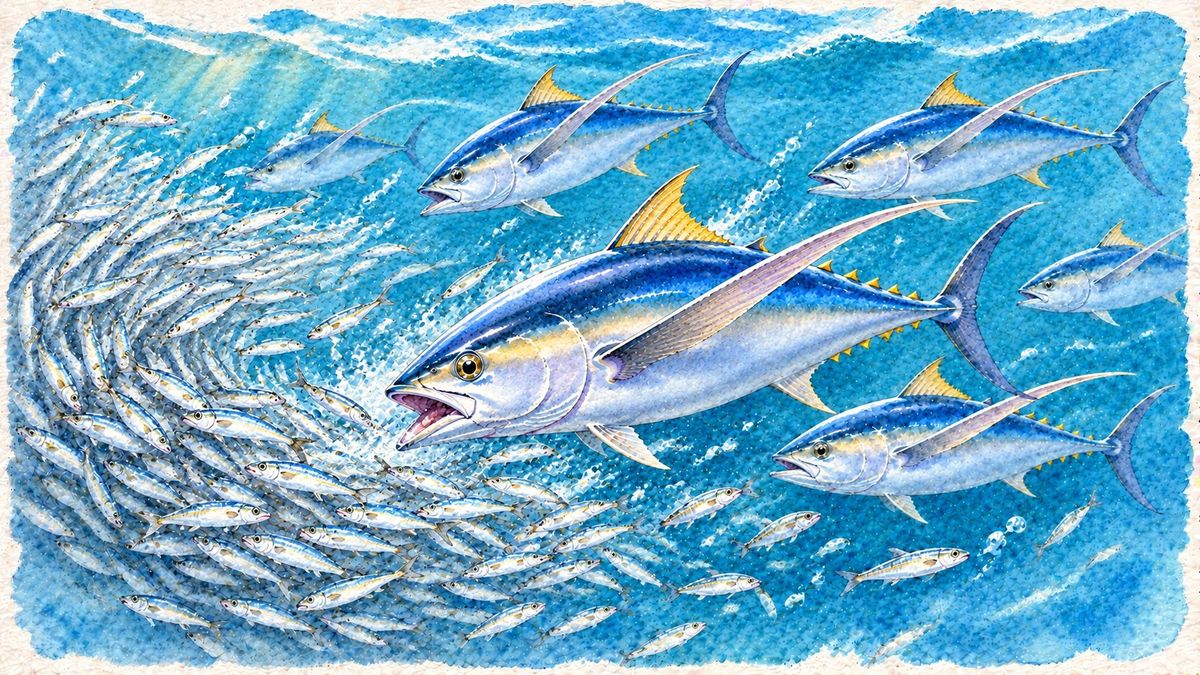
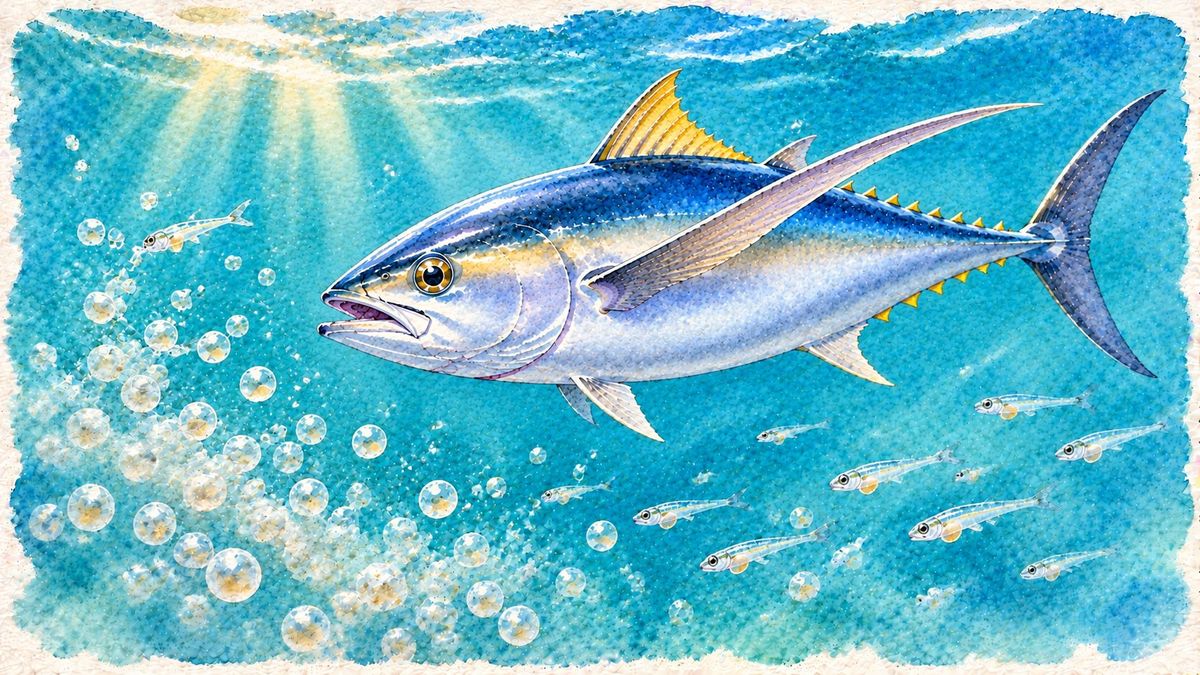
Albacore hunt in groups, using speed and teamwork to herd small fish into tight balls near the surface. They then dart through the school, snapping up prey. They also feed deeper in the water during the day, following prey that migrate up and down in the water column. Their large eyes help them hunt at depths with little light.
Albacore have a high metabolism and need to eat often to fuel their constant swimming. Unlike many fish, tunas must keep swimming to push water over their gills, so they never truly rest.
Albacore Tuna Behavior and Lifestyle
Constant Swimming
Albacore are obligate ram ventilators, meaning that they must swim continuously to breathe. They cruise at an efficient speed for long distances and can accelerate quickly when chasing prey.
Schooling
Albacore travel in schools, often grouped by size and age. Young albacore sometimes school with other tunas such as skipjack or yellowfin. Large, older fish tend to live in deeper water and may be found in smaller groups.
Migration
Albacore are among the most migratory fish in the sea. Satellite tagging has shown that individual fish can travel thousands of miles. They move between feeding grounds and spawning grounds, following food and water temperature.
Diving
Albacore regularly dive hundreds of meters, tracking prey and temperature layers. Tagging studies show that they spend time at both the surface and in cooler depths, adjusting their position through the day.
Albacore Tuna Reproduction and Babies
Albacore spawn in tropical and subtropical waters, usually in warm seasons. Females release millions of tiny eggs into the open ocean, and males fertilize them externally. A single large female may produce millions of eggs over a spawning season.
The eggs float in the surface waters and hatch within a day or two. The larvae are tiny, only a few millimeters long, and drift with the plankton while feeding on small organisms. Most larvae are eaten by other animals, and only a tiny fraction grow to adulthood.
Young albacore grow quickly. They typically reach maturity at around five years of age, when they are about 80 to 90 cm (31 to 35 in) long, though this varies by population. After maturing, they join the spawning stock and begin migrating to warm waters to breed.
How Long Do Albacore Tuna Live?
Albacore usually live up to about 13 to 15 years, though most caught in fisheries are younger. This is shorter than some other tunas, such as bluefin, which can live much longer. Fast growth and relatively early maturity help albacore populations recover from fishing pressure faster than some other tuna species.
Predators and Threats
Because albacore are medium-sized, they are both predators and prey. Their natural enemies include:
- Large sharks such as makos and great whites
- Billfish such as marlin and swordfish
- Larger tunas and toothed whales
- Seabirds, which may eat very young fish near the surface
The main threat today is fishing. Albacore are caught by longlines, trolling, pole-and-line fishing and purse seines. They are also affected by changes in ocean temperatures, which can shift where food and spawning grounds are located.
Why Albacore Tuna Are Important
- Food web connection: Albacore link small prey fish and squid to top predators in the open ocean.
- Global fisheries: They support commercial and recreational fisheries on every continent with an ocean coast.
- Food source: Albacore is the main source of canned "white tuna," and fresh albacore is popular for grilling and sushi.
- Ocean indicator: Because they travel so widely, albacore help scientists track changes in ocean temperature and currents.
Is Albacore Tuna Healthy and Sustainable?
Albacore is a good source of protein and omega-3 fatty acids. It generally contains more mercury than smaller "light" tuna such as skipjack, but less than very large tunas like bigeye. Health agencies often suggest limiting albacore intake for pregnant women and young children, so it is worth checking local guidance.
Sustainability depends on the stock and the fishing method. Troll-caught and pole-and-line albacore, especially from well-managed fisheries in the North Pacific and North Atlantic, are generally considered better choices than longline-caught fish, which have more bycatch of turtles, sharks and seabirds. Several albacore fisheries have been certified as sustainable by independent programs.
Are Albacore Tuna Endangered?
The albacore is not considered endangered. Its status on the IUCN Red List has varied over time: earlier assessments classified it as Near Threatened, but more recent assessments of tunas list the albacore as Least Concern. Regional stocks differ, and the Mediterranean stock has been of particular concern to scientists in the past.
Key issues include:
- Overfishing in some regions where catch limits are not enforced
- Bycatch of other species in longline and net fisheries
- Climate change, which may shift migration routes and prey availability
- Incomplete data about stocks in certain oceans
International organizations such as regional tuna commissions set catch limits and monitor stocks. Strong management and well-enforced limits are essential to keep albacore numbers healthy.
Fun Facts About Albacore Tuna
- Longfin name: Its extremely long pectoral fins give it the nickname "longfin tuna."
- The only white tuna: Only albacore can be sold as "white tuna" in cans.
- Trans-ocean traveler: Some albacore cross entire oceans during their lives.
- Never stops swimming: Albacore must keep moving to breathe.
- Warm muscles: Albacore can keep parts of their body warmer than the water around them.
- Edge of white: The trailing edge of the tail fin is thin and whitish.
- Fast growers: They reach maturity in about five years.
- Tagging tells the story: Satellite tags have revealed their long migrations and deep dives.
- Ocean-wide fish: They live in the Pacific, Atlantic, Indian Ocean and Mediterranean.
Frequently Asked Questions
What is an albacore tuna? Albacore tuna is a medium-sized, fast-swimming ocean fish with very long pectoral fins. It is the species used for canned white tuna and is also eaten fresh and as sushi.
How big do albacore tuna get? Most albacore are 24 to 40 inches (60 to 100 cm) long and weigh 10 to 45 pounds (5 to 20 kg). The largest reach about 4 feet (1.2 m) or more.
Where do albacore tuna live? Albacore live in temperate and tropical waters of the Pacific, Atlantic and Indian Oceans and the Mediterranean, mostly in the open sea.
What do albacore tuna eat? They eat small fish such as anchovies and sardines, squid and crustaceans such as krill. They hunt in groups and feed both near the surface and in deeper water.
Is albacore tuna high in mercury? Albacore generally has more mercury than light tuna such as skipjack but less than very large tunas such as bigeye. People who are pregnant or feeding young children should follow local health advice on how much to eat.
Is albacore tuna endangered? No. Recent IUCN assessments list albacore as Least Concern, although some stocks need careful management to prevent overfishing.
Final Thoughts
The albacore tuna is a graceful marathon swimmer of the open ocean, equipped with long wing-like fins, a warm-blooded edge and an appetite for sardines and squid. It appears on dinner tables around the world, yet its life story of long migrations, deep dives and huge schools remains largely hidden beneath the waves. Choosing well-managed, responsibly caught albacore helps keep this remarkable "longfin" traveler swimming for generations to come.