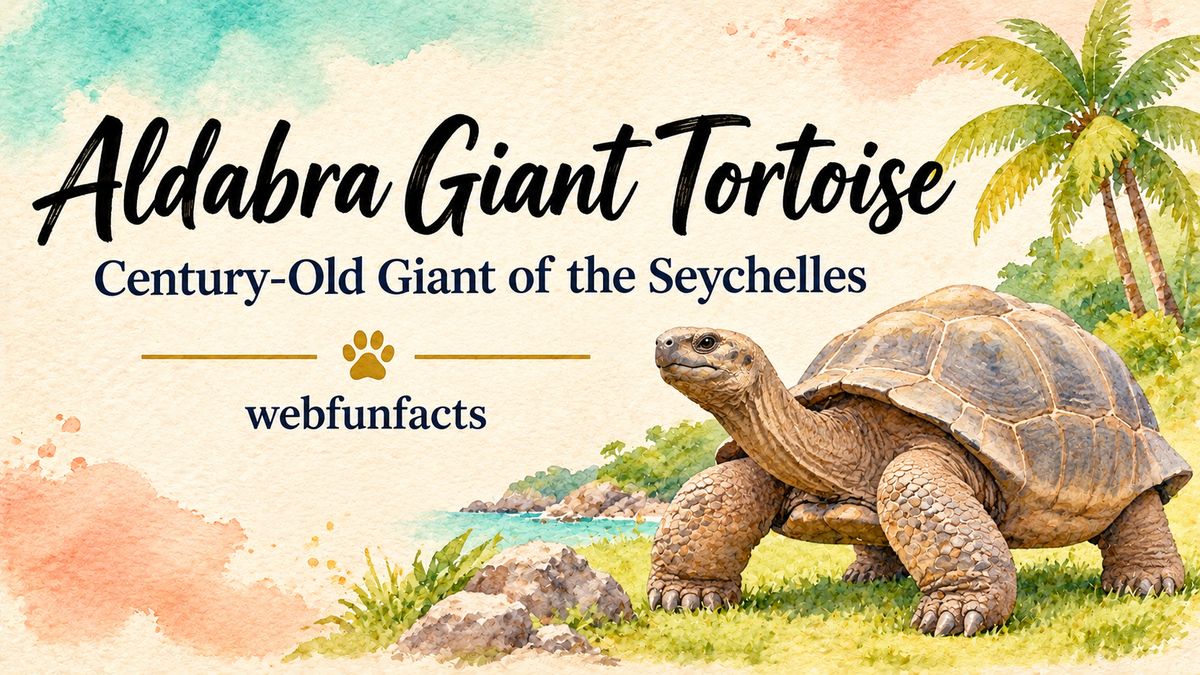
The Aldabra giant tortoise is one of the largest tortoises on Earth and one of the longest-lived animals alive today. Plodding slowly across the coral islands of the Indian Ocean, these domed giants can weigh as much as a refrigerator and live for well over a century, outlasting the people who care for them.
Found naturally only on Aldabra Atoll in the Seychelles, the species has made an extraordinary comeback from the brink of extinction. Today, tens of thousands of Aldabra tortoises roam their protected home, making it the largest population of giant tortoises in the world. In this complete guide, you will learn what an Aldabra giant tortoise is, how big it gets, where it lives, what it eats, how it breeds, how long it lives and why it matters to its island ecosystem.
Quick answer: The Aldabra giant tortoise (Aldabrachelys gigantea) is a huge land tortoise native to Aldabra Atoll in the Seychelles, in the western Indian Ocean. Adults typically weigh about 100 to 250 kg (220 to 550 lb) and have shells up to about 1.2 m (4 ft) long. It eats grass, leaves and fruit, often lives well over 100 years, and is listed as Vulnerable by the IUCN.
Aldabra Giant Tortoise at a Glance
| Feature | Details |
|---|---|
| Scientific name | Aldabrachelys gigantea |
| Class | Reptilia |
| Order | Testudines |
| Family | Testudinidae (tortoises) |
| Shell length | Up to about 4 feet (1.2 m); males usually larger |
| Weight | About 220 to 550 pounds (100 to 250 kg); females are smaller |
| Lifespan | Often over 100 years; some individuals are thought to exceed 150 |
| Diet | Grasses, leaves, woody plants, fruit and occasional carrion |
| Habitat | Grassland, scrub, mangrove edges and coastal dunes |
| Range | Aldabra Atoll, Seychelles; also introduced to other islands |
| Activity | Active by day, resting in shade at midday |
| Conservation status | Vulnerable (IUCN) |
What Is an Aldabra Giant Tortoise?
The Aldabra giant tortoise is one of only two living groups of giant tortoises, the other being the Galapagos tortoises of the Pacific. Giant tortoises once lived on many islands around the world, including several in the Indian Ocean, but most populations were wiped out by sailors who collected them for food. The Aldabra tortoise survived mainly because the atoll where it lives is remote, rugged and hard to reach.
Its scientific name is Aldabrachelys gigantea. The name "Aldabra" refers to its home atoll, a ring of coral islands that is a UNESCO World Heritage Site, and gigantea means "giant." Scientists consider it the last surviving giant tortoise species of the Indian Ocean islands, so it is a living link to a vanished ecosystem.
Tortoises are land-dwelling turtles. Unlike sea turtles or freshwater turtles, they do not swim and they have sturdy, column-like legs to support their weight on land. The Aldabra tortoise is one of the biggest tortoises alive, rivaled only by the Galapagos tortoise.
What Does an Aldabra Giant Tortoise Look Like?
Size and Weight
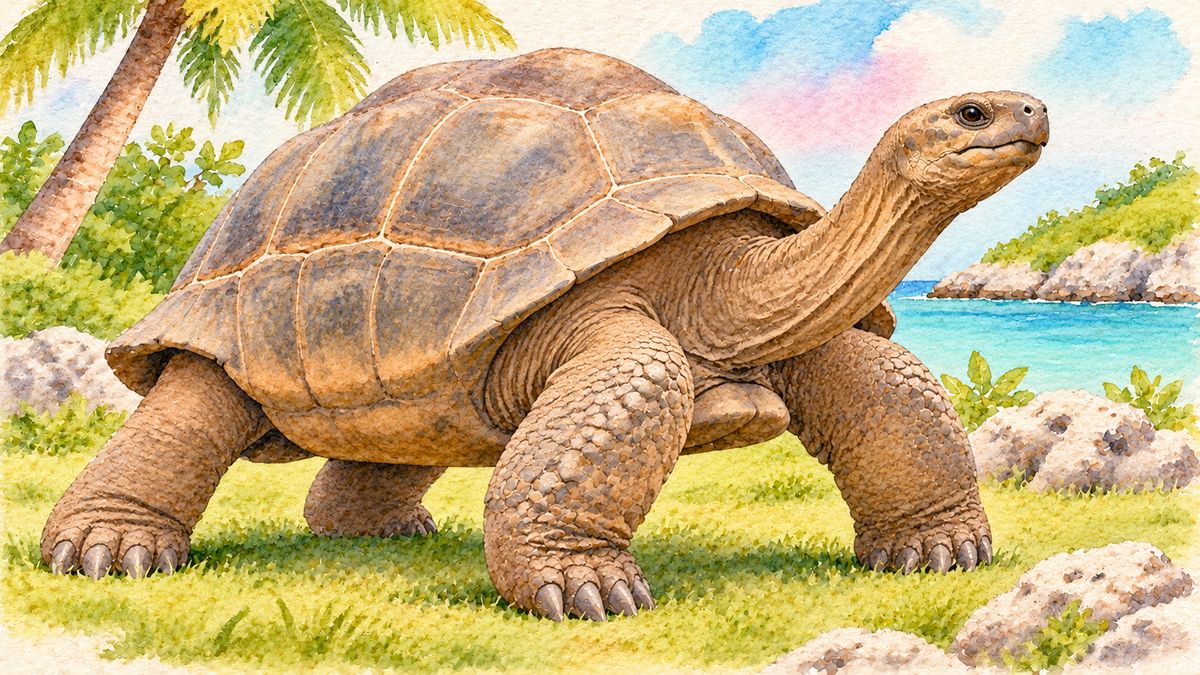
Adult males are the largest. They often weigh around 550 pounds (250 kg) or somewhat less, and their shells can measure up to about 4 feet (1.2 m) long. Females are smaller, typically about 220 to 330 pounds (100 to 150 kg), though they vary. A fully grown male is an impressive animal, standing roughly knee-high or higher.
Shell
The shell, or carapace, is high and domed, usually dark brown to tan or gray. Its plates are called scutes and show growth rings, but these cannot be used to tell the tortoise's age accurately. The shell of an Aldabra tortoise is thick and strong, protecting the tortoise from the sun and from most threats. The front edge of the shell is slightly raised, which leaves room for the neck and front legs to stretch out.
Neck and Head
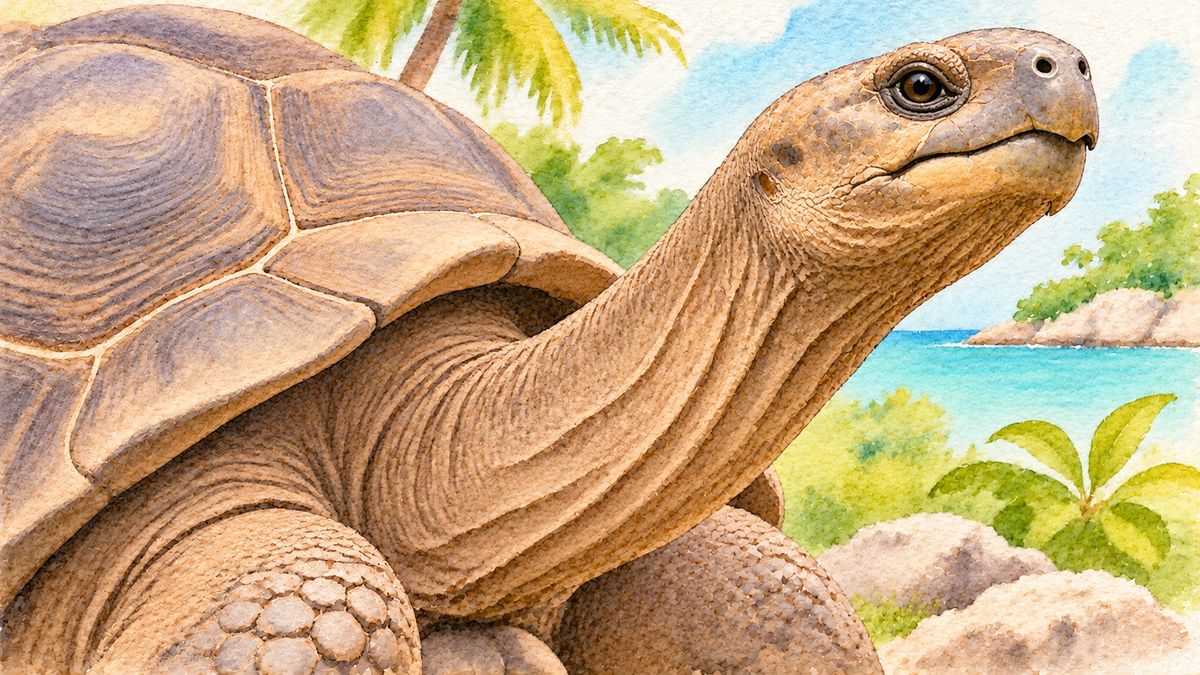
The neck is long and wrinkled and can stretch to reach leaves and branches. This is helpful on an island where tall vegetation may be the only food in dry seasons. The head is small and the mouth is shaped like a beak with no teeth. A sharp, horny beak slices through tough plants. The nostrils are located at the front of the face, and the tortoise has a good sense of smell.
Legs and Feet
The legs are thick, scaly and shaped like pillars, with stubby, elephant-like feet. They can support the animal's enormous weight and let it walk for long distances at a slow, steady pace.
Where Do Aldabra Giant Tortoises Live?
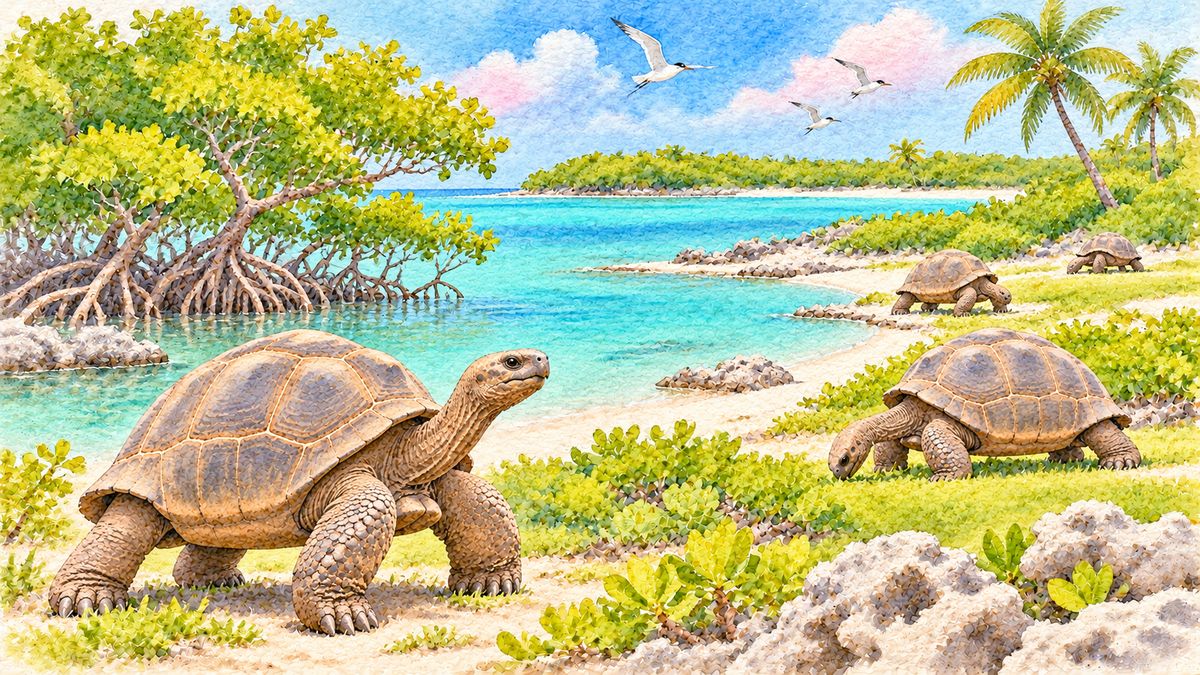
The Aldabra giant tortoise is native to Aldabra Atoll, a remote coral atoll in the Seychelles, about 400 km (250 miles) northwest of Madagascar. Aldabra is one of the largest raised coral atolls in the world and is protected as a UNESCO World Heritage Site. Tens of thousands of tortoises, roughly 100,000 according to many estimates, live there.
Within the atoll, tortoises use many habitats:
- Grasslands: short, grazed grass often called "tortoise turf"
- Scrub and shrubland: a mix of low trees and bushes
- Mangrove fringes: where they can find shade and food
- Coastal dunes and open ground: where they graze and sunbathe
Tortoises have also been introduced to other islands in the Seychelles and to places such as Mauritius, where they have been used in conservation projects to replace extinct giant tortoises. They live in zoos and sanctuaries worldwide.
What Do Aldabra Giant Tortoises Eat?
Aldabra tortoises are mainly herbivores. They spend a large part of each day grazing and browsing.
Typical Foods
- Grasses and sedges: a staple of their diet
- Leaves and herbs: including various low plants
- Woody plants and shrubs: which they can reach with their long necks
- Fruits and fallen fruit: when available
- Flowers and tender stems
Unusual Meals
Although they are mostly plant-eaters, Aldabra tortoises have been seen eating carrion, including dead tortoises and birds. Scientists believe this extra protein or calcium may be useful. They also chew bones and shells occasionally, which helps supply minerals.
Water
On Aldabra, fresh water can be scarce, and tortoises rely on rain and on moisture from plants. They drink from rain pools when available and can go for long periods without water.
Aldabra Giant Tortoise Behavior and Lifestyle
Slow and Steady
Aldabra tortoises are slow movers, but they can travel several hundred meters a day. They spend most of the day grazing, resting in shade and cooling off in the hottest hours. Tortoises have low energy needs and a slow metabolism, which is partly why they live so long.
Staying Cool
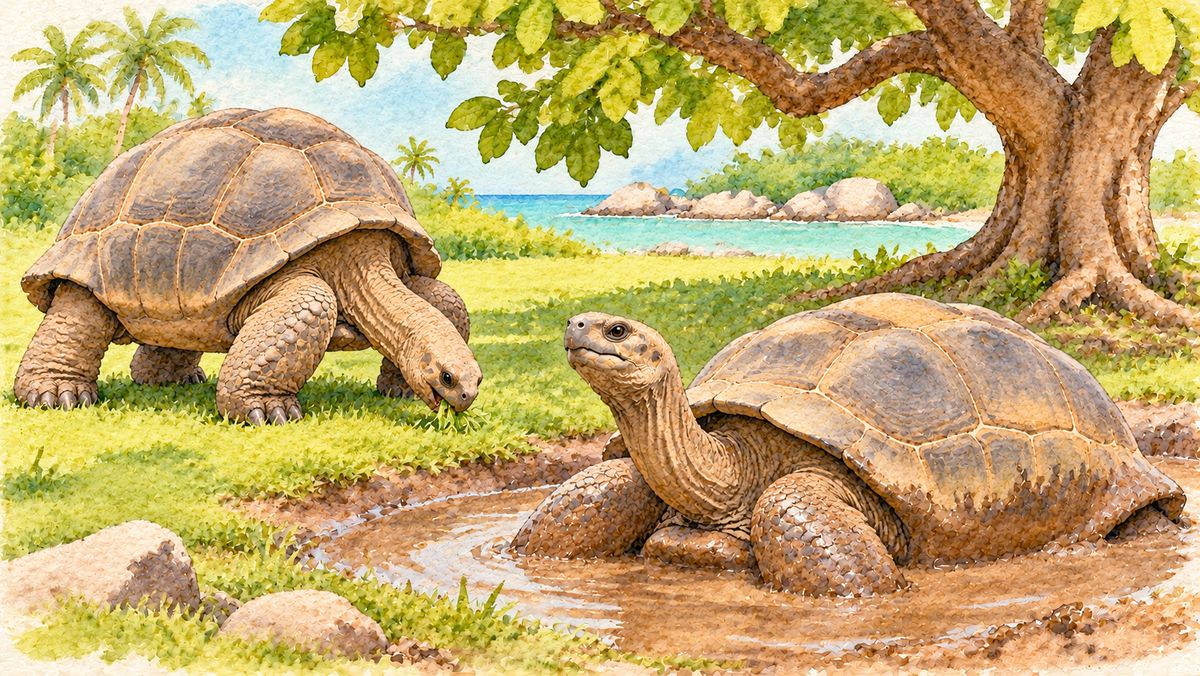
The tropical sun on Aldabra can be fierce. Tortoises protect themselves by seeking shade under trees or in rocky shelters and by wallowing in mud or shallow pools. They sometimes gather in groups under shade trees in the middle of the day.
Social Life
Aldabra tortoises are usually calm and not very aggressive. Males may fight for mates and territory by pushing and bumping each other with their shells and by stretching their necks to appear taller, and the taller male often wins. They communicate with sounds, including hisses, grunts and bellows, especially during breeding.
Daily Rhythm
Tortoises tend to be most active in the morning and late afternoon. During dry spells, they may rest more and eat less.
Aldabra Giant Tortoise Reproduction and Babies
Mating usually happens in the cooler, wetter part of the year. Males follow females, bellowing, bobbing their heads and nudging them before mating.
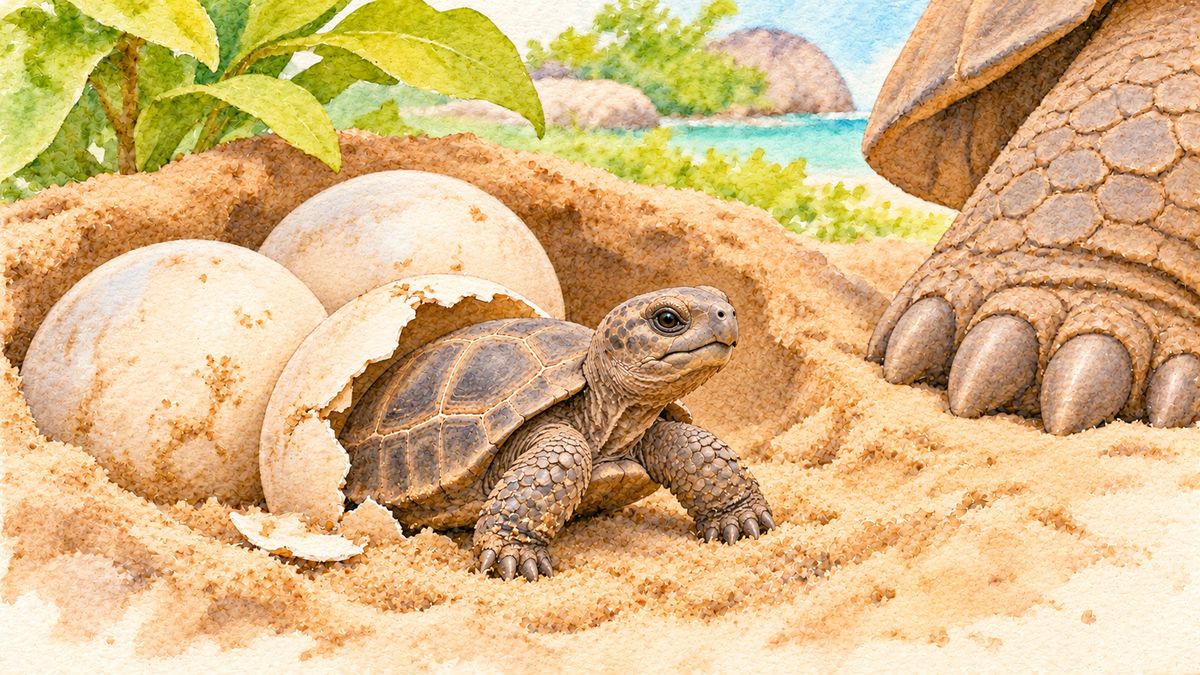
A female digs a nest in sandy soil or sheltered ground with her hind legs and lays a clutch of roughly 9 to 25 eggs. The eggs are round, white and about the size of a tennis ball. She covers the nest and leaves. Females may lay more than one clutch in a season.
The eggs incubate for several months, often around 3.5 to 8 months, depending on temperature and rainfall. Hatchlings are only about the size of a small apple, around 2 inches (5 to 6 cm) long, and must fend for themselves immediately. Their shells are soft at first and harden over time.
Aldabra tortoises grow slowly. They reach adult size over a few decades and may be sexually mature at around 20 to 30 years of age.
How Long Do Aldabra Giant Tortoises Live?
Aldabra giant tortoises are among the longest-lived animals on the planet. Many live well over 100 years, and some individuals in captivity are thought to have passed 150 years, although exact ages for the oldest animals are difficult to verify because records were not kept when they were born. Their long life is linked to slow growth, low metabolism and few natural predators as adults.
Predators and Threats
Adult Aldabra tortoises have very few natural predators because of their size and thick shells. Eggs and hatchlings are far more vulnerable and can be eaten by:
- Crabs, rats and other predators on islands where these are present
- Birds such as crows or herons on some islands
- Feral cats, dogs or pigs on islands where they have been introduced
The biggest danger in the past was people. During the 1700s and 1800s, sailors and settlers collected huge numbers of giant tortoises as a source of fresh meat on long voyages, because the animals could survive for months on a ship without food or water. This wiped out giant tortoises on most islands of the Indian Ocean. On Aldabra, the population fell very low, and it was only protection of the atoll that helped it recover.
Why Aldabra Giant Tortoises Are Important
Aldabra tortoises are known as ecosystem engineers because of the way they shape their environment.
- Seed dispersal: Seeds pass through their digestive systems and are spread across the island, helping many plants grow.
- Grazing: Their constant grazing creates short grasslands that support other species.
- Pathmakers: Their regular routes create trails and clear vegetation.
- Rewilding: Aldabra tortoises are being used on islands such as Mauritius to fill the ecological role of extinct giant tortoises, helping native plants recover.
Are Aldabra Giant Tortoises Endangered?
The Aldabra giant tortoise is listed as Vulnerable by the IUCN. Its population is relatively large and stable on Aldabra, but the species depends on a single small atoll, which makes it vulnerable to major events.
The main threats include:
- Sea-level rise: Aldabra is low-lying, so rising seas could reduce habitat.
- Climate change: Changes in rainfall and temperature could affect food and nesting.
- Invasive species: Rats, cats and other animals can harm eggs and young on some islands.
- Illegal collecting: Tortoises and eggs can be targeted for the pet and food trade.
- Disease: Large concentrations of animals may be affected by an outbreak.
Conservation measures such as strict protection of the atoll, controlled access, research and captive breeding are helping the species survive.
Fun Facts About Aldabra Giant Tortoises
- Century-old giants: Many live well over 100 years.
- One home atoll: They are native only to Aldabra in the Seychelles.
- Largest population: Aldabra supports the largest population of giant tortoises on Earth.
- Mud baths: They cool themselves by wallowing in mud and shallow pools.
- Bellowing males: Males make loud sounds during mating season.
- Seed spreaders: They carry seeds for plants across the island.
- Tooth-free chompers: They have a toothless beak that cuts tough plants.
- Ship's pantry: Sailors once kept them alive on ships as a source of fresh meat.
- Rewilding stars: They have been introduced to other islands to restore lost ecosystems.
Frequently Asked Questions
How big do Aldabra giant tortoises get? Males can weigh around 550 pounds (250 kg) and have shells up to about 4 feet (1.2 m) long. Females are smaller, usually around 220 to 330 pounds (100 to 150 kg).
How long do Aldabra giant tortoises live? They commonly live well over 100 years, and some are thought to reach 150 years or more, although the exact ages of the oldest are hard to confirm.
Where do Aldabra giant tortoises live? They are native to Aldabra Atoll in the Seychelles in the Indian Ocean. They have also been introduced to a few other islands and live in zoos around the world.
What do Aldabra giant tortoises eat? They mainly eat grasses, leaves, shrubs and fruit, and they occasionally eat carrion or chew bones for minerals.
Are Aldabra giant tortoises endangered? They are listed as Vulnerable by the IUCN. Their population is large for a giant tortoise, but it is concentrated on one low-lying atoll that is threatened by sea-level rise and climate change.
Are Aldabra giant tortoises good pets? No. They grow very large, live more than a century and need huge outdoor space and warm weather, so they are best suited to zoos, sanctuaries and specialist keepers, and their trade is regulated.
Final Thoughts
The Aldabra giant tortoise is a living piece of Earth's ancient history, a gentle giant that has outlived countless generations of people. Its recovery from near extinction shows how powerful protection can be, but its dependence on one low coral atoll reminds us that the future of the species is still uncertain. By supporting conservation and respecting these slow, steady giants, we help ensure they keep plodding across their island home for centuries to come.