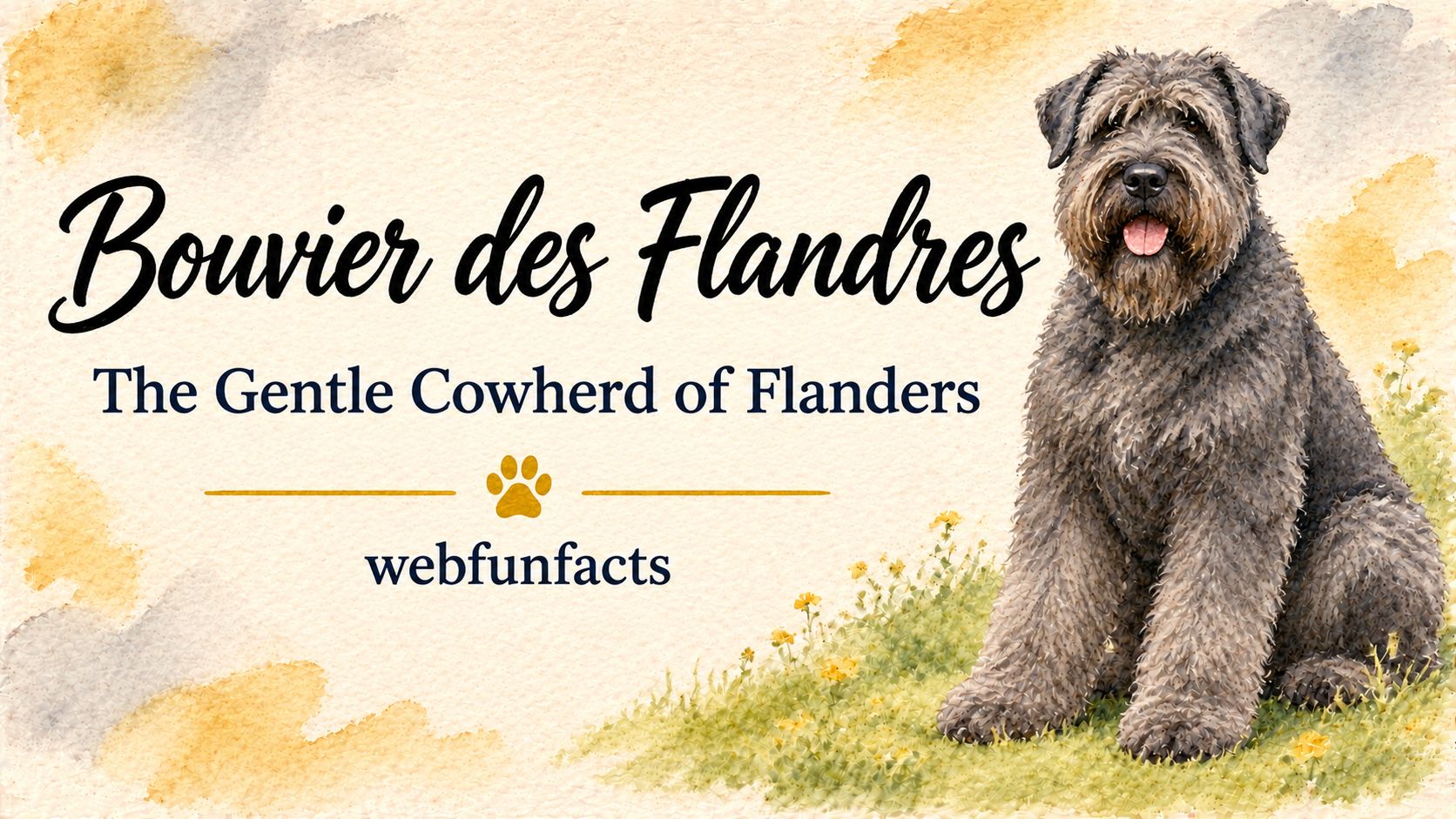
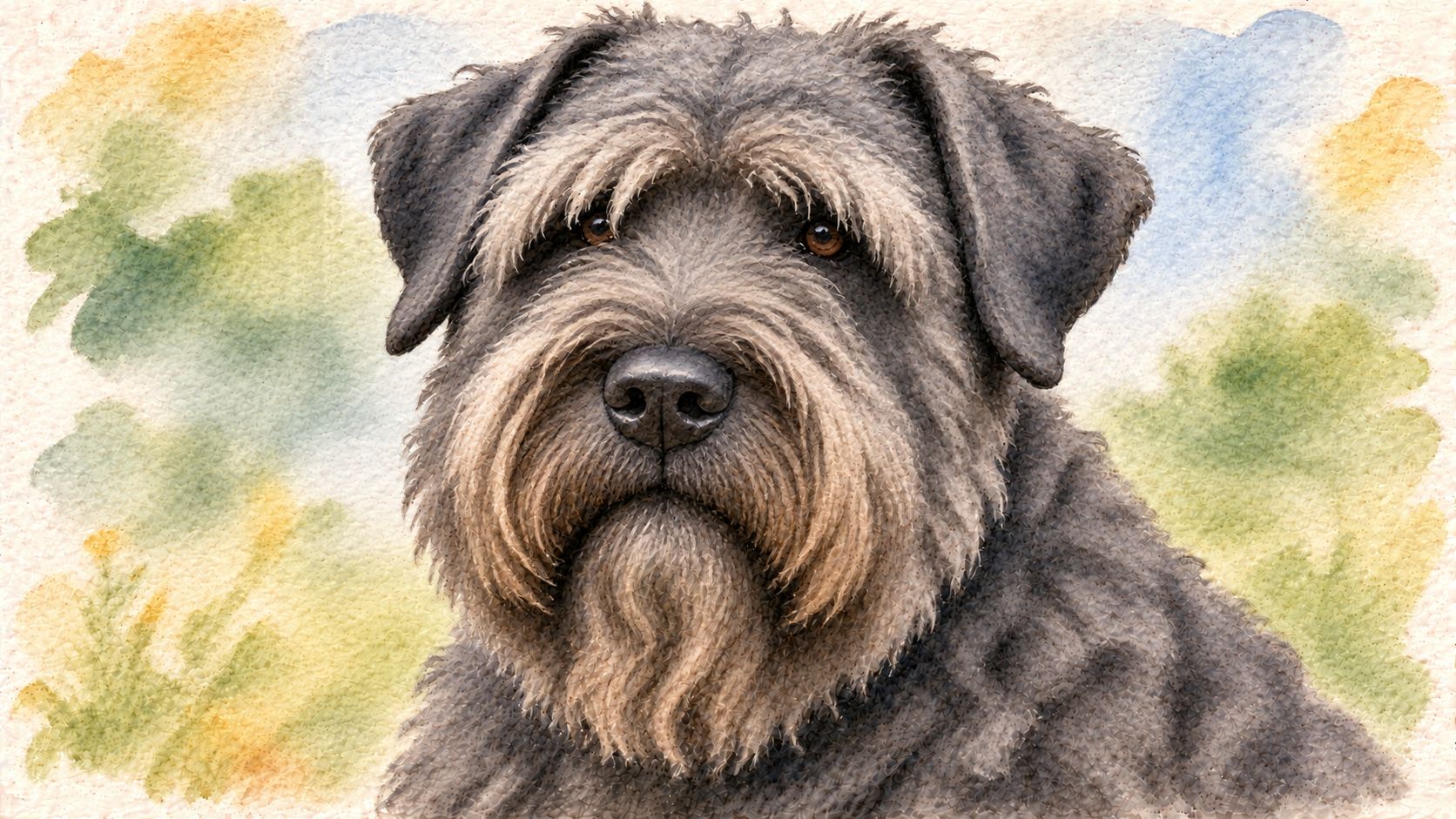
The Bouvier des Flandres is a big, bearded farm dog from Belgium with a rugged look and a surprisingly gentle heart. Its French name means "cowherd of Flanders," a nod to the region where it once drove cattle, pulled carts and guarded farms. With its shaggy coat, bushy eyebrows and thick mustache, it looks a little like a friendly bear on a mission.
Behind that tough exterior is a calm, steady and deeply loyal companion. In this complete Bouvier des Flandres dog breed guide, you will learn everything you need to know before bringing one home, including its size, temperament, grooming needs, exercise requirements, common health concerns, diet tips and remarkable history.
Bouvier des Flandres at a Glance
| Trait | Details |
|---|---|
| Breed group | Herding (AKC) |
| Height | Males 24.5 to 27.5 inches (62 to 70 cm); females 23.5 to 26.5 inches (60 to 67 cm) |
| Weight | Males 80 to 100 pounds (36 to 45 kg); females 65 to 85 pounds (29 to 39 kg) |
| Life expectancy | About 10 to 12 years |
| Coat | Rough, shaggy double coat, medium length |
| Colors | Fawn to black, salt and pepper, gray, brindle |
| Shedding | Low |
| Energy level | High |
| Temperament | Calm, gentle, loyal, protective, intelligent |
| Good for | Active families, experienced owners, homes with yards |
| Origin | Flanders region (Belgium and northern France) |
What Is a Bouvier des Flandres?
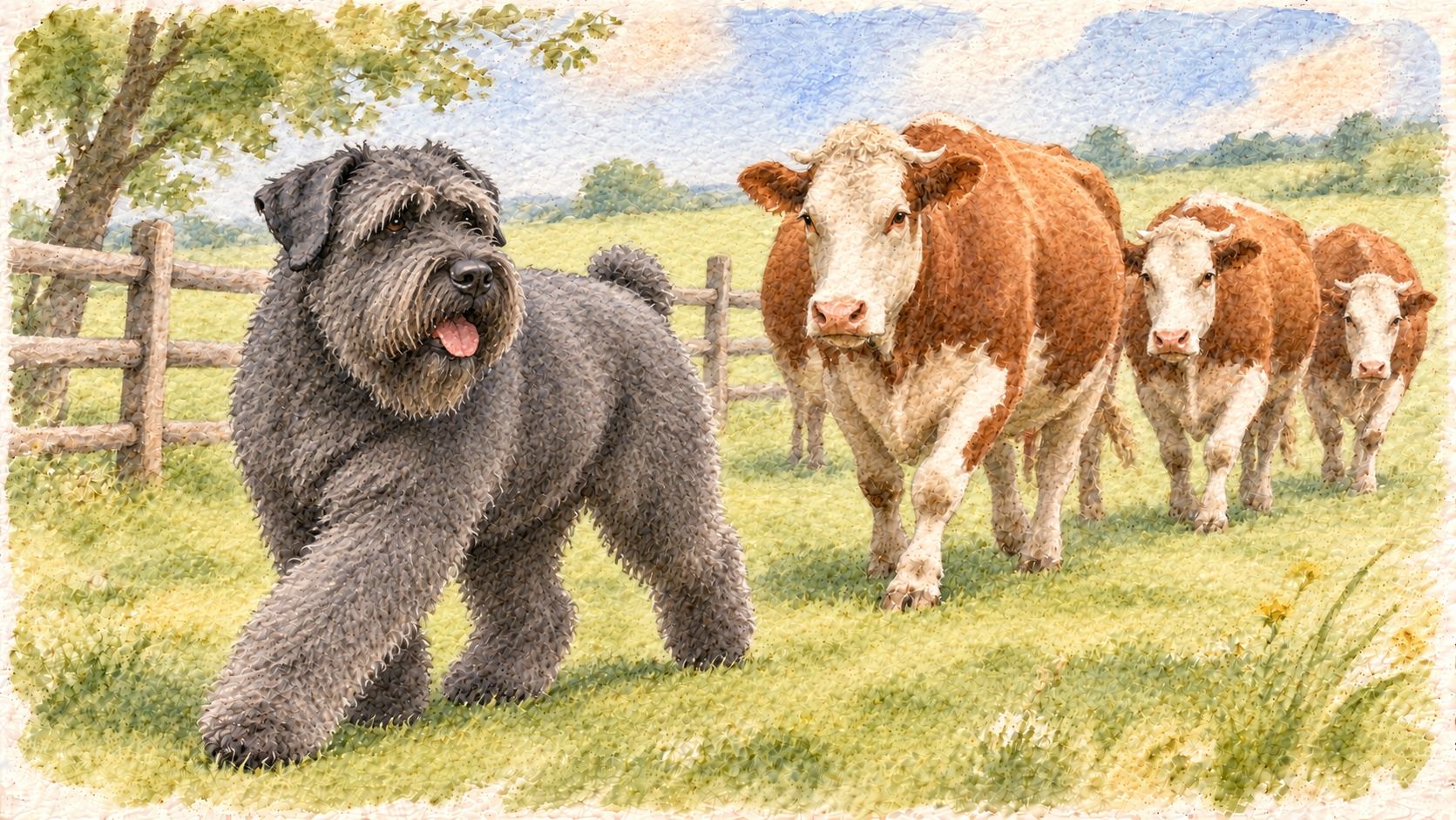
The Bouvier des Flandres is a large, powerful herding breed developed by farmers in Flanders, a region that covers parts of Belgium and northern France. These dogs were true all-rounders. They moved cattle to market, pulled carts, guarded the farm and kept watch over the family.
Today, the breed is a member of the American Kennel Club's Herding Group. It still excels at many jobs, from herding and tracking to police work and search and rescue. At home, it is known as a calm, devoted family guardian that likes to stay close to its people.
Bouvier des Flandres Size and Appearance
How Big Does a Bouvier des Flandres Get?
The Bouvier des Flandres is a large dog. Males usually stand 24.5 to 27.5 inches tall at the shoulder and weigh 80 to 100 pounds, while females stand 23.5 to 26.5 inches and weigh 65 to 85 pounds.
The breed has a compact, square, muscular body that gives it a sturdy, rugged look. It is built for strength and stamina rather than speed. Even so, a well-conditioned Bouvier moves with surprising agility for its size.
The head is the breed's signature feature. A full beard, a thick mustache and heavy eyebrows frame dark, alert eyes and give the Bouvier des Flandres its wise, serious expression. Traditionally the ears were cropped and the tail docked, but many dogs today keep their natural ears and tails.
Keep in mind that this breed matures slowly. A Bouvier may not reach full physical and mental maturity until it is 2 to 3 years old.
Coat and Colors
The Bouvier wears a weatherproof double coat. The outer coat is harsh, rough and slightly tousled, while the undercoat is fine, soft and dense. This combination protected farm dogs from rain, wind and cold while they worked outdoors in all seasons.
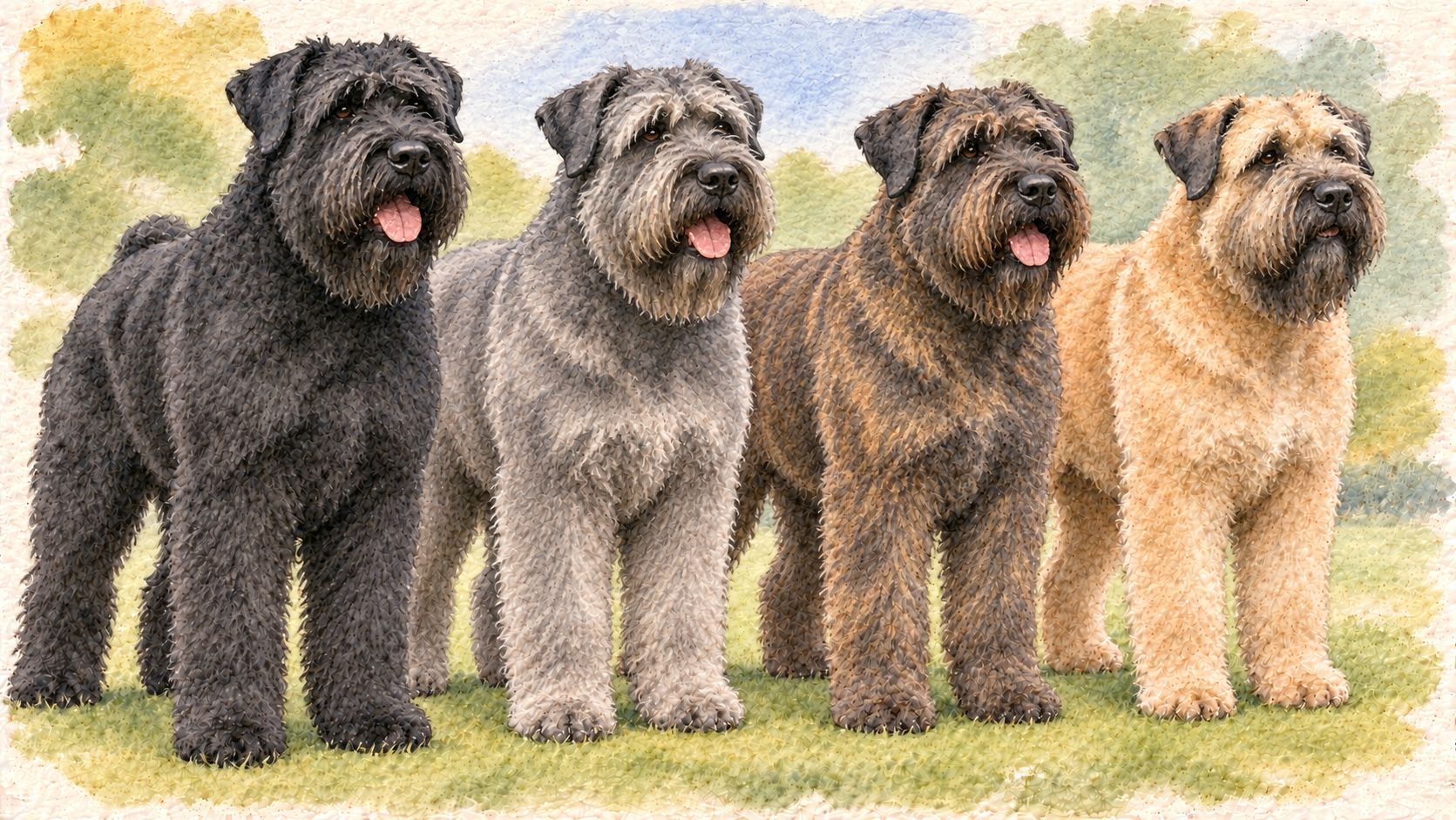
Accepted colors range from fawn to black, including salt and pepper, gray and brindle. Many dogs look dark gray or black from a distance, with lighter or mixed hairs visible up close.
Bouvier des Flandres Temperament and Personality
The Bouvier des Flandres temperament is often described as calm, gentle and steady. It is a thoughtful dog that tends to watch a situation before reacting. This breed is known for being:
- Calm and gentle: Bouviers are usually relaxed at home and gentle with the people they love.
- Loyal: They form strong bonds with their families and like to be wherever their people are.
- Protective: Their guarding background makes them natural watchdogs that keep an eye on their home and family.
- Intelligent: Bouviers learn quickly and enjoy having a job to do.
- Independent: As working dogs, they were bred to think for themselves, so they can be strong-willed at times.
- Reserved with strangers: They are often polite but cautious with people they do not know.
Because the Bouvier is so people-oriented, it does not enjoy being left alone for long periods. It is happiest as a full member of the household, not a dog kept outside.
Is the Bouvier des Flandres Good With Kids and Other Pets?
Yes, a well-socialized Bouvier is usually good with kids and can be a patient, protective family companion. Because of its large size, supervision is important around small children, who could be knocked over during play.
With other pets, Bouviers often do well when they are raised together. Their herding instincts may lead them to nudge or chase running children, cats or other animals. Some Bouviers can be bossy with unfamiliar dogs, particularly dogs of the same sex.
Early socialization is essential. Introduce your Bouvier des Flandres puppy to many people, animals, sounds and places so it grows into a confident, well-mannered adult.
Training a Bouvier des Flandres
This breed is smart and eager to work, but it also has a mind of its own. It responds best to a confident, consistent owner who uses positive reinforcement. Firm, fair rules and plenty of rewards work far better than harsh methods.
Here are a few training tips for Bouvier owners:
- Start early. Begin basic manners and socialization the day your puppy comes home, before it grows into a large, strong adult.
- Be consistent. Clear, steady rules help this independent breed understand what you expect.
- Teach leash manners. A 90-pound dog that pulls is hard to walk, so practice loose-leash walking from puppyhood.
- Give it a job. Bouviers thrive when their minds are busy. Obedience, tracking and puzzle games are excellent outlets.
- Try dog sports. The breed shines in herding, agility, obedience, tracking, carting and other working sports.
Exercise Needs
The Bouvier des Flandres has a high energy level and needs plenty of daily exercise. Plan on at least an hour of activity each day, such as long walks, hikes, jogs or energetic play in a secure yard.
Mental exercise matters just as much as physical activity. A bored Bouvier may invent its own jobs, which can include digging, chewing or herding family members. Training sessions, scent games and structured activities help keep it content.
Because of its size and energy, the Bouvier usually does best in a home with a securely fenced yard. Puppies should avoid heavy, repetitive exercise, such as long runs on hard surfaces, while their joints are still developing.
Bouvier des Flandres Grooming
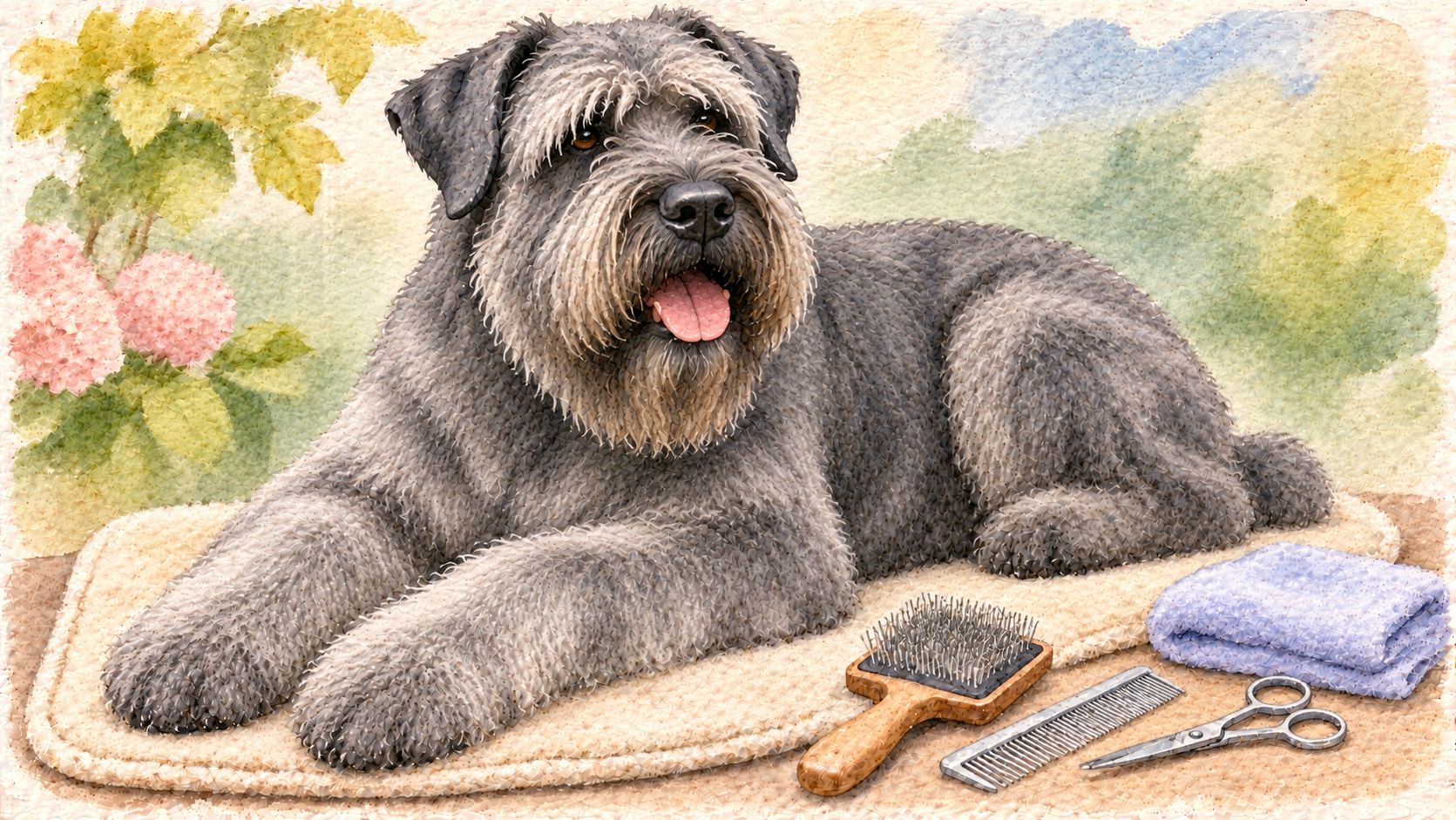
The Bouvier des Flandres needs frequent grooming. Its rough, shaggy coat can mat quickly, and the beard collects food, water and dirt throughout the day.
Do Bouvier des Flandres Dogs Shed?
Bouviers shed relatively little compared with many double-coated breeds, but they are not shed-free. Loose hair tends to get caught in the coat, which is why regular brushing is so important. No dog is truly hypoallergenic, so allergy sufferers should spend time with the breed before committing.
Grooming Routine
- Brushing: Brush the coat thoroughly at least once or twice a week, and more often if your dog spends lots of time outdoors.
- Stripping and trimming: The coat benefits from stripping or professional trimming every few weeks to months to keep it neat and manageable.
- Beard care: Wipe the beard and mustache after meals to keep them clean and fresh.
- Nails: Trim nails regularly so they do not grow too long or crack.
- Teeth: Brush your dog's teeth several times a week to support good dental health.
- Ears and eyes: Check ears weekly for dirt, moisture or redness, and keep the hair around the eyes tidy.
Bouvier des Flandres Health and Lifespan
The average Bouvier des Flandres lifespan is about 10 to 12 years. The breed is generally sturdy, but like all breeds it can be prone to certain conditions. Responsible breeders screen their dogs for common concerns, which may include:
- Hip and elbow dysplasia: Abnormal development of the hip or elbow joints, which is seen in many large breeds.
- Eye conditions: Problems such as cataracts or glaucoma can occur, so regular eye checks are helpful.
- Heart conditions: Some lines may be affected by heart problems, and screening is recommended.
- Thyroid issues: Hypothyroidism has been reported in the breed.
- Bloat: Like other large, deep-chested dogs, Bouviers can be at risk of this serious stomach condition.
Keeping your Bouvier at a healthy weight helps protect its joints and overall well-being. Always work with your veterinarian to set up a schedule of checkups, vaccinations and preventive care, and ask about warning signs to watch for in large breeds.
Feeding and Nutrition
As a large, active breed, the Bouvier does best on a high-quality dog food made for large dogs. Large-breed formulas are designed with the energy needs and joint health of big dogs in mind.
A Bouvier des Flandres puppy should eat a large-breed puppy food that supports steady, controlled growth. Because the breed matures slowly, your veterinarian can help you decide when to switch to adult food.
Portion sizes depend on your dog's age, size and activity level. Follow the feeding guidelines on the package and adjust with your veterinarian's advice. Many owners split daily meals into two or more portions. Treats are great for training but should make up only a small part of daily calories.
History of the Bouvier des Flandres
The Bouvier des Flandres was developed by farmers, cattle merchants and butchers in Flanders, likely from a mix of local working dogs. Breeders valued usefulness over looks, so early Bouviers varied in appearance. What they shared was strength, intelligence and a willingness to work.
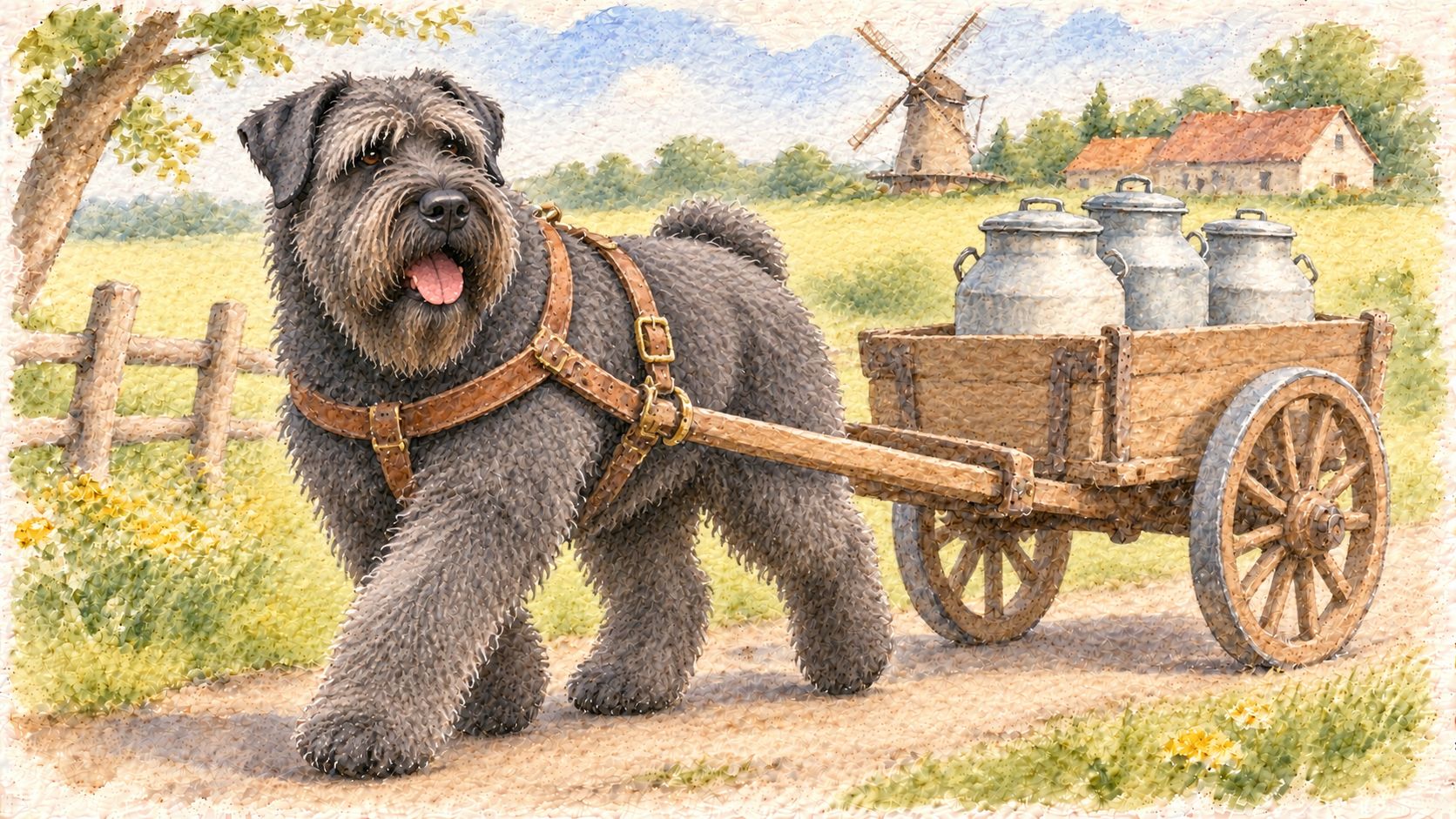
These dogs drove cattle to market, pulled carts loaded with milk or goods and guarded farms against intruders. The name says it all: "bouvier" is French for cowherd or ox herder, so the breed's name roughly means "cowherd of Flanders."
World War I brought both heroism and hardship. Bouviers served on the front lines as message carriers and as cart dogs that helped carry wounded soldiers. Much of Flanders was devastated by the fighting, and the breed came close to disappearing.
After the war, dedicated breeders worked to rebuild the breed from the few dogs that survived. A dog named Nic de Sottegem, who had served in the Belgian army, is often credited as an important foundation sire of the modern breed. The American Kennel Club recognized the breed in 1929.
The breed has also enjoyed some fame. President Ronald Reagan and First Lady Nancy Reagan owned a Bouvier named Lucky, who spent time at the White House in the 1980s and introduced many Americans to the breed.
Bouvier des Flandres vs Giant Schnauzer
The Bouvier des Flandres is often compared with the Giant Schnauzer, since both are big, bearded working dogs with rough coats. The Giant Schnauzer comes from Germany, usually has a sleeker, more angular outline and is often described as more intense. The Bouvier is generally a bit calmer at home and has a shaggier, more tousled coat. Both breeds need experienced owners, daily exercise and regular grooming.
Is a Bouvier des Flandres Right for You?
Is a Bouvier des Flandres a Good Family Dog?
Yes, a Bouvier des Flandres can be an excellent family dog for active households that can meet its exercise, training and grooming needs. It is calm, gentle and devoted to its family, and it makes a reliable watchdog.
A Bouvier des Flandres could be a wonderful match if you:
- Want a large, loyal and protective companion
- Have a home with space and a securely fenced yard
- Enjoy long walks, hikes or dog sports
- Have experience training strong, independent dogs
- Can commit to frequent brushing and coat care
- Want a dog that stays close to the family
A Bouvier des Flandres may not be the best fit if you:
- Live in a small apartment with little outdoor space
- Are away from home for long hours most days
- Want a low-maintenance coat
- Prefer a dog that is equally friendly with every stranger
Finding a Bouvier des Flandres Puppy
The Bouvier is not one of the most common breeds, so you may need to join a waiting list for a puppy. Look for a reputable breeder who health-screens parent dogs, raises puppies in a home environment and welcomes your questions. Breed clubs and rescue groups are also good places to look, since adult Bouviers sometimes need new homes.
Fun Facts About the Bouvier des Flandres
- The breed's name roughly means "cowherd of Flanders" in French.
- Bouviers worked as message carriers and cart dogs during World War I.
- President Ronald Reagan owned a Bouvier named Lucky.
- The breed can take 2 to 3 years to fully mature.
- Bouviers have worked in herding, tracking, police work, search and rescue and carting.
- Its beard and mustache are so full that many owners wipe them after every meal.
Frequently Asked Questions
What does "Bouvier des Flandres" mean?
The name is French and roughly means "cowherd of Flanders." It refers to the breed's original job of driving cattle in the Flanders region.
How big do Bouviers des Flandres get?
Males usually stand 24.5 to 27.5 inches tall and weigh 80 to 100 pounds. Females stand 23.5 to 26.5 inches and weigh 65 to 85 pounds.
Are Bouviers des Flandres good family dogs?
Yes, they are typically calm, gentle and loyal family companions. They do best with active families who can provide daily exercise, training and supervision around small children.
Do Bouviers des Flandres shed a lot?
No, they are considered low shedders. However, their coat needs frequent brushing and regular trimming or stripping to prevent mats.
How long do Bouviers des Flandres live?
The typical Bouvier des Flandres lifespan is about 10 to 12 years with good care, a healthy diet and regular veterinary checkups.
Are Bouviers des Flandres easy to train?
They are intelligent and learn quickly, but they can be independent and strong-willed. Consistent, positive training that starts in puppyhood works best.
Final Thoughts
The Bouvier des Flandres is a gentle giant with a working dog's heart. Calm at home, loyal to its family and ready for almost any job, this bearded cowherd of Flanders brings strength, history and devotion to the right household. If you can offer daily exercise, steady training and regular grooming, a Bouvier des Flandres may become the most faithful companion you have ever had.