With its shaggy eyebrows, soulful eyes and gentle, almost human expression, the Spinone Italiano is one of the most endearing hunting dogs in the world. This large, rugged pointer from Italy is famous for its excellent nose, tireless work in the field and remarkably sweet nature at home. The breed is also known as the Italian Spinone, the Spinone or the Italian Coarsehaired Pointer.
The Spinone Italiano is a dog of two moods: determined and steady when hunting, calm and affectionate on the sofa. In this complete Spinone Italiano dog breed guide, you will learn about its size, temperament, grooming needs, exercise requirements, common health concerns, diet tips and long Italian history.
Spinone Italiano at a Glance
| Trait | Details |
|---|---|
| Breed group | Sporting (AKC) |
| Height | 22 to 27 inches (56 to 69 cm) |
| Weight | About 62 to 85 pounds (28 to 39 kg) |
| Life expectancy | 12 to 14 years |
| Coat | Dense, wiry, single coat |
| Colors | White, white and orange, orange roan, white and brown, brown roan |
| Shedding | Moderate |
| Energy level | Moderate |
| Temperament | Gentle, patient, affectionate, loyal, determined in the field |
| Good for | Families, hunters, suburban or rural homes |
| Origin | Northern Italy |
What Is a Spinone Italiano?
The Spinone Italiano is a large, versatile gundog from Italy. It was developed to hunt, point and retrieve game over all kinds of terrain, from open fields to thick, thorny brush and cold water. It works at a steady, ground-covering trot rather than a fast gallop, which makes it a pleasant partner for hunters on foot.
The breed's name is often linked to the Italian word pino, a thorny bush that these tough dogs could push through thanks to their protective coat. The American Kennel Club recognized the Spinone Italiano in 2000 and placed it in the Sporting Group. It is still fairly uncommon in the United States, but those who own one tend to be devoted fans.
Spinone Italiano Size and Appearance
How Big Do Spinone Italianos Get?
Spinone Italianos are large dogs. Males usually stand 23 to 27 inches (58 to 69 cm) at the withers, and females 22 to 25 inches (56 to 64 cm). Most adults weigh somewhere around 62 to 85 pounds (28 to 39 kg), with males heavier than females.
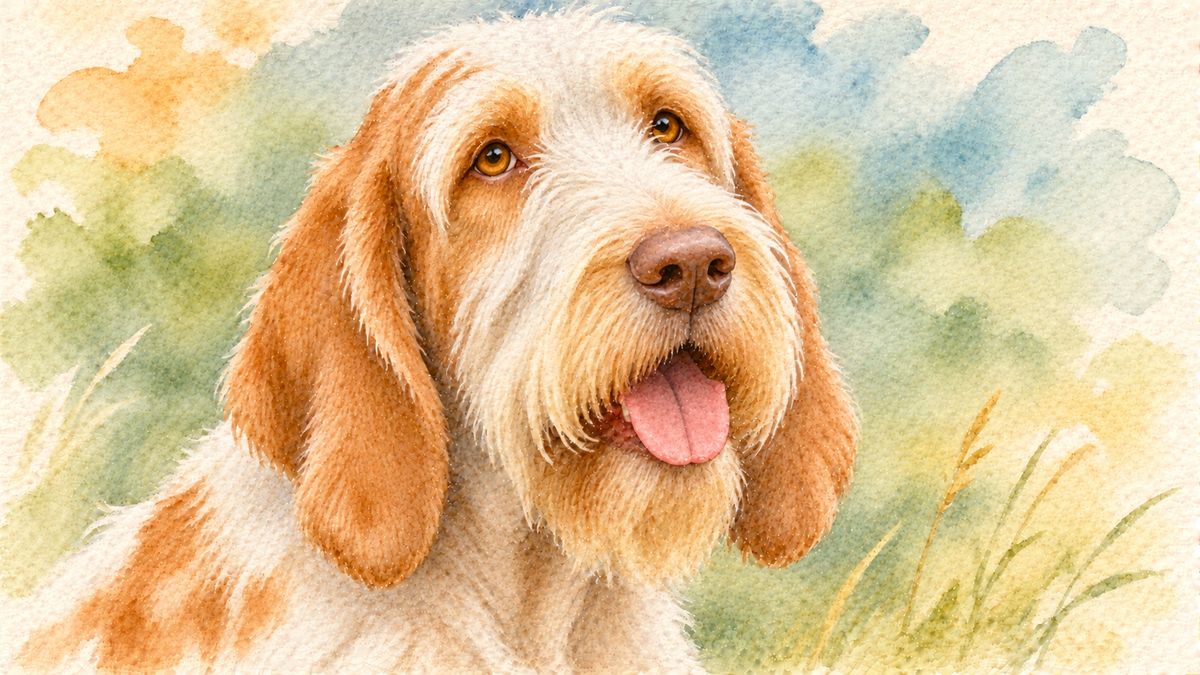
The body is solid, muscular and nearly square, with strong bones and a deep chest. The head is long, with a slightly domed skull, a long muzzle and large, gentle eyes. Long, triangular ears hang close to the cheeks. The thick eyebrows, mustache and beard give the breed its wise, friendly face.
Coat and Colors
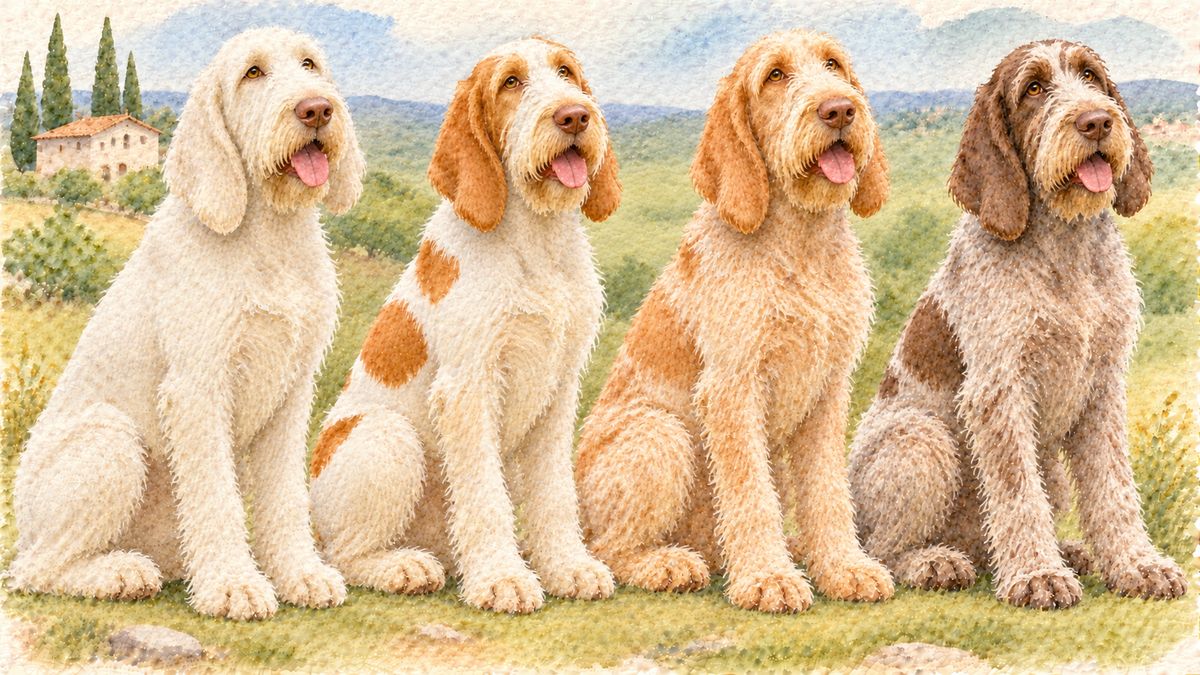
The Spinone Italiano has a single coat that is dense, tough and wiry, usually about 1.5 to 2.5 inches long. The coat lies fairly close to the body and helps protect the dog from thorns, brush, cold water and changing weather. Longer, stiffer hair forms the eyebrows, mustache and beard.
Accepted colors include solid white, white with orange or brown markings, orange roan and brown roan. Black is not an accepted color for the breed.
Spinone Italiano Temperament and Personality
The Spinone Italiano temperament is one of the breed's biggest attractions. It is known for being:
- Gentle and patient: The Spinone is famously easygoing and tolerant at home.
- Affectionate: It loves to be close to its people and is happiest when included in family life.
- Determined in the field: On a hunt it is focused, steady and tireless.
- Calm and cautious: In new situations, many Spinoni take a careful, thoughtful approach.
- Sociable: It is usually friendly with people and other dogs.
This breed is sensitive and responds best to kindness. It does not enjoy being left alone for long periods and may become bored or unhappy without companionship.
Are Spinone Italianos Good Family Dogs?
Yes, Spinone Italianos are often excellent family dogs. Their patient, gentle nature makes them a good match for children who know how to behave around dogs. Because they are large and can be clumsy as youngsters, supervision with toddlers is still wise.
Spinoni typically get along well with other dogs and can live with cats, especially when raised with them. As a hunting breed, they may show interest in birds and small animals, so early socialization and training are helpful.
Training a Spinone Italiano
The Spinone Italiano is intelligent and willing, but it can also be independent and a little stubborn. It learns best with patient, positive training that uses praise, treats and play. Harsh corrections can upset this sensitive dog and make it less willing to work.
Here are a few training tips:
- Start early. Begin basic manners and socialization as soon as your puppy comes home.
- Be patient. The Spinone matures slowly and may take its time to respond. Calm consistency pays off.
- Use its nose. Scent games, tracking and retrieving tap into the breed's natural talents.
- Practice leash manners. A large dog that pulls is hard to walk, so teach loose-leash walking early.
- Try dog sports. Spinoni can enjoy hunting tests, field trials, tracking, obedience, agility and therapy work.
Exercise Needs
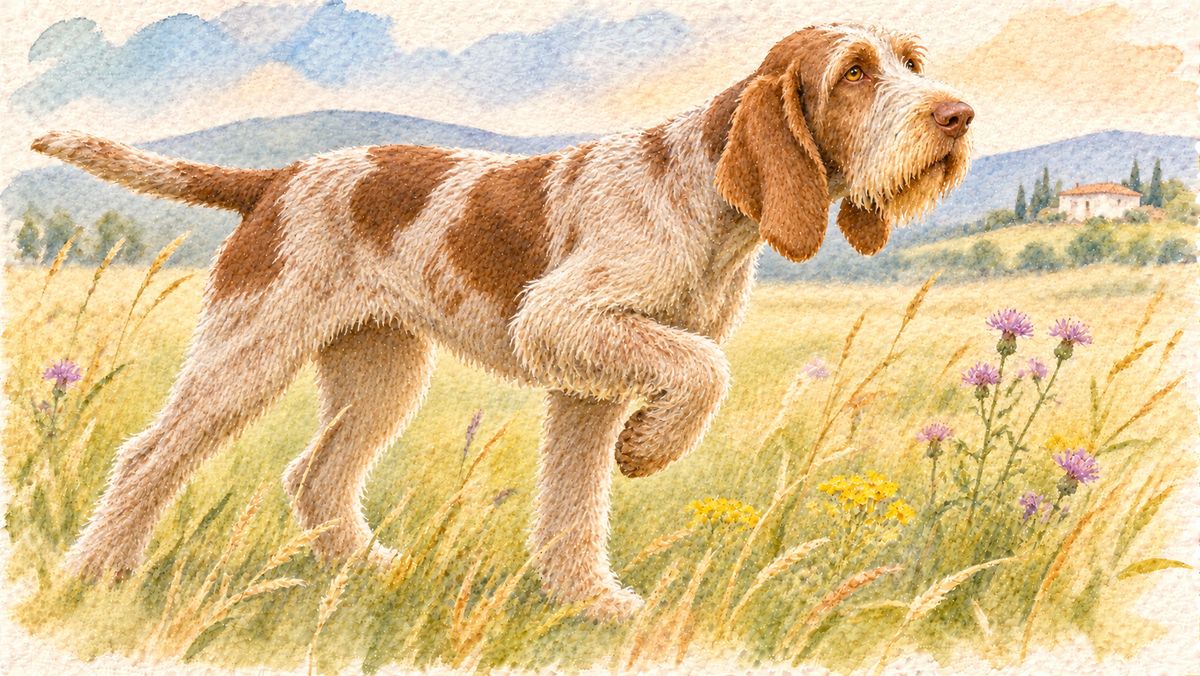
The Spinone Italiano has a moderate energy level, but it is still a working gundog that needs daily exercise. Long walks, hikes, swimming and time to explore and sniff in a safe, fenced area are ideal. Aim for about an hour of activity each day.
Because the breed was built for stamina rather than speed, it makes a great hiking companion. It is usually calm indoors once its exercise needs are met. Young dogs should not be pushed too hard with long runs or repeated jumping while their joints are still developing.
Keep your Spinone on a leash or in a securely fenced area. Its excellent nose can lead it to follow a scent and wander off.
Spinone Italiano Grooming
Do Spinone Italianos Shed?
Yes, Spinone Italianos shed a moderate amount. Their wiry coat sheds less than many smooth-coated breeds, but you will still find some hair around the house.
Grooming Routine
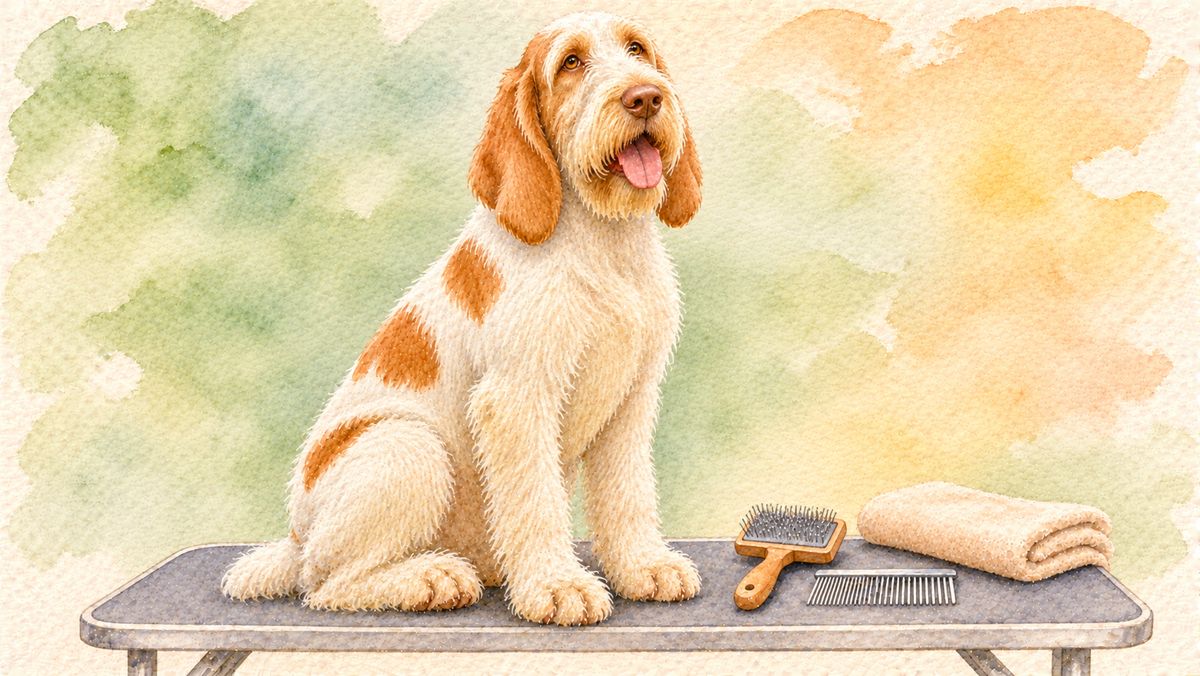
- Brushing: Brush the coat weekly with a slicker brush or comb to remove loose hair and debris.
- Hand-stripping: Many owners have the coat lightly hand-stripped a few times a year to keep it tidy and natural. Clipping is not recommended because it can soften the coat's texture.
- Beard care: The beard can collect food and water, so wipe it after meals and drinks. Expect some drool and wet whiskers.
- Ears: Check the long ears weekly and keep them clean and dry to help prevent infections.
- Nails and teeth: Trim nails every few weeks and brush teeth several times a week.
- After outings: Check the coat for burrs, seeds and ticks after walks in fields or woods.
Spinone Italiano Health and Lifespan
The Spinone Italiano is generally a healthy breed, with a typical lifespan of about 12 to 14 years. Like all breeds, it can be prone to certain conditions. Responsible breeders screen for concerns that may include:
- Hip dysplasia: An abnormal formation of the hip joint that can lead to arthritis.
- Cerebellar ataxia: An inherited neurological condition seen in the breed. A DNA test is available, and responsible breeders test their dogs.
- Bloat (gastric dilatation-volvulus): A serious condition that can affect large, deep-chested dogs.
- Eyelid problems: Such as ectropion or entropion, in which the eyelid rolls outward or inward.
- Ear infections: Long, hanging ears can trap moisture and dirt.
Ask breeders for health testing results on both parents. Keep your dog at a healthy weight and work with your veterinarian on regular checkups, vaccinations and preventive care.
Feeding and Nutrition
A Spinone Italiano does best on a complete and balanced, high-quality dog food made for large breeds. Large-breed formulas are designed to support healthy joints and steady growth.
Puppies should eat a large-breed puppy food to help them grow at a healthy, controlled pace. Portion sizes depend on age, weight and activity level, so follow the package guidelines and ask your veterinarian for advice. Working dogs in hunting season may need more calories. Many owners of deep-chested breeds feed two smaller meals a day rather than one large one.
History of the Spinone Italiano
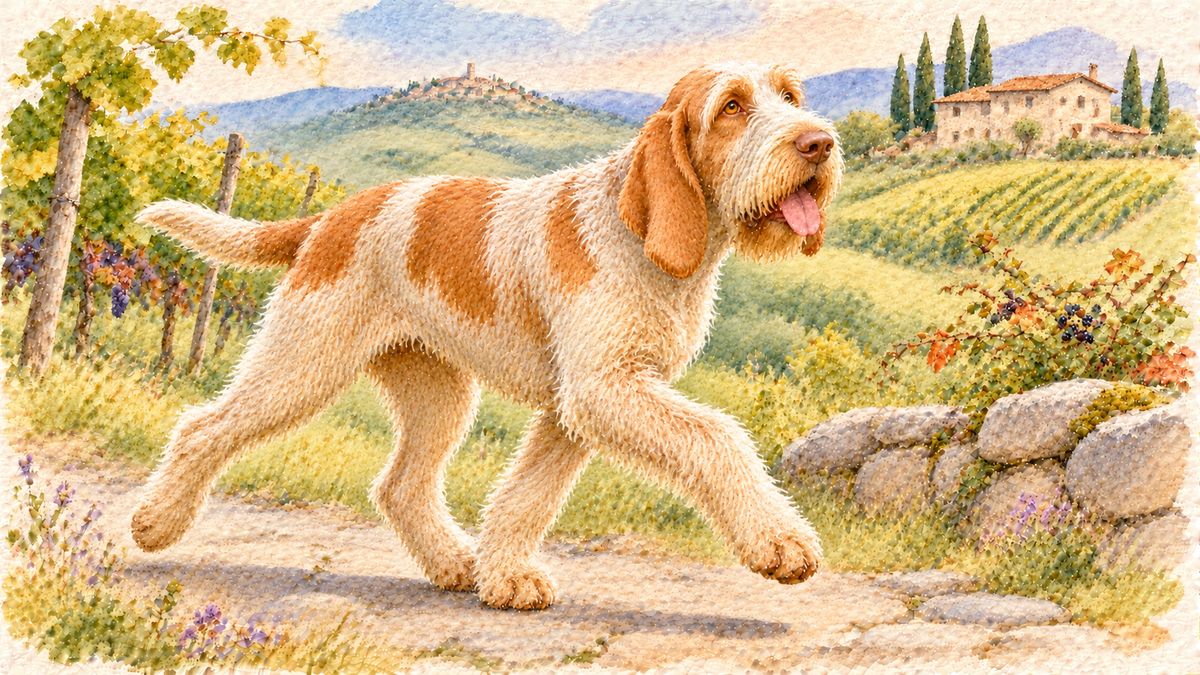
The Spinone Italiano is considered one of the oldest pointing breeds. Some enthusiasts trace its roots to ancient times, although the earliest history is hard to prove. Rough-coated pointing dogs that look much like the Spinone appear in Italian art from the Renaissance, and the breed was well established in northern Italy, especially the Piedmont region, for centuries.
Italian hunters valued the Spinone because it could work patiently in difficult terrain, push through thorny brush and retrieve from water. It was a practical dog for hunters on foot who did not need a fast, far-ranging pointer.
The breed suffered greatly during World War II, when numbers fell sharply. Some Spinoni even helped Italian partisans by tracking German patrols. After the war, dedicated Italian breeders worked to rebuild the breed, and interest gradually spread across Europe and North America. The AKC officially recognized the Spinone Italiano in 2000.
Spinone Italiano vs Wirehaired Pointing Griffon
The Spinone Italiano and the Wirehaired Pointing Griffon are both rough-coated, bearded pointing dogs, so they are often compared. The Spinone is larger and heavier, and its colors are white, orange and brown roan shades. The Griffon is medium-sized, usually steel gray with brown markings, and tends to be a bit more energetic. Both are affectionate, people-loving hunting companions.
Is a Spinone Italiano Right for You?
A Spinone Italiano could be a wonderful match if you:
- Want a gentle, affectionate large dog
- Enjoy walking, hiking or hunting
- Have a home with space and a securely fenced yard
- Can provide daily exercise and companionship
- Don't mind a bit of drool and a wet beard
- Want a patient dog for a family with children
A Spinone Italiano may not be the best fit if you:
- Live in a small apartment with little access to outdoor space
- Are away from home for long hours most days
- Want a super-fast, highly driven sporting dog
- Prefer a perfectly tidy, drool-free home
Finding a Spinone Italiano Puppy
Because the Spinone Italiano is uncommon in the United States, you may need to join a waiting list for a puppy. Choose a breeder who health-tests their dogs, including the DNA test for cerebellar ataxia, and raises puppies in a home environment. Breed clubs and rescue groups can also help you find adult dogs in need of new homes.
Fun Facts About the Spinone Italiano
- The plural of Spinone is Spinoni.
- The breed's name is often linked to the Italian word pino, a thorny bush.
- Spinone Italianos are known for a soft mouth, meaning they carry game gently without damaging it.
- The breed hunts at a steady trot rather than a gallop.
- Some Spinoni helped Italian partisans during World War II.
- The AKC recognized the Spinone Italiano in 2000.
Frequently Asked Questions
How big do Spinone Italianos get?
Adult Spinone Italianos usually stand 22 to 27 inches tall and weigh about 62 to 85 pounds, with males larger than females.
Are Spinone Italianos good family dogs?
Yes, they are known for their gentle, patient and affectionate nature. With training and supervision, they usually do very well with children.
Do Spinone Italianos shed?
They shed a moderate amount. Weekly brushing and occasional hand-stripping help keep loose hair under control.
How long do Spinone Italianos live?
The average Spinone Italiano lifespan is about 12 to 14 years with good care, a healthy diet and regular veterinary checkups.
Do Spinone Italianos drool?
Some do, especially after drinking. Their beards also hold water, so expect a few wet spots around the house.
What does "Spinone" mean?
The name is often linked to pino, an Italian thorny bush. It reflects the breed's ability to push through rough, prickly cover while hunting.
Final Thoughts
The Spinone Italiano is a rare blend of hard-working hunter and gentle family friend. With its wise bearded face, wiry coat and patient personality, it wins hearts wherever it goes. If you can offer daily exercise, kind training and plenty of companionship, a Spinone Italiano can be a loyal and loving partner for years to come.