
With its golden-rust coat, bristly beard and warm, expressive eyes, the Wirehaired Vizsla looks like a rugged outdoorsman with a soft heart. This athletic hunting dog was developed in Hungary to point, track and retrieve in cold weather and rough terrain. It is closely related to the smooth-coated Vizsla but wears a tougher, wiry jacket.
Away from the field, the breed is a gentle, loyal and people-oriented companion that loves being part of family life. In this complete Wirehaired Vizsla dog breed guide, you will learn everything you need to know before bringing one home, including its size, temperament, grooming needs, exercise requirements, common health concerns, diet tips and history.

Wirehaired Vizsla at a Glance
| Trait | Details |
|---|---|
| Breed group | Sporting (AKC) |
| Height | 23 to 25 inches (58 to 64 cm) for males; 21.5 to 23 inches (55 to 58 cm) for females |
| Weight | About 45 to 65 pounds (20 to 30 kg) |
| Life expectancy | 12 to 14 years |
| Coat | Dense, wiry outer coat with a water-resistant undercoat |
| Colors | Golden rust in various shades |
| Shedding | Moderate; seasonal |
| Energy level | High |
| Temperament | Loyal, gentle, affectionate, trainable, energetic |
| Good for | Active families, hunters, homes with outdoor space |
| Origin | Hungary (1930s) |
What Is a Wirehaired Vizsla?
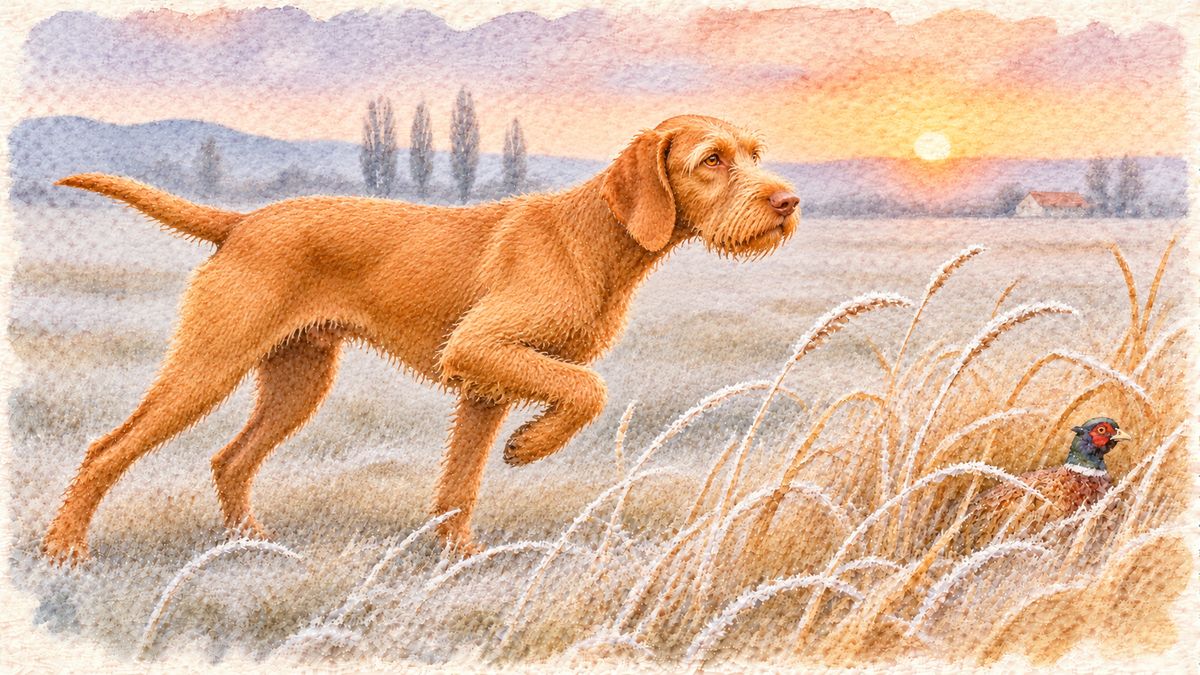
The Wirehaired Vizsla is a versatile gundog, which means it was bred to do many jobs in the field. It can search for birds, hold a steady point, track wounded game and retrieve from both land and water. Its dense, wiry coat protects it from cold winds, icy water and thorny brush.
This breed is a member of the American Kennel Club's Sporting Group. It is still fairly rare in North America, but its popularity is growing among hunters and active families. Owners often describe it as happy, confident and devoted, with an affectionate nature that makes it a true family dog.
Wirehaired Vizsla Size and Appearance
How Big Do Wirehaired Vizslas Get?
These are medium-to-large, athletic dogs. Males typically stand 23 to 25 inches tall at the shoulder, while females stand about 21.5 to 23 inches. Most adults weigh roughly 45 to 65 pounds, with males usually heavier than females.
The breed has a lean, muscular body that is a little longer than it is tall, built for stamina and agility. Its head is noble and well proportioned, with a bearded muzzle, prominent eyebrows and medium-length ears that hang close to the cheeks. The eyes are oval and usually blend with the coat color, giving the dog a lively, intelligent expression.
Coat and Colors
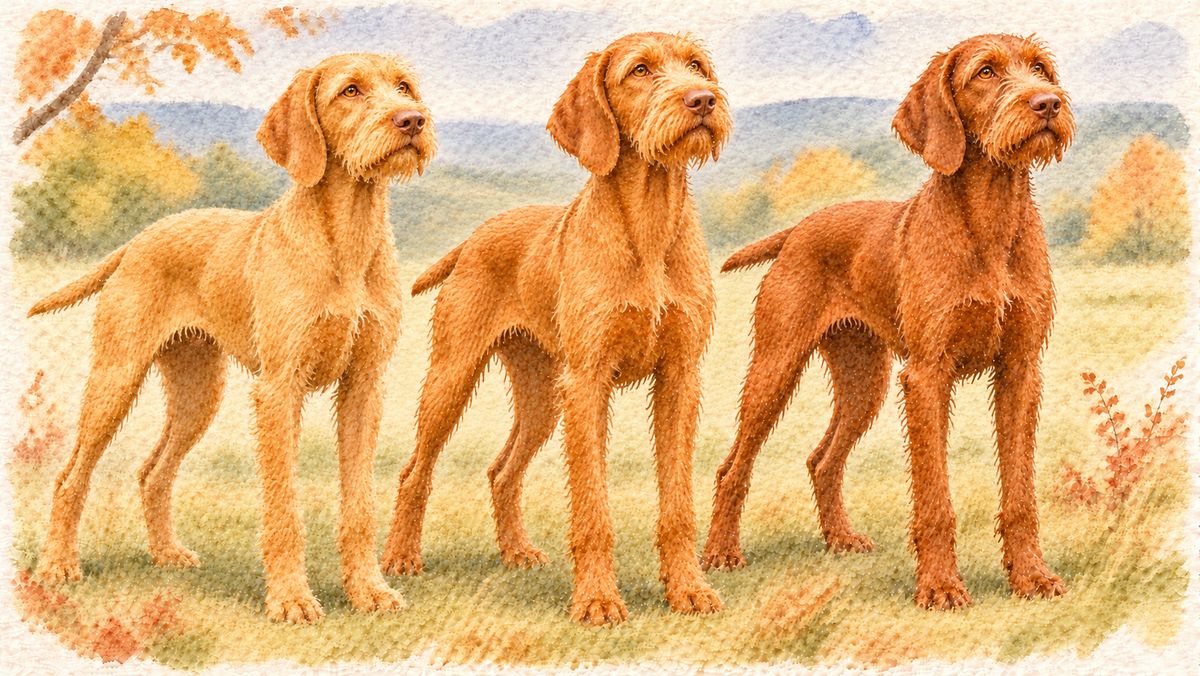
The coat is the main feature that sets this breed apart from its smooth-coated cousin. The outer coat is dense, wiry and close-lying, usually about an inch long. A thick undercoat keeps the dog warm and helps repel water. The hair forms a short beard, bushy eyebrows and slightly longer furnishings on the legs.
The only color is golden rust, which can range from lighter golden shades to deeper russet tones. Small white markings on the chest or toes are permitted. The nose, lips and eye rims should blend with the coat color rather than being black.
Wirehaired Vizsla Temperament and Personality
If you want an energetic dog that is also a loving companion, this breed is a great example. This breed is known for being:
- Loyal: These dogs form deep bonds with their families and like to stay close to their favorite people.
- Gentle and affectionate: At home, many are calm, sweet dogs that enjoy cuddling on the couch after exercise.
- Trainable: They are intelligent and eager to work with their owners.
- Confident: A well-bred dog of this breed is happy, steady and self-assured.
- Energetic: Bred for long days in the field, they have plenty of stamina and enthusiasm.
This is a sensitive breed that wants to be included in everything. It does not like being left alone for long periods and may become anxious, vocal or destructive if it is lonely or bored. Many will also bark to let you know someone is at the door.
Are Wirehaired Vizslas Good With Kids and Other Pets?
Yes, they are usually excellent family dogs. Their gentle, playful nature makes them good companions for children, especially active older kids. Because they are energetic and strong, supervise play with younger children so no one gets knocked over.
They are generally friendly with other dogs. As bird dogs with a hunting instinct, they may be very interested in pet birds, rabbits or other small animals, so careful introductions and supervision are important.
Early socialization helps a Wirehaired Vizsla puppy grow into a well-mannered, confident adult. Introduce your puppy to many people, places, sounds and calm, friendly dogs.
Training a Wirehaired Vizsla
This breed is intelligent, cooperative and quick to learn, which makes it a joy to train for many owners. However, it is also sensitive, so harsh words or rough corrections can damage its confidence. Gentle, positive, reward-based training is the best approach.
Here are a few training tips for owners:
- Start early. Begin house-training, crate training and basic cues as soon as your puppy comes home.
- Keep it positive. Use praise, treats and play to reward good behavior.
- Make recall a priority. Squirrels and birds can be very distracting, so practice coming when called in safe, enclosed areas.
- Give them a job. Retrieving, scent games and field work keep this working breed mentally satisfied.
- Try dog sports. Hunting tests, tracking, agility, obedience, rally and dock diving are all great outlets.

Wirehaired Vizsla Exercise Needs
The Wirehaired Vizsla is a high-energy breed that needs vigorous exercise every day. Plan on at least an hour, and ideally more, of activities such as running, hiking, swimming, retrieving or off-leash play in a safe, enclosed space.
This breed makes an excellent partner for joggers, hikers and anyone who loves the outdoors. Many enjoy water and are strong swimmers. Mental challenges, such as puzzle toys, scent work and training games, are just as important as physical exercise.
A home with a securely fenced yard and access to open spaces is ideal. A dog that doesn't get enough activity may become restless and find its own entertainment, which often means chewing, digging or barking.
Wirehaired Vizsla Grooming
Do Wirehaired Vizslas Shed?
They shed a moderate amount, with heavier shedding at certain times of year as the undercoat turns over. Regular brushing helps keep loose hair under control. Like all dogs, they are not truly hypoallergenic.
Grooming Routine
- Brushing: Brush the coat once or twice a week to remove loose hair and keep it healthy.
- Bathing: Bathe only occasionally, when the dog is dirty or smelly, to protect the coat's natural oils and water resistance.
- Stripping: Some owners occasionally strip dead hair by hand to keep the coat tidy, but the breed should look natural.
- After outings: Check the coat, paws and ears for burrs, seeds, ticks and small cuts after time in fields or woods.
- Ears: Keep the ears clean and dry, especially after swimming.
- Nails and teeth: Trim nails every few weeks and brush teeth several times a week.

Wirehaired Vizsla Health and Lifespan
The Wirehaired Vizsla is generally a healthy breed, with an average lifespan of about 12 to 14 years. Like all breeds, it can be prone to certain conditions. Responsible breeders screen their dogs for concerns that may include:
- Hip dysplasia: An abnormal formation of the hip joint that can cause discomfort and arthritis.
- Elbow dysplasia: Abnormal development of the elbow joint.
- Hyperuricosuria: A condition that can cause bladder or kidney stones; a DNA test is available.
- Eye conditions: Regular eye checks help catch problems early.
Keeping your dog lean and active supports healthy joints throughout life. Always work with your veterinarian on a schedule of checkups, vaccinations and preventive care, and ask breeders for health screening results before choosing a puppy.
Feeding and Nutrition
This breed needs a high-quality, complete and balanced dog food suited to its age, size and activity level. Working and very active dogs may need more calories, especially during hunting season, while less active pets need smaller portions to avoid weight gain.
Puppies should eat a food made for growing puppies to support healthy development. Most adults do well with two meals a day. Follow the feeding guide on the package and ask your veterinarian for advice on portions. Check your dog's body condition regularly, keep treats to a small share of daily calories and always provide fresh water.
History of the Wirehaired Vizsla
The Wirehaired Vizsla's story begins with the smooth-coated Vizsla, an ancient Hungarian hunting dog prized by the nobility for centuries. The smooth Vizsla was a superb hunter, but its short coat offered little protection in cold weather, icy water and thick cover.
In the 1930s, Hungarian hunters and breeders set out to create a Vizsla with a tougher coat. They crossed smooth Vizslas with German Wirehaired Pointers, and other breeds may have played a smaller role. The goal was a dog with the Vizsla's color, temperament and hunting talent, plus a dense, weatherproof wire coat.
The new breed proved itself in the field and gained international recognition in the 1960s. Wirehaired Vizslas arrived in North America later in the 20th century, and the American Kennel Club officially recognized the breed in the Sporting Group in 2014.
Wirehaired Vizsla vs Vizsla
The Wirehaired Vizsla and the Vizsla share the same golden-rust color, Hungarian roots and affectionate nature, but they are separate breeds. The Wirehaired Vizsla is slightly larger and heavier-boned, with a wiry coat, beard and eyebrows that protect it in cold, wet conditions. The smooth Vizsla has a short, sleek coat and a lighter, more refined build.
Is a Wirehaired Vizsla Right for You?
A Wirehaired Vizsla could be a wonderful match if you:
- Love running, hiking, swimming or hunting
- Want a loyal, affectionate dog that wants to be with you
- Have time for daily vigorous exercise and training
- Have a home with a yard and access to open spaces
- Enjoy positive training and dog sports
- Have children who love playing outdoors
A Wirehaired Vizsla may not be the best fit if you:
- Are away from home for long hours most days
- Live in a small apartment in a busy city with little green space
- Want a low-energy dog
- Keep pet birds or other small animals
Finding a Wirehaired Vizsla Puppy
Because the breed is still uncommon, you may need to join a waiting list for a puppy from a reputable breeder. Look for breeders who health-test parent dogs, raise puppies in a home environment and can tell you about the parents' temperament and working ability. Breed clubs and rescue groups are also worth contacting.
Fun Facts About the Wirehaired Vizsla
- The breed was developed in Hungary in the 1930s by crossing Vizslas with German Wirehaired Pointers.
- In its homeland, the breed is often called the Hungarian Wirehaired Vizsla.
- The AKC recognized the Wirehaired Vizsla in 2014, making it a relatively new breed in the United States.
- Its nose, lips and eye rims blend with its golden-rust coat.
- The wiry coat and undercoat help it work in icy water and harsh weather.
- They are skilled swimmers and enthusiastic water retrievers.
Frequently Asked Questions
How big do Wirehaired Vizslas get?
Males stand about 23 to 25 inches tall and females about 21.5 to 23 inches. Most adults weigh roughly 45 to 65 pounds.
Do Wirehaired Vizslas shed?
Yes, they shed a moderate amount, with seasonal increases. Weekly brushing helps manage loose hair.
Are Wirehaired Vizslas good family dogs?
Yes. They are loyal, gentle and affectionate, and they usually do very well with children in active families that can meet their exercise needs.
How long do Wirehaired Vizslas live?
The average Wirehaired Vizsla lifespan is about 12 to 14 years with good care, a balanced diet and regular veterinary checkups.
What is the difference between a Vizsla and a Wirehaired Vizsla?
They are separate breeds. The Wirehaired Vizsla has a dense wire coat with a beard and eyebrows and is slightly sturdier, while the Vizsla has a short, smooth coat.
Can a Wirehaired Vizsla be left alone?
This breed is very people-focused and does not like being left alone for long periods. Training can help, but it suits homes where someone is around for much of the day.
Final Thoughts
The Wirehaired Vizsla combines the heart of a devoted family dog with the drive of a tireless hunting partner. With its golden-rust wire coat, gentle nature and boundless energy, it thrives in active homes that love the outdoors. If you can offer daily exercise, kind training and plenty of companionship, a Wirehaired Vizsla may become your most loyal friend.