The Pug is one of the most lovable toy breeds in the world, famous for its wrinkled forehead, curly tail and big, soulful eyes. This little dog has charmed emperors, royals and everyday families for centuries. Its playful spirit and deep devotion to its people have earned it a reputation as the clown of the dog world.
Few breeds pack so much personality into such a compact body. In this complete dog breed guide, you will learn everything you need to know before bringing one home, including size, temperament, shedding, grooming, exercise, health concerns, diet tips and a history that stretches back about 2,000 years.
Pug at a Glance
| Trait | Details |
|---|---|
| Breed group | Toy (AKC) |
| Height | 10 to 13 inches (25 to 33 cm) |
| Weight | 14 to 18 pounds (6.4 to 8.2 kg) |
| Life expectancy | 13 to 15 years |
| Coat | Short, smooth, fine |
| Colors | Fawn with a black mask, or solid black |
| Shedding | Heavy; year-round |
| Energy level | Low to moderate |
| Temperament | Charming, loving, playful, even-tempered |
| Good for | Families, seniors, apartment living |
| Origin | China (ancient) |
What Is a Pug?
This is a small companion breed that was developed in ancient China as a lapdog for the imperial court. Unlike many breeds that were created to hunt, herd or guard, its only real job has always been to keep people company. It does that job extremely well.
Today, the breed is a member of the American Kennel Club's Toy Group and is one of the most recognizable dogs on the planet. Its Latin motto, multum in parvo, means "a lot in a little," and anyone who has lived with one will tell you that it fits perfectly.
Pug Size and Appearance
How Big Do Pugs Get?
Adults usually stand 10 to 13 inches tall at the shoulder and weigh 14 to 18 pounds. Although they are classed as a toy breed, they feel solid and muscular when you pick them up.
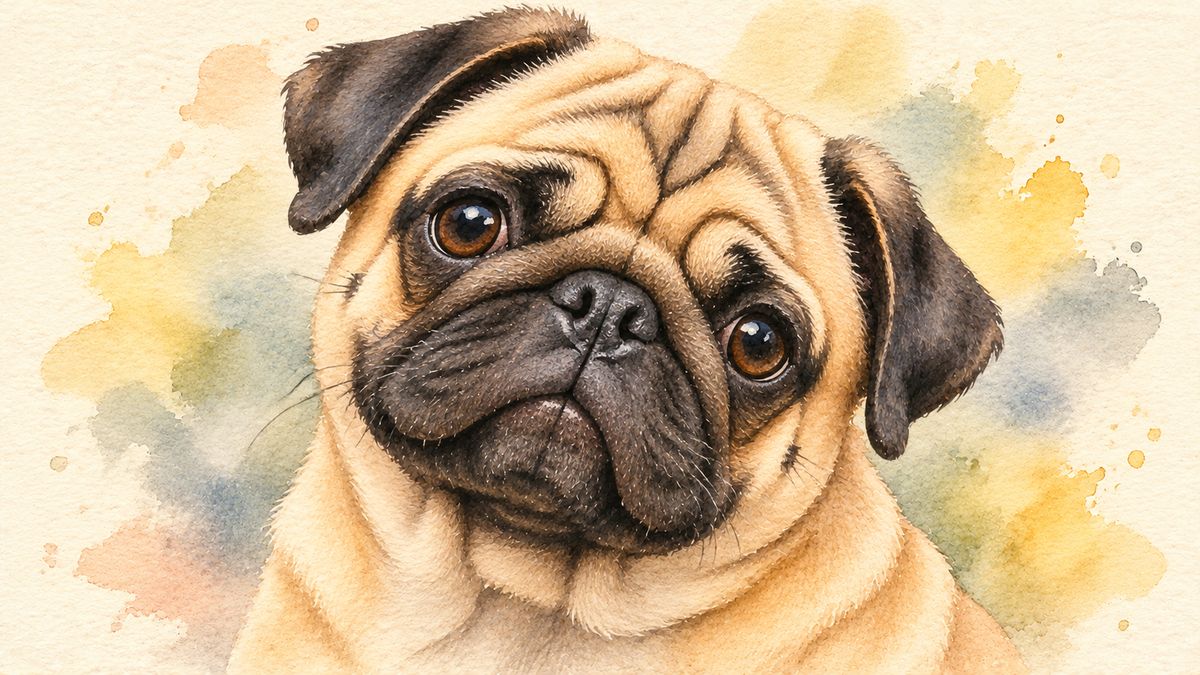
The body is square and cobby, with a deep chest and sturdy legs. The head is large and round, with a short, flat muzzle and deep wrinkles across the face. Small, thin ears fold forward or to the side, and the tail curls tightly over the hip. Some say the name may come from that quizzical facial expression, while others link it to the Latin word pugnus, meaning "fist," since the face can resemble a clenched fist.
Coat and Colors
The coat is short, smooth and soft to the touch. It looks low maintenance, and in many ways it is, but it sheds more than many people expect.
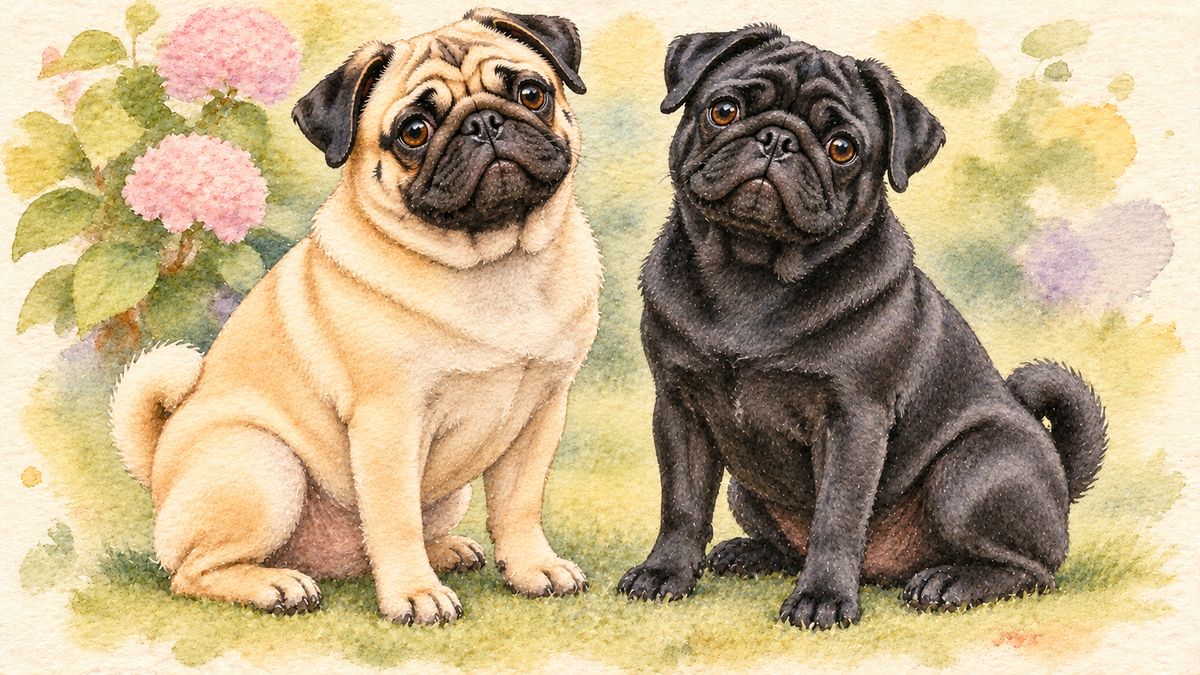
The most familiar color is fawn with a black "mask" on the face and black ears. Many dogs also have a dark line, called a trace, running down the back. Solid black is the other well-known color and has a sleek, glossy look.
Pug Temperament and Personality
The Pug temperament is a big part of the breed's worldwide appeal. These dogs are known for being:
- Charming: Their comical faces and funny habits make almost everyone smile.
- Loving: They adore their people and want to be close to them as much as possible.
- Mischievous: A playful, cheeky streak keeps life interesting at home.
- Even-tempered: They tend to be calm, steady and easygoing.
- Outgoing: Most are friendly with strangers and happy to greet guests.
Because they were bred purely for companionship, these dogs do not like being left alone for long periods. They often follow their owners from room to room and are happiest curled up on a lap or beside you on the couch. Some people call them "shadows" for this reason.
Are Pugs Good Family Dogs?
Yes, Pugs are generally excellent family dogs. They are sturdy for their size, patient and affectionate, which makes them a good fit for families with children who know how to treat a dog gently.
They usually get along well with other dogs and even cats, especially when raised together. Their adaptable nature means they can thrive in the city or the country, in a busy household or with a single owner. As with any breed, early socialization helps a puppy grow into a confident, well-mannered adult.
Training a Pug
These dogs are generally easy to train because they are eager to please and highly motivated by food. However, they are sensitive, so harsh words or corrections can make them shut down. Gentle, positive training with praise and small treats works best.
Here are a few training tips for new owners:
- Start early. Begin socialization and basic cues as soon as your puppy arrives.
- Use treats wisely. Food is a great motivator, but use tiny pieces and count them in the daily diet.
- Be patient with house-training. Small breeds can take a little longer, so keep a regular schedule.
- Keep sessions short and fun. A few minutes of training several times a day keeps your dog interested.
- Try dog sports. Many enjoy obedience, rally obedience and even agility at a relaxed pace.
Exercise Needs
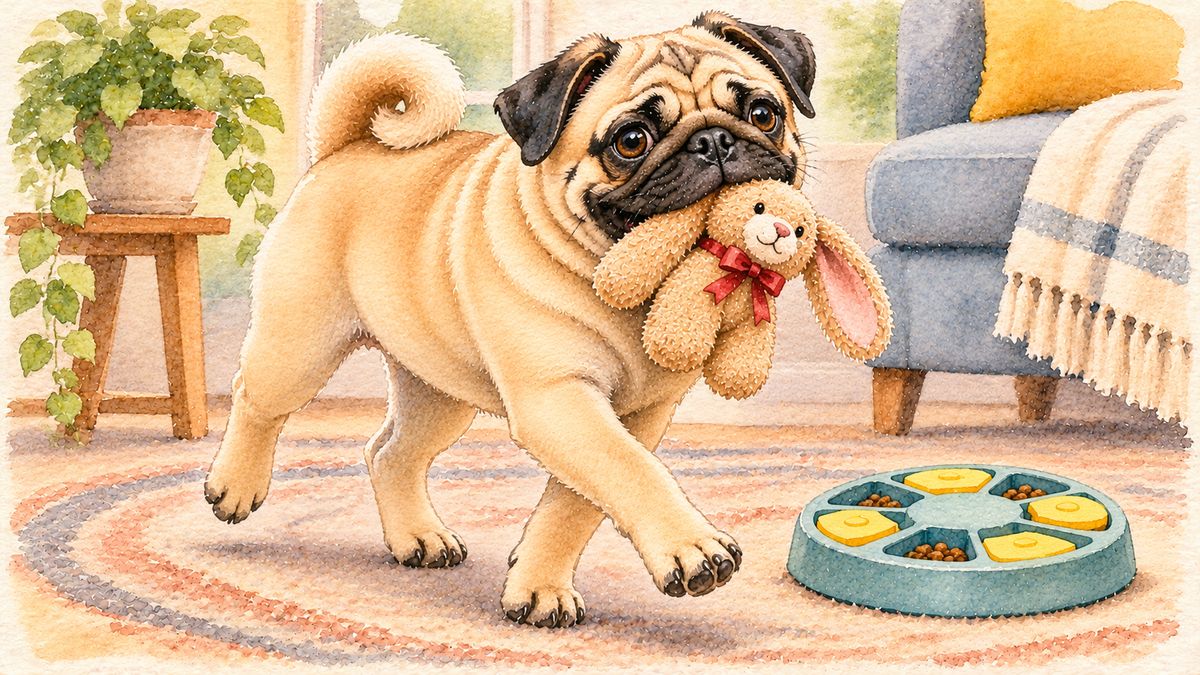
The breed has a fairly low energy level, but daily activity is still important. A couple of short walks each day and some indoor play are usually enough. Regular exercise helps prevent weight gain, which is a common problem in this food-loving breed.
Heat is the biggest concern. Because of their flat faces, these dogs do not cool down efficiently and can overheat quickly in hot or humid weather. Walk them in the early morning or evening during summer, keep outings short, provide shade and water, and never leave them in a parked car.
Can Pugs Live in Apartments?
Yes, Pugs are one of the best breeds for apartment living. They are small, fairly quiet and content with short outings, as long as they get daily walks and plenty of attention.
They also tend to be gentle with neighbors and visitors, and they rarely need a large yard. Climate control matters more than square footage, so a cool, comfortable home is ideal in summer, and a sweater can help on very cold winter walks.
Short games of fetch, gentle tug and food puzzle toys are good ways to add fun and mental stimulation to the day.
Pug Grooming
Do Pugs Shed?
Yes, Pugs shed quite a lot for such a small dog. Their short coat sheds throughout the year, with heavier shedding during seasonal changes, so expect to find fine hairs on furniture and clothing.
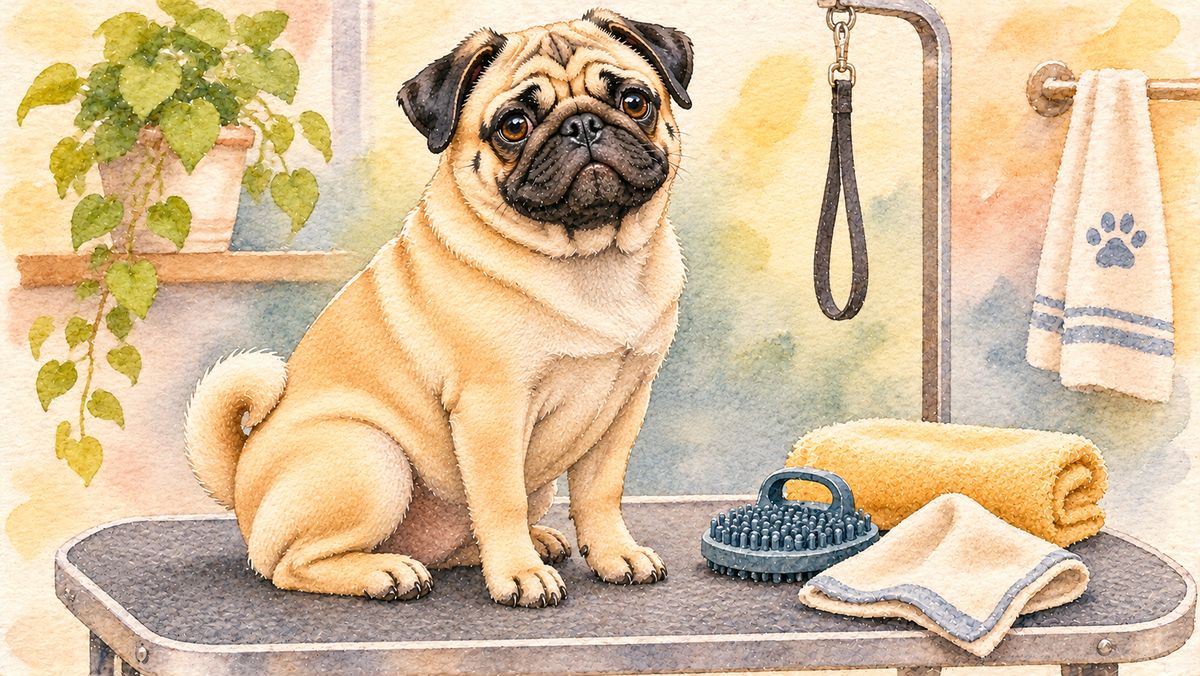
The good news is that grooming is simple. Regular brushing removes loose hair and keeps the coat shiny.
Grooming Routine
- Brushing: Brush at least once a week, or more often during heavy shedding seasons. A rubber curry brush or soft bristle brush works well.
- Wrinkle care: Gently wipe and dry the facial folds a few times a week to keep them clean.
- Eyes: Check the eyes daily. Their prominent eyes can be prone to irritation and injury, so contact your vet if you notice redness, cloudiness or squinting.
- Bathing: Bathe about once a month or as needed, and dry the wrinkles thoroughly afterward.
- Nails: Trim nails every few weeks.
- Teeth: Brush teeth several times a week, since small mouths are prone to dental problems.
Pug Health and Lifespan
The typical Pug lifespan is 13 to 15 years. Like all breeds, they can be prone to certain health conditions, and their flat face brings some special considerations. Responsible breeders screen their dogs, and owners should be aware of:
- Breathing problems: As a flat-faced (brachycephalic) breed, they can have trouble breathing, especially in heat and humidity. Snoring and snorting are common.
- Eye problems: Corneal ulcers and dry eye are among the eye issues seen in the breed.
- Obesity: A big appetite and a love of the couch can lead to weight gain, which adds stress to the body and breathing.
- Joint problems: Hip and knee issues can occur, as in many small breeds.
Keeping your dog lean, cool and comfortable goes a long way toward a healthy life. Always work with your veterinarian on regular checkups, vaccinations and preventive care, and ask for advice about any concerns.
Feeding and Nutrition
A high-quality small-breed dog food helps maintain an ideal body condition. Small-breed formulas offer smaller kibble and are designed with the needs of little dogs in mind.
Puppies should eat a food made for puppies. Formulas with DHA support brain and vision development, while antioxidants support the immune system. Measure meals carefully, follow the feeding guide on the package and ask your veterinarian how much your dog should eat. Because this breed loves food so much, it is wise to keep treats small and limit table scraps.
History of the Pug
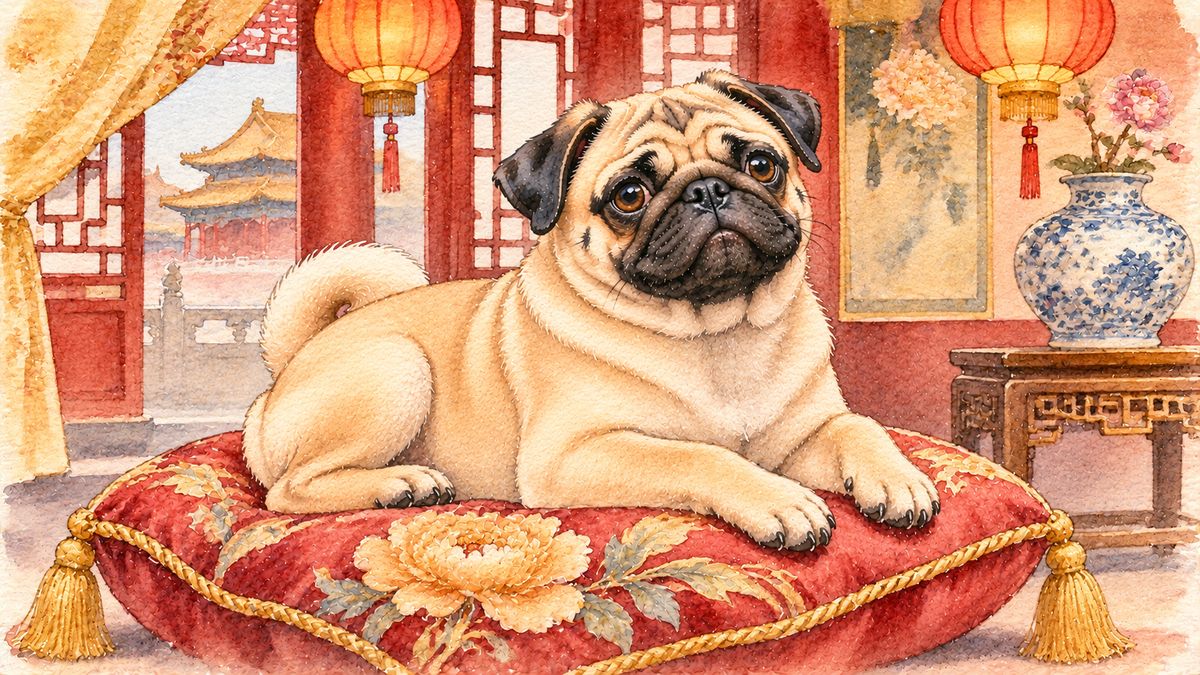
This is an ancient breed with roots in China going back about 2,000 years. These little dogs were treasured by Chinese emperors and lived in luxury, sometimes even guarded by soldiers. In China, the breed was known as Lo-sze.
Dutch traders brought the dogs to Europe in the 1500s, and they quickly became favorites of the nobility. In the Netherlands, the breed became the mascot of the royal House of Orange. A famous story says that a small dog named Pompey saved William the Silent, Prince of Orange, by sounding the alarm when assassins approached his tent in 1572.
When William and Mary came from the Netherlands to take the British throne in 1689, they brought their dogs with them, and the breed became fashionable in Britain. It later spread across Europe under many names, including Mops in Germany, Mopsi in Finland and Doguillo in Spain. Napoleon's wife, Josephine, famously owned one named Fortune.
The American Kennel Club recognized the breed in 1885. In 1981, a fawn dog named Dhandys Favorite Woodchuck won Best in Show at the Westminster Kennel Club Dog Show, a rare win for the breed.
Pug vs French Bulldog
People often compare the Pug with the French Bulldog, since both are small, flat-faced companion breeds. Frenchies are usually heavier, have large bat-like ears and come in more colors. Pugs are a bit smaller, have folded ears and a curly tail, and are often described as even more people-focused. Both breeds need careful protection from heat.
Is a Pug Right for You?
A Pug could be a wonderful match if you:
- Want an affectionate companion that loves to be close to you
- Live in an apartment, condo or smaller home
- Prefer a dog with modest exercise needs
- Have children who can handle a dog gently
- Are home often or can bring your dog along
This breed may not be the best fit if you:
- Want a running or hiking partner for long, hot days
- Live in a very hot climate without air conditioning
- Want a low-shedding dog
- Are away from home for long hours every day
Finding a Pug Puppy
When looking for a Pug puppy, choose a reputable breeder who health-tests parent dogs, raises puppies in a home environment and is open about any breathing or eye concerns in the line. Ask to meet the parents if possible. Rescue groups and breed clubs are also a great place to find adult dogs looking for loving homes.
Fun Facts About the Pug
- The breed's Latin motto, multum in parvo, means "a lot in a little."
- These dogs date back about 2,000 years to the courts of Chinese emperors.
- A dog of this breed became the mascot of the Dutch House of Orange.
- In China, the breed was called Lo-sze; in Finland it is Mopsi and in Spain, Doguillo.
- A group of these dogs is sometimes jokingly called a "grumble."
- Dhandys Favorite Woodchuck won Best in Show at Westminster in 1981.
Frequently Asked Questions
How big do Pugs get?
Adults usually stand 10 to 13 inches tall at the shoulder and weigh 14 to 18 pounds, making them a sturdy toy breed.
Do Pugs shed a lot?
Yes, they shed more than many people expect. Weekly brushing, and more frequent brushing in shedding season, helps keep loose hair under control.
Are Pugs good with kids?
Yes, they are sturdy, patient and affectionate, which makes them good companions for children who handle them gently. Always supervise young kids with any dog.
How long do Pugs live?
The average lifespan is 13 to 15 years with good care, a healthy weight and regular veterinary checkups.
Can Pugs handle hot weather?
No, they are sensitive to heat and humidity because of their flat faces. Keep them cool, limit exercise on hot days and never leave them in a car.
Are Pugs easy to train?
They are generally easy to train because they are eager to please and love treats. Use gentle, positive methods, since they are sensitive to harsh corrections.
Final Thoughts
The Pug truly lives up to its motto of "a lot in a little." With a loving heart, a funny personality and modest exercise needs, it makes a delightful companion for families, singles and seniors alike. If you can keep it cool, fit and close by your side, a Pug will reward you with years of laughter and loyalty.