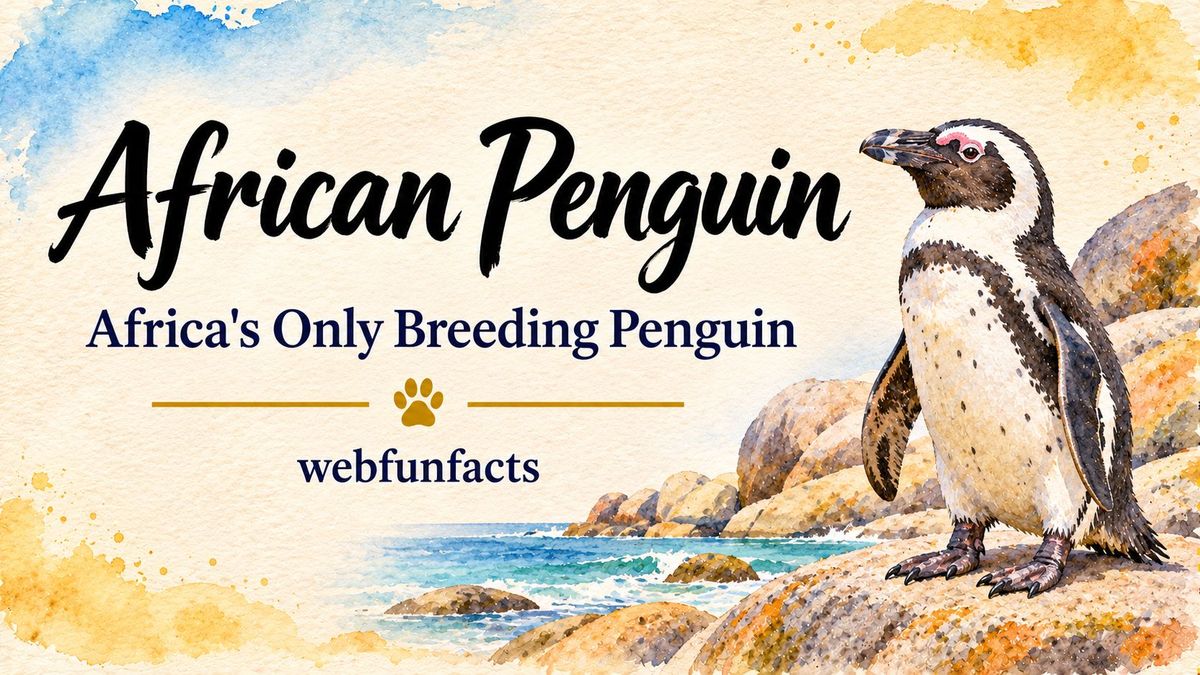
The African penguin is the only penguin species that breeds on the African continent, and it is one of the most charming seabirds in the world. With its black-and-white tuxedo, pink eye patches and loud, donkey-like bray, it looks and sounds like no other bird on the southern coasts of Africa. Visitors to the beaches near Cape Town often find it hard to believe that penguins live in warm, sunny Africa at all.
Sadly, this beloved bird is in serious trouble. Its numbers have dropped dramatically over the last century, and conservationists now rank it among the most threatened seabirds on Earth. In this complete guide, you will learn what an African penguin is, where it lives, what it eats, how it raises its chicks, why it is declining and what people are doing to help it survive.
Quick answer: The African penguin (Spheniscus demersus) is a medium-sized, black-and-white penguin that lives and breeds along the coasts and islands of South Africa and Namibia. It stands about 60 to 70 cm (24 to 28 in) tall, weighs roughly 2.2 to 3.5 kg (5 to 7.7 lb), and eats small schooling fish such as sardines and anchovies. The IUCN lists it as Critically Endangered.
African Penguin at a Glance
| Feature | Details |
|---|---|
| Scientific name | Spheniscus demersus |
| Class | Aves |
| Order | Sphenisciformes |
| Family | Spheniscidae |
| Height | About 24 to 28 inches (60 to 70 cm) |
| Weight | About 5 to 7.7 pounds (2.2 to 3.5 kg) |
| Lifespan | Roughly 10 to 20 years in the wild; sometimes longer in human care |
| Diet | Sardines, anchovies, other small fish, squid and crustaceans |
| Habitat | Coastal waters, rocky islands and sandy beaches |
| Range | Southwestern coast of Africa, from Namibia to South Africa |
| Other names | Jackass penguin, black-footed penguin, Cape penguin |
| Conservation status | Critically Endangered (IUCN) |
What Is an African Penguin?
The African penguin is a flightless seabird belonging to the genus Spheniscus, often called the banded penguins. Its closest relatives are the Humboldt penguin of Peru and Chile, the Magellanic penguin of southern South America and the Galapagos penguin. All of these penguins live in warmer climates than the famous emperor and Adelie penguins of Antarctica.
The species has several nicknames. It has long been called the "jackass penguin" because its loud, braying call sounds strikingly like a donkey. It is also known as the black-footed penguin and the Cape penguin. Many people now prefer the name African penguin, which is its official common name.
Like all penguins, it is a bird that has traded flight for swimming. Its wings have become stiff, paddle-shaped flippers, and its body is shaped like a torpedo. On land it waddles, but in the water it is fast, agile and graceful.
What Does an African Penguin Look Like?
African penguins are easy to recognize, and every single bird has its own unique look.
Size and Shape
An adult African penguin stands roughly 24 to 28 inches (60 to 70 cm) tall and weighs between 2.2 and 3.5 kg (5 to 7.7 lb). Males are slightly larger than females, and their bills are a little longer and thicker.
Black-and-White Plumage
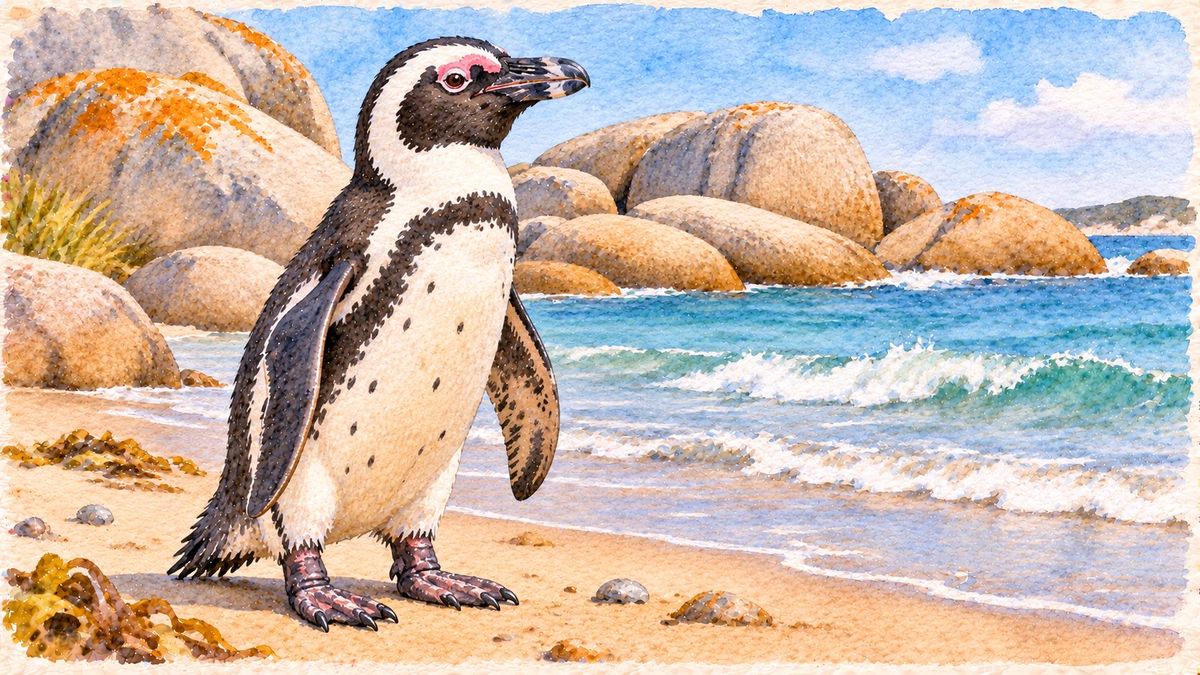
The back is black and the belly is white, a pattern called countershading that helps hide the bird in the water. From above, a predator sees a dark shape against the dark sea. From below, the pale belly blends in with the bright surface. A black stripe in the shape of an upside-down horseshoe runs across the chest and down the sides of the body.
Spots and Pink Patches
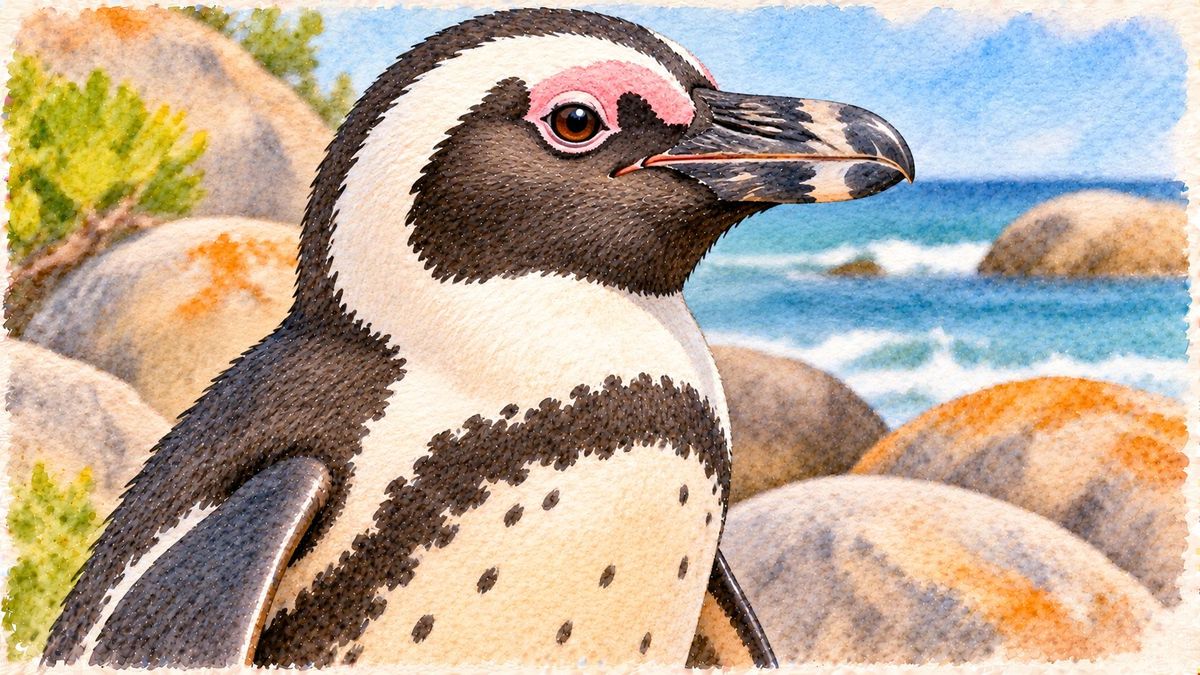
Each African penguin has its own pattern of black spots on its white chest, much like a fingerprint. Researchers can use these patterns to identify individual birds. Above each eye is a patch of bare pink skin. These patches contain many blood vessels, and when the bird gets too warm, more blood flows to them so that heat can escape. In hot weather, the patches become a darker pink.
Flippers, Feet and Bill
The flippers are narrow and stiff, perfect for "flying" underwater. The feet are black with pink or pale blotches, and have strong claws for gripping rock and digging nests. The bill is black with a pale band, and is strong enough to catch slippery fish.
What Do Baby African Penguins Look Like?
Newly hatched chicks are covered in soft gray down. As they grow, they develop a bluish-gray juvenile plumage without the black chest band, and they lack the full face pattern of adults. It takes a couple of years before young birds develop their adult look.
Where Do African Penguins Live?
African penguins live along the southwestern coast of Africa, in the cold, nutrient-rich waters of the Benguela Current. They breed on islands and a few mainland sites in Namibia and South Africa, and they travel at sea in search of fish.
Their main habitats include:
- Rocky offshore islands, free of land predators
- Sandy beaches and coastal dunes
- A few protected mainland colonies, such as Boulders Beach near Cape Town and Stony Point
- Cold coastal waters, where small fish gather in large shoals
The Benguela Current brings cool temperatures and rich food, which is what allows penguins to thrive in a part of the world with a warm, dry climate. Some well-known colonies include Dyer Island, Dassen Island, Robben Island and St Croix Island. Penguins sometimes wander far from their colonies, and a few have been found as far north as Gabon and as far east as Mozambique.
What Do African Penguins Eat?
African penguins are carnivores and feed almost entirely on fish and small sea animals.
Main Foods
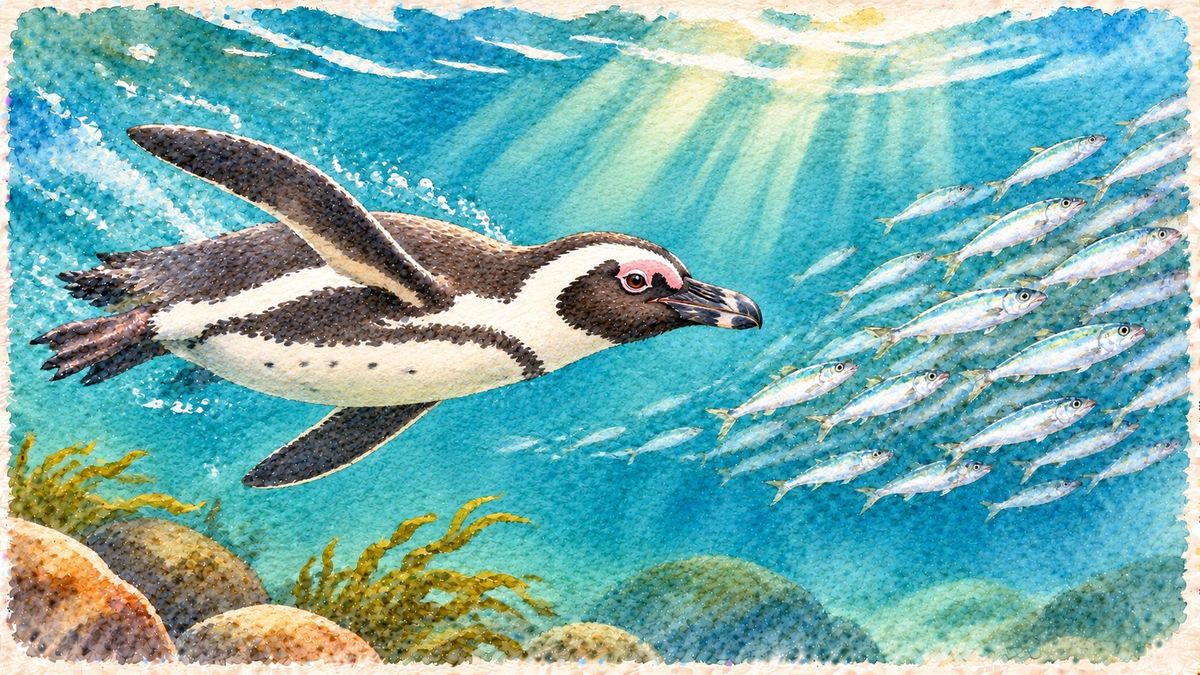
Their main foods are small, oily schooling fish, especially sardines (also called pilchards) and anchovies. They also eat:
- Horse mackerel and other small fish
- Squid
- Small crustaceans such as shrimp-like krill
How They Hunt
African penguins hunt by swimming underwater and chasing fish in pursuit dives. They can swim at speeds of several miles per hour and usually dive to modest depths, though they are capable of going deeper. They snatch their prey in their bills and swallow it whole, often while still swimming. Barbs on the tongue and the roof of the mouth help hold slippery fish in place.
Penguins often forage in groups and may follow shoals of fish for many miles. During breeding, adults usually stay within a day's trip of the colony so they can come back and feed their chicks.
How Much Do They Eat?
An adult can eat a significant amount of fish each day, and parents with chicks need even more. This makes the availability of sardines and anchovies extremely important to the survival of the species.
African Penguin Behavior and Lifestyle
Social Seabirds
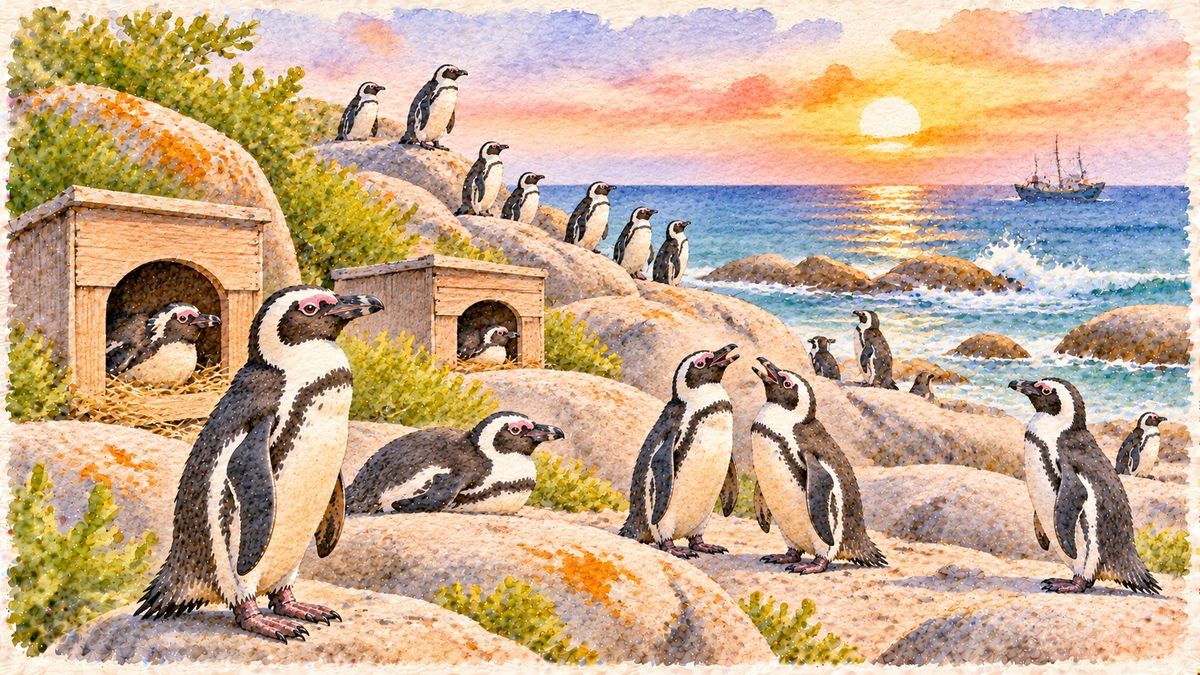
African penguins are social birds that live in colonies. They nest, rest and often swim together. They are also very noisy. Their calls include loud brays used to attract mates and find each other in the crowd, as well as softer calls used between pairs and chicks.
Staying Cool
Unlike Antarctic penguins, African penguins have to avoid overheating. They do this by:
- Resting in burrows or in the shade of rocks and bushes
- Swimming in the cool ocean
- Panting and holding their flippers away from the body
- Sending more blood to the bare skin patches above the eyes
Molting
Once a year, adult penguins go through a "catastrophic molt," replacing all their feathers in about three weeks. During this time, their feathers are not waterproof, so they cannot go to sea to feed. They must stand on land and fast, living on the fat they built up beforehand. This period is a vulnerable time for the birds.
Swimming and Preening
Penguins spend a great deal of time preening, spreading oil from a gland near the tail over their feathers to keep them waterproof. Good waterproofing is essential, since a bird with damaged feathers can quickly lose body heat in cold water.
African Penguin Reproduction and Chicks
African penguins are generally monogamous, and many pairs stay together for several breeding seasons. They return to the same colony, and often the same nest site, year after year. Breeding can happen at almost any time of year, although the timing varies between colonies.
Nests
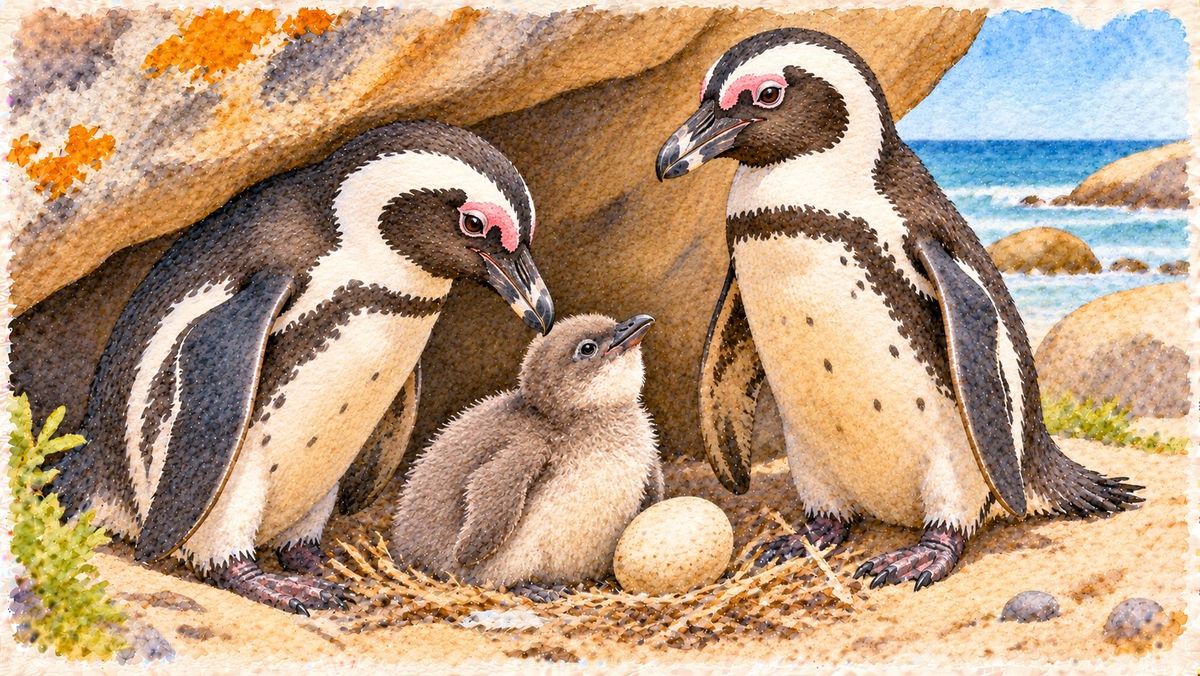
Unlike many penguins, African penguins often nest in burrows. In the past, they dug into thick layers of guano, the droppings of seabirds that built up on islands. Because most guano has been removed by people, many penguins now nest in shallow scrapes in the sand, under bushes, between boulders or in artificial nest boxes provided by conservationists. Shelter helps protect eggs and chicks from heat and predators.
Eggs and Chicks
The female usually lays two eggs, and both parents take turns incubating them for about five to six weeks. When the chicks hatch, they are fed by both parents with regurgitated fish. Chicks are guarded at first, then left in small groups called crèches as they grow. They are ready to go to sea at about two to four months old, depending on conditions.
Young penguins often spend a year or more at sea before returning to their colony. They usually begin breeding when they are around four to six years old.
How Long Do African Penguins Live?
African penguins can live about 10 to 20 years in the wild, although survival depends heavily on food supply and protection from threats. Birds in zoos and rehabilitation centers have lived into their twenties and, in some cases, beyond.
Predators and Threats
African penguins are hunted by both sea and land predators. At sea, their enemies include:
- Cape fur seals
- Sharks
- Orcas
On land, eggs and chicks may be taken by:
- Kelp gulls and other seabirds
- Mongooses, genets and other mammals, where they can reach the colonies
- Domestic animals, in some mainland areas
Penguins use their speed in the water and their numbers in colonies to protect themselves, and adults will defend their nests with sharp pecks and bites.
Why African Penguins Are Important
African penguins are more than an attractive tourist draw. They are an important part of the marine ecosystem.
- Indicator species: Because they depend on sardines and anchovies, their numbers show the health of the ocean and its fish stocks.
- Food web link: They eat huge amounts of small fish and are in turn prey for seals, sharks and other predators.
- Nutrient cycling: Their droppings fertilize island soils and support plants and invertebrates.
- Tourism and education: Colonies like the one at Boulders Beach draw many visitors, bringing income to local communities and raising awareness about conservation.
Are African Penguins Endangered?
Yes. The African penguin is listed as Critically Endangered on the IUCN Red List, having been uplisted from Endangered in 2024. Its population has dropped by well over 95 percent from historical levels, and only roughly 10,000 breeding pairs, or fewer, are thought to remain in the wild today.
The main threats include:
- Food shortages: Competition with commercial fisheries for sardines and anchovies, and changes in where fish live, leave penguins with less to eat.
- Oil spills: Heavy shipping traffic around the Cape has led to spills that have oiled thousands of birds.
- Climate change: Warming seas and changing currents move fish away from breeding colonies.
- Egg collection and guano removal: In the past, huge numbers of eggs were harvested and guano was dug from islands, taking away nesting material.
- Disease and predators: Avian influenza, avian malaria and predators add extra pressure.
How Are People Helping?
Conservation groups, scientists and governments are working to save the species. Key efforts include:
- Closing fishing areas around major colonies so penguins have food near their nests
- Installing artificial nest boxes to give chicks shelter
- Rescuing, cleaning and releasing oiled birds
- Hand-rearing abandoned chicks, such as at rehabilitation centers in South Africa
- Monitoring colonies and studying how penguins find food
Fun Facts About African Penguins
- They are called jackass penguins. Their loud call sounds like a braying donkey.
- Each bird has unique spots. The pattern of spots on the chest is different for every penguin.
- They have built-in air conditioning. The pink patches above their eyes help release extra heat.
- They are Africa's only penguin. No other penguin species breeds on the African continent.
- They are fast swimmers. Their flippers and streamlined bodies make them excellent hunters.
- They molt all at once. The yearly feather change takes around three weeks on land.
- They have been rescued in huge numbers. In a famous 2000 oil spill, volunteers helped save tens of thousands of birds.
- They can nest in boxes. Artificial nests help protect eggs and chicks from sun and predators.
Frequently Asked Questions
Where do African penguins live? African penguins live along the coasts and islands of southwestern Africa, mostly in South Africa and Namibia, where cold ocean currents provide plenty of fish.
What do African penguins eat? They eat small schooling fish such as sardines and anchovies, plus squid and small crustaceans.
Why are African penguins called jackass penguins? They are called jackass penguins because their loud, braying call sounds like a donkey. Today, the name African penguin is preferred.
How big is an African penguin? An adult is about 60 to 70 cm (24 to 28 in) tall and weighs roughly 2.2 to 3.5 kg (5 to 7.7 lb).
Are African penguins endangered? Yes. They are listed as Critically Endangered by the IUCN because of food shortages, oil pollution, climate change and other threats.
Can you see African penguins in the wild? Yes. Visitors can see them at places such as Boulders Beach near Cape Town and Stony Point, as well as on some islands that offer boat trips. Visitors should keep a respectful distance and never touch or feed the birds.
Final Thoughts
The African penguin is a surprising and lovable reminder that penguins are not only creatures of the ice. Living in the warm sunshine of southern Africa, this noisy, spotted seabird has adapted to a unique corner of the world, but it now needs urgent help. By supporting sustainable fishing, protecting nesting sites and preventing pollution, people can still give this remarkable bird a future.