With its long, silky coat, bright eyes and confident little strut, the Yorkshire Terrier is one of the most recognizable dogs in the world. Fans simply call it the "Yorkie." This tiny terrier may weigh only a few pounds, but it has the bold heart of a much larger dog and a personality that fills any room.
The Yorkie has been one of America's most popular breeds for many years, and it is easy to see why. In this complete Yorkshire Terrier dog breed guide, you will learn everything you need to know before welcoming one into your home, including its size, temperament, grooming needs, exercise requirements, common health concerns, diet tips and surprising working-class history.
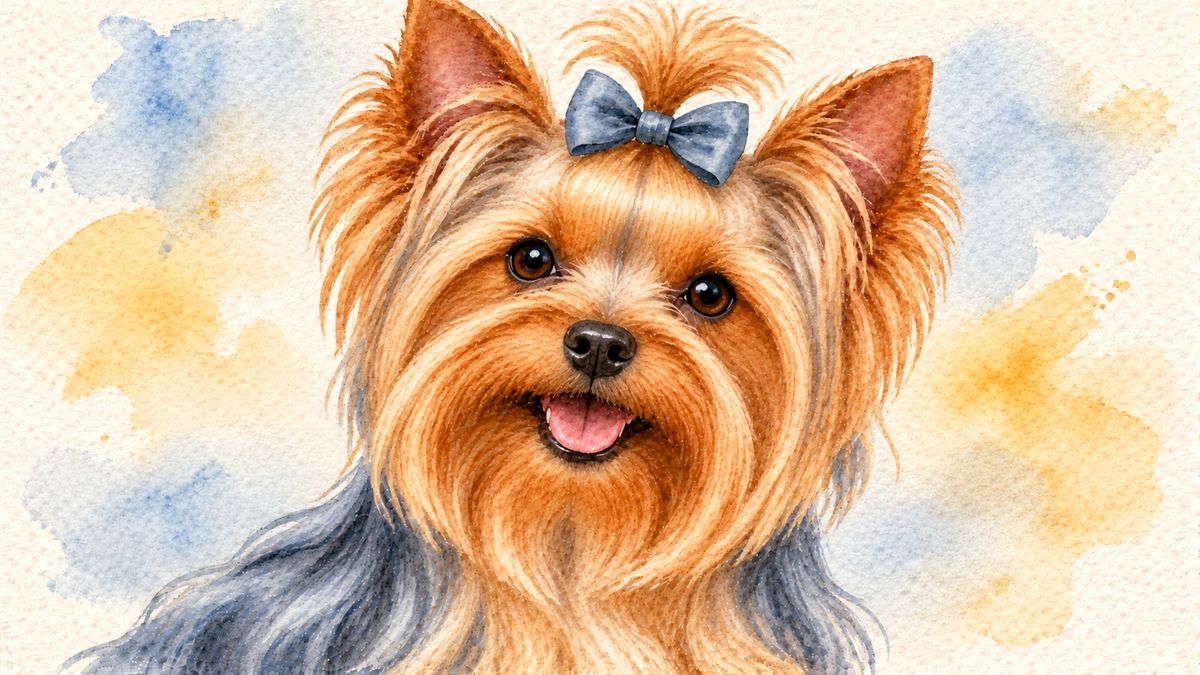
Yorkshire Terrier at a Glance
| Trait | Details |
|---|---|
| Breed group | Toy (AKC) |
| Height | About 7 to 8 inches (18 to 20 cm) |
| Weight | Up to 7 pounds (3.2 kg) |
| Life expectancy | 11 to 15 years |
| Coat | Long, fine, silky, straight single coat |
| Colors | Blue and tan, blue and gold, black and tan, black and gold |
| Shedding | Low |
| Energy level | High |
| Temperament | Bold, affectionate, brave, clever, protective |
| Good for | Apartments, adults, seniors, families with older kids |
| Origin | England (mid-1800s) |
What Is a Yorkshire Terrier?
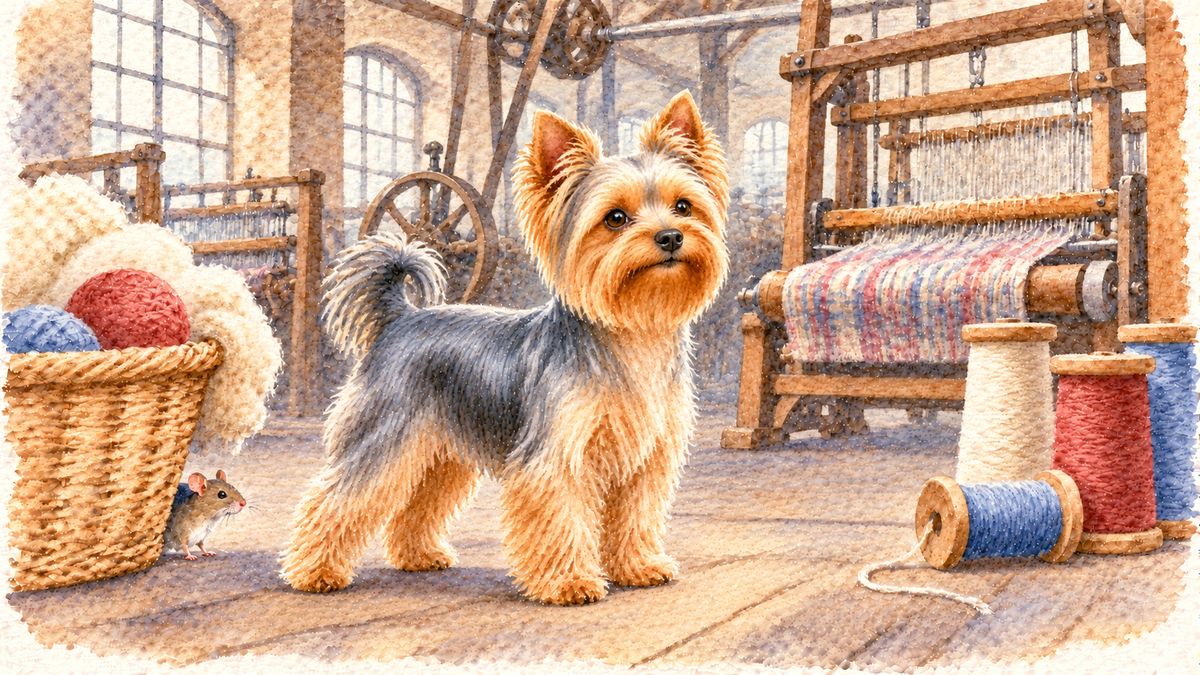
The Yorkshire Terrier is a toy breed that began life as a working terrier in northern England. Long before it was a lapdog, it earned its keep catching rats in textile mills and mines. Over time, breeders reduced its size and refined its glamorous coat, and the Yorkie became a fashionable companion.
Today, the Yorkie is a member of the American Kennel Club's Toy Group. It may sit happily on a cushion, but underneath it is still a true terrier: brave, curious, feisty and full of energy. Owners often say their Yorkie has no idea how small it is.
Yorkshire Terrier Size and Appearance
How Big Do Yorkshire Terriers Get?
Yorkies are among the smallest dog breeds. Adults usually stand about 7 to 8 inches tall at the shoulder and, according to the breed standard, should weigh no more than 7 pounds. Many pet Yorkies weigh between 4 and 7 pounds.
The breed has a compact, well-proportioned body and a level back. Its head is small and slightly flat on top, with a medium-length muzzle, dark sparkling eyes and small, V-shaped ears that stand upright. The Yorkie carries itself with a proud, confident air that makes it look larger than life.
Coat and Colors
The Yorkie's coat is its crowning glory. The hair is long, fine, glossy and silky, and it grows straight down the sides of the body. Unlike many breeds, the Yorkie has a single coat with no woolly undercoat, and the texture is often compared to human hair.
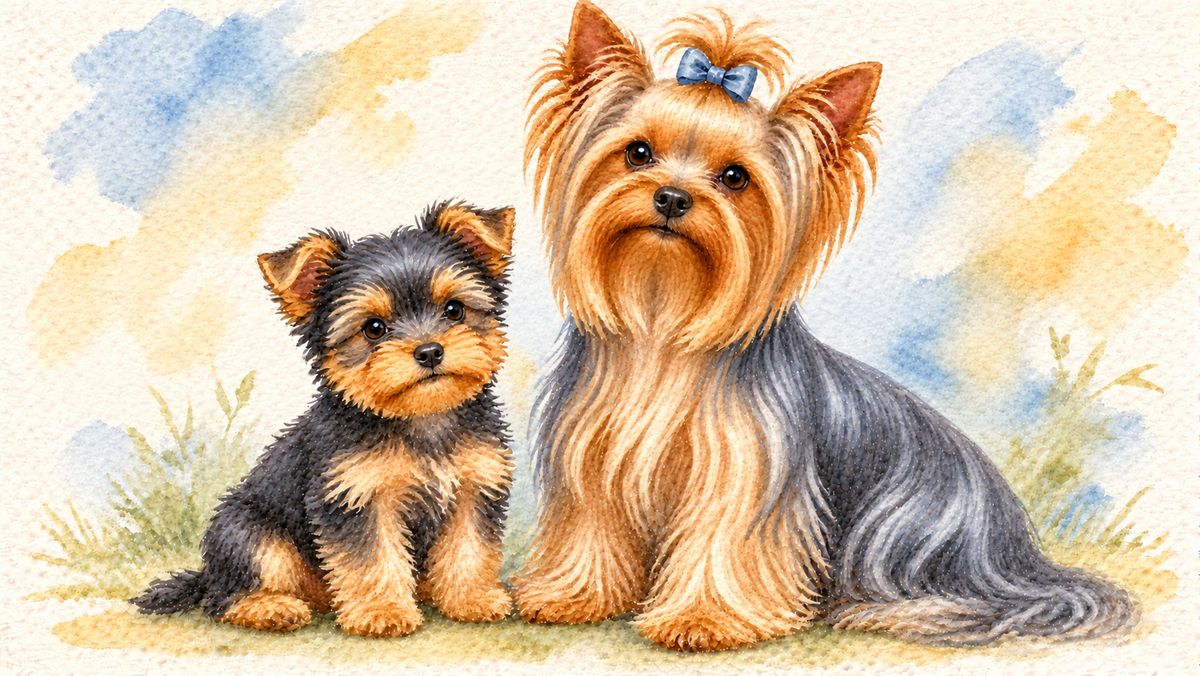
Yorkie puppies are born black and tan. As they mature, the black usually lightens to a steel blue, and the tan turns a rich gold. Adult colors include blue and tan, blue and gold, black and tan, and black and gold. The blue typically covers the body from the back of the neck to the tail, while the tan or gold appears on the head, chest and legs.
Yorkshire Terrier Temperament and Personality
If you want a tiny dog with a huge personality, the Yorkie delivers. This breed is known for being:
- Fearless: Yorkies are bold little dogs that will happily challenge a much larger dog, so owners must watch out for their safety.
- Affectionate: They love their people and enjoy cuddling, sitting on laps and following their owners around the house.
- Tenacious: True to their terrier roots, they are determined and persistent when something catches their interest.
- Protective: Yorkies are alert watchdogs that will bark to announce visitors, unusual sounds or passing animals.
- Clever: They are smart and quick to learn, though they can also be stubborn.
Many Yorkies are very attached to their families and enjoy being the center of attention. They can be demanding at times, and some may become vocal or anxious if left alone for long periods without enough attention or activity.
Are Yorkshire Terriers Good With Kids and Other Pets?
Yorkies can be loving family dogs, especially in homes with older, gentle children. Because they are so small and delicate, they can easily be injured if they are dropped, stepped on or handled roughly. For this reason, they are often better suited to homes without toddlers.
With other pets, Yorkies usually do well if raised together, but their bold nature can lead them to challenge bigger dogs. Their ratting history also means they may chase small animals, so keep them away from pet rodents.
Early socialization is essential. Introducing your Yorkshire Terrier puppy to many people, places, sounds and calm, friendly dogs helps it grow into a confident, well-mannered adult.
Training a Yorkshire Terrier
Yorkies are intelligent and eager to please, but they can also be stubborn. Training works best when it is short, upbeat and full of rewards. Harsh corrections can make a Yorkie defensive or anxious, so patience and positive reinforcement are key.
Here are a few training tips for Yorkie owners:
- Start early. Begin training and socialization as soon as your puppy comes home.
- Be patient with house-training. Like many toy breeds, Yorkies can take longer to house-train. A regular schedule, crate training and frequent potty breaks help.
- Avoid "small dog syndrome." Set the same rules you would for a larger dog so your Yorkie doesn't become bossy.
- Manage barking. Teach a "quiet" cue and reward calm behavior.
- Try dog sports. Yorkies can excel in agility, obedience, rally obedience and tracking.

Yorkshire Terrier Exercise Needs
Despite their size, Yorkies have plenty of energy. A couple of short walks each day, along with indoor play sessions and occasional games of fetch, is usually enough to keep them happy and healthy.
Because they are so small, Yorkies adapt very well to apartment living. Still, they need regular mental and physical activity to prevent boredom. Puzzle toys, short training sessions and interactive games are great ways to keep their clever minds busy.
Many owners use a harness rather than a collar for walks, since it puts less pressure on a small dog's delicate neck. Always keep your Yorkie on a leash or in a secure area, and watch out for larger dogs and birds of prey in open spaces.
Yorkshire Terrier Grooming
Do Yorkshire Terriers Shed?
Yorkies shed very little. Their single coat of fine, hair-like strands rarely drops hair around the house, which is why the breed is often recommended for people with mild allergies. No dog is completely hypoallergenic, however, so spend time with a Yorkie before deciding.
Grooming Routine
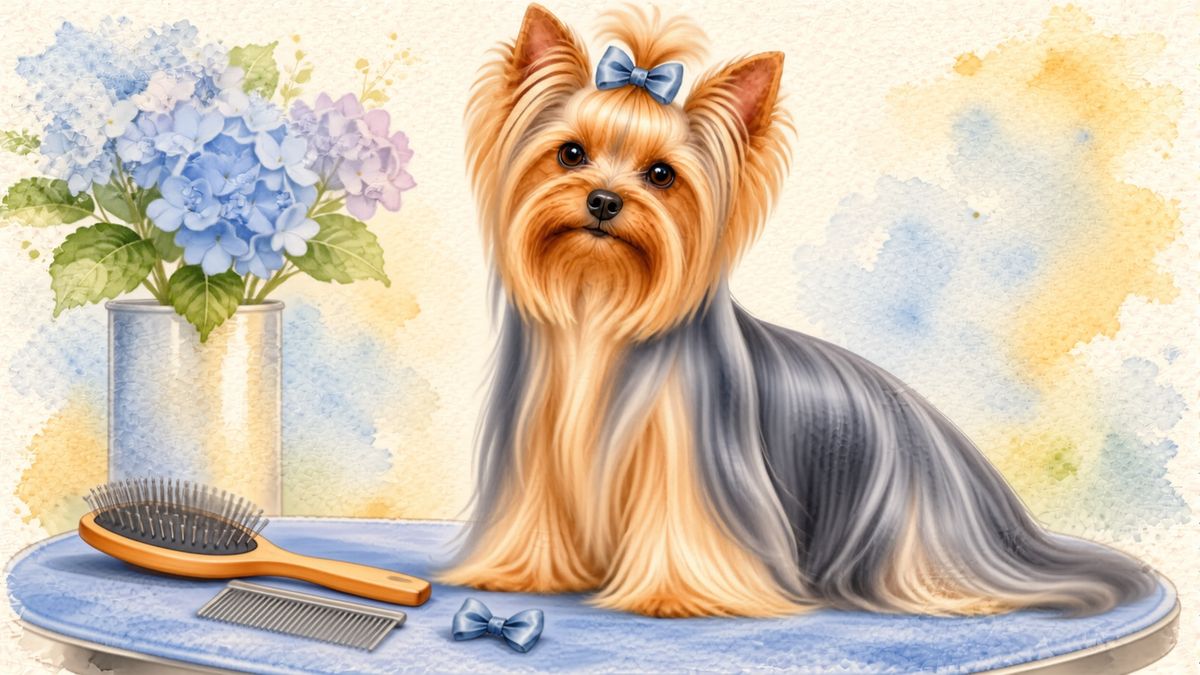
- Brushing: A long coat needs daily brushing to stay smooth and tangle-free.
- Bathing: Bathe your Yorkie about once a week, or as needed, to keep the coat clean and shiny.
- Haircuts: Many pet owners choose a shorter "puppy cut," which is much easier to maintain than a floor-length show coat.
- Topknot: The hair above the eyes is often trimmed short or tied up in a topknot with a small band so it stays out of the dog's eyes.
- Teeth: Brush your Yorkie's teeth daily or several times a week. Toy breeds are prone to dental problems.
- Nails, ears and eyes: Trim nails every few weeks, check ears weekly and gently clean around the eyes.
Yorkshire Terrier Health and Lifespan
The Yorkshire Terrier is generally a healthy breed, with an average lifespan of 11 to 15 years. Like all breeds, however, it can be prone to certain conditions. Responsible breeders screen their dogs for concerns that may include:
- Luxating patella: A condition in which the kneecap slips out of place. Limiting high jumps, such as off furniture, may help protect the knees.
- Eye problems: Regular eye checks help catch issues early.
- Dental disease: Small mouths with crowded teeth make dental care especially important.
- Tracheal collapse: A weakening of the windpipe seen in some toy breeds, which is one reason many owners prefer a harness.
Yorkies can gain weight easily, so it is important to monitor food and treats. Very small puppies may also need frequent meals to keep their energy steady. Always work with your veterinarian to set up a routine of checkups, vaccinations and preventive care.
Feeding and Nutrition
As a toy breed, the Yorkie does best on a high-quality, complete and balanced dog food. Many owners choose a small-breed formula with smaller kibble that is easier for tiny mouths to chew.
Puppies should eat a food designed for puppies to support healthy growth. Because Yorkies are so small, even a few extra treats can add up quickly. Follow the feeding guide on the package, ask your veterinarian about portion sizes and keep treats to a small part of daily calories. Fresh water should always be available.
History of the Yorkshire Terrier
The Yorkshire Terrier was developed in the mid-1800s in the counties of Yorkshire and Lancashire in northern England. Many Scottish weavers had moved there to work in the woolen and textile mills, and they brought their small terriers with them. These dogs were crossed with other terriers, likely including the Skye Terrier, the Dandie Dinmont Terrier and several now-extinct Scottish terriers. The Maltese may also have played a part.
The early Yorkies were working dogs. Their job was to catch rats in the mills, and some also worked in coal mines. A dog named Huddersfield Ben, born in 1865, became a famous show dog and an influential sire, and he is often called the father of the breed.
England's Kennel Club recognized the Yorkshire Terrier in 1886. By then, the breed was shrinking in size and becoming a fashionable lapdog for Victorian ladies. Yorkies reached the United States in the 1870s, and the American Kennel Club registered its first Yorkie in 1885.
One of the most famous Yorkies was Smoky, a tiny dog found in the jungle during World War II. Smoky traveled with an American soldier, helped run communication wires through a narrow pipe and later visited wounded troops, making her one of the earliest known therapy dogs.
Yorkshire Terrier vs Silky Terrier
The Yorkshire Terrier and the Silky Terrier look alike and share some ancestry, but they are different breeds. The Silky Terrier, developed in Australia, is slightly larger and sturdier, with a somewhat shorter coat. The Yorkie is smaller, with a longer, finer coat that can reach the floor when kept in full show length.
Is a Yorkshire Terrier Right for You?
A Yorkie could be a wonderful match if you:
- Want a tiny dog with a big, bold personality
- Live in an apartment or a smaller home
- Prefer a low-shedding dog
- Enjoy daily grooming or are happy to pay for regular haircuts
- Can provide short daily walks and plenty of attention
- Live with adults, seniors or older, gentle children
A Yorkie may not be the best fit if you:
- Have toddlers or very young children
- Want a quiet dog, since Yorkies like to bark at visitors
- Are away from home for long hours most days
- Keep small pets such as hamsters or gerbils
Finding a Yorkshire Terrier Puppy
Because Yorkies are so popular, it is important to choose a breeder carefully. Look for a reputable breeder who health-tests parent dogs, raises puppies in a home environment and is happy to answer your questions. Be cautious of anyone advertising unusually tiny "teacup" Yorkies, as very small dogs can face extra health risks. Breed clubs and rescue groups are also great places to find adult Yorkies in need of homes.
Fun Facts About the Yorkshire Terrier
- Yorkies were originally bred to catch rats in textile mills and coal mines.
- Yorkie puppies are born black and tan and gradually turn blue and tan as they grow.
- Huddersfield Ben, born in 1865, is known as the father of the breed.
- A Yorkie named Smoky became a World War II hero and one of the first known therapy dogs.
- The Yorkie's coat is a single coat that is often compared to human hair.
- The Yorkshire Terrier has been one of America's most popular breeds for decades.
Frequently Asked Questions
How big do Yorkshire Terriers get?
Adult Yorkies usually stand about 7 to 8 inches tall at the shoulder and weigh no more than 7 pounds, making them a true toy breed.
Are Yorkshire Terriers hypoallergenic?
Yorkies have a single, hair-like coat that sheds very little, so many people with mild allergies do well with them. No dog is completely allergen-free, though.
Are Yorkshire Terriers good family dogs?
They can be loving family dogs for adults and older, gentle children. Because they are tiny and fragile, they are generally not ideal for homes with toddlers.
How long do Yorkshire Terriers live?
The average Yorkshire Terrier lifespan is 11 to 15 years with good care, a balanced diet and regular veterinary checkups.
Do Yorkshire Terriers bark a lot?
Yorkies are alert watchdogs and often bark at visitors and unusual sounds. Training, exercise and attention help keep barking under control.
Why do Yorkies change color?
Yorkie puppies are born black and tan. As they mature, the black usually fades to steel blue and the tan becomes gold, a change that can take a year or more.
Final Thoughts
The Yorkshire Terrier proves that courage and charm come in the smallest packages. Fearless, affectionate and endlessly entertaining, this little terrier with the silky coat has won hearts for more than 150 years. If you can offer gentle handling, regular grooming and plenty of attention, a Yorkshire Terrier may become your most devoted companion.