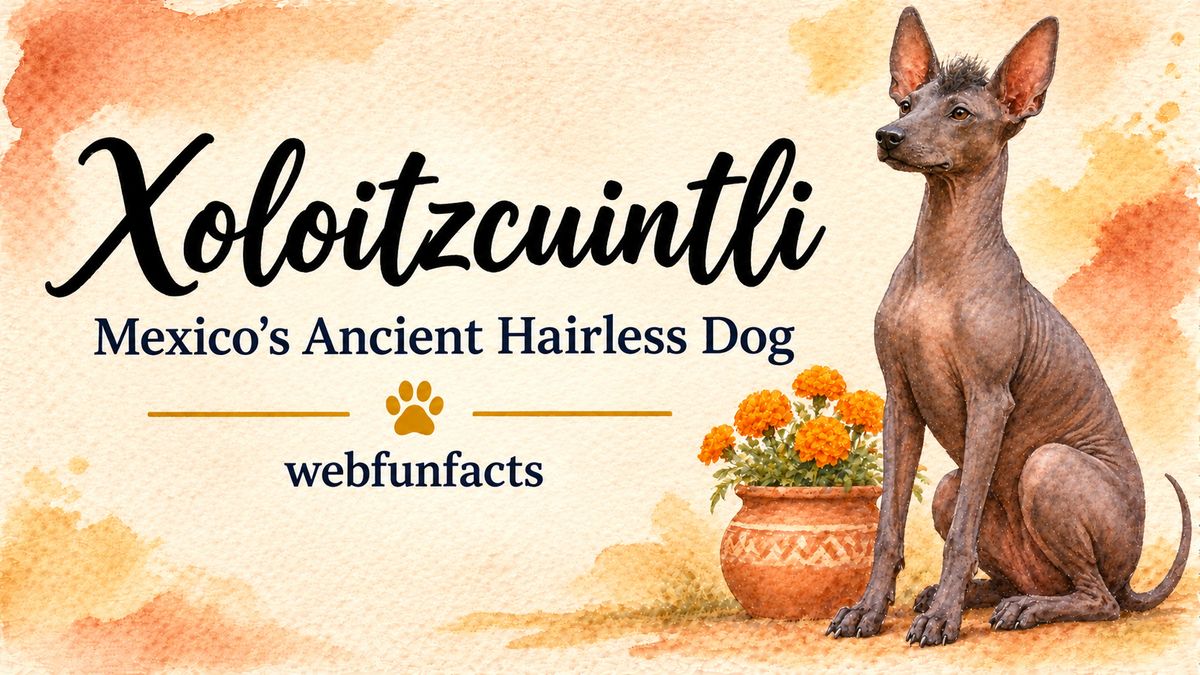
Sleek, elegant and full of quiet confidence, the Xoloitzcuintli is one of the oldest and most fascinating dog breeds in the world. Often called the Mexican Hairless Dog or simply the "Xolo," this ancient breed has lived alongside people in Mexico for thousands of years. Its name is pronounced "show-low-eetz-QUEENT-lee," and it combines the name of the Aztec god Xolotl with itzcuintli, the Aztec word for dog.
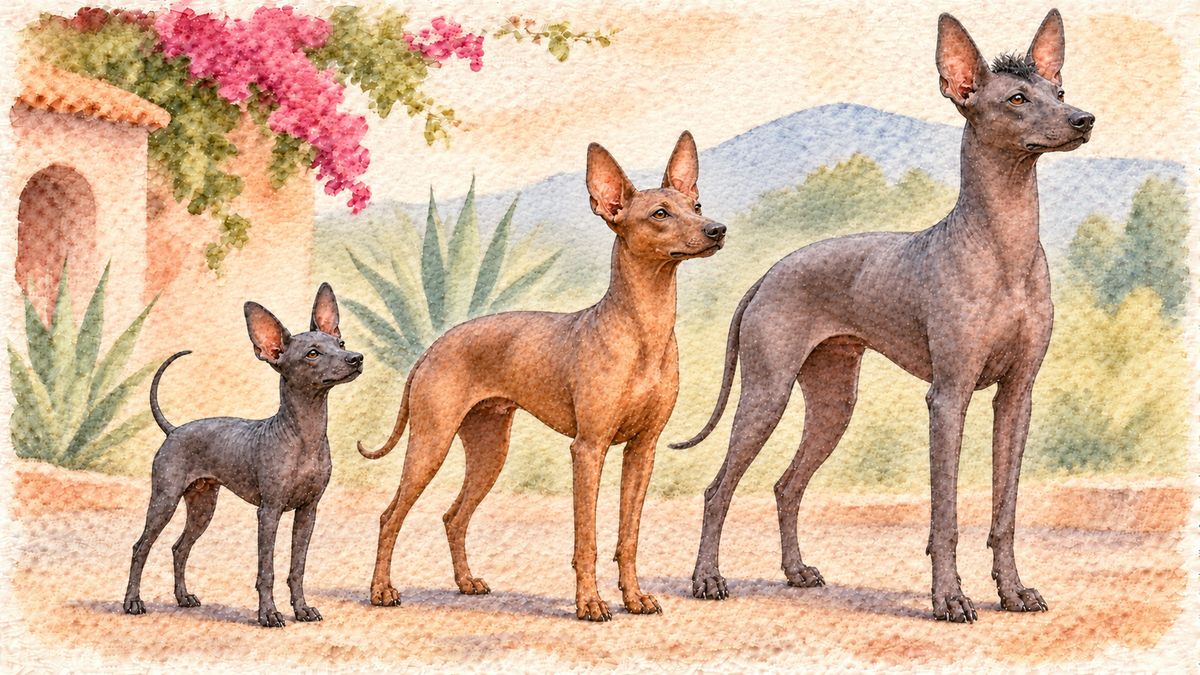
The Xolo comes in three sizes and two coat varieties, so there is a version to suit many different homes. In this complete Xoloitzcuintli dog breed guide, you will learn everything you need to know before bringing one home, including its size, temperament, skin and coat care, exercise needs, common health concerns, diet tips and remarkable history.
Xoloitzcuintli at a Glance
| Trait | Details |
|---|---|
| Breed group | Non-Sporting (AKC) |
| Height | Toy 10 to 14 in (25 to 36 cm); Miniature 14 to 18 in (36 to 46 cm); Standard 18 to 23 in (46 to 58 cm) |
| Weight | Toy about 10 to 15 lb (4.5 to 7 kg); Miniature 15 to 30 lb (7 to 14 kg); Standard about 30 to 55 lb (14 to 25 kg) |
| Life expectancy | 13 to 18 years |
| Coat | Hairless, or short, flat coat (coated variety) |
| Colors | Black, gray-black, slate, liver, red, bronze, fawn; white spots allowed |
| Shedding | Very low |
| Energy level | Moderate |
| Temperament | Calm, alert, loyal, intelligent, affectionate |
| Good for | Families, people with allergies, homes of many sizes |
| Origin | Mexico (ancient) |
What Is a Xoloitzcuintli?
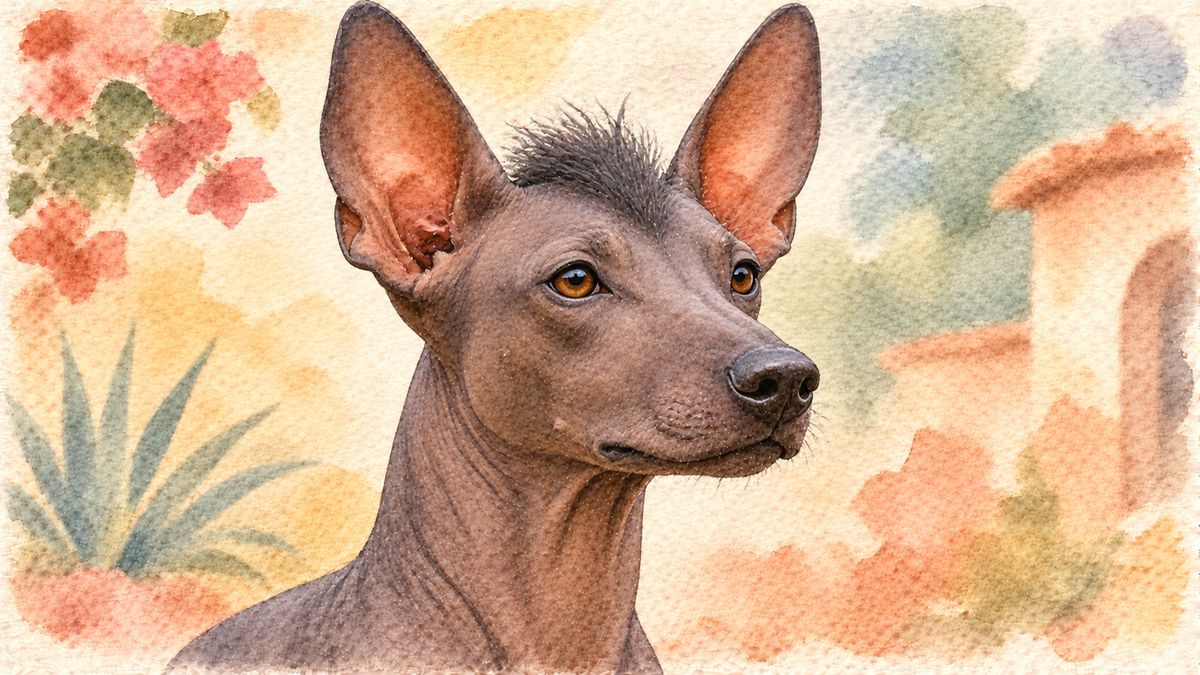
The Xoloitzcuintli is a primitive, naturally developed breed from Mexico. It is best known for its hairless variety, which has smooth, tough skin with perhaps a little hair on the head, feet or tail. A coated variety with a short, flat coat is also born in the same litters.
Xolos are lean, muscular and graceful, with a calm, watchful personality. They have long been treasured as faithful watchdogs and loving family companions. In Mexico, the breed is a cherished national symbol, and in the United States it belongs to the American Kennel Club's Non-Sporting Group.
Xoloitzcuintli Size and Appearance
How Big Do Xoloitzcuintlis Get?
The Xolo comes in three sizes. Toys stand 10 to 14 inches tall at the shoulder, Miniatures stand 14 to 18 inches and Standards stand 18 to 23 inches. Weight follows height, ranging from about 10 pounds for a small Toy to around 55 pounds for a large Standard.
Whatever the size, the breed has a moderate, athletic build that is slightly longer than tall. Its head is wedge-shaped, with almond-shaped eyes and large, upright, bat-like ears. The neck is long and elegant, and the tail is long and thin. Many hairless Xolos are missing some teeth, especially premolars, which is linked to the same gene that causes hairlessness.
Coat, Skin and Colors
There are two varieties of Xoloitzcuintli:
- Hairless: The skin is smooth, close-fitting and tough. Some dogs have a little short hair on the top of the head, the feet or the end of the tail.
- Coated: The body is covered in a short, smooth, close-fitting coat. Coated Xolos usually have full sets of teeth.
Dark, solid colors are traditional, including black, gray-black, slate, liver, red, bronze and fawn. White spots and markings are also allowed. The skin of hairless Xolos can change shade with sun exposure and the seasons.
Xoloitzcuintli Temperament and Personality
The Xoloitzcuintli is a calm, thoughtful dog with a deep loyalty to its people. This breed is known for being:
- Calm: Adult Xolos are usually peaceful and relaxed indoors once their exercise needs are met.
- Alert: They notice everything and make excellent watchdogs, often announcing visitors with a bark.
- Loyal: Xolos form strong bonds with their families and often attach closely to one special person.
- Intelligent: They are clever, quick learners that can also be independent thinkers.
- Affectionate: Many love to cuddle, and the warmth of a hairless Xolo's skin has long made it a favorite bed companion.
Xolos can be reserved or wary with strangers, which is part of what makes them good watchdogs. Puppies are lively and energetic, but most mature into calm, composed adults by around two years of age.
Are Xoloitzcuintlis Good With Kids and Other Pets?
Xolos can be gentle, loving family dogs, especially with children who are taught to treat them kindly. Toy Xolos are small and can be injured by rough play, so they are best with older, careful children. Supervision is always a good idea.
Most Xolos get along well with other dogs and cats, particularly when raised with them. Some can be watchful of unfamiliar animals, so slow introductions help.
Early socialization is very important for this naturally alert breed. Introducing your Xoloitzcuintli puppy to many friendly people, places, sounds and animals helps it grow into a confident, well-balanced adult.
Training a Xoloitzcuintli
Xolos are smart and learn quickly, but they can be independent and sensitive. They respond best to calm, consistent, reward-based training. Harsh corrections can make them shut down or become wary, so patience and kindness go a long way.
Here are a few training tips for Xolo owners:
- Start early. Begin socialization and basic training as soon as your puppy comes home.
- Use positive reinforcement. Treats, praise and play keep training enjoyable.
- Be consistent. Clear routines and rules help this clever breed understand what you expect.
- Manage alert barking. Reward quiet behavior and teach a "quiet" cue early.
- Try activities together. Xolos can enjoy obedience, rally, agility and therapy work.
Xoloitzcuintli Exercise Needs
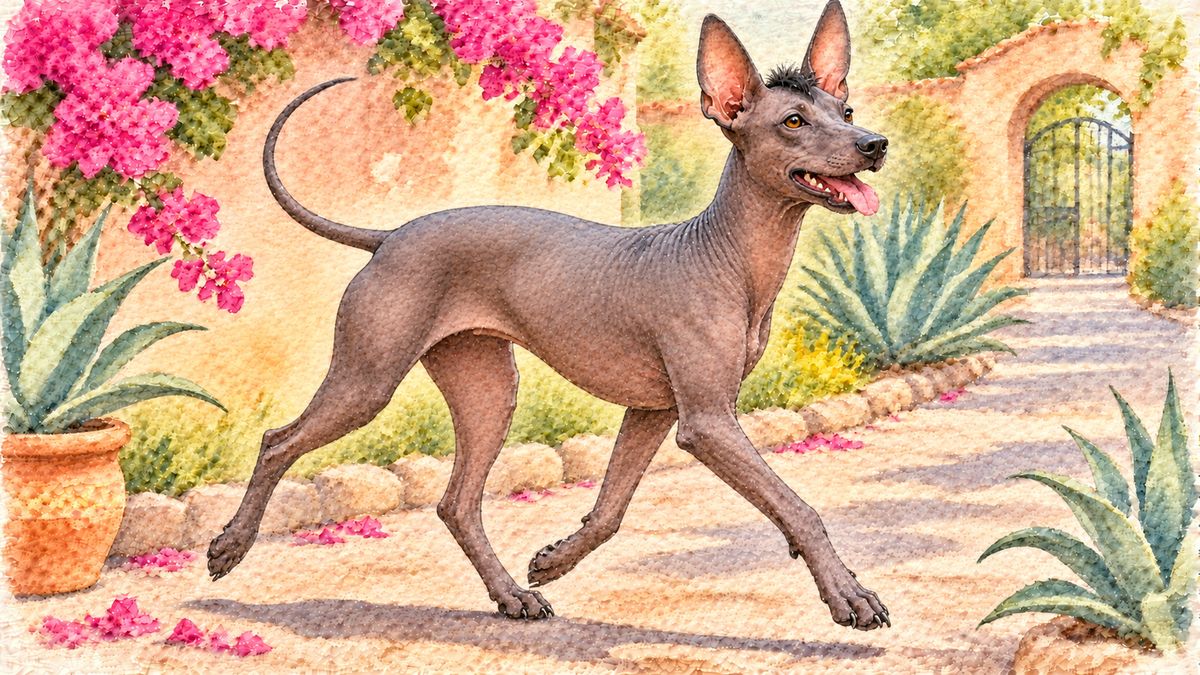
The Xoloitzcuintli has a moderate energy level and needs daily exercise to stay fit and happy. A couple of brisk walks plus some playtime in a secure area usually satisfies most adult Xolos. Standards may enjoy longer walks or jogs, while Toys can get much of their exercise indoors.
Mental stimulation matters, too. Puzzle toys, scent games and short training sessions help prevent boredom. Xolos are agile and some are good climbers or jumpers, so a securely fenced yard is important.
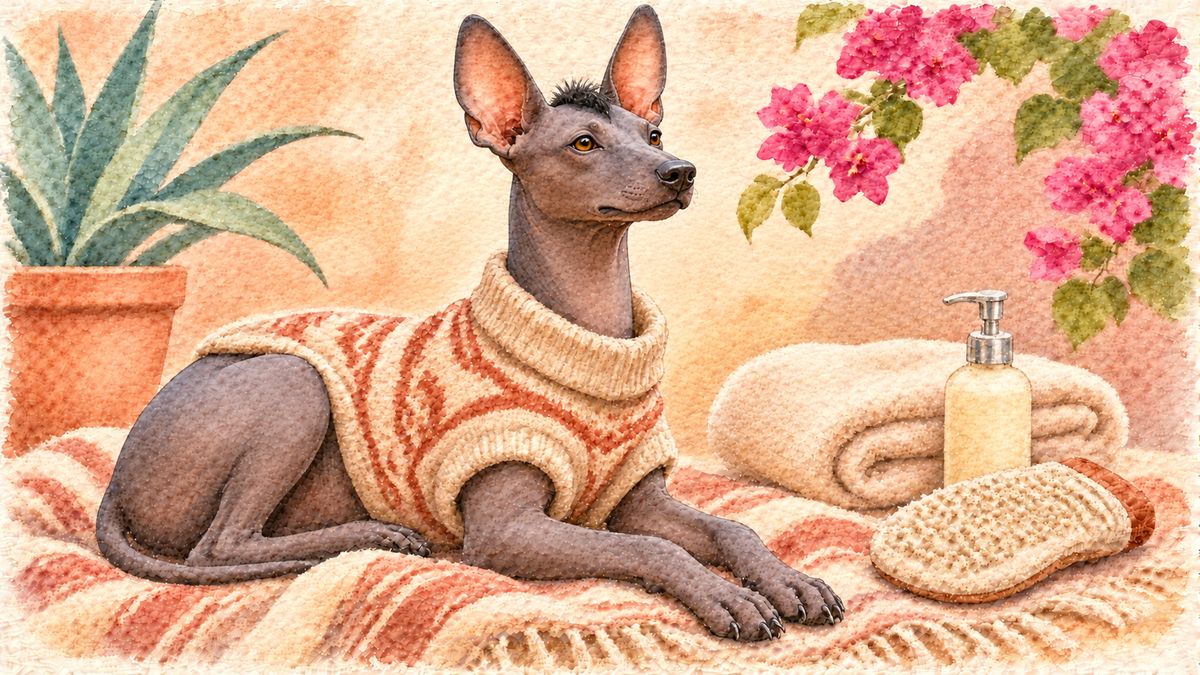
Weather needs special attention for hairless Xolos. In sunny weather, their exposed skin can burn, so limit midday sun and use a dog-safe sunscreen if your veterinarian recommends it. In cold weather, a sweater or coat helps keep them warm.
Xoloitzcuintli Grooming and Skin Care
Do Xoloitzcuintlis Shed?
Hairless Xolos shed almost nothing, and coated Xolos shed only lightly. This makes the breed a popular choice for people who want a tidy home or who have mild allergies. No dog is completely hypoallergenic, however, so spend time with a Xolo before deciding.
Grooming Routine
- Skin care (hairless): Bathe as needed with a gentle dog shampoo and keep the skin clean. Some dogs benefit from a light, dog-safe moisturizer, but avoid heavy products that can clog pores.
- Sun protection: Protect hairless skin from strong sun to prevent sunburn.
- Acne watch: Young hairless Xolos can get blackheads or acne, which usually improves with gentle cleansing.
- Brushing (coated): A quick weekly brush keeps the short coat shiny.
- Nails: Trim nails every few weeks.
- Teeth and ears: Brush teeth several times a week and check the large, upright ears regularly.
Xoloitzcuintli Health and Lifespan
The Xoloitzcuintli is generally a healthy, hardy breed with an impressive lifespan, often 13 to 18 years. As a naturally developed breed, it has fewer inherited problems than many others, but some conditions can occur. Responsible breeders screen for concerns that may include:
- Skin issues: Hairless Xolos can be prone to sunburn, dryness, acne and skin irritation.
- Dental concerns: Missing or irregular teeth are common in hairless dogs and are not considered a fault.
- Luxating patella: The kneecap may slip out of place, especially in smaller Xolos.
- Hip dysplasia: Abnormal development of the hip joint can occur in larger dogs.
Always work with your veterinarian to plan checkups, vaccinations and preventive care. A vet can also advise on the best skin products and sun protection for a hairless Xolo.
Feeding and Nutrition
A Xoloitzcuintli does well on a high-quality, complete and balanced dog food suited to its size, age and activity level. Toy Xolos may prefer a small-breed formula with smaller kibble, while Standards may do well on a medium-breed formula.
Hairless Xolos with missing teeth can usually still eat kibble, but some may find softer food or smaller pieces easier to chew. Puppies need a food made for puppies. Follow the feeding guide on the package, ask your veterinarian about portions and keep treats to a small part of daily calories. Fresh water should always be available.
History of the Xoloitzcuintli
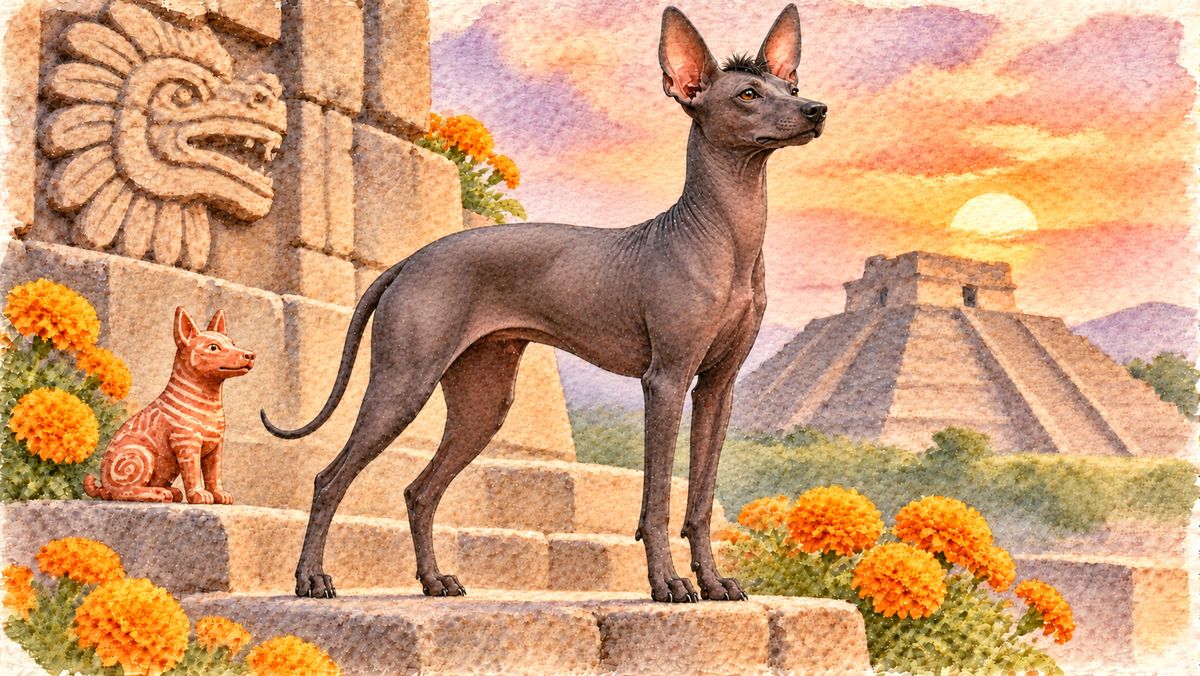
The Xoloitzcuintli is believed to be one of the oldest dog breeds in the Americas, with roots going back more than 3,000 years. Clay figures of hairless dogs have been found in ancient tombs in western Mexico, showing how important these dogs were to early cultures.
The Aztecs and other peoples of Mesoamerica held the Xolo in high regard. It was associated with Xolotl, the god of lightning and death, and was believed to guide souls through the underworld. Xolos were also valued as protectors of the home against evil spirits and intruders, and as warm companions that were thought to ease aches and pains.
After the Spanish conquest, the breed became rare and survived mainly in remote villages. In the 20th century, Mexican breeders and artists helped revive it. Painters Frida Kahlo and Diego Rivera kept Xolos and featured them in their work, and the breed became a beloved symbol of Mexican heritage. The AKC first recognized the breed in 1887 but later dropped it as numbers fell, then recognized it again in 2011.
The Xolo has also found modern fame. Dante, the lovable dog in Pixar's 2017 film Coco, is a Xoloitzcuintli, which introduced the breed to a new generation of fans.
Is a Xoloitzcuintli Right for You?
A Xoloitzcuintli could be a wonderful match if you:
- Want a loyal, calm companion with a watchful nature
- Prefer a very low-shedding dog
- Like the idea of choosing from three sizes
- Can provide daily walks and mental stimulation
- Are happy to manage sun protection and skin care
- Want a long-lived, generally healthy breed
A Xoloitzcuintli may not be the best fit if you:
- Want a dog that is instantly friendly with every stranger
- Live in an extreme climate and cannot protect a hairless dog's skin
- Prefer a dog that needs no special care at all
- Have very young children and are considering a Toy Xolo
Finding a Xoloitzcuintli Puppy
The Xolo is still uncommon in many areas, so you may need to join a waiting list. Choose a reputable breeder who health-tests parent dogs, raises puppies in a home environment and can explain the differences between sizes and coat varieties. Breed clubs and rescue groups also sometimes have Xolos looking for homes.
Fun Facts About the Xoloitzcuintli
- The name is pronounced "show-low-eetz-QUEENT-lee," and most fans simply say "Xolo."
- The breed combines the name of the Aztec god Xolotl with itzcuintli, meaning dog.
- Hairless and coated puppies can be born in the same litter.
- Frida Kahlo and Diego Rivera kept Xolos and included them in their art.
- Dante from Pixar's Coco is a Xoloitzcuintli.
- The breed is considered a national treasure and cultural symbol of Mexico.
Frequently Asked Questions
How do you pronounce Xoloitzcuintli?
It is pronounced "show-low-eetz-QUEENT-lee." Most owners simply call the breed the "Xolo" (SHOW-low).
How big do Xoloitzcuintlis get?
It depends on the size variety. Toys stand 10 to 14 inches, Miniatures 14 to 18 inches and Standards 18 to 23 inches tall at the shoulder.
Are Xoloitzcuintlis hypoallergenic?
Hairless Xolos shed almost nothing and coated Xolos shed lightly, so many people with mild allergies do well with them. No dog is completely allergen-free.
Are Xoloitzcuintlis good family dogs?
Yes, they are loyal, affectionate and calm family companions. They can be wary of strangers, so early socialization is important.
How long do Xoloitzcuintlis live?
The Xoloitzcuintli lifespan is often 13 to 18 years, making it one of the longer-lived breeds.
Do hairless Xolos need sunscreen?
Hairless Xolos can get sunburned, so limit strong midday sun and ask your veterinarian about a dog-safe sunscreen for outdoor time.
Final Thoughts
The Xoloitzcuintli is a living piece of history, with thousands of years of companionship behind its calm, watchful gaze. Loyal, elegant and wonderfully low-shedding, it brings ancient charm to modern homes of every size. If you can offer daily exercise, gentle training and a little extra skin care, a Xoloitzcuintli may become a devoted friend for many years.