
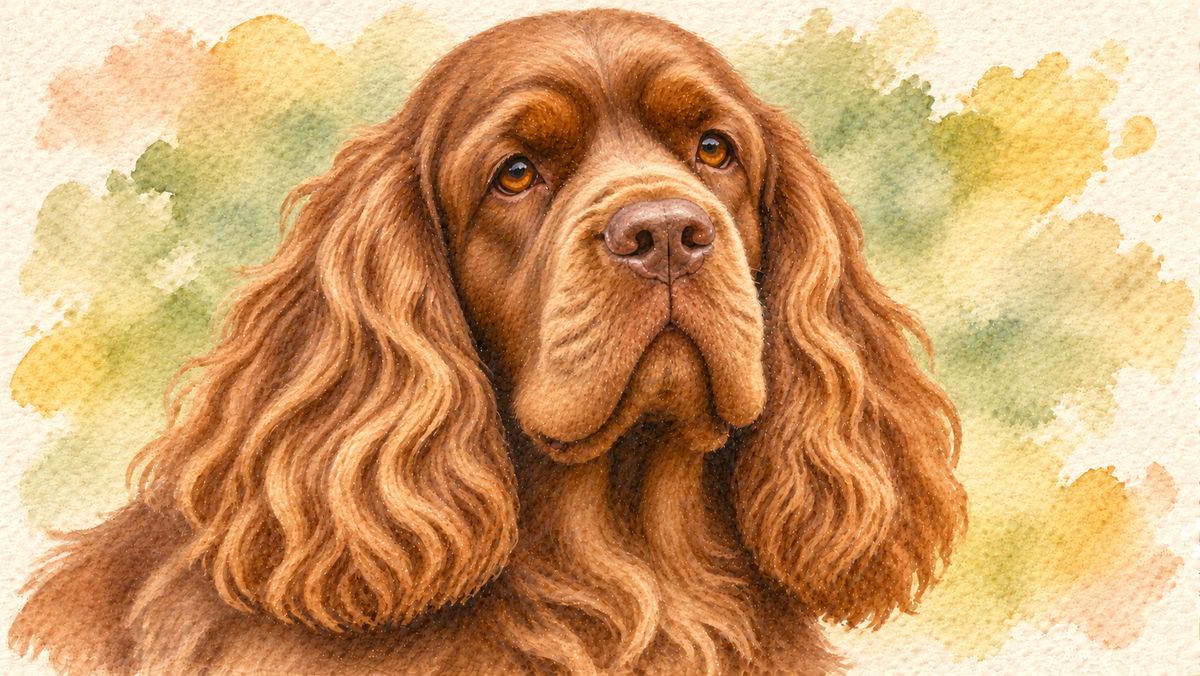
With its rich golden liver coat, long low body and serious, slightly frowning expression, the Sussex Spaniel is one of the most distinctive spaniels in the world. Don't let that solemn face fool you. Behind it is a cheerful, friendly and often funny dog that loves its family and enjoys a good romp in the countryside.
The Sussex Spaniel is also one of the rarest breeds you can meet, and it has a remarkable history that stretches back to 18th-century England. In this complete Sussex Spaniel dog breed guide, you will learn about its size, temperament, grooming needs, exercise requirements, health, diet and fascinating past.
Sussex Spaniel at a Glance
| Trait | Details |
|---|---|
| Breed group | Sporting (AKC) |
| Height | 13 to 15 inches (33 to 38 cm) |
| Weight | 35 to 45 pounds (16 to 20 kg) |
| Life expectancy | 13 to 15 years |
| Coat | Abundant, flat or slightly wavy, with feathering |
| Colors | Golden liver |
| Shedding | Moderate |
| Energy level | Moderate |
| Temperament | Friendly, cheerful, even-tempered, devoted, gentle |
| Good for | Families, seniors, relaxed active homes |
| Origin | Sussex, England (1700s) |
What Is a Sussex Spaniel?
The Sussex Spaniel is a medium-sized, low-set hunting spaniel from the county of Sussex in southern England. It was developed to flush small game such as pheasants and rabbits from dense undergrowth. Its sturdy, compact build allowed it to push through thick hedgerows and heavy cover at a steady pace.
Unlike many spaniels that hunt quietly, the Sussex Spaniel is known for "giving tongue," which means it barks or bays while working so hunters can follow it in thick cover. It was one of the first ten breeds recognized by the American Kennel Club when the AKC was founded in 1884, and it belongs to the Sporting Group. Today it remains rare, with relatively few puppies born each year.
Sussex Spaniel Size and Appearance
How Big Do Sussex Spaniels Get?
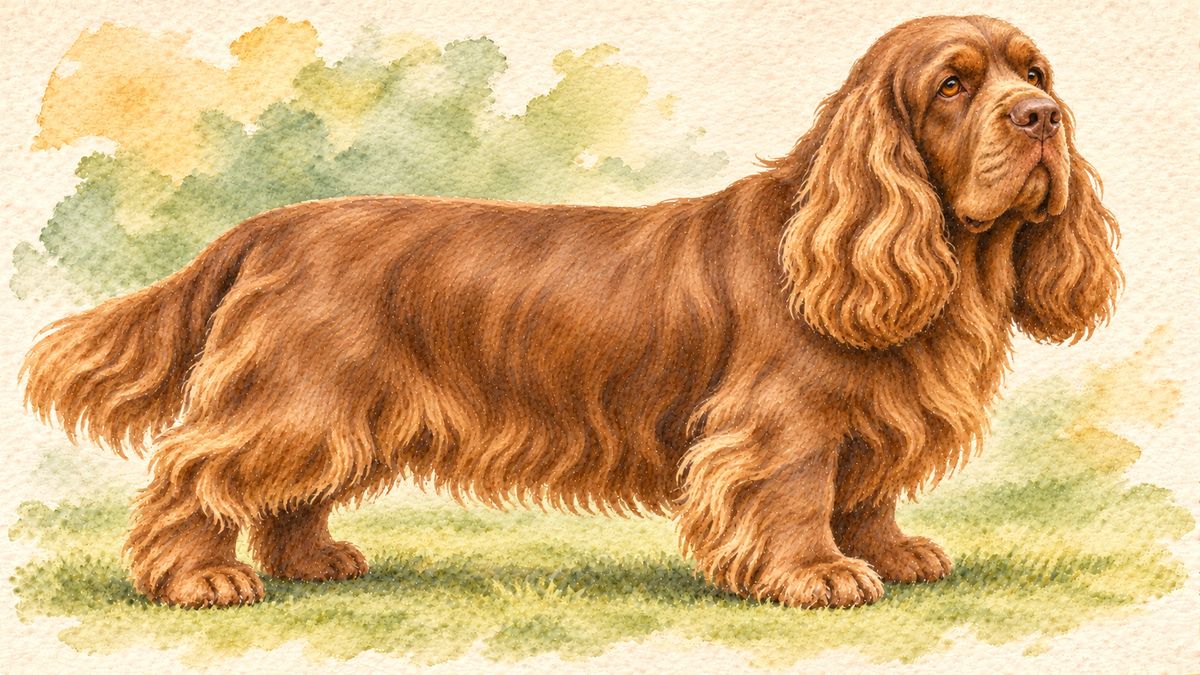
Sussex Spaniels stand about 13 to 15 inches (33 to 38 cm) tall at the shoulder and weigh around 35 to 45 pounds (16 to 20 kg). They are short in the leg but heavy for their height, with a solid, muscular build.
The body is long, low and rectangular, with a deep chest and strong back. The head is broad with heavy brows, giving the breed its famous somber, serious expression. The ears are large, set low and covered in soft, wavy hair. The breed moves with a distinctive, gentle rolling gait.
Coat and Colors
The Sussex Spaniel has an abundant coat that lies flat or has a slight wave. There is feathering on the ears, legs, chest and tail, which adds to its elegant look. The coat is weather resistant and helps protect the dog in damp, brushy country.
The breed comes in just one color: golden liver. This rich color often shows golden tips on the hair, giving the coat a warm, glowing appearance. It is one of the breed's defining features.
Sussex Spaniel Temperament and Personality
The Sussex Spaniel temperament is calm, kind and full of character. This breed is known for being:
- Friendly: Sussex Spaniels are usually sociable with people and other dogs.
- Cheerful and funny: Despite their serious faces, many are playful clowns at home.
- Even-tempered: They tend to be steady and relaxed rather than hyperactive.
- Devoted: They bond closely with their families and enjoy being near their people.
- Gentle: Around the house, they are usually soft and easygoing.
The breed can be vocal, both in the field and at home. Some Sussex Spaniels also have a stubborn streak, so patience is part of the package.
Are Sussex Spaniels Good Family Dogs?
Yes, Sussex Spaniels can make excellent family dogs. Their gentle, even temperament suits families with respectful children, and many do well with older adults who want a calm but sociable companion.
Sussex Spaniels generally get along well with other dogs and can live with cats, especially when raised together. As hunting dogs, they may be interested in birds and small animals, so supervision helps. Early socialization will help your Sussex Spaniel puppy grow into a confident, friendly adult.
Training a Sussex Spaniel
Sussex Spaniels are intelligent and eager to please their families, but they can be independent and a little stubborn. They also mature slowly and may act like puppies for longer than some breeds. Patience, consistency and positive reinforcement are the keys to success.
Here are a few training tips:
- Start early. Begin training and socialization as soon as your puppy comes home.
- Use rewards. Food rewards, praise and play work much better than harsh corrections.
- Keep sessions short. Several short, fun sessions each day hold your dog's interest.
- Manage barking. Teach a "quiet" cue and reward calm behavior.
- Try dog activities. Sussex Spaniels can enjoy hunting tests, tracking, rally, obedience and therapy work.
Exercise Needs
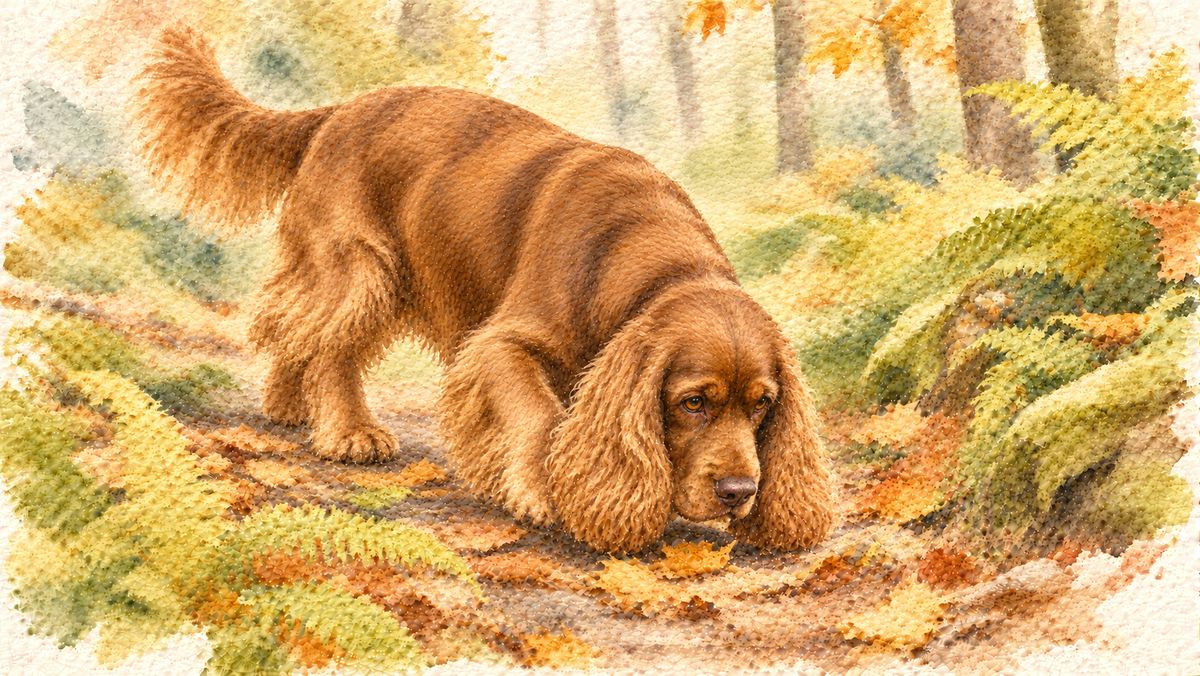
The Sussex Spaniel has a moderate energy level. It enjoys daily walks and outdoor exploring, but it is not as high-energy as many other sporting breeds. Plan for around 30 to 60 minutes of activity each day, such as leisurely walks, sniffing adventures and play in a fenced yard.
Because of its long back and short legs, it is best to avoid lots of jumping on and off furniture or stairs, especially while the dog is young. Steady walks are ideal.
Keep your Sussex Spaniel on a leash or in a securely fenced area. Its excellent nose may tempt it to follow interesting scents.
Sussex Spaniel Grooming
Do Sussex Spaniels Shed?
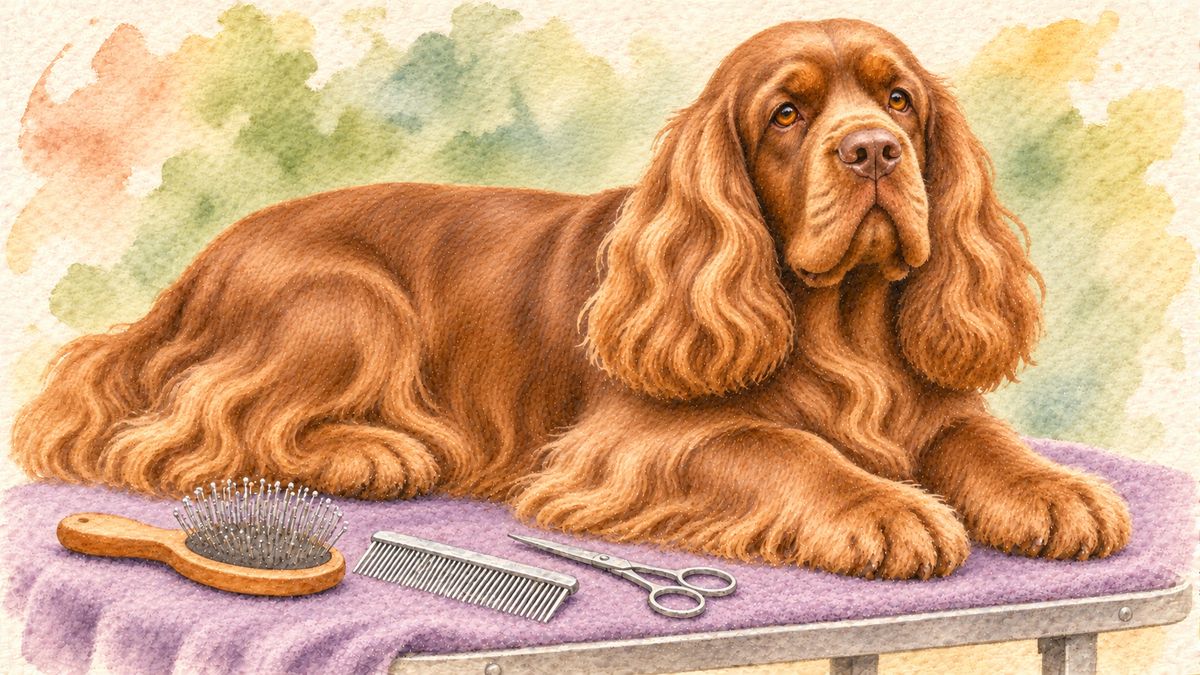
Yes, Sussex Spaniels shed a moderate amount. Weekly brushing helps remove loose hair and keeps their feathering free of tangles. They are not considered a hypoallergenic breed.
Grooming Routine
- Brushing: Brush the coat at least once a week, paying attention to the ears, legs, chest and tail where feathering can tangle.
- Trimming: Tidy the hair on the feet and between the pads, and trim around the ears if needed.
- Ears: The long, heavy ears can trap moisture and dirt. Check and clean them weekly to help prevent infections.
- Bathing: Bathe as needed with a gentle dog shampoo.
- Nails and teeth: Trim nails every few weeks and brush teeth several times a week.
- After outings: Check the coat for burrs, seeds and ticks after walks in the countryside.
Sussex Spaniel Health and Lifespan
The Sussex Spaniel has a typical lifespan of about 13 to 15 years. Like all breeds, it can be prone to certain conditions. Responsible breeders screen their dogs for concerns that may include:
- Hip dysplasia: An abnormal formation of the hip joint that can lead to arthritis.
- Back problems: Like other long-bodied, short-legged breeds, it may be prone to spinal disc issues.
- Heart conditions: Some lines may be affected, so heart screening is recommended.
- Ear infections: Long, low-set ears can trap moisture.
- Weight gain: The breed loves food and can become overweight easily.
Ask breeders for health testing results on both parents. Keeping your dog at a healthy weight is especially important for protecting its back and joints. Always work with your veterinarian on regular checkups, vaccinations and preventive care.
Feeding and Nutrition
A Sussex Spaniel does best on a complete and balanced, high-quality dog food suited to its age, size and activity level. Because the breed can gain weight easily, measure meals carefully and watch your dog's body condition.
Puppies should eat a puppy formula to support healthy growth. Follow the feeding guidelines on the package and ask your veterinarian for advice on portion sizes. Treats are helpful for training, but they should make up only a small share of daily calories.
History of the Sussex Spaniel
The Sussex Spaniel takes its name from the county of Sussex in southern England. The breed's development is closely linked to Augustus Elliott Fuller, who established a kennel at Rosehill Park in Sussex in the late 1700s. He bred spaniels for hunting in the dense, heavy woodland of the area, and his dogs became known for their golden liver color and steady working style.
Sussex Spaniels were among the earliest breeds shown at dog shows in England in the 1800s. When the American Kennel Club was founded in 1884, the Sussex Spaniel was one of its first ten recognized breeds.
The breed has come close to disappearing more than once. Numbers fell sharply during and after World War II, when only a handful of dogs remained. A dedicated English breeder named Joy Freer is widely credited with keeping the breed alive through those difficult years.
In 2009, a Sussex Spaniel named Stump made headlines when he won Best in Show at the Westminster Kennel Club Dog Show at the age of 10, becoming the oldest dog ever to win that title.

Sussex Spaniel vs Clumber Spaniel
The Sussex Spaniel and Clumber Spaniel are both long, low English spaniels with a calm style of hunting, so they are often compared. The Sussex is smaller and comes only in golden liver. The Clumber is larger and heavier, usually weighing well over 50 pounds, and is mostly white with lemon or orange markings. Both are gentle, easygoing companions.
Is a Sussex Spaniel Right for You?
A Sussex Spaniel could be a wonderful match if you:
- Want a gentle, friendly companion with a calm nature
- Enjoy steady daily walks rather than intense exercise
- Like the idea of owning a rare, historic breed
- Have time for weekly grooming and ear care
- Can be patient with a slow-maturing, sometimes stubborn dog
- Want a dog that gets along with children and other pets
A Sussex Spaniel may not be the best fit if you:
- Need a very quiet dog, since the breed can be vocal
- Want a high-energy running or sport partner
- Prefer a dog that is quick and easy to find
- Can't manage a dog's weight and diet carefully
Finding a Sussex Spaniel Puppy
Because the Sussex Spaniel is so rare, you will likely need to join a waiting list and be prepared to travel to meet a breeder. Look for a breeder who health-tests their dogs, raises puppies in a home environment and is happy to answer your questions. Breed clubs and rescue groups may also know of adult dogs in need of new homes.
Fun Facts About the Sussex Spaniel
- The breed is named after the county of Sussex in southern England.
- It was one of the first ten breeds recognized by the AKC in 1884.
- Golden liver is the only accepted color.
- Sussex Spaniels "give tongue," barking while they hunt so hunters can follow them.
- A Sussex Spaniel named Stump won Best in Show at Westminster in 2009 at age 10.
- The breed nearly disappeared after World War II.
Frequently Asked Questions
How big do Sussex Spaniels get?
Adult Sussex Spaniels usually stand 13 to 15 inches tall and weigh 35 to 45 pounds, giving them a long, low and solid build.
Are Sussex Spaniels good family dogs?
Yes, they are friendly, gentle and even-tempered, and they usually do well with respectful children and other pets.
Do Sussex Spaniels shed?
They shed a moderate amount. Weekly brushing helps manage loose hair and keeps their feathering tangle-free.
How long do Sussex Spaniels live?
The average Sussex Spaniel lifespan is about 13 to 15 years with good care, a healthy diet and regular veterinary checkups.
Why are Sussex Spaniels so rare?
The breed has always had a small population, and its numbers dropped sharply after World War II. Dedicated breeders have worked to preserve it.
Do Sussex Spaniels bark a lot?
They can be vocal. They were bred to bark while hunting, and many will also bark at home. Training helps keep barking manageable.
Final Thoughts
The Sussex Spaniel is a rare treasure with a golden liver coat, a serious face and a warm, cheerful heart. Its calm nature, friendly personality and long history make it a special companion. If you can offer steady exercise, regular grooming and patient training, a Sussex Spaniel can bring years of quiet joy and gentle humor to your home.