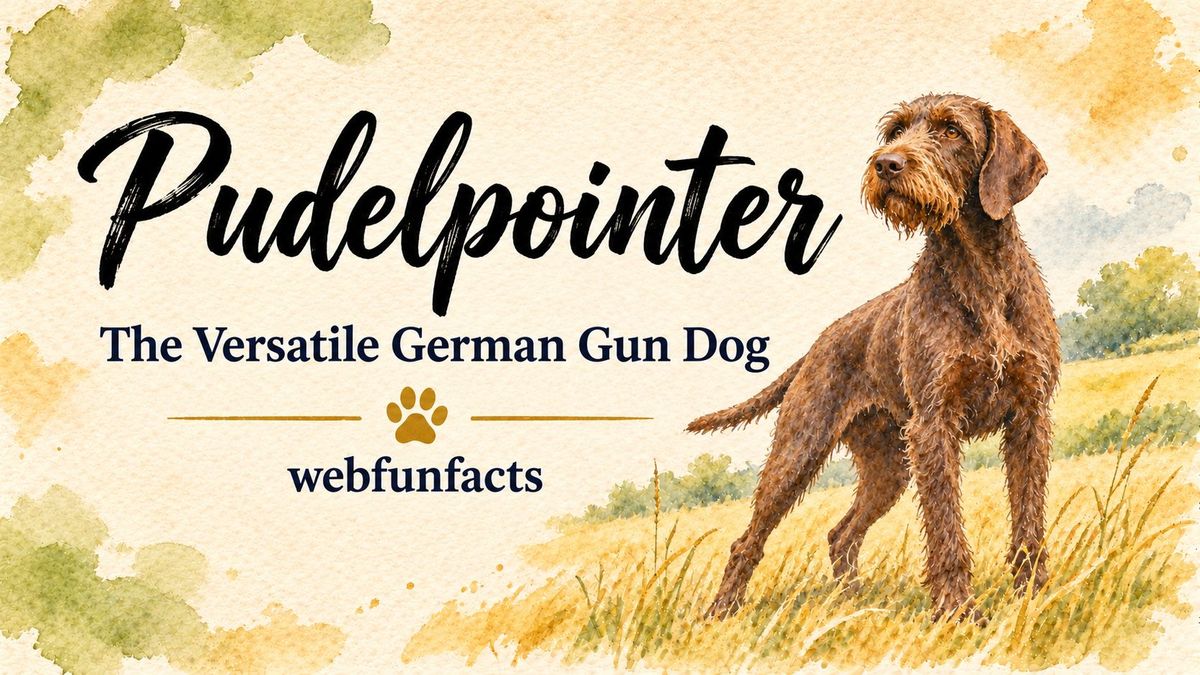
The Pudelpointer is a rugged, bearded hunting dog that was created in Germany to do a little bit of everything in the field. With its wiry coat, bushy eyebrows and kind, intelligent eyes, it looks like a dog that is always ready for the next adventure. Its name tells the story of its making: a careful blend of the German hunting Poodle ("Pudel") and the English Pointer.
Hunters prize this dog for its nose, its love of water and its willingness to work with people. At home, it is a calm, affectionate companion that needs plenty of activity. In this complete dog breed guide, you will learn about its size, temperament, grooming, exercise needs, health, diet and history, so you can decide whether this versatile breed is the right fit for you.
Pudelpointer at a Glance
| Trait | Details |
|---|---|
| Breed group | Sporting (AKC Foundation Stock Service) |
| Height | Roughly 22 to 27 inches (56 to 69 cm) |
| Weight | 45 to 70 pounds (20 to 32 kg) |
| Life expectancy | About 12 to 14 years |
| Coat | Wiry, dense, with an undercoat and beard |
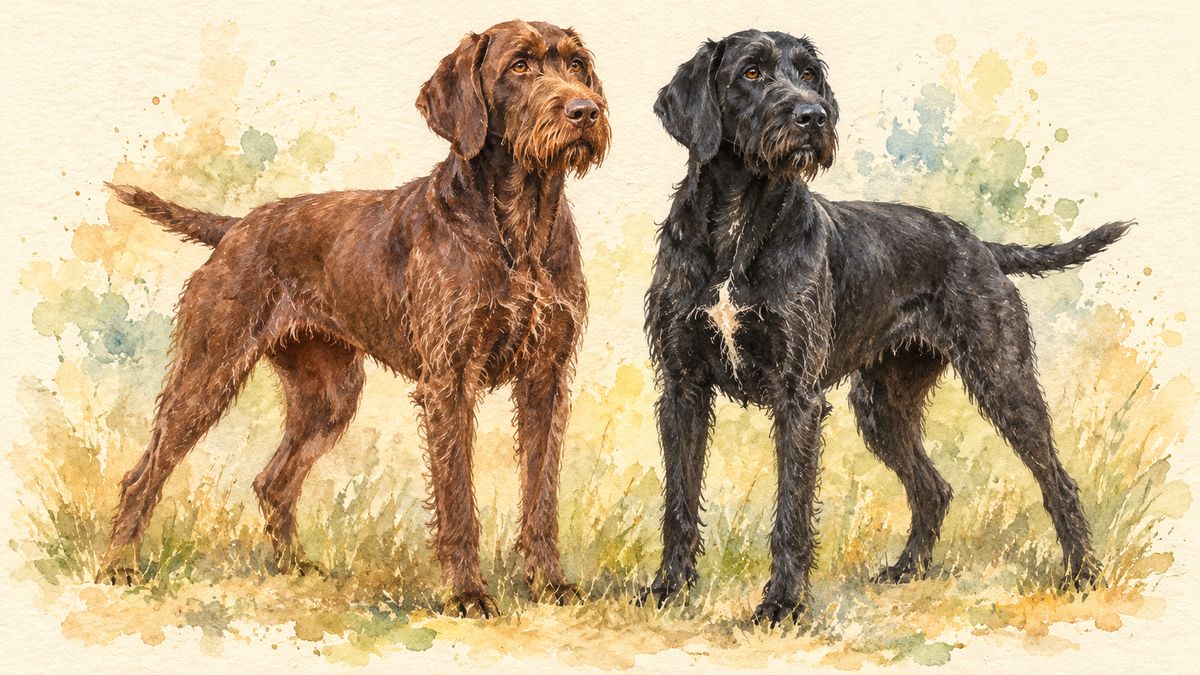
| Colors | Liver or black, with or without small white markings |
| Shedding | Low |
| Energy level | High |
| Temperament | Calm, smart, eager to please, versatile |
| Good for | Active owners, hunters, outdoorsy families |
| Origin | Germany (1881) |
What Is a Pudelpointer?
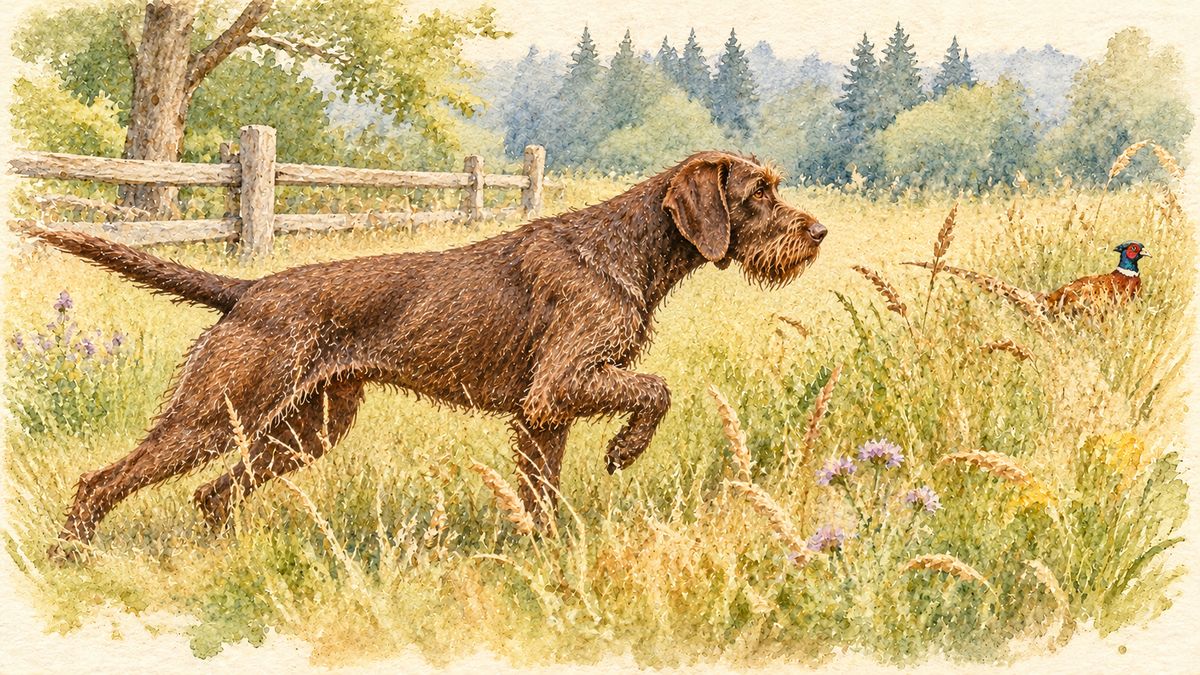
It is a versatile hunting dog, which means it was bred to hunt in the field, in the forest and in the water. It can point game birds, track wounded game and retrieve from land or water. Few breeds were designed so deliberately for such a wide range of jobs.
Although the breed is popular with hunters in North America and Europe, it is still a fairly rare sight as a family pet. In the United States, the American Kennel Club lists the breed in its Foundation Stock Service, a step toward full recognition. Many dogs are bred with a strong focus on hunting ability and are tested through hunting dog organizations.
Pudelpointer Size and Appearance
How Big Do Pudelpointers Get?
These are medium-to-large dogs that usually weigh between 45 and 70 pounds. Most stand somewhere around 22 to 27 inches tall at the shoulder, with males typically larger than females.
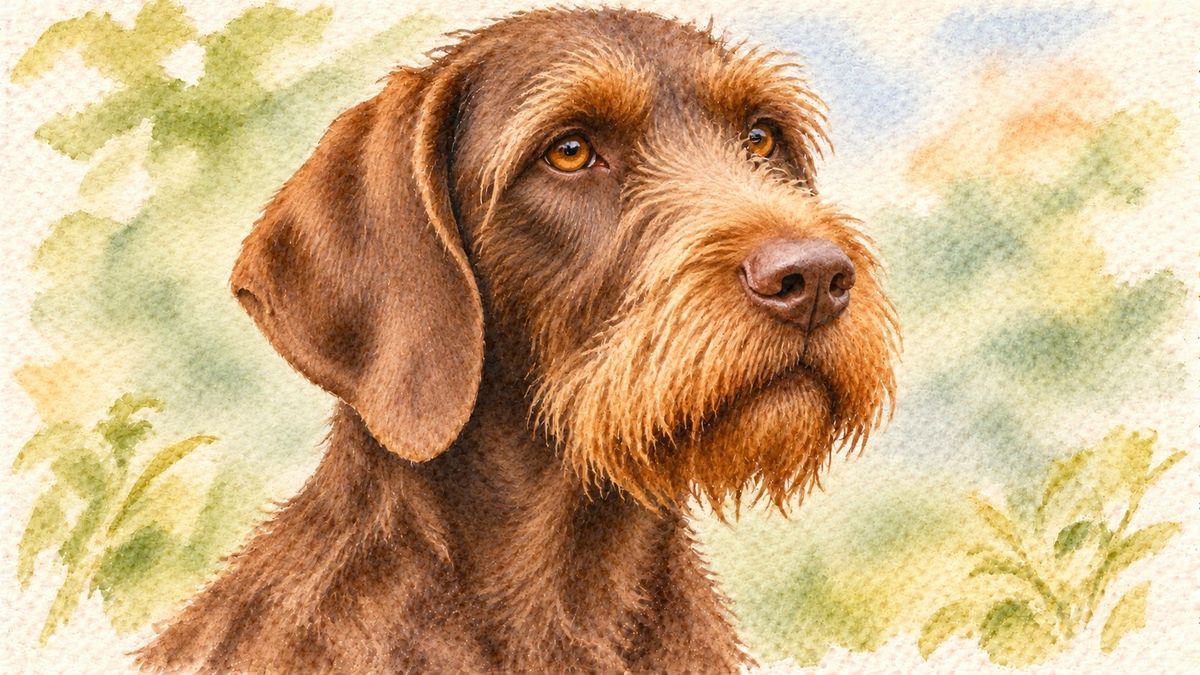
The breed has an athletic, balanced build that is made for long days outdoors. It has a strong neck, a deep chest, sturdy legs and a straight back. The head is fairly long, with a bearded muzzle, expressive eyebrows and ears that hang close to the cheeks. Overall, the dog looks practical, strong and ready to move.
Coat and Colors
The coat is one of its most useful features. Most dogs have a harsh, wiry outer coat over a dense undercoat, which protects them from thorns, brush, cold water and wind. The coat can vary, and some dogs have a smoother or rougher texture than others, but a weatherproof wire coat with a beard and eyebrows is the classic look.
Colors are kept simple. Most dogs are liver (a rich brown) or black, and some dogs have small white markings on the chest or feet.
Pudelpointer Temperament and Personality
The Pudelpointer temperament is often described as a great balance between drive in the field and calm at home. This breed is known for being:
- Intelligent: Pudelpointers learn quickly and enjoy figuring out what you want from them.
- Eager to please: They form close bonds with their people and genuinely like to work alongside them.
- Calm and steady: When their exercise needs are met, they are usually relaxed and easygoing indoors.
- Versatile: They are just as happy pointing birds as they are swimming, hiking or retrieving a ball.
- Driven: Their natural hunting instincts are strong, and they love having a job to do.
Because the breed was built to work, a bored dog is not a happy one. Without enough physical and mental exercise, it may become anxious, restless or destructive. Owners who can keep this dog busy are rewarded with a loyal, affectionate and well-mannered companion.
Are Pudelpointers Good Family Dogs?
Yes, they can be good family dogs for active households. They tend to be affectionate with their families and can get along well with respectful children, especially when raised with them.
Their size and enthusiasm mean they may accidentally knock over very small children, so supervision is important. With other dogs, they are usually friendly. However, they have a strong prey drive and may not be a good match for cats, rabbits, rodents or other small pets. Early and frequent socialization helps a Pudelpointer puppy grow into a confident, well-rounded adult.
Training a Pudelpointer
These dogs are among the easier sporting breeds to train because they are smart and love to learn. They respond best to positive, reward-based training with praise, play and treats. Harsh methods are not needed and can damage the strong bond these dogs form with their owners.
Here are a few training tips for new owners:
- Start early. Begin socialization and basic manners as soon as your puppy comes home.
- Channel the hunting drive. Retrieving games, scent work and field training give this breed a healthy outlet for its instincts.
- Work on recall. A reliable "come" is essential for a dog that may want to chase birds or wildlife.
- Keep it varied. Mix obedience, tricks and play so training never gets boring.
- Try dog sports. Many enjoy obedience, agility, dock diving and hunt tests.
Exercise Needs
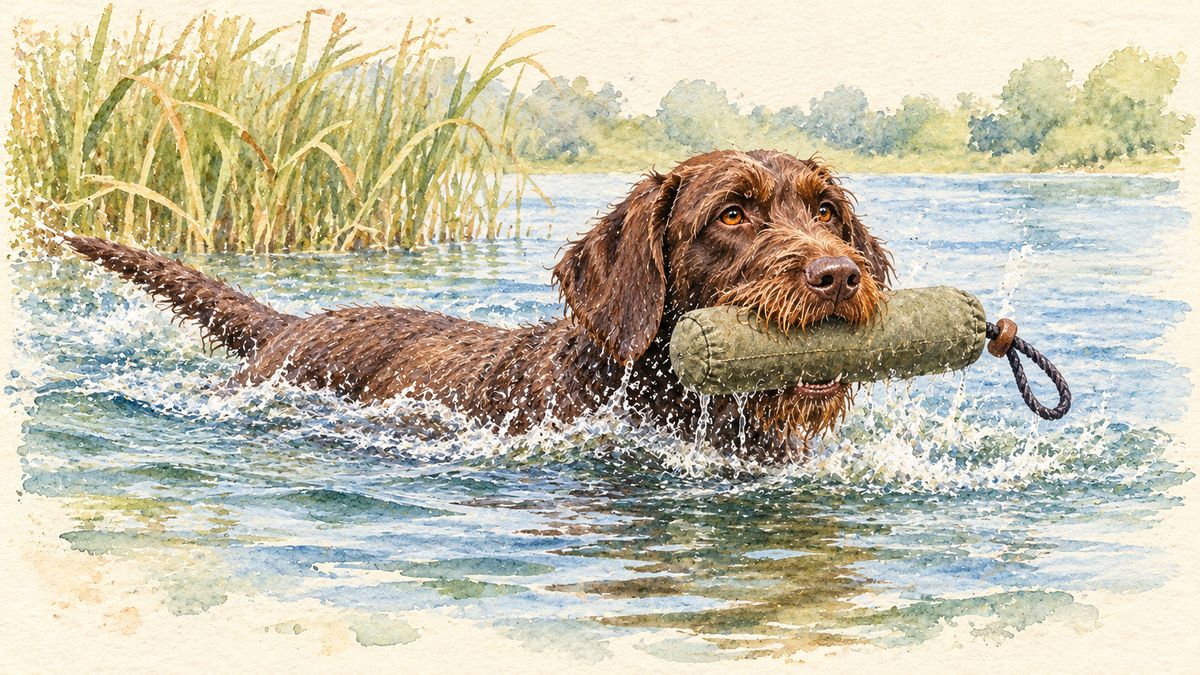
This is a high-energy breed that needs a lot of daily exercise. Plan on at least an hour or more of activity each day, ideally including some off-leash running in a safe, enclosed area. Long walks alone are usually not enough for this athletic dog.
Thanks to their Poodle heritage, most of these dogs are strong swimmers and love the water. Great activities for this breed include:
- Retrieving and fetch: A natural favorite for a dog bred to bring back game.
- Hiking and trail running: They make excellent outdoor companions.
- Swimming: Lakes and calm rivers are a perfect playground.
- Mental games: Puzzle toys, scent games and trick training tire out the mind.
A securely fenced yard is strongly recommended, as these dogs may chase birds, squirrels or other animals. While the breed can live in an apartment with regular outdoor access and plenty of exercise, suburban or rural homes with a yard are a better fit.
Weather and Living Conditions
A dense, wiry coat helps a Pudelpointer handle cool mornings, wind and cold water with ease. Dogs with smoother coats may cope a little better in warmer regions. Either way, no dog should spend long periods in extreme heat or cold, so provide shade, fresh water and a comfortable indoor space.
This is also a people-oriented breed that does not enjoy being left alone for long hours. It is happiest when it can share daily life, outdoor trips and quiet evenings with its family.
Pudelpointer Grooming
Do Pudelpointers Shed?
Yes, but only lightly; they are generally low-shedding dogs. Their wiry coat sheds less than many sporting breeds, though some loose hair is normal, especially with seasonal changes. No dog is truly hypoallergenic, so allergy sufferers should spend time with the breed first.
One big advantage of Pudelpointer grooming is that it is fairly simple. Unlike its Poodle ancestor, the breed does not need regular professional grooming.
Grooming Routine
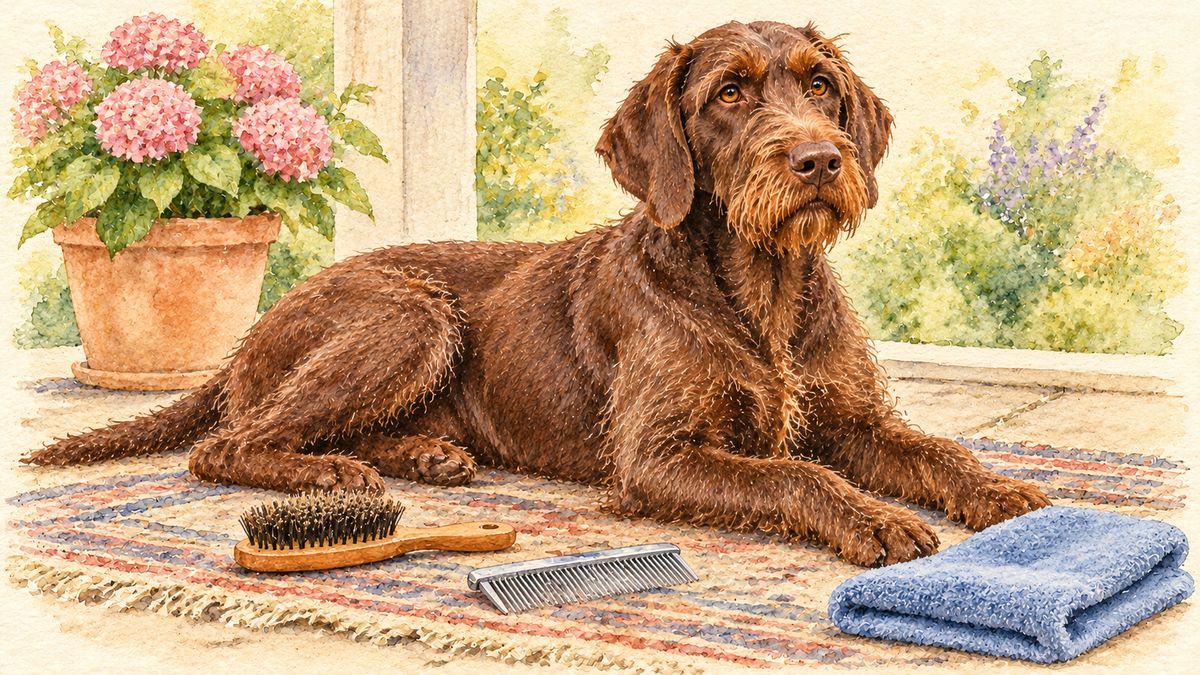
- Brushing: Brush the coat regularly, about once a week, to remove loose hair and prevent matting.
- Bathing: Bathe only as needed, such as after a muddy hunt or a swim in murky water.
- Skin checks: After time in fields and woods, check the coat and skin for ticks, burrs and small cuts.
- Ears: Check ears for wax and moisture, and dry them well after swimming.
- Nails: Keep nails short, especially if your dog doesn't wear them down on rough ground.
- Teeth: Brush your dog's teeth several times a week to support good dental health.
Pudelpointer Health and Lifespan
This is generally considered a healthy breed, partly because it has been bred with a strong focus on function and soundness. The typical Pudelpointer lifespan is around 12 to 14 years, and some dogs live longer with good care.
Like all breeds, they can be prone to some health conditions. Responsible breeders screen their dogs and may watch for:
- Hip dysplasia: An abnormal formation of the hip joint that can lead to arthritis.
- Epilepsy: A seizure condition that the breed may be genetically prone to.
- Arthritis: Joint stiffness can develop as active dogs get older.
Keeping your dog at a healthy weight is one of the best ways to protect its joints. Work with your veterinarian on regular checkups, vaccinations, parasite prevention and dental care, and ask about any concerns as your dog ages.
Feeding and Nutrition
This breed does best on a high-quality dog food made for medium or large breeds. Very active hunting dogs may benefit from a performance formula with higher protein to support their energy needs during the season.
Puppies should eat a food designed for growing dogs. Feed puppies smaller, more frequent meals, and feed adults on a regular schedule rather than leaving food out all day. Portion sizes depend on age, weight and activity level, so follow the package guidelines and ask your veterinarian for advice. Treats should make up no more than about 10 percent of daily calories.
History of the Pudelpointer
The breed was developed in Germany in 1881. The goal was to create the ideal all-around hunting dog by combining two very different breeds. The German hunting Poodle brought intelligence, a love of water, a protective coat and strong retrieving skills. The English Pointer added a keen nose, speed, pointing instinct and a passion for hunting birds.
The breed's early development is usually credited to German breeder Baron von Zedlitz, who wrote about hunting dogs under the pen name "Hegewald." Breeders used far more Pointers than Poodles over the years, carefully selecting dogs for hunting ability, temperament and a weatherproof coat.
The two World Wars were hard on many European breeds, and the breed became rare. The breed first reached North America in the 1950s, and dedicated hunters worked to build up strong breeding programs. Today, it has a loyal following among hunters who want a capable, cooperative dog that can handle many different jobs.
Pudelpointer vs German Wirehaired Pointer
This breed is often compared to the German Wirehaired Pointer, since both are bearded, wire-coated German gun dogs. The German Wirehaired Pointer is a fully AKC-recognized breed and can be a bit more reserved or protective. The Pudelpointer stands out for its Poodle heritage, its love of water and its especially cooperative, easygoing temperament.
Is a Pudelpointer Right for You?
A Pudelpointer could be a wonderful match if you:
- Hunt, hike, swim or spend lots of time outdoors
- Can provide at least an hour of vigorous exercise every day
- Want a smart, trainable dog that loves to work with you
- Prefer a low-shedding, easy-care coat
- Have a home with a securely fenced yard
A Pudelpointer may not be the best fit if you:
- Want a laid-back dog that is happy with short walks
- Live in a small apartment with little outdoor access
- Keep cats, rabbits or other small pets
- Are away from home for long hours most days
Finding a Pudelpointer Puppy
Because this is still a rare breed, finding a puppy may take time. Look for breeders who health-test their dogs, are involved with hunting dog testing and are happy to answer your questions. Many breeders keep waiting lists, and puppies are often placed with hunting homes first. Breed clubs and rescue groups can also help you find an adult Pudelpointer in need of a home.
Fun Facts About the Pudelpointer
- "Pudel" is the German word for Poodle, which is where the breed's name begins.
- The breed was created in Germany in 1881 as an all-in-one hunting dog.
- Most are natural swimmers thanks to their Poodle ancestors.
- Their wiry coat helps protect them from thorns, cold water and brush.
- Despite its Poodle heritage, the breed does not need professional grooming.
- The breed is listed in the AKC Foundation Stock Service.
Frequently Asked Questions
What is a Pudelpointer mixed with?
It was developed from the German hunting Poodle and the English Pointer. Today it breeds true and is treated as its own breed rather than a mix.
How big do Pudelpointers get?
Adults usually weigh 45 to 70 pounds and stand roughly 22 to 27 inches tall at the shoulder.
Are Pudelpointers good family dogs?
They can be loving family dogs for active households with respectful children. They need lots of exercise and may not suit homes with small pets.
Do Pudelpointers shed a lot?
No, they are generally low-shedding dogs with a wiry, easy-care coat. Weekly brushing is usually enough.
How long do Pudelpointers live?
The average Pudelpointer lifespan is about 12 to 14 years with good care, a healthy diet and regular veterinary checkups.
Are Pudelpointers easy to train?
Yes, they are intelligent and eager to please, which makes them quick learners. Positive, reward-based training works best.
Final Thoughts
The Pudelpointer is a capable, friendly and hardworking dog that shines in the field and relaxes at home. If you love the outdoors and can offer daily exercise, consistent training and plenty of companionship, this dog may become your perfect hunting partner and loyal family friend.