25 Knabstrupper Horse Facts: Denmark's Spotted Wonder
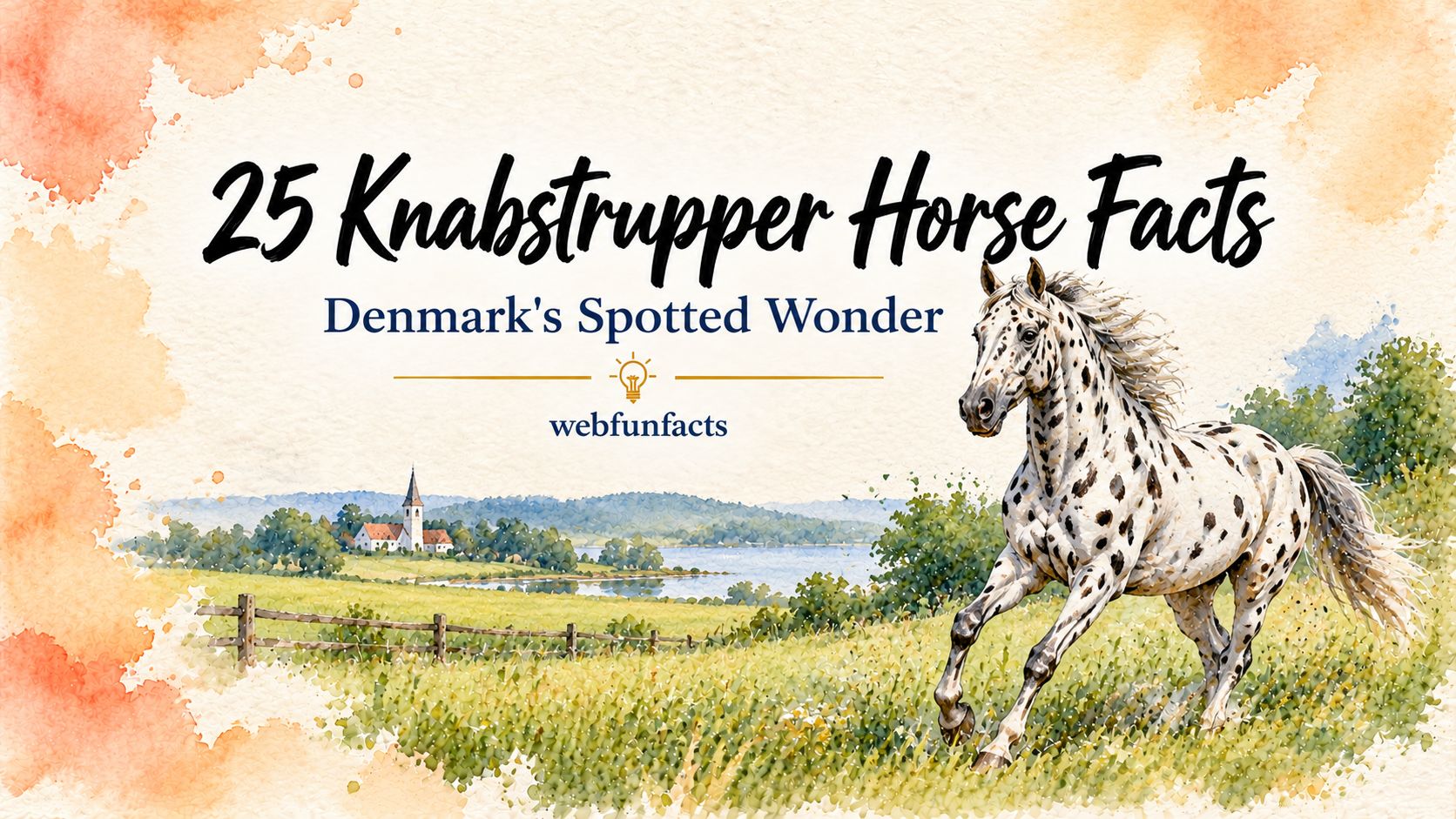
The Knabstrupper is a rare Danish horse breed famous for its eye-catching spots, which can make it look like a leopard on four hooves. Admired in royal stables, circus rings and modern dressage arenas, it combines a striking coat with a willing, intelligent nature.
The breed's story begins with a single remarkable mare in 1812, and its spots come from a gene shared with some other famous spotted breeds. Here are 25 fact-checked Knabstrupper horse facts covering its origins, genetics, near disappearance and the different types bred today.
Knabstrupper Horse Facts
The Knabstrupper is a horse breed from Denmark, best known for its spotted coat patterns.
The breed takes its name from Knabstrupgaard, an estate on the Danish island of Zealand where it was developed.
Spotted horses were fashionable in European courts long before the breed existed, and they appear in Baroque-era paintings and in Denmark's royal Frederiksborg stud.
The breed traces back to 1812, when a spotted chestnut mare later known as Flaebehoppen, or "Flaebe's mare", was bought by Major Villars Lunn, owner of Knabstrupgaard.
Her name comes from an earlier owner, a butcher called Flaebe. Breed histories often say she was originally bought from a Spanish officer stationed in Denmark during the Napoleonic Wars, though this is hard to confirm.
Flaebehoppen was admired for her speed and stamina, and she was crossed with a solid-coloured Frederiksborg-type stallion.
Her grandson, or by some accounts her son, became a famous stallion known as Flaebehingsten, whose dramatic spots helped establish the Knabstrupper look.
Not every Knabstrupper is spotted. Solid-coloured foals are born too, and they are still registered as part of the breed.
Knabstrupper coats come in several named patterns, including leopard (spots all over a white coat), blanket (spots or white over the hindquarters), snowflake and few-spot.
The Leopard-Complex Gene
A Knabstrupper's spots come from a gene called leopard complex, or LP, the same gene behind the spotted coats of the Appaloosa and some other breeds. A single copy of LP produces white patterning with dark spots, while other genes help decide how much of the body is covered. Horses carrying two copies tend to have very few spots on a mostly white coat. Leopard-complex horses also often show three tell-tale signs: mottled pink-and-dark skin around the muzzle and eyes, striped hooves, and white visible around the eye. These clues can reveal the gene even in horses with few spots.
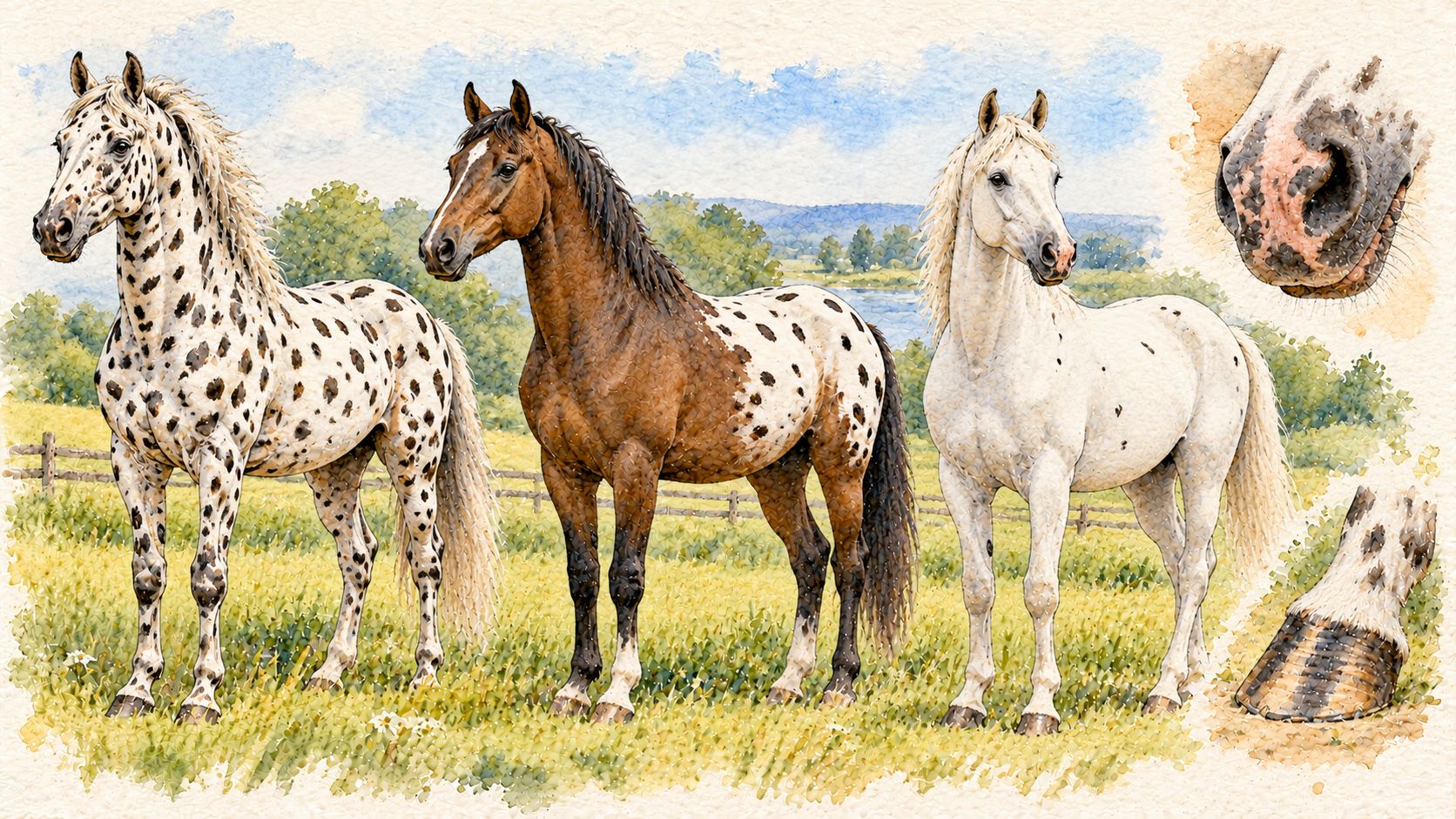
Horses with two copies of the leopard-complex gene usually have congenital stationary night blindness, meaning they see poorly in dim light from birth.
Leopard-complex horses are also thought to have a higher risk of an eye condition called equine recurrent uveitis, so breeders watch eye health carefully.
A Knabstrupper's coat can change as it ages. Some horses gain white hairs over the years, so a foal's pattern may not stay the same.
In the nineteenth century, the breed became popular as a riding and carriage horse in Denmark, valued for its stamina and steady temperament.
Breed lore says Danish officers rode Knabstruppers during the First Schleswig War (1848–1851), and that the bright coats made riders easy to spot on the battlefield, though details are hard to verify.
The breed's numbers fell in the late nineteenth century, largely because breeders focused on colour over quality, leading to heavy inbreeding.
A fire at the Knabstrup estate in the late nineteenth century is reported to have killed many horses, adding to the breed's decline.
To rescue the breed, Danish breeders brought in new bloodlines in the twentieth century, including a few Appaloosa stallions imported in the 1970s.
A Danish breed society for the Knabstrupper was founded in 1971 and helped organise breeding and keep studbook records.
Three Types of Knabstrupper
Today, the Knabstrupper is bred in three main types to suit different riders and jobs. The sport type is a tall, athletic warmblood-style horse used in dressage, show jumping and eventing, with modern lines often crossed with Danish sport horses. The baroque type is shorter, rounder and powerful, resembling the horses seen in old royal paintings, and is popular for classical riding and driving. The pony type is smaller, usually under about 148 centimetres at the withers, and makes a good mount for children. All three share the breed's famous range of spotted and solid coats.
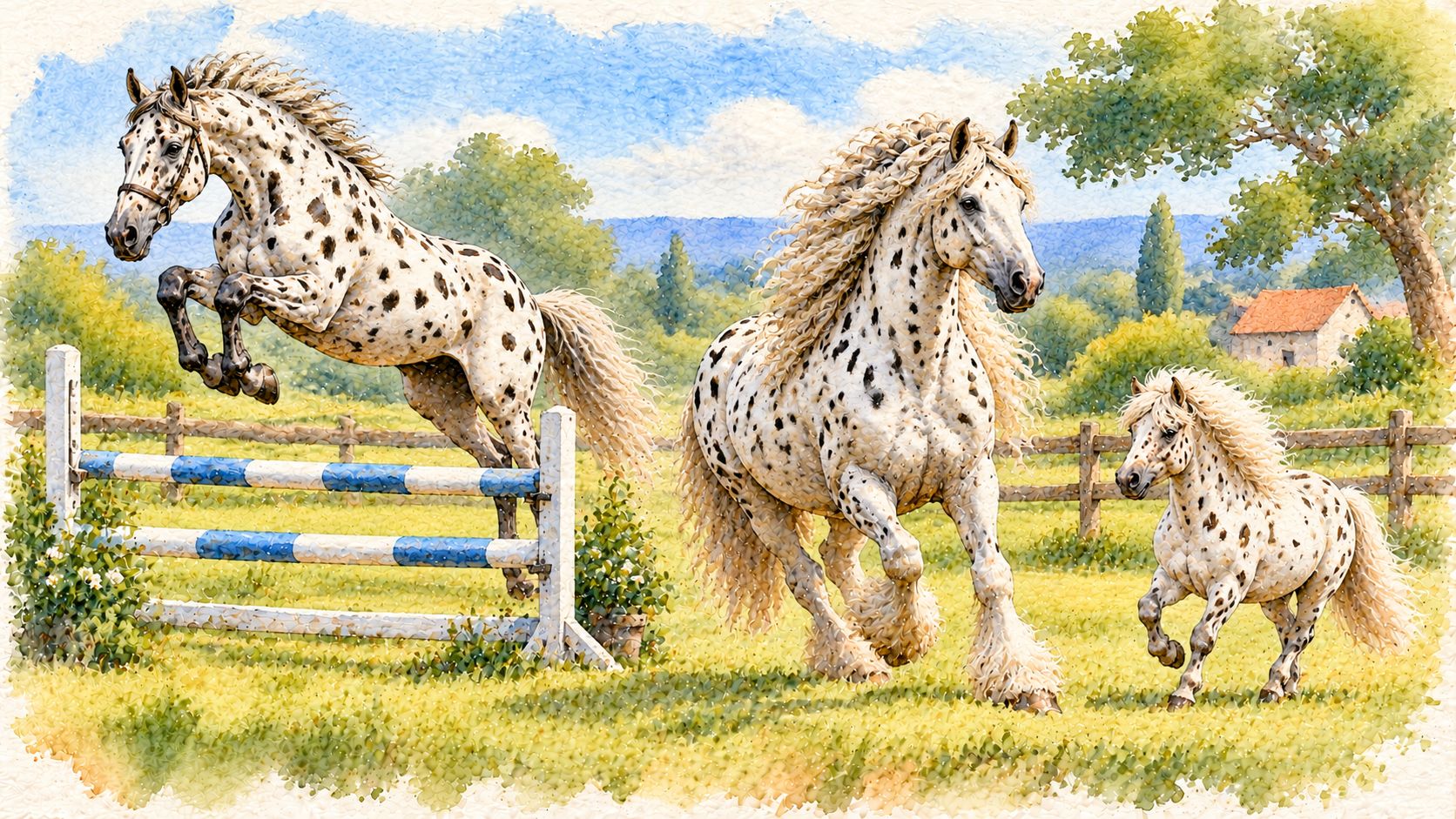
Knabstruppers are popular circus horses because their spots stand out in the ring and they learn routines well.
Although they share the leopard-complex gene, Knabstruppers and Appaloosas are separate breeds: the Knabstrupper is Danish, while the Appaloosa was developed in North America.
The breed has spread from Denmark to other countries, with breeders and registries in parts of Europe, North America and Australia.
Knabstruppers are generally described as friendly, intelligent and easy to train, making them good all-round family horses.
The Knabstrupper remains relatively rare worldwide, with far smaller numbers than mainstream sport horse breeds.
Sources and Further Reading
- Encyclopaedia Britannica
- Oklahoma State University Breeds of Livestock
- The Livestock Conservancy
- University of California, Davis Veterinary Genetics Laboratory
- FAO Domestic Animal Diversity Information System
- The Horse
Frequently asked questions
Where does the Knabstrupper horse come from?
It comes from Denmark and is named after the Knabstrupgaard estate on the island of Zealand.
What causes a Knabstrupper's spots?
The spots are caused by the leopard-complex (LP) gene, the same gene responsible for Appaloosa spotting.
Are all Knabstruppers spotted?
No. Some are born with solid coats, and they are still part of the breed.
Is a Knabstrupper the same as an Appaloosa?
No. They share a spotting gene, but the Knabstrupper is a Danish breed and the Appaloosa is American.
Who was Flaebehoppen?
She was a spotted mare bought by Major Villars Lunn in 1812 and is regarded as the foundation mare of the breed.
What are Knabstruppers used for?
They are used for dressage, show jumping, driving, circus work and general riding, and the pony type suits children.