The Bullmastiff is a powerful, imposing dog with a broad wrinkled head, a dark mask and a muscular body that can weigh as much as an adult person. Yet behind that formidable look is a calm, sweet-natured and deeply loyal companion that loves nothing more than relaxing near its family.
Developed in England to guard large estates against poachers, this breed combines courage and confidence with a surprisingly gentle, docile temperament at home. In this complete guide, you will learn everything you need to know before bringing one home, including its size, temperament, grooming needs, exercise requirements, health, diet and history.
Bullmastiff at a Glance
| Trait | Details |
|---|---|
| Breed group | Working (AKC) |
| Height | 25 to 27 inches (64 to 69 cm) for males; 24 to 26 inches (61 to 66 cm) for females |
| Weight | 110 to 130 pounds (50 to 59 kg) for males; 100 to 120 pounds (45 to 54 kg) for females |
| Life expectancy | About 7 to 9 years |
| Coat | Short, dense, slightly rough |
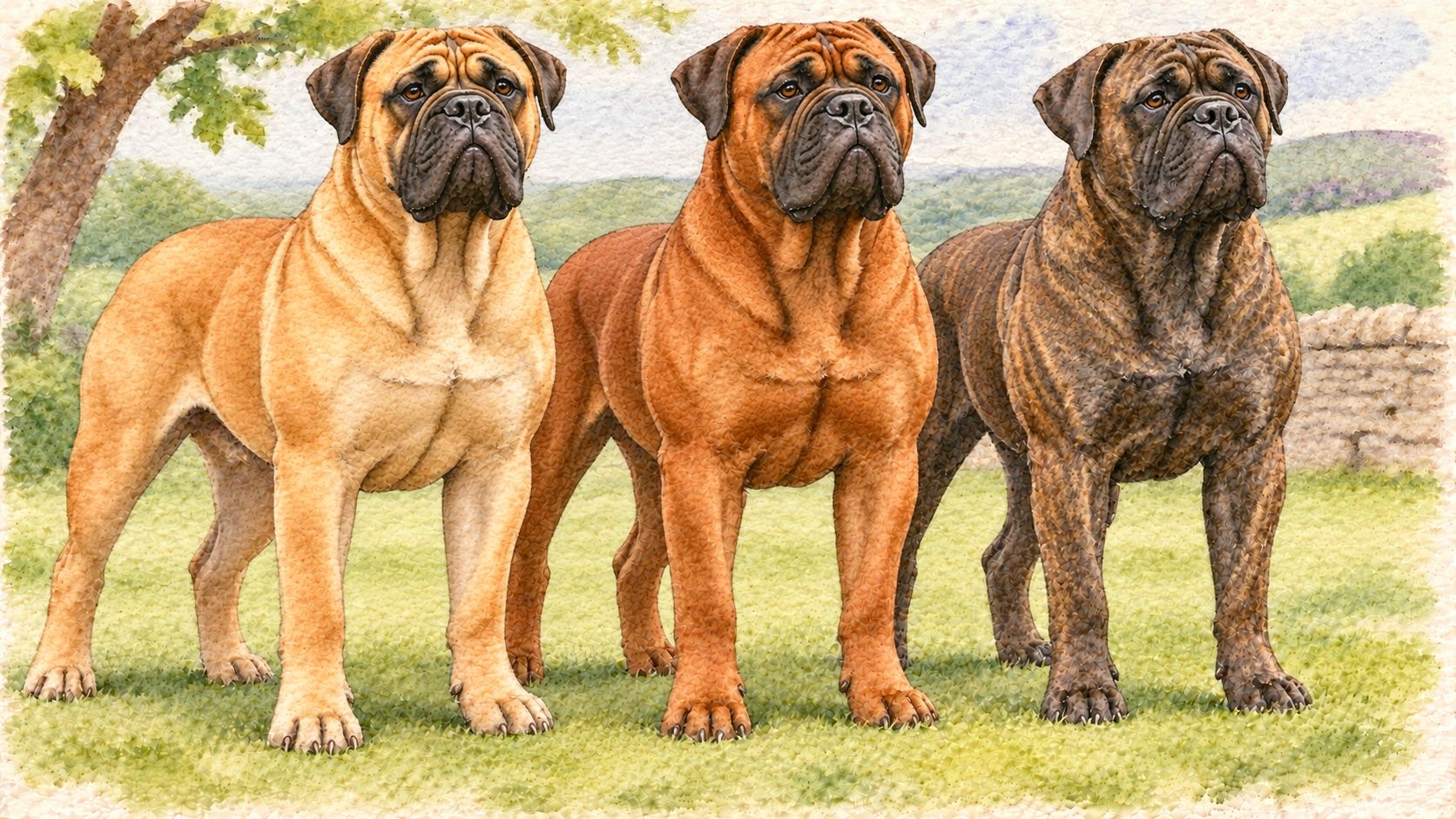
| Colors | Fawn, red, brindle, usually with a dark mask |
| Shedding | Moderate |
| Energy level | Low |
| Temperament | Fearless, confident, loyal, docile, affectionate |
| Good for | Experienced owners, families with space, calm households |
| Origin | England (1800s) |
What Is a Bullmastiff?
This is a large, muscular guardian breed developed in 19th-century England by crossing the Mastiff with the old English Bulldog. Its job was to help gamekeepers protect country estates and game preserves from poachers. The dog needed to be quiet, fast enough to catch an intruder and strong enough to pin and hold them without causing serious harm.
The American Kennel Club places the breed in the Working Group and recognized it in 1934. Today, it is valued as a devoted family companion and natural watchdog that tends to be calm indoors and protective when it matters.
Bullmastiff Size and Appearance
How Big Do Bullmastiffs Get?
Bullmastiffs are big dogs. Males typically stand 25 to 27 inches (64 to 69 cm) tall at the shoulder and weigh 110 to 130 pounds (50 to 59 kg), while females stand 24 to 26 inches (61 to 66 cm) and weigh 100 to 120 pounds (45 to 54 kg).
The body is powerful, compact and symmetrical, with a broad, deep chest and strong legs. Despite its size, the breed is athletic and moves with confidence and purpose.
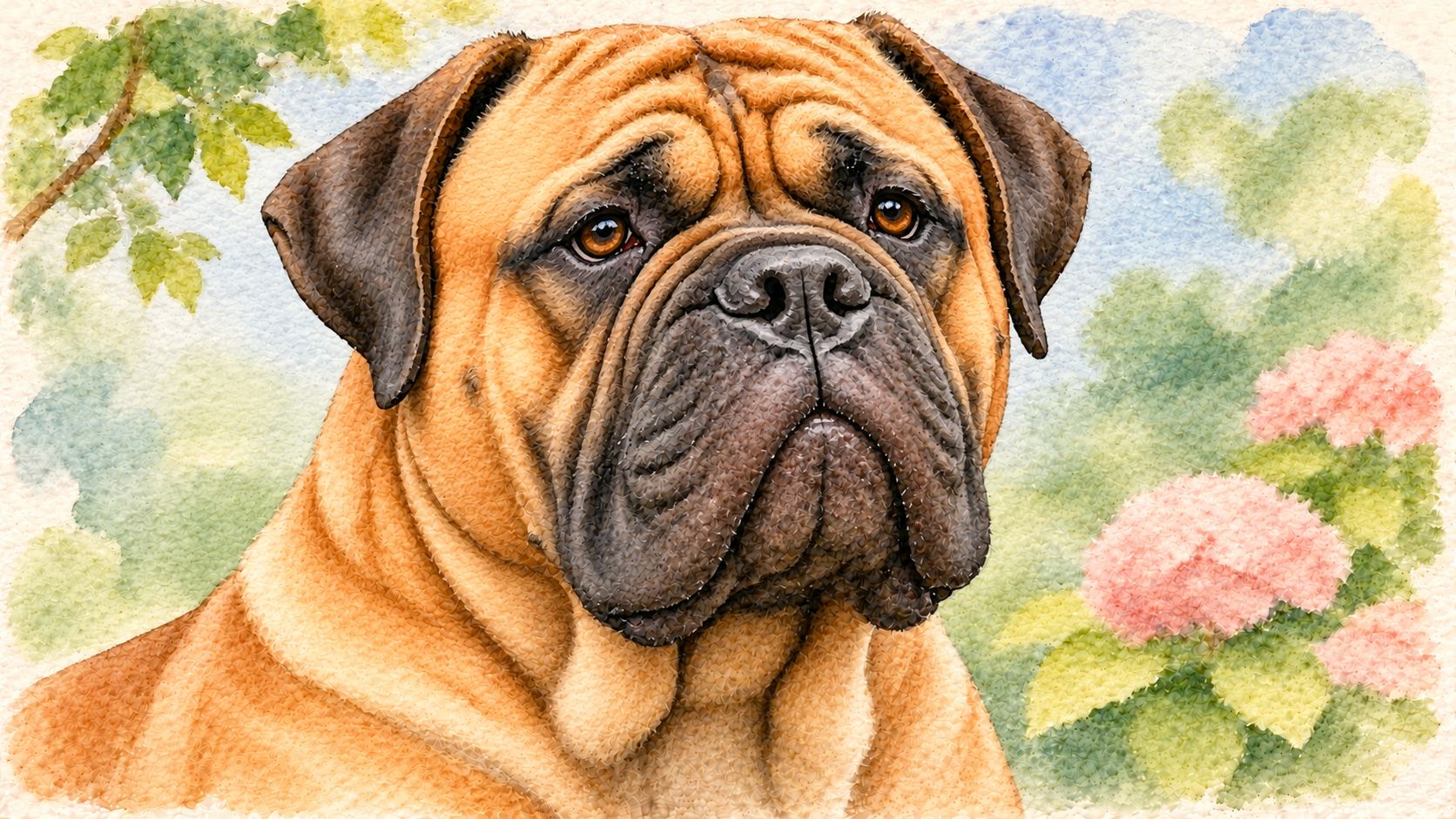
The head is large and square, with wrinkles on the forehead when the dog is alert. The muzzle is short and broad, and a dark mask usually covers the face. Its V-shaped ears are set wide and carried close to the cheeks, and its dark eyes give it a keen, intelligent expression.
Coat and Colors
The coat is short and dense, slightly rough to the touch, and gives good protection against the weather. It lies close to the body and is easy to maintain.
Accepted colors are fawn, red and brindle, in any shade. A dark mask on the muzzle is typical, and a small white mark on the chest is allowed in some standards.
Bullmastiff Temperament and Personality
The Bullmastiff temperament balances quiet confidence with a loving, gentle nature. Here is what you can expect:
- Fearless and confident: These dogs are naturally brave and self-assured, which makes them excellent guardians.
- Sweet-natured and docile: At home, most are calm, gentle and easygoing.
- Loyal and protective: They are devoted to their families and naturally watchful of their home and property.
- Quiet: The breed does not bark much, a trait that goes back to its days of silently tracking poachers.
- Affectionate: Many think they are lapdogs and like to lean on or snuggle with their people.
Because of their size and guarding instincts, these dogs need confident, consistent leadership and early socialization. A well-raised Bullmastiff is discerning rather than aggressive, accepting welcome guests while staying alert to anything unusual.
Are Bullmastiffs Good Family Dogs?
Yes, Bullmastiffs can be wonderful family companions. They are generally patient and gentle with children in their own family and are often protective of them.
Because they are so large and strong, they can accidentally knock over small kids, so supervision is important. Teach children to respect the dog's space, and make sure the dog has a quiet place to rest.
Are They Good With Other Pets?
Many get along well with other pets they are raised with. Some can be less tolerant of unfamiliar dogs, especially of the same sex, so early socialization and careful introductions are important.
Cats and small pets that share the home from puppyhood are often accepted as part of the family. Even so, a dog this strong should always be supervised during play, since an enthusiastic bump from a big dog can easily knock over a smaller animal.
Training a Bullmastiff
These dogs are intelligent but can be independent and strong-willed. Training should start early, before the puppy grows into a very large adult. Use positive reinforcement such as praise, treats and play, and be calm, patient and consistent.
Training tips:
- Socialize early. Introduce your puppy to many people, places, sounds and dogs to build confidence.
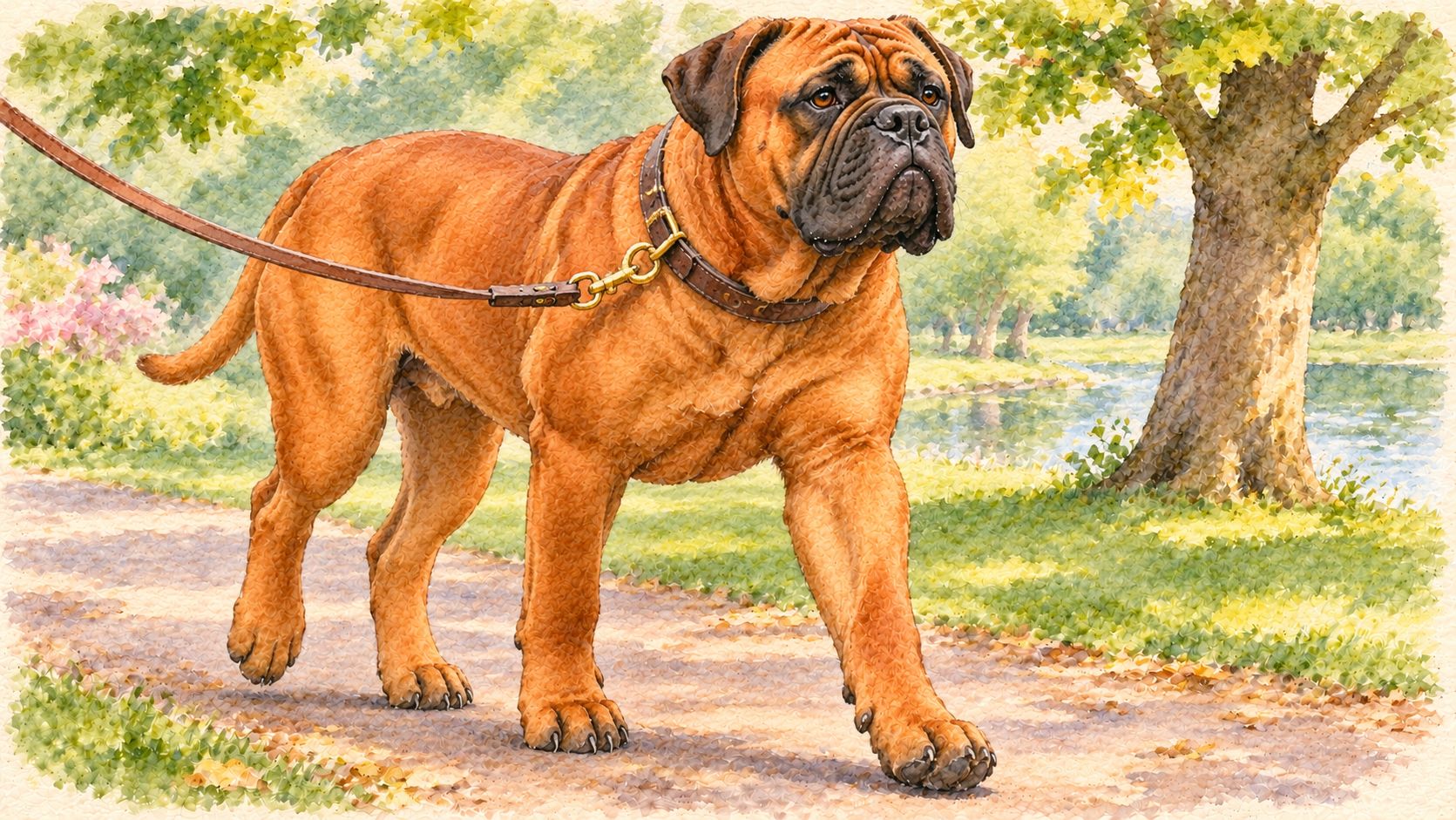
- Teach leash manners young. A 120-pound dog that pulls is hard to handle, so practice loose-leash walking from day one.
- Keep sessions short. Brief, upbeat lessons work best for this breed.
- Be consistent. Set clear rules and make sure everyone in the household follows them.
- Try dog sports. The breed can take part in obedience, rally, tracking, agility and conformation.
Exercise Needs
The breed has a low energy level and requires only modest exercise. A couple of moderate daily walks and some playtime in a secure yard are usually enough to keep it fit and content. These dogs are not built for long runs or intense endurance activities.
Puppies should avoid strenuous exercise, long runs and repetitive jumping while their bones and joints are still developing. As with other short-muzzled breeds, take care in hot, humid weather and plan walks for cooler parts of the day.
Can a Bullmastiff Live in an Apartment?
Surprisingly, yes. Despite its large size, the breed can do well in an apartment as well as a house, thanks to its calm, quiet nature and modest exercise needs. Daily walks and enough room to stretch out comfortably are the main requirements.
Keep in mind that stairs and elevators matter with a very heavy dog, especially as it ages. A ground-floor home or an elevator building can make life easier for both of you, and a sturdy, supportive dog bed helps cushion those big joints.
Bullmastiff Grooming
Do Bullmastiffs Shed?
Yes, Bullmastiffs shed a moderate amount, with somewhat heavier shedding during seasonal changes. Their short coat requires minimal grooming overall.
Grooming Routine
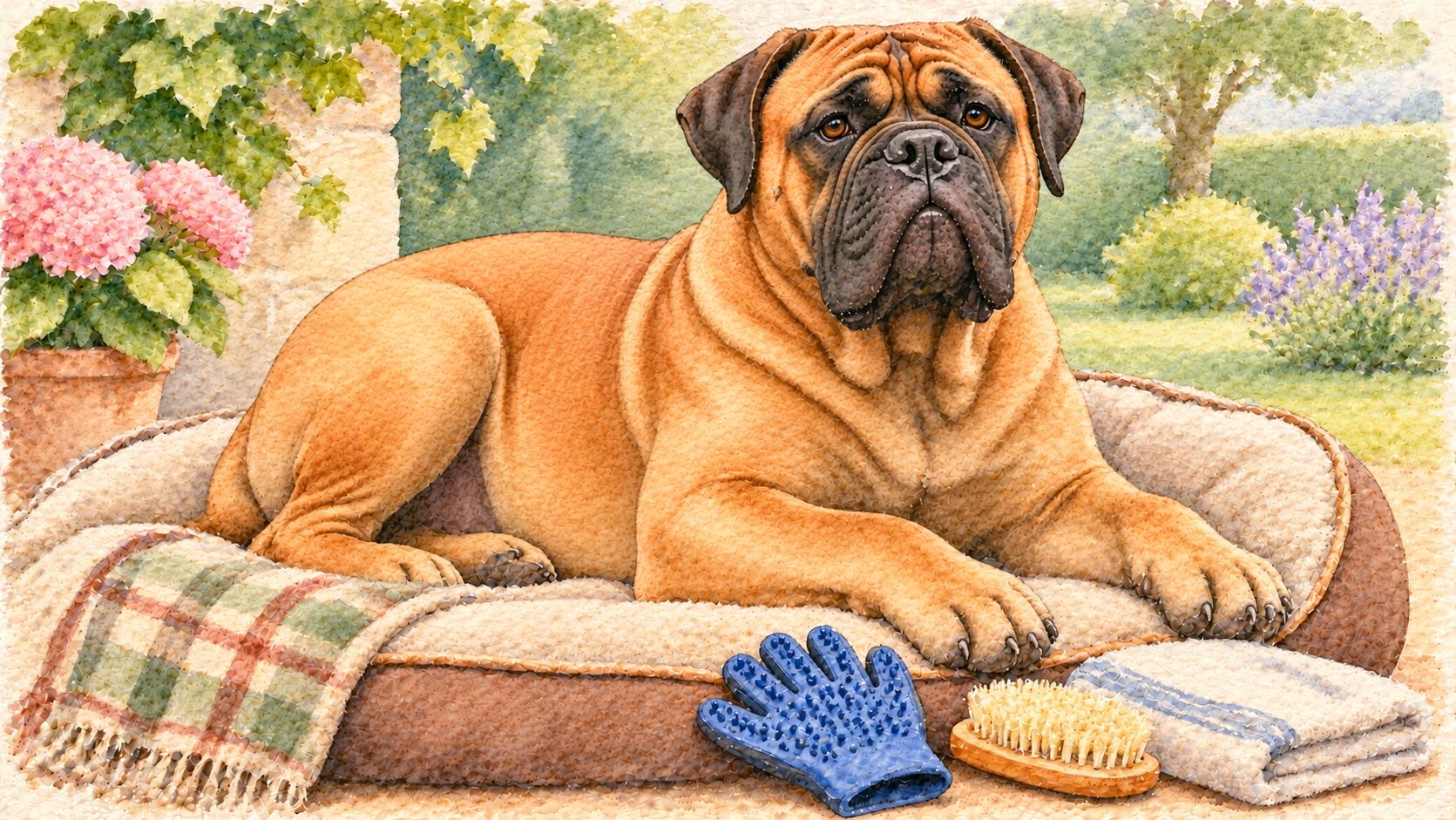
- Brushing: Brush once a week with a rubber grooming mitt or soft bristle brush to remove loose hair.
- Drool: Many dogs drool, especially after eating or drinking, so keep a towel handy and wipe the face and jowls.
- Wrinkles: Check and gently clean facial wrinkles to keep them dry.
- Bathing: Bathe only as needed.
- Nails and teeth: Trim nails regularly, since long nails can affect comfort in a heavy dog, and brush teeth several times a week.
Bullmastiff Health and Lifespan
Like many large breeds, the Bullmastiff has a shorter lifespan than smaller dogs, typically about 7 to 9 years. Responsible breeders screen their dogs for inherited conditions, which may include:
- Hip and elbow dysplasia: Abnormal development of the joints, common in large breeds.
- Bloat (gastric dilatation-volvulus): A serious condition in deep-chested dogs where the stomach fills with gas and may twist. Learn the signs and ask your veterinarian about prevention.
- Eye conditions: Issues such as entropion, where the eyelid rolls inward, can occur.
- Hypothyroidism: An underactive thyroid that can affect weight and energy.
- Certain cancers: Some cancers have been reported in the breed.
Keeping your dog at a lean, healthy weight helps protect its joints. Always work with your veterinarian to set up a routine of checkups, vaccinations and preventive care.
Feeding and Nutrition
A high-quality large-breed or giant-breed dog food is a good choice. These formulas are designed with the needs of big dogs in mind, including support for joints and controlled growth.
Puppies should eat a large-breed puppy food to support steady, healthy growth rather than rapid weight gain. Many owners split daily food into two or more smaller meals, which may help reduce the risk of bloat. Follow the package feeding guide and ask your veterinarian for advice on portions.
History of the Bullmastiff
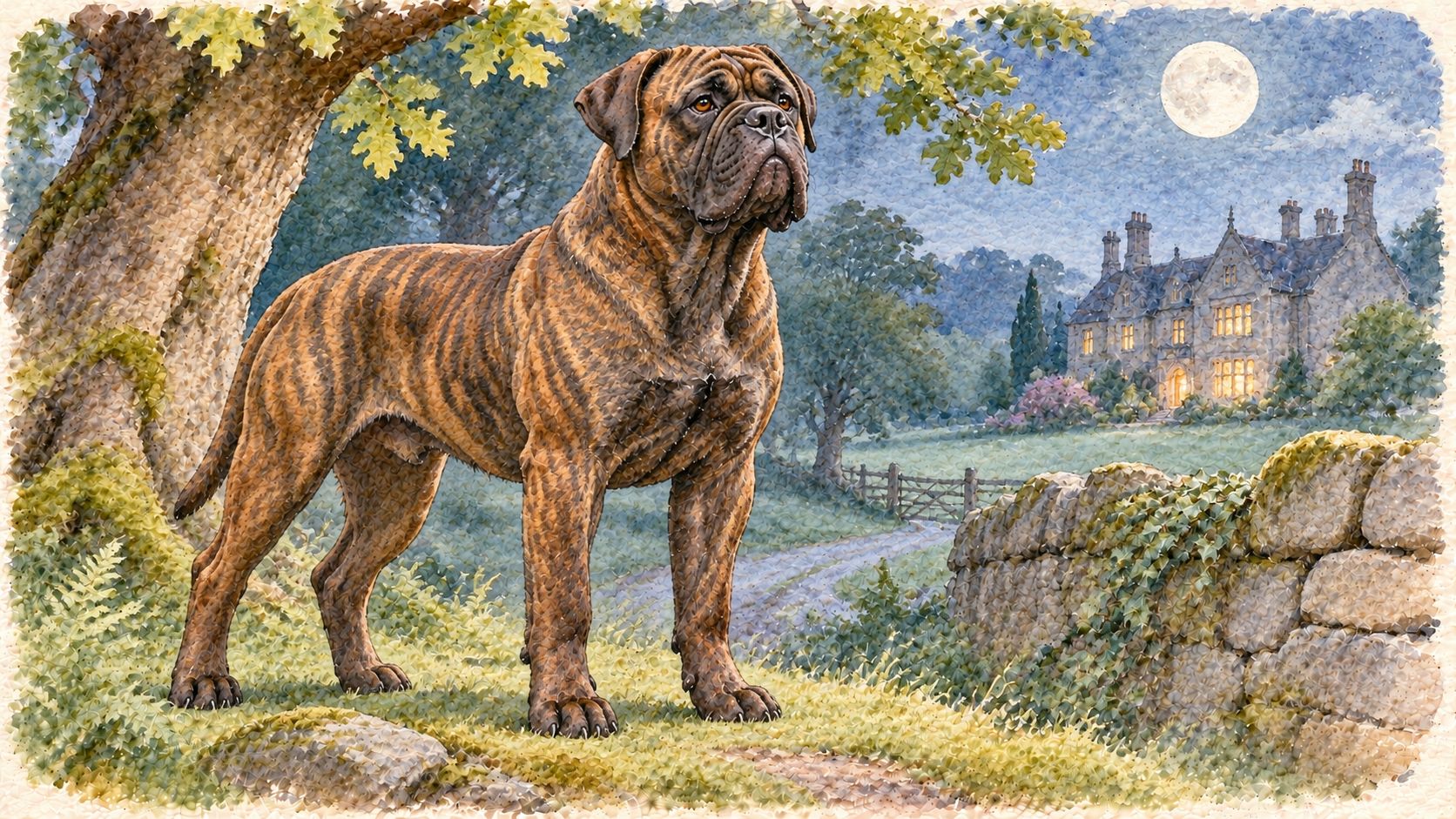
The breed was developed in 19th-century England, when poaching was a serious problem on large country estates. Gamekeepers needed a dog that could quietly track intruders at night, catch them quickly and hold them down until the keeper arrived, without mauling them.
The Mastiff was strong but too slow, while the old Bulldog was fast and fierce but lacked size. Crossing the two produced the ideal dog. The often-quoted formula was roughly 60 percent Mastiff and 40 percent Bulldog. The breed became known as the "Gamekeeper's Night Dog," and dark brindle dogs were especially valued because they were hard to spot in the dark.
As poaching declined, the breed's calm loyalty and guarding talent made it popular as an estate guardian and family protector. The English Kennel Club recognized it in 1924, and the American Kennel Club followed in 1934.
The breed has also had its share of fame. A Bullmastiff named Butkus, owned by Sylvester Stallone, appeared in the film Rocky. A Bullmastiff named Mac also featured in a Honda Odyssey Super Bowl commercial.
Today, the breed is still admired for the same qualities gamekeepers prized long ago: quiet confidence, steady nerves and unwavering loyalty to the people it calls family.
Bullmastiff vs Mastiff
The Bullmastiff and the Mastiff look similar, but there are key differences. The Mastiff is larger and heavier, often weighing well over 150 pounds, with a more massive frame. The Bullmastiff is smaller, more athletic and quicker, a result of its Bulldog ancestry, and its colors include brindle, red and fawn.
Is a Bullmastiff Right for You?
This breed could be a great match if you:
- Want a calm, loyal and protective family companion
- Have experience handling large, strong dogs
- Prefer a dog with low exercise needs
- Can commit to early socialization and consistent training
- Do not mind some drool and shedding
It may not be the best fit if you:
- Want a running or hiking partner
- Cannot physically manage a dog over 100 pounds
- Have very young children and no time for supervision
- Prefer a long-lived breed
Finding a Bullmastiff Puppy
When looking for a Bullmastiff puppy, choose a responsible breeder who screens parent dogs for hip, elbow and eye problems and raises puppies in a home environment. Ask to meet the parents to see their temperament. Breed clubs and rescue groups are also wonderful places to find adult dogs that need loving homes.
Fun Facts About the Bullmastiff
- The breed was nicknamed the "Gamekeeper's Night Dog."
- It was developed by crossing the Mastiff and the old English Bulldog.
- Dark brindle dogs were favored because they were harder to see at night.
- Sylvester Stallone's dog Butkus, who appeared in Rocky, was a Bullmastiff.
- Despite its size, the breed can adapt to apartment life.
- These dogs bark very little.
Frequently Asked Questions
How big do Bullmastiffs get?
Males usually stand 25 to 27 inches tall and weigh 110 to 130 pounds, while females stand 24 to 26 inches and weigh 100 to 120 pounds.
Are Bullmastiffs good family dogs?
Yes, they are loyal, gentle and protective with their families. Because of their size, they need supervision around small children and consistent training.
How long do Bullmastiffs live?
The average Bullmastiff lifespan is about 7 to 9 years, which is typical for giant breeds. Good nutrition, a healthy weight and regular vet care help.
Do Bullmastiffs drool?
Many do, especially after eating or drinking or when excited. Keeping a towel nearby makes cleanup easy.
Are Bullmastiffs good guard dogs?
Yes, they are natural guardians with a watchful, confident nature. They tend to be quiet and discerning rather than overly vocal.
Do Bullmastiffs need a lot of exercise?
No, they have low exercise needs. A couple of moderate walks a day and some playtime are usually enough.
Final Thoughts
The Bullmastiff is a gentle giant with a guardian's heart, combining courage, loyalty and a calm, affectionate nature. It thrives with confident owners who provide early training, modest daily exercise and plenty of family time. If you have the space and experience to welcome a large, devoted protector, a Bullmastiff may be the perfect companion for your home.