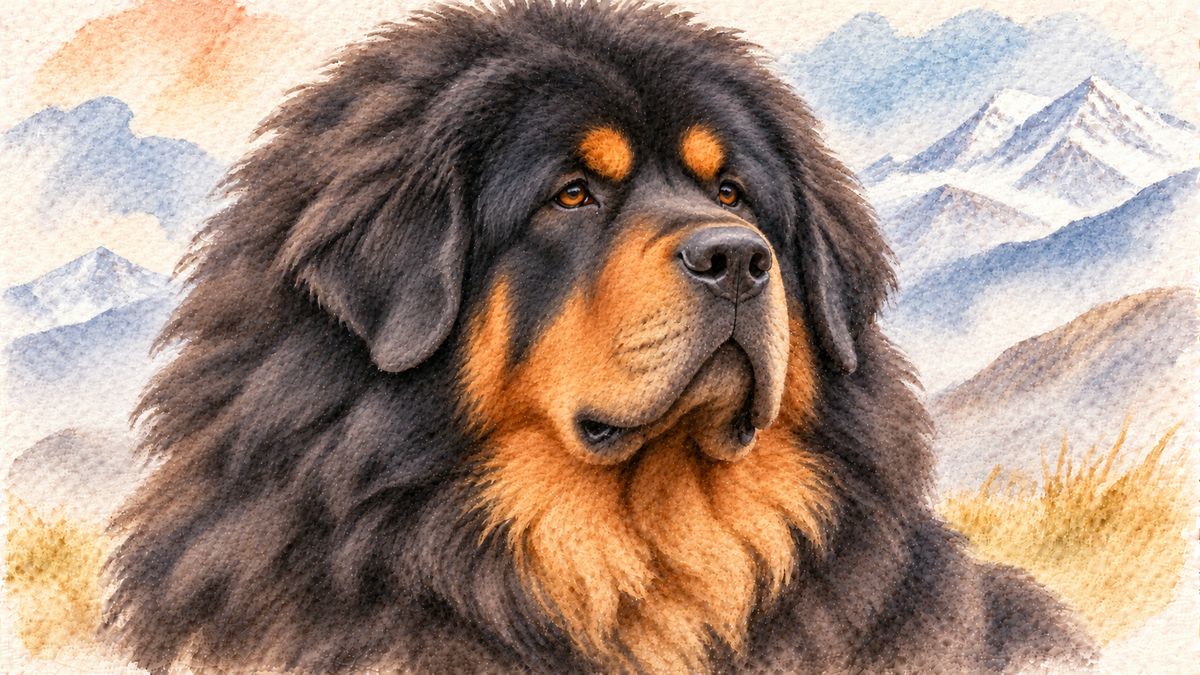
With its thick, lion-like mane, massive head and calm, watchful gaze, the Tibetan Mastiff is one of the most impressive dogs on Earth. For centuries, this giant guardian protected families, flocks and monasteries high in the Himalayas. In Tibet it is known as do khyi, a name usually translated as "home guard" or "door dog."
The Tibetan Mastiff is courageous, loyal and patient with its family, but it is also extremely independent and naturally wary of strangers. It is not a breed for everyone, yet for the right owner it is a devoted and dignified companion. In this complete Tibetan Mastiff dog breed guide, you will learn about its size, temperament, grooming, exercise needs, health concerns, diet and ancient history.
Tibetan Mastiff at a Glance
| Trait | Details |
|---|---|
| Breed group | Working (AKC) |
| Height | Males at least 26 inches (66 cm); females at least 24 inches (61 cm) |
| Weight | Males about 90 to 150 pounds (41 to 68 kg); females about 70 to 120 pounds (32 to 54 kg) |
| Life expectancy | About 10 to 12 years |
| Coat | Thick, heavy double coat with a mane |
| Colors | Black, brown, blue gray, red gold, with or without tan markings |
| Shedding | Heavy once a year; light the rest of the year |
| Energy level | Moderate |
| Temperament | Courageous, loyal, independent, protective, patient |
| Good for | Experienced owners, homes with space and secure fencing |
| Origin | Tibet and the Himalayan region (ancient) |
What Is a Tibetan Mastiff?
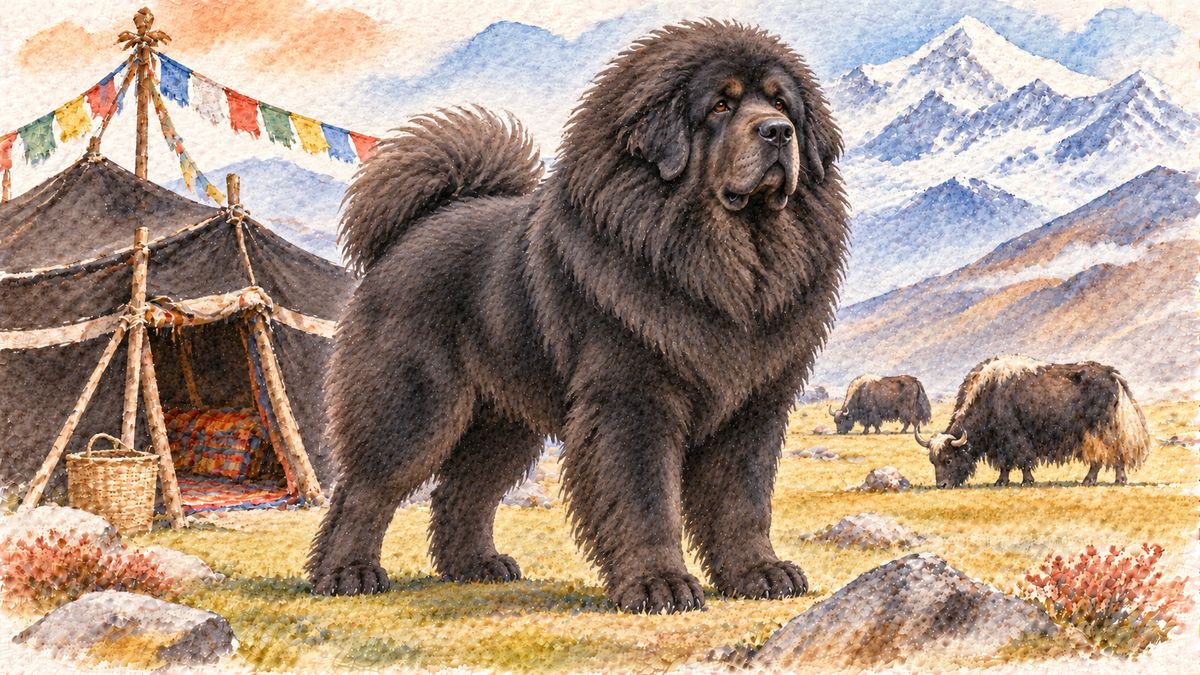
The Tibetan Mastiff is a giant, powerful guardian breed from the high plateaus and mountains of Tibet and the surrounding Himalayan region. Nomadic herders used these dogs to protect their tents, livestock and families from predators such as wolves, leopards and bears. Monasteries and villages also kept them as fearless watchdogs.
Today, the Tibetan Mastiff is a member of the American Kennel Club's Working Group. It is still a guardian at heart, with a strong instinct to protect its home and people. Owners admire its intelligence, quiet dignity and loyalty, while recognizing that its independent mind requires a confident, experienced handler.
Tibetan Mastiff Size and Appearance
The Tibetan Mastiff is a large, heavy-boned dog with a broad head and a powerful, slightly longer-than-tall body. Males stand at least 26 inches tall at the shoulder, and females at least 24 inches. Many dogs are taller than these minimums.
How Big Do Tibetan Mastiffs Get?
Tibetan Mastiffs are giant dogs. Adult males typically weigh about 90 to 150 pounds and females about 70 to 120 pounds, with some individuals larger. Their thick coat makes them look even bigger than they really are.
The breed matures slowly. Many Tibetan Mastiffs are not fully grown, physically and mentally, until they are two to four years old, and males often take longer than females.
The head is broad and impressive, with a strong muzzle, deep-set almond-shaped eyes and medium-sized drop ears. The bushy tail curls over the back. Many dogs have tan markings above the eyes that look like a second pair of eyes, adding to their watchful expression.
Coat and Colors
The Tibetan Mastiff has a thick, heavy double coat made for freezing mountain weather. The outer coat is coarse and straight, while the undercoat is dense and woolly. Males usually grow a heavier mane around the neck and shoulders, giving them their famous lion-like appearance.
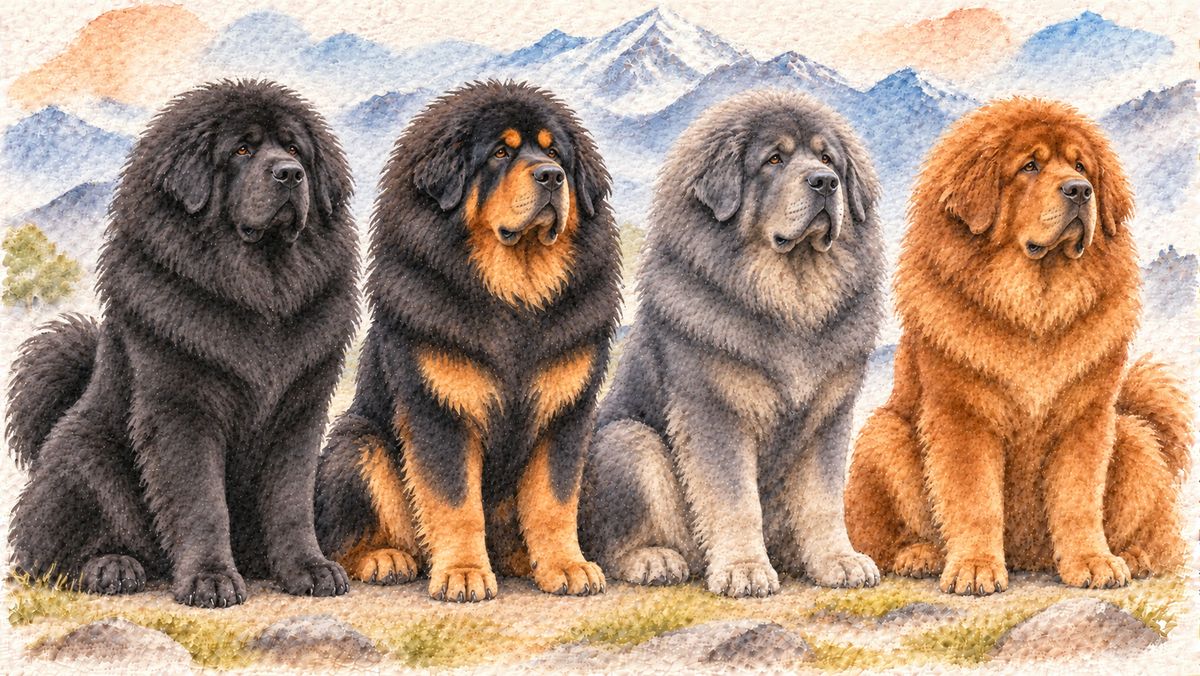
Accepted colors include black, brown and blue gray, each with or without tan markings, as well as shades of gold ranging from light gold to deep red. Some dogs have small white markings on the chest or feet.
Tibetan Mastiff Temperament and Personality
The Tibetan Mastiff temperament is a blend of protective guardian and gentle family companion. This breed is known for being:
- Courageous: It will stand its ground against any perceived threat to its family or territory.
- Loyal: It forms a deep bond with its people and is devoted to their safety.
- Independent: It was bred to make decisions on its own, so it does not always follow commands instantly.
- Patient and calm at home: With its own family, it is usually gentle, quiet and dignified.
- Reserved with strangers: It is naturally suspicious of unfamiliar people and animals.
Tibetan Mastiffs are known for being more active at night, when predators would traditionally approach. Many will bark at unusual sounds after dark, which can be a concern in close neighborhoods. A Tibetan Mastiff needs an owner who can provide calm, firm and consistent leadership from the start.
Are Tibetan Mastiffs Good With Kids and Other Pets?
A well-socialized Tibetan Mastiff is often patient and protective with the children in its own family. However, it may misread rough play between kids and their visiting friends as a threat. Constant supervision is essential, and the breed is generally better suited to homes with older children.
With other pets, the Tibetan Mastiff usually does best when raised with them from puppyhood. It may be territorial with unfamiliar dogs. Early, ongoing socialization with many people, animals and situations is vital for raising a well-mannered Tibetan Mastiff puppy.
Training a Tibetan Mastiff
Training a Tibetan Mastiff is a long-term commitment. This intelligent breed learns quickly, but it is strong-willed and may decide that your request is not worth following. Short, positive, reward-based sessions work much better than repetitive drills or harsh methods, which can lead to stubbornness or distrust.
Here are a few training tips for Tibetan Mastiff owners:
- Start socialization immediately. Introduce your puppy to many people, places and animals during its first months.
- Enroll in puppy classes. Structured classes help with both training and socialization.
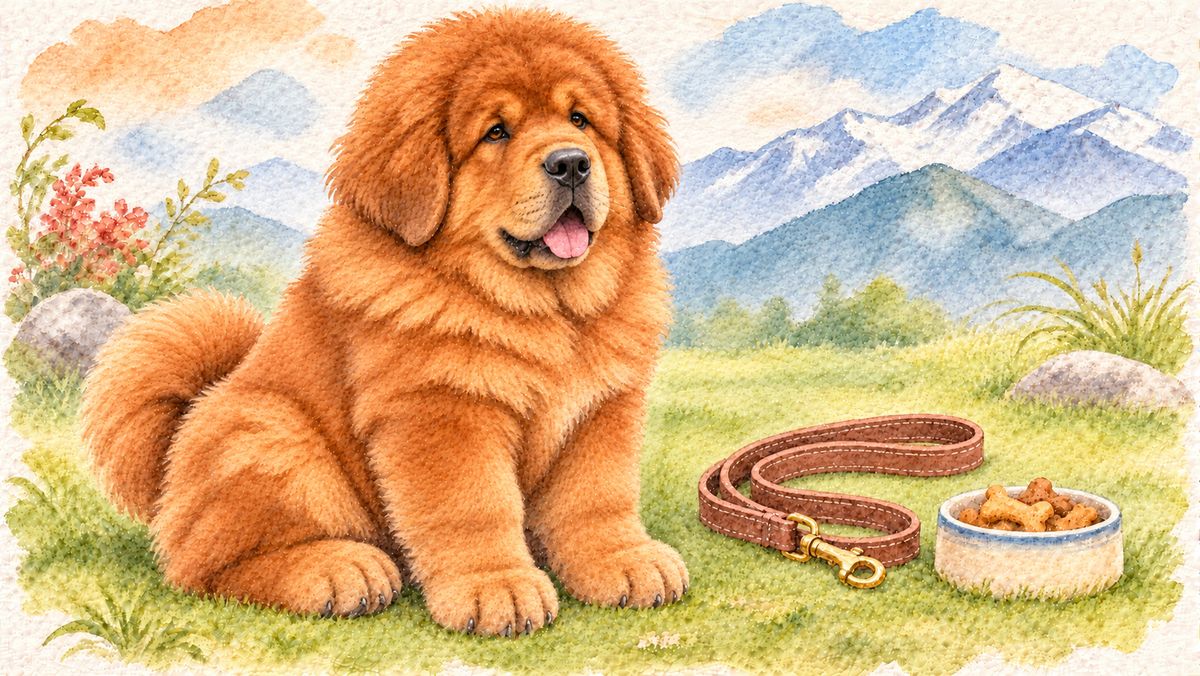
- Teach leash manners early. A giant adult dog that pulls is very hard to control, so start leash training while your puppy is small.
- Be patient and consistent. Expect slower progress than with more eager-to-please breeds.
- Manage guarding behavior. Teach your dog to settle calmly when guests arrive and reward relaxed behavior.
Exercise Needs
The Tibetan Mastiff has a moderate energy level. It does not need intense workouts, but it does benefit from daily walks and time to patrol a securely fenced yard. Many adults are content with one or two leisurely walks a day.
Because of its strong will and protective instincts, a Tibetan Mastiff should always be on a leash or inside a secure fence during exercise. Fences should be tall and sturdy, as some dogs are skilled climbers or diggers.
The breed's heavy coat makes it well suited to cold weather but prone to overheating in summer. Exercise during the cooler parts of the day, provide shade and water, and never leave your dog in a parked car. Puppies should avoid long runs and heavy jumping while their bones and joints are still developing.
Grooming a Tibetan Mastiff
Do Tibetan Mastiffs Shed?
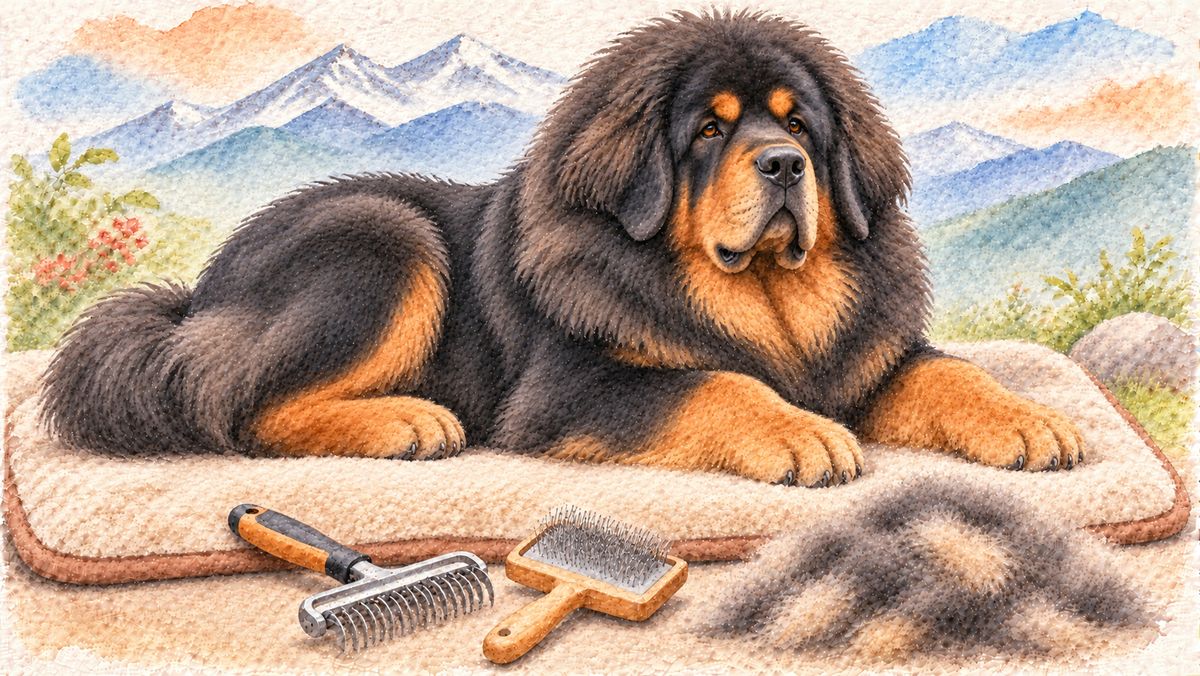
Yes. Tibetan Mastiffs shed lightly for most of the year, then shed heavily once a year, usually in late winter or spring. During this "coat blow," large tufts of undercoat come out, and frequent brushing is needed.
Interestingly, the Tibetan Mastiff is known for having relatively little "doggy" odor compared with many large breeds.
Grooming Routine
- Brushing: Brush once or twice a week, and daily during the annual heavy shed, using an undercoat rake and slicker brush.
- Bathing: Bathe only when needed; the thick coat takes a long time to dry completely.
- Nails: Trim nails regularly, as long nails can affect a giant dog's posture.
- Teeth: Brush your dog's teeth several times a week.
- Ears: Check the drop ears weekly for dirt, wax or signs of irritation.
Tibetan Mastiff Health and Lifespan
The typical Tibetan Mastiff lifespan is about 10 to 12 years, which is fairly long for a giant breed. Like all dogs, it can be prone to certain health conditions. Responsible breeders screen their dogs for common concerns, which may include:
- Hip and elbow dysplasia: Abnormal joint development that can lead to arthritis.
- Hypothyroidism: An underactive thyroid gland that can affect weight, coat and energy.
- Eye conditions: Including entropion, where the eyelid rolls inward.
- Inherited neurological conditions: Rare in the breed, but responsible breeders are aware of them.
Female Tibetan Mastiffs are also unusual in that they typically come into heat only once a year, a trait shared with some other primitive breeds. Always work with your veterinarian to set up a schedule of checkups, vaccinations and preventive care.
Feeding and Nutrition
A giant breed like the Tibetan Mastiff does best on a high-quality, complete and balanced dog food formulated for large or giant dogs. Large-breed puppy foods are designed to support steady, controlled growth, which helps protect developing joints.
Interestingly, many Tibetan Mastiffs eat less than you might expect for their size. Portion sizes depend on age, weight and activity level, so follow the feeding guidelines on the food package and ask your veterinarian for advice. Keeping your dog lean is one of the best ways to support its joints.
History of the Tibetan Mastiff
The Tibetan Mastiff is one of the oldest dog breeds in the world. Its roots lie in the Himalayan Mountains and the Tibetan Plateau, where it developed in isolation over many centuries. Some accounts trace large guardian dogs in the region back thousands of years, though exact dates are hard to prove.
Nomadic herders relied on these dogs to guard livestock and camps, often chaining them by the tent entrance during the day and letting them roam at night. Monasteries and villages kept them as watchdogs too. Travelers' tales of enormous, ferocious dogs in the Himalayas spread to the West over the centuries, adding to the breed's legendary reputation.
One of the first Tibetan Mastiffs known in the West was sent to Queen Victoria of England in the 1840s. Over the following decades, a small number of dogs reached Britain and Europe. The breed arrived in the United States in the mid-20th century, and dedicated breeders worked for decades to establish it. The American Kennel Club officially recognized the Tibetan Mastiff in 2006 as a member of the Working Group.
In the early 21st century, the Tibetan Mastiff became a status symbol in China, and a red Tibetan Mastiff named Big Splash was reportedly sold in 2011 for well over a million US dollars.
Tibetan Mastiff vs Great Pyrenees
The Tibetan Mastiff vs Great Pyrenees comparison is common, as both are giant guardian breeds that work at night and are wary of strangers. The Great Pyrenees is usually white and often a little more tolerant of visitors. The Tibetan Mastiff comes in darker colors, has a heavier mane and tends to be even more independent and territorial.
Is a Tibetan Mastiff Right for You?
A Tibetan Mastiff could be a wonderful match if you:
- Have experience with large, independent guardian breeds
- Have a spacious home with a tall, secure fence
- Want a loyal, protective companion
- Live in a cooler climate
- Can commit to years of consistent training and socialization
- Don't mind a once-a-year heavy shed
A Tibetan Mastiff may not be the best fit if you:
- Are a first-time dog owner
- Live in an apartment or a home with close neighbors who may be bothered by night barking
- Frequently host visitors or other dogs
- Want an obedient dog that follows every command
Finding a Tibetan Mastiff Puppy
Choose a breeder who health-tests parent dogs for hips, elbows, thyroid and eyes, raises puppies in a home setting and focuses on stable temperament. Avoid sellers who emphasize extreme size or rare colors over health. Breed clubs and rescue groups can also help, as adult Tibetan Mastiffs sometimes need new homes.
Fun Facts About the Tibetan Mastiff
- In Tibet, the breed is known as do khyi, often translated as "home guard."
- Males grow a thick mane that makes them look like lions.
- Tibetan Mastiffs are often more active at night than during the day.
- Females usually come into heat only once a year.
- One of the first Tibetan Mastiffs in the West was a gift to Queen Victoria.
- The AKC recognized the Tibetan Mastiff in 2006.
Frequently Asked Questions
How big do Tibetan Mastiffs get?
Males stand at least 26 inches tall and usually weigh about 90 to 150 pounds, while females stand at least 24 inches and weigh about 70 to 120 pounds.
Are Tibetan Mastiffs good family dogs?
They can be loyal and gentle with their own families, especially older children. Because they are protective and wary of strangers, they need experienced owners, early socialization and constant supervision around visiting kids.
Do Tibetan Mastiffs shed a lot?
Tibetan Mastiffs shed lightly most of the year but have one heavy shed annually, usually in late winter or spring. Daily brushing during that period helps manage the loose undercoat.
How long do Tibetan Mastiffs live?
The average Tibetan Mastiff lifespan is about 10 to 12 years, which is relatively long for a giant breed.
Are Tibetan Mastiffs good guard dogs?
Yes. The Tibetan Mastiff was bred for centuries to guard homes, flocks and monasteries, and it remains a natural, highly protective guardian.
Are Tibetan Mastiffs easy to train?
Tibetan Mastiffs are intelligent but very independent and strong-willed. They respond best to patient, consistent, reward-based training started in early puppyhood.
Final Thoughts
The Tibetan Mastiff is a living legend from the roof of the world. Majestic, loyal and fiercely protective, it can be a remarkable companion for experienced owners with the space, time and patience it needs. If you can provide secure fencing, steady training and a calm home, a Tibetan Mastiff may become the most devoted guardian you will ever know.