
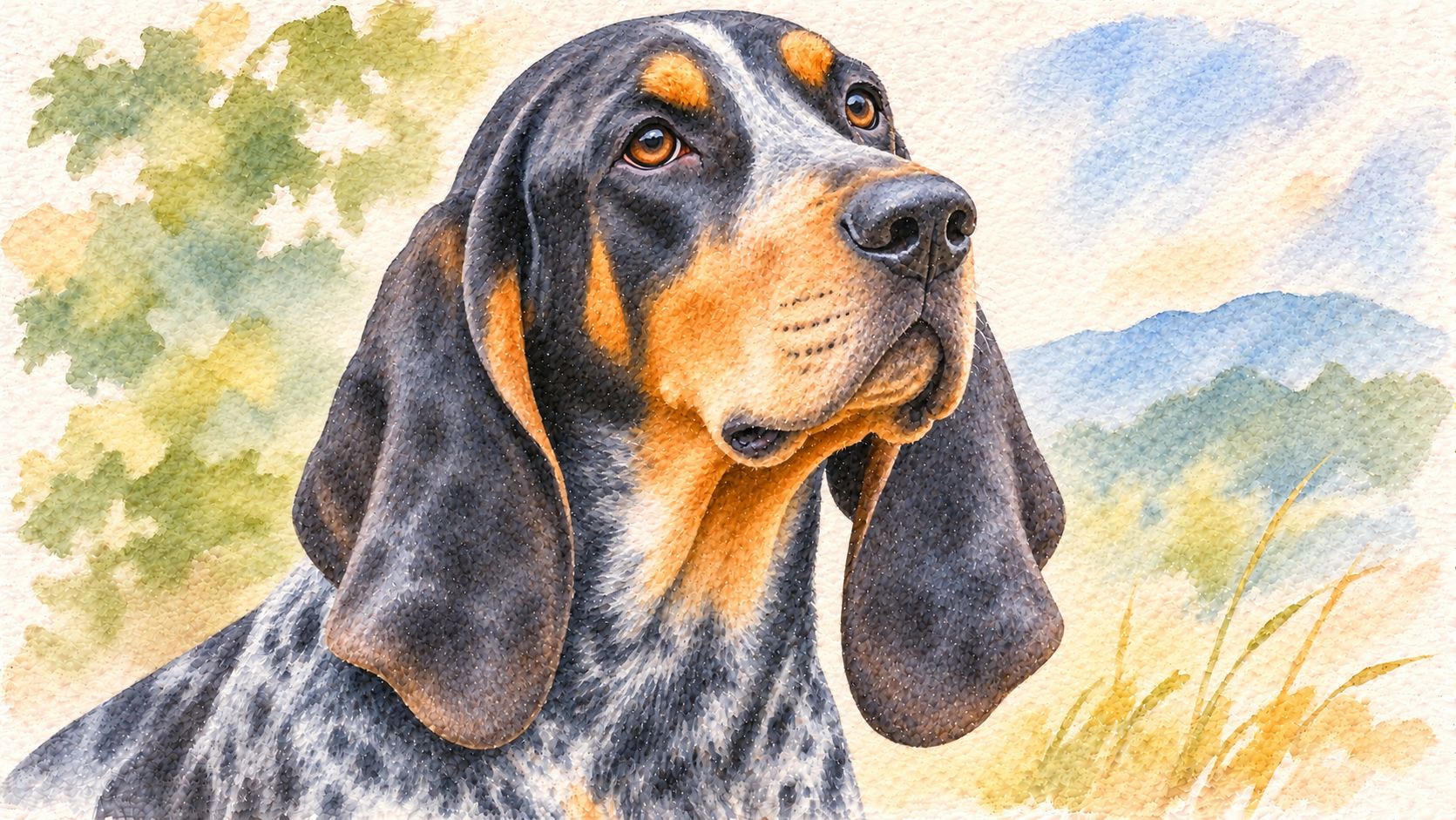
The Bluetick Coonhound is a striking American scent hound famous for its dark blue, speckled coat, soulful eyes and a deep, ringing voice you can hear from far across the woods. Bred in the American South to trail raccoons through the night, this dog combines a tireless nose with a gentle, loyal heart. Its unusual coat pattern even gave the breed its name.
Behind that hard-working hunter is a friendly, affectionate companion that loves its people. In this complete Bluetick Coonhound dog breed guide, you will learn everything you need to know before bringing one home, including its size, temperament, training needs, exercise, grooming, health, diet and fascinating Southern history.
Bluetick Coonhound at a Glance
| Trait | Details |
|---|---|
| Breed group | Hound (AKC) |
| Height | Males 22 to 27 inches (56 to 69 cm); females 21 to 25 inches (53 to 64 cm) |
| Weight | Males 55 to 80 pounds (25 to 36 kg); females 45 to 65 pounds (20 to 29 kg) |
| Life expectancy | About 11 to 12 years |
| Coat | Short, smooth, glossy |
| Colors | Dark blue mottled with black spots; may have tan or red ticking |
| Shedding | Moderate |
| Energy level | Moderate |
| Temperament | Intelligent, loyal, affectionate, determined, vocal |
| Good for | Active families, hunters, homes with a fenced yard |
| Origin | Southern United States |
What Is a Bluetick Coonhound?
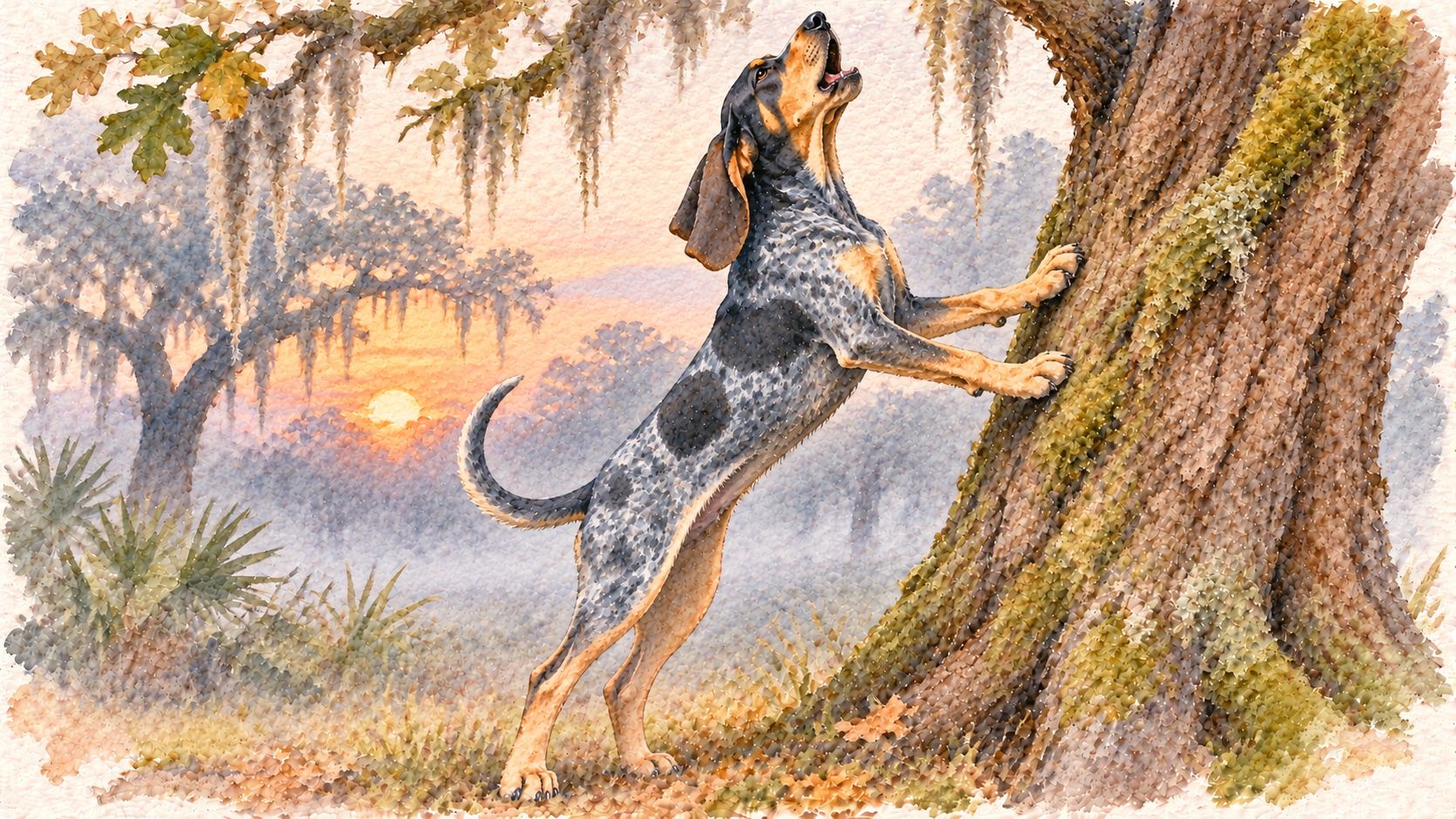
The Bluetick Coonhound is a large, athletic scent hound developed in the United States to hunt raccoons and other small game. Its specialty is "treeing," which means following a scent trail until the animal climbs a tree, then staying at the base and baying loudly so the hunter can find it.
This breed is known for a cold nose, meaning it can follow older, fainter trails than many hounds. It is also known for its booming voice and steady determination. Today, the Bluetick is a member of the American Kennel Club's Hound Group and is loved by hunters and families alike.
Bluetick Coonhound Size and Appearance
How Big Do Bluetick Coonhounds Get?
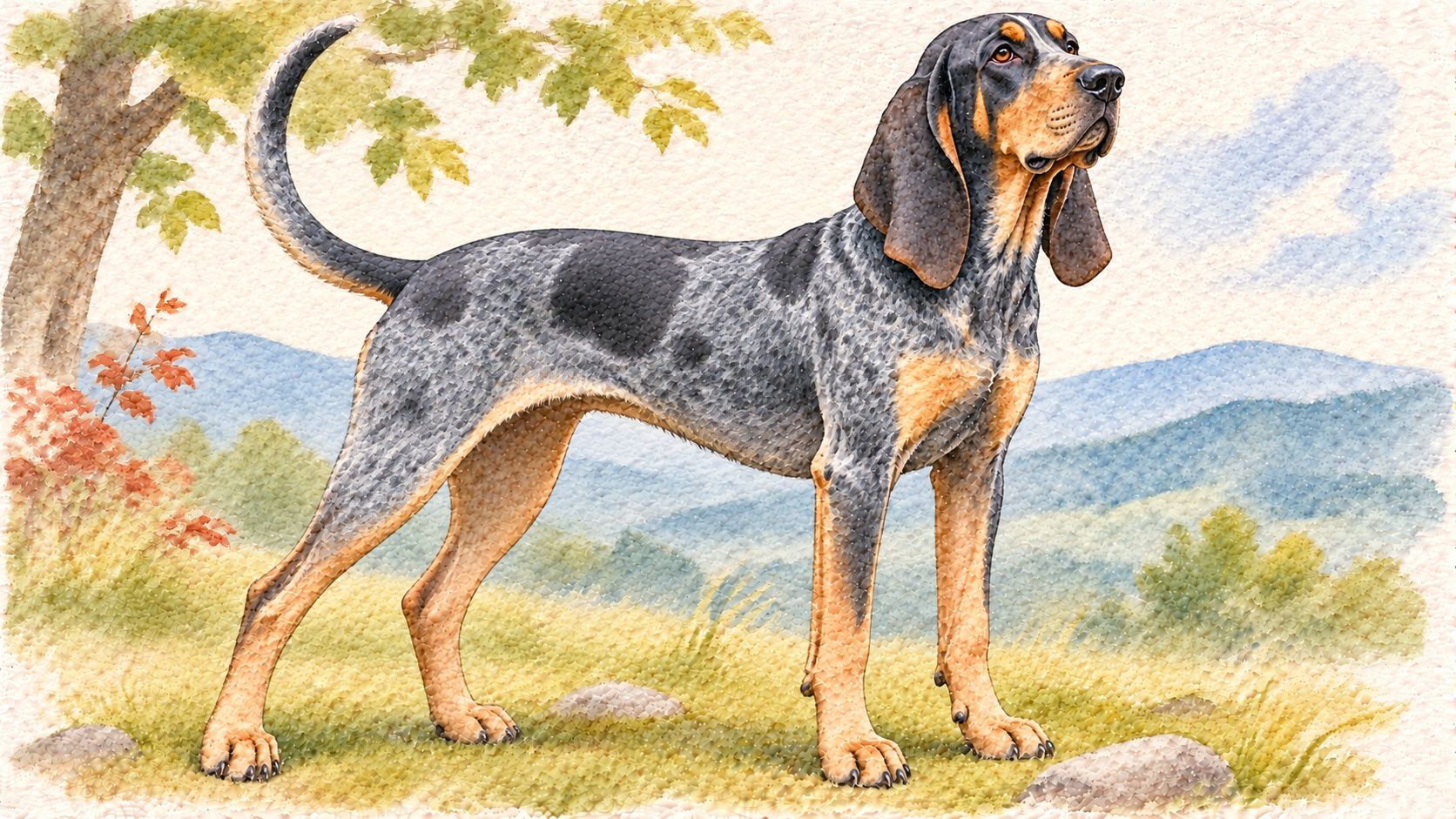
Bluetick Coonhounds are large dogs. Males usually stand 22 to 27 inches tall at the shoulder and weigh 55 to 80 pounds, while females typically stand 21 to 25 inches and weigh 45 to 65 pounds.
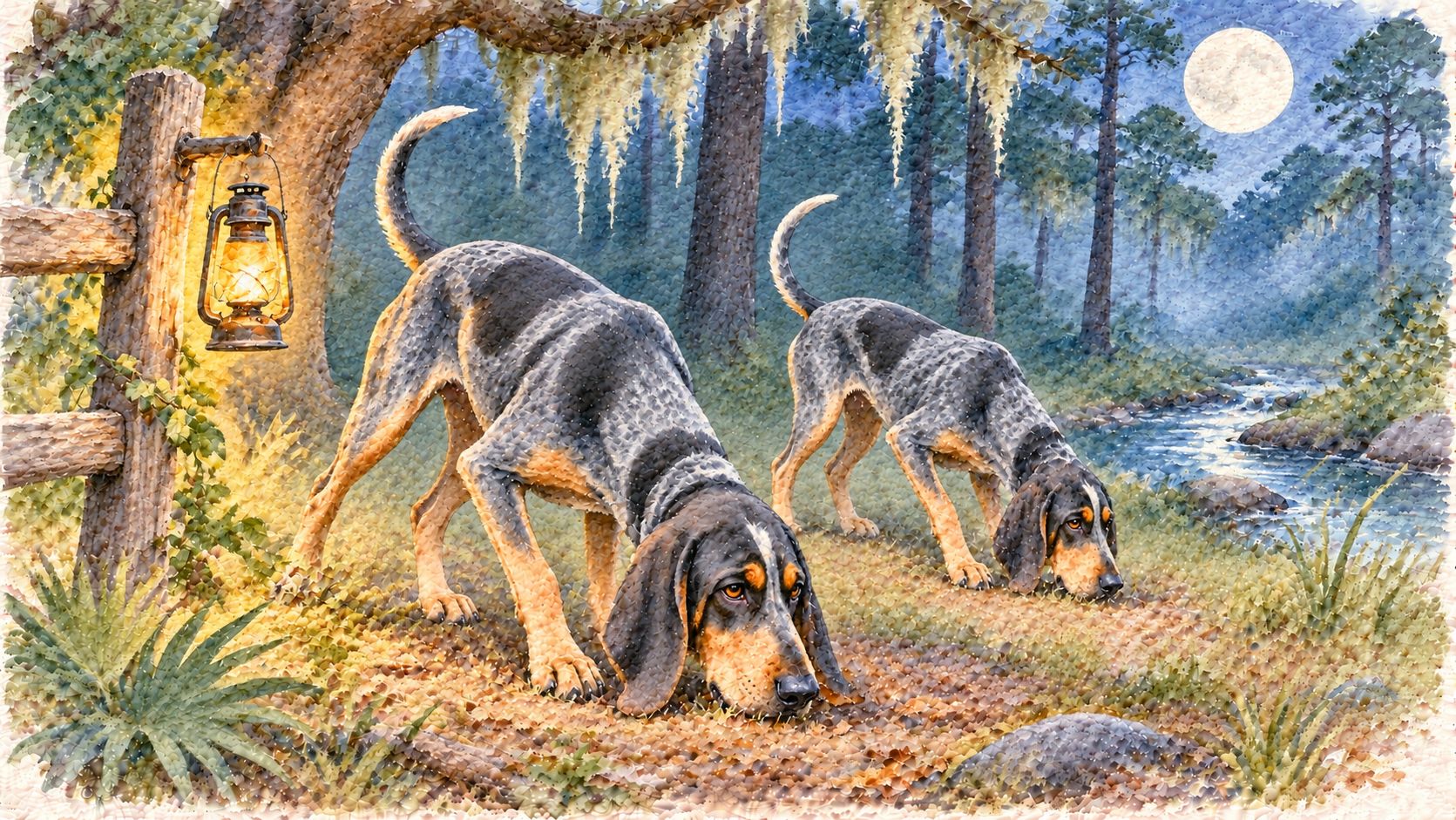
The Bluetick Coonhound size and build reflect its working past. It has a muscular, athletic body, a deep chest, strong legs and a slightly domed head. Long, low-set ears hang in soft folds, and large dark eyes give the breed a pleading, gentle expression. The tail is carried high, especially when the dog is on a scent.
Coat and Colors
This hound wears a short, smooth and glossy coat that lies close to the body. The coat is tough enough to handle brush and woods while staying easy to care for at home.
The signature color is a dark blue, mottled pattern, called ticking, covered with black spots. Many dogs also have tan markings over the eyes, on the cheeks and chest, and below the tail. Some show red ticking on the feet and lower legs.
Bluetick Coonhound Temperament and Personality
The Bluetick Coonhound temperament is a charming mix of focused hunter and easygoing family dog. At home, many Blueticks are relaxed and sweet. Once outside, their nose often takes charge. This breed is known for being:
- Intelligent: Blueticks are clever problem-solvers, especially when a scent trail is involved.
- Loyal: They bond closely with their families and enjoy being part of everyday life.
- Affectionate: Many love to lean against their people, nap nearby and soak up attention.
- Determined: Once a Bluetick locks onto a scent, it can be very hard to call it back.
- Vocal: Like most coonhounds, Blueticks bay and howl, and their voices carry a long way.
Are Bluetick Coonhounds Good With Kids and Other Pets?
Yes, Blueticks generally get along well with children and other pets, especially when raised with them. Their patient, friendly nature makes them good companions for families with respectful kids.
Because they are large and strong, supervision is wise around toddlers who could be knocked over during play. Most Blueticks enjoy other dogs, since they were bred to hunt in packs. However, their hunting instinct is real, so introduce them carefully to cats and keep them away from small pets such as rabbits or guinea pigs.
Early socialization helps your Bluetick Coonhound puppy grow into a calm, confident adult. Introduce it to many people, animals, sounds and places during its first months.
Training a Bluetick Coonhound
Blueticks are smart, but like many scent hounds they can be independent. They were bred to make their own decisions on the trail, so they may not always respond instantly to commands. Patience, consistency and positive reinforcement work best.
Here are a few training tips for Bluetick owners:
- Start early. Begin basic manners and socialization the day your puppy comes home.
- Use food rewards. Most hounds are highly motivated by treats, which makes training much easier.
- Work on recall. A reliable "come" takes time with this breed. Practice in a fenced area and always use a leash in open spaces.
- Keep sessions fun and short. Ten-minute sessions with plenty of praise keep a Bluetick engaged.
- Channel the nose. Scent games, tracking classes and nose work give this breed a natural outlet for its talents.
Do Bluetick Coonhounds Bark a Lot?
Yes, this is a vocal breed. It is known for a loud bawl and a choppy bark used to signal when an animal has been treed. You can teach a "quiet" cue, but you will not train the voice out of this dog completely, so it may not suit close neighbors.
Exercise Needs
The Bluetick has a moderate energy level, but it is built for endurance. Plan on at least an hour of activity each day, such as long walks, hikes or jogs, along with play and sniffing time.
Mental exercise matters just as much. Hide treats around the yard, try puzzle feeders or sign up for tracking events. A bored Bluetick may howl, dig or chew to entertain itself.
A securely fenced yard is ideal. This breed will follow its nose without looking back, so it should always be on a leash or in a safe enclosure when outdoors. Many Blueticks also enjoy hunting, field trials and tracking competitions.
Bluetick Coonhound Grooming
Bluetick Coonhound grooming is refreshingly simple. The short, glossy coat needs only regular brushing and an occasional bath to stay healthy and shiny.
Do Bluetick Coonhounds Shed?
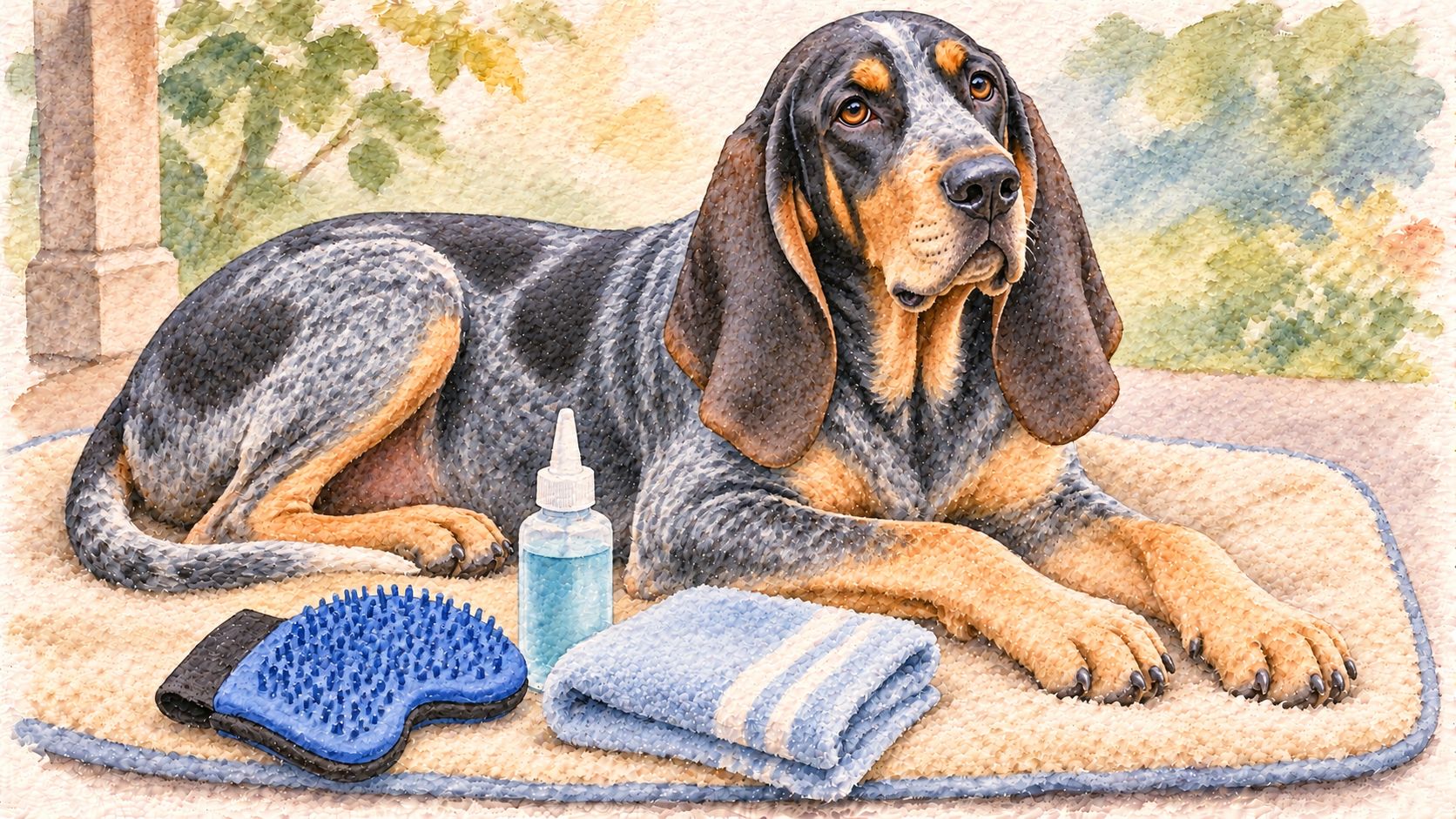
Yes, they shed a moderate amount. Weekly brushing with a rubber curry brush or hound mitt removes loose hair and keeps shedding under control around the house.
Grooming Routine
- Brushing: Brush once a week to spread natural oils and catch loose hair.
- Bathing: Bathe only when needed, such as after a muddy hike or when the "hound smell" gets strong.
- Ears: Check and clean the long ears weekly. Floppy ears can trap moisture and dirt, so keeping them dry and clean is important.
- Nails: Trim nails every few weeks if they are not worn down naturally.
- Teeth: Brush teeth several times a week to support good dental health.
- Drool: Some Blueticks drool, so keeping a towel handy can help.
Bluetick Coonhound Health and Lifespan
This is generally a sturdy, healthy breed. The typical Bluetick Coonhound lifespan is about 11 to 12 years, and many dogs stay active well into their senior years. Like all breeds, it can be prone to some conditions. Responsible breeders screen for concerns that may include:
- Hip dysplasia: An abnormal formation of the hip joint, common in many large breeds.
- Ear infections: Long, hanging ears need regular checks to stay clean and dry.
- Eye problems: Routine eye exams help catch any issues early.
- Bloat: Deep-chested breeds can be at risk of this serious stomach condition, so learn the warning signs.
Blueticks love food and can gain weight easily, especially if they are not getting enough exercise. Keeping your dog lean helps protect its joints. Always work with your veterinarian to set up regular checkups, vaccinations and preventive care.
Feeding and Nutrition
A Bluetick does best on a high-quality dog food formulated for large, active breeds. Large-breed formulas are designed with the needs of bigger dogs in mind, including support for joints and lean muscle.
Puppies should eat a large-breed puppy food to help them grow at a steady pace. Portion sizes depend on age, weight and activity level, so follow the package guidelines and ask your veterinarian for advice. Because this breed is so food-motivated, measure meals carefully and keep treats to a small part of daily calories.
History of the Bluetick Coonhound
The Bluetick Coonhound's story begins in the American South. Its ancestors are believed to include the French Grand Bleu de Gascogne, a large blue-mottled hound, along with English Foxhounds and other hounds brought to America by early settlers. Hunters wanted a dog with a sharp nose, stamina and a strong voice for night hunting.
For many years, Blueticks were grouped with the English Coonhound. In the mid-1940s, Bluetick breeders chose to separate, preferring a cold-nosed hound that could work older trails with a big, carrying voice. The United Kennel Club then recognized the Bluetick as its own breed.
The breed continued to grow in popularity among hunters across the South and beyond. The American Kennel Club officially welcomed the breed into its Hound Group in 2009.
The Bluetick has also earned plenty of hometown pride. It is the state dog of Tennessee, and a Bluetick named Smokey serves as the beloved live mascot of the University of Tennessee, leading the team onto the field on game days.
Bluetick Coonhound vs Redbone Coonhound
The Bluetick and the Redbone are both American treeing hounds with similar sizes and friendly natures. The easiest difference is the coat: Blueticks are blue and spotted, while Redbones wear a solid, rich red coat. Blueticks are also known for their cold nose and slow, steady trailing style.
Is a Bluetick Coonhound Right for You?
Are Bluetick Coonhounds Good Family Dogs?
Yes, Blueticks can make excellent family dogs for active households. They are loyal, affectionate and good with children, as long as they get enough exercise and their families are comfortable with a vocal dog.
A Bluetick Coonhound could be a wonderful match if you:
- Enjoy long walks, hikes or outdoor adventures
- Have a securely fenced yard
- Want a loyal, affectionate and easygoing companion
- Prefer a short coat that is easy to groom
- Are interested in hunting, tracking or scent sports
- Have patience for training an independent hound
A Bluetick may not be the best fit if you:
- Live in an apartment with close neighbors
- Need a quiet dog that rarely barks or howls
- Want a dog that is reliable off leash
- Keep small pets such as rabbits or hamsters
Finding a Bluetick Coonhound Puppy
When looking for a puppy, choose a breeder who health-tests parent dogs, raises puppies in a clean, social environment and answers your questions openly. Breed clubs are a good place to start. Rescue groups and shelters also often have coonhounds looking for loving homes.
Interestingly, Bluetick puppies are born mostly white with large dark patches. Their famous blue ticking appears a few weeks after birth.
Fun Facts About the Bluetick Coonhound
- The breed is named for its dark blue, speckled coat pattern.
- Puppies are born mostly white, and their ticking develops within a few weeks.
- The breed is the official state dog of Tennessee.
- Smokey, the University of Tennessee mascot, is a Bluetick.
- Blueticks are known for a "cold nose" that can follow very old scent trails.
- The French Grand Bleu de Gascogne is thought to be one of the breed's ancestors.
Frequently Asked Questions
How big do Bluetick Coonhounds get?
Males usually stand 22 to 27 inches tall and weigh 55 to 80 pounds. Females are a bit smaller, standing 21 to 25 inches and weighing 45 to 65 pounds.
Are Bluetick Coonhounds good family dogs?
Yes. They are loyal, affectionate and generally good with children and other dogs. They do best with active families who can handle their exercise needs and vocal nature.
Do Bluetick Coonhounds shed?
They shed a moderate amount. Brushing once a week with a hound mitt or rubber brush helps keep loose hair under control.
How long do Bluetick Coonhounds live?
The average Bluetick Coonhound lifespan is about 11 to 12 years with good care, a healthy diet and regular veterinary checkups.
Are Bluetick Coonhounds easy to train?
They are intelligent and food-motivated, but they can be independent and easily distracted by scents. Patient, reward-based training works best.
Why is it called a Bluetick Coonhound?
The name comes from its dark blue ticked coat and its traditional job of hunting raccoons, often shortened to "coons."
Final Thoughts
The Bluetick Coonhound is a loyal, affectionate and hard-working hound with a striking blue coat and a voice to match. It brings Southern hunting heritage, easy grooming and plenty of love to the right home. If you can offer daily exercise, a secure yard and patient training, a Bluetick Coonhound may become your most devoted companion.