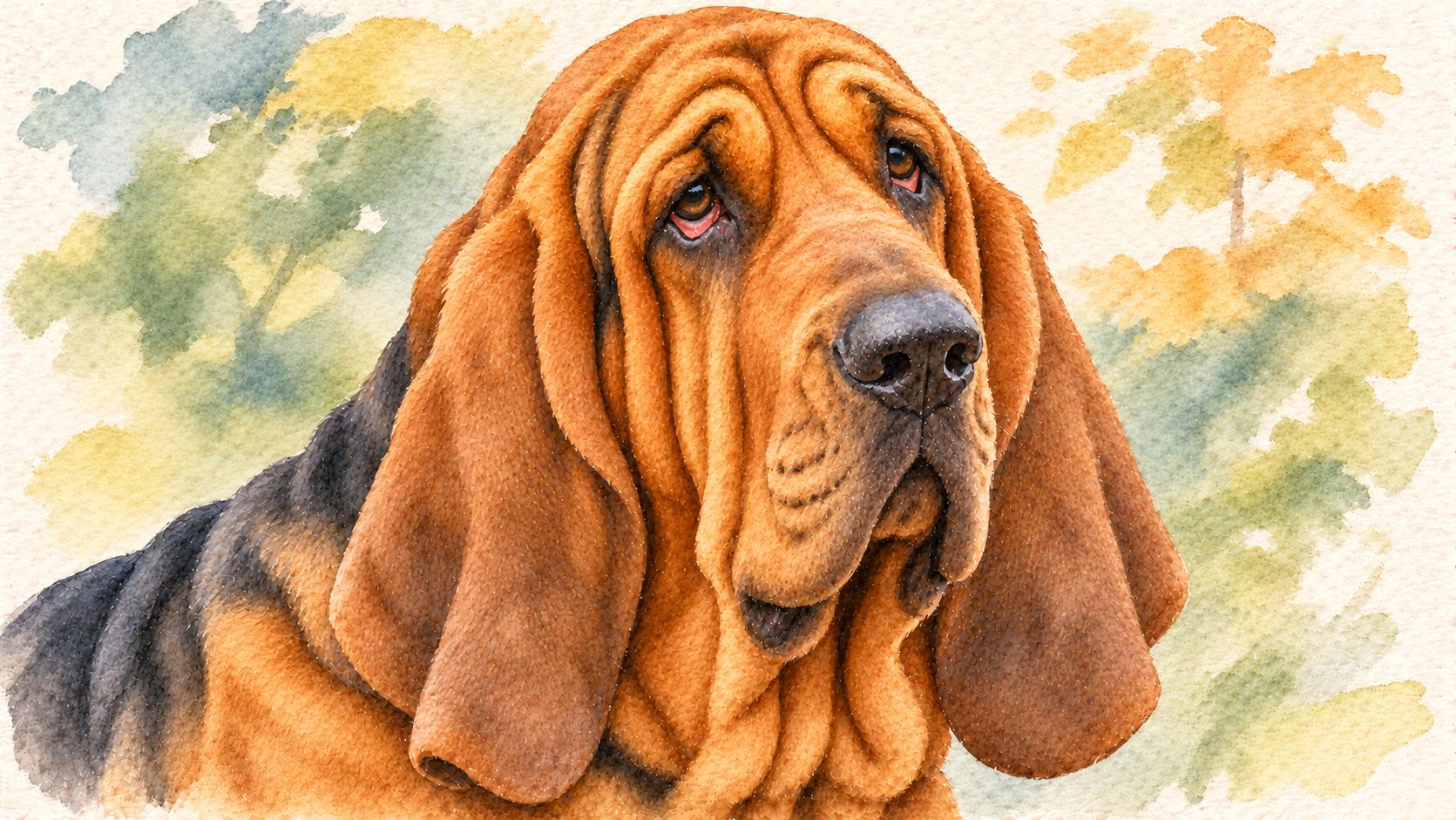
With its long velvety ears, deep wrinkles and soulful, droopy eyes, the Bloodhound is one of the most recognizable dogs on the planet. It is also famous for something you cannot see at first glance: a nose so powerful that this breed has helped police and rescue teams find lost people for generations.
Behind that serious, slightly sorrowful face is a gentle, affectionate and easygoing companion. In this complete Bloodhound dog breed guide, you will learn everything you need to know before bringing one home, including its size, temperament, grooming needs, exercise requirements, common health concerns, diet tips and remarkable history.
Bloodhound at a Glance
| Trait | Details |
|---|---|
| Breed group | Hound (AKC) |
| Height | Males 25 to 27 inches (64 to 69 cm); females 23 to 25 inches (58 to 64 cm) |
| Weight | Males 90 to 110 pounds (41 to 50 kg); females 80 to 100 pounds (36 to 45 kg) |
| Life expectancy | 10 to 12 years |
| Coat | Short, dense, smooth |
| Colors | Black and tan, liver and tan, red |
| Shedding | Moderate; seasonal |
| Energy level | Low to moderate indoors; steady stamina outdoors |
| Temperament | Gentle, affectionate, easygoing, determined |
| Good for | Active families, experienced owners, homes with a fenced yard |
| Origin | Western Europe (perfected about 1,000 years ago) |
What Is a Bloodhound?
The Bloodhound is a large scent hound bred to follow a trail with patience and focus. While many hounds hunt by sight or chase by speed, this hound works slowly and methodically, nose to the ground, following a scent for hours if needed.
The breed is a member of the American Kennel Club's Hound Group. In parts of Europe, it is also known as the St. Hubert Hound, a name linked to the medieval monastery where its ancestors were carefully bred. Today, the Bloodhound is valued as both a skilled working dog and a loving family companion.
Bloodhound Size and Appearance
How Big Do Bloodhounds Get?
Bloodhounds are large, powerful dogs. Males usually stand 25 to 27 inches tall at the shoulder and weigh 90 to 110 pounds, while females typically stand 23 to 25 inches and weigh 80 to 100 pounds.
The Bloodhound size is matched by a sturdy, muscular build designed for long days in the field. The body is slightly longer than it is tall, with a deep chest, strong legs and a long tail that is often carried high when the dog is working a trail.
The breed's most striking feature is its loose skin. It hangs in deep folds around the head and neck, creating the famous wrinkled face. Long, soft ears and droopy lower eyelids complete the look. Many people believe the ears and wrinkles help sweep and trap scent near the nose, although the main credit belongs to the nose itself.
Coat and Colors
This breed wears a short, dense coat that feels smooth and fairly firm on the body. The skin on the ears and head is especially thin and soft to the touch.
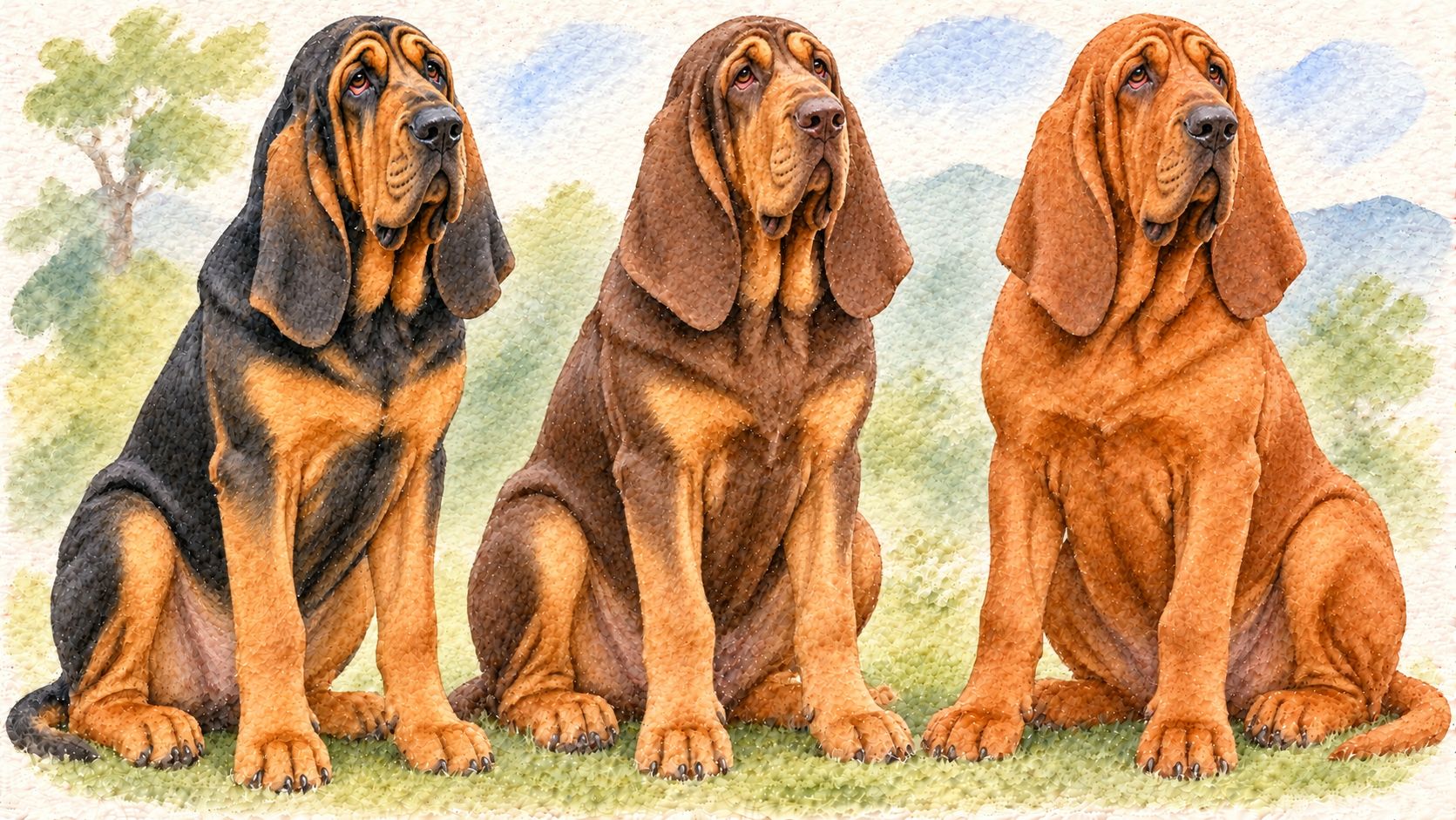
Accepted colors are black and tan, liver and tan, and red. Some dogs have a small amount of white on the chest, feet or tail tip.
Bloodhound Temperament and Personality
The Bloodhound temperament is a lovely mix of gentleness and determination. At home, these dogs are usually calm and affectionate. On a scent, they become single-minded detectives. This breed is known for being:
- Gentle and affectionate: These hounds are typically sweet, mild-mannered dogs that enjoy being close to their people.
- Easygoing: They tend to be relaxed around the house and take life at their own pace.
- Determined: Once one of these dogs picks up an interesting smell, it is relentless and may ignore everything else.
- Independent: Bred to work a trail on its own, it often prefers to make its own decisions.
- Vocal: The breed is known for its deep, booming bay, which carries a long way.
These hounds are not usually aggressive, and they are not known as strong guard dogs. They are more likely to greet a visitor with a friendly sniff and a wagging tail than with a warning.
Are Bloodhounds Good With Kids and Other Pets?
Yes, they generally get along well with both adults and children. Their patient, affectionate nature makes them good companions for kids who know how to behave around dogs.
Because they are large and can be clumsy, especially as puppies, a young hound may accidentally knock over a toddler. Always supervise young children and teach them how to interact gently with dogs.
As pack hounds, they usually do well with other dogs. Many also live peacefully with cats, especially when raised with them. Early socialization helps any Bloodhound puppy grow into a confident, well-mannered adult.
Training a Bloodhound
These dogs are intelligent, but they are not always eager to follow commands. Their independent streak and powerful nose mean they can be easily distracted. Training takes patience, consistency and a good sense of humor.
Here are a few training tips for new owners:
- Start early. Begin socialization and basic manners as soon as your puppy comes home, before it grows into a 100-pound dog.
- Use positive reinforcement. Praise, play and tasty treats work far better than harsh corrections with this sensitive breed.
- Keep sessions short and fun. Brief, upbeat lessons hold a hound's attention better than long drills.
- Practice leash manners. A strong dog that follows its nose can pull hard, so loose-leash walking is an important skill.
- Give the nose a job. Tracking, scent work and nosework classes let your hound do what it was born to do.
Exercise Needs
This breed is often calm indoors, but it has impressive stamina outdoors. Plan on at least one long walk a day plus extra time for sniffing, exploring and play.
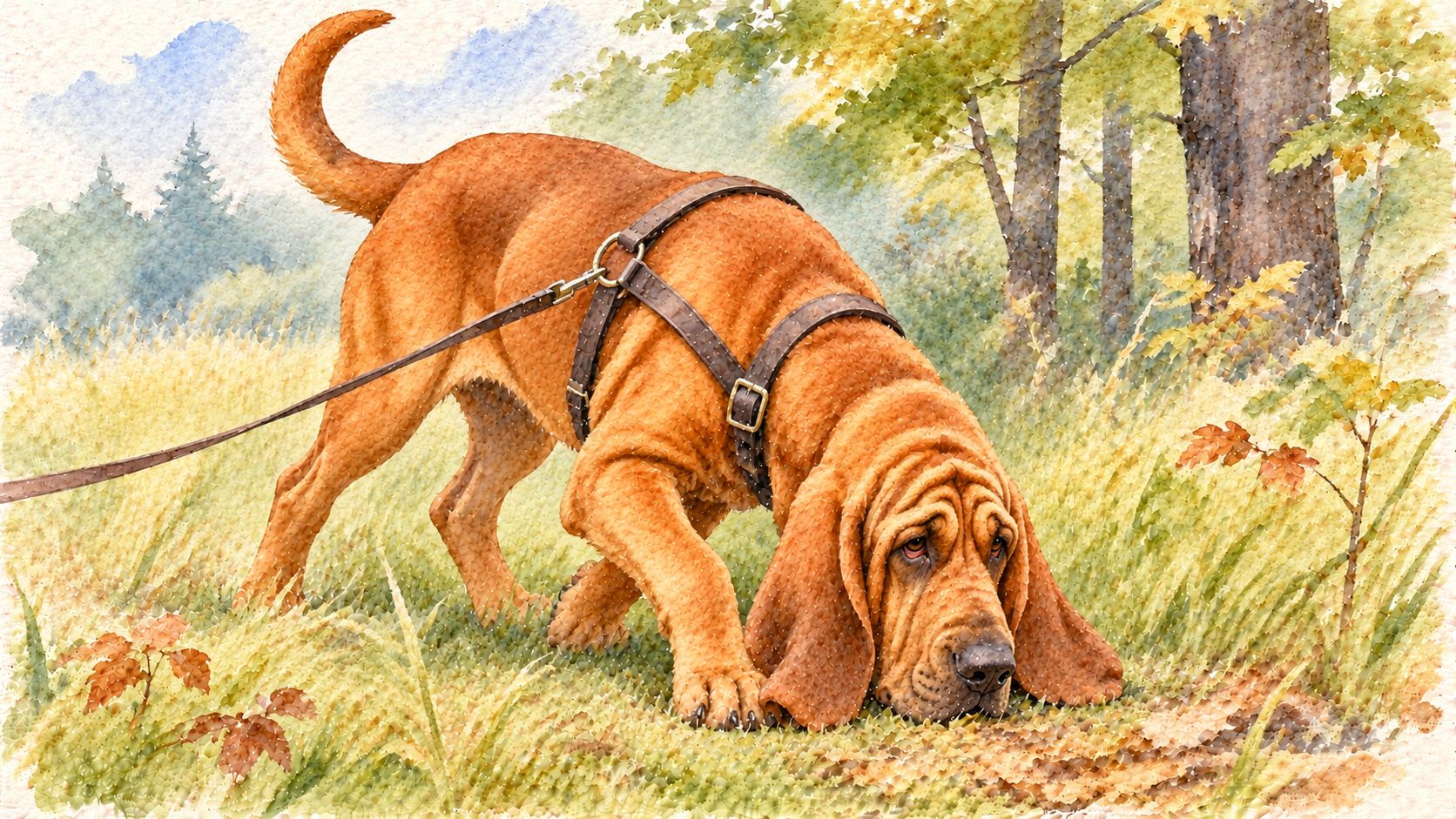
Always walk your dog on a leash or let it run only in a securely fenced area. Once it catches a scent, it may follow it for miles and ignore your calls completely. A tall, sturdy fence is a must, since some hounds are skilled at finding gaps.
Scent games are a great way to tire out this breed's busy mind. Hide treats around the yard, or try organized activities such as tracking trials or scent work. Many owners find that a good sniffing session leaves their dog more relaxed than a fast run.
Bloodhound Grooming
Do Bloodhounds Shed?
Yes, this breed sheds, mostly on a seasonal basis. Their short coat is easy to care for, and a weekly brushing is usually enough to remove loose hair and keep the coat healthy.
Bloodhound grooming goes beyond the coat, though. The breed's ears, skin folds and famous drool all need regular attention.
Grooming Routine
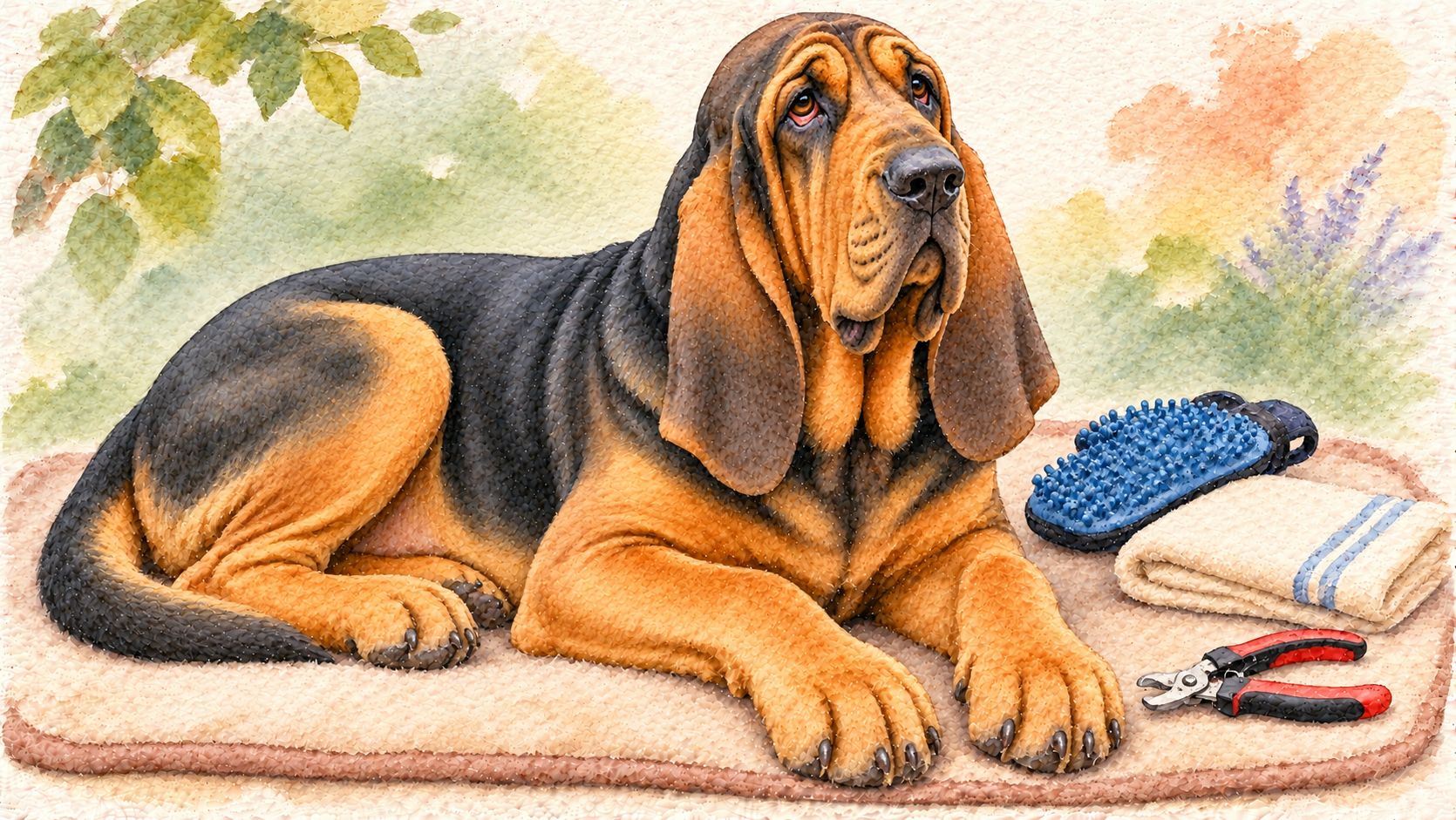
- Brushing: Brush once a week with a rubber grooming mitt or soft bristle brush. Brush more often during heavy seasonal shedding.
- Bathing: Bathe regularly to help prevent a "doggy" odor.
- Ears: Check the long ears every day for dirt, redness or a bad smell, and keep them clean and dry.
- Face and skin folds: Wipe the face and wrinkles to keep them clean and free of food and irritants.
- Drool: This breed drools, so keep a towel handy and wipe their mouths after meals and drinks.
- Nails and teeth: Trim nails every few weeks and brush teeth several times a week.
Bloodhound Health and Lifespan
How Long Do Bloodhounds Live?
The typical Bloodhound lifespan is about 10 to 12 years. Like many giant and large breeds, it has a shorter life expectancy than smaller dogs.
The breed is generally healthy, but responsible breeders screen their dogs for common concerns. These may include:
- Bloat: As a large, deep-chested breed, it can be prone to this serious stomach condition. Ask your veterinarian how to reduce the risk.
- Ear infections: Long, heavy ears can trap moisture and debris, so daily checks are important.
- Skin fold irritation: Wrinkles need regular cleaning to stay healthy.
- Joint problems: Hip and elbow screening is common in large breeds.
- Eye problems: Droopy eyelids should be checked regularly.
These hounds also tend to eat almost anything in their path. Keep socks, toys, trash and other unsafe items out of reach. Always work with your veterinarian to set up a routine of checkups, vaccinations and preventive care.
Feeding and Nutrition
This breed may benefit from a high-quality dog food formulated for large breeds. Large-breed formulas are designed with the size, energy needs and joint support of big dogs in mind.
Puppies should eat a large-breed puppy food for their first year to support healthy, steady growth. Adult dogs that need help maintaining a healthy weight may benefit from a weight-management formula. Portion sizes depend on age, weight and activity level, so follow the package guidelines and ask your veterinarian for advice.
History of the Bloodhound
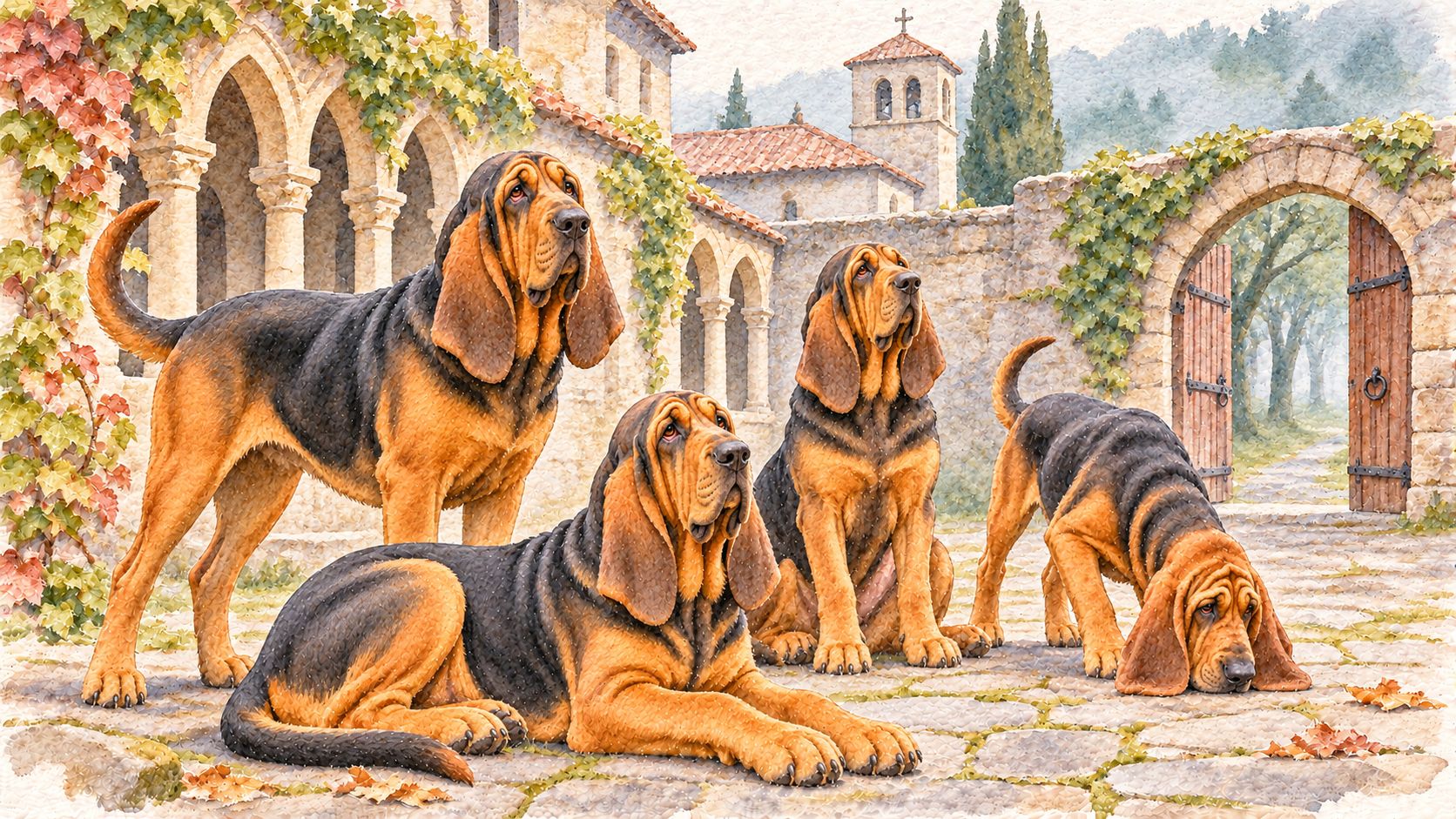
This is an ancient breed. It was perfected about 1,000 years ago in Western Europe, where wealthy monasteries in England and France carefully bred packs of hounds for hunting.
The breed's name has nothing to do with violence. It comes from "blooded hounds," meaning dogs "of aristocratic blood." The term refers to the careful, pure-bred lines kept by nobles and clergy.
The St. Hubert Hound, associated with the Abbey of Saint-Hubert in the Ardennes region, is widely considered an important ancestor. These hounds spread across Europe and became prized by hunters for their unmatched noses.
Over the centuries, the breed's talent found a new purpose. Its ability to follow a person's trail made it valuable to police and search-and-rescue teams. Bloodhounds have even provided tracking evidence that has been accepted in a court of law. The American Kennel Club recognized the breed in 1885.
The breed has also become a pop culture favorite. Duke, the family dog on the classic TV show The Beverly Hillbillies, was a Bloodhound, and McGruff the Crime Dog is drawn as one too.
Bloodhound vs Basset Hound
The Bloodhound and the Basset Hound are both scent hounds with long ears, droopy faces and excellent noses, and many experts believe the two share ancestry. The biggest difference is size: the Bloodhound is a tall, large dog that can weigh over 100 pounds, while the Basset Hound is short-legged and much lower to the ground. Both breeds are gentle and vocal, but the taller breed needs more space and is the more serious tracker.
Is a Bloodhound Right for You?
Are Bloodhounds Good Family Dogs?
Yes, these hounds can be wonderful family dogs for households that have room for a large hound and time for daily exercise. They are affectionate with adults and children and usually friendly with other dogs.
This breed could be a great match if you:
- Want a gentle, affectionate large dog
- Have a home with a securely fenced yard
- Enjoy long walks, hiking or scent sports
- Don't mind drool, baying and a bit of shedding
- Have the patience for consistent, positive training
It may not be the best fit if you:
- Live in a small apartment with little outdoor space
- Want a dog that is reliable off leash
- Prefer a quiet, tidy, drool-free pet
- Need a highly obedient dog that learns commands quickly
Finding a Bloodhound Puppy
Look for a reputable breeder who health-tests parent dogs, raises puppies in a home environment and is happy to answer your questions. Ask to meet at least one of the parents to get a sense of temperament.
Breed clubs and hound rescue groups are also good places to look. Adult hounds sometimes need new homes, and an adult dog's personality is easier to judge than a puppy's.
Fun Facts About the Bloodhound
- The breed's name comes from "blooded hound," meaning a hound of pure, aristocratic breeding.
- This breed can pick up a scent from just one or two skin cells.
- No man-made scenting device is considered better than this hound's nose.
- Tracking evidence from these dogs has been accepted in court.
- In Europe, the breed is also known as the St. Hubert Hound.
- The AKC recognized the breed in 1885.
Frequently Asked Questions
Why is it called a Bloodhound?
The name comes from "blooded hound," which meant a dog of pure, aristocratic breeding. It refers to the carefully kept bloodlines, not to anything violent.
How big do Bloodhounds get?
Adult males usually stand 25 to 27 inches tall and weigh 90 to 110 pounds. Females are a little smaller, at about 23 to 25 inches and 80 to 100 pounds.
Are Bloodhounds good family dogs?
Yes, they are typically gentle and affectionate with both adults and children. Because they are large and can be clumsy, supervision around small kids is a good idea.
How long do Bloodhounds live?
The average lifespan is about 10 to 12 years with good care, a healthy diet and regular veterinary checkups.
Do Bloodhounds drool a lot?
Yes, drooling is part of life with this breed. Keeping a towel nearby and wiping the face after meals helps keep things tidy.
Can Bloodhounds be trusted off leash?
Usually not. Once it catches a scent, it may follow it for miles and ignore commands, so a leash or securely fenced area is best.
Final Thoughts
The Bloodhound is a true legend of the dog world, combining a gentle heart with the most famous nose in history. It brings centuries of tradition, a loving personality and endless curiosity to the right home. If you can offer daily walks, a secure yard, patient training and a tolerance for a little drool, a Bloodhound may become the most devoted companion you have ever had.