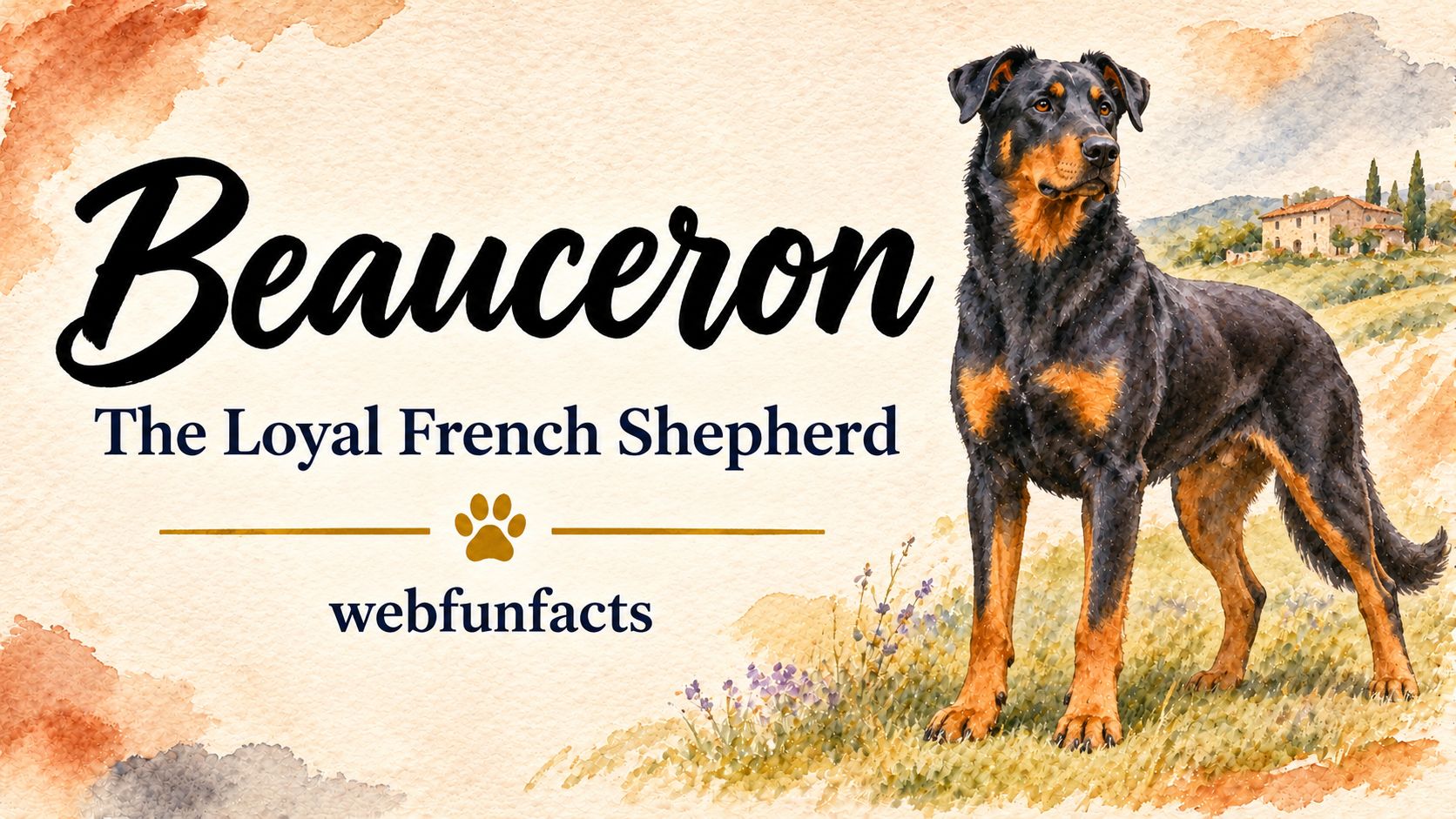
The Beauceron is a powerful, intelligent French sheepdog with a sleek black-and-tan coat, a calm gaze and a working history that stretches back more than 400 years. Its name comes from La Beauce, the wide farming plains around Paris where these dogs once guarded and moved huge flocks of sheep. In France, the breed is also called the Berger de Beauce and, more playfully, bas rouge, which means "red stockings," a nod to the rich tan markings on its legs.
Loyal, brave and athletic, the Beauceron is a devoted family guardian that thrives with an active, experienced owner. In this complete Beauceron dog breed guide, you will learn about its size, temperament, training, exercise needs, grooming, health, diet and remarkable history, so you can decide whether this impressive herding dog is the right match for your home.
Beauceron at a Glance
| Trait | Details |
|---|---|
| Breed group | Herding (AKC) |
| Height | Males 25.5 to 27.5 inches (65 to 70 cm); females 24 to 26.5 inches (61 to 67 cm) |
| Weight | About 65 to 110 pounds (29 to 50 kg) |
| Life expectancy | About 10 to 12 years |
| Coat | Short, dense, weather-resistant double coat |
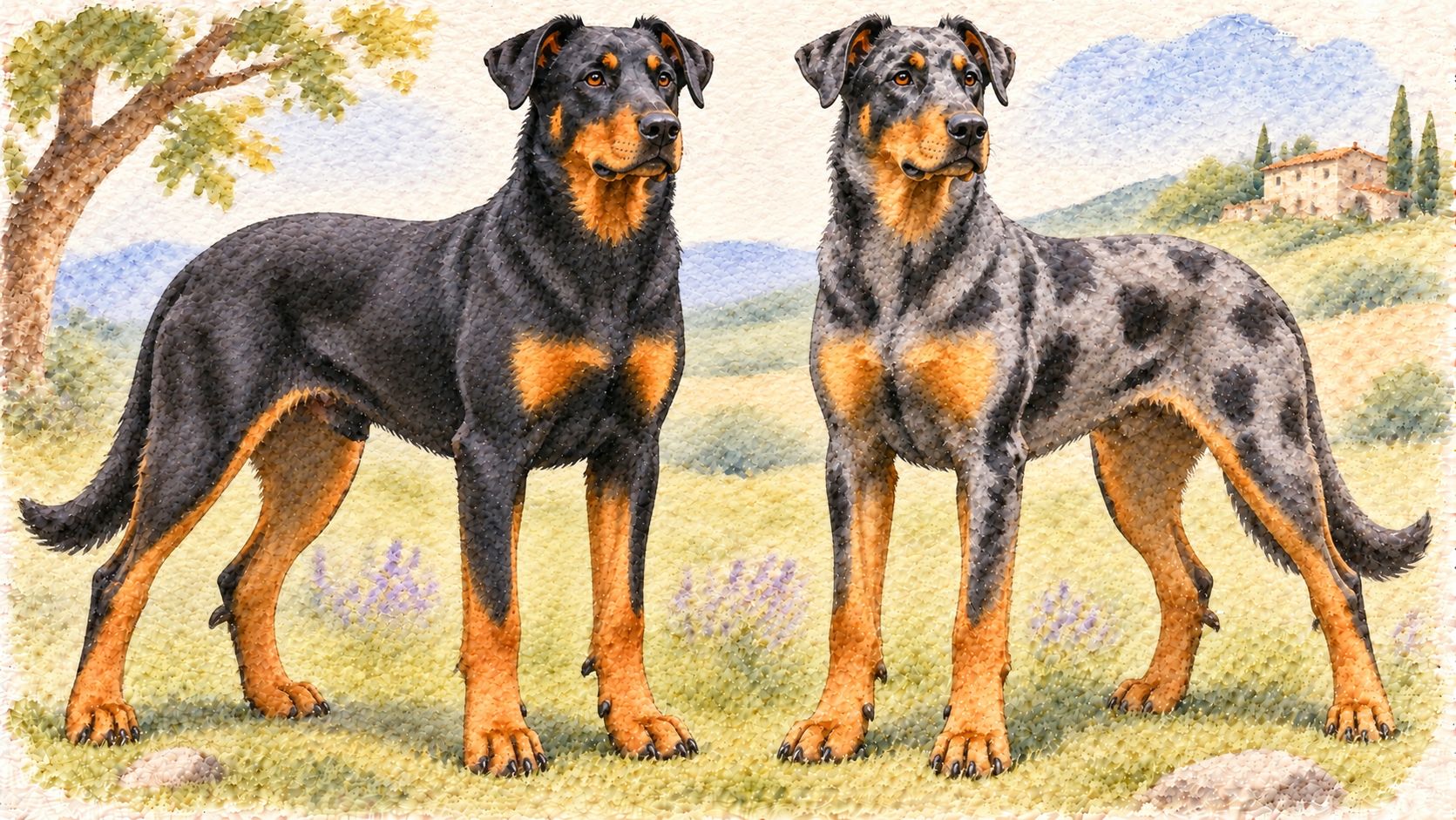
| Colors | Black and tan; harlequin (gray, black and tan) |
| Shedding | Moderate; heavier seasonally |
| Energy level | High |
| Temperament | Intelligent, loyal, protective, gentle, confident |
| Good for | Active, experienced owners and homes with space |
| Origin | France (late 1500s) |
What Is a Beauceron?
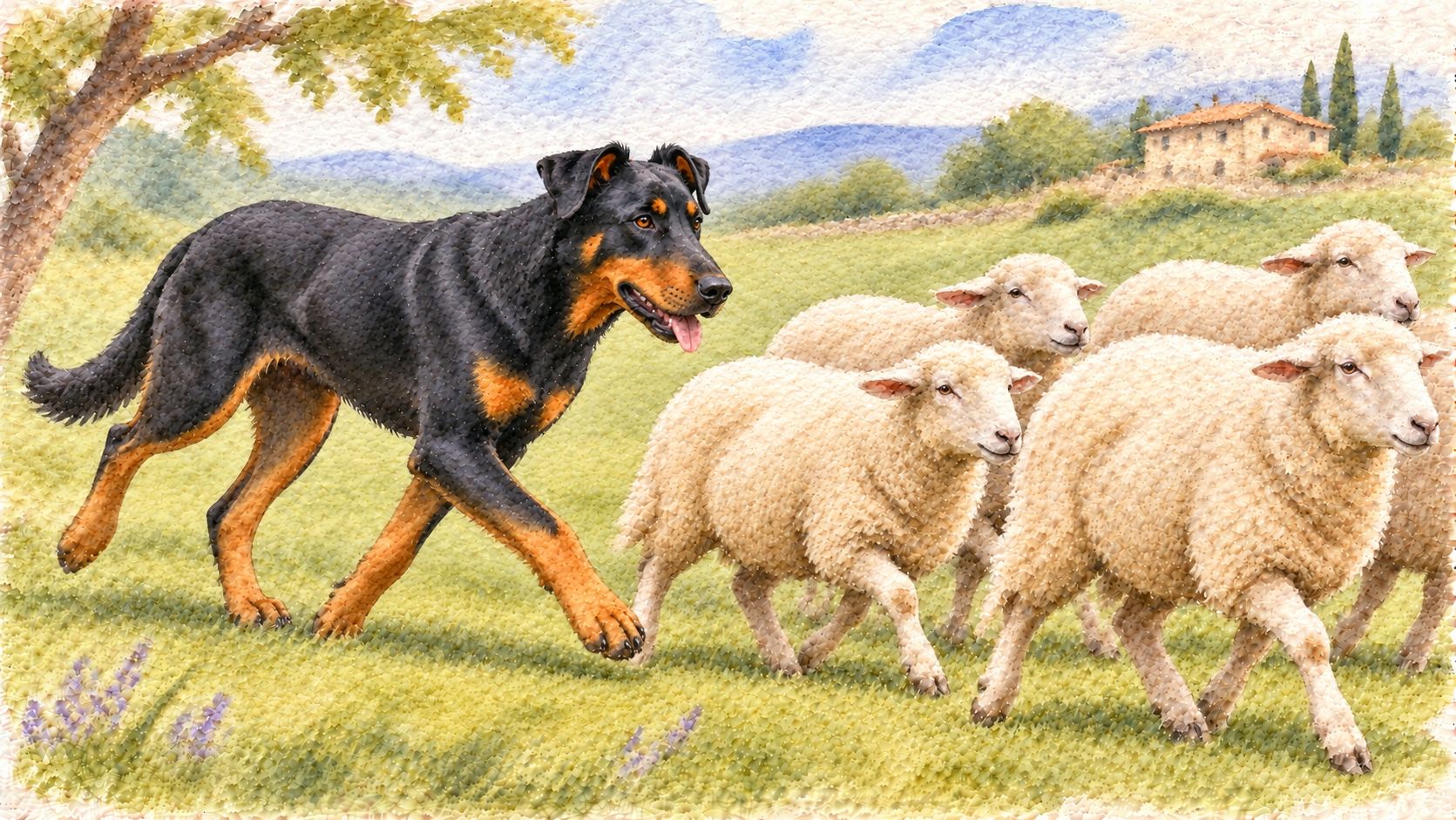
This is a large, muscular herding breed from northern France. For centuries, it worked on farms as an all-purpose dog, herding sheep, driving cattle and protecting the flock and the farmer's family from wolves and intruders. That combination of herding and guarding is still at the heart of the breed today.
These dogs are often described as noble, steady and thoughtful. They are not frantic or flighty. Instead, they watch carefully, learn quickly and act with confidence. In the United States, the breed belongs to the American Kennel Club's Herding Group, and it remains fairly uncommon, though its fan base keeps growing.
Beauceron Size and Appearance
How Big Do Beaucerons Get?
They are large dogs. Males usually stand 25.5 to 27.5 inches (65 to 70 cm) tall at the shoulder, while females measure about 24 to 26.5 inches (61 to 67 cm). Adults generally weigh between 65 and 110 pounds (29 to 50 kg), depending on sex, build and condition.
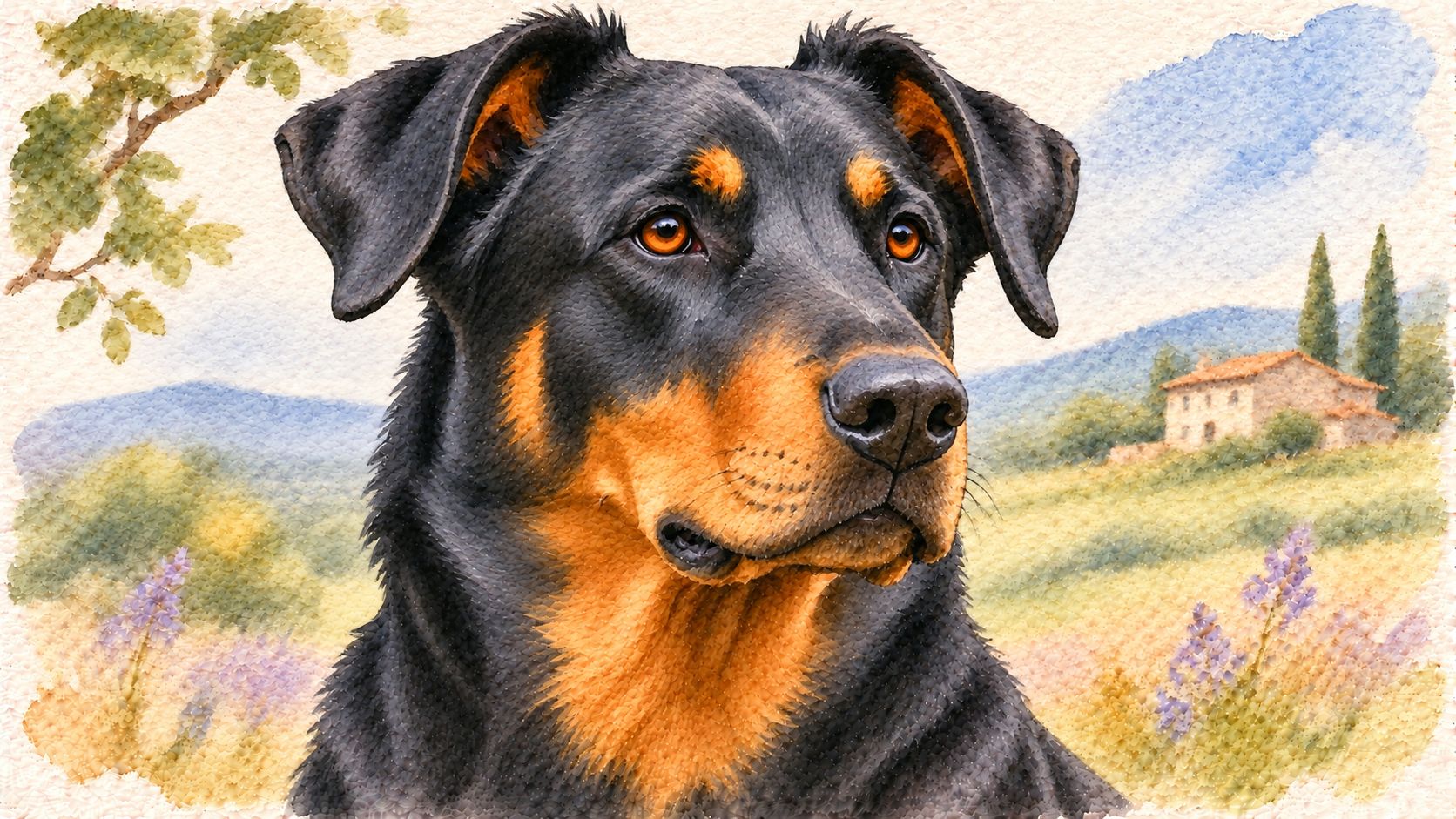
The Beauceron size and shape are built for endurance. The body is strong and well-balanced, slightly longer than it is tall, with a deep chest and solid bone. The breed moves with a smooth, ground-covering trot that let it work long days in the fields. Its head is long and well-chiseled, and its dark eyes give it a calm, alert, wise expression.
One of the most unusual features of the breed is its double dewclaws on the hind legs. These extra toes are a required trait in the breed standard and are a distinctive mark of the breed. Ears may be left natural, when they hang or half-stand, or cropped, depending on the country and owner preference.
Coat and Colors
The breed wears a short, straight, dense outer coat over a soft undercoat. The hair is a little longer around the neck and on the tail, and the coat is designed to protect the dog from wind, rain and cold while working outdoors.
The most familiar color is black and tan, with rich tan markings on the face, chest and legs that create those famous "red stockings." The breed also comes in harlequin, a striking pattern of gray, black and tan patches. Harlequin dogs are less common and very eye-catching.
Beauceron Temperament and Personality
The Beauceron temperament is a blend of intelligence, loyalty and quiet strength. This breed is known for being:
- Intelligent: They learn fast and enjoy solving problems, which makes them excellent working dogs.
- Loyal and loving: They bond deeply with their families and like to stay close to their people.
- Protective: With a natural guarding instinct, they are watchful and will alert you to anything unusual.
- Gentle: Despite their size and strength, they are often gentle and patient with the people they love.
- Confident: These dogs carry themselves with self-assurance and a strong personality of their own.
Because of that strong personality, this breed is usually best for experienced, dedicated owners. It needs clear, fair leadership, plenty of activity and a real job to do. A bored dog may invent its own work, which can include herding family members or rearranging the yard.
The breed also matures slowly. Many keep their puppy-like energy and silliness until around two or three years of age, so patience during the teenage stage is important.
Are Beaucerons Good With Kids and Other Pets?
Yes, they can be good with kids when they are raised with them and well socialized. They are often affectionate and protective toward children in their own family. Their size and herding instinct, however, mean they may bump or nudge small kids, so adult supervision is always wise.
With other pets, early introductions make a big difference. Many live happily with other dogs and even cats they grow up with. Some can be reserved with unfamiliar dogs, especially dogs of the same sex.
Early and ongoing socialization is essential. Introduce your Beauceron puppy to many people, places, sounds and friendly animals so it grows into a calm, confident adult.
Training a Beauceron
This breed is eager to learn and generally easy to train for an owner who is consistent and confident. This is a thinking breed, so it responds best to positive reinforcement, clear rules and training sessions that challenge its mind. Harsh methods tend to backfire with such a sensitive, intelligent dog.
Here are a few training tips for new owners:
- Start early. Begin socialization and basic manners the day your puppy comes home.
- Be consistent. Set clear house rules and make sure everyone in the family follows them.
- Use rewards. Praise, play and treats keep your dog motivated and engaged.
- Give it a job. Herding, obedience, tracking, agility and other dog sports suit the breed beautifully.
- Consider a puppy class. A good class helps with socialization and gives you support during the lively adolescent months.
Exercise Needs
This breed is a natural athlete with high energy, and it needs daily exercise. Plan on at least an hour or more of activity each day, such as long walks, hiking, jogging once the dog is fully grown, or active games in a securely fenced yard.
Mental exercise matters just as much as physical activity. Puzzle toys, scent games, training sessions and dog sports help keep this clever breed happy. Without enough stimulation, a bored dog can become restless or destructive.
Because of its size and energy, this dog usually does best in a home with a yard rather than a small apartment. It also enjoys being part of family activities, so it is happiest when included rather than left alone for long periods.
Grooming a Beauceron
The Beauceron grooming routine is refreshingly simple. Its short coat needs little grooming compared with many large breeds, but regular care keeps the dog clean and comfortable.
Do Beaucerons Shed?
Yes, they shed a moderate amount year-round and more heavily during seasonal coat changes, usually in spring and fall, when the undercoat comes out. Extra brushing during these times helps control loose hair around the house.
Grooming Routine
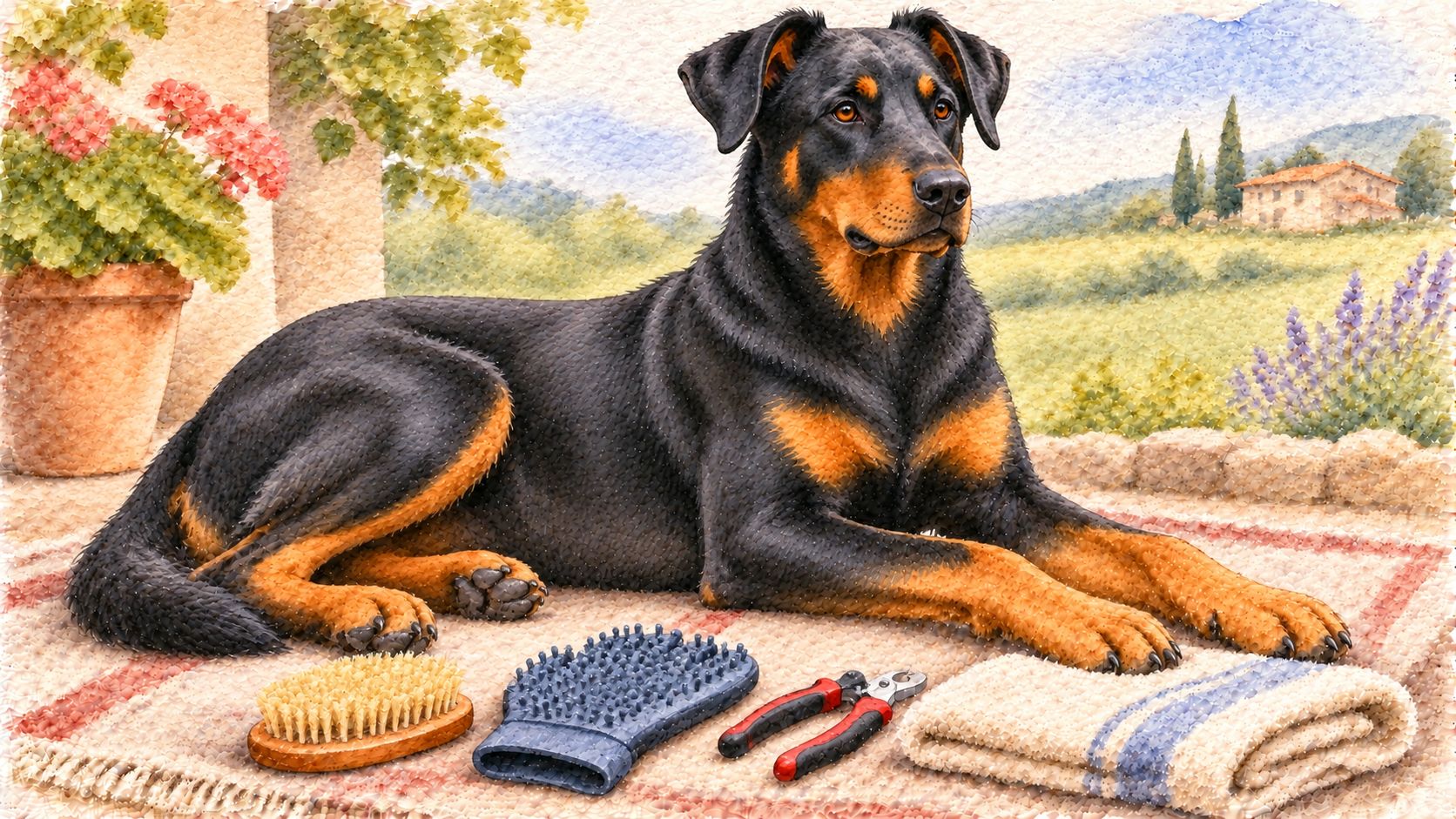
- Brushing: Brush the coat about once a week with a firm bristle brush or grooming mitt, and more often during shedding season.
- Bathing: Bathe only when needed, since the coat naturally repels dirt fairly well.
- Nails: Trim nails regularly, and don't forget the double dewclaws on the hind legs, which do not touch the ground.
- Teeth: Brush your dog's teeth several times a week to support good dental health.
- Ears: Check ears weekly for dirt, redness or odor, and clean them gently when needed.
Beauceron Health and Lifespan
The average Beauceron lifespan is about 10 to 12 years, which is typical for a large breed. The breed is generally a sturdy, healthy dog, but like all breeds it can be prone to certain conditions. Responsible breeders screen their dogs for common concerns, which may include:
- Hip dysplasia: An abnormal formation of the hip joint that is common in large breeds.
- Bloat: A serious condition in deep-chested dogs in which the stomach fills with gas and may twist.
- Heart conditions: Some lines may be affected, so heart screening is often recommended.
- Eye problems: Regular eye checks can help catch issues early.
Because these dogs grow large and mature slowly, it is wise to avoid very strenuous or repetitive exercise, such as long runs, until your veterinarian says your puppy's joints are ready. Always work with your veterinarian to set up a routine of checkups, vaccinations and preventive care.
Feeding and Nutrition
As a large, active breed, this dog does best on a high-quality dog food made for large dogs. Large-breed formulas are designed with the needs of bigger dogs in mind, including steady growth in puppies and support for active adults.
Beauceron puppies should eat a large-breed puppy food to support healthy, controlled growth. Portion sizes depend on your dog's age, size and activity level, so follow the feeding guide on the package and ask your veterinarian for advice. Many owners of deep-chested breeds choose to split daily food into two or more meals. Keep treats to a small part of the daily diet to help maintain a healthy weight.
History of the Beauceron
This tireless French sheepdog has a history reaching back to at least the late 1500s. It developed on the plains of La Beauce and across northern France, where farmers needed a large, hardy dog that could move flocks over long distances and guard them from predators.
For a long time, this breed and its shaggy cousin, the Briard, were considered close relatives with different coats. In the early 1800s, a French writer described the two types separately, and by the late 1800s, the short-haired Berger de Beauce and the long-haired Berger de Brie were recognized as distinct breeds. A dedicated French breed club was formed in the early 1920s to protect and promote the breed.
The breed's courage and intelligence made it valuable beyond the farm. During World War I and World War II, these dogs served the French army as messenger dogs, sentries and helpers locating wounded soldiers. Today, they still work in police, military and protection roles in parts of Europe.
The breed remained rare outside France for many years. The American Kennel Club fully recognized the breed in 2007, placing it in the Herding Group.
One dog earned a special place in American history. A Beauceron named O'Cara Bleue de St. Sacrement, known as "Cara," helped with search-and-rescue work after the September 11, 2001 attacks. She wore a special camera around her neck to search for signs of life in spaces people could not reach.
Beauceron vs Doberman: What Is the Difference?
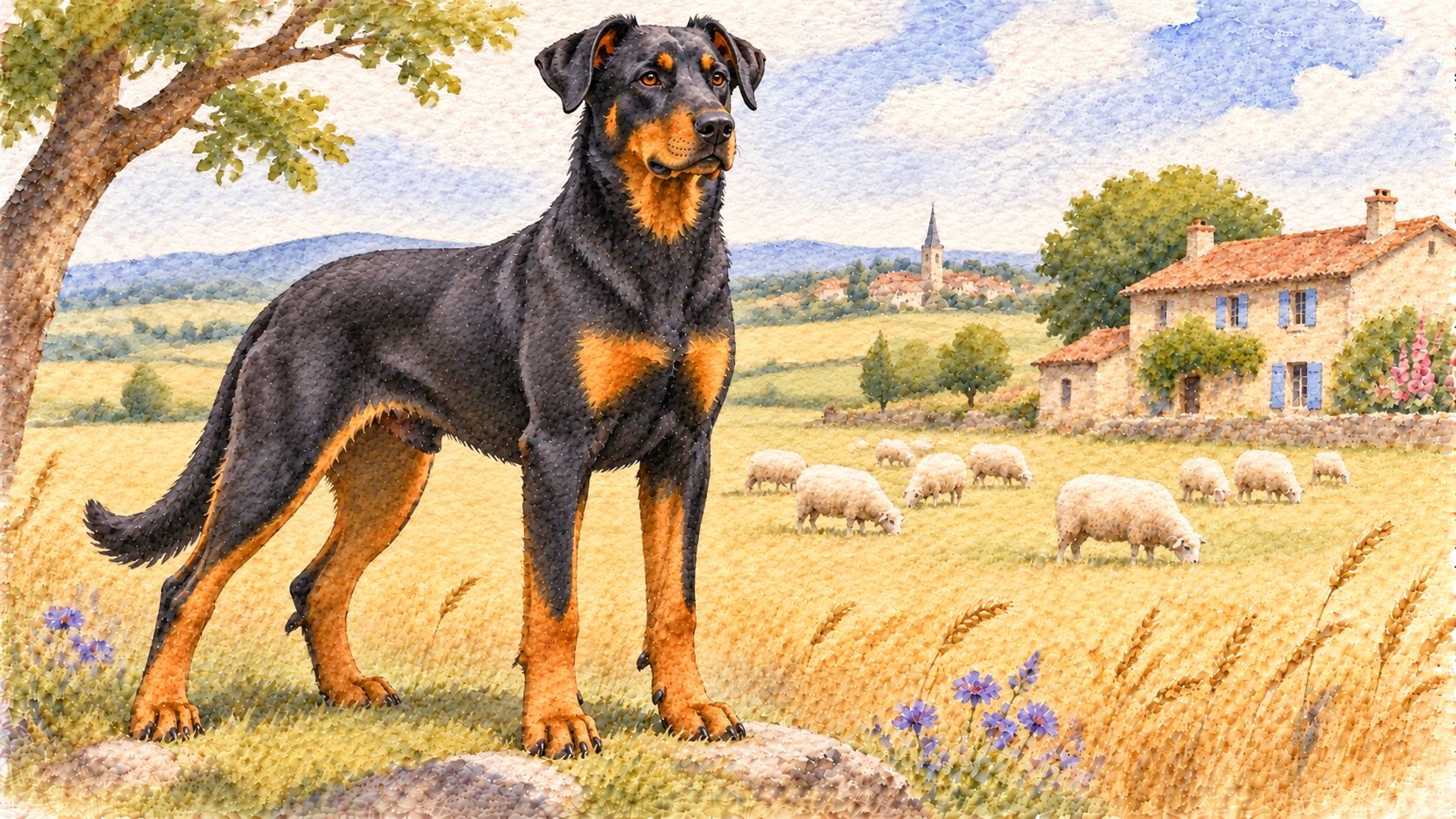
The Beauceron and the Doberman Pinscher are often confused because both are large, athletic, black-and-tan dogs. The Beauceron is a French herding breed with a weather-resistant double coat, natural or half-standing ears in many countries, and those distinctive double dewclaws on its hind legs. The Doberman is a German working breed with a sleeker single coat and a lighter, more streamlined build. Some historians believe the French breed may have played a part in the Doberman's development, though this is not certain.
Is a Beauceron Right for You?
This breed could be a wonderful match if you:
- Have experience owning large, intelligent dogs
- Lead an active lifestyle and enjoy hiking, running or dog sports
- Have a home with a securely fenced yard
- Want a loyal, protective family companion
- Can commit to consistent, positive training and socialization
This breed may not be the best fit if you:
- Are a first-time dog owner looking for an easygoing pet
- Live in a small apartment with little outdoor space
- Are away from home for long hours most days
- Want a dog that needs only short, casual walks
Are Beaucerons Good Family Dogs?
Yes, they can be excellent family dogs for active households that understand the breed's needs. They are loving, loyal and protective, but they need daily exercise, training and companionship to be at their best.
Finding a Beauceron Puppy
Because the breed is still fairly rare in the United States, you may need to join a waiting list for a Beauceron puppy from a reputable breeder. Look for breeders who health-test their dogs, raise puppies in a family setting and are happy to answer your questions. Breed clubs and rescue groups are also good places to look, since adult dogs sometimes need new homes.
Fun Facts About the Beauceron
- The breed is nicknamed bas rouge, or "red stockings," because of the tan markings on its legs.
- The breed is known for its double dewclaws on the hind legs, a required breed feature.
- The breed takes its name from La Beauce, a farming region near Paris.
- These dogs served as messenger and sentry dogs during both World Wars.
- A Beauceron named Cara helped search for survivors after the September 11, 2001 attacks.
- The American Kennel Club fully recognized the Beauceron in 2007.
Frequently Asked Questions
What does "Beauceron" mean?
The name refers to La Beauce, the region of plains around Paris where the breed was developed. In France, it is also called the Berger de Beauce, meaning "shepherd of Beauce."
How big do Beaucerons get?
Males stand about 25.5 to 27.5 inches tall and females about 24 to 26.5 inches tall. Adults usually weigh between 65 and 110 pounds.
Are Beaucerons good family dogs?
Yes, they can be loving, loyal family dogs in active homes with experienced owners. They need early socialization, training and plenty of daily exercise.
Do Beaucerons shed a lot?
They shed a moderate amount, with heavier shedding during spring and fall. Weekly brushing, plus extra brushing in shedding season, keeps loose hair under control.
How long do Beaucerons live?
The typical Beauceron lifespan is about 10 to 12 years with good care, a healthy diet and regular veterinary checkups.
Are Beaucerons easy to train?
They are intelligent and eager to learn, so they train well with consistent, positive methods. Their strong personality means they do best with confident, experienced owners.
Final Thoughts
The Beauceron is a loyal, brave and intelligent herding dog with centuries of French farm history behind it. Its easy-care short coat, gentle devotion to family and natural athletic ability make it a remarkable companion. If you can offer daily exercise, steady training and an active home, a Beauceron may become the most faithful partner you have ever had.