
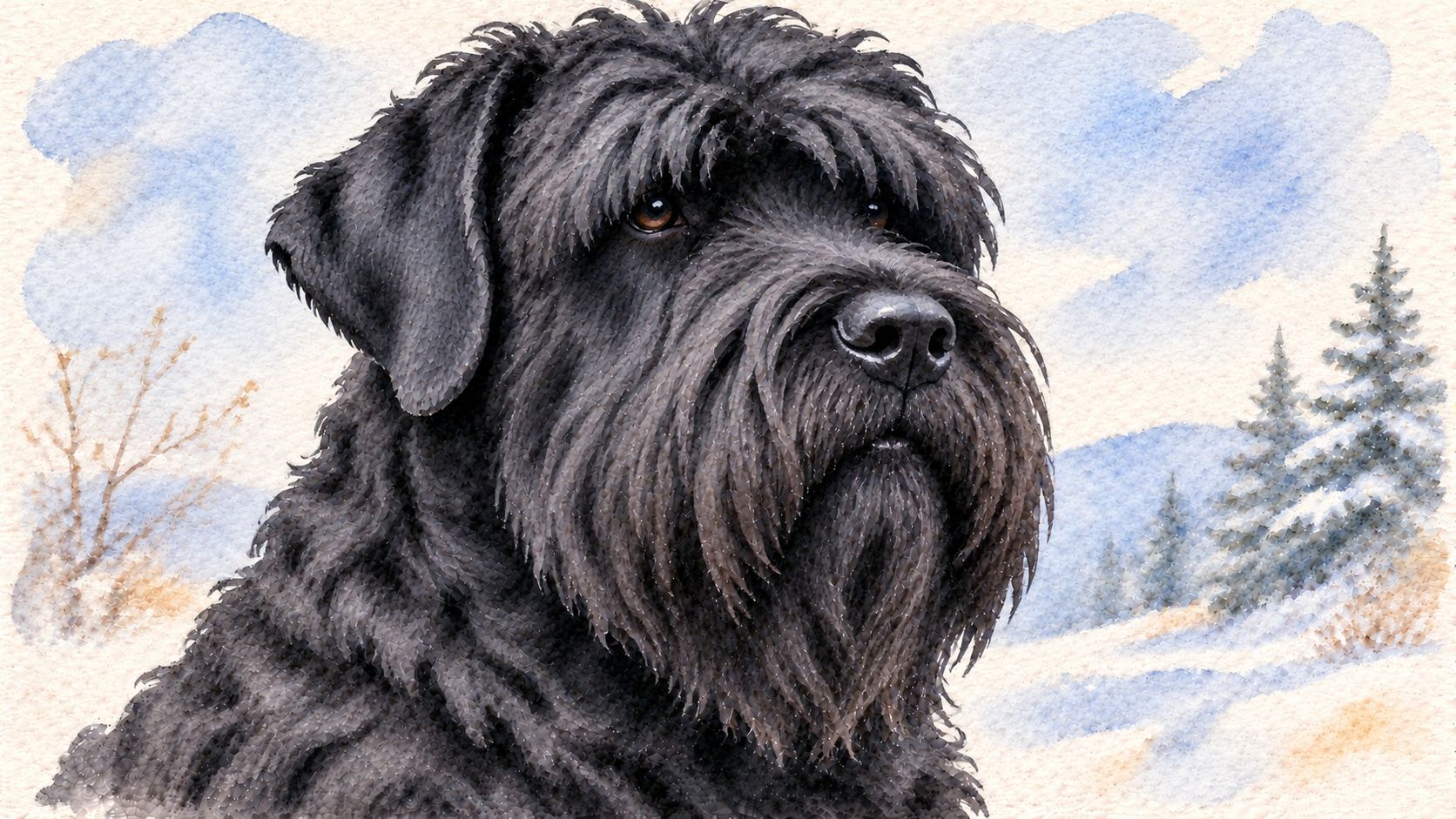
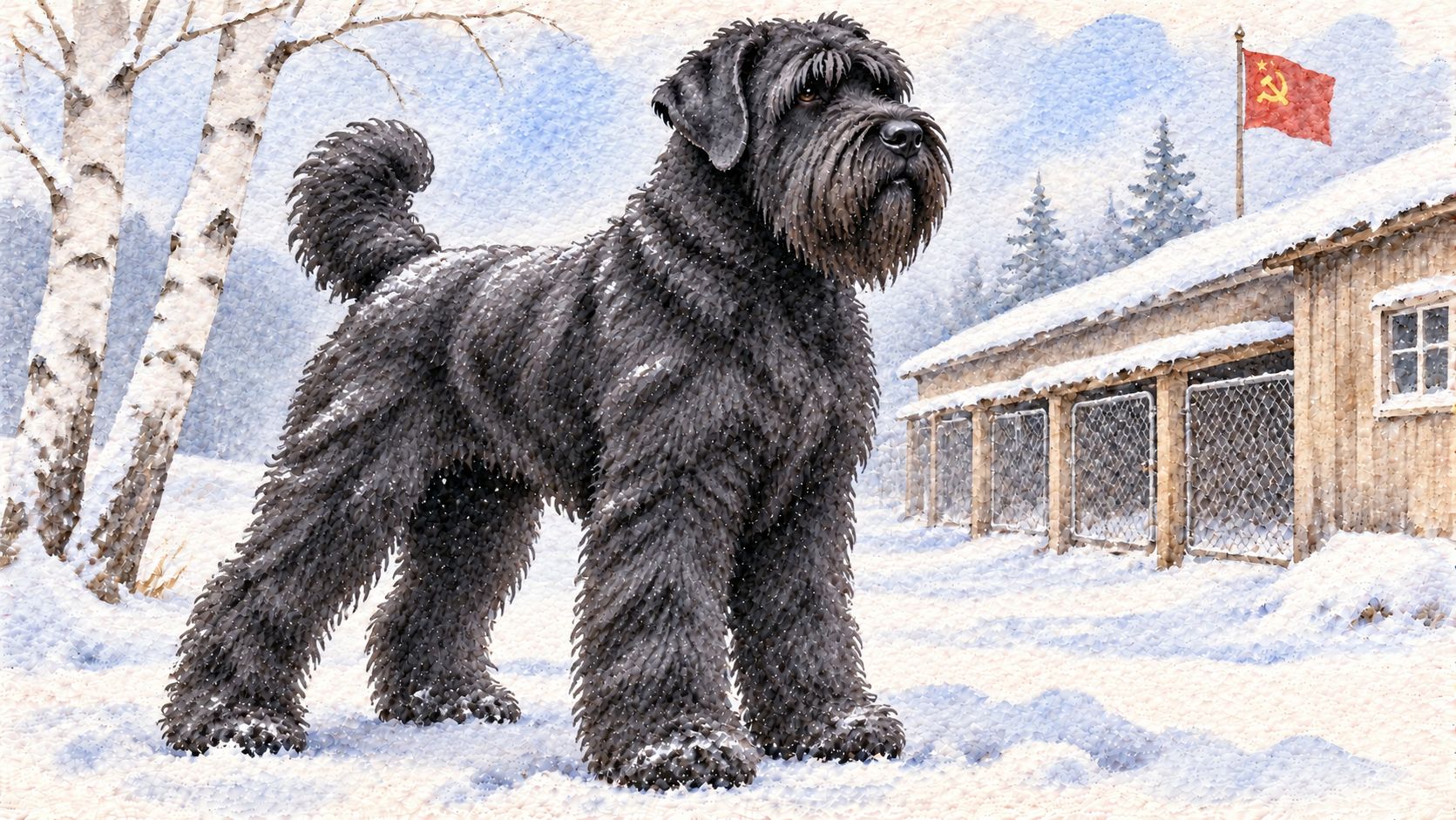
The Black Russian Terrier is a big, bearded, coal-black guardian with a calm gaze and a surprisingly soft heart. Created in the Soviet Union in the years after World War II, it was designed to protect military sites in harsh weather. Fans sometimes call it the "Black Pearl of Russia," a fitting name for a dog with such a striking, glossy coat.
Despite its tough beginnings, this breed is devoted, intelligent and deeply attached to its family. In this complete dog breed guide, you will learn about its size, temperament, grooming needs, exercise requirements, health, diet and fascinating history, so you can decide whether this powerful companion belongs in your home.
Black Russian Terrier at a Glance
| Trait | Details |
|---|---|
| Breed group | Working (AKC) |
| Height | Males 27 to 30 inches (69 to 76 cm); females 26 to 29 inches (66 to 74 cm) |
| Weight | About 75 to 130 pounds (34 to 59 kg) |
| Life expectancy | Roughly 10 to 11 years |
| Coat | Rough double coat, medium to long |
| Colors | Black, sometimes with scattered gray hairs |
| Shedding | Light to moderate |
| Energy level | Moderate |
| Temperament | Confident, loyal, intelligent, protective, calm |
| Good for | Experienced owners, active families, homes with space |
| Origin | Soviet Union (late 1940s and 1950s) |
What Is a Black Russian Terrier?
This is a large working dog developed by the Soviet army at the Red Star (Krasnaya Zvezda) kennel near Moscow. Its purpose was clear: guard and patrol in extreme climates, from icy winters to scorching summers. The result was a strong, brave and trainable dog with a weatherproof coat.
Here is a surprise for many people: this breed is not really a terrier. Only a small part of its ancestry comes from terrier breeds such as the Airedale. In the United States, the American Kennel Club places it in the Working Group, alongside breeds like the Rottweiler and Giant Schnauzer. In the United Kingdom, it is known as the Russian Black Terrier.
How Big Do Black Russian Terriers Get?
Black Russian Terriers are large dogs. Males stand about 27 to 30 inches (69 to 76 cm) tall at the shoulder, and females stand about 26 to 29 inches (66 to 74 cm). Adults typically weigh between 75 and 130 pounds (34 to 59 kg), depending on sex, build and bloodline.
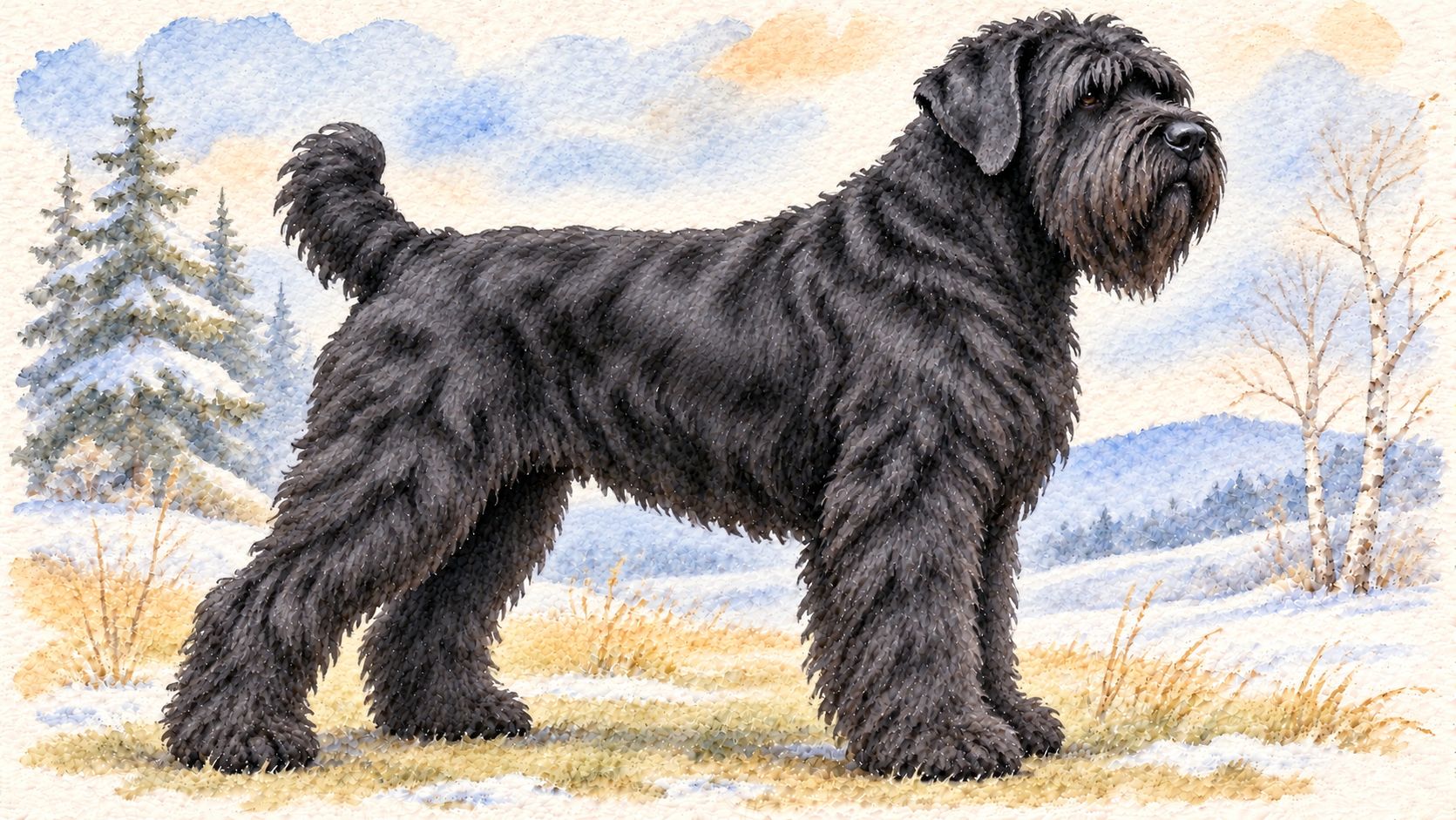
The Black Russian Terrier size is matched by its sturdy frame. It has a deep chest, a broad back, heavy bone and powerful legs. The head is long and strong, with a beard, mustache and eyebrows that give the face a serious, thoughtful expression.
Coat and Colors
The breed wears a rough, ruffled double coat. A soft, dense undercoat sits beneath a coarser outer layer, and together they protect the dog from cold, wind and wet weather. The coat is usually medium to long and is often trimmed to show off the dog's strong outline.
There is only one accepted color: black. Some dogs show a sprinkling of gray hairs through the coat, which is allowed. That solid black look is a big part of the breed's dramatic appeal.
Black Russian Terrier Temperament and Personality
The Black Russian Terrier temperament blends strength with steady calm. At home, many are relaxed and affectionate. Around strangers, they tend to be watchful and reserved. This breed is known for being:
- Loyal: They bond closely with their families and like to stay near their people.
- Protective: Bred as guard dogs, they are naturally alert and will step in if they sense a threat.
- Intelligent: They learn quickly and enjoy having a job to do.
- Confident: These dogs are self-assured and rarely nervous, which makes them steady companions.
- Calm indoors: With enough activity, many are surprisingly mellow and happy to lounge near their owners.
This is a people-oriented breed. It generally does not do well left alone in a yard or kennel for long periods. It wants to be part of daily family life, and loneliness can lead to boredom and unwanted behavior.
Are Black Russian Terriers Good Family Dogs?
Yes, Black Russian Terriers can be excellent family dogs in the right home. They are often gentle and patient with the children in their own family, especially when raised with them.
Because of their large size and strength, supervision is important around young kids, who could be knocked over during play. Teach children to respect the dog's space, and never leave very young children alone with any dog.
Are Black Russian Terriers Good With Other Pets?
Many live peacefully with other pets, particularly when raised together. Some can be dominant with unfamiliar dogs, especially dogs of the same sex.
Early socialization is the key. Introducing your Black Russian Terrier puppy to many people, dogs, places and sounds will help it grow into a well-balanced adult that can tell the difference between a real threat and a friendly visitor.
Training a Black Russian Terrier
These dogs are smart and quick to learn, which is one reason they have been used for military and police work. However, they are also strong-willed and need an owner who is confident, calm and consistent. Positive reinforcement with praise, play and treats works best.
Here are a few training tips for Black Russian Terrier owners:
- Start early. Begin training and socialization as soon as your puppy comes home, before it grows into a large, strong adult.
- Be consistent. Set clear house rules and make sure everyone in the family follows them.
- Keep it interesting. This clever breed can get bored with endless repetition. Mix up exercises and keep sessions upbeat.
- Teach leash manners. Good walking habits are essential for a dog that may weigh more than 100 pounds.
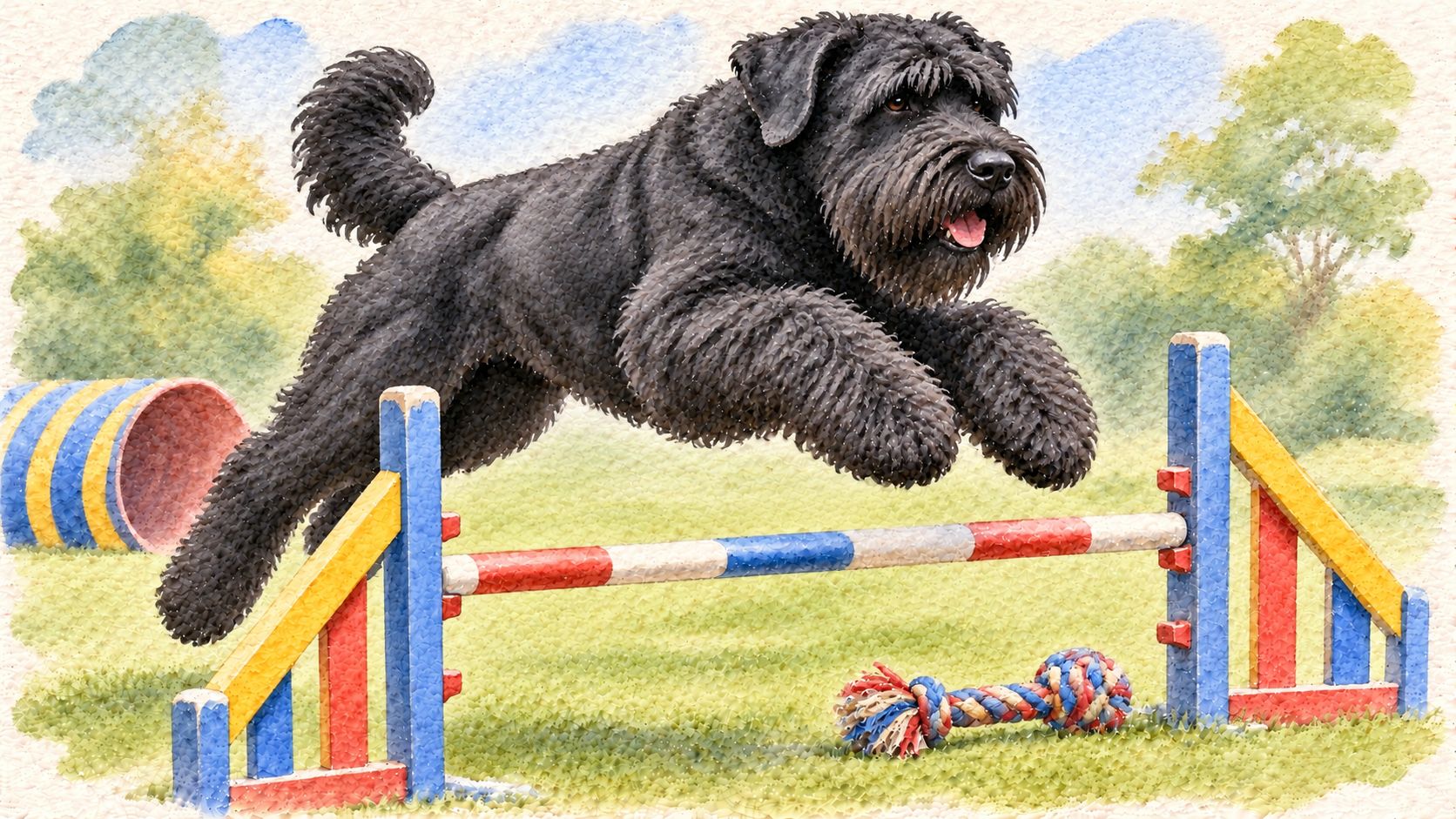
- Give it a job. The breed can excel at obedience, agility, tracking, search and rescue and protection sports.
Many owners find that a puppy class and later an obedience club give both dog and handler structure and confidence.
Exercise Needs
The Black Russian Terrier has a moderate energy level. It needs daily exercise, but it is not usually hyperactive. Long walks, play sessions in a securely fenced yard and some mental challenges will keep most adults happy and healthy.
Training games, scent work and puzzle toys are great ways to work the breed's busy mind. A bored dog may find its own entertainment, such as digging or chewing.
Because of its size, this breed usually does best in a home with some outdoor space. Its thick coat also means it can overheat, so plan exercise for cooler parts of the day in summer and always provide shade and fresh water.
Black Russian Terrier vs Giant Schnauzer
The Giant Schnauzer is one of the Black Russian Terrier's ancestors, and the two breeds look similar at first glance. Both are big, black, bearded working dogs. However, the Black Russian Terrier is generally heavier and more massive, with a longer, more ruffled coat. The Giant Schnauzer has a shorter, wiry coat, often looks leaner and tends to be more high-energy.
Black Russian Terrier Grooming
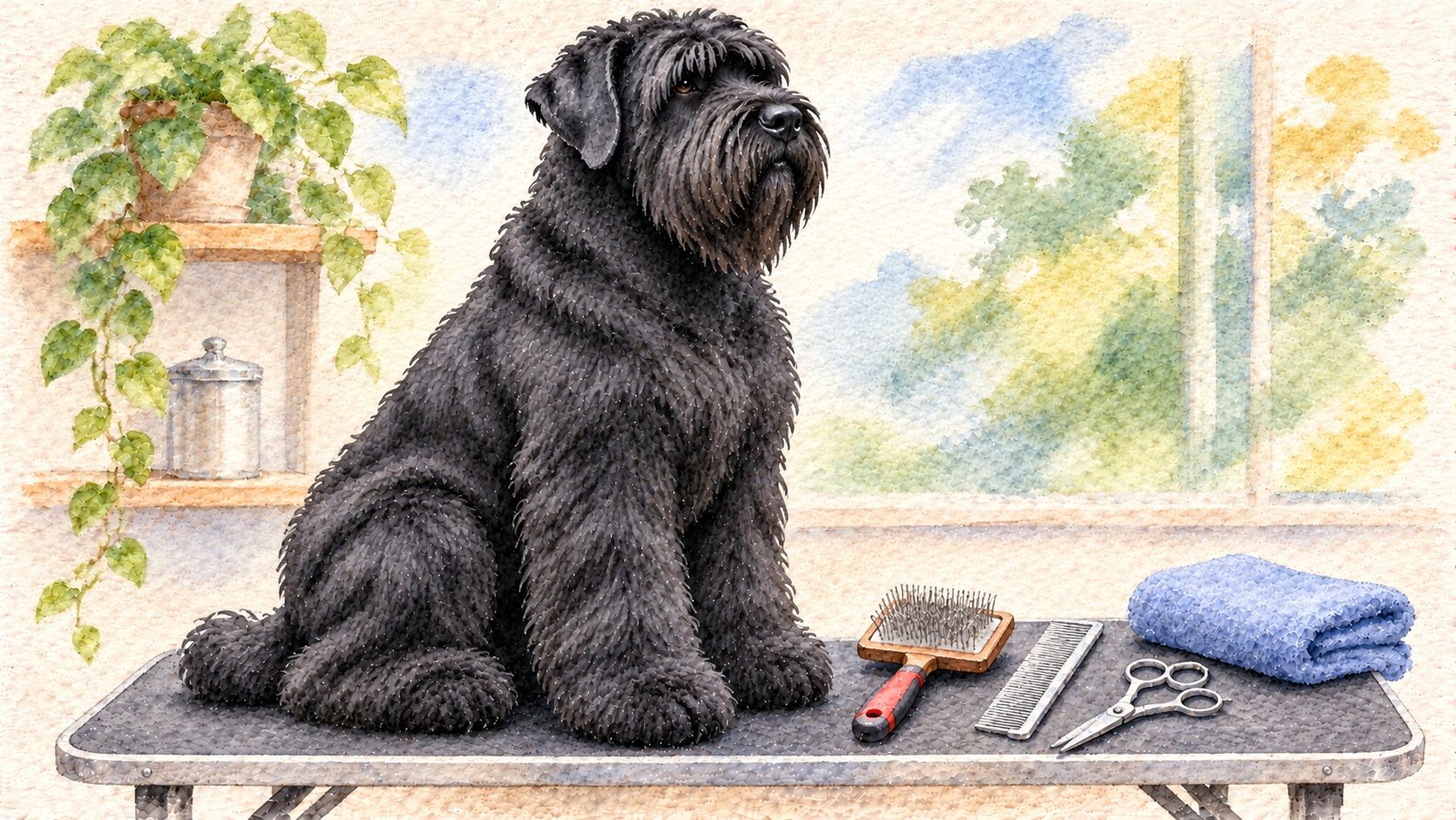
Black Russian Terrier grooming is a real commitment. The ruffled double coat needs regular care to stay clean, healthy and free of mats.
Do Black Russian Terriers Shed?
Yes, they shed, but usually less than many other double-coated breeds. Regular brushing removes loose hair before it lands on your floors. No dog is truly hypoallergenic, so allergy sufferers should spend time with the breed before committing.
Grooming Routine
- Brushing: Brush the coat thoroughly at least once or twice a week, paying extra attention to the legs, chest and behind the ears where mats form.
- Beard care: Wipe the beard after meals and drinks, since it can hold food and water.
- Trimming: Most owners book a professional grooming session every couple of months to keep the coat neat and in its classic shape.
- Bathing: Bathe as needed, and dry the dense coat completely afterward.
- Nails: Trim nails every few weeks if they are not worn down naturally.
- Teeth and ears: Brush teeth several times a week and check ears regularly for dirt or redness.
Start grooming routines while your dog is still a puppy. A large adult that is used to being handled is much easier to care for.
Black Russian Terrier Health and Lifespan
The typical Black Russian Terrier lifespan is roughly 10 to 11 years, which is common for large breeds. Like all breeds, it may be prone to certain health concerns. Responsible breeders screen their dogs, and common concerns can include:
- Hip and elbow dysplasia: Abnormal development of the hip or elbow joints, seen in many large breeds.
- Eye conditions: Some inherited eye problems can occur, so eye checks are recommended.
- Bloat: Large, deep-chested dogs can be prone to this serious stomach condition, so learn the warning signs.
- Breed-specific genetic conditions: DNA tests exist for some inherited conditions in the breed, and good breeders use them.
Keeping your dog at a healthy weight helps protect its joints. Always work with your veterinarian to set up a routine of checkups, vaccinations and preventive care.
Feeding and Nutrition
This breed does best on a high-quality dog food made for large breeds. Large-breed formulas are designed with the needs of big dogs in mind, including support for joints and controlled growth.
Puppies should eat a large-breed puppy food to support steady, healthy development. Portion sizes depend on age, weight and activity level, so follow the guidelines on the food package and ask your veterinarian for advice. Many owners feed two smaller meals a day rather than one large meal, and treats should make up only a small part of daily calories.
History of the Black Russian Terrier
It is one of the newest breeds in the world. After World War II, the Soviet Union faced a shortage of reliable working dogs. The military's Red Star kennel near Moscow set out to create a new breed that could guard and protect in any climate.
Breeders reportedly used around 17 breeds in the program. Key contributors included the Giant Schnauzer, Rottweiler, Airedale Terrier and Newfoundland. The goal was a large, brave, trainable dog with a coat tough enough for Russian winters.
By the 1950s, Red Star began selling some dogs to civilian breeders, who refined the breed's appearance and temperament. A formal standard followed, and the breed gained international recognition from the FCI in 1984. The dogs later spread to Europe and North America.
The American Kennel Club officially recognized the breed in 2004, placing it in the Working Group. The breed is still used today in military and police roles, while also thriving as a loyal family companion.
Is a Black Russian Terrier Right for You?
A Black Russian Terrier could be a wonderful match if you:
- Have experience with large, strong-willed dogs
- Want a loyal, protective family companion
- Can commit to regular grooming or professional grooming visits
- Have a home with space and a securely fenced yard
- Enjoy training and want a dog that loves to learn
- Can include your dog in daily family life
A Black Russian Terrier may not be the best fit if you:
- Are a first-time dog owner
- Live in a small apartment with no outdoor space
- Are away from home for long hours most days
- Want a low-maintenance coat
Finding a Black Russian Terrier Puppy
This is a fairly rare breed, so you may need to join a waiting list. Look for a reputable breeder who health-tests their dogs, raises puppies in a home environment and focuses on stable temperament. Breed clubs and rescue groups are also good places to find adult dogs that need new homes. As with any guardian breed, it is wise to check local rules and housing policies before bringing one home.
Fun Facts About the Black Russian Terrier
- The breed is nicknamed the "Black Pearl of Russia."
- Despite its name, it is mostly not a terrier and belongs to the AKC Working Group.
- It was developed by the Soviet military's Red Star kennel near Moscow.
- Around 17 breeds were reportedly used to create it.
- In the UK, the breed is called the Russian Black Terrier.
- It is one of the youngest recognized dog breeds in the world.
Frequently Asked Questions
Is the Black Russian Terrier a real terrier?
Not really. Although it has some Airedale Terrier ancestry, it was bred as a guard dog and belongs to the AKC Working Group.
How big do Black Russian Terriers get?
Males stand about 27 to 30 inches tall and females about 26 to 29 inches. Adults usually weigh between 75 and 130 pounds.
Do Black Russian Terriers shed a lot?
They shed, but usually less than many double-coated breeds. Regular brushing keeps loose hair under control.
Are Black Russian Terriers good family dogs?
Yes, they can be loving and gentle with their own families. Their size means supervision is important around young children.
How long do Black Russian Terriers live?
The average Black Russian Terrier lifespan is roughly 10 to 11 years with good care and regular veterinary checkups.
Are Black Russian Terriers good for first-time owners?
They are usually better suited to experienced owners. Their size, intelligence and protective nature call for confident, consistent training.
Final Thoughts
The Black Russian Terrier is a rare blend of power, intelligence and quiet devotion. Bred to guard in the toughest conditions, this "Black Pearl of Russia" becomes a gentle, loyal companion in the right home. If you can offer confident training, regular grooming and plenty of time together, a Black Russian Terrier may be the most faithful friend you will ever have.