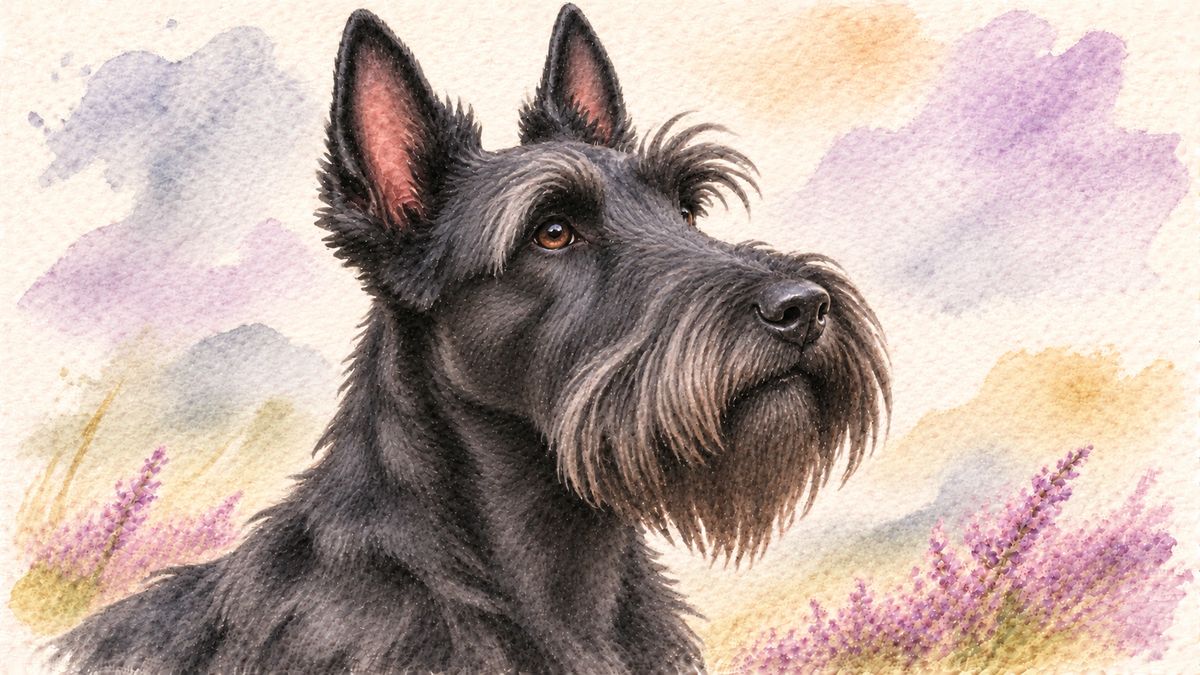
With its long beard, bushy eyebrows and confident little strut, the Scottish Terrier is one of the most recognizable dogs in the world. Affectionately known as the "Scottie," this compact terrier has appeared on board games, holiday cards, jewelry and even in the White House. Its silhouette alone is enough to make dog lovers smile.
Beneath that dignified look is a sturdy, spirited and loyal companion. The Scottish Terrier was bred to hunt vermin in the rugged Scottish Highlands, and it still carries the courage and independence of a working terrier. In this complete Scottish Terrier dog breed guide, you will learn about its size, temperament, grooming needs, exercise requirements, health, diet and long, colorful history.
Scottish Terrier at a Glance
| Trait | Details |
|---|---|
| Breed group | Terrier (AKC) |
| Height | About 10 inches (25 cm) |
| Weight | 18 to 22 pounds (8 to 10 kg) |
| Life expectancy | Around 11 to 13 years |
| Coat | Hard, wiry outer coat with a soft, dense undercoat |
| Colors | Black, wheaten, brindle (including black, red and silver brindle) |
| Shedding | Low |
| Energy level | Moderate |
| Temperament | Confident, loyal, dignified, playful, independent |
| Good for | Adults, couples, families with older children |
| Origin | Scotland |
What Is a Scottish Terrier?
The Scottie is a small, short-legged terrier from Scotland. It was originally developed to go to ground after foxes, badgers and rodents among the rocky cairns and burrows of the Highlands. That job required a dog that was tough, brave and determined, and the Scottie still has all of those qualities.
Today, this breed is primarily a beloved companion. It belongs to the American Kennel Club's Terrier Group and is admired for its proud bearing and loyal heart. Owners often say it has a "big dog" personality packed into a low, solid frame. It is charming and gentle with its family, yet always alert and ready for adventure.
Scottish Terrier Size and Appearance
How Big Do Scottish Terriers Get?
Scottish Terriers are small but solid dogs, standing about 10 inches tall at the shoulder. Males usually weigh around 19 to 22 pounds, while females are slightly lighter at about 18 to 21 pounds.
Although the Scottish Terrier size is modest, this is not a delicate dog. It has a deep chest, strong back, short sturdy legs and surprisingly powerful hindquarters. Many people are surprised by how heavy a Scottie feels when they pick one up.
The breed's head is long in proportion to its body, with a strong muzzle, small almond-shaped dark eyes and pointed, upright ears. The famous beard and eyebrows give the Scottie its wise, slightly serious expression. Its tail is medium length, carried upright and often wagging with purpose.
Coat and Colors
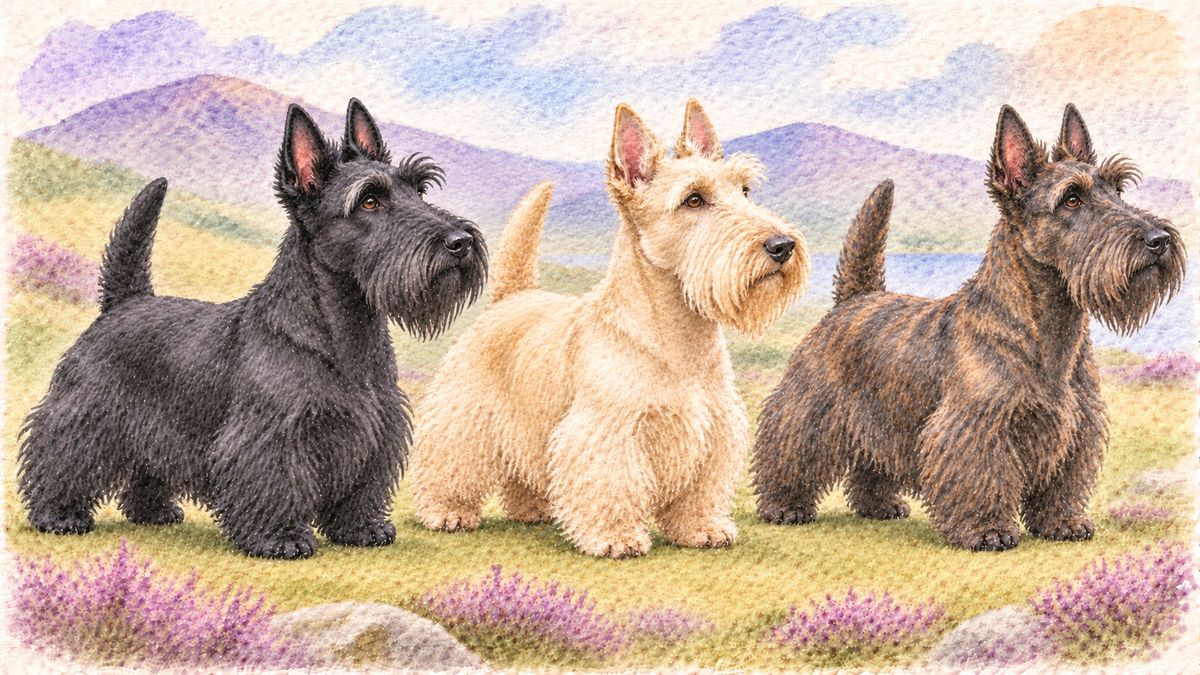
The Scottie wears a double coat. The outer coat is hard, dense and wiry, while the undercoat is soft and close to the body. Together they provide protection from wind, rain and brambles, which was essential for a dog working outdoors in the Scottish weather.
Accepted colors include black, wheaten, and several shades of brindle, such as black brindle, red brindle and silver brindle. Black is the color most people picture, but wheaten Scotties are striking and increasingly popular.
Scottish Terrier Temperament and Personality
The Scottish Terrier temperament is a fascinating mix of dignity and playfulness. This breed is known for being:
- Loyal: Scotties bond deeply with their families and like to stay close to their favorite people.
- Confident and brave: Bred to face tough quarry, they are bold and rarely back down from a challenge.
- Independent: Scotties like to think for themselves, which can come across as stubbornness.
- Playful and spirited: They enjoy games, toys and outings, and they keep a lively spark well into adulthood.
- Alert: With a keen sense of hearing and a deep bark, the Scottie makes a reliable watchdog.
- Dignified: Many owners describe their Scottie as proud and self-possessed, almost like a small gentleman.
Scotties can be somewhat reserved with strangers. They are not usually the type to greet everyone they meet with wild enthusiasm. Instead, they tend to warm up on their own terms, which is part of their charm.
Are Scottish Terriers Good Family Dogs?
Scotties can be wonderful family dogs for households with older, respectful children. They are affectionate and devoted, but they do not always enjoy rough handling, tail pulling or chaotic play. Teaching children to interact calmly and supervising their time together helps everyone get along.
Are Scottish Terriers Good With Other Pets?
Scotties can live with other dogs, especially when raised together, but some can be assertive with unfamiliar dogs. Because of their strong prey drive, they may chase cats, squirrels and small pets. Homes with hamsters, rabbits or guinea pigs should be cautious.
Early socialization makes a big difference. Introduce your Scottish Terrier puppy to many people, places, sounds and friendly animals so it grows into a confident, well-mannered adult.
Training a Scottish Terrier
Scotties are intelligent, but they are not pushovers. They respond best to calm, consistent and positive training. Harsh methods tend to backfire with this sensitive and proud breed, while praise, play and small treats can work wonders.
Here are some practical training tips:
- Start early. Begin socialization and basic manners as soon as your puppy comes home.
- Keep it interesting. Short, varied sessions hold a Scottie's attention better than long, repetitive drills.
- Be patient with recall. Their hunting instincts can override commands, so always practice in a safe, enclosed area.
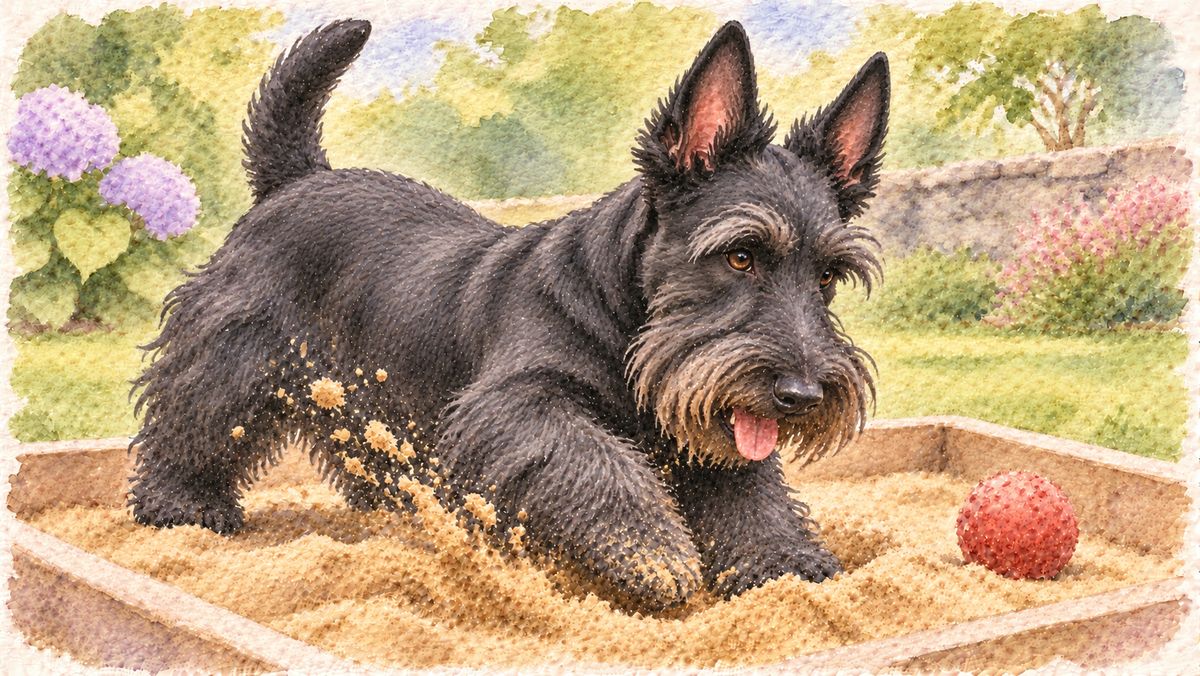
- Manage digging. Scotties were bred to dig. Give them a sandbox or approved digging spot instead of fighting nature.
- Try terrier sports. Earthdog trials, agility and conformation are activities that many Scotties enjoy.
Exercise Needs
The Scottie has a moderate energy level. It enjoys daily walks, play sessions and the chance to sniff and explore. Several leashed walks a day or active play in a securely fenced area will usually keep a Scottie fit and content.
Because of its size, a Scottie can adapt to apartment life as long as it gets regular activity and mental stimulation. Puzzle toys, scent games and short training sessions help keep its clever mind busy.
A leash is a must outside the home. Scotties are quick to chase small animals and may ignore you once they spot something interesting. A secure fence is also important, since some Scotties are skilled diggers.
Scottish Terrier Grooming
Do Scottish Terriers Shed?
Scotties shed very little compared with many breeds. Their wiry coat holds loose hair, so you will see less of it on furniture and clothing. That said, they still need regular grooming to keep the coat healthy and tidy.
Grooming Routine
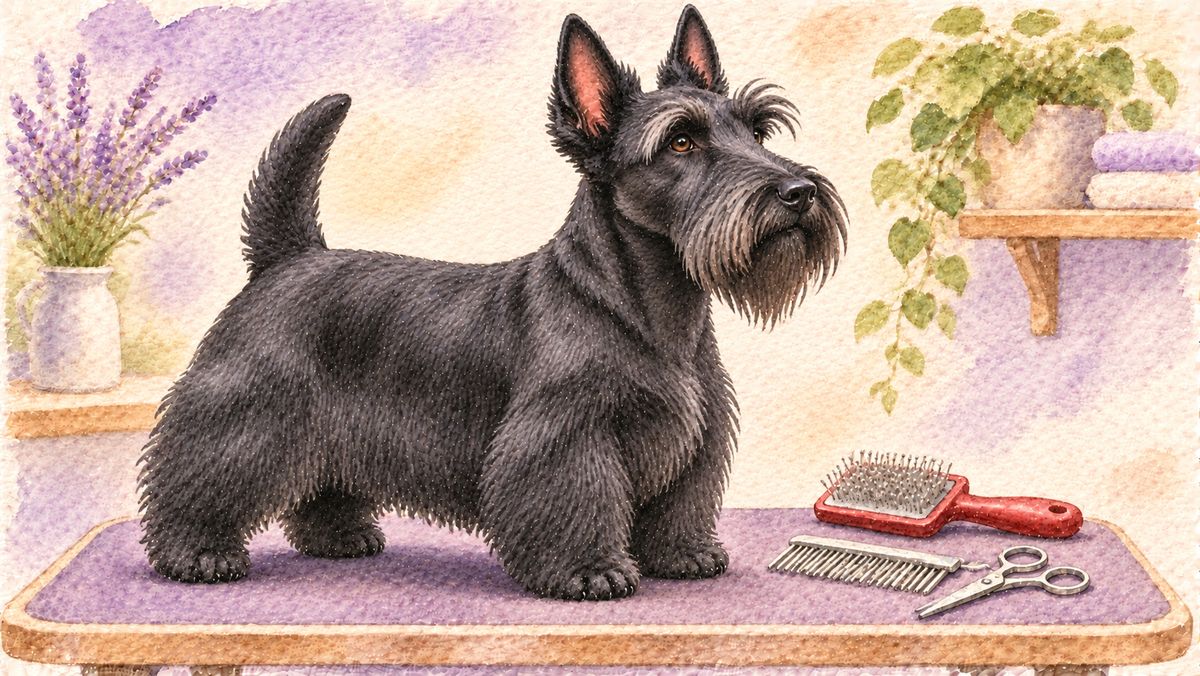
- Brushing: Brush the coat about twice a week, paying special attention to the beard, legs and underside where tangles form.
- Clipping or stripping: Most pet Scotties are clipped every other month or so. Show dogs are usually hand-stripped to preserve the harsh coat texture.
- Beard care: Wipe the beard after meals to keep it clean and fresh.
- Nails: Trim nails every few weeks to keep paws comfortable.
- Teeth: Brush teeth several times a week to support good dental health.
- Ears: Check ears weekly for dirt, redness or odor.
A skilled groomer can give your dog the classic look, with a skirt of longer hair, a neat beard and eyebrows, and a tidy body coat. Many owners learn basic trimming at home between professional visits.
Scottish Terrier Health and Lifespan
How Long Do Scottish Terriers Live?
The typical Scottish Terrier lifespan is around 11 to 13 years, and many live longer with good care. Like all breeds, Scotties can be prone to certain health conditions.
Responsible breeders screen their dogs and discuss known concerns openly. Conditions that may affect the breed include:
- Von Willebrand's disease: An inherited bleeding disorder that affects blood clotting.
- Scottie cramp: A condition that can cause temporary episodes of stiff or unusual movement, often triggered by excitement.
- Craniomandibular osteopathy: A bone growth condition of the jaw that can occur in young puppies.
- Certain cancers: The breed is thought to have a higher risk of some cancers, including bladder cancer.
Regular veterinary checkups help catch problems early. Keep your Scottie at a healthy weight, provide daily exercise and always work with your veterinarian to plan vaccinations, screenings and preventive care.
Feeding and Nutrition
A Scottie does well on a high-quality, complete and balanced dog food suited to its size, age and activity level. Many owners choose small-breed formulas because the kibble is easier for smaller jaws to chew.
Puppies should eat a food designed for puppies to support healthy growth. Portion sizes vary, so follow the feeding guide on the package and ask your veterinarian for advice. Scotties can gain weight easily, so measure meals and keep treats to a small share of daily calories.
History of the Scottish Terrier
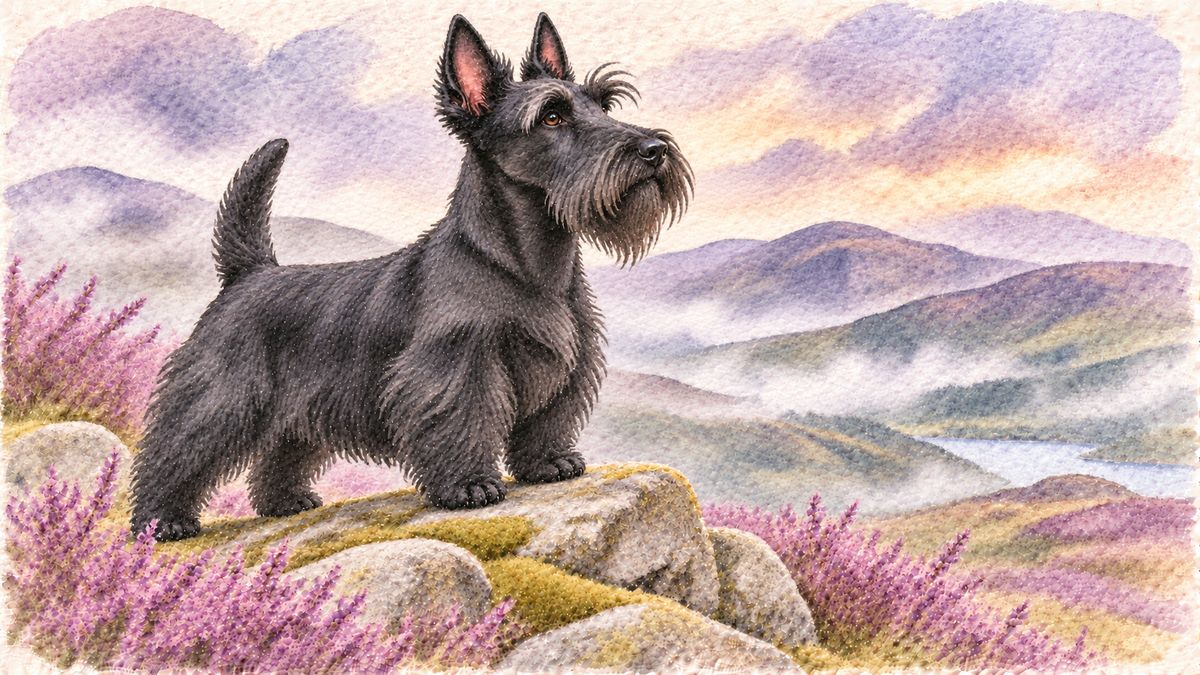
The Scottish Terrier's roots stretch back centuries in Scotland, where several types of small, hardy terriers were used to hunt vermin. For a long time, these dogs were grouped together under the general name "Skye Terriers" or simply "Scotch Terriers," and breed lines were not clearly separated.
The breed has royal connections. King James VI of Scotland, who later became James I of England, was a fan of these earthy little terriers, and their popularity in Scotland grew during his reign. According to a well-known story, he even sent several of them as gifts to France.
During the 1800s, breeders began to standardize the breed we know today. The breed gained the nickname "Diehard," a name tied to the Earl of Dumbarton, whose regiment and terriers were both celebrated for their toughness.
The first Scotties arrived in the United States in 1883, when breeder John Naylor imported a pair named Tam Glen and Bonnie Belle. The American Kennel Club recognized the breed shortly afterward, in 1885. Interest rose steadily in the early 1900s, and by the 1930s and 1940s the Scottish Terrier was among the most fashionable dogs in America.
Scotties also have a remarkable place in American political history. The breed has lived in the White House under three presidents: Franklin D. Roosevelt with his famous Fala, Dwight D. Eisenhower with Caacie and Telek, and George W. Bush with Barney and later Miss Beazley.
Scottish Terrier vs Westie
The Scottie and the West Highland White Terrier are often confused because both are small Scottish breeds with short legs and terrier spirit. The biggest difference is color: Westies are always white, while Scotties are usually black, wheaten or brindle. Scotties also have a longer head, a heavier beard and a slightly more reserved personality, while Westies tend to be more outgoing with strangers.
Is a Scottish Terrier Right for You?
A Scottie could be a great match if you:
- Want a small but sturdy dog with a big personality
- Appreciate an independent, dignified companion
- Can provide daily walks and play
- Prefer a low-shedding breed
- Are patient with positive, consistent training
- Live with adults or older, gentle children
A Scottie may not be the best fit if you:
- Want a dog that is friendly with every stranger it meets
- Have small pets such as rabbits, hamsters or guinea pigs
- Expect perfect off-leash obedience
- Do not want to deal with digging or barking
Finding a Scottish Terrier Puppy
When looking for a puppy, choose a reputable breeder who health-tests parent dogs, raises puppies in a home environment and is happy to answer your questions. Ask to meet at least one parent so you can see its temperament. Breed clubs and rescue groups are also good places to look, as adult Scotties sometimes need loving new homes.
Fun Facts About the Scottish Terrier
- The breed is often simply called the "Scottie."
- It is the only breed to have lived in the White House under three different presidents.
- President Roosevelt's Scottie, Fala, has a statue beside him at the FDR Memorial in Washington, D.C.
- A Scottie token appears in the classic board game Monopoly.
- The breed was nicknamed the "Diehard" for its toughness.
- The first two Scotties were brought to the United States in 1883.
Frequently Asked Questions
How big do Scottish Terriers get?
Adult Scotties stand about 10 inches tall at the shoulder and usually weigh 18 to 22 pounds. They are small but very sturdy for their size.
Are Scottish Terriers good family dogs?
Yes, Scotties can be loving family dogs, especially with older children who handle them calmly. They are loyal and affectionate but may not tolerate rough play.
Do Scottish Terriers shed a lot?
No, Scotties are low shedders thanks to their wiry coat. They still need brushing about twice a week and regular clipping or stripping.
How long do Scottish Terriers live?
The average Scottish Terrier lifespan is around 11 to 13 years. Good nutrition, daily exercise and regular veterinary care help them live long, healthy lives.
Are Scottish Terriers easy to train?
Scotties are smart but independent, so training takes patience. Short, positive sessions with treats and praise work best for this proud breed.
Do Scottish Terriers bark a lot?
Scotties are alert watchdogs and will bark to announce visitors or unusual sounds. Early training and enough daily activity help keep barking under control.
Final Thoughts
The Scottish Terrier is a small dog with a giant spirit. Loyal, confident and full of character, the Scottie has charmed kings, presidents and families for generations. If you can offer patient training, daily walks and a home that appreciates a dignified, independent companion, a Scottish Terrier may become your most devoted friend.