
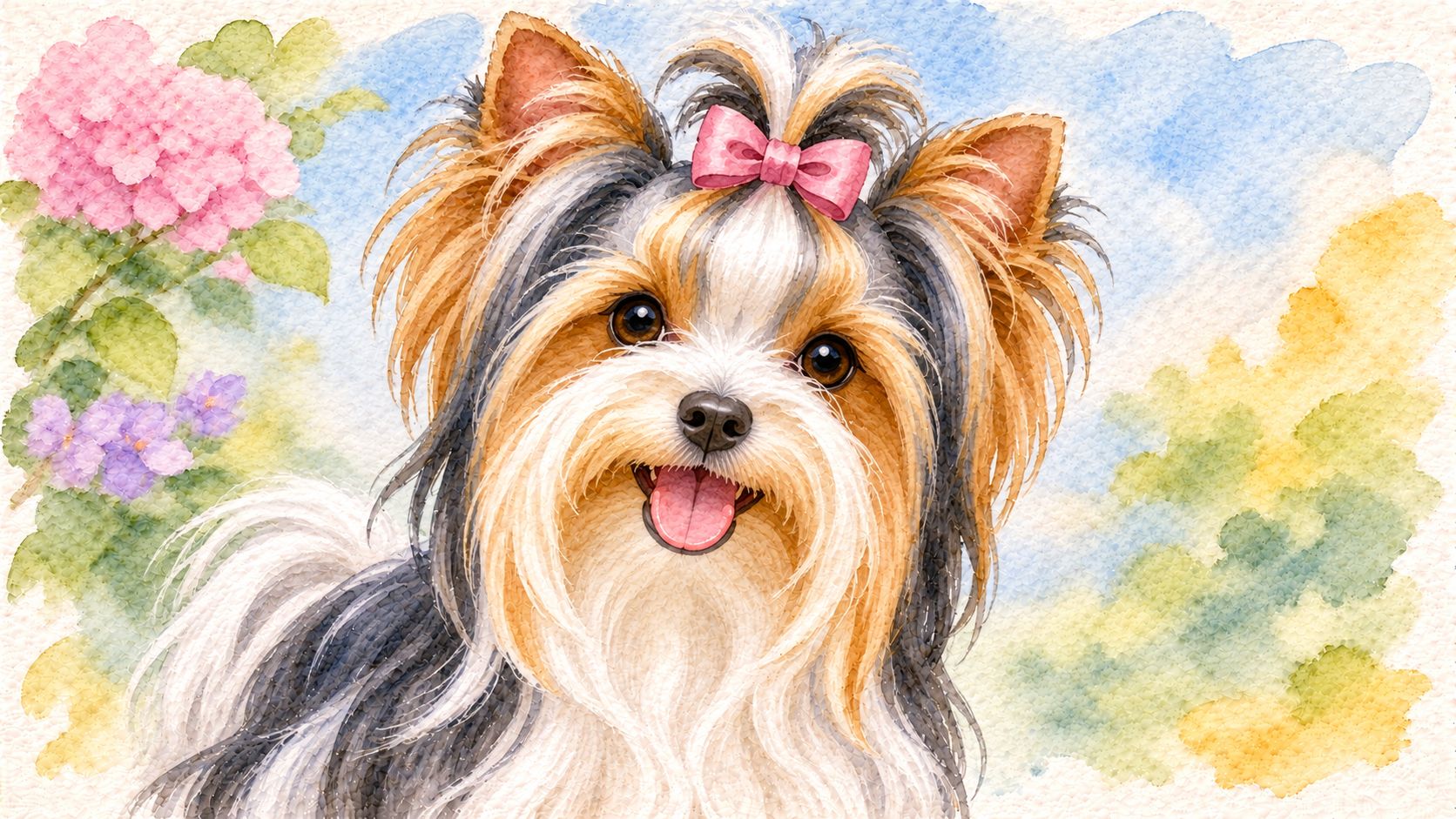
The Biewer Terrier is a tiny, silky-coated toy dog with a striking tricolor coat and a personality that is part clown, part cuddle buddy. Its name is pronounced "beaver," and it honors the German couple who started the breed in the 1980s. With its flowing hair, topknot and bright, happy expression, this little dog tends to turn heads wherever it goes.
Even though it weighs only a few pounds, this little dog is playful, sweet and surprisingly sporty. It is also one of the newest breeds recognized by the American Kennel Club. In this complete Biewer Terrier dog breed guide, you will learn about its size, temperament, grooming needs, exercise, health, diet and history, so you can decide whether this charming companion is right for you.
Biewer Terrier at a Glance
| Trait | Details |
|---|---|
| Breed group | Toy (AKC) |
| Height | About 7 to 11 inches (18 to 28 cm) |
| Weight | About 4 to 7 pounds (1.8 to 3.2 kg) |
| Life expectancy | Up to about 16 years |
| Coat | Long, silky, flowing; no undercoat |
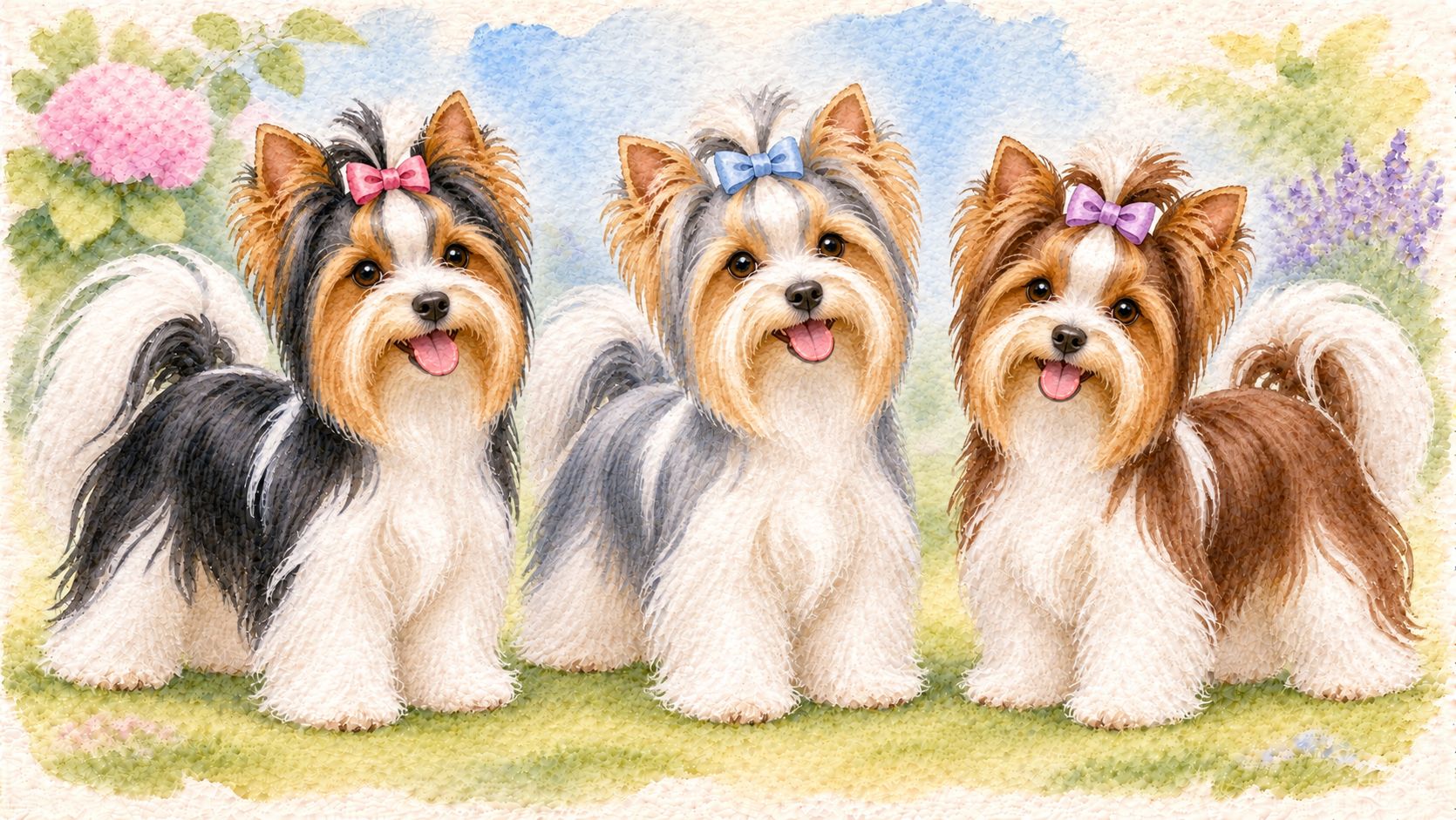
| Colors | Black, tan and white; blue, tan and white; chocolate, tan and white |
| Shedding | Minimal |
| Energy level | Low to moderate |
| Temperament | Playful, affectionate, funny, easygoing, alert |
| Good for | Adults, seniors, families with older children, apartments |
| Origin | Germany (1984) |
What Is a Biewer Terrier?
The Biewer Terrier is a small companion breed that began in Germany in 1984. It was developed from Yorkshire Terrier lines, so it shares the Yorkie's long, silky hair and compact build. What sets it apart is its bold tricolor coat with plenty of white, something you do not see in a standard Yorkie.
Unlike many terriers, the Biewer was never meant to hunt or work. It was bred purely to be a loving household companion. Today it belongs to the American Kennel Club's Toy Group, which suits its tiny size and people-focused nature.
Biewer Terrier Size and Appearance
How Big Do Biewer Terriers Get?
Biewer Terriers are true toy dogs, usually weighing about 4 to 7 pounds (1.8 to 3.2 kg) and standing roughly 7 to 11 inches (18 to 28 cm) tall at the shoulder. Most reach their adult size by around one year of age.
The Biewer has a neat, well-balanced body with a level back and a proud, upright way of carrying itself. Its small, V-shaped ears stand erect, and its dark eyes give it a bright and friendly look. Unlike many Yorkies in the past, the Biewer's tail is left natural and is carried high with a pretty plume of hair.
Coat and Colors
The coat is the breed's crowning glory. It is long, straight and silky, and it often falls on either side of a natural part running down the back. There is no undercoat, which gives the hair its fine, flowing feel. Many owners tie the long hair on the head into a topknot to keep it out of the eyes.
The breed's colors come in tricolor combinations: black, tan and white; blue, tan and white; or chocolate, tan and white. The white usually appears on the chest, legs and underside, while the darker color covers the back. Every dog's pattern is a little different, so no two Biewers look exactly alike.
Biewer Terrier Temperament and Personality
The Biewer Terrier temperament is often summed up as plucky, funny and charming. This is a happy-go-lucky little dog that loves to be in the middle of family life. Here is what owners can expect:
- Playful: Biewers enjoy toys and games and often keep their puppy-like silliness well into adulthood.
- Affectionate: They bond closely with their people and love lap time after a busy play session.
- Easygoing: Many Biewers are relaxed and adaptable, settling happily into different routines and homes.
- Funny: Their whimsical antics and expressive faces make them natural entertainers.
- Alert: Despite their size, they will let you know when someone comes to the door.
Because Biewers were bred as companions, they can become anxious when left alone for long periods. Gradually teaching your dog to be comfortable on its own, and providing toys and a cozy spot, can help prevent separation anxiety. Some Biewers can also be vocal, so early training to manage barking is a good idea.
Are Biewer Terriers Good Family Dogs?
Biewers can be wonderful family dogs in homes with adults or older children who know how to handle a small dog gently. They are generally best suited to families without very young children, since toddlers may accidentally drop, squeeze or step on such a tiny pet.
Are Biewer Terriers Good With Other Pets?
Most Biewers get along well with other dogs and cats, especially when they are raised together. Supervise play with larger dogs, as rough games could injure a dog this small.
Early and frequent socialization is key. Introduce your Biewer Terrier puppy to many people, places, sounds, dogs and other animals so it grows into a confident and friendly adult.
Training a Biewer Terrier
Biewers are smart and eager to please, but like many toy breeds they can have a bit of a stubborn side. Positive reinforcement works best. Use praise, play and tiny treats, and keep the mood upbeat, since harsh corrections can make a sensitive little dog nervous.
Here are a few training tips for Biewer owners:
- Start early. Begin gentle training and socialization the day your puppy comes home.
- Keep sessions short. Five to ten minutes of fun practice holds a small dog's attention best.
- Be patient with house-training. Toy breeds can take longer to house-train. A consistent schedule, frequent potty breaks and crate training help.
- Teach a "quiet" cue. Reward calm behavior to keep alert barking under control.
- Practice alone time. Short, positive periods apart build your dog's confidence and help prevent separation stress.
Exercise Needs
The Biewer Terrier has a low to moderate energy level, but it still enjoys being active. Short daily walks, indoor games and a little playtime in a safe area are usually enough to keep this small dog fit and happy.
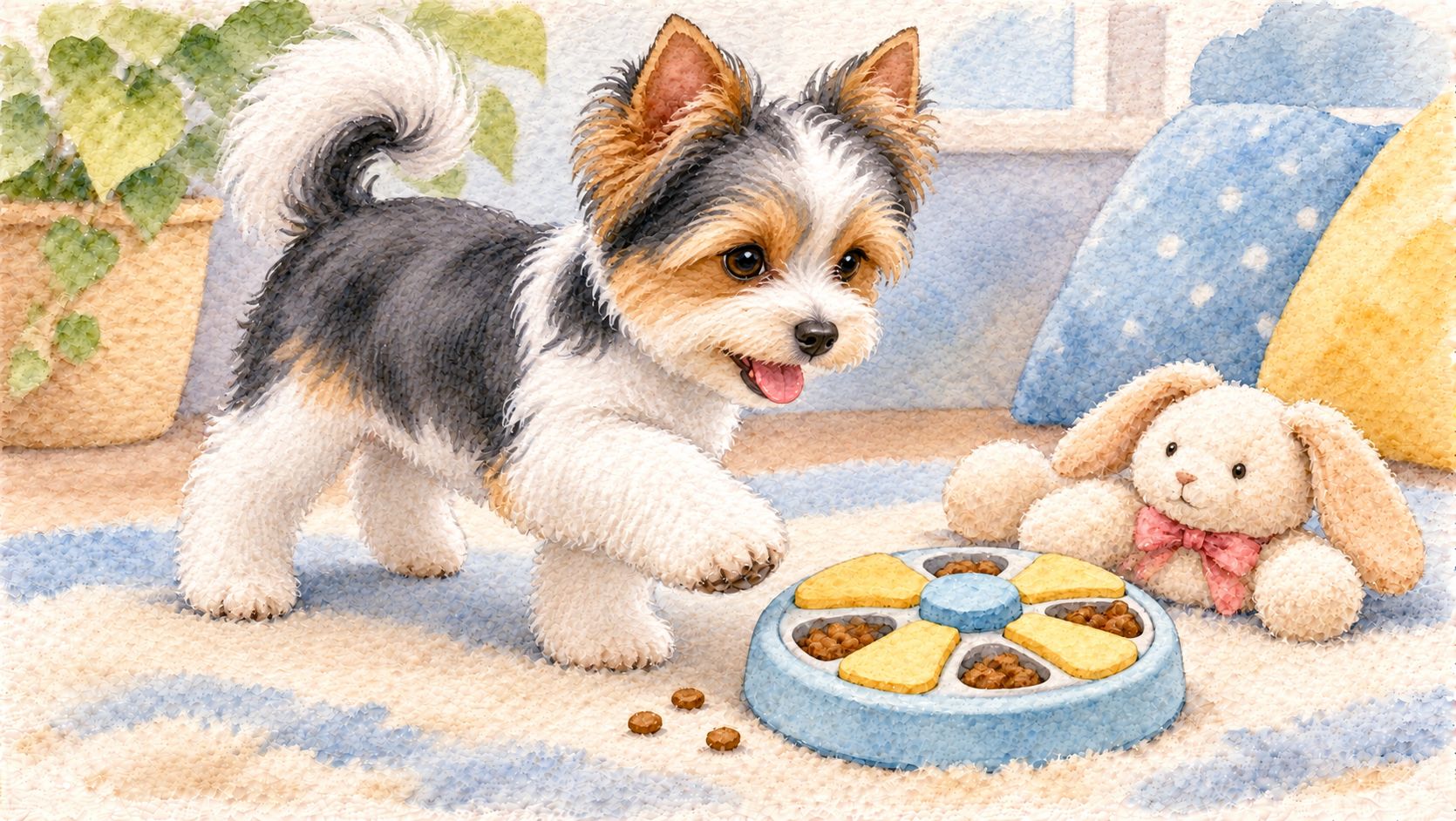
Mental exercise matters just as much as physical activity. Puzzle toys, simple trick training and hide-and-seek games are great ways to keep a clever Biewer busy. Because the breed has a fragile frame, avoid overexercising and discourage high jumps on and off furniture, which can strain small joints.
Biewers can be escape artists, so dog-proof your home and never leave your dog unsupervised in the yard. They adapt well to apartments and small homes, as long as they get regular outdoor breaks for play and potty trips.
Biewer Terrier Grooming
Do Biewer Terriers Shed?
Biewers shed very little. Their single coat of fine, silky hair has no undercoat, so you are unlikely to find much hair on your furniture. Some people with mild allergies find the breed easier to live with, but no dog is completely hypoallergenic, so spend time with a Biewer before committing.
While shedding is low, Biewer Terrier grooming still takes regular effort. That long, flowing coat can tangle and mat quickly without care.
Grooming Routine
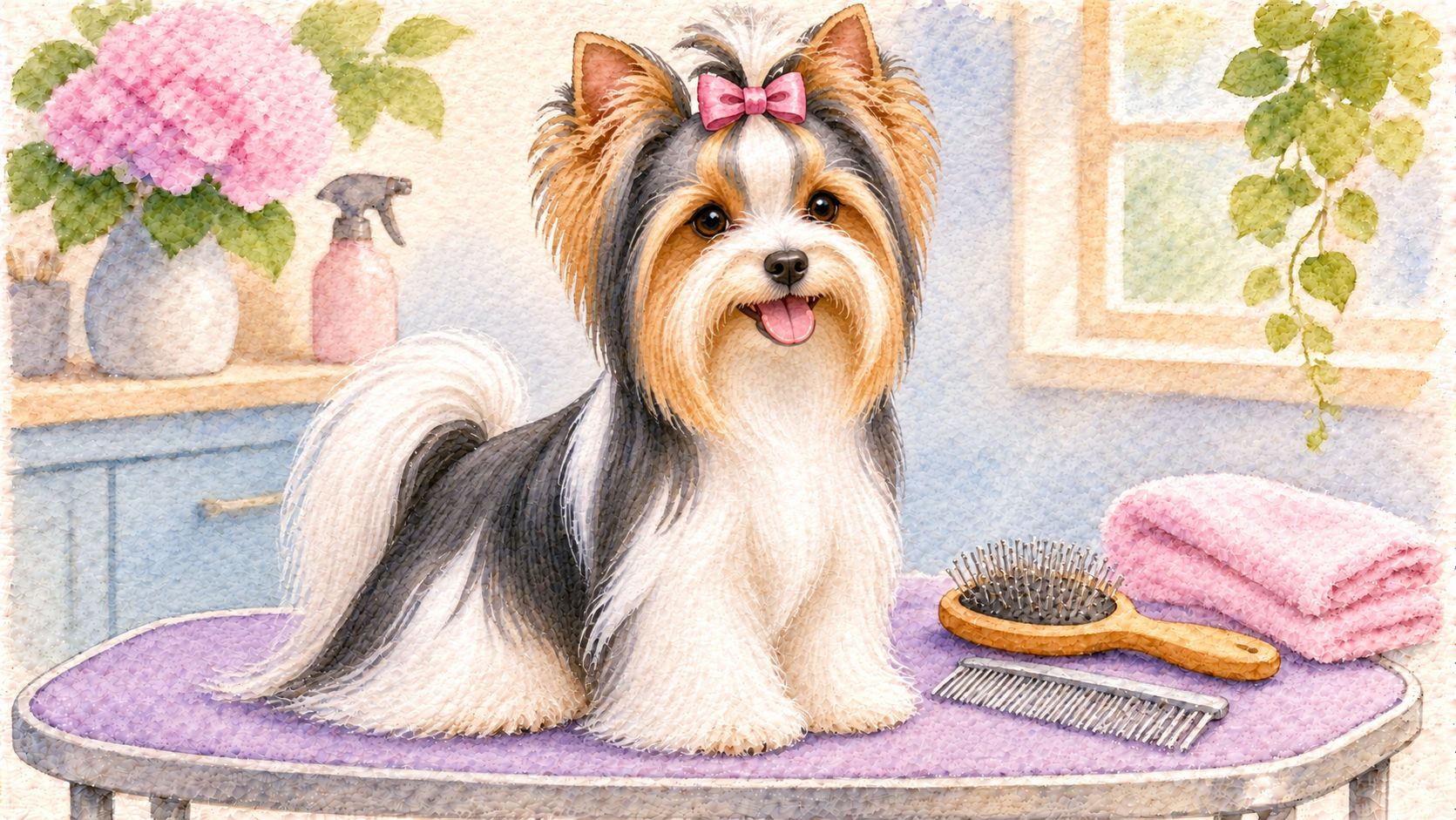
- Brushing: Brush the coat frequently, ideally daily for a full-length coat, to prevent mats and tangles.
- Haircuts: Many owners choose a short "puppy cut" for easier care. It needs regular trims but much less daily brushing.
- Bathing: Bathe your Biewer about once a month or as needed, and dry the coat thoroughly afterward.
- Eyes: Gently wipe around the eyes to reduce tear staining and keep the face clean.
- Ears and nails: Check and clean the ears regularly, and trim nails often. Check the paw pads too.
- Teeth: Dental care is especially important for toy breeds. Brush your dog's teeth regularly and offer size-appropriate dental chews.
Biewer Terrier Health and Lifespan
How Long Do Biewer Terriers Live?
The Biewer Terrier lifespan is long for a dog, and with good care many can live to about 16 years. A healthy diet, regular exercise and routine veterinary checkups all help your dog enjoy a long, happy life.
Like all breeds, Biewers can be prone to certain health conditions. Responsible breeders screen their dogs, and owners should watch for signs of concerns such as:
- Luxating patella: A condition in which the kneecap slips out of place, common in small breeds.
- Bladder stones: Mineral stones that can form in the bladder.
- Hypoglycemia: Low blood sugar, which tiny dogs and young puppies may be more prone to.
- Dental disease: Small mouths with crowded teeth make regular dental care important.
Biewers have delicate bodies and are sensitive to temperature extremes. In cold weather, a sweater or coat can help keep your dog warm. In hot weather, exercise during cooler hours and provide plenty of shade and fresh water. Always work with your veterinarian to set up vaccinations, parasite prevention and regular checkups.
Feeding and Nutrition
A Biewer does best on a high-quality dog food made for toy or small breeds. Look for a formula with quality protein, healthy fats and kibble small enough for a tiny mouth.
Because Biewers can gain weight quickly, stick to a regular feeding schedule rather than leaving food out all day. Your veterinarian may suggest several small meals a day, which can be especially helpful for toy breeds. Treats are great for training, but keep them small and limit them to about 10 percent of daily calories. As your dog ages, ask your veterinarian whether a senior formula for small breeds makes sense.
History of the Biewer Terrier
The Biewer Terrier story began in 1984 in Germany, at the home of Werner and Gertrud Biewer, longtime Yorkshire Terrier breeders. One of their litters produced a puppy with an unusual blue, white and gold coat. This surprising color pattern came from a rare recessive piebald gene carried in their Yorkie lines.
The Biewers decided to develop these striking tricolor dogs as their own line. Early on, the dogs were known by longer names that included "Yorkshire Terrier," but over time the shorter breed name took hold.
The breed later made its way to the United States, where fans worked to establish it as a separate breed. Genetic research helped show that the Biewer was genetically distinct from the Yorkshire Terrier, and the breed is often described as one of the first to have its purebred status confirmed through DNA studies.
After years of work by breed clubs, the American Kennel Club fully recognized the breed as a member of the Toy Group in 2021. That makes it one of the newest AKC breeds, and its popularity has been growing steadily ever since.
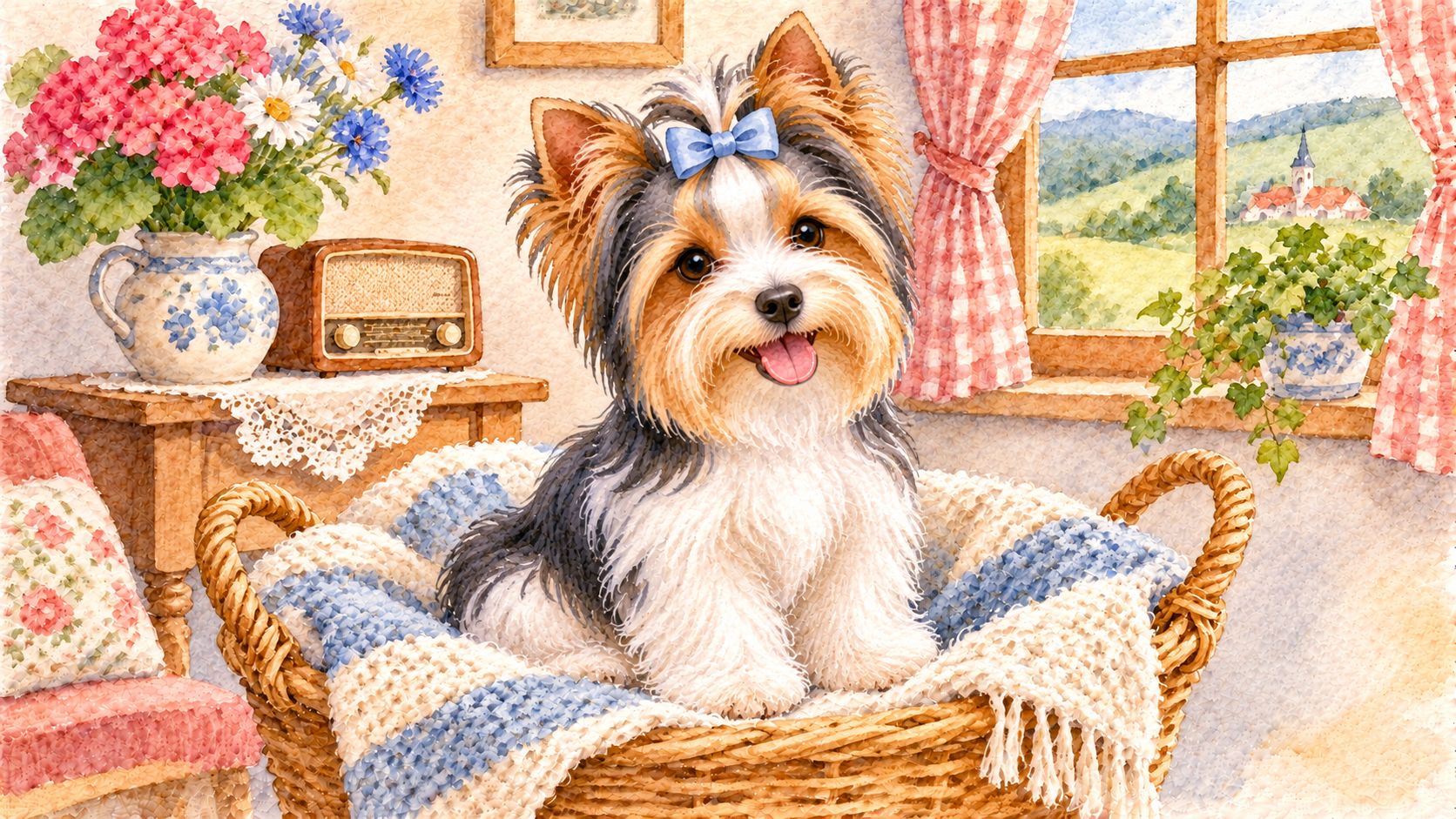
Biewer Terrier vs Yorkshire Terrier
The Biewer and the Yorkshire Terrier are close relatives, and they look alike at first glance. Both are tiny, long-haired toy dogs with silky coats. The biggest difference is color: Biewers wear tricolor coats with lots of white, while Yorkies are typically blue and tan or black and tan. Biewers also keep a natural, plumed tail, and many owners describe them as a bit more mellow than the often feisty Yorkie.
Is a Biewer Terrier Right for You?
A Biewer Terrier could be a great match if you:
- Want a tiny, affectionate dog with a cheerful personality
- Live in an apartment or a smaller home
- Prefer a breed that sheds very little
- Are home often and can give plenty of companionship
- Enjoy regular grooming or are happy to visit a groomer
- Live with adults or older, gentle children
A Biewer may not be the best fit if you:
- Have toddlers or very young children
- Are away from home for long hours most days
- Want a rugged dog for long hikes or running
- Need a dog that never barks
Finding a Biewer Terrier Puppy
Because the breed is still fairly new and uncommon, you may need to join a waiting list for a puppy. Choose a reputable breeder who health-tests parent dogs, raises puppies in a loving home and answers your questions openly. Breed clubs and rescue groups are also good places to look, as adult Biewers sometimes need new homes.
Fun Facts About the Biewer Terrier
- The name "Biewer" is pronounced like "beaver."
- The breed is named after Werner and Gertrud Biewer, the German couple who started it.
- The Biewer's tricolor coat comes from a rare recessive piebald gene.
- It is often called one of the first breeds confirmed as purebred through genetic testing.
- The breed became fully recognized by the AKC in 2021.
- Unlike many terriers, the Biewer was bred purely as a companion, not a working dog.
Frequently Asked Questions
How do you pronounce Biewer Terrier?
Biewer is pronounced "beaver." The breed is named after its German founders, Werner and Gertrud Biewer.
How big do Biewer Terriers get?
Adult Biewers usually weigh about 4 to 7 pounds and stand roughly 7 to 11 inches tall, making them a true toy breed.
Are Biewer Terriers hypoallergenic?
Biewers have a single, silky coat with no undercoat and shed very little, so some people with mild allergies do well with them. However, no dog is completely allergen-free.
Are Biewer Terriers good family dogs?
Yes, for families with adults or older children who handle them gently. They are usually not recommended for homes with very young children because of their tiny, delicate size.
How long do Biewer Terriers live?
With good care, a Biewer can live to about 16 years. Regular vet visits, dental care and a healthy weight all support a long life.
What is the difference between a Biewer Terrier and a Yorkie?
The Biewer was developed from Yorkshire Terriers but has a tricolor coat with white and a natural tail. Genetic research has shown the Biewer to be a distinct breed.
Final Thoughts
The Biewer Terrier packs a lot of love, fun and style into a tiny, silky package. This cheerful tricolor companion is playful, affectionate and well suited to apartment life. If you can offer gentle handling, regular grooming and plenty of time together, a Biewer may become your favorite little shadow.