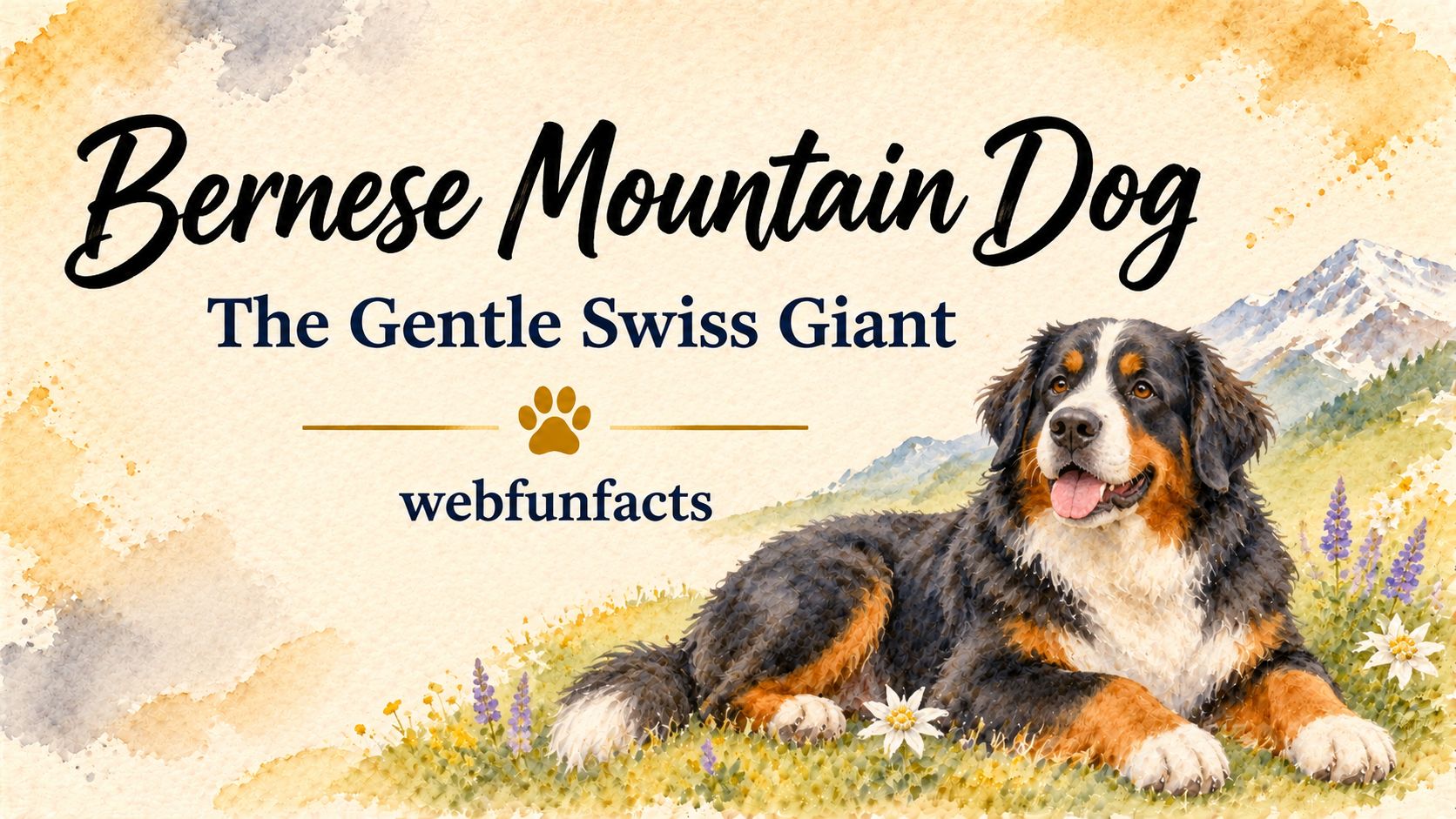
The Bernese Mountain Dog is a big, gentle farm dog from the Swiss Alps, instantly recognized by its silky black, white and rust coat and its soft, friendly eyes. Fans often call it simply the "Berner," and in its homeland it is known as the Berner Sennenhund. For generations, these strong, steady dogs pulled carts, moved cattle and watched over farms in the countryside around Bern.
Today, the Bernese is loved far more for its sweet nature than its pulling power. It is calm, loyal and famously patient with children, which has made it a favorite large family dog around the world. In this complete Bernese Mountain Dog breed guide, you will learn about its size, temperament, grooming, exercise needs, health, lifespan, diet and history, so you can decide whether this gentle giant is the right match for your home.
Bernese Mountain Dog at a Glance
| Trait | Details |
|---|---|
| Breed group | Working (AKC) |
| Height | Males 25 to 27.5 inches (64 to 70 cm); females 23 to 26 inches (58 to 66 cm) |
| Weight | Males 80 to 115 pounds (36 to 52 kg); females 70 to 95 pounds (32 to 43 kg) |
| Life expectancy | 7 to 10 years |
| Coat | Long, thick, double coat |
| Colors | Tricolor: black, white and rust |
| Shedding | Heavy; year-round, more in spring |
| Energy level | Low to moderate |
| Temperament | Calm, affectionate, loyal, patient, eager to please |
| Good for | Families, homes with space, cooler climates |
| Origin | Switzerland |
What Is a Bernese Mountain Dog?
The Bernese Mountain Dog is a large, sturdy working breed that developed on farms in the Swiss canton of Bern. It was an all-purpose helper. It drove cattle to pasture, pulled carts loaded with milk and cheese to market, and kept watch over the farm and family.
The Berner is one of four Swiss mountain dog breeds, known as Sennenhunde. The others are the Greater Swiss Mountain Dog, the Appenzeller Sennenhund and the Entlebucher Mountain Dog. Of the four, the Bernese is the second largest and the only one with a long, silky coat. In the United States, it belongs to the American Kennel Club's Working Group.
Bernese Mountain Dog Size and Appearance
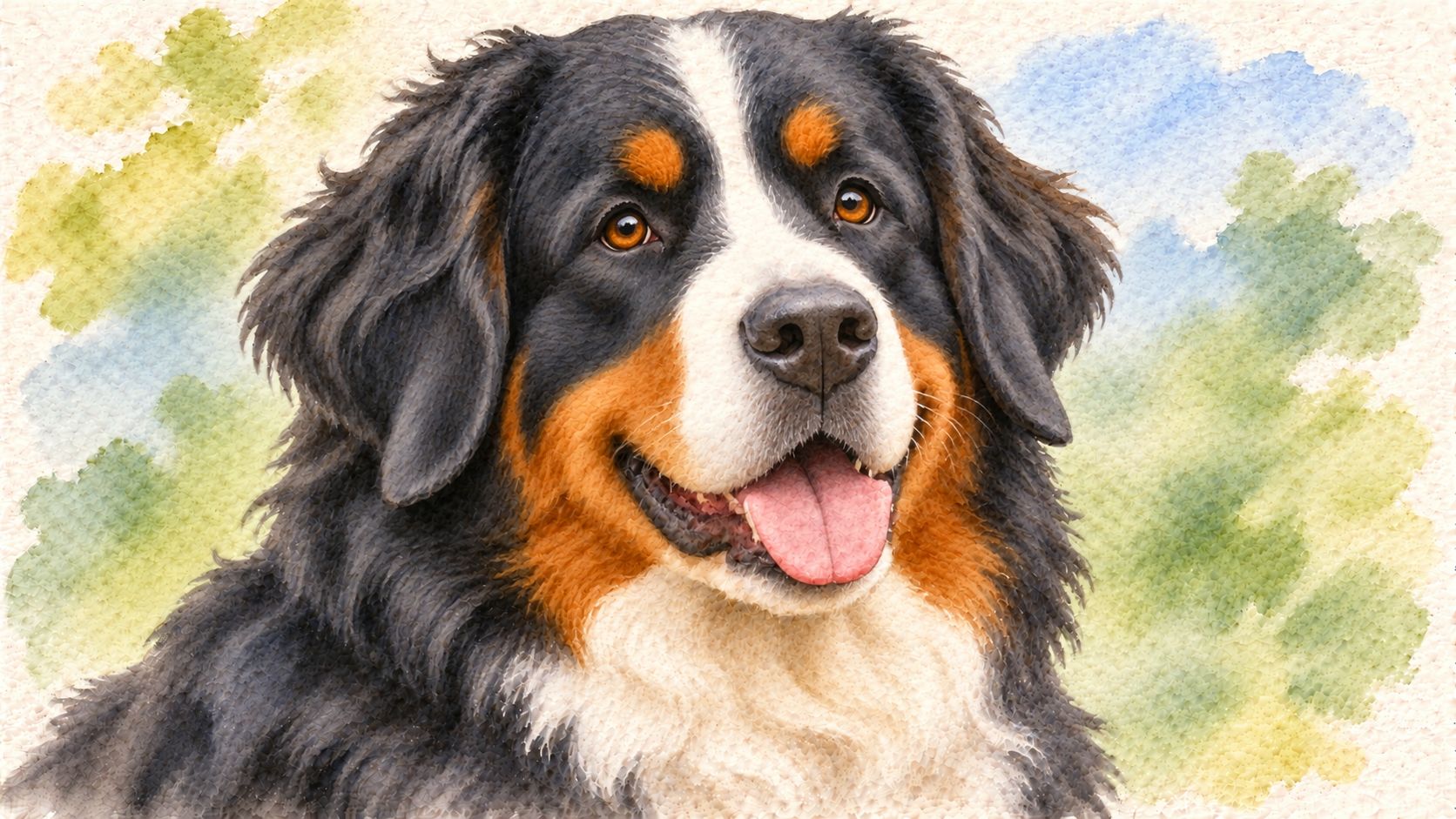
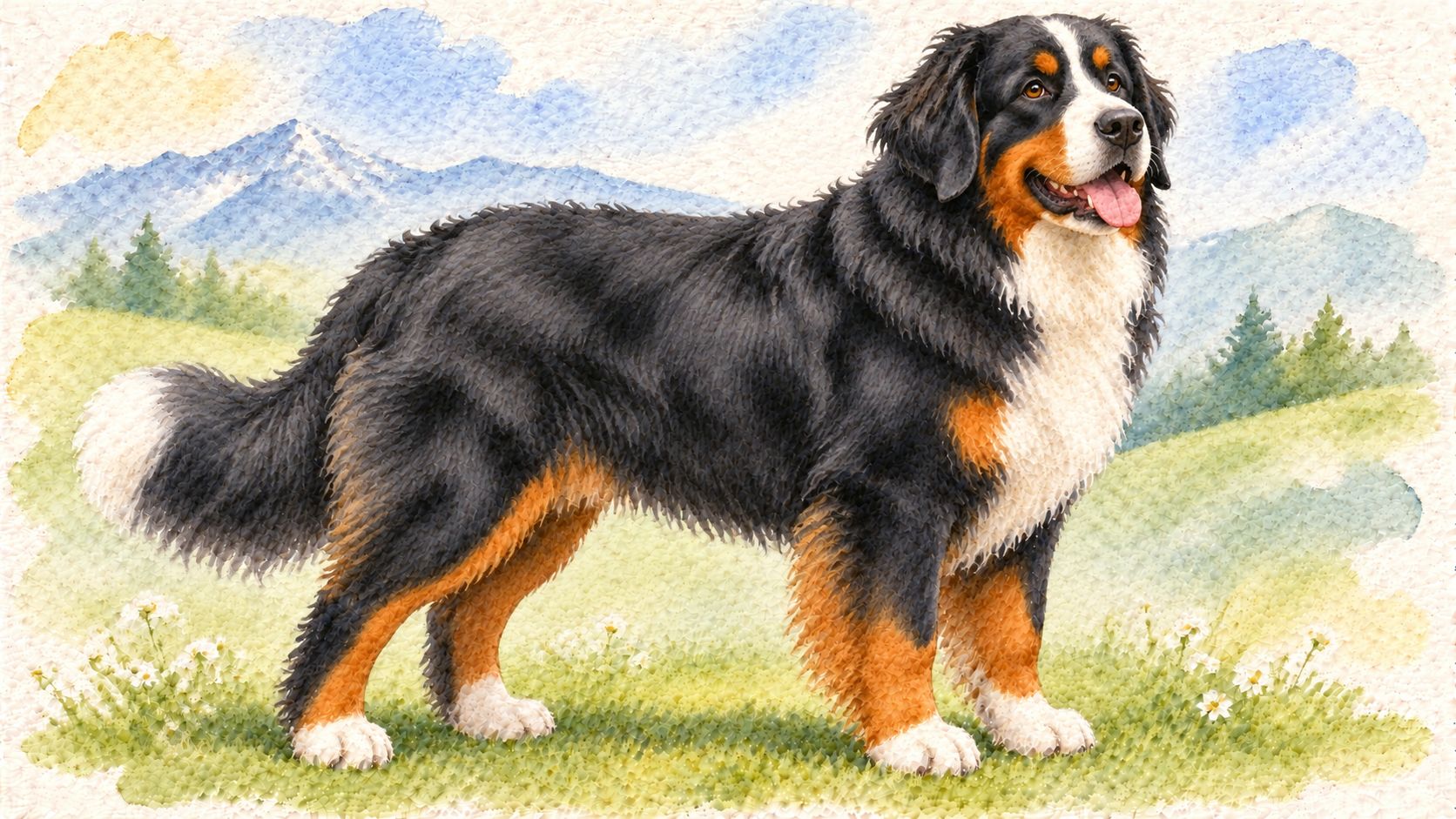
The Bernese Mountain Dog is a large, powerful breed built for hard work. Its body is slightly longer than it is tall, with a deep chest, strong legs and a broad head. Despite its strength, the overall look is soft and friendly, thanks to its gentle dark brown eyes and fluffy coat.
How Big Do Bernese Mountain Dogs Get?
Adult male Berners usually stand 25 to 27.5 inches (64 to 70 cm) tall and weigh 80 to 115 pounds (36 to 52 kg). Females are a little smaller, at 23 to 26 inches (58 to 66 cm) and 70 to 95 pounds (32 to 43 kg).
Berners grow quickly in their first year but take longer to mature fully, both physically and mentally. Many owners say their dogs still act like big, goofy puppies until they are around two years old.
Coat and Colors
The Bernese wears a long, thick double coat that kept it warm during cold Alpine winters. The coat is silky and can be straight or slightly wavy. It is longest on the chest, tail, legs and behind the ears.
Every Berner has the same striking tricolor pattern: a jet-black base with rust markings on the cheeks, above the eyes, on the legs and on the chest, plus white on the face, chest and feet. Many dogs have a white blaze running up the face and a white marking on the chest that fans often compare to a cross. A small white patch on the back of the neck is sometimes called a "Swiss kiss."
Bernese Mountain Dog Temperament and Personality
The Bernese Mountain Dog temperament is one of the main reasons people fall in love with the breed. This dog is known for being:
- Calm and gentle: Berners are typically relaxed and easygoing indoors, preferring a cozy spot near their people.
- Affectionate: They are deeply devoted to their families and often lean against their owners for attention.
- Patient: Their steady nature makes them famously tolerant with children.
- Eager to please: Berners want to make their people happy, which helps a great deal with training.
- Alert and watchful: As former farm guardians, they will bark to let you know someone is approaching, though they are rarely aggressive.
The Bernese is very people-oriented and does not do well when left alone for long hours. A lonely Berner may become bored or anxious. It is happiest when it can be part of daily family life, whether that means joining a hike or simply lying at your feet. Some Berners can be a little reserved with strangers at first, so early socialization is important.
Are Bernese Mountain Dogs Good Family Dogs?
Yes, Bernese Mountain Dogs are widely considered excellent family dogs. They are affectionate with adults and patient with children, and they usually enjoy being in the middle of household activity.
Because of their size, adult supervision is still important around toddlers. A happy, wagging Berner can accidentally knock over a small child, and young kids should be taught to treat the dog calmly and kindly.
Are Bernese Mountain Dogs Good With Other Pets?
Most Berners get along well with other dogs, especially when they are raised together or socialized early. Many can also live peacefully with cats. As with any breed, slow introductions and supervision help every pet feel safe.
Training a Bernese Mountain Dog
Bernese Mountain Dogs are smart and eager to please, which often makes obedience training enjoyable. They respond best to gentle, positive methods such as praise, play and small treats. Berners can be sensitive, so harsh corrections tend to make them worried rather than cooperative.
Here are some practical training tips:
- Start early. Begin basic manners and socialization as soon as your Bernese Mountain Dog puppy comes home. A 20-pound puppy becomes a 100-pound adult very quickly.
- Teach leash manners. A large dog that pulls is hard to walk, so practice loose-leash walking from day one.
- Discourage jumping up. Jumping may seem cute in a puppy, but it can easily knock people over later.
- Keep sessions short and fun. Several brief sessions a day work better than one long one.
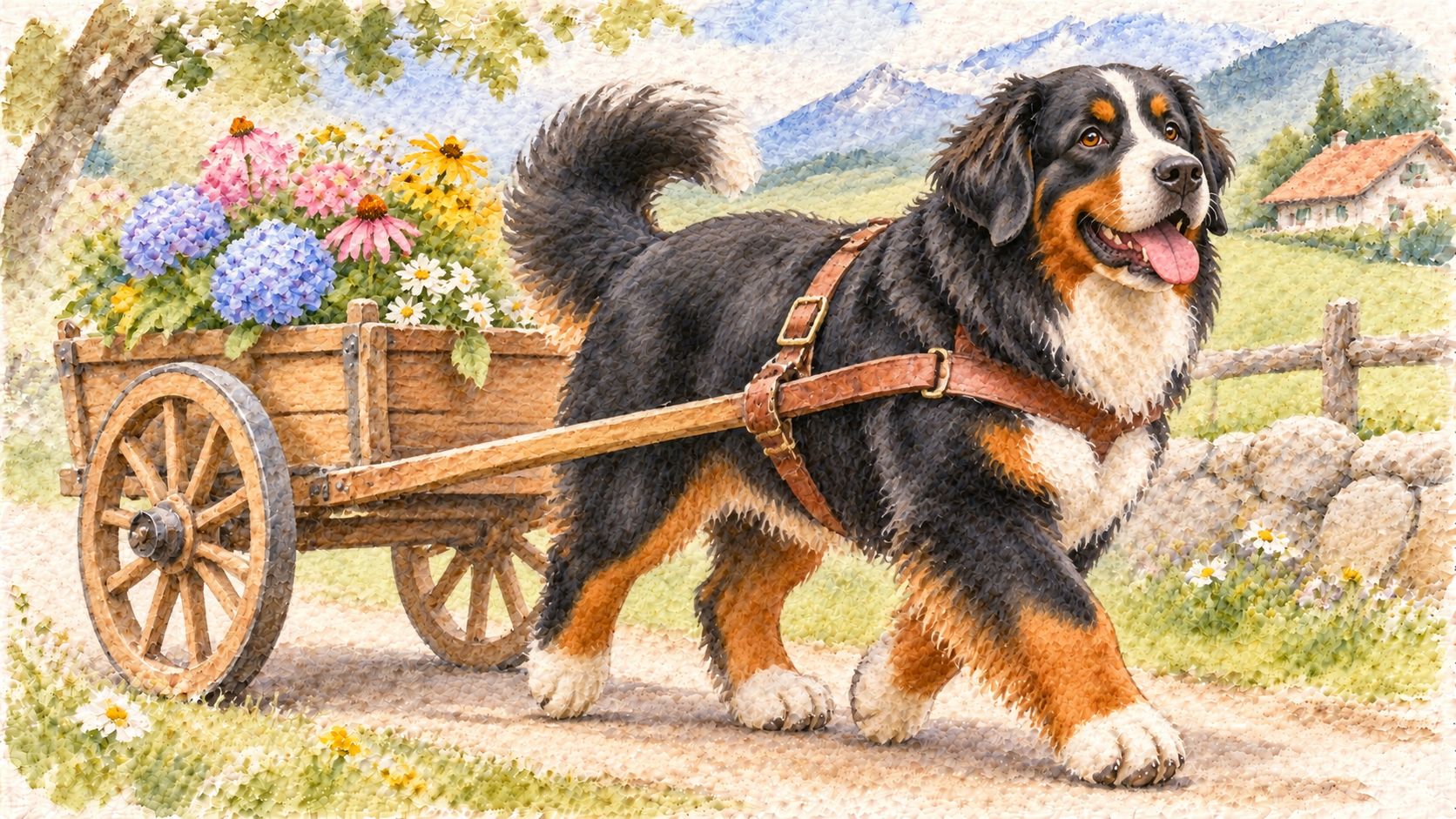
- Try a job. Many Berners love carting and drafting, where they pull a small cart. Some breed clubs offer drafting events that celebrate the breed's working roots.
Exercise Needs
The Berner has a fairly low energy level for a working breed, but it still needs moderate daily exercise. Long walks, relaxed hikes and play in a fenced yard are ideal ways to keep a Berner fit and content.
Berners are not outdoor-only dogs. They want to live inside with their families, and they enjoy outdoor adventures most when their people come along. They especially love cool weather and often delight in playing in snow.
Puppies need a gentler approach. Because large breeds grow quickly, avoid long runs, repeated jumping and lots of stair climbing until your veterinarian says your dog's joints are mature. Short walks and free play are best for young Berners.
Do Bernese Mountain Dogs Do Well in Hot Weather?
Berners are not well suited to heat. Their thick black coat was designed for Alpine winters, so they can overheat quickly in warm weather.
In summer, exercise early in the morning or in the evening, provide shade and fresh water, and give your dog a cool place to rest indoors. Never leave any dog in a parked car.
Bernese Mountain Dog Grooming
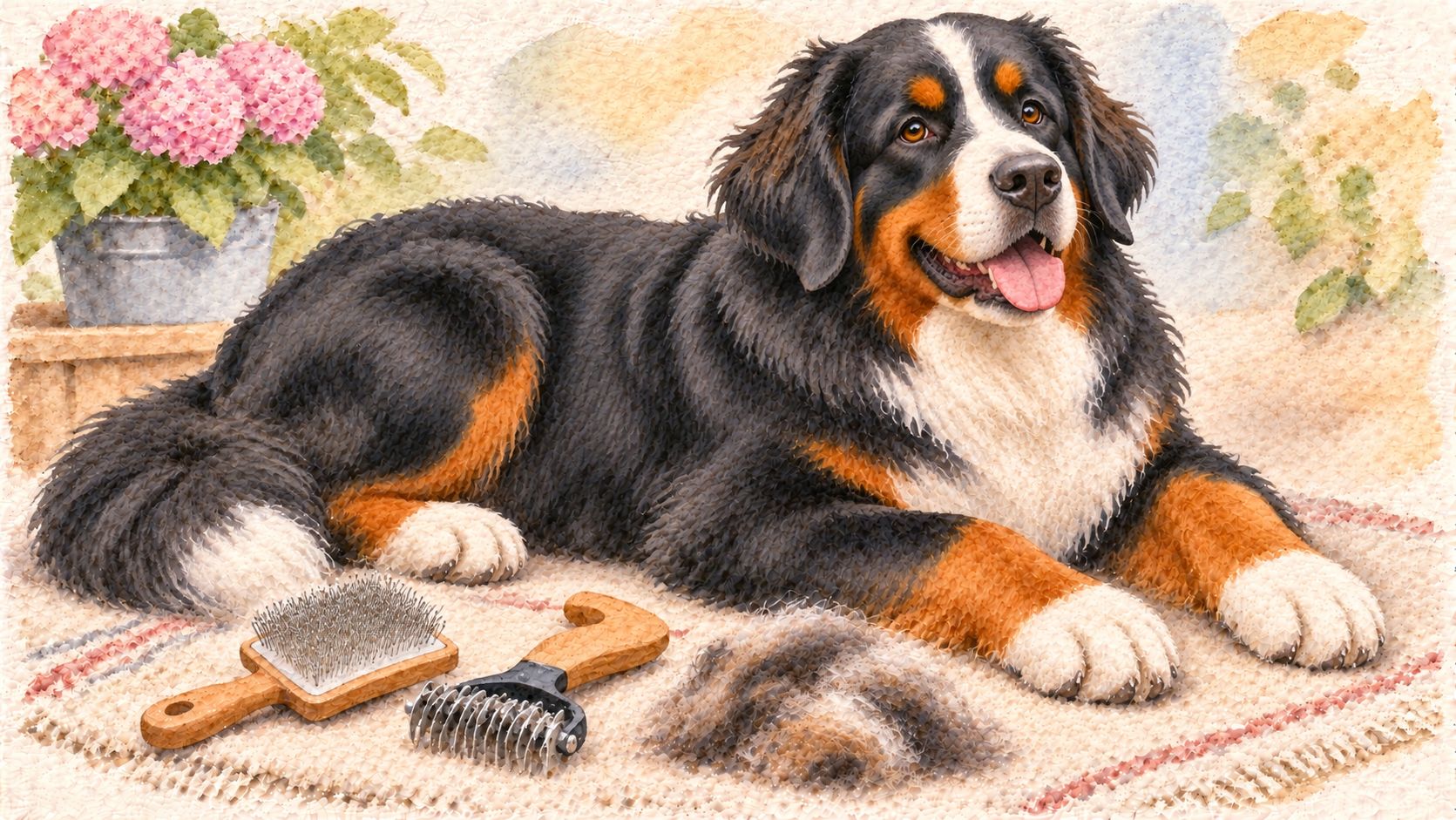
The beautiful Bernese coat requires regular care. Brushing several times a week is the minimum, and daily brushing is helpful during heavy shedding periods. Regular grooming keeps the coat healthy, reduces mats and cuts down on the amount of hair around your home.
Do Bernese Mountain Dogs Shed?
Yes, Berners shed quite a lot. They shed throughout the year and usually shed even more heavily in spring, when they lose their winter undercoat.
Because of this, the Berner is not a good choice for people looking for a low-shedding or hypoallergenic breed. A good vacuum cleaner and a lint roller will quickly become your best friends.
Grooming Routine
- Brushing: Brush at least a few times a week with a slicker brush and an undercoat rake, and daily during shedding seasons.
- Bathing: Bathe every couple of months or when your dog gets dirty. Make sure the thick coat dries completely.
- Trimming: Neaten the hair around the paws and between the toe pads to keep your dog tidy and sure-footed.
- Nails: Trim nails every few weeks, especially if your dog does not wear them down on walks.
- Teeth: Brush your dog's teeth several times a week to support good dental health.
- Ears: Check the ears weekly for dirt, odor or redness, since the heavy, folded ears can trap moisture.
Bernese Mountain Dog Health and Lifespan
The average Bernese Mountain Dog lifespan is about 7 to 10 years, which is shorter than many other breeds. Like all large dogs, Berners can be prone to certain health conditions, so it is important to choose a responsible breeder who screens their dogs. Conditions that may affect the breed include:
- Bloat: A serious, life-threatening condition in which the stomach fills with gas and may twist. It is more common in large, deep-chested breeds.
- Hip and elbow dysplasia: Abnormal development of the hip or elbow joints.
- Certain cancers: The breed is known to be at higher risk for some types of cancer.
- Blood disorders: Some lines may be affected by inherited blood conditions.
Keeping your Berner at a healthy weight puts less strain on its joints and supports overall well-being. Learn the warning signs of bloat, and always work with your veterinarian to set up a routine of checkups, vaccinations and preventive care.
Feeding and Nutrition
A Berner does best on a high-quality food formulated for large-breed dogs. Large-breed formulas are designed to support healthy joints and mobility and provide the right balance of nutrients for big bodies.
Puppies grow fast, so they benefit from a large-breed puppy food during their first two years. These puppy foods help support steady, controlled growth rather than growth that is too rapid. Portion sizes depend on your dog's age, weight and activity level, so follow the feeding guidelines on the package and ask your veterinarian for advice. Many owners of large breeds feed two smaller meals a day instead of one big meal.
History of the Bernese Mountain Dog
The breed's roots are often traced back more than 2,000 years. According to a popular theory, Roman soldiers brought large mastiff-type dogs with them when they crossed the Alps into what is now Switzerland. These dogs are believed to have mixed with local farm dogs, eventually giving rise to the Swiss mountain breeds.
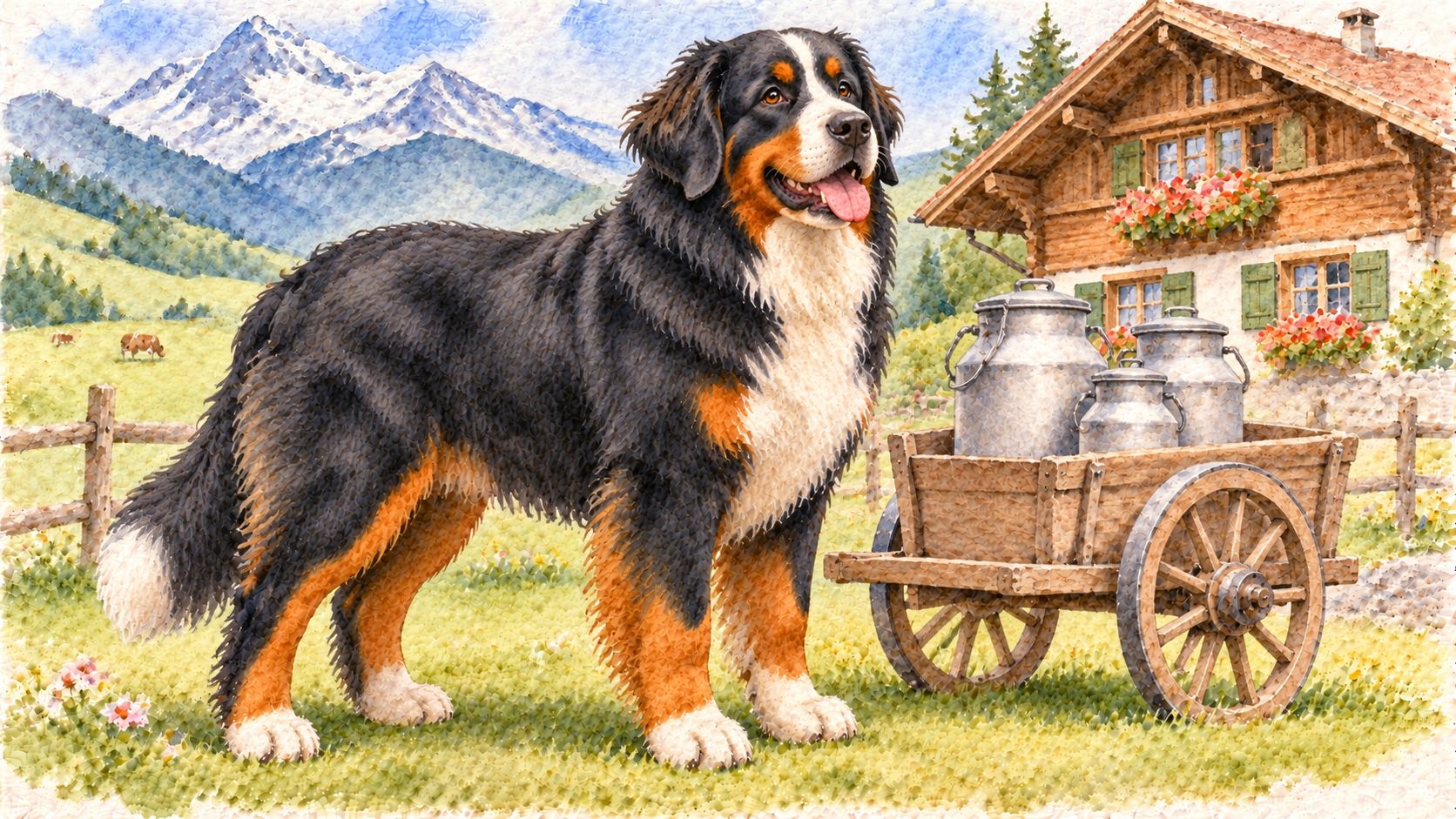
For centuries, the Berner worked on farms in the canton of Bern. It was a true multipurpose dog, driving cattle, guarding the farm and pulling carts of milk and cheese. A strong Berner can pull many times its own weight, which made it an outstanding draft dog. Early on, the breed was sometimes called the Dürrbächler, after an area near Bern where many of these dogs were found.
By the late 1800s, machines and changing farm life had greatly reduced the need for working dogs, and the breed's numbers fell sharply. A group of Swiss fanciers set out to save it. Professor Albert Heim, a Swiss geologist and dog enthusiast, played an important role, and in 1907 a breed club was formed to preserve and promote the Bernese.
The first Berners arrived in the United States in 1926, brought over by a farmer in Kansas. The American Kennel Club registered its first Berner in 1937. Since then, the breed has grown steadily in popularity as a beloved family companion.
Bernese Mountain Dog vs Greater Swiss Mountain Dog
The Bernese Mountain Dog is often compared with its cousin, the Greater Swiss Mountain Dog. Both share the same black, rust and white tricolor pattern and similar farm-working roots. The easiest difference to spot is the coat: the Berner has a long, silky coat, while the Greater Swiss has a short, dense one. The Greater Swiss is also the larger of the two and tends to be a bit more energetic.
Is a Bernese Mountain Dog Right for You?
A Bernese Mountain Dog could be a wonderful match if you:
- Want a calm, affectionate and loyal family dog
- Have children and want a patient, gentle companion
- Have room for a large dog, ideally with a fenced yard
- Live in a cooler climate or can keep your dog comfortable in hot weather
- Can provide moderate daily exercise, such as long walks
- Don't mind regular brushing and plenty of dog hair
A Bernese may not be the best fit if you:
- Live in a small apartment with limited space
- Are away from home for long hours each day
- Want a low-shedding or hypoallergenic breed
- Live in a very hot climate without air conditioning
- Are looking for a long-lived breed, since Berners have a shorter lifespan than many dogs
Finding a Bernese Mountain Dog Puppy
When searching for a Bernese Mountain Dog puppy, take your time and choose a reputable breeder. Good breeders health-screen their dogs, share test results openly, raise puppies in a home environment and are happy to answer questions. They will also ask you questions to make sure a Berner suits your lifestyle.
Adoption is another great option. Breed clubs and rescue groups often help adult Berners find new homes, and an adult dog's personality and size are already known.
Fun Facts About the Bernese Mountain Dog
- The Berner is one of four Swiss mountain dog breeds and the only one with a long coat.
- Its Swiss name, Berner Sennenhund, is often translated as "Bernese alpine herdsman's dog."
- Berners were famous for pulling carts of milk and cheese to market.
- A strong Berner can pull many times its own body weight.
- The white marking on the back of the neck is nicknamed the "Swiss kiss."
- The American Kennel Club registered its first Berner in 1937.
Frequently Asked Questions
How big do Bernese Mountain Dogs get?
Males usually stand 25 to 27.5 inches (64 to 70 cm) tall and weigh 80 to 115 pounds (36 to 52 kg). Females are slightly smaller, at 23 to 26 inches (58 to 66 cm) and 70 to 95 pounds (32 to 43 kg).
Are Bernese Mountain Dogs good family dogs?
Yes. Berners are affectionate, calm and patient with children, which makes them excellent family pets. Supervise them around toddlers, since their large size can accidentally knock little ones over.
Do Bernese Mountain Dogs shed a lot?
Yes. Their long double coat sheds year-round and even more heavily in spring. Brushing several times a week, and daily during shedding seasons, helps manage loose hair.
How long do Bernese Mountain Dogs live?
The typical Bernese Mountain Dog lifespan is about 7 to 10 years. Choosing a health-screened puppy, keeping your dog lean and staying on top of veterinary checkups all support a healthy life.
Are Bernese Mountain Dogs easy to train?
Berners are smart and eager to please, so many owners find them fairly easy to train. Gentle, positive methods and early socialization work best for this sensitive breed.
Can Bernese Mountain Dogs live in hot climates?
They can, but they need extra care. Their thick black coat makes them prone to overheating, so limit exercise to cooler times of day and provide shade, water and air-conditioned rest.
Final Thoughts
The Bernese Mountain Dog is a true gentle giant, combining Swiss farm-dog strength with a sweet, patient and loving personality. If you have room for a large dog, enjoy daily walks and don't mind a little extra fur around the house, a Berner can become a loyal, affectionate companion and a much-loved member of your family.