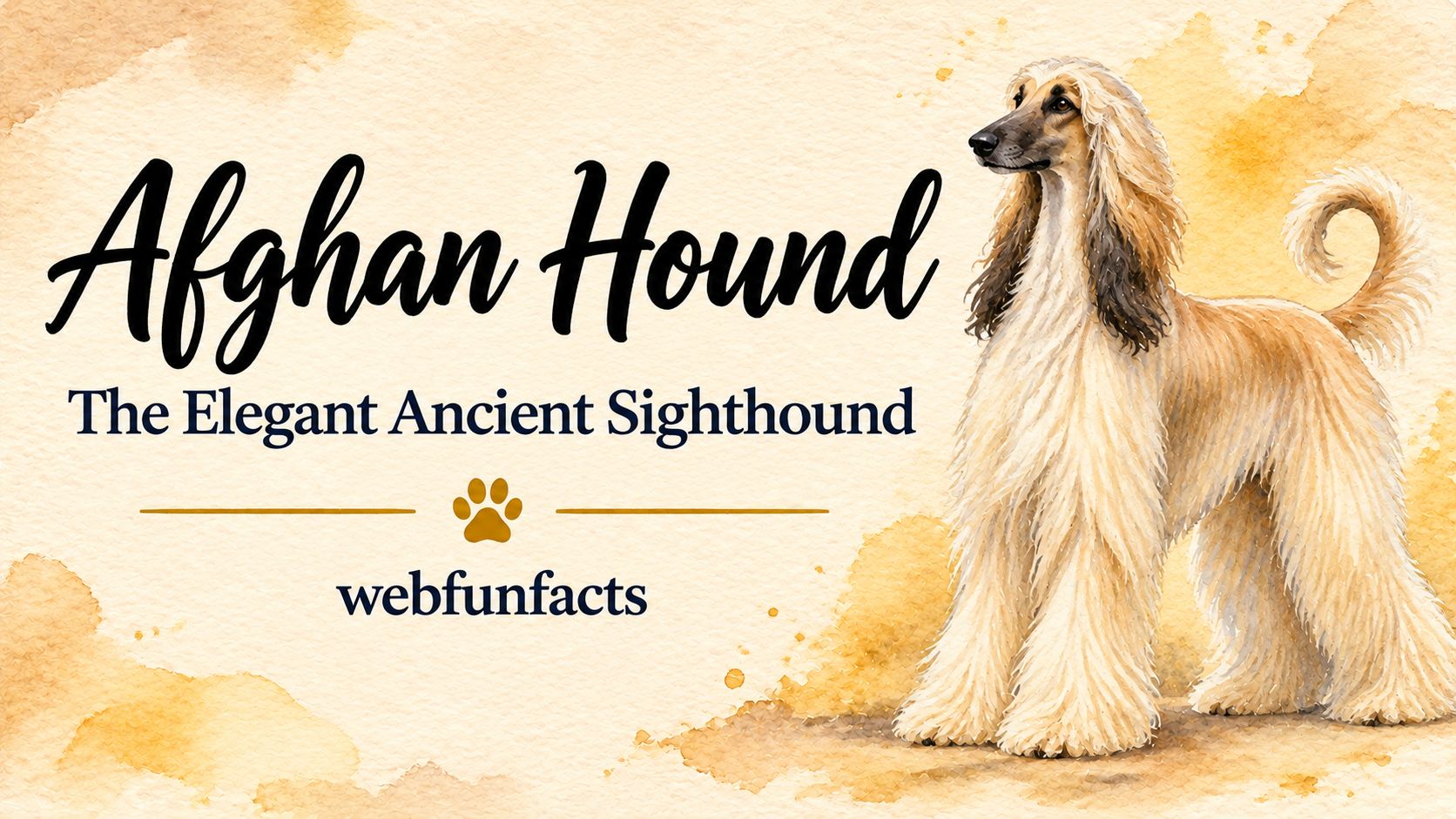
With its flowing silky coat, proud head carriage and graceful, springy stride, the Afghan Hound looks like it just stepped off a fashion runway. Few breeds are as instantly recognizable. Yet behind that glamorous appearance is an ancient hunting dog built for speed, stamina and rugged mountain terrain, with a history that stretches back long before anyone started writing things down.
The Afghan Hound is dignified, independent and sometimes a little aloof, but it also has a sweet, silly side that its family gets to enjoy. In this complete Afghan Hound dog breed guide, you will learn everything you need to know before bringing one home, including its size, temperament, grooming needs, exercise requirements, common health concerns, diet tips and fascinating history.
Afghan Hound at a Glance
| Trait | Details |
|---|---|
| Breed group | Hound (AKC) |
| Height | 25 to 27 inches (64 to 69 cm) |
| Weight | 50 to 60 pounds (23 to 27 kg) |
| Life expectancy | 12 to 14 years |
| Coat | Long, fine, silky |
| Colors | Black, black and silver, black and tan, blue, blue and cream, red, silver, white |
| Shedding | Low |
| Energy level | High |
| Temperament | Dignified, independent, loyal, sweet, playful |
| Good for | Active adults and families with a securely fenced yard |
| Origin | Mountainous regions of Afghanistan and neighboring areas |
What Is an Afghan Hound?
The Afghan Hound is a large, elegant sighthound. Sighthounds are dogs that hunt mainly by sight rather than by scent, spotting movement from far away and then chasing it down with bursts of incredible speed. Other members of this family include the Greyhound, the Saluki and the Borzoi.
The Afghan Hound is considered one of the oldest purebred dogs in the world. For centuries, it worked as a hunting partner in harsh deserts and high mountains, where it was prized for its ability to pursue game on its own without needing commands from a handler. That independent working style still shapes its personality today. The breed belongs to the American Kennel Club's Hound Group and is a familiar sight in show rings, lure coursing fields and, of course, family living rooms.
Afghan Hound Size and Appearance
The Afghan Hound is a tall, slender and athletic dog. Adults generally stand 25 to 27 inches tall at the shoulder and weigh around 50 to 60 pounds, with females usually a little smaller than males. Although the breed is classed as medium by some sources because of its weight, its height and long legs give it a striking, statuesque presence.
Underneath all that hair is a lean, powerful body made for running. Afghan Hounds have noticeably prominent hipbones, which is completely normal for the breed and does not mean the dog is too thin. Their hip joints allow a wide range of movement, which helps them cover ground quickly and leap over obstacles. Large paw pads act like natural shock absorbers, a useful feature for a dog that once ran across rocky mountain terrain.
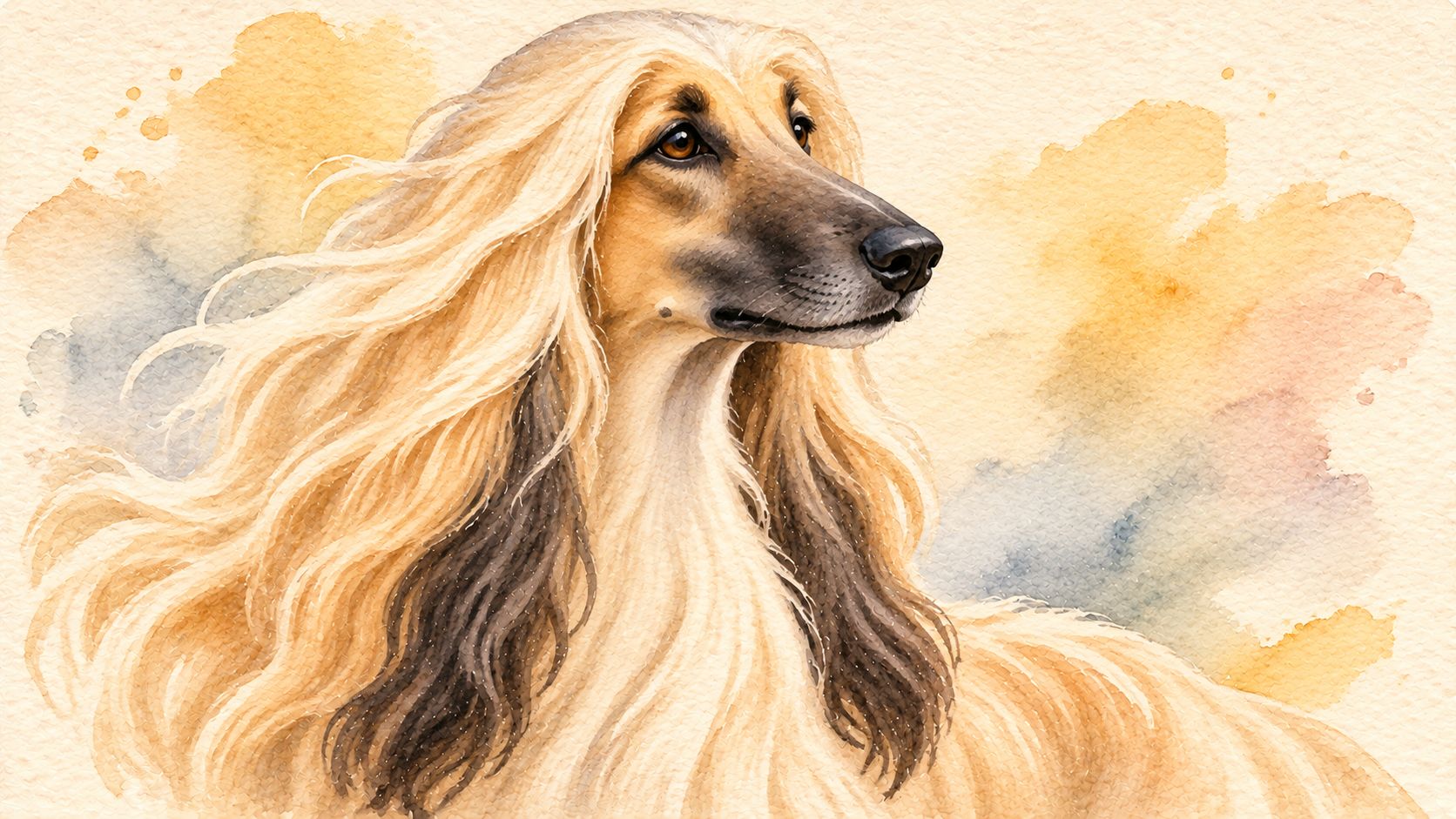
The head is long and refined, with a slightly arched profile, dark almond-shaped eyes and long ears covered in silky hair. The expression is often described as dignified or even exotic, as if the dog is gazing into the distance. A signature feature is the tail, which is carried with a distinctive ring or curl at the end.
Coat and Colors
The Afghan Hound's coat is its crowning glory. Adults have long, fine, silky hair covering most of the body, with a shorter, smoother "saddle" along the back in many dogs. The face is usually covered with short hair, while a long topknot of silky hair flows from the top of the head. This luxurious coat originally protected the breed from the cold nights and harsh conditions of its mountain and desert homeland.
Interestingly, Afghan Hound puppies do not start out with this dramatic coat. Puppies have shorter, fuzzier hair, and the long adult coat grows in gradually during adolescence.
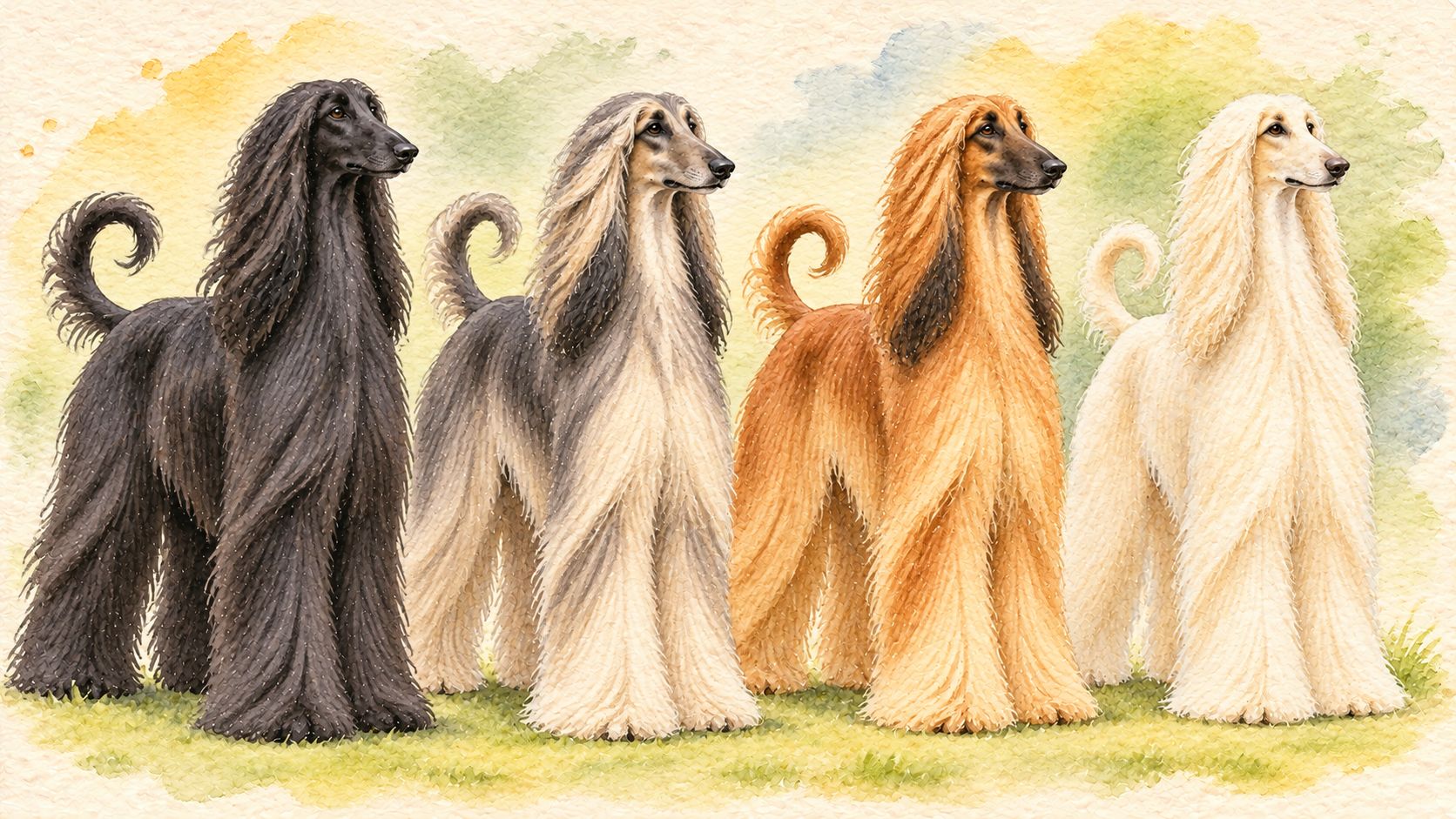
The breed comes in many colors, including black, black and silver, black and tan, blue, blue and cream, red, silver and white. Possible markings include a black mask, brindle, and the "domino" pattern, a distinctive reversed-mask look seen in some Afghans.
Afghan Hound Temperament and Personality
The Afghan Hound has a personality as unique as its appearance. This breed is known for being:
- Dignified: Afghans carry themselves with an aristocratic air and often seem to be quietly observing the world around them.
- Independent: Bred to hunt without human direction, they like to make their own decisions and are not as eager to please as some breeds.
- Loyal: They form close bonds with their own family, even if they do not show it with constant attention.
- Sweet and silly: Behind the serious exterior is a playful, clownish side, especially in puppies and young dogs.
- Reserved with strangers: Many Afghans are polite but aloof with guests and may simply ignore visitors they do not know.
Owners often compare the Afghan Hound's personality to that of a cat. It enjoys affection on its own terms and usually prefers calm, gentle interaction over rough play. It is generally a quiet breed indoors, happy to lounge on a soft surface between bursts of activity.
Is the Afghan Hound Good With Kids and Other Pets?
An Afghan Hound can be an excellent family companion in the right home. It typically does best with older children who understand how to treat a dog calmly and respectfully. Because the breed is sensitive and does not enjoy being handled roughly, supervision with younger children is always a good idea.
Afghans can live happily with other dogs, especially when raised alongside them. However, as a sighthound, the breed has a very strong instinct to chase anything small that runs. Cats, rabbits and other small pets may trigger that chase response, so careful introductions and supervision are essential. Some Afghans learn to live peacefully with a family cat they were raised with, while still chasing unfamiliar animals outdoors.
Early socialization helps an Afghan puppy grow into a confident, well-adjusted adult. Gently introduce your puppy to a variety of people, places, sounds and friendly animals during its first months.
Training an Afghan Hound
Training an Afghan Hound takes patience and a sense of humor. The breed is intelligent, but its independent nature means it may not see the point of repeating a command just because you asked. Harsh methods tend to backfire with this sensitive dog, so positive reinforcement is the best approach.
Here are a few training tips for Afghan Hound owners:
- Start early. Begin basic manners, handling and socialization as soon as your puppy comes home.
- Keep it positive. Use praise, play and small treats to reward good behavior, and keep sessions upbeat.
- Keep sessions short. Several short training sessions each day work better than one long one.
- Practice handling. Get your puppy used to brushing, bathing and having its paws and ears touched, since grooming will be a big part of life with an adult Afghan.
- Never trust recall in open spaces. Even well-trained Afghans can bolt after a moving target, so keep your dog on a leash when outside a secure area.
- Try dog sports. Many Afghans love lure coursing, racing and agility, which give them a safe outlet for their speed and instincts.
Exercise Needs
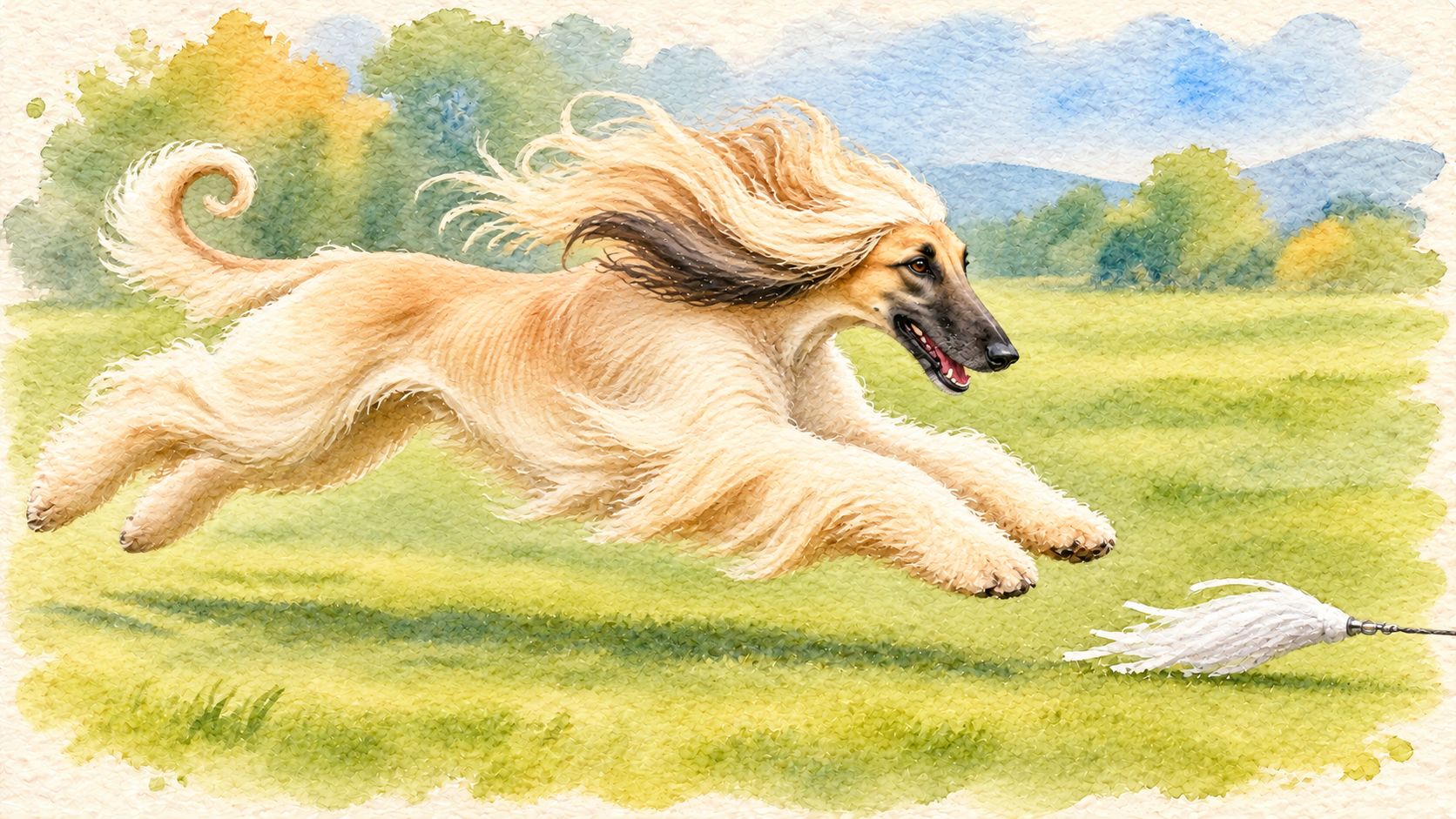
The Afghan Hound is a high-energy breed that needs plenty of daily exercise. Long walks on a leash are a good start, but this dog also needs regular opportunities to run at full speed in a safe, enclosed area. Without enough exercise, an Afghan may become bored and restless.
Because of its strong prey drive, the Afghan Hound should not be walked off-leash in unfenced areas, even with consistent training. Once a sighthound locks onto something moving, it can reach top speed in moments and may not respond to its name. A yard with a high, secure fence is strongly recommended, since Afghans are athletic jumpers.
Lure coursing is one of the best activities for this breed. In this sport, dogs chase a mechanical lure across a large field, which lets them use their natural speed and sight in a controlled setting. Agility, conformation shows and racing are other popular activities for Afghan Hounds.
Grooming an Afghan Hound
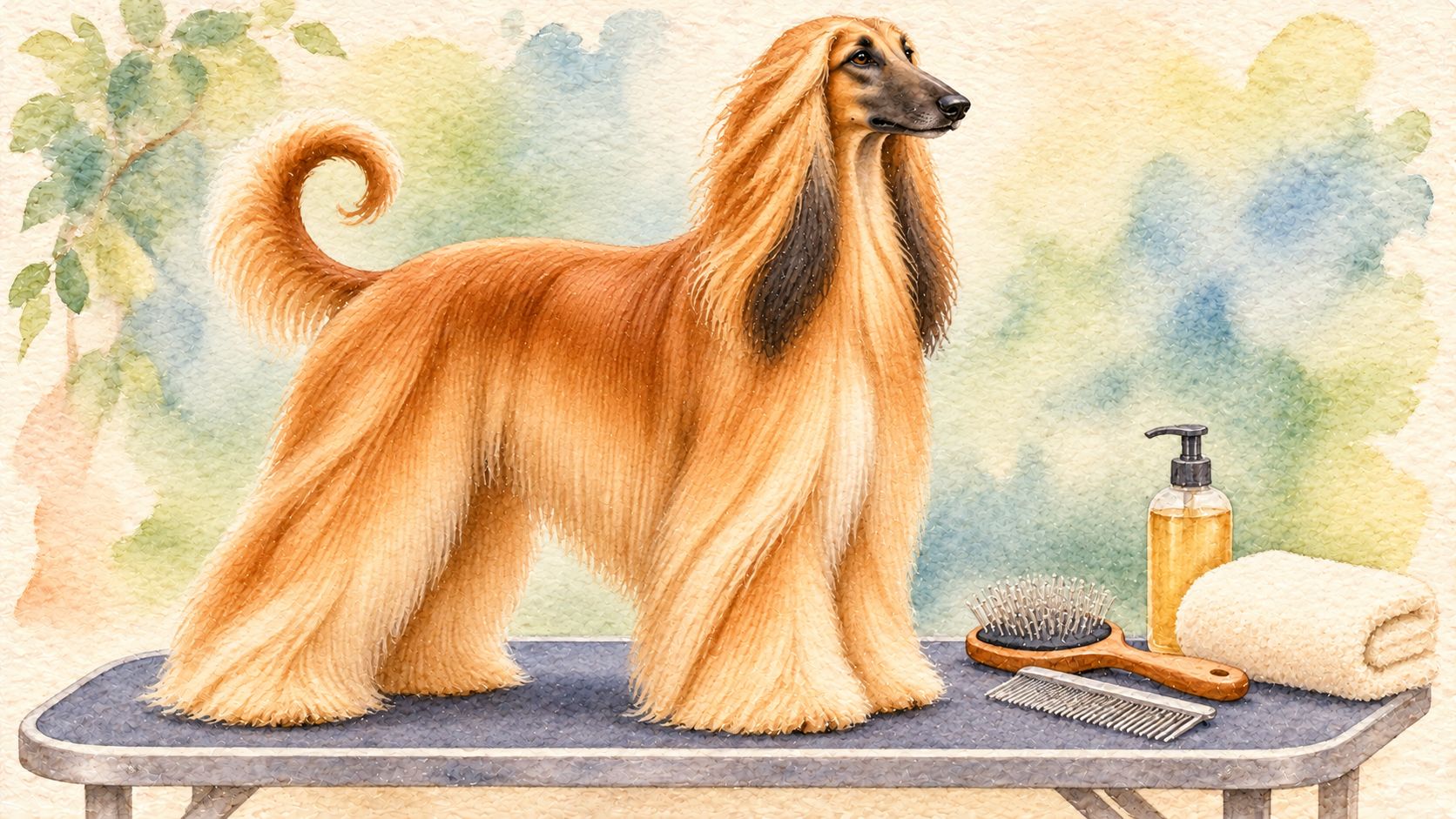
Grooming is one of the biggest commitments that comes with owning an Afghan Hound. The good news is that the breed sheds very little. The challenge is that its long, fine coat tangles and mats easily, so it needs regular, careful care to stay healthy and beautiful.
Grooming Routine
- Brushing: Brush the adult coat daily or close to daily to prevent tangles and mats and to remove dirt and debris. Work in sections, brushing down to the skin.
- Bathing: Afghans need regular baths, often every week or two, followed by thorough drying and brushing. Many owners use a high-velocity dryer to speed up the process.
- Ears: The long, hanging ears can trap moisture and dirt, so check and clean them regularly. Some owners use a snood, a fabric tube that covers the ears, during meals to keep them clean.
- Nails: Trim nails every few weeks to keep feet comfortable.
- Teeth: Brush your dog's teeth several times a week to support good dental health.
- Puppy coat: Afghan puppies need little coat maintenance at first, but it is wise to start gentle brushing early so your dog is comfortable with grooming as an adult.
Many owners learn to groom their Afghans themselves, while others rely on a professional groomer experienced with long-coated breeds. Either way, expect to spend several hours each week caring for the coat.
Afghan Hound Health and Lifespan
The Afghan Hound typically lives 12 to 14 years with good care. Like all breeds, it can be prone to certain health conditions, and responsible breeders screen their dogs for hip, eye and thyroid problems. Some other things Afghan owners should be aware of include:
- Anesthesia sensitivity: Afghans have less body fat than many breeds, which can make them more sensitive to anesthesia. If your dog needs surgery, look for a veterinarian experienced with sighthounds.
- Bloat: Like many deep-chested breeds, the Afghan Hound is at risk of bloat, a sudden and potentially life-threatening swelling of the stomach. Learn the warning signs and talk to your veterinarian about ways to reduce the risk.
- Ear infections: Long, heavy ears can trap moisture, so regular ear checks are important.
- Hip and eye conditions: Ask breeders about health screening results for the parents of any puppy you are considering.
Because Afghans are naturally lean, owners sometimes worry that their dog looks too thin. Your veterinarian can help you judge your dog's ideal body condition. Always work with your veterinarian to set up a routine of checkups, vaccinations and preventive care.
Feeding and Nutrition
As an active breed, the Afghan Hound needs a complete and balanced diet that supports its energy level. Many active dogs do well on a high-quality, high-protein dog food that helps fuel exercise and maintain lean muscle.
Puppies should eat a food formulated for growth during their first year to support healthy development. Portion sizes depend on your dog's age, size and activity level, so follow the feeding guidelines on the food package and ask your veterinarian for advice. Because of the breed's bloat risk, many owners prefer to split daily food into two or more smaller meals rather than one large one. Treats are helpful for training, but they should make up only a small part of daily calories.
History of the Afghan Hound
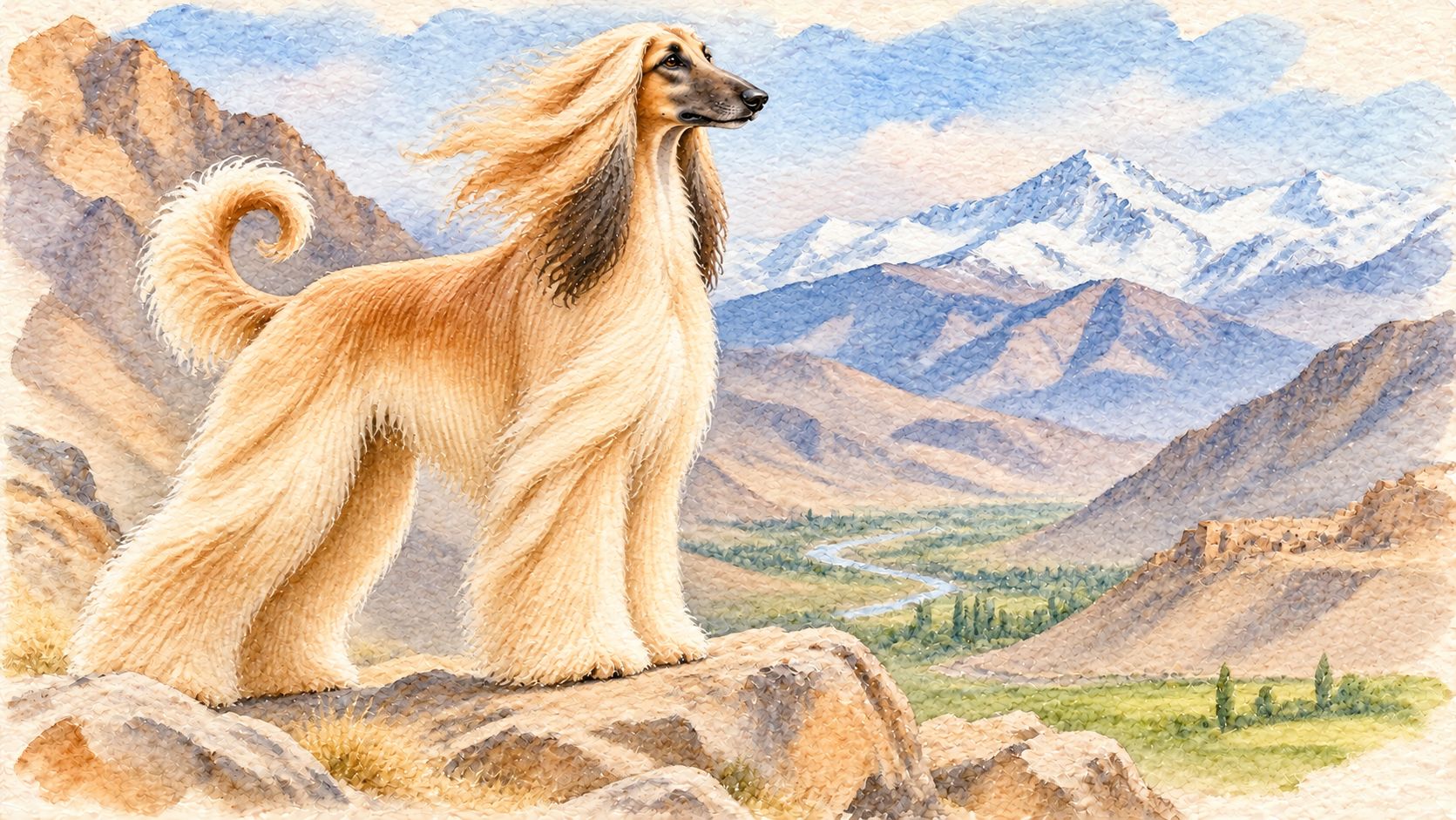
The Afghan Hound is one of the oldest dog breeds in existence, developed thousands of years before written records were kept. Its exact birthplace is uncertain, but its roots are generally traced to the mountainous regions of present-day Afghanistan, along with neighboring areas of Pakistan and India.
In these rugged lands, Afghan Hounds served as hunting companions for nobles and tribal leaders. They pursued large and fast prey across deserts and mountains, often working far ahead of their human companions and making decisions on their own. Their long coats protected them from cold nights and harsh weather, while their keen eyesight and remarkable speed helped them spot and catch their quarry.
The Western world did not discover the breed until the 1800s, when British military officers returning from the region brought Afghan Hounds back to England. By the early 1900s, the breed had become a fashionable favorite among Britain's upper classes.
The Afghan Hound arrived in the United States in the 1920s. Zeppo Marx, one of the famous Marx Brothers, was among the first Americans to own one. The American Kennel Club first registered the breed in 1927, and its popularity grew quickly during the 1930s. The breed has also shone in the show ring, winning Best in Show at the Westminster Kennel Club Dog Show in 1957 and again in 1983.
Is an Afghan Hound Right for You?
An Afghan Hound could be a wonderful match if you:
- Love the look of a glamorous, long-coated dog and enjoy grooming
- Can provide daily exercise and safe places for your dog to run
- Have a yard with a high, secure fence
- Appreciate an independent dog with a calm, dignified personality
- Have the patience for gentle, positive training
- Prefer a breed that sheds very little
An Afghan Hound may not be the best fit if you:
- Want a dog that is eager to obey every command
- Do not have time for frequent brushing and bathing
- Hope to let your dog run off-leash in open spaces
- Keep small pets that might trigger a chase instinct
- Want a dog that greets every stranger with enthusiasm
Finding an Afghan Hound Puppy
When looking for an Afghan Hound puppy, choose a reputable breeder who health-screens their dogs, raises puppies in a loving home environment and is happy to answer your questions about the breed. Ask to meet the puppy's mother and see health testing results. Breed clubs and sighthound rescue groups are also great resources, as adult Afghans sometimes need new homes and can make wonderful companions.
Fun Facts About the Afghan Hound
- The Afghan Hound is considered one of the oldest purebred dog breeds in the world.
- Sighthounds like the Afghan have wide, panoramic vision that helps them spot movement from far away.
- Snuppy, an Afghan Hound born in South Korea in 2005, was the world's first cloned dog.
- Pablo Picasso owned an Afghan Hound named Kabul, which appeared in some of his artwork.
- Barbie's Afghan Hound, named Beauty, helped boost the breed's popularity in America.
- Afghan Hounds won Best in Show at Westminster in both 1957 and 1983.
Frequently Asked Questions
How big do Afghan Hounds get?
Adult Afghan Hounds usually stand 25 to 27 inches tall at the shoulder and weigh around 50 to 60 pounds, with females typically a little smaller than males.
Do Afghan Hounds shed a lot?
No. Afghan Hounds shed very little, but their long, silky coat needs frequent brushing and regular bathing to prevent tangles and mats.
Are Afghan Hounds good family dogs?
They can be loving family companions, especially for families with older, gentle children. They are loyal to their own people but may be reserved with strangers.
Can Afghan Hounds be off-leash?
It is not recommended. Afghan Hounds have a strong instinct to chase, and even well-trained dogs may run after moving animals. Keep them leashed or in a securely fenced area.
How long do Afghan Hounds live?
The average Afghan Hound lifespan is 12 to 14 years with good care, a balanced diet and regular veterinary checkups.
Are Afghan Hounds easy to train?
Afghan Hounds are intelligent but independent, so training takes patience. Short, positive sessions with praise and treats work best for this sensitive breed.
Final Thoughts
The Afghan Hound is a breed of rare beauty and ancient history, combining glamorous good looks with the speed and spirit of a true sighthound. It asks a lot in return, including daily exercise, a secure yard and plenty of grooming time. If you can offer patience, gentle training and a love of brushing, an Afghan Hound may become the most elegant and devoted companion you have ever had.