Albertonectes was a giant sea reptile with one of the longest necks of any animal that has ever lived. Swimming through a warm inland sea that covered part of western Canada about 76 million years ago, this long-necked plesiosaur had a neck made up of 76 vertebrae, more than any other known plesiosaur and a record for any known animal in the fossil record.
Its fossils were discovered in Alberta, Canada, and its name literally means "Alberta swimmer." Although it is often grouped in people's minds with the dinosaurs, Albertonectes was not a dinosaur at all. It was a marine reptile, a member of the plesiosaurs, which ruled Mesozoic seas alongside ichthyosaurs and mosasaurs. In this complete guide, you will learn what Albertonectes was, how big it grew, what it looked like, where and when it lived, what it ate and what its record-breaking neck tells us about life in ancient seas.
Quick answer: Albertonectes (Albertonectes vanderveldei) was a long-necked plesiosaur of the family Elasmosauridae that lived in the Late Cretaceous, roughly 76 million years ago, in the inland sea covering what is now Alberta, Canada. It measured about 11 m (37 ft) long and had 76 neck vertebrae, the most of any known plesiosaur. It was an extinct marine reptile, not a dinosaur, and probably ate fish and squid-like animals.
Albertonectes at a Glance
| Feature | Details |
|---|---|
| Scientific name | Albertonectes vanderveldei |
| Group | Plesiosauria (marine reptiles, not dinosaurs) |
| Class | Reptilia |
| Order | Plesiosauria |
| Family | Elasmosauridae |
| Lived | Late Cretaceous, about 76 million years ago (Campanian stage) |
| Period | Cretaceous |
| Length | About 36 to 37 feet (roughly 11 m) |
| Neck | About 76 vertebrae, making up around half or more of its length |
| Weight | Not precisely known; likely several tonnes |
| Diet | Probably fish, squid-like cephalopods and other small marine animals |
| Habitat | Warm, shallow inland seaway |
| Fossils found | Bearpaw Formation, Alberta, Canada |
| Described | 2012 |
| Status | Extinct |
What Was Albertonectes?
Albertonectes was an elasmosaurid, a member of a group of plesiosaurs famous for their incredibly long necks and small heads. Elasmosaurids were the "swans" of the Mesozoic seas: bulky, paddle-limbed bodies with slender necks that stretched far in front. They lived during much of the Jurassic and Cretaceous and spread through oceans around the world before disappearing at the end of the Cretaceous.
Albertonectes was named in 2012 by a team of Canadian researchers who studied a remarkably complete skeleton from Alberta. The genus name combines "Alberta" with the Greek word nektes, meaning "swimmer." The species name vanderveldei honors the person connected with the discovery of the specimen. Its most important feature, the 76 neck vertebrae, immediately made it famous among paleontologists.
It is important to remember that Albertonectes was not a dinosaur. Dinosaurs lived on land. Plesiosaurs were a separate branch of reptiles that returned to the sea and became specialized swimmers. Albertonectes and its relatives lived alongside dinosaurs, but they were not part of the dinosaur family tree.
What Did Albertonectes Look Like?
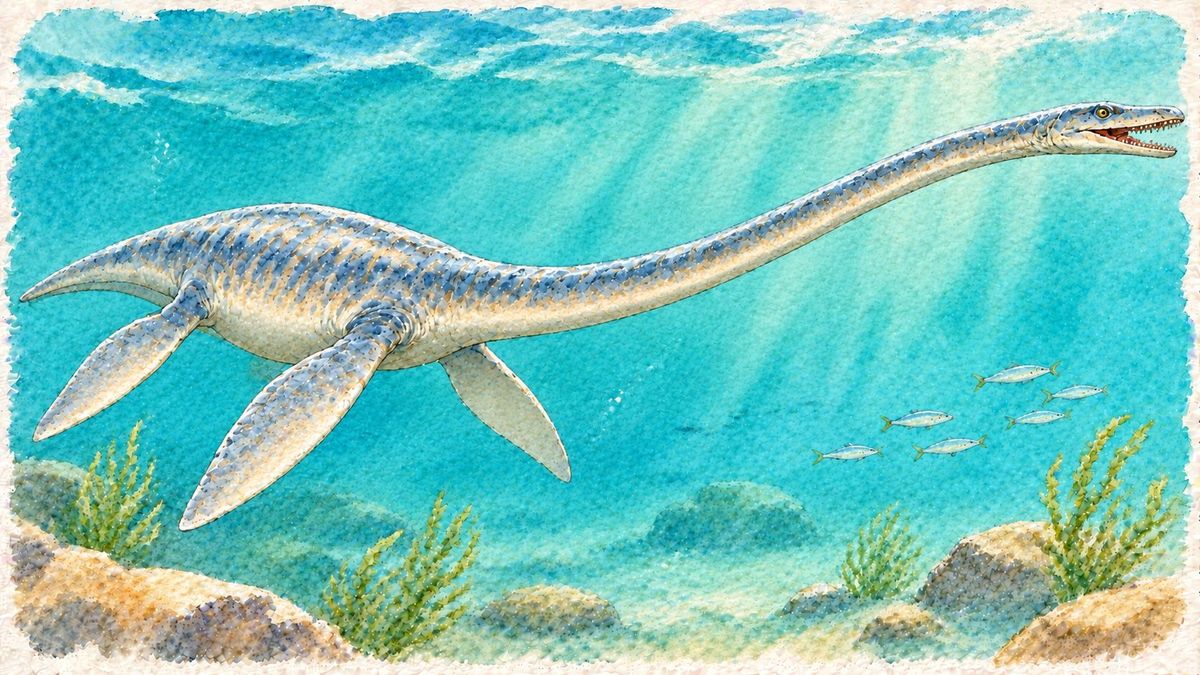
Albertonectes had the classic elasmosaurid body plan, an extreme version of it.
Size
Albertonectes measured about 36 to 37 feet (roughly 11 m) from the tip of its snout to the end of its short tail. This makes it one of the longest known elasmosaurids, though not necessarily the heaviest. Its body was fairly compact, and the neck made up a large share of the overall length.
The Record-Breaking Neck
The neck of Albertonectes had 76 cervical (neck) vertebrae. For comparison, humans, giraffes and most mammals have seven neck bones. Even a long-necked dinosaur such as Mamenchisaurus had far fewer than 76. Elasmosaurids gained their long necks by adding more vertebrae rather than by lengthening each one, and Albertonectes took this trend to an extreme.
The neck was likely about 20 feet (6 m) long or more. Scientists think that, despite its length, the neck was not very flexible in all directions. Elasmosaurid neck joints appear to have limited how far the neck could bend upward or sideways, so the animal probably could not hold its neck up like a swan or curl it like a snake.
Head and Teeth
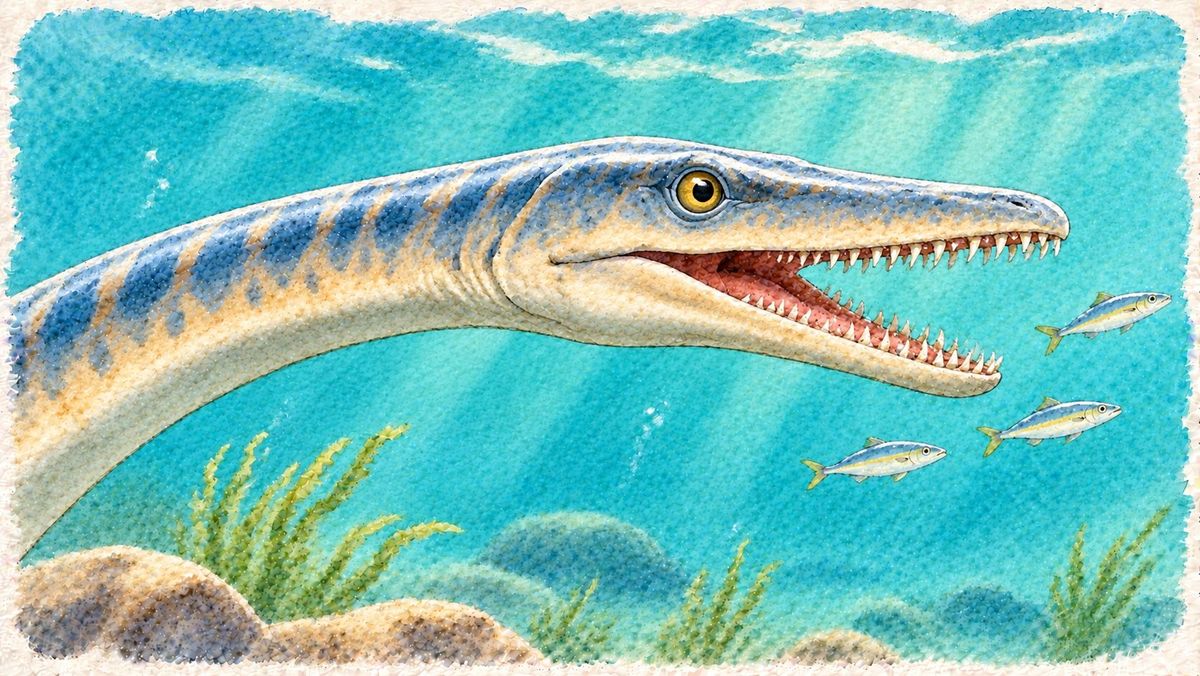
The head was small and narrow compared with the huge body, and the jaws were lined with sharp, curved, interlocking teeth. These teeth were well suited to snapping at slippery fish and soft-bodied prey, but not to crushing large, hard-shelled animals.
Flippers and Tail
Albertonectes had four large, wing-shaped flippers, two at the front and two at the back, and a short tail. The body was broad and flattened, with a strong, rigid ribcage. The flippers were similar in shape to the wings of a penguin or sea turtle, with a stiff, streamlined cross-section that worked well for underwater swimming.
When and Where Did Albertonectes Live?
Albertonectes lived in the Late Cretaceous, about 76 million years ago, during the Campanian stage. At that time, North America was divided by the Western Interior Seaway, a large, shallow sea that stretched from the Arctic to the Gulf of Mexico. Alberta lay along the western side of this sea, which had a warm climate and was rich in life.
Albertonectes fossils come from the Bearpaw Formation in southern Alberta, a layer of marine rock that preserves many animals from the seaway. The Bearpaw Sea was home to many other creatures, including:
- Other plesiosaurs, such as short-necked polycotylids
- Mosasaurs, large predatory marine lizards
- Sharks and many kinds of bony fish
- Ammonites, coiled shelled relatives of squid
- Marine turtles and diving birds such as Hesperornis
- Dinosaurs living on the nearby coastlines
Albertonectes seems to have lived in relatively shallow, sheltered waters rather than the deep open ocean, though it may have traveled widely in the seaway.
What Did Albertonectes Eat?
Nobody has found definitive stomach contents for Albertonectes, so scientists use clues from its relatives and from its teeth.
Likely Diet
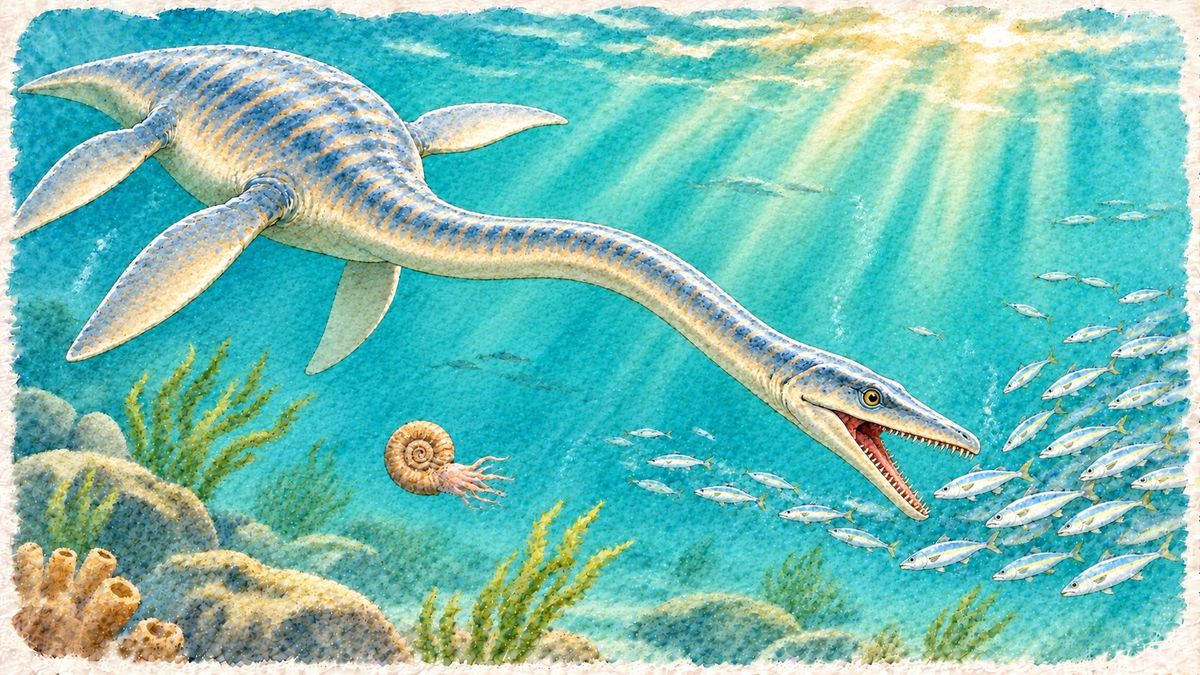
Albertonectes probably fed on small to medium-sized prey, including:
- Fish such as small schooling species
- Cephalopods, including squid-like animals and possibly ammonites
- Other small marine invertebrates
How It May Have Hunted
Because of its long neck, small head and flexible-but-limited neck movements, Albertonectes may have approached schools of fish from below or from a distance, reaching forward with its neck to snap up prey. Some scientists suggest that its long neck allowed it to stay behind and below its prey, which may have made it harder for fish to spot the body of the huge reptile.
Plesiosaurs swallowed prey whole or in big chunks rather than chewing it. Some elasmosaurs have been found with small stones in their stomach areas, known as gastroliths. These may have helped with digestion or with controlling buoyancy, though scientists still debate their purpose.
How Did Albertonectes Swim?
Plesiosaurs moved their flippers in a way sometimes described as "underwater flight." The front and rear flippers worked like wings, producing lift as they moved up and down. Studies of plesiosaur anatomy suggest that the four flippers could work together to give strong forward thrust and good maneuverability, even for animals with such a long body.
Albertonectes probably cruised slowly most of the time, which suited an animal with a stiff, heavy body. Its streamlined torso and large flippers helped it move efficiently through the water while searching for food.
Albertonectes Behavior and Lifestyle
Because only fossils survive, much of what we know about plesiosaur behavior is inferred from relatives and from the shape of the bones.
- Slow, steady swimmer: The body shape suggests long-distance cruising rather than sudden bursts of speed.
- Possibly social: Some elasmosaurid fossils have been found in groups, but this is not proven for Albertonectes.
- Air-breathing: As a reptile, it had to come to the surface regularly to breathe air.
- Warm-water dweller: The Cretaceous seaway was warm, and these animals probably preferred mild temperatures.
Albertonectes Reproduction and Babies
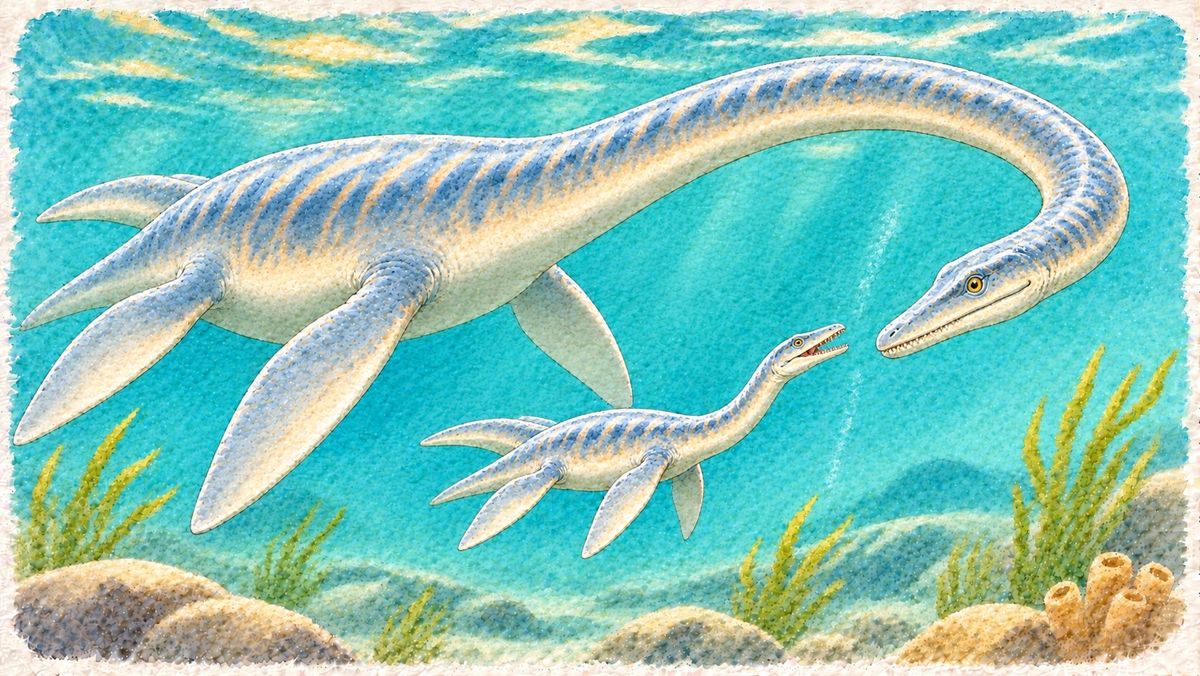
No fossil eggs or embryos have been found for Albertonectes. However, a fossil of another plesiosaur, a polycotylid, was discovered with a large embryo inside the body, showing that plesiosaurs gave birth to live young at sea. Scientists think that elasmosaurids such as Albertonectes did the same. Because plesiosaurs could not easily move on land, laying eggs on a beach would have been very difficult for such large, flipper-limbed animals.
Plesiosaur mothers probably had just one large baby at a time, which would have been born able to swim.
How Long Did Albertonectes Live?
The lifespan of Albertonectes is unknown. Research on bone structure in plesiosaurs suggests fast early growth followed by slower growth in adulthood, which hints at an active metabolism, but there is no precise lifespan figure for this species.
Predators and Threats
Large predators lived in the Bearpaw Sea. A big adult Albertonectes would have been hard to attack, but younger animals and weak individuals may have been hunted by:
- Mosasaurs, which were powerful marine predators
- Large sharks
- Other big marine reptiles
How Did Albertonectes Go Extinct?
Albertonectes lived millions of years before the end of the Cretaceous, so it disappeared before the great extinction event itself. The Bearpaw Sea eventually retreated as sea levels fell and the land changed. By the end of the Cretaceous, about 66 million years ago, plesiosaurs as a whole vanished, along with non-avian dinosaurs, mosasaurs, pterosaurs and many other groups, after a huge asteroid impact and its environmental effects disrupted ocean food chains.
Why Albertonectes Is Important
- Neck record: With 76 neck vertebrae, it shows how extreme evolution can become in the number of bones in the neck.
- Evidence for ancient Alberta: It helps scientists picture the seaway that once covered western Canada.
- Plesiosaur evolution: It adds to our understanding of how elasmosaurids diversified near the end of their time.
- Public interest: As a Canadian discovery, it highlights Alberta's rich fossil record.
Fun Facts About Albertonectes
- Neck bones galore: It had 76 neck vertebrae, more than any other known plesiosaur.
- Not a dinosaur: It was a marine reptile that lived alongside dinosaurs.
- Alberta swimmer: The name means "Alberta swimmer."
- Named in 2012: It was described scientifically in 2012.
- Long and slender: Roughly half or more of its length was neck.
- Seven in a human: Humans have seven neck vertebrae, compared with its 76.
- Giant flippers: It had four paddle-shaped flippers that it used like wings.
- Live birth: Plesiosaurs probably gave birth to live young in the water.
- Ancient seaway: It swam in the Western Interior Seaway that once split North America.
Frequently Asked Questions
What was Albertonectes? Albertonectes was a long-necked marine reptile, a plesiosaur, that lived in the inland sea over Alberta, Canada, about 76 million years ago.
Was Albertonectes a dinosaur? No. It was a plesiosaur, a separate group of marine reptiles that lived at the same time as dinosaurs but was not a dinosaur.
How long was Albertonectes? Albertonectes was about 36 to 37 feet (roughly 11 m) long, with a neck that made up around half or more of its total length.
How many neck bones did Albertonectes have? It had 76 neck vertebrae, more than any other known plesiosaur and far more than the seven found in humans and most mammals.
What did Albertonectes eat? It probably ate fish and squid-like animals, which it caught with its small head and sharp teeth. No stomach contents have been found, so this is inferred from its anatomy and its relatives.
Where were Albertonectes fossils found? Its fossils were found in the Bearpaw Formation in southern Alberta, Canada, which preserves marine life from the Late Cretaceous.
Final Thoughts
Albertonectes shows just how strange and wonderful life in the Cretaceous seas could be. With a neck built from 76 bones, four wing-like flippers and a body longer than a bus, this swimmer of the ancient Alberta seaway pushed the elasmosaur design to its limit. Its fossils remind us that the land we know today was once underwater and that the oceans of the past were home to creatures every bit as astonishing as those in our seas today.