The African tree toad is a tiny, tree-climbing amphibian from the rainforests of Central Africa. Unlike the heavy, ground-dwelling toads most people picture, this little animal has slender limbs and sticky, disc-shaped fingertips that let it cling to leaves and branches. It spends much of its life above the forest floor, in the damp, shaded layers of the rainforest where the air is warm and wet.
Because it is small, well camouflaged and tied to remote forests, the African tree toad is not a well-known animal, and some details of its life remain poorly studied. Even so, what scientists do know makes it a fascinating example of how amphibians have adapted to life in the trees. In this guide, you will learn what an African tree toad is, how to recognize it, where it lives, what it eats, how it breeds and why amphibians like it are so important to forest ecosystems.
Quick answer: The African tree toad (Nectophryne afra) is a small, tree-climbing toad of the family Bufonidae that lives in the lowland rainforests of Central and West-Central Africa. It measures only about 2 to 3.5 cm (0.8 to 1.4 in) long, has adhesive discs on its fingers and toes, and feeds mainly on small insects and other invertebrates. It is generally considered not threatened at present, though it depends on intact forest.
African Tree Toad at a Glance
| Feature | Details |
|---|---|
| Scientific name | Nectophryne afra |
| Class | Amphibia |
| Order | Anura (frogs and toads) |
| Family | Bufonidae (true toads) |
| Size | Roughly 0.8 to 1.4 inches (2 to 3.5 cm), with females larger than males |
| Weight | Only a few grams |
| Lifespan | Not well documented; small toads typically live a few years |
| Diet | Small insects, ants, springtails and other tiny invertebrates |
| Habitat | Lowland tropical rainforest, especially near streams and swampy areas |
| Range | Central and West-Central Africa, including Cameroon, Gabon and neighboring countries |
| Activity | Mainly active at night and in humid conditions |
| Conservation status | Generally regarded as not threatened (IUCN); forest loss is a concern |
What Is an African Tree Toad?
An African tree toad is a toad that has adapted to life in vegetation rather than on the ground. The name is used mainly for Nectophryne afra, a small member of the true toad family, Bufonidae. The same family includes the familiar common toads found all over the world, but the African tree toad looks quite different from its stocky, warty relatives.
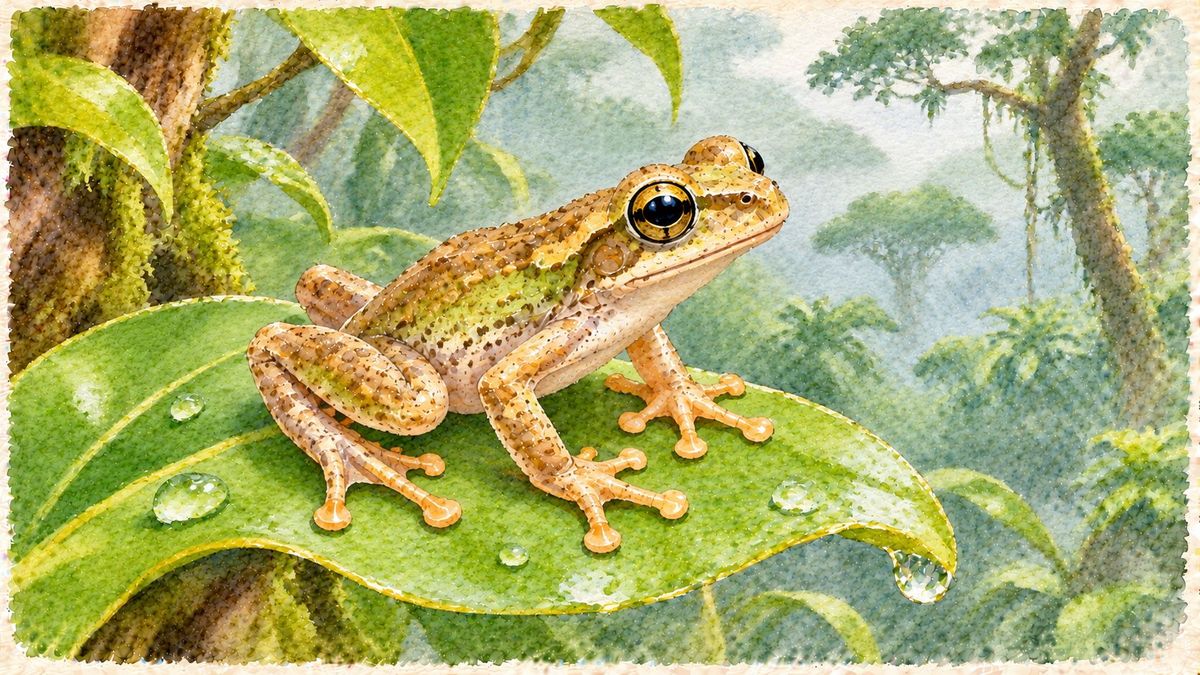
Most true toads have thick bodies, short limbs and a habit of hopping or walking slowly across the ground. The African tree toad, by contrast, has a slim body and long, slender limbs, and its fingers and toes end in expanded pads. These pads allow it to grip leaves, stems and bark, even when they are wet.
Tree Toads and Tree Frogs
Many people assume that anything which climbs trees is a "tree frog," but the African tree toad shows that toads can climb, too. It is a good example of convergent evolution, when unrelated animals develop similar features because they live similar lives. Tree frogs from other families and this tree-climbing toad have separately evolved sticky toe pads.
What Does an African Tree Toad Look Like?
The African tree toad is a small and delicate amphibian, and its appearance is well suited to life among leaves.
Size and Shape
Adults are tiny. Most measure roughly 0.8 to 1.4 inches (2 to 3.5 cm) from snout to rear end, with females generally larger than males. They weigh only a few grams, which is lighter than a small coin. The body is slender, with a narrow head and long legs compared with those of other toads.
Skin and Color
The skin is usually brown, tan, olive or gray, often with darker blotches or marks that help it blend into bark, leaf litter and shaded vegetation. Depending on the individual and its surroundings, the skin may look smooth or slightly bumpy. Like all amphibians, it has thin, moist skin that helps it absorb water and breathe, which is why it must stay in humid places.
Fingers and Toes
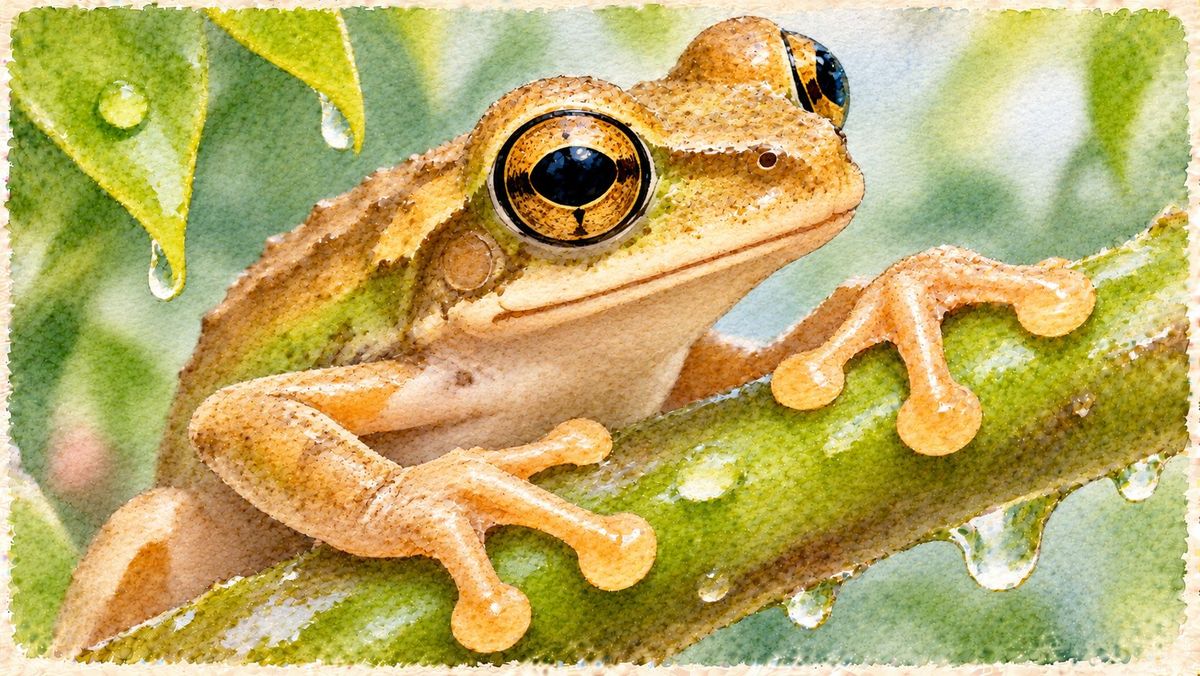
The most distinctive feature is the set of expanded, disc-like tips on the fingers and toes. These pads give the toad a strong grip on slippery surfaces. They are not just sticky; they also use a thin layer of moisture to help the toad hold on, which allows it to climb steadily rather than slip.
Eyes and Senses
The eyes are large and set on the sides of the head, giving the toad good vision in dim light. Like other frogs and toads, it can also sense vibrations, which helps it detect insects and potential danger. Males have a vocal sac, which they use to call during the breeding season.
Where Do African Tree Toads Live?
African tree toads live in the tropical rainforests of Central and West-Central Africa. Their range includes countries such as Cameroon, Equatorial Guinea, Gabon and the Republic of the Congo, as well as parts of neighboring regions. The exact edges of the range are still being studied.
Their typical habitats include:
- Lowland rainforest with a closed canopy
- Understory vegetation near streams and swamps
- Forest edges and secondary forest, if enough humidity remains
- Low shrubs, tree trunks and leaves, usually a short distance above the ground
Moisture is the key. Like all amphibians, the African tree toad must keep its skin damp, so it cannot live in dry places. During the day it hides in leaf axils, bark crevices or under foliage, where it stays cool and humid.
What Do African Tree Toads Eat?
The African tree toad is a carnivore, which means it eats animals. Because it is so small, its food is tiny too.
Main Foods
Its diet is likely to include:
- Ants and other small insects
- Springtails and mites
- Small beetles
- Flies and gnats
- Other tiny invertebrates found on leaves and bark
How It Hunts
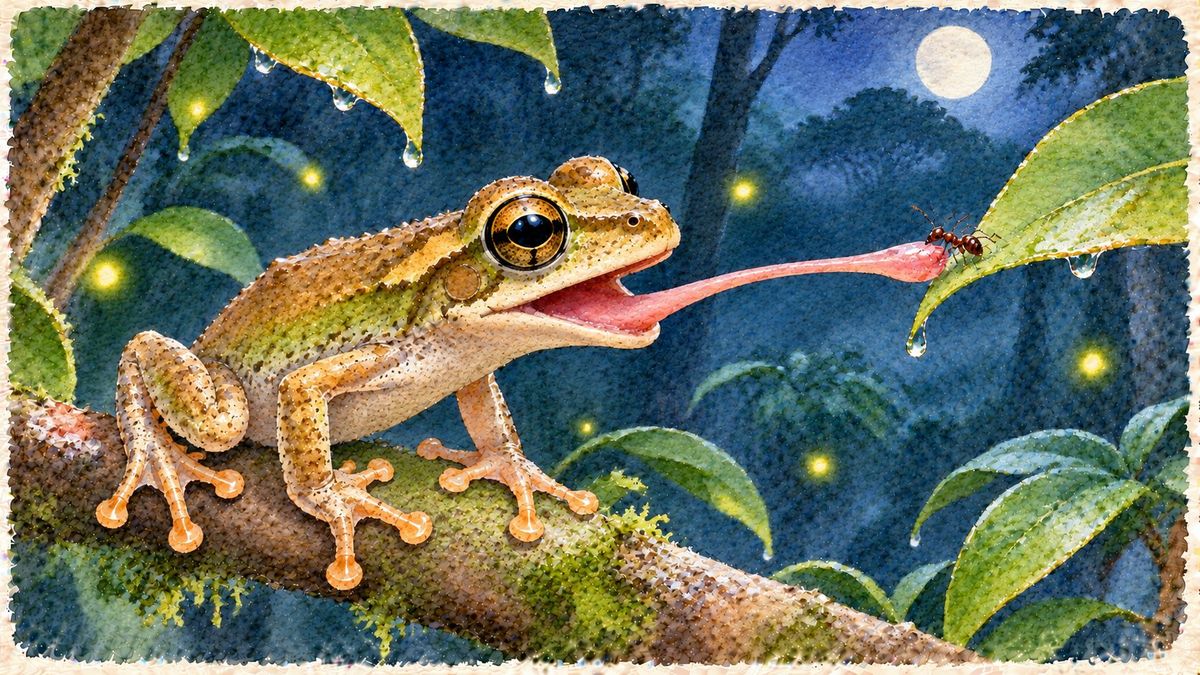
Like most toads, it is a sit-and-wait hunter. It stays still on a leaf or branch until a small animal comes close, then snaps out its sticky tongue to catch it and pulls it back into its mouth in a fraction of a second. Its big eyes and quick reflexes help it find food at night.
By eating many small insects, African tree toads help control insect numbers in the forest understory.
What About Water?
Toads do not usually drink the way mammals do. Instead, the African tree toad absorbs water through its skin, especially from damp leaves or moist surfaces. This is why it stays close to humid places and rain-soaked vegetation.
African Tree Toad Behavior and Lifestyle
Climbing and Resting
African tree toads spend much of their time off the ground, climbing on stems and leaves. They are most active at night, when the air is cooler and more humid, and they usually rest during the day in sheltered spots to avoid drying out.
Camouflage
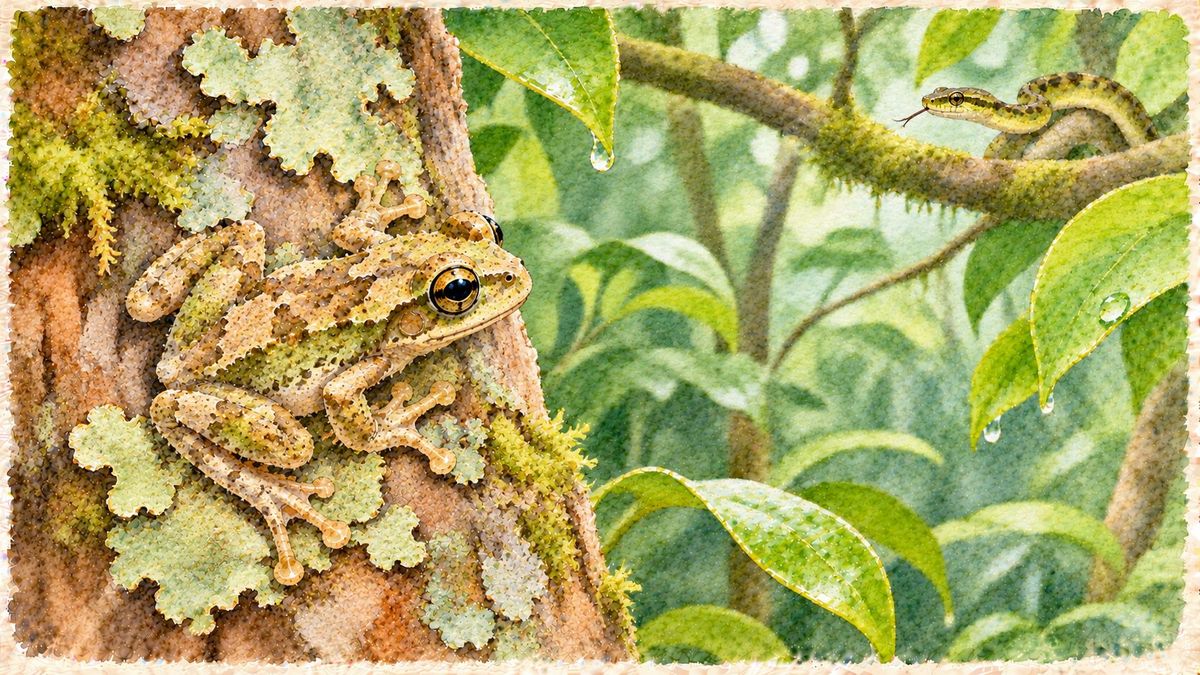
The toad's brown and olive colors help it blend into bark and leaves. When it feels threatened, it often freezes and relies on its camouflage rather than hopping away. If a predator comes too close, it can jump to a nearby branch or drop to the ground.
Calls
Male toads call to attract females, especially after rain. Their calls are usually high, soft trills or whistles typical of small forest amphibians. Calling is most common at night in the breeding season, when humidity is high.
Skin Defense
Many true toads have glands in the skin that release bitter or toxic secretions to discourage predators. Related species in the toad family do this, and it is likely that the African tree toad has some chemical protection as well, though details are not well studied. As with any wild amphibian, it should never be handled casually.
African Tree Toad Reproduction and Tadpoles
Details of the breeding biology of Nectophryne afra are limited, but like most amphibians, it depends on water and humid conditions to reproduce.
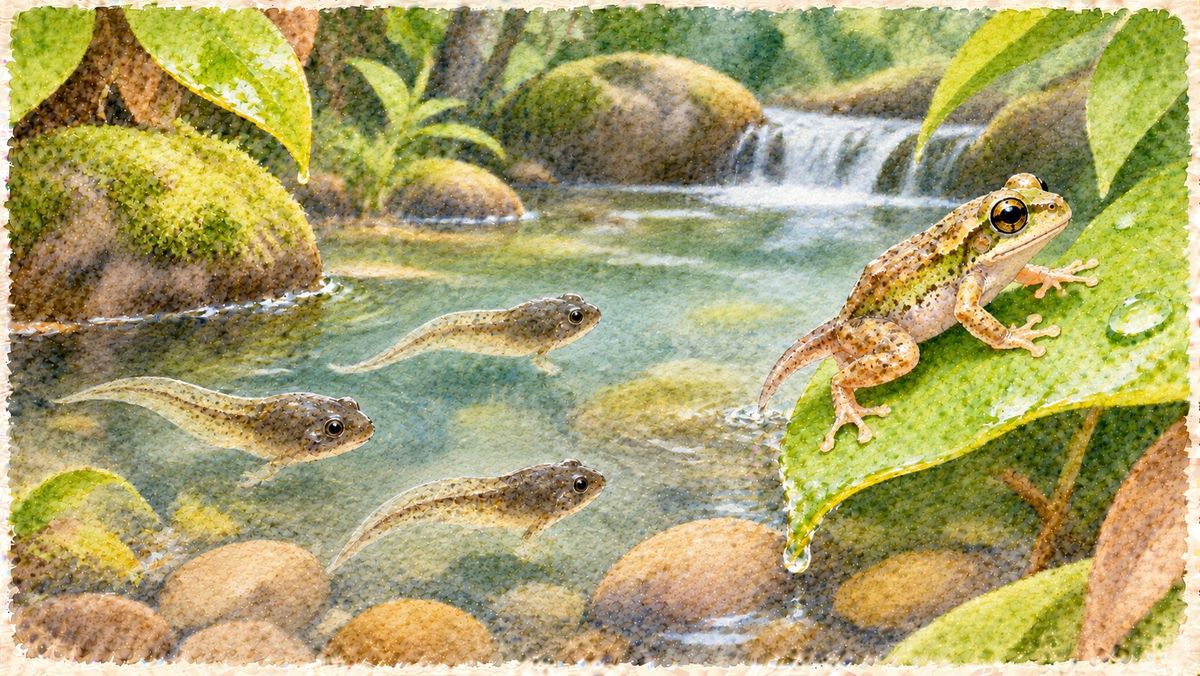
Breeding is usually linked to the wetter parts of the year. Males call from vegetation near streams or pools to attract females. After mating, the female lays her eggs in or near a suitable source of water. The eggs hatch into tadpoles, which have gills and tails and live in the water while they feed and grow.
Over a period of weeks to months, the tadpoles develop back legs, then front legs, and their tails gradually shrink in a process called metamorphosis. When the change is complete, the young toadlets leave the water and begin a life on land and in the vegetation. Young toads are very small and vulnerable, and few survive to adulthood.
How Long Do African Tree Toads Live?
The lifespan of the African tree toad in the wild is not well known. Small toads and frogs often live only a few years in nature, since they face many predators, diseases and environmental risks. Some amphibians live longer in protected conditions, but no reliable lifespan data exists for this species.
Predators and Defense
Because of its tiny size, the African tree toad is food for many animals. Its predators may include:
- Snakes, especially tree snakes
- Birds, such as forest-dwelling insect-eaters
- Larger frogs and lizards
- Spiders and large invertebrates, which can take tadpoles and toadlets
- Small mammals
Its main defenses are:
- Camouflage: Blending in with bark and leaves
- Staying hidden: Resting in sheltered places during the day
- Skin secretions: Bitter chemicals that make it unpleasant to eat
- Jumping: Quick leaps to escape
Why African Tree Toads Are Important
Small amphibians may be easy to ignore, but they play an essential role in tropical forests.
- Insect control: They eat large numbers of small insects, helping keep populations in balance.
- Food for others: They are prey for snakes, birds and other animals, linking small invertebrates with larger predators.
- Environmental indicators: Because amphibians breathe and absorb water through their skin, they react quickly to pollution, climate shifts and habitat loss. Healthy toad populations often mean a healthy forest.
- Scientific value: Unusual amphibians like this one help researchers understand how climbing abilities and breeding habits evolve.
Is the African Tree Toad Endangered?
The African tree toad is generally regarded as not threatened at present, as it occupies a fairly large area of rainforest in Central Africa. However, amphibians worldwide are among the most threatened groups of animals, and any forest species can be affected when its home disappears.
The main risks to the African tree toad include:
- Deforestation: Logging, farming and mining remove the shady, humid forest it needs.
- Pollution and chemicals: Dirty water and pesticides harm sensitive amphibian skin.
- Climate change: Hotter and drier conditions can dry out breeding sites and shrink suitable habitat.
- Disease: A fungal disease called chytridiomycosis has harmed amphibians in many parts of the world.
Protecting large areas of Central African rainforest is the best way to safeguard this small climber and the many species that share its habitat.
Fun Facts About the African Tree Toad
- It is a toad that climbs. Most toads stay on the ground, but this one has adhesive finger and toe discs.
- It is tiny. Adults are only about 2 to 3.5 cm long.
- It drinks through its skin. Amphibians absorb water instead of drinking it.
- It belongs to the true toad family. It is a relative of the familiar common toad.
- It relies on camouflage. Its brown and olive skin blends into bark and leaves.
- Males sing. Calls help males attract females after rain.
- It begins life as a tadpole. Like most amphibians, it changes shape during metamorphosis.
- It is a forest health indicator. Amphibians react quickly to environmental changes.
Frequently Asked Questions
What is an African tree toad? The African tree toad (Nectophryne afra) is a small, tree-climbing member of the true toad family that lives in the rainforests of Central Africa.
How big is an African tree toad? It is very small, measuring only about 2 to 3.5 cm (0.8 to 1.4 in) long, with females usually larger than males.
What do African tree toads eat? They eat small invertebrates such as ants, springtails, mites, beetles and flies, which they catch with a sticky tongue.
Where do African tree toads live? They live in lowland tropical rainforests in Central and West-Central Africa, often close to streams and swampy areas.
Are African tree toads poisonous? Many toads produce skin secretions that taste bad or are irritating, and this species may do the same. It is not known to be dangerous to people, but wild amphibians should not be handled, and anyone who touches one should wash their hands afterwards.
Are African tree toads endangered? They are generally regarded as not threatened at present, but like other rainforest amphibians, they depend on intact forest and can be harmed by deforestation, pollution and disease.
Final Thoughts
The African tree toad may be small enough to sit on a fingertip, but it is a remarkable example of how amphibians adapt to every corner of the rainforest. With its sticky climbing discs, camouflaged skin and nighttime calls, it lives a quiet life among the leaves, eating insects and feeding the forest food web. Protecting Africa's rainforests means protecting this little climber and countless other creatures that depend on the same damp, green world.