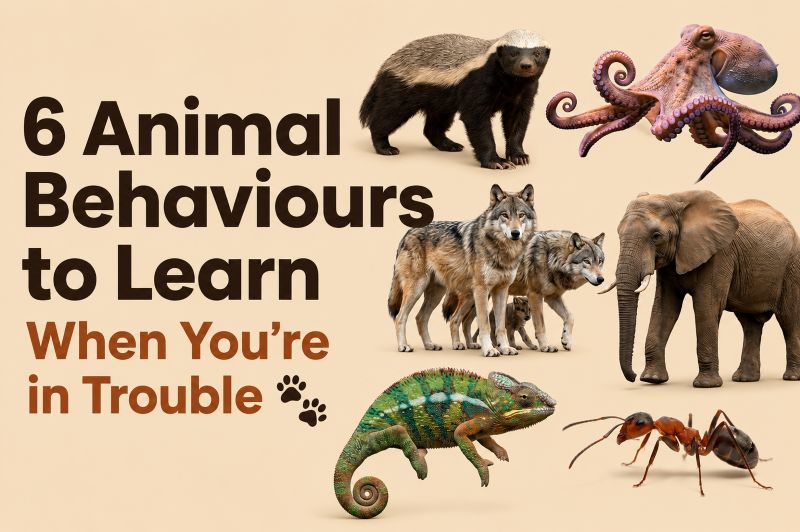
Animals survive danger every day using instincts humans can learn from. From wolf teamwork to octopus adaptability, these animal behaviors reveal powerful survival lessons for handling stress, failure, fear, and difficult situations.
Wolf – Teamwork

Wolves hunt in packs. One wolf fails alone. The group succeeds together. They share roles. Strong members lead. Others support. This coordination brings down big prey. Packs raise pups as one unit. They defend territory with joint effort. Lone wolves struggle. Team members thrive.
Humans often act solo in crises. Wolves prove otherwise. Build support networks now. Share tasks. Rely on others. Success rises fast. This unknown fact changes how you handle pressure. Teamwork beats isolation every time.
Octopus – Adaptability
Octopuses change shape and colour instantly. They escape tight spots. They solve problems with new tools. One arm explores while others hide. They open jars and escape tanks. Their skin shifts in seconds to match surroundings. Failure triggers quick switches. They try different paths without delay.
Life throws curveballs. Stick to old plans and lose. Switch strategies fast like the octopus. Test new ideas. Drop what fails. This interesting fact boosts survival rates. Adaptability turns dead ends into escapes. Master this unknown fact today.
Honey Badger – Relentless Persistence
Honey badgers attack animals ten times their size. They fight lions and snakes. Thick skin protects them. They dig relentlessly for food. Nothing stops their pursuit. They return again and again. Guinness records name them the most fearless. Their drive exhausts bigger opponents.
Quitting early ends progress. Push through resistance. Stay in the fight longer. Small persistent actions wear down obstacles. This fun fact inspires grit. Relentless effort creates breakthroughs. Apply this unknown fact when challenges feel impossible.
Elephant – Calm Under Pressure
Elephants stay composed during threats. They assess danger first. They comfort herd members with touches and sounds. Panic wastes energy. Clear thinking guides smart decisions. They remember past dangers and avoid repeats. Their steady presence calms the group.
Stress clouds judgment. Breathe deep. Observe facts. Think before you act. Calm leaders make better choices. This interesting fact saves lives in crises. Stay composed. Think straight. Win more situations with elephant-level calm.
Chameleon – Strategic Patience
Chameleons wait motionless for hours. They blend perfectly. They strike only when success is certain. Rushing leads to failure. Timing beats speed. They ignore small distractions. They conserve energy for the right moment.
Not every battle needs immediate action. Wait for clear advantages. Save resources. Strike decisively. This unknown fact prevents wasted effort. Strategic patience delivers bigger wins. Learn this fun fact. Choose battles wisely.
Ant – Consistency & Discipline
Ants follow routines daily. Each worker repeats tasks. Small steps build huge colonies. They carry loads many times their weight. Discipline keeps the group strong. One ant alone achieves little. Consistent effort creates massive results over time.
Big goals demand daily action. Show up. Repeat small habits. Discipline compounds fast. This interesting fact explains colony success. Stay consistent. Build momentum. Unknown facts like this transform long-term outcomes.
Why These Animal Behaviors Matter
Nature has spent millions of years solving survival problems. Animals survive danger, pressure, failure, and uncertainty using instincts that humans can learn from. Wolves teach teamwork. Octopuses show adaptability. Honey badgers demonstrate persistence. Elephants reveal the power of calm thinking. Chameleons remind us to wait for the right moment, while ants prove that small consistent actions create massive results over time.
These animal behaviors are more than interesting facts. They are practical survival lessons for modern life. When challenges appear, the ability to stay calm, adapt quickly, work with others, and remain disciplined often decides success or failure. Studying survival instincts in nature can improve decision-making, resilience, leadership, and mental toughness.
The next time life becomes difficult, look at how animals respond to danger. Nature already discovered many of the best strategies for survival. Learn from them. Apply them daily. Small behavioral changes can create powerful long-term results.