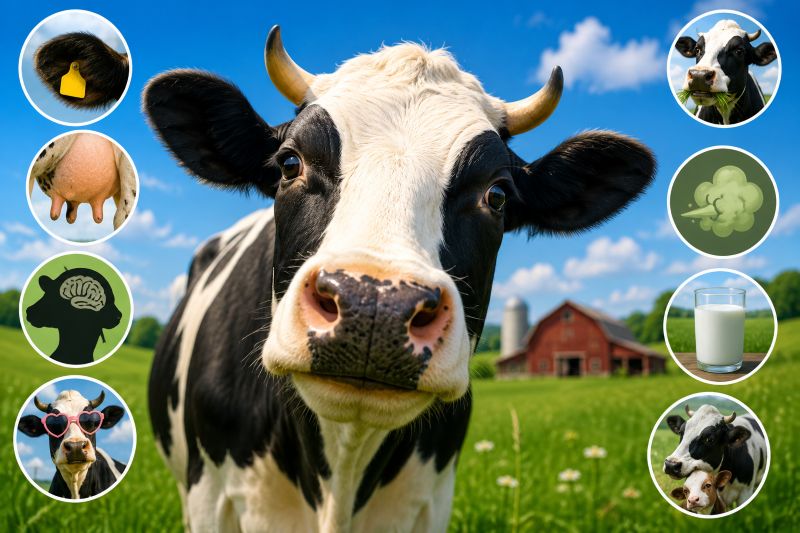
Looking for fascinating facts about cows? These gentle farm animals are smarter, more social, and biologically impressive than most people realize.
Cows are far more than just the source of milk, cheese, and burgers on your table. These majestic animals have captured human fascination for thousands of years, playing a vital role in agriculture, culture, and ecosystems worldwide. Whether you’re a dairy lover, a curious animal enthusiast, or simply searching for fun facts about cows, you’ll be amazed by what these creatures can do.
In this article, we dive deep into 10 fascinating facts about cows that highlight their unique anatomy, incredible senses, social lives, and more. Packed with science-backed insights, these animal facts will change how you view the humble cow. Let’s get started!
Like Humans, Cows Have Teeth—But Mostly on the Bottom Jaw

Cows have a full set of 32 teeth, just like humans, but their dental setup is perfectly adapted for their grazing lifestyle. They lack upper front incisors. Instead, they have a tough, fibrous dental pad on the top of their mouth.
When a cow eats, it curls its long, muscular tongue around blades of grass, presses them against the dental pad, and rips them out with a quick pull. This efficient method allows them to graze large amounts of vegetation without “biting” like predators do. Their molars on both jaws then grind the food side-to-side.
Fun bonus: Cows produce up to 40-50 quarts of saliva daily to help soften and break down tough plant material. This unique feeding mechanism is why they’re such effective converters of grass into energy—and eventually, delicious milk or meat.
A Cow’s Sense of Smell Is Superhuman—Up to 5 Miles Away
Got dinner cooking on the grill? A cow might smell it from up to 5 miles (8 kilometers) away! Their powerful olfactory system features a massive nasal cavity and millions of scent receptors far more sensitive than ours.
Cows use this incredible sense of smell to:
- Locate fresh grazing spots
- Recognize individual herd members by scent
- Detect predators or danger long before seeing it
- Identify familiar humans or changes in their environment
This superpower explains why farmers often notice cows reacting to distant events. Their noses help them navigate social hierarchies and maintain herd safety in vast pastures.
One Dairy Cow Produces a Staggering 23,000 Pounds of Milk Per Year
Talk about a milk powerhouse! The average dairy cow in the U.S. produces around 23,000 pounds (over 10,000 liters) of milk annually. That’s enough to fill a small swimming pool or supply milk for hundreds of families.
Modern dairy breeds like Holsteins have been selectively bred for high production, but it takes proper nutrition, comfortable housing, and excellent care to achieve these numbers. A high-producing cow can yield 6-12 gallons per day during peak lactation.
This incredible output supports global nutrition, from fluid milk to cheese, yogurt, and butter. It’s a testament to the cow’s specialized biology and the dedication of American dairy farmers.
Cows Are Social Butterflies Who Form Lifelong Friendships and Hold Grudges
Forget the stereotype of cows as simple herd animals. Cows are highly social with complex emotional lives. They form close friendships, preferring to spend time with specific “besties” in the herd. Studies show they get stressed when separated from preferred companions and relaxed when reunited.
Even more surprising: cows can hold grudges for years against animals or people who have treated them poorly. They recognize individual humans, remember past interactions, and show clear preferences.
This emotional intelligence makes positive human-animal interactions crucial on farms. Happy, socially fulfilled cows produce more milk and stay healthier—proving that kindness pays off.
Cows Spend About 8 Hours a Day Eating and Digesting
Cows dedicate roughly one-third of their day to eating and processing food. They consume 40-100+ pounds of feed daily, depending on size and production level, but the real magic happens during rumination—chewing cud.
After swallowing grass, they regurgitate it as cud and chew it again for up to 8 hours total. This multi-stage process maximizes nutrient extraction from fibrous plants that humans couldn’t digest.
It’s not laziness—it’s biology at its finest. Content cows chew cud rhythmically, a sign of good health and welfare.
Cows Are Red-Green Colorblind—They See the World Differently
Cows have dichromatic vision, meaning they’re red-green colorblind. They perceive the world in muted blues, yellows, and grays rather than vibrant colors. Bright reds or sudden contrasts can startle them, which is why farmers use soft, neutral tones in barns and handling areas.
Their eyes are positioned on the sides of their head, giving nearly 330-360 degrees of panoramic vision—perfect for spotting predators while grazing. This wide field of view, combined with their color perception, influences how they react to their environment.
Understanding cow vision helps design better facilities that reduce stress and improve safety for both animals and handlers.
Cows Sleep Only About 4 Hours a Day—And They’re Light Sleepers
Unlike humans who need 7-9 hours, cows get by on just 3-4 hours of sleep daily. They often doze while standing or lying down in short naps and lie down for deeper rest, including REM sleep.
This polyphasic sleep pattern (multiple short sleeps) suits their need to stay vigilant in herds. Cows are light sleepers, quickly alert to sounds or movements—another evolutionary adaptation for survival.
Providing comfortable bedding encourages them to lie down more, improving rest and milk production.
Cows Have Exceptional Hearing—Better Than Humans in Many Ways
Cows can detect a wider range of frequencies than people, including very low and very high sounds we might miss. Their large, mobile ears swivel independently to pinpoint sound sources.
This heightened hearing helps them:
- Communicate with low-frequency moos that travel long distances
- Detect approaching predators or machinery
- Respond to calf calls or herd members
Farmers use calm voices and consistent routines because sudden loud noises can stress cows easily.
You Can Lead a Cow Up Stairs… But Not Down!
Here’s a classic quirk: cows can walk upstairs, but their knee structure and body weight distribution make descending steep stairs extremely difficult and uncomfortable. Their legs aren’t built for the backward bend needed for easy downhill movement.
This fact has inspired everything from farm jokes to urban legends. It highlights how specialized cow anatomy is for flat pastures and gentle slopes rather than human architecture.
Cows Have One Stomach with Four Amazing Compartments
Cows are true ruminants with a single stomach divided into four specialized compartments: Rumen, Reticulum, Omasum, and Abomasum. This system lets them thrive on a grass-based diet.
- Rumen (largest, up to 50 gallons): Fermentation vat where microbes break down fiber.
- Reticulum: Traps foreign objects (like hardware disease prevention).
- Omasum: Absorbs water and nutrients.
- Abomasum: The “true stomach” with acid digestion like ours.
This efficient setup turns low-quality forage into high-quality protein and milk. It’s one of nature’s most impressive engineering feats.
Why These Cow Facts Matter More Than Ever
Understanding these fascinating facts about cows isn’t just trivia—it supports better animal welfare, sustainable farming, and appreciation for the food on our plates. American dairy and beef industries rely on healthy, happy cows, and knowledge like this helps farmers provide the best care possible.
From their social bonds to their digestive superpowers, cows prove they’re intelligent, sensitive animals deserving respect. Next time you see a cow in a field, remember: there’s a lot more going on behind those big brown eyes!
Which cow fact surprised you the most? Drop your favorite in the comments below, share this article with fellow animal lovers, and follow for more Fun Facts and Animal Facts!
FAQ About Cows
What is the most interesting fact about cows?
Cows form friendships, recognize humans, and can even hold grudges.
How many stomachs does a cow have?
A cow has one stomach with four compartments: rumen, reticulum, omasum, and abomasum.
Are cows intelligent animals?
Yes. Cows have strong memories, emotional intelligence, and social bonds.
How long do cows sleep?
Most cows sleep around 4 hours per day in short naps.