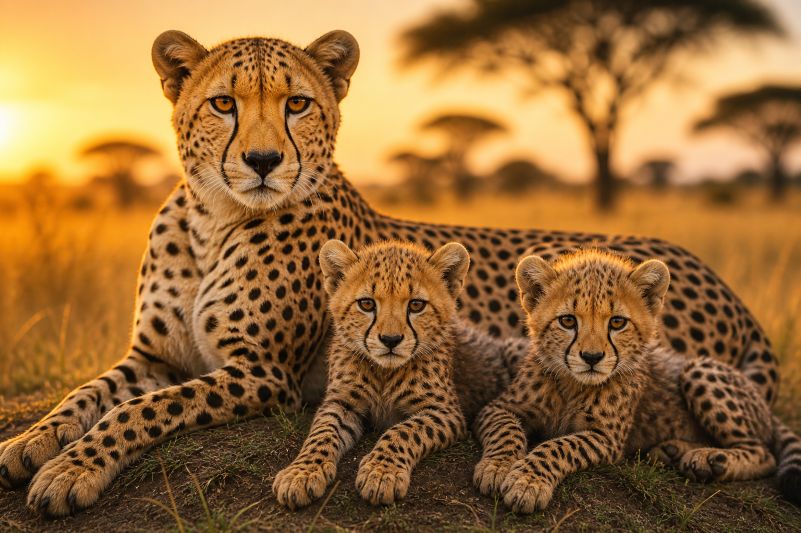
Cheetahs are the ultimate speed machines of the animal kingdom. With their sleek bodies, tear-streaked faces, and unmatched acceleration, these big cats are built like living Ferraris. But there’s so much more to cheetahs than just raw speed. These 10 fascinating facts about cheetahs reveal their incredible adaptations, unique behaviors, and the serious challenges they face in the wild.
If you love big cats and mind-blowing animal facts, you’re in for a treat. Here’s everything you need to know about the world’s fastest land animal.
Cheetahs are the fastest on land

They can reach a staggering 110 km/h (68 mph) in just 3 seconds — faster than most sports cars. This explosive acceleration makes them the undisputed sprint champions of the animal world.
They are built for speed

A cheetah’s body is perfectly engineered for velocity. With a lightweight frame, long legs, flexible spine, and large lungs and heart, they are basically a high-performance racing machine in feline form.
They take incredibly long strides
During a full-speed chase, a cheetah can cover 6 to 7 meters (20–23 feet) in a single stride. Their stride length is one of the keys to their record-breaking speed.
They don’t roar — they chirp and purr
Unlike lions or tigers, cheetahs cannot roar. Instead, they communicate with a variety of soft sounds including chirps, purrs, and bird-like calls that help them stay in touch with their family.
Cheetahs are daytime hunters
They prefer to hunt during early morning and late afternoon when it’s cooler. This timing also helps them avoid competition with stronger nocturnal predators like lions and hyenas.
Cheetah cubs have a very low survival rate
Tragically, nearly 90% of cheetah cubs do not survive to adulthood. Predators, disease, and habitat loss make the first few months of life extremely dangerous for these vulnerable kittens.
Their black tear marks are functional
Those distinctive black lines running from their eyes to their mouth aren’t just for looks. They act like natural sunglasses, reducing glare from the bright African sun and helping them focus on prey during hunts
Their claws work like running spikes
Cheetah claws are only semi-retractable. They stay out like cleats or spikes, giving the cat extra grip and stability when making sharp turns at top speed.
They can only sprint for 20–30 seconds
Despite their incredible top speed, cheetahs overheat quickly. After a high-speed chase, they need time to rest and cool down before they can hunt again.
Cheetahs are an endangered species
Fewer than 7,100 cheetahs remain in the wild. Habitat loss, human conflict, and low genetic diversity have pushed this magnificent cat to the brink of extinction.
These fascinating facts about cheetahs show just how perfectly adapted — and how fragile — these big cats really are. From their lightning-fast sprints and clever survival tools to the heartbreaking reality of their low cub survival rate, cheetahs are one of nature’s most remarkable yet vulnerable predators.
Conservation efforts are now more important than ever to protect the remaining wild populations. What surprised you the most about these incredible speedsters? Share this article with fellow wildlife lovers and help spread awareness about the fastest land animal on Earth!