Synopsis: Discover the most shocking interesting facts about the octopus – one of nature’s most intelligent yet tragic creatures! From the tragic father who self-destructs after mating to the super-mom who starves herself for over four years guarding her eggs, these mind-blowing interesting facts about octopus reveal a heartbreaking life cycle like no other in the ocean. Prepare to be stunned by the ultimate sacrifice these eight-armed geniuses make for the next generation. Your daily dose of jaw-dropping ocean mysteries starts here – the real story behind the octopus that will change how you see these incredible animals forever!
Introduction:
Octopuses are among the most fascinating creatures on Earth. With three hearts, blue blood, and the ability to change color and shape in an instant, they are true masters of the ocean. Yet behind their incredible intelligence lies one of the most bittersweet stories in the animal kingdom. These interesting facts about the octopus focus on their dramatic final chapter: reproduction and inevitable death. Unlike most animals that raise families together, octopuses follow a semelparous life strategy – they reproduce only once and then die. The process is both beautiful and heartbreaking, driven by ancient biological programming. In this article, we dive deep into seven powerful interesting facts about octopus that explain why these creatures literally give their lives for their babies.
THE TRAGIC FATHER

After mating, the male octopus’s brain slowly shuts down, and he wanders aimlessly until a predator eats him.
After mating, the male octopus’s brain slowly shuts down in a process called senescence. The optic gland releases hormones that trigger self-destructive behavior – he stops eating, wanders aimlessly, and eventually becomes easy prey for predators. This is not an accident; it is nature’s way of ensuring the male does not compete with his own offspring for food. Scientists have discovered that removing the optic gland in labs allows males to live much longer, proving this is a built-in biological “off switch.” These interesting facts about the octopus show how even the smartest sea creatures are programmed to sacrifice everything after passing on their genes. The tragic father truly lives only to die for new life.
THOUSANDS OF EGGS
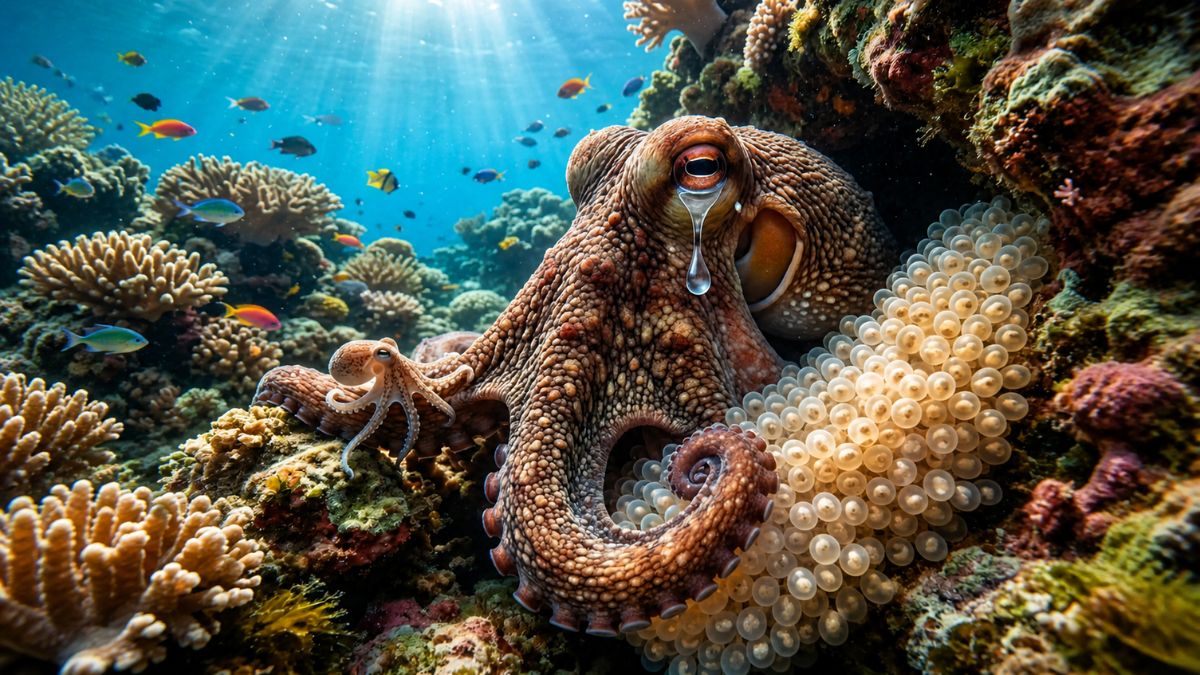
The mother lays over five hundred eggs inside an underwater cave and stays there to completely protect them.
Once fertilized, the mother octopus lays anywhere from 500 to over 100,000 eggs (depending on the species) inside a dark underwater cave or crevice. She carefully attaches each egg to the rock with a special glue and begins her long vigil. This massive number of eggs is nature’s insurance policy – only a tiny fraction will survive to adulthood. The mother uses her suckers and siphon to constantly clean and aerate the clutch. These interesting facts about octopus highlight her incredible dedication right from the start. She will never leave her precious eggs, turning her body into a living shield against predators and bacteria for months or even years.
MONTHS WITHOUT EATING
She constantly sprays fresh water over the eggs for oxygen, but refuses to eat anything for several months.
You May Also Like: AIRLINES THAT VANISHED FOREVER
During the entire brooding period, the mother octopus refuses to eat anything. She stays glued to her eggs, gently blowing fresh oxygenated water over them with her siphon while fending off hungry fish and crabs. Her body slowly wastes away as she survives on stored energy reserves. This extreme fasting can last from a few months in shallow-water species to an astonishing four-and-a-half years in deep-sea octopuses. These interesting facts about the octopus reveal the ultimate act of maternal love – a mother willing to starve herself so her babies have the best chance. Her devotion is unmatched in the animal world.
THE SENESCENCE PROCESS
A fatal natural process stops hormone release, causing the mother to starve and sometimes physically harm herself.
As brooding continues, the mother enters a fatal natural process called senescence. The optic gland ramps up production of hormones and cholesterol-based molecules that shut down her digestive system and salivary glands. She literally forgets how to hunt and eat. In many cases, she begins to physically harm herself – slamming against rocks or even eating her own arms. Scientists studying RNA changes in the optic gland have finally decoded this self-destruct mechanism. These interesting facts about octopus explain the biological reason behind the tragedy: once her reproductive duty is complete, her body is programmed to end. It is nature’s harsh but efficient way to clear the stage for the next generation.
THE 4.5 YEAR RECORD
One specific octopus species protected her eggs for fifty-three months straight without eating, the longest brooding record.
One specific deep-sea octopus species (Graneledone boreopacifica) holds the world record for the longest egg-guarding period ever recorded in any animal – a staggering 53 months (over 4.5 years)! Observed by researchers from the Monterey Bay Aquarium Research Institute, this dedicated mother never left her eggs, never ate, and continuously protected them at 4,600 feet depth. This incredible feat broke all previous records and stunned scientists worldwide. These interesting facts about the octopus prove just how far some mothers will go. The 4.5-year vigil remains one of the most extraordinary examples of parental sacrifice in the entire natural world.
DYING FOR NEW LIFE
By the exact moment the tiny baby octopuses finally hatch from their dried eggs, the mother is already dead.
By the exact moment the tiny baby octopuses finally hatch from their dried, carefully guarded eggs, the mother is already dead or dying. She has given every last ounce of energy to her offspring. As the babies emerge and swim away, her body finally shuts down completely. This perfect timing ensures she does not eat any of her own young and leaves the cave free for the next generation. These interesting facts about octopus paint a poetic yet heartbreaking picture: the mother’s death is the final gift that gives her babies their first taste of freedom. Her life ends so theirs can begin.
COMPLETELY ALONE
Without any parents for protection, the lonely babies drift away, and only a few out of thousands survive.
Without any parents for protection, the thousands of tiny hatchlings drift away into the vast ocean immediately after birth. Only a tiny fraction – sometimes less than 1% – will survive to adulthood. They must rely entirely on their instincts, camouflage skills, and luck to avoid predators. There is no family unit, no teaching from mom or dad. These interesting facts about the octopus remind us how solitary and unforgiving ocean life truly is. The babies are on their own from the very first second, carrying forward the remarkable intelligence and survival skills of their tragic parents.
Other Interesting Facts About Octopus
Beyond their tragic reproduction, octopuses continue to amaze scientists. They have nine brains (one central and eight in their arms), can solve puzzles, use tools, and even escape from locked aquariums. Their blue blood carries copper instead of iron, allowing them to thrive in low-oxygen deep-sea environments. They can edit their own RNA to adapt instantly to changing conditions – a superpower no other animal possesses. These extra interesting facts about the octopus show why they are often called “aliens of the sea.” Their short, intense lives are packed with more intelligence and drama than many animals experience in decades.
Conclusion
There you have it – the most powerful and emotional interesting facts about the octopus ever compiled. From the tragic father’s self-destruct sequence to the mother’s record-breaking 4.5-year sacrifice, these incredible creatures prove that love and survival in the ocean come at the ultimate price. Which interesting facts about octopus surprised you the most? Share your thoughts in the comments and tag a friend who loves ocean mysteries. More mind-blowing facts about the smartest animals on Earth are coming soon – stay tuned for your daily dose of wonder!