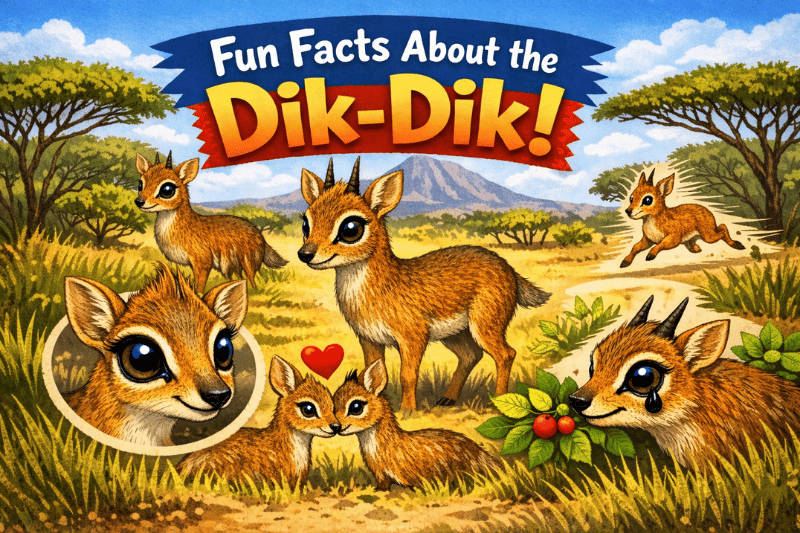
If you’re searching for Fun Facts About the Dik-Dik, you’re in for a treat. These tiny antelopes might make you giggle because of their unusual name, but there’s much more to them than meets the eye. From their zigzag escape runs to the surprising ways humans have used their bones and skin, dik-diks are full of fascinating surprises.
Below, you’ll discover some of the most interesting Fun Facts About the Dik-Dik that make this small African antelope truly unique.
1. They’re Tiny but Mighty Antelopes
Dik-diks are antelopes—a diverse group of hoofed mammals admired for their elegance and speed. Despite belonging to this graceful family, dik-diks stand only 12 to 18 inches (30 to 45 cm) tall at the shoulder, depending on the species.
2. There Are Four Species
Among the most interesting Fun Facts About the Dik-Dik is that there are four species: Günther’s dik-dik, Kirk’s dik-dik, Salt’s dik-dik, and the Silver dik-dik. The largest of them all is Kirk’s dik-dik.
3. Males Have Tiny Horns
Male dik-diks grow short horns up to 3 inches (7.6 cm) long, while females do not have horns at all.
4. They Have Special Scent Glands
The dark spots below their eyes contain preorbital glands. Dik-diks use these glands, along with dung and urine, to scent-mark and defend their territory.
5. They Mature Quickly
Dik-diks reach maturity at just seven months old. Once mature, their parents drive them away to establish their own territory.
6. Their Name Comes From Their Alarm Call
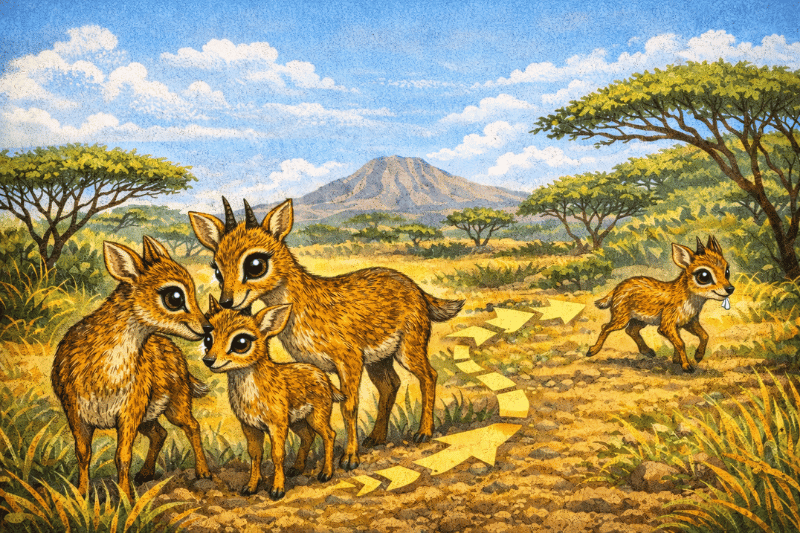
One of the most famous Fun Facts About the Dik-Dik is how they got their name. When in danger, they make a sharp “dik-dik” or “zik-zik” sound through their nose to warn others of nearby predators.
7. They Can Survive Without Drinking Water
Dik-diks rarely need to drink water. The moisture from the leaves, shoots, fruits, berries, acacia leaves, and shrubs they eat is enough to keep them hydrated.
8. Built-In Air Conditioning
Their elongated snouts help cool their blood when temperatures rise above 104°F (40°C), allowing them to survive in hot climates.
9. They Live in Eastern and Southern Africa
You can find dik-diks in countries such as Somalia, Kenya, and Tanzania. They inhabit dry bushlands and savannah regions.
10. They Run in Zigzags
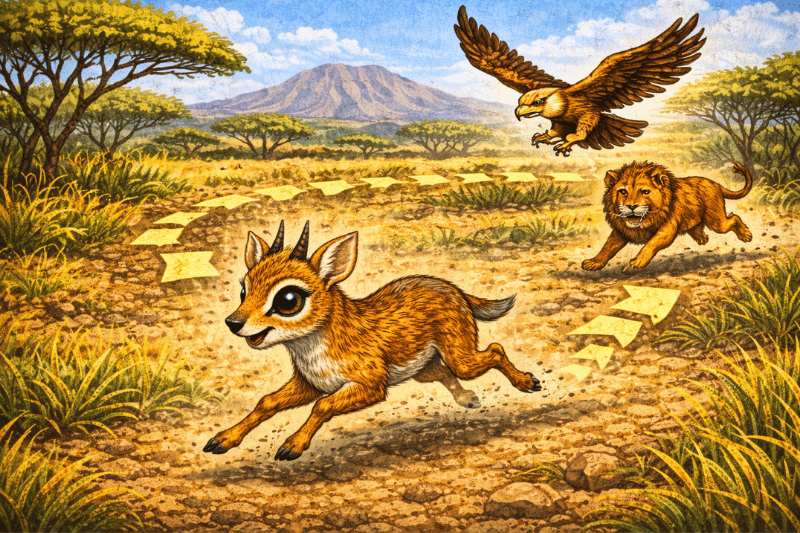
When escaping predators like eagles or lions, dik-diks run in a zigzag pattern. These tiny antelopes can reach speeds of up to 26 miles per hour (42 km/h).
11. They Form Monogamous Pairs
Unlike many antelopes that live in herds, dik-diks form lifelong monogamous pairs. This bonding behavior is one of the sweetest Fun Facts About the Dik-Dik.
12. Reproduction and Lifespan
Females give birth to one calf per gestation period, which lasts about five to six months. They can produce up to two offspring per year. In the wild, dik-diks live around 5 to 10 years, while those in captivity can live up to 18 years.
13. They Chew the Cud
Like many ruminants, dik-diks regurgitate and re-chew their food in a process known as “chewing the cud,” which helps with digestion.
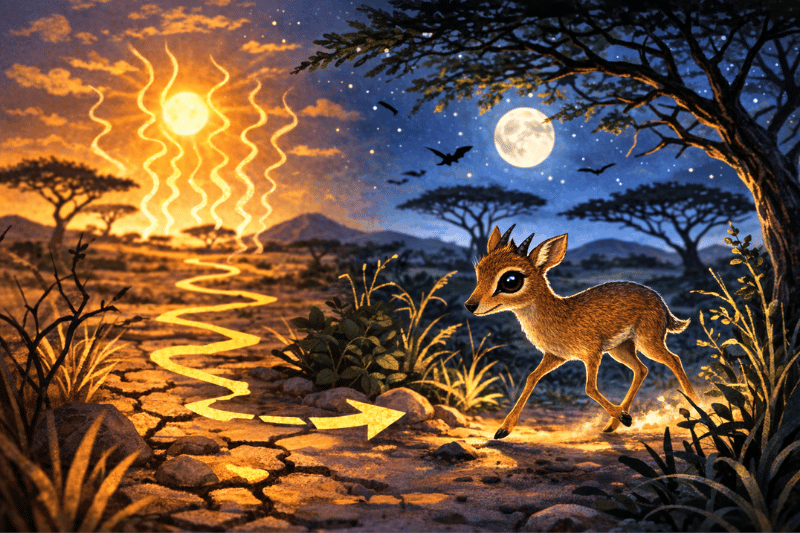
14. They’re Mostly Nocturnal
Being active at night helps dik-diks conserve water and avoid extreme daytime heat.
15. Cultural and Human Connections
Some lesser-known Fun Facts About the Dik-Dik include their unexpected ties to humans. In 1965, an Italian pop band named “Dik Dik” was formed. There’s even a card game called “Don’t Be a Dik Dik,” where the loser must shout the animal’s name.
Unfortunately, dik-diks have also been hunted. In some cases, their small bones are used for jewelry, their skin is turned into suede for gloves, and male horns have been used to make small accessories.
Why Dik-Diks Are So Fascinating
Dik-diks may be small, but they’re packed with personality, survival skills, and unique traits. From their signature alarm call and lightning-fast zigzag runs to their lifelong partnerships, these tiny antelopes truly stand out in the animal kingdom.
Now that you’ve explored these Fun Facts About the Dik-Dik, you can appreciate how remarkable this little African antelope really is. And yes—their name might still make you smile!